
On This Page
Description
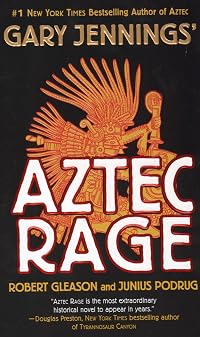
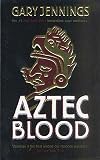
"Aztec" is the extraordinary story of the last and greatest native civilization of North America. Told in the words of one of the most robust and memorable characters in modern fiction, Mixtli-Dark Cloud, "Aztec "reveals the very depths of Aztec civilization from the peak and feather-banner splendor of the Aztec Capital of Tenochtitlan to the arrival of Herná n Cortá s and his conquistadores, and their destruction of the Aztec empire. The story of Mixtli is the story of the Aztecs show more themselves---a compelling, epic tale of heroic dignity and a colossal civilization' s rise and fall. show lessTags
Recommendations






























Member Recommendations



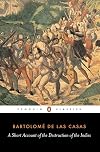
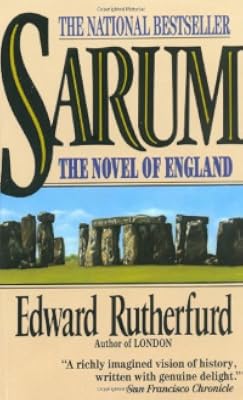
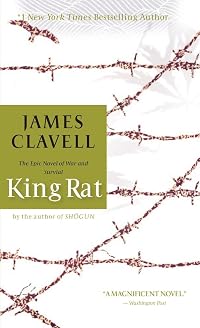
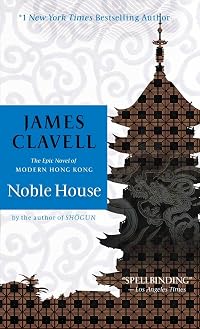
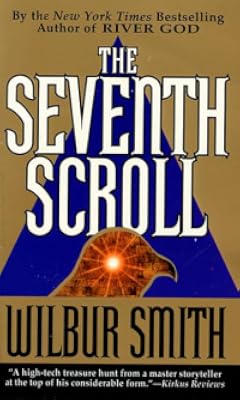
Cecrow Non-fiction eyewitness account of the Spanish conquest, and clearly an influence.



Member Reviews
If books were a mirror, than "Aztec" is a picturesque record of the depravity to which man can fall and the heights he can ascend. Jennings spectacularly builds upon historical stereotypes of Mesoamerican civilizations to narrate the last days of the Aztecs before their fateful tryst with the Western world.
The reader is thrust into the world of the youthful protagonist Dark Cloud and rapidly witnesses his coming of age in a world in which fable and myth run side by side with sanguinary warfare and realpolitik.
While the sexual escapades narrated in the novel are enough to make even the most prodigious glut sweat, they do not distract from the otherwise fast moving pace established by Jennings. And therein lies "Aztec's" success, it's show more narrative flows fluidly and even the most minor details integrate with the whole to usher in a new challenge/lesson bestowed upon the protagonist by his environment.
Overall, "Aztec" hits the right spots in historical fiction. It is lucid, takes liberties with some contentious truths, visceral, deviant and most importantly grounded in the realities of life where the winners decide the truth and the vanquished are left to pick up the shards of whatever they once possessed. show less
The reader is thrust into the world of the youthful protagonist Dark Cloud and rapidly witnesses his coming of age in a world in which fable and myth run side by side with sanguinary warfare and realpolitik.
While the sexual escapades narrated in the novel are enough to make even the most prodigious glut sweat, they do not distract from the otherwise fast moving pace established by Jennings. And therein lies "Aztec's" success, it's show more narrative flows fluidly and even the most minor details integrate with the whole to usher in a new challenge/lesson bestowed upon the protagonist by his environment.
Overall, "Aztec" hits the right spots in historical fiction. It is lucid, takes liberties with some contentious truths, visceral, deviant and most importantly grounded in the realities of life where the winners decide the truth and the vanquished are left to pick up the shards of whatever they once possessed. show less
Aztec covers the last fifty or so years of the Aztec empire, before it was decimated by the Spanish invaders.
The narrator is a rising Aztec commoner Mixtli (Dark Cloud), whose life we follow from childhood to old age. His narrative is occasionally interrupted by letters written by the top religious authority of New Spain, Bishop Zumarraga, to the Spanish monarch. This makes for a nice break and a change of perspective and enables us to see how the Spanish conquerors viewed the subjugated peoples of Meso-America. Hint: they did not have a high opinion of them.
Jennings displays an astounding amount of knowledge about the Aztec society. Social structure, language, the geography of the region and neighboring nations are all convincingly show more portrayed. However, he also makes the classic mistake, all too often seen in works of historical fiction. Mixtli, the hero, is at the center of every major event occurring during this period. From major battlefield success to parlaying with Cortes, assassination of a ruler, discovering new trade routes and goods - this short-sighted badass does it all. Another classic faux-pas is that Mixtli, naturally, always speaks truth to power, dealing advice to rulers and nobility who are mostly so very stupid that they need perfectly obvious solutions pointed out to them by our hero. Who, in reality, would probably have been sacrificially executed for letting his shadow fall on that of a nobleman, or something like that.
The author could have done with a little more character development, especially with the supporting cast, as the entire novel is rather Mixtli-focused, probably to its detriment.
Nevertheless, Aztec is a very interesting read, although quite a long one. Mixtli's adventures are rather fun to follow, even if certain sections of his wandering about do drag on and the novel could have been cut by a third without any great loss to the reader. However, the work was probably meant to be a comprehensive one, covering all aspects of Aztec life as well as the conquest. It took me quite a while to read, not just because of the formidable length, but also because the last part, the one about the conquest, was such a sad read. It is a story of how Spanish greed destroyed a marvelous civilization, one that was in certain aspects (hygiene and public health, for example) more advanced than the one that conquered it.
Of course, there are darker aspects to the Aztec culture. Ritualistic sacrifices, the hard life of the slave population and the general frugality of life, where the commoners and slaves are always at the mercy of the upper class' whims - these are all topics that Jennings does not shy away from. Kudos, Sir. show less
The narrator is a rising Aztec commoner Mixtli (Dark Cloud), whose life we follow from childhood to old age. His narrative is occasionally interrupted by letters written by the top religious authority of New Spain, Bishop Zumarraga, to the Spanish monarch. This makes for a nice break and a change of perspective and enables us to see how the Spanish conquerors viewed the subjugated peoples of Meso-America. Hint: they did not have a high opinion of them.
Jennings displays an astounding amount of knowledge about the Aztec society. Social structure, language, the geography of the region and neighboring nations are all convincingly show more portrayed. However, he also makes the classic mistake, all too often seen in works of historical fiction. Mixtli, the hero, is at the center of every major event occurring during this period. From major battlefield success to parlaying with Cortes, assassination of a ruler, discovering new trade routes and goods - this short-sighted badass does it all. Another classic faux-pas is that Mixtli, naturally, always speaks truth to power, dealing advice to rulers and nobility who are mostly so very stupid that they need perfectly obvious solutions pointed out to them by our hero. Who, in reality, would probably have been sacrificially executed for letting his shadow fall on that of a nobleman, or something like that.
The author could have done with a little more character development, especially with the supporting cast, as the entire novel is rather Mixtli-focused, probably to its detriment.
Nevertheless, Aztec is a very interesting read, although quite a long one. Mixtli's adventures are rather fun to follow, even if certain sections of his wandering about do drag on and the novel could have been cut by a third without any great loss to the reader. However, the work was probably meant to be a comprehensive one, covering all aspects of Aztec life as well as the conquest. It took me quite a while to read, not just because of the formidable length, but also because the last part, the one about the conquest, was such a sad read. It is a story of how Spanish greed destroyed a marvelous civilization, one that was in certain aspects (hygiene and public health, for example) more advanced than the one that conquered it.
Of course, there are darker aspects to the Aztec culture. Ritualistic sacrifices, the hard life of the slave population and the general frugality of life, where the commoners and slaves are always at the mercy of the upper class' whims - these are all topics that Jennings does not shy away from. Kudos, Sir. show less
This book may have taken me longer to read than any I can remember. It got to the point where people who know me would see me with it and say, "Wow, you're STILL reading that?"
Admittedly, it's over 1000 pages... but still!
After such a time-investment, one might like to feel a sense of literary accomplishment (or something) – but no. This was definitely the trashiest 1000 pages I have ever read.
I got the distinct impression that before sitting down to write the book, Jennings made a list of all the taboo topics, assorted acts of violence, and sexual perversions he could think of and said, "OK, we're gonna get all these into the book, somehow." And he did.
The book is framed as the story of the life of Mixtli, an aged member of the show more Mexica tribe, which he tells to the Spanish Inquisition, on the order of the King of Spain. This of course, gives plenty of opportunity for the Spanish priests to comment on how shocking Mixtli's doings are – in case the reader hadn't noticed. From humble origins (and a forbidden sexual relationship with his sister), Mixtli rises to a significant position in the Aztec empire (and wanders about having all sorts of adventures), before the arrival of Cortez, and his people's subsequent fall. (which is actually portrayed quite well, I thought.) My main issue with the book is that all the "shocking" content is not portrayed in the interest of describing (or even exploiting) different cultural mores... most of the stuff (although not all) is described as taboo in Mixtli's society too. And it's all done from the point of view of things that would be shocking to a Westerner, not shocking to an Aztec. Jennings was playing with his readers – not his story.
That said, I cannot deny that the book was entertaining all the way through.... show less
Admittedly, it's over 1000 pages... but still!
After such a time-investment, one might like to feel a sense of literary accomplishment (or something) – but no. This was definitely the trashiest 1000 pages I have ever read.
I got the distinct impression that before sitting down to write the book, Jennings made a list of all the taboo topics, assorted acts of violence, and sexual perversions he could think of and said, "OK, we're gonna get all these into the book, somehow." And he did.
The book is framed as the story of the life of Mixtli, an aged member of the show more Mexica tribe, which he tells to the Spanish Inquisition, on the order of the King of Spain. This of course, gives plenty of opportunity for the Spanish priests to comment on how shocking Mixtli's doings are – in case the reader hadn't noticed. From humble origins (and a forbidden sexual relationship with his sister), Mixtli rises to a significant position in the Aztec empire (and wanders about having all sorts of adventures), before the arrival of Cortez, and his people's subsequent fall. (which is actually portrayed quite well, I thought.) My main issue with the book is that all the "shocking" content is not portrayed in the interest of describing (or even exploiting) different cultural mores... most of the stuff (although not all) is described as taboo in Mixtli's society too. And it's all done from the point of view of things that would be shocking to a Westerner, not shocking to an Aztec. Jennings was playing with his readers – not his story.
That said, I cannot deny that the book was entertaining all the way through.... show less
A fabulous, incredible work of research and art, which may make you hate Spaniards, if you don't already, for the audacity to take and destroy a civilization and its people that was superior in every way to their own. Most of the book is narrated by an Aztec who self-taught himself many of the languages used throughout his country, besides learning Spanish. His character taught the Spaniards the history of the empire as it stood before they destroyed it, and he was"rewarded" when he finished his narration in the most cruel way. Here are a few quotes:
P.213
"oh, yes, your Excellency, I know that hell is only for the multitude of wicked men who deserve eternal torment, and that a select few righteous men go to a sublime Glory called heaven. show more But your missionaries preach that, even for Christians, the felicitous heaven is narrow place, hard to get to, while the terrible hell is capacious and easily entered. I have attended many Church and mission services since the one that converted me, and I have come to think that Christianity would be more attractive to the heathen if your excellency's priests were able to describe the delights of heaven as vividly and gloatingly as they dwell upon the horrors of hell.
P.462
Ahuítzotl's eldest recognized son Cuauhtémoc led, on a Golden chain, the small dog that would accompany the dead man on his journey to the afterworld.
P.573
from your expressions, Reverend scribes, I take it that you do not comprehend the meaning of the ueyquin ayquic, "the age of never." no, no, my lords, it does not signify an age of any specific number of years. It comes early to some people, later to others. Considering that I was then 40 and 5 years old, well into my middle years, I had eluded its clutch for longer than most men. The ueyquin ayquic is the age when a man begins to mutter to himself, "ayya, the hills never seemed so steep before..." or "ayya, my back never used to give me these twinges of pain..." or "ayya, I never found a gray hair in my head before now..."
that is the age of never.
P.639
my four companions look bothered and indignant, but they said nothing. So I cleared my throat, and spoke directly to Cortes, and in his own language: "I have one question, my Lord."
the white men all look surprised at being addressed in Spanish, and Ce - malinali stiffened, no doubt fearing that I was about to denounce her -- or perhaps apply to take her place as interpreter.
"I am curious to know..." I began, pretending humility and uncertainty. "could you tell me...?"
"yes?" prompted Cortes.
Still seeming shy and hesitant, I said, "I have heard your men - so many of your men - speak of our women as, well, incomplete in a certain respect..."
there was a clanking of metal and a squeaking of leather as all the white men bent closer their attention to me. "yes? Yes?"
I asked as if I really wanted to know, and asked politely, solemnly, with no hint of scurrility or mockery, "do your women... Does your Virgin Mary have hair covering her private parts?"
P.663
when runners came back from each of the detachments to report that they were in position and making camp to stay on call as long as necessary, Cortes told Tlácotzin, and the snake woman sent the word to Motecuzóma: the emissaries of King Carlos and the Lord God would enter Tenochtítlan the next day.
that was the day Two House in our year of One Reed, which is to say, early in your month of November, and your year counted as 1519.
P.674
it is a pity, Reverend scribes, that your church is thereby enjoined from employing more merciful methods of execution. For I have seen many kinds of killing and dying in my time, but none more hideous, I think, than what Cuaupopóca and his officers suffered that day.
They bore it staunchly for a while, as the flames first licked up along their legs. Above the heavy iron collars of the chain links, their faces were calm and resigned. They were not otherwise bound to the post, but they did not kick their legs or flail their arms or struggle in any unseemly manner. However, when the flames reached their groins and burned away their loincloths and began to burn what was underneath, their faces became agonized. Then the fire needed no longer to be fed by the wood and chapopótli; it caught the natural oils of their skin and the fatty tissue just under the skin. The men, instead of being burned, began to burn of themselves, and the flames Rose so high that we could barely see their faces. But we saw the brighter flash of their hair going in one blaze, and we could hear the men begin to scream.
after a while, the scream faded to a thin, high shrilling, just audible above the crackling of the flames, and more unpleasant to hear than the screaming had been. When we onlookers got a glimpse of the men inside the blaze, they were black and crinkled all over, but somewhere inside that char they still lived and one or more of them kept up that inhuman Keening. The flames eventually ate under their skin and flesh, to gnaw on their muscles, and that made the muscles tighten in odd ways, so that the men's bodies began to contort. Their arms bent at the elbows; their hands of fused fingers came up before their faces, or where their faces had been. What was left of their legs slowly bent at the knees and hips; they lifted off the ground and bunched up against the men's bellies.
As they hung their and fried, they also shrank, until they ceased to resemble men, in size as well as appearance. Only their crusted and featureless heads were still of adult size. Otherwise they looked like five children, charred black, tucked into the position in which young children so often sleep. And still, though it was hard to believe that life still existed inside those pitiful objects, that shrill noise went on. It went on until their heads burst. Wood soaked in chapopótli gives a hot fire, and such heat must make the brain boil and Froth, and steam until the skull can no longer contain it. There was a sudden noise like a clay pot shattering, and it sounded four times more, and then there was no noise except the sizzle of some last droplets from the bodies falling into the fire, and the soft crunch of the wood relaxing into a bed of embers.
P.711
it is said that Cortes did just that. He sat, as if he would never rise again. He sat with his back against one of the "oldest of old" cypress trees, and he wept. Whether he wept more for his crushing defeat for the Lost treasure, I do not know. But a fence has recently been put around that tree where Cortes wept, to mark it as a memorial of "the sad night." we Mexíca, if we were still keeping histories, might have given a different name to that occasion - the night of the last victory of the Mexíca, perhaps - but it is you Spaniards who write the histories now, so I suppose that rainy and bloody night, by your calendar the 30th day of the month of June in the year 1520, will forever be remembered as "La Noche triste."
P.719-720
The disease of the smallpox was the conqueror of us Mexíca and if some other peoples. Still other nations were defeated or are still being devastated by other diseases never known in these lands before, some of which might make us Mexíca feel almost thankful to have been visited only with the smallpox.
There is the sickness you call the plague, in which the victim develops agonizing black bulges in his neck and groin and armpits so that he keeps continually stretching his head backward and his extremities outward, as if he would gladly break them from his body to be rid of the pain. Meanwhile, his every bodily emanation -- his spittle, his urine and excrement, even his sweat and his breath -- are of such vile stench that neither hardened physicians Nor tender kinsmen can bear to stay near the victim, until at last the bulges burst with a gush of nauseous black fluid, and the sufferer is mercifully dead.
There is the sickness you call the Cholera, whose victims are seized by cramps in every muscle of the body, randomly or all at once. A man will at one moment have his arms or legs wrenched into contortions of anguish, then be splayed out as if he were flinging himself apart, then have his whole body convulsed into a knot of torture. All the time, he is also tormented by an unquenchable thirst. Although he gulps down Torrants of water, he continuously retches it out, and uncontrollably urinates and defecates. Since he cannot contain any moisture, he dries and shrivels so that, when at last he dies, he looks like an old seed pod.
There are the other diseases you call the measles and the pease pocks, which kills less horrifically but just as certainly. The only visible symptom is an itchy rash on the face and torso, but invisibly the sicknesses invade the brain, so the victim subsides first into unconsciousness and then into death. show less
P.213
"oh, yes, your Excellency, I know that hell is only for the multitude of wicked men who deserve eternal torment, and that a select few righteous men go to a sublime Glory called heaven. show more But your missionaries preach that, even for Christians, the felicitous heaven is narrow place, hard to get to, while the terrible hell is capacious and easily entered. I have attended many Church and mission services since the one that converted me, and I have come to think that Christianity would be more attractive to the heathen if your excellency's priests were able to describe the delights of heaven as vividly and gloatingly as they dwell upon the horrors of hell.
P.462
Ahuítzotl's eldest recognized son Cuauhtémoc led, on a Golden chain, the small dog that would accompany the dead man on his journey to the afterworld.
P.573
from your expressions, Reverend scribes, I take it that you do not comprehend the meaning of the ueyquin ayquic, "the age of never." no, no, my lords, it does not signify an age of any specific number of years. It comes early to some people, later to others. Considering that I was then 40 and 5 years old, well into my middle years, I had eluded its clutch for longer than most men. The ueyquin ayquic is the age when a man begins to mutter to himself, "ayya, the hills never seemed so steep before..." or "ayya, my back never used to give me these twinges of pain..." or "ayya, I never found a gray hair in my head before now..."
that is the age of never.
P.639
my four companions look bothered and indignant, but they said nothing. So I cleared my throat, and spoke directly to Cortes, and in his own language: "I have one question, my Lord."
the white men all look surprised at being addressed in Spanish, and Ce - malinali stiffened, no doubt fearing that I was about to denounce her -- or perhaps apply to take her place as interpreter.
"I am curious to know..." I began, pretending humility and uncertainty. "could you tell me...?"
"yes?" prompted Cortes.
Still seeming shy and hesitant, I said, "I have heard your men - so many of your men - speak of our women as, well, incomplete in a certain respect..."
there was a clanking of metal and a squeaking of leather as all the white men bent closer their attention to me. "yes? Yes?"
I asked as if I really wanted to know, and asked politely, solemnly, with no hint of scurrility or mockery, "do your women... Does your Virgin Mary have hair covering her private parts?"
P.663
when runners came back from each of the detachments to report that they were in position and making camp to stay on call as long as necessary, Cortes told Tlácotzin, and the snake woman sent the word to Motecuzóma: the emissaries of King Carlos and the Lord God would enter Tenochtítlan the next day.
that was the day Two House in our year of One Reed, which is to say, early in your month of November, and your year counted as 1519.
P.674
it is a pity, Reverend scribes, that your church is thereby enjoined from employing more merciful methods of execution. For I have seen many kinds of killing and dying in my time, but none more hideous, I think, than what Cuaupopóca and his officers suffered that day.
They bore it staunchly for a while, as the flames first licked up along their legs. Above the heavy iron collars of the chain links, their faces were calm and resigned. They were not otherwise bound to the post, but they did not kick their legs or flail their arms or struggle in any unseemly manner. However, when the flames reached their groins and burned away their loincloths and began to burn what was underneath, their faces became agonized. Then the fire needed no longer to be fed by the wood and chapopótli; it caught the natural oils of their skin and the fatty tissue just under the skin. The men, instead of being burned, began to burn of themselves, and the flames Rose so high that we could barely see their faces. But we saw the brighter flash of their hair going in one blaze, and we could hear the men begin to scream.
after a while, the scream faded to a thin, high shrilling, just audible above the crackling of the flames, and more unpleasant to hear than the screaming had been. When we onlookers got a glimpse of the men inside the blaze, they were black and crinkled all over, but somewhere inside that char they still lived and one or more of them kept up that inhuman Keening. The flames eventually ate under their skin and flesh, to gnaw on their muscles, and that made the muscles tighten in odd ways, so that the men's bodies began to contort. Their arms bent at the elbows; their hands of fused fingers came up before their faces, or where their faces had been. What was left of their legs slowly bent at the knees and hips; they lifted off the ground and bunched up against the men's bellies.
As they hung their and fried, they also shrank, until they ceased to resemble men, in size as well as appearance. Only their crusted and featureless heads were still of adult size. Otherwise they looked like five children, charred black, tucked into the position in which young children so often sleep. And still, though it was hard to believe that life still existed inside those pitiful objects, that shrill noise went on. It went on until their heads burst. Wood soaked in chapopótli gives a hot fire, and such heat must make the brain boil and Froth, and steam until the skull can no longer contain it. There was a sudden noise like a clay pot shattering, and it sounded four times more, and then there was no noise except the sizzle of some last droplets from the bodies falling into the fire, and the soft crunch of the wood relaxing into a bed of embers.
P.711
it is said that Cortes did just that. He sat, as if he would never rise again. He sat with his back against one of the "oldest of old" cypress trees, and he wept. Whether he wept more for his crushing defeat for the Lost treasure, I do not know. But a fence has recently been put around that tree where Cortes wept, to mark it as a memorial of "the sad night." we Mexíca, if we were still keeping histories, might have given a different name to that occasion - the night of the last victory of the Mexíca, perhaps - but it is you Spaniards who write the histories now, so I suppose that rainy and bloody night, by your calendar the 30th day of the month of June in the year 1520, will forever be remembered as "La Noche triste."
P.719-720
The disease of the smallpox was the conqueror of us Mexíca and if some other peoples. Still other nations were defeated or are still being devastated by other diseases never known in these lands before, some of which might make us Mexíca feel almost thankful to have been visited only with the smallpox.
There is the sickness you call the plague, in which the victim develops agonizing black bulges in his neck and groin and armpits so that he keeps continually stretching his head backward and his extremities outward, as if he would gladly break them from his body to be rid of the pain. Meanwhile, his every bodily emanation -- his spittle, his urine and excrement, even his sweat and his breath -- are of such vile stench that neither hardened physicians Nor tender kinsmen can bear to stay near the victim, until at last the bulges burst with a gush of nauseous black fluid, and the sufferer is mercifully dead.
There is the sickness you call the Cholera, whose victims are seized by cramps in every muscle of the body, randomly or all at once. A man will at one moment have his arms or legs wrenched into contortions of anguish, then be splayed out as if he were flinging himself apart, then have his whole body convulsed into a knot of torture. All the time, he is also tormented by an unquenchable thirst. Although he gulps down Torrants of water, he continuously retches it out, and uncontrollably urinates and defecates. Since he cannot contain any moisture, he dries and shrivels so that, when at last he dies, he looks like an old seed pod.
There are the other diseases you call the measles and the pease pocks, which kills less horrifically but just as certainly. The only visible symptom is an itchy rash on the face and torso, but invisibly the sicknesses invade the brain, so the victim subsides first into unconsciousness and then into death. show less
So violent, so smutty, so perverted. And it sure covers a lot of Mexican history. I would't loan it to grandma, but I couldn't put the damned thing down.
"Oc ye nechca", as they said to us, "Once upon a time". A spell-binding narrative by a man drawn across multiple professions as the Aztec empire expanded, only to become a prisoner interviewed by Spanish priests deeply offended by his pagan existence.
Jennings reanimates the perspectives and worlds which were lost in the Conquest.
Jennings reanimates the perspectives and worlds which were lost in the Conquest.
i was pleasantly surprised by this book. as i've seen others mention, the first 75 pages or so are heavy, with a lot of historical background and little story-line, which makes it hard to get into the book. trust me when i say it's worth it. a fantastic adventure, bringing with it the full range of human emotions - jennings makes it easy to sympathize with, rather than detest, what most of us now look upon as a horrid, cruel society. the sarcastic humor due to the way the narration is presented is an added bonus. i would (and have) recommend this book to anyone who enjoys great fiction.
Members
- Recently Added By
Lists

Best Historical Fiction
620 works; 261 members

Historical Fiction
889 works; 91 members

Evan's Wish List
86 works; 2 members
Author Information

47+ Works 5,505 Members
Born in Buena Vista, Va., Gary Jennings worked as an account executive in advertising and as managing editor of Dude and Gent magazines before becoming a full time writer. His early works were written for young adults, but he has since become well known as a writer of extensively researched, epic historical fiction. Jennings immerses himself in show more the culture of the period and locale to gain the background for his novels. Before writing Aztec (1980), Jennings lived in Mexico for 12 years and studied the Nahuatl language. The popularity of this novel resulted in the sequel, Aztec Autumn (1997). To give depth and flavor to his novel, The Journeyer (1984), Jennings followed a route to China, sometimes traveling by camel or elephant, in the manner of Marco Polo. (Bowker Author Biography) show less
Some Editions
Awards and Honors
Awards
Series

Common Knowledge
- Canonical title
- Aztec
- Original title
- Aztec
- Original publication date
- 1980
- Epigraph
- You tell me then that I must perish
like the flowers that I cherish.
Nothing remaining of my name,
nothing remembered of my fame?
But the gardens I planted are still young --
the songs I sang will still be s... (show all)ung!
--Huéxotzin
Prince of Texcóco
ca. 1484 - Dedication
- for Zyanya
- First words
- That we may be better acquainted with our colony of New Spain, with its peculiarities, its riches, the people who possessed it, and the beliefs, rites, and ceremonies which they heretofore held, we wish to be informed of all ... (show all)matters appertaining to the Indians during their existence in the land before the coming of our liberating forces, ambassadors, evangels and colonizers.
- Last words
- (Click to show. Warning: May contain spoilers.)We subscribe ourself our Gracious Sovereign's loyal Defender of the Faith, pledging our constancy in the service of God for the salvation of souls and of nations.
- Original language
- English
Classifications
Statistics
- Members
- 2,120
- Popularity
- 9,660
- Reviews
- 47
- Rating
- (4.11)
- Languages
- 9 — Catalan, Danish, English, French, German, Italian, Portuguese, Russian, Spanish
- Media
- Paper, Ebook
- ISBNs
- 53
- ASINs
- 21