On This Page
Description
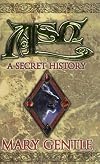
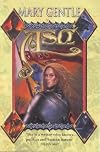
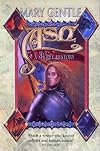
In a world not unlike fiteenth century mediaeval Europe . . . For the beautiful young woman Ash, life has always been arquebuses and artillery, swords and armour and the true horrors of hand-to-hand combat. War is her job. She has fought her way to the command of a mercenary company, and on her unlikely shoulders lies the destiny of a Europe threatened by the depredations of an Infidel army more terrible than any nightmare. Ash is guided by voices. They may come from her God, or from a show more source infinitely stranger . . . ASH: A SECRET HISTORY marks the full-flowering of the talent of one of the world¿s most acclaimed writers of fantasy. show lessTags
Recommendations







Member Recommendations
Member Reviews
When people ask the dreaded 'what's your favourite book question', this is one of my stand-by answers. And it's not just a throw-away line because it honestly is. I don't usually go for historical fiction but this alternate-history/fantasy-history grabbed me and compelled me the entire way through. I'd only read one other Mary Gentle novel, Grunts, before this, and this was both so different and contained the things that made me enjoy that book. Ash is a fantastic character and not just because it's wonderful to read about a literal strong female character.
My three major issues fall under one umbrella: believability—which is not the same as realism. Obviously The Black Company is totally unrealistic, yet I believed every word of it.
One: the prose. Again! In short: Mary Gentle is no Ada Palmer. 15th-century (auto)biographies simply do not read like the text Gentle serves us – not even in the rough first draft of an English translation – as the frame story frames a big part of the novel. Okay, the scholar – historian Pierce Ratcliff – admits that he is quite liberal in the way he translates the Latin text, but even so, the alteration of dialogue, internal thoughts and third person perspective is a form that did not exist in the 15th century, and not one that a translator would be show more able to concoct on the fly. That form begins to appear at the end of the 18th century, and only reaches its full-fledged version with Jane Austen in the early 19th – the version Gentle anachronistically uses for Ash.
This is not a trivial matter: most of Ash’s detailed thoughts would have basically been invented by the translator, and as such have no scientific value – even though Ratcliff has clear scientific ambitions with his translations.
So, for all the research about medieval cannons and armor, Gentle could have upped her ante, and done some research into her own craft: writing. That might have made the novel harder to read, but more conceptually sound. A lesser alternative could have been an explicit reference – in the form of elaborate translator’s notes for instance – to a huge modernization of the text, coupled with a different backstory for the second manuscript, one that would have granted a realistic time frame for the stylistic transformation.
Two: Ratcliff, the scientist, acts like a gullible, whiny child. It’s more than a matter of prose, or the way he writes his emails: his psychological profile and scientific rigor simply doesn’t fit an experienced, serious late 20th, early 21st-century historian. Anna Longman, his editor, also acts far too gullible about certain aspects of the narrative, aspects that have extremely profound implications for human reality. As both are foundational characters, Gentle’s choices for them basically destroy any realistic scaffolding of her framing device. I think this issue could have been fixed, but not without a higher page count.
Three: the overall scientific foundations. Is Ash science fiction, or simply science fantasy in a lab coat?
(...)
Full review on Weighing A Pig show less
One: the prose. Again! In short: Mary Gentle is no Ada Palmer. 15th-century (auto)biographies simply do not read like the text Gentle serves us – not even in the rough first draft of an English translation – as the frame story frames a big part of the novel. Okay, the scholar – historian Pierce Ratcliff – admits that he is quite liberal in the way he translates the Latin text, but even so, the alteration of dialogue, internal thoughts and third person perspective is a form that did not exist in the 15th century, and not one that a translator would be show more able to concoct on the fly. That form begins to appear at the end of the 18th century, and only reaches its full-fledged version with Jane Austen in the early 19th – the version Gentle anachronistically uses for Ash.
This is not a trivial matter: most of Ash’s detailed thoughts would have basically been invented by the translator, and as such have no scientific value – even though Ratcliff has clear scientific ambitions with his translations.
So, for all the research about medieval cannons and armor, Gentle could have upped her ante, and done some research into her own craft: writing. That might have made the novel harder to read, but more conceptually sound. A lesser alternative could have been an explicit reference – in the form of elaborate translator’s notes for instance – to a huge modernization of the text, coupled with a different backstory for the second manuscript, one that would have granted a realistic time frame for the stylistic transformation.
Two: Ratcliff, the scientist, acts like a gullible, whiny child. It’s more than a matter of prose, or the way he writes his emails: his psychological profile and scientific rigor simply doesn’t fit an experienced, serious late 20th, early 21st-century historian. Anna Longman, his editor, also acts far too gullible about certain aspects of the narrative, aspects that have extremely profound implications for human reality. As both are foundational characters, Gentle’s choices for them basically destroy any realistic scaffolding of her framing device. I think this issue could have been fixed, but not without a higher page count.
Three: the overall scientific foundations. Is Ash science fiction, or simply science fantasy in a lab coat?
(...)
Full review on Weighing A Pig show less
Ms. Gentle's work is of high quality. This is definitely not by-the-yard trolls, dragons and Elves fantasy. It is a setting postulating that the Visigoths are still in possession of North Africa, and there is a very weird meteorological phenomenon dominating the south shore of the Mediterranean. But the changes all happened so long ago that there's very little artistic reason for any of this being on our earth. I guess it saved money on drawing a map of a made-up planet. So a curious failure in fantasy construction as far as I'm concerned.
Well this is truly great achievement. A staggeringly long work, but one well worth the read. Mary Gentle really brings out the grit and the clamour of late medieval combat (or is it early Renaissance?) The writing is wonderfully readable, no useful thing since there are over 1100 pages of it. The story is multi-layered and hugely entertaining. I did feel that some portions in the last quarter or so (during the siege) needed better editing. But all in all, this is one of the best fantasy novels I've read in a long while (though I suppose there is a strong case for classifying it as SF. Oh well, its still worth reading.)
https://nwhyte.livejournal.com/3564209.html
At first sight this appears to be set in the fifteenth century of our own era. Ash, a teenage mercenary commander, has taken strategic advice for years from voices in her head and as a result is one of the most successful mercenaries in Western Europe. But the near-future (ie early 2000's) researchers who are trying to compose a new biography gradually realise that her history is not their history, and the two realities begin to leach into each other. This book gave me very strange dreams when I first read it; my dreams have generally been strange this year so I didn't notice any difference this time. Admittedly the history and presentation are dodgy - I doubt that any of the female mercenary show more commanders of the fifteen century were still teenagers, and the whole thing is presented as a translation, complete with scholarly footnotes for difficult bits, from a manuscript which is not written in the style of any medieval text. I'm also a bit better informed about medieval Burgundy than I was twenty years ago, thanks to Van Loo and Dunnett. But in the end I love the intensity of description and the leakage between realities. It's awfully long, but I found myself thinking at one point, oh no, there's only 250 pages left to go. show less
At first sight this appears to be set in the fifteenth century of our own era. Ash, a teenage mercenary commander, has taken strategic advice for years from voices in her head and as a result is one of the most successful mercenaries in Western Europe. But the near-future (ie early 2000's) researchers who are trying to compose a new biography gradually realise that her history is not their history, and the two realities begin to leach into each other. This book gave me very strange dreams when I first read it; my dreams have generally been strange this year so I didn't notice any difference this time. Admittedly the history and presentation are dodgy - I doubt that any of the female mercenary show more commanders of the fifteen century were still teenagers, and the whole thing is presented as a translation, complete with scholarly footnotes for difficult bits, from a manuscript which is not written in the style of any medieval text. I'm also a bit better informed about medieval Burgundy than I was twenty years ago, thanks to Van Loo and Dunnett. But in the end I love the intensity of description and the leakage between realities. It's awfully long, but I found myself thinking at one point, oh no, there's only 250 pages left to go. show less
First things first, Ash is long: 1113 pages with small print and hardly any margin space. According to the publisher's website it is, "the largest single fantasy work ever--longer even than The Lord of the Rings." In fact, in the United States it was published as four separate volumes: A Secret History, Carthage Ascendant, The Wild Machines, and Lost Burgundy. While these are perhaps a little easier to handle, Ash really works best as single volume, which means a significant amount of time will need to be set aside to read it; this is not light reading!
Pierce Ratcliff is a medieval historian who is working on a new translation of the documents that recount the life of Ash, a nineteen year old mercenary captain. Outside of these show more documents, little is known about her. But, he has recently discovered a new text, perhaps written or dictated by Ash herself, that fills some gaps in her history. Ash consists of his translation of the texts (in which he chose to use modern colloquialisms, so "she does say 'Fuck' rather a lot."), and the correspondence between him and his publishing editor. Both story-lines are quite interesting. Not only are there mysteries surrounding Ash's life, there are mysteries surrounding the publication of Pierce's book as well.
As part of her research for the novel, Mary Gentle studied at Kings College and received a masters degree in War Studies. So, the detail and historical accuracy is incredible despite it being a fantasy or alternate history of sorts; her understanding of the time-period is apparent. This is not a sanitized fantasy world, this is brutally realistic dirty, gruesome day-to-day living of a mercenary company in the 1470s.
Ash is quite an achievement; there is a ton of quality to go along with the quantity of writing. The story and characters are complex; I did find it somewhat confusing at times, and I'm still not sure I understood the ending completely, but I really enjoyed the book regardless. The total immersion into such a realistically written world and cast of characters was fantastic making this novel one that I'll keep thinking about for awhile.
Experiments in Reading show less
Pierce Ratcliff is a medieval historian who is working on a new translation of the documents that recount the life of Ash, a nineteen year old mercenary captain. Outside of these show more documents, little is known about her. But, he has recently discovered a new text, perhaps written or dictated by Ash herself, that fills some gaps in her history. Ash consists of his translation of the texts (in which he chose to use modern colloquialisms, so "she does say 'Fuck' rather a lot."), and the correspondence between him and his publishing editor. Both story-lines are quite interesting. Not only are there mysteries surrounding Ash's life, there are mysteries surrounding the publication of Pierce's book as well.
As part of her research for the novel, Mary Gentle studied at Kings College and received a masters degree in War Studies. So, the detail and historical accuracy is incredible despite it being a fantasy or alternate history of sorts; her understanding of the time-period is apparent. This is not a sanitized fantasy world, this is brutally realistic dirty, gruesome day-to-day living of a mercenary company in the 1470s.
Ash is quite an achievement; there is a ton of quality to go along with the quantity of writing. The story and characters are complex; I did find it somewhat confusing at times, and I'm still not sure I understood the ending completely, but I really enjoyed the book regardless. The total immersion into such a realistically written world and cast of characters was fantastic making this novel one that I'll keep thinking about for awhile.
Experiments in Reading show less
The narrative is well constructed - you go from an historical novel to an epic fantastic/fantasy and science-fiction tale, without noticing, which is surprising. Ash's life starts in medieval Burgundy, then grows up to fight battles against many enemies. However, in the course of these battles, she discovers many secrets, which will have repercussions until now, the modern world. Then we learn that golems are real and that Ash carries a secret that could change the face of the world. I liked the first part best, as I like well-rounded historical stories, then I read on and, as the story developped, I was surprised by the cryptic clues and how they all merged to form some fantastic tale. The ending was unexpected, but it doesn't detract show more from the book as a whole. I enjoyed this big book (it is a door-stopper), it changed quite a bit from my usual readings, and if you fancy strong female characters, this book is for you! show less
Members
- Recently Added By
Lists

Best Fantasy Novels
821 works; 361 members

Best Alternate History
111 works; 60 members

Favorite Science Fiction by Women Authors
741 works; 203 members

Epic fantasy by female authors
47 works; 7 members

Female Protagonist
1,056 works; 57 members

Books with Twins
175 works; 12 members

Arthur C. Clarke Award Winners and Shortlisted Books
219 works; 14 members

Fiction with Women's Names in the Title
378 works; 15 members

Genre Benders: Historical Speculative Fiction
22 works; 7 members

Stories of War and Revolution
146 works; 55 members
Books We'd Want on a Desert Island
204 works; 133 members

Books I Read Before The Invention Of The Internet.
144 works; 1 member
Books We Couldn't Put Down
443 works; 197 members

Books We Want To Read Again For The First Time
384 works; 160 members
Author Information

61+ Works 7,584 Members
Some Editions
Awards and Honors
Awards
Distinctions
Series

Belongs to Publisher Series
Work Relationships
Common Knowledge
- Original publication date
- 1999
- People/Characters
- Ash, the Lion Azure; Onorata Rodiani; Florian del Guiz ; Charles the Bold, Duke of Burgundy; Pierce Ratcliff
- Important places
- Carthage, Tunis, Tunisia; Dijon, Côte-d'Or, Bourgogne-Franche-Comté, France
- Epigraph
- "My soul is among lions."
Psalms 57:4 - Dedication
- For Richard
- First words
- It was her scars that made her beautiful.
- Disambiguation notice
- Ash: A Secret History was published in the United States as four separate volumes: A Secret History, Carthage Ascendant, The Wild Machines, and Lost Burgundy.
PLEASE do not combine wi... (show all)th A Secret History: The Book of Ash #1--these are not the same books!
Classifications
Statistics
- Members
- 748
- Popularity
- 37,831
- Reviews
- 19
- Rating
- (3.99)
- Languages
- English
- Media
- Paper, Ebook
- ISBNs
- 6
- ASINs
- 4