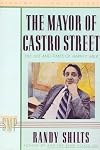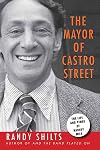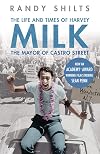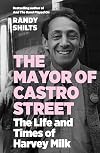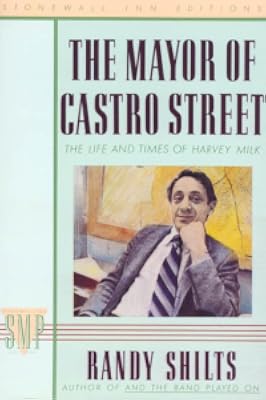
The Mayor of Castro Street: The Life and Times of Harvey Milk
by Randy Shilts
On This Page
Description
A biography of Harvey Milk, the first openly gay city official in the nation, recounts his public and personal life, and examines the emergence of the San Francisco gay community as a social and political force.Tags
Recommendations








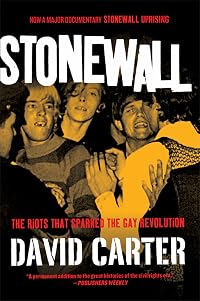

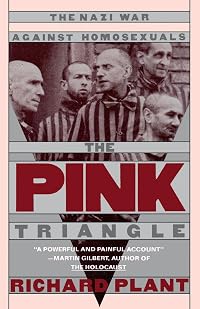



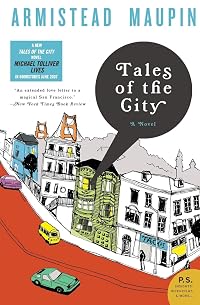
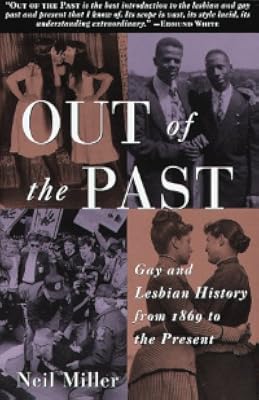


Member Recommendations
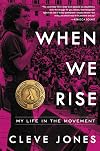
Kiddboyblue Cleve Jones was Harvey Milk's prodigy and in many ways took up the mantle for Milk after his death.
Member Reviews
What a different (but same) time we live in. We have moved beyond having a Director of the Coors Beer Boycott and yet, yet, yet we still persecute (and prosecute) those different from us. Haven't we learned anything? But I digress.
Shilts portrayed Harvey Milk as ambitious to a fault. Using a plethora of sources he was able to bring Milk to life, covering extensively both his political and private life. Milk would stoop to incredible lows to create controversy and promote his agenda in the name of the homosexual lifestyle. The betrayal of Bill Sipple's privacy being just one example. What struck me the most was how Milk knew all along he would die by a bullet to the brain. His ambition was so great that even the fear of assassination show more couldn't stop him from fighting for the underdog. He knew how to connect with his Castro Street constituents and collect lovers for a lifetime. Ever the consummate reporter, Shilts turned over every rock to find the detailed story of Milk's life. Shilts interviewed over one hundred and forty people and poured over thousands of documents for his biography of Harvey Milk. He even sought the audience of Dan White and his attorneys to offer another perspective of the Castro Street Mayor's tragic end. It is too bad he was unsuccessful. show less
Shilts portrayed Harvey Milk as ambitious to a fault. Using a plethora of sources he was able to bring Milk to life, covering extensively both his political and private life. Milk would stoop to incredible lows to create controversy and promote his agenda in the name of the homosexual lifestyle. The betrayal of Bill Sipple's privacy being just one example. What struck me the most was how Milk knew all along he would die by a bullet to the brain. His ambition was so great that even the fear of assassination show more couldn't stop him from fighting for the underdog. He knew how to connect with his Castro Street constituents and collect lovers for a lifetime. Ever the consummate reporter, Shilts turned over every rock to find the detailed story of Milk's life. Shilts interviewed over one hundred and forty people and poured over thousands of documents for his biography of Harvey Milk. He even sought the audience of Dan White and his attorneys to offer another perspective of the Castro Street Mayor's tragic end. It is too bad he was unsuccessful. show less
I re-read this book for a book group. Originally, I read it in the 1980s, and it shaped my perspective on the gay rights movement and the development of urban safe spaces for LGBT people. Often, books do not hold up when I reread them, but this one did. It reminded me of Randy Shilts' remarkable decade of incredible productivity, which included And the Band Played On (his chronicle of the AIDS epidemic) and Conduct Unbecoming (his exploration of the gay people serving in the U.S. military, which came well before the ultimate changes during President Obama's first term). And thus, it reminded me of the loss of Shilts and an entire generation of other creative people.
It's a satisfying read and the story of a city in a particular time. show more That San Francisco is long gone now, not only because so many of the people who lived in the Castro perished from AIDS, but also because that city experienced gentrification to such an extreme degree. Harvey Milk was the kind of person who moved to San Francisco in the 1970s but who could never afford to live there now. People with normal jobs and middle class income levels can't afford San Franscisco any more.
The developments of the 1970s changed the city for the better, and it remains a special place. Along with David Talbot's Season of the Witch, The Mayor of Castro Street is an essential book for understanding how that happened. show less
It's a satisfying read and the story of a city in a particular time. show more That San Francisco is long gone now, not only because so many of the people who lived in the Castro perished from AIDS, but also because that city experienced gentrification to such an extreme degree. Harvey Milk was the kind of person who moved to San Francisco in the 1970s but who could never afford to live there now. People with normal jobs and middle class income levels can't afford San Franscisco any more.
The developments of the 1970s changed the city for the better, and it remains a special place. Along with David Talbot's Season of the Witch, The Mayor of Castro Street is an essential book for understanding how that happened. show less
What I was hoping for was a glimpse into the life and times of Harvey Milk, but what I ended up getting from this biography was so much more. Shilts not only shines a light on Milk, he digs deeper in the history of San Fransisco, Castro Street, the Gay Movement and the people with whom Harvey surrounded himself. There was so much information packed into this biography, it ended up feeling more like a history book, which I loved!
Shilt's background as an investigative journalist really helped shape the book to be more of a journalistic approach to Harvey's life, rather than a biased or emotional one. While Shilts did know Harvey personally, he still ensured he approached this work with an eye for facts and information far more then show more opinions and feelings. This approach both added to and took away from the overall narrative for me. In one aspect the unbiased narrative allowed for a more honest look into Milk's life, attitude, and personality. He did not try and shine Harvey in a perfect light, painting him as a saint or un-flawed, but rather tried to allow for the reader to see Harvey as a human being who fought for a cause, but was in his own was flawed. Too often we can raise marters up onto pedastools and create a perfect image of them, that is far from the real people they were. This was not the case, and I felt like Shilt's did Milk's story justice in this way.
Where it distracted for me was in the emotional aspect. The weight and emotional toll of some of the events told in the history felt less due to the delivery of the facts. My personal connection to them somehow seemed less because there seemed little emotion in the writing of the events. I would have loved to feel more.
Even without that emotional weight, Harvey Milk's life sunk into me, and I fell in love with him even more. I fell in love with his ideals, his passion, his spirit, his drive, his politics, and his unwavering stance on gay rights. I needed to read this biography, and so does any gay man or woman, or LGBT ally, so we can know more about the man who helped push the Gay rights movement forward perhaps more than any other man or woman ever. show less
Shilt's background as an investigative journalist really helped shape the book to be more of a journalistic approach to Harvey's life, rather than a biased or emotional one. While Shilts did know Harvey personally, he still ensured he approached this work with an eye for facts and information far more then show more opinions and feelings. This approach both added to and took away from the overall narrative for me. In one aspect the unbiased narrative allowed for a more honest look into Milk's life, attitude, and personality. He did not try and shine Harvey in a perfect light, painting him as a saint or un-flawed, but rather tried to allow for the reader to see Harvey as a human being who fought for a cause, but was in his own was flawed. Too often we can raise marters up onto pedastools and create a perfect image of them, that is far from the real people they were. This was not the case, and I felt like Shilt's did Milk's story justice in this way.
Where it distracted for me was in the emotional aspect. The weight and emotional toll of some of the events told in the history felt less due to the delivery of the facts. My personal connection to them somehow seemed less because there seemed little emotion in the writing of the events. I would have loved to feel more.
Even without that emotional weight, Harvey Milk's life sunk into me, and I fell in love with him even more. I fell in love with his ideals, his passion, his spirit, his drive, his politics, and his unwavering stance on gay rights. I needed to read this biography, and so does any gay man or woman, or LGBT ally, so we can know more about the man who helped push the Gay rights movement forward perhaps more than any other man or woman ever. show less
4.5 stars. Oh so close to perfect.
Full of strong reporting, both of Milk's life, his time in politics and the city of San Francisco's rise to prominence in the LGBT community, Shilts does a wonderful job of balancing the man Harvey Milk and the icon he became to the movement. As much as I love Gus Van Sant's biopic (it's what spurred me to re-read this book) it doesn't quite capture how multi-faceted a man Milk was. He was media savvy, often hot headed and spontaneous and extremely passionate to the point of pig-headedness. He was also determined, caring and very funny. The movie also captures Harvey's sense of hope that things would get better, something that's particularly poignant in these days of Dan Savage's campaign. Shilts's show more book is a very accessible read and a must read for anyone interested in politics of LGBTQ movement. It is a very male-centric read though, something that was more evident to me upon re-reading. show less
Full of strong reporting, both of Milk's life, his time in politics and the city of San Francisco's rise to prominence in the LGBT community, Shilts does a wonderful job of balancing the man Harvey Milk and the icon he became to the movement. As much as I love Gus Van Sant's biopic (it's what spurred me to re-read this book) it doesn't quite capture how multi-faceted a man Milk was. He was media savvy, often hot headed and spontaneous and extremely passionate to the point of pig-headedness. He was also determined, caring and very funny. The movie also captures Harvey's sense of hope that things would get better, something that's particularly poignant in these days of Dan Savage's campaign. Shilts's show more book is a very accessible read and a must read for anyone interested in politics of LGBTQ movement. It is a very male-centric read though, something that was more evident to me upon re-reading. show less
Where do I start in talking about this book? There is so much to discuss, but I will limit myself. First, this is nominally a biography of Harvey Milk, and it does a fine job of it, but it is also, equally, a history of the gay rights movement and a history of San Francisco politics. For those tasks, the author does just as well, sometimes not even mentioning Harvey Milk for entire chapters. For the first fifteen chapters, the book sets the stage for reaching what the majority of people know about Harvey Milk, namely his death and the trial of his killer. While that early part of the book is very good and well worth reading in its own right, the remaining chapters are some of the best and most interesting reporting I have ever written, show more being all the more vivid because of the foundation that the author laid down earlier. I highly suspect that there is detail included of which even San Franciscans of the time are not aware. The author says as much at the end of his book. There was much to surprise me about Milk and about San Francisco politics. I have been concurrently reading yet another book about the segregationist American Deep South, a period of time in which whites were seldom arrested and very rarely convicted of crimes against blacks. This book provides ample evidence that gays have suffered a similar fate. In fact, I am certain that there are those who will believe this entire book is mere fiction, inspired by, if not actually written by the devil. Rational people will know otherwise. show less
I read this for Pride month. A moving, powerful story that details the contradictions of one man's life, his flaws, but especially his heroism. The book is also a portrait of the times he lived in, and I was astounded to learn about the dark corners of the world I grew up in (I was in high school when Harvey Milk was assassinated). I can't recommend this book more highly. Read it!
Living today in a world where I have openly gay friends and relatives, and where the national debate is on same sex marriage, it was amazing to me to see how far LGBT progress has come within my lifetime. Harvey Milk is portrayed as a man obsessively devoted to his cause, which in the broadest definition, was gay rights. Shilts portrays Milk as a man with the potential for greatness, hampered by his own weaknesses. Nonetheless, Harvey Milk probably had the potential to become a truly great politician (meaning that as a rare complment, not as an oxymoron) had is life not been cut short so tragically.
Members
- Recently Added By
Lists

LGBTQ Memoir/Biography
52 works; 4 members

LGBTQIA+ TBR
33 works; 1 member
The Best LGBTQ Nonfiction
159 works; 68 members
Author Information

10+ Works 5,019 Members
Some Editions
Series
Belongs to Publisher Series
Common Knowledge
- Canonical title
- The Mayor of Castro Street: The Life and Times of Harvey Milk
- People/Characters
- Harvey Milk; Dianne Feinstein; Cleve Jones
- Important places
- San Francisco, California, USA
- Dedication
- For Bud and Norma Shilts, my mom and dad
Classifications
- Genres
- Nonfiction, LGBTQ+, Biography & Memoir, General Nonfiction, History, Sexuality and Gender Studies
- DDC/MDS
- 979.4 — History & geography History of North America Great Basin and Pacific Slope region of United States California
- LCC
- F869 .S353 .M547 — Local History of the United States, Canada and Latin America United States local history California
- BISAC
Statistics
- Members
- 867
- Popularity
- 31,359
- Reviews
- 20
- Rating
- (4.17)
- Languages
- English, French, German
- Media
- Paper, Audiobook, Ebook
- ISBNs
- 15
- ASINs
- 5