
In the Beginning
by Chaim Potok
On This Page
Description
“Powerful . . . It successfully recreates a time and place and the journey of a soul.”—The New York TimesAll beginnings are hard—that is the lesson David Lurie learns early and painfully in his life. As a boy in the depression-shadowed Bronx, he must begin to hold his own against neighborhood bullies and the treacherous frailties of his own health. As a young man in a world menaced by a distant, horrifying war, he must begin once more—this time to define a resolute path of show more personal belief that departs boldly from the tradition of his teachers and his own father, a courageous defender of their people.
Learning how to remember his past as he nourishes the future, David struggles to complete his first long journey into ancient beginnings.
“A major work in every sense.”—Pittsburgh Press. show less
Tags
Recommendations











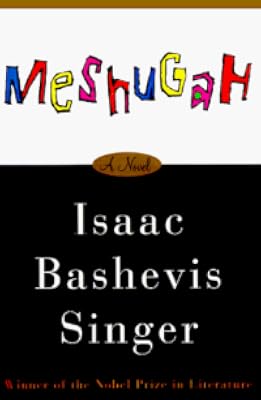
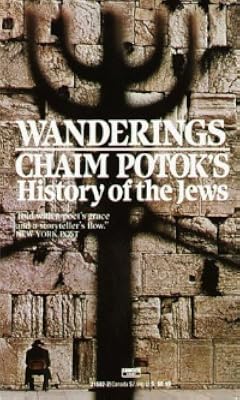
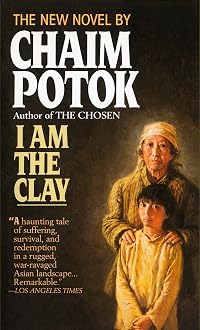



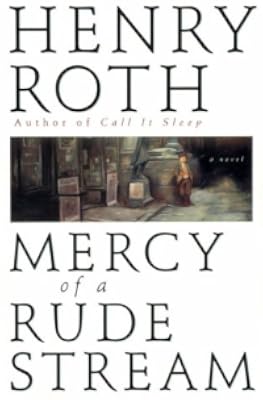





Member Recommendations
Member Reviews
Last read a Chaim Potok book aged 14...43 years on I read another and it's FABULOUS writing, up there with Roth's 'Radetzky March' as my best reads of the year.
This is an impression of the Jewish experience of the early 20th century...but not from a European perspective. The young narrator is living a relatively OK life in New York. But the whole book is filled with a sense of menace, as the child encounters snatches of adult conversation; a photo of his father and friends in a Polish forest with guns; mother fearing for her family back in Poland and the anguish as their efforts to persuade them to leave are rebuffed; the narrator's uncle and namesake who was killed in a pogrom...and closer to home, casual racist bullying, the show more Depression which impacts on the community's ability to help their compatriots. And the fearful news from Europe...
David Lurie is the sickly but academically brilliant son of Polish Jewish emigres. His father helps run an organisation dedicated to helping Polish Jews start a new life in the States. But the family history forms a big part of the child's experience: the frequent family trips to the wooded Bronx zoo overlay the images of the Jewish resistance in the Polish forest; and as his search for religious truth lead him to a secular university rather than the yeshiva, a sense of betraying his roots...
Utterly brilliant writing, 100% recommended! show less
This is an impression of the Jewish experience of the early 20th century...but not from a European perspective. The young narrator is living a relatively OK life in New York. But the whole book is filled with a sense of menace, as the child encounters snatches of adult conversation; a photo of his father and friends in a Polish forest with guns; mother fearing for her family back in Poland and the anguish as their efforts to persuade them to leave are rebuffed; the narrator's uncle and namesake who was killed in a pogrom...and closer to home, casual racist bullying, the show more Depression which impacts on the community's ability to help their compatriots. And the fearful news from Europe...
David Lurie is the sickly but academically brilliant son of Polish Jewish emigres. His father helps run an organisation dedicated to helping Polish Jews start a new life in the States. But the family history forms a big part of the child's experience: the frequent family trips to the wooded Bronx zoo overlay the images of the Jewish resistance in the Polish forest; and as his search for religious truth lead him to a secular university rather than the yeshiva, a sense of betraying his roots...
Utterly brilliant writing, 100% recommended! show less
Young David Lurie’s life is dominated by accidents in which he is both an unwitting participant and helpless victim. When bringing him home from the hospital, him mother tripped on the front steps to their apartment and fell, with the infant David in her arms; the left side of his face and his nose hit the pavement. A doctor’s examination showed nothing wrong, but unseen was damage to the nasal septum; as a result of this accident, David spent his childhood constantly ill, and grew up fragile. Trying to protect his baby brother’s carriage from the unwelcome attentions of a neighbor’s dog, David shooed the dog away--who promptly ran into the street, was hit by a car, and killed. The dog’s owner blamed David. On his tricycle, he show more accidentally ran over the hand of an anti-Semitic neighborhood bully,who harassed and frightened David for years. The Great Depression nearly destroyed his father, a man of action who had fought in the Polish Army in World War I, and dedicated his life to bringing Jews out of Europe into the U.S.
But the greatest accident of all was the Holocaust. No one--not David, not his grim father, not his uncle nor any of his friends--can even begin to imagine the mentality that would bring about such a catastrophe. As a result, anything German became taboo.
For David, who, although in fragile health, is a genius, this presents major difficulties. He has become interested in studying the Bible, not just the Torah, which is bad enough in his Orthodox Jewish community; it means reading questionable sources--Jews who, in Orthodox thought, are more like goy. Worst of all, it means reading German scholars; even if they are Jewish, David is surrounded by hostility from members of his yeshiva. David, aided by the greatest Talmudic scholar alive, is forced to choose between the heritage he loves and his passion for learning and understanding.
Chaim Potok, in his finest books, always writes about the conflict between the secular world and that of Orthodox Jewry. He writes about it with the most obvious love for his Orthodox heritage, but with enormous empathy for those in conflict. Whatever the resolution, it isn’t easy for his protagonist and always comes at great cost.
Potock not only is a master storyteller, but he is also a superb writer. Outside of a few words that anyone of my generation heard while growing up on the East Coast of the U.S., I have never heard Yiddish spoken. Potok narates his main story line and conversations with short, simple declarative sentences that have a sort of sing-song (the best way I can describe it) rhythm; I have no doubt that it imitates spoken Yiddish.
But David is someone who loves nature, finds comfort in the zoo and the parks. When Potok describes these scenes and David’s reactions, his prose becomes lyrical; his sentences are complex and filled with the wonder and delight that David feels when he feeds the zoo’s billy goat or is walking along a path in the park to a picnic area. David also dreams, and many are nightmares; then the prose is composed of long run-on sentences, clauses strung together by the conjunction “and” and darkly stunning in their descriptive power.
Potok moves easily with the skill of a master writer among these three styles, weaving a story that is both moving and thought-provoking. His stories are never simple, but they do reveal a world that is mostly hidden from the gentile view, one that is never filled by stereotypical characters but by real people who come from a revered and precious tradition and who must make their way in a secular world. In sum, a powerful book, beautifully written. Highly recommended. show less
But the greatest accident of all was the Holocaust. No one--not David, not his grim father, not his uncle nor any of his friends--can even begin to imagine the mentality that would bring about such a catastrophe. As a result, anything German became taboo.
For David, who, although in fragile health, is a genius, this presents major difficulties. He has become interested in studying the Bible, not just the Torah, which is bad enough in his Orthodox Jewish community; it means reading questionable sources--Jews who, in Orthodox thought, are more like goy. Worst of all, it means reading German scholars; even if they are Jewish, David is surrounded by hostility from members of his yeshiva. David, aided by the greatest Talmudic scholar alive, is forced to choose between the heritage he loves and his passion for learning and understanding.
Chaim Potok, in his finest books, always writes about the conflict between the secular world and that of Orthodox Jewry. He writes about it with the most obvious love for his Orthodox heritage, but with enormous empathy for those in conflict. Whatever the resolution, it isn’t easy for his protagonist and always comes at great cost.
Potock not only is a master storyteller, but he is also a superb writer. Outside of a few words that anyone of my generation heard while growing up on the East Coast of the U.S., I have never heard Yiddish spoken. Potok narates his main story line and conversations with short, simple declarative sentences that have a sort of sing-song (the best way I can describe it) rhythm; I have no doubt that it imitates spoken Yiddish.
But David is someone who loves nature, finds comfort in the zoo and the parks. When Potok describes these scenes and David’s reactions, his prose becomes lyrical; his sentences are complex and filled with the wonder and delight that David feels when he feeds the zoo’s billy goat or is walking along a path in the park to a picnic area. David also dreams, and many are nightmares; then the prose is composed of long run-on sentences, clauses strung together by the conjunction “and” and darkly stunning in their descriptive power.
Potok moves easily with the skill of a master writer among these three styles, weaving a story that is both moving and thought-provoking. His stories are never simple, but they do reveal a world that is mostly hidden from the gentile view, one that is never filled by stereotypical characters but by real people who come from a revered and precious tradition and who must make their way in a secular world. In sum, a powerful book, beautifully written. Highly recommended. show less
There is truth to this book of a sort one doesn't often find in literature: truth to oneself as a creator, mated with truth to one's traditions, even when the two find themselves in apparent opposition to one another.
The novel offers the story of a young Jewish man's coming-of-age, from a boyish six through to his 23rd year, in which he finally leaves his parents' Bronx apartment to pursue an education elsewhere.
As he grows he grows in wisdom, educated by life about death, duty, hatred, tradition. "We each have a job to do," his father is fond of saying, yet it takes our hero David Lurie a very long time to determine just what his own job may be. His cousin's path is a sure one, just as has been his mother's, his father's, his uncle's, show more each way dictated by custom, by family, by law. His own path is a trickier one, and only through nearly constant and literally feverish introspection is he able to find it and to find the courage to pursue it.
This book is a magnificent one, rich in detail, alive with the simple observational brilliance that make Potok such an exceptional author. show less
The novel offers the story of a young Jewish man's coming-of-age, from a boyish six through to his 23rd year, in which he finally leaves his parents' Bronx apartment to pursue an education elsewhere.
As he grows he grows in wisdom, educated by life about death, duty, hatred, tradition. "We each have a job to do," his father is fond of saying, yet it takes our hero David Lurie a very long time to determine just what his own job may be. His cousin's path is a sure one, just as has been his mother's, his father's, his uncle's, show more each way dictated by custom, by family, by law. His own path is a trickier one, and only through nearly constant and literally feverish introspection is he able to find it and to find the courage to pursue it.
This book is a magnificent one, rich in detail, alive with the simple observational brilliance that make Potok such an exceptional author. show less
This superbly written novel of the intellectual-and emotional awakening of young David Lurie brings to glowing reality the rich texture of Jewish family life in America, from the Twenties through the shadows of the Depression and World War II.
Even those too young to have lived it will know
how was, For the rest, it will recapture an un•
forgettable moment of the past with breathtaking
immediacy.
Even those too young to have lived it will know
how was, For the rest, it will recapture an un•
forgettable moment of the past with breathtaking
immediacy.
A moving story about the life of David Lurie, a Jewish boy growing up in New York. Due to an accident suffered as an infant, chronic illness often confines David to his bed which leads to an over-active imagination and a love for reading. As his family survives the great depression, racism, then the loss of their family to Hitler's camps, David becomes a renowned scholar of the Jewish faith. I probably would have liked the book more without having to wade through the tedious religious debates throughout the book, but the writing is beautiful and thought-provoking.
5592. In the Beginning, by Chaim Potok (read 4 Nov 2018) This 1975 novel is a powerful story of Jewish life and belief in Depression and wartime New York. The story begins in 1929 when David Lurie is 6 years old. The years of his early childhood in the Bronx are told at considerable length in the first person. His parents came to the U.S. after the war, they go through the Depression and recover therefrom. Their effort to persuade David's grandparents to leave Europe are unsuccessful The book closes with overpowering poignancy as David is studying to be a rabbi and word comes after the war in Europe ends and the fate of the family members in Europe is learned. There is much discussion of Jewish religion and learning which is expertly show more portrayed and which does explain the intellectual hurdles facing David and his relatives and which I found gripping and absorbing. The book is a masterpiece and fully lives up to what I expected from Potok, this being the fourth novel by him which I have read. show less
One feels intensely for the personal anguish suffered by the members of the Lurie family, from when Davey was 6 and playing marbles on the sidewalk outside his family's Bronx home around 1928 through when he departs for college in Chicago after the end of WW2.
Yes there were good times, and joyous ones, for David Lurie and his brother Alex and family as they traverse both the Great Depression and the tragedy which claimed the lives of members of their extended family in Poland, but the overall feel of Potok's novel is one of separation, anxiety, and culture disassociation as they strove to maintain their religious sensitivities within a larger world.
Yes there were good times, and joyous ones, for David Lurie and his brother Alex and family as they traverse both the Great Depression and the tragedy which claimed the lives of members of their extended family in Poland, but the overall feel of Potok's novel is one of separation, anxiety, and culture disassociation as they strove to maintain their religious sensitivities within a larger world.
Members
- Recently Added By
Lists

Favourite Books
1,820 works; 316 members

Top Five Books of 2018
802 works; 265 members
Author Information

36+ Works 24,741 Members
Chaim Potok was born in New York City in 1929. He graduated summa cum laude (with highest honors) from Yeshiva University in 1950, and received an advanced degree from Jewish Theological Seminary in 1954, when he also became an ordained Conservative rabbi. After two years of military service as a chaplain in Korea, Potok married Adena Sarah show more Mosevitsky in 1958. The couple had three children. Eventually Potok returned to school and received his Ph.D. from the University of Pennsylvania in 1965. Potok has held a variety of positions within the Jewish community, including directing a camp in Los Angeles, teaching at the University of Judaism in Los Angeles at a Jewish Theological Seminary in New York, and working as an editor on various religious publications, Potok's first novel, The Chosen, was published in 1967, and he quickly won acclaim for this best-selling book about tensions within the Orthodox and Hasidic Jewish communities. This and later books have been both critically and popularly successful. Many of them explore the meaning of Judaism in the modern era, focusing on the conflict between traditional teachings and the pressures of modern life. The Chosen was nominated for a National Book Award in 1967 and made into a successful film in 1982. Its sequel, The Promise (1969) was the winner of an Athenaeum Award. Potok is also the author of a nonfiction volume, Wanderings: Chaim Potok's History of the Jews (1978), as well as several short stories and articles that have been published in both religious and secular magazines. (Bowker Author Biography) show less
Awards and Honors
Awards
Distinctions
Work Relationships
Is contained in
Common Knowledge
- Original publication date
- 1975
- People/Characters
- David Lurie; Saul Lurie
- Important places
- Manhattan, New York, USA
- Dedication
- To
ADENA
my wife
and to
ROBERT GOTTLIEB
my editor and friend - First words
- Alle begin is moeilijk.
All beginnings are hard. - Quotations
- I liked parks. I had the world visible to me while I read. It was important to have it visible so you could see how your reading changed it.
- Last words
- (Click to show. Warning: May contain spoilers.)Toen wandelde ik tussen de graven door terug naar de auto en reed weg.
(Click to show. Warning: May contain spoilers.)Then I walked back between the graves to the car and drove away. - Original language
- English
Classifications
Statistics
- Members
- 1,325
- Popularity
- 18,279
- Reviews
- 21
- Rating
- (3.91)
- Languages
- 6 — Dutch, English, French, German, Hungarian, Italian
- Media
- Paper, Ebook
- ISBNs
- 26
- ASINs
- 14