Bruges-la-Morte
by Georges Rodenbach
On This Page
Description
"Bruges-La-Morte, which first appeared in 1892, concerns the fate of Hugues Viane, a widower who has turned to the melancholy, decaying city of Bruges as the ideal location in which to mourn his wife and as a suitable haven for the narcissistic perambulations of his inexorably disturbed spirit. Bruges, the 'dead city', becomes the image of his dead wife and thus allows him to endure the unbearable loss by systematically following its mournful labyrinth of streets and canals in a cyclical show more promenade of reflection and allusion. The story itself centres around Hugues' obsession with a young dancer whom he believes is the double of his beloved wife." "This is a poet's novel and is therefore metaphorically dense and visionary in style. It is the ultimate evocation of Rodenbach's lifelong love affair with the enduring mystery and haunting mortuary atmosphere of Bruges."--Jacket. show lessTags
Recommendations













Member Recommendations
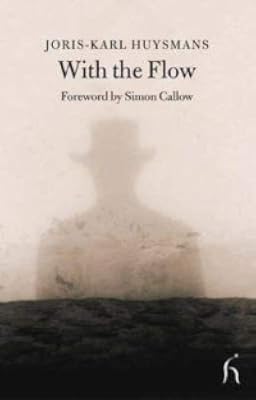
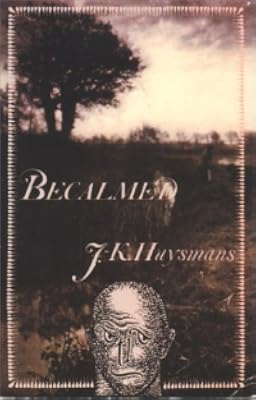
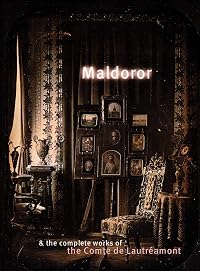
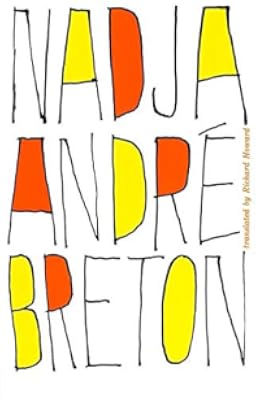
fugitive Another book about death that takes place in a city with canals.
Member Reviews
Bruges-la-Morte is Rodenbach's short and highly influential symbolist novel, and as with the movement in general it lives mostly on its poetic and rich prose - the evocation of the city of Bruges is almost a kind of perverse declaration of love as Rodenbach uses the sleepy, decaying city as a character in itself, imbuing tragedy into the futile and tragic fate of Hugues, a widower unable to move on from his deceased wife until he finds her likeness in another woman - with unforeseen and disastrous consequences. The constant relationship of doubles - Hugues as a kind of dead, immobile entity and the equally dead and unchanging city, the living woman embodied as sordid reality vs the deceased woman as perfected ideal, are all played to show more the fullest extent and give rich meaning to the fluctuations of desire, despair and yes, death (the references to "la mort/e" in this novella are omnipresent and the gloom of the city is never fully allowed to dissipate for even a moment). Very painful and sad but very good.
______
A difficult read as Rodenbach's prose is some of the most complex and flowery I've encountered yet in French - my dictionary wasn't of help with a lot of the more convoluted turns of phrase here either but I didn't feel I was deprived of too much compared to if I were reading a translation. Challenging and probably not a good idea to binge in a day (though I did anyway) show less
______
A difficult read as Rodenbach's prose is some of the most complex and flowery I've encountered yet in French - my dictionary wasn't of help with a lot of the more convoluted turns of phrase here either but I didn't feel I was deprived of too much compared to if I were reading a translation. Challenging and probably not a good idea to binge in a day (though I did anyway) show less
This book truly is perhaps the most archetypal possible example of fin de siecle literature, for both better and worse. On one hand it's unique, evocative, and textured. On the other it's dull, melodramatic to a near-comical level, and deeply misogynist. Ultimately, while I'm glad I read this as someone interested in this era of literature, I don't think it's nearly as gripping as, for instance, Marcel Schwob or Rachilde. Most dammingly, perhaps, is that while this book makes a big deal of Bruges as the central character, it doesn't feel like it does much interesting with that. Like yes, the city is grey and mirrors Hugues' despair. And that's kind as far as it goes, described in different ways, forever. Interesting for folks who care show more about this literary scene, but there are more interesting books from it. show less
"Dedalus should be treasured: a small independent publisher that regularly produces works of European genius at which the behemoths wouldn't sniff. If the corporations did care to look at this new work, they would find, on the surface, a precursor to W G Sebald, a Symbolist vision of the city that lays the way for Aragon and Joyce, and a macabre story of obsessive love and transfiguring horror that is midway between Robert Browning and Tod Browning. Bruges, "an amalgam of greyish drowsiness", is the setting and spur; Hugues is a widower who finds a dancer nearly identical to his lost love. "Nearly" is here the operative word. This is a little masterpiece, from a brave publisher. If only Scotland could boast the same." S.B.Kelly in show more Scotland on Sunday show less
Hugues Viane has retired to Bruges after the death of his wife of ten years; five years later, he is still unable to put her memory to rest. Indeed, he has sequestered himself in his home, erecting a shrine to his wife; in this room are gathered her portraits and various objects and trinkets, along with a tress of her hair which Viane has placed inside a glass box. Each day he caresses and kisses each item, and by night he takes to the meandering the streets of Bruges whose grey melancholy he feels in tune with, a kind of "spiritual telegraphy between his soul and the grief-stricken towers of Bruges."
As in many symbolist texts, doubling is apparent here: not only is Viane's mood that of the city, and therefore emphasized, but his grief show more is so obsessive that he chances upon a woman whom he believes to be the striking image of his dead wife. This act of doubling is one in which Georges Rodenbach is extremely interested in that it proves how the dead die twice, the first death being their physical death and the second being when our memories of them begin to fade, causing those mental images to which we cling to no longer be sources of recollection and comfort:
But the faces of the dead, which are preserved in our memory for a while, gradually deteriorate there, fading like a pastel drawing that has not been kept under glass, allowing the chalk to disperse. Thus, within us, our dead die a second time.Bruges-la-Morte is very much concerned with the vacillation between states of intense joy and utter anguish. In his obsession over Jane, the woman who resembles his dead wife, Viane is embodying this idea of the dead dying twice. While there are moments of some melodramatic intensity characteristic of symbolist work, Rodenbach is also keen on exploring how the life of a small city reacts to a scandal, and it is both the solitary city scenes that drive home the despair of the protagonist and the scenes of townspeople gossiping in the city that demonstrate how the city works in different ways for its inhabitants.
Although he is under "the spell" of this double, and even though he hopes that the likeness "would allow him the infinite luxury of forgetting," Viane can do no such thing, and soon finds himself at an erotic and psychological crossroads at which the "distressing masquerade" he enacts to quell his grief is not enough to sustain the memory of the dead.
Bruges is very much the main character in the novel: "He was already starting to resemble the town. Once more he was the brother in silence and in melancholy of this sorrowful Bruges, his soror dolorosa." The novel is accompanied by photographs of the city to underscore the central role it plays in Viane's state of mourning. Rodenbach is adamant about how living spaces breathe and affect those living there:
Towns above all have a personality, a spirit of their own, an almost externalised character which corresponds to joy, new love, renunciation, widowhood. Each town is a state of mind, a mood which, after only a short stay, communicates itself, spreads to us in an effluvium which impregnates us, which we absorb with the very air.This idea of the city having an emotional and psychological state of its own is also something Rodenbach explores in the short essay included in the Dedalus edition, "The Death Throes of Towns."Bruges-la-Morte is a symbolist masterpiece; more than that, it is powerful novel about grief and mourning, as well as a treatise on how one's city can reflect one's emotional state, and vice versa. show less
‘The faces of the dead, which are preserved in our memory for a while, gradually deteriorate there, fading like a pastel drawing that has not been kept under glass, allowing the chalk to disperse. Thus, within us, our dead die a second time.’
Bruges-La-Morte is the cardinal work of Symbolist literature: a haunted, profoundly intimate novel that explores the sacred obligations of grief, sorrow, and sin—and the way that a place, here the decaying city of Bruges, can inform the rhythm of life (as well as life-in-death) of the scattered, ruined souls that comprise its inhabitants.
Written by a Belgian, Georges Rodenbach, in 1892, Bruges-La-Morte is a key component of the literature of the Decadence—as well as, perhaps, the most show more moving and acutely poignant work in its canon. Rodenbach’s prose, orphic and sensuous, could be labeled a sort of exercise in hypnotism, the spell achieving its greatest successes when, after coming up from the depths of an opium-dream, we are startled with the occasional interruption of painfully raw, near-caustic laconicism; these short, beautifully-woven sentences linger in the brain like a fever, inducing a rapture of agonized comprehension. This novel, curiously, is utterly empathic to the concerns of even the most jaded and stoic of readers: because it is a work dedicated to the study of human ‘analogies’—the strange, surreal comparisons drawn in the minds of all and torn to pieces within the obsessions, and eager fervor, of an unfortunate few.
The plot is merely a gauze upon which to hang the ghosts of observation: it details the dream-like, funereal existence of a widower who, after ten years of mourning his dead wife—worshiping her possessions, photographs, and physical memories like the reliquaries of a saint—chances to meet a woman who, in outward appearance, is the very mirror-image of his lost love. They begin an affair: one in which our protagonist sees not the intimations of sin and betrayal against the dead so often experienced by the bereaved, but, instead, the literal continuation of his wife’s actuality: he is trying to recreate her existence, as if a thread had never been cut—as if it had only been interrupted. Obviously we can expect little but disappointment and tragedy from so misguided a notion; but the climax of this novel is triply-tragic, because three lives are shattered by the highest intentions of one.
Bruges-La-Morte, as I said, is a novel of analogies; and the highest analogy is between the insistent sentience of the city and the way it mirrors—as a dead wife is mirrored by a stranger—the psyche of a citizen. Rodenbach, of course, illustrates this phenomenon best: ‘Towns above all have a personality, a spirit of their own, an almost externalized character which corresponds to joy, new love, renunciation, widowhood. Every town is a state of mind, a mood which, after only a short stay, communicates itself, spreads to us in an effluvium which impregnates us, which we absorb with the very air.’ And the ‘effluvium’ of dead, gloom-haunted, and weeping Bruges (which, arguably, remains the most important character in this novel) is rich with a paradoxical aura of contagion, comfort, and doom.
Bruges-La-Morte is one of the dozen or so pieces of literature that have been instrumental in defining, refining, and directing my sensibilities as an intellectual and an artist; but it has also served to reflect my perception of the nature of love, sorrow, and decay, by crystallizing my notions of the ‘sacred sin’ that, ultimately, intimates salvation. The protagonist of Bruges-La-Morte is left to his own sins before we can glimpse his absolution: but if the trajectory of my philosophy, that we must rot before we ripen, is accepted as truth, Bruges-La-Morte, with its jarring tragedy and startling pessimism, casts a light upon one of the more troubling intimations of this school of thought: that salvation is relative: that sometimes decay is, in and of itself, the only salvation at all. show less
Bruges-La-Morte is the cardinal work of Symbolist literature: a haunted, profoundly intimate novel that explores the sacred obligations of grief, sorrow, and sin—and the way that a place, here the decaying city of Bruges, can inform the rhythm of life (as well as life-in-death) of the scattered, ruined souls that comprise its inhabitants.
Written by a Belgian, Georges Rodenbach, in 1892, Bruges-La-Morte is a key component of the literature of the Decadence—as well as, perhaps, the most show more moving and acutely poignant work in its canon. Rodenbach’s prose, orphic and sensuous, could be labeled a sort of exercise in hypnotism, the spell achieving its greatest successes when, after coming up from the depths of an opium-dream, we are startled with the occasional interruption of painfully raw, near-caustic laconicism; these short, beautifully-woven sentences linger in the brain like a fever, inducing a rapture of agonized comprehension. This novel, curiously, is utterly empathic to the concerns of even the most jaded and stoic of readers: because it is a work dedicated to the study of human ‘analogies’—the strange, surreal comparisons drawn in the minds of all and torn to pieces within the obsessions, and eager fervor, of an unfortunate few.
The plot is merely a gauze upon which to hang the ghosts of observation: it details the dream-like, funereal existence of a widower who, after ten years of mourning his dead wife—worshiping her possessions, photographs, and physical memories like the reliquaries of a saint—chances to meet a woman who, in outward appearance, is the very mirror-image of his lost love. They begin an affair: one in which our protagonist sees not the intimations of sin and betrayal against the dead so often experienced by the bereaved, but, instead, the literal continuation of his wife’s actuality: he is trying to recreate her existence, as if a thread had never been cut—as if it had only been interrupted. Obviously we can expect little but disappointment and tragedy from so misguided a notion; but the climax of this novel is triply-tragic, because three lives are shattered by the highest intentions of one.
Bruges-La-Morte, as I said, is a novel of analogies; and the highest analogy is between the insistent sentience of the city and the way it mirrors—as a dead wife is mirrored by a stranger—the psyche of a citizen. Rodenbach, of course, illustrates this phenomenon best: ‘Towns above all have a personality, a spirit of their own, an almost externalized character which corresponds to joy, new love, renunciation, widowhood. Every town is a state of mind, a mood which, after only a short stay, communicates itself, spreads to us in an effluvium which impregnates us, which we absorb with the very air.’ And the ‘effluvium’ of dead, gloom-haunted, and weeping Bruges (which, arguably, remains the most important character in this novel) is rich with a paradoxical aura of contagion, comfort, and doom.
Bruges-La-Morte is one of the dozen or so pieces of literature that have been instrumental in defining, refining, and directing my sensibilities as an intellectual and an artist; but it has also served to reflect my perception of the nature of love, sorrow, and decay, by crystallizing my notions of the ‘sacred sin’ that, ultimately, intimates salvation. The protagonist of Bruges-La-Morte is left to his own sins before we can glimpse his absolution: but if the trajectory of my philosophy, that we must rot before we ripen, is accepted as truth, Bruges-La-Morte, with its jarring tragedy and startling pessimism, casts a light upon one of the more troubling intimations of this school of thought: that salvation is relative: that sometimes decay is, in and of itself, the only salvation at all. show less
Set in the author's native Bruges, Belgium, this 1890 novel follows lonely widower Hugues. Bereft of his beloved, near perfect wife, he chooses to settle in this melancholy city and dwell on his memories. In the house, his late wife's possessions and hair are quasi-religious relics to him.
And then he chances on a lookalike in the street and, in a kind of madness, takes up with her in an effort to "resurrect" the deceased. Yet while Jane may resemble "Madame", her attitude and behaviour is a world apart..
But the important thing in this work is not the characters, but the city itself. Rodenbach saw Bruges as grey, dying, solitary, religious, historic; "the peace of a cemetery reigns in those deserted districts and along the taciturn show more quais....the eternal weeping, the streaming and dripping of the gutters, the drains and the sporadic springs, the overflow from the roofs, the seepage from the tunnels of the bridges, like a great euphony of sobbing and inexhaustible tears."
It's a VERY strange book; the delusions of our hero don't entirely convince us, and yet....how much of a role does Bruges itself have in events? Although "it was for its melancholy that he had chosen it", nonetheless, Hugues' increasing dependence on Jane is partly due to his feeling "a horror at the idea of being left alone, face to face with this town, without anyone between him and it any more."
With atmospheric B/W shots of Bruges throughout... show less
And then he chances on a lookalike in the street and, in a kind of madness, takes up with her in an effort to "resurrect" the deceased. Yet while Jane may resemble "Madame", her attitude and behaviour is a world apart..
But the important thing in this work is not the characters, but the city itself. Rodenbach saw Bruges as grey, dying, solitary, religious, historic; "the peace of a cemetery reigns in those deserted districts and along the taciturn show more quais....the eternal weeping, the streaming and dripping of the gutters, the drains and the sporadic springs, the overflow from the roofs, the seepage from the tunnels of the bridges, like a great euphony of sobbing and inexhaustible tears."
It's a VERY strange book; the delusions of our hero don't entirely convince us, and yet....how much of a role does Bruges itself have in events? Although "it was for its melancholy that he had chosen it", nonetheless, Hugues' increasing dependence on Jane is partly due to his feeling "a horror at the idea of being left alone, face to face with this town, without anyone between him and it any more."
With atmospheric B/W shots of Bruges throughout... show less
I sometimes get the worrying feeling that nineteenth-century men preferred their women to be dead than alive. There is something archetypal about the repeated vision of the pale, beautiful, fragile, utterly feminine corpse. Beyond corruption, a woman who's died is a woman you can safely worship without any danger that she'll ruin the image by doing something vulgar like using the wrong form of address to a bishop, or blowing your best friend. It's a vision that crops up everywhere in the works of these fin-de-siècle writers, who were unhealthily obsessed with Edgar Allen Poe and with the figure of drowned Ophelia (for them, more Millais than Shakespeare).
Bruges-la-Morte (1892) is the apotheosis of this kind of preoccupation. As my show more introductory para suggests, I find the general mindset a little problematic, but this is certainly a beautifully-written distillation of the theme. Hugues Viane, our melancholy hero, settles in Bruges after the death of his wife, and prepares to live out the rest of his days nursing his memories of her: he dedicates a room of his house to her portraits, and preserves a lock of her hair in a glass cabinet.
When he's not staring at her pictures, he's out taking moody walks along the canals.
Where, one day, he sees a woman in the street who looks identical, in every detail, to his dead wife. Is it a ghost? An appalling coincidence? His mind playing tricks on him?
And might it be somehow possible to recreate his lost love…?
Viane is the main character; but drizzly, grey Bruges is the real hero of the book. The city is portrayed as the necessary complement to Viane's feelings of loneliness:
Une équation mystérieuse s'établissait. À l'épouse morte devait correspondre une ville morte.
[A mysterious equation established itself. To the dead wife there must correspond a dead town.]
The point is underlined by the inclusion of a number of black-and-white photographs of the city, looking still and silent, and often including unidentified figures. A modern reader can't help seeing the effect as Sebaldian.
But anyway, however interesting this early use of photography may be, the real star is Rodenbach's prose. He finds a thickly atrabilious style to fit his story, rich in imagery, full of strikingly depressive turns of phrase. The city's canals are ‘cold arteries’ where ‘the great pulse of the sea has stopped beating’; the famous Tour des Halles ‘defends itself against the invading night with the gold shield of its sundial’; down below there are streetlamps ‘whose wounds bleed into the darkness’.
This must be what people mean when they talk about ‘prose-poetry’. There are some paragraphs here that seem to be made up entirely of alexandrines. And then just look at a phrase like this:
Les hautes tours dans leurs frocs de pierre partout allongent leur ombre.
There is a progression of vowels here that slides forward through the mouth beautifully, ending with the wonderful dirge-like assonance of allongent and ombre; and the consonants travel too, from the silent h of haut, back in the throat, forward to the t of tours, on to one lip with the f of frocs, then both lips for the two ps, and finally the lips are pushed right out for the last two nasal vowels. Wowzer! (Translation: something like: ‘Everywhere the high towers in their stony habits stretch forth their shadow.’)
Earlier this year I read Nerval's Les Filles du feu, and I kept being reminded of it while I was reading Bruges-la-Morte. There is exactly the same fascination with the ‘doubling’ of a love interest: one woman becomes two (or more), each taking on different attributes – one is blonde, the other dark, one is pure, the other degraded, one is a virgin the other is a whore, and so on. Some scenes, some lines, are almost identical: Rodenbach must surely have been a Nerval fan. He sums up the poetic essence of this tradition perfectly – indeed so perfectly that I found the formalities of plot resolution at the end of the book to be irritatingly drab and melodramatic by contrast. I guess that's the problem with turning poetry into a novel.
Nevertheless, Bruges-la-Morte is obviously a high point of Symbolist writing, a book that's obsessed with death and always alert to new ways to externalise deep emotions. There is a brooding openness to the supernatural, and a looming architectural presence, which also has clear links with the Gothic. But more importantly it's just beautifully-written: every sentence drops balanced and gorgeous into your head.
For best results, it should be read at dusk, preferably when it's raining outside. Just make sure you have a brisk walk afterwards. show less
Bruges-la-Morte (1892) is the apotheosis of this kind of preoccupation. As my show more introductory para suggests, I find the general mindset a little problematic, but this is certainly a beautifully-written distillation of the theme. Hugues Viane, our melancholy hero, settles in Bruges after the death of his wife, and prepares to live out the rest of his days nursing his memories of her: he dedicates a room of his house to her portraits, and preserves a lock of her hair in a glass cabinet.
When he's not staring at her pictures, he's out taking moody walks along the canals.
Where, one day, he sees a woman in the street who looks identical, in every detail, to his dead wife. Is it a ghost? An appalling coincidence? His mind playing tricks on him?
And might it be somehow possible to recreate his lost love…?
Viane is the main character; but drizzly, grey Bruges is the real hero of the book. The city is portrayed as the necessary complement to Viane's feelings of loneliness:
Une équation mystérieuse s'établissait. À l'épouse morte devait correspondre une ville morte.
[A mysterious equation established itself. To the dead wife there must correspond a dead town.]
The point is underlined by the inclusion of a number of black-and-white photographs of the city, looking still and silent, and often including unidentified figures. A modern reader can't help seeing the effect as Sebaldian.
But anyway, however interesting this early use of photography may be, the real star is Rodenbach's prose. He finds a thickly atrabilious style to fit his story, rich in imagery, full of strikingly depressive turns of phrase. The city's canals are ‘cold arteries’ where ‘the great pulse of the sea has stopped beating’; the famous Tour des Halles ‘defends itself against the invading night with the gold shield of its sundial’; down below there are streetlamps ‘whose wounds bleed into the darkness’.
This must be what people mean when they talk about ‘prose-poetry’. There are some paragraphs here that seem to be made up entirely of alexandrines. And then just look at a phrase like this:
Les hautes tours dans leurs frocs de pierre partout allongent leur ombre.
There is a progression of vowels here that slides forward through the mouth beautifully, ending with the wonderful dirge-like assonance of allongent and ombre; and the consonants travel too, from the silent h of haut, back in the throat, forward to the t of tours, on to one lip with the f of frocs, then both lips for the two ps, and finally the lips are pushed right out for the last two nasal vowels. Wowzer! (Translation: something like: ‘Everywhere the high towers in their stony habits stretch forth their shadow.’)
Earlier this year I read Nerval's Les Filles du feu, and I kept being reminded of it while I was reading Bruges-la-Morte. There is exactly the same fascination with the ‘doubling’ of a love interest: one woman becomes two (or more), each taking on different attributes – one is blonde, the other dark, one is pure, the other degraded, one is a virgin the other is a whore, and so on. Some scenes, some lines, are almost identical: Rodenbach must surely have been a Nerval fan. He sums up the poetic essence of this tradition perfectly – indeed so perfectly that I found the formalities of plot resolution at the end of the book to be irritatingly drab and melodramatic by contrast. I guess that's the problem with turning poetry into a novel.
Nevertheless, Bruges-la-Morte is obviously a high point of Symbolist writing, a book that's obsessed with death and always alert to new ways to externalise deep emotions. There is a brooding openness to the supernatural, and a looming architectural presence, which also has clear links with the Gothic. But more importantly it's just beautifully-written: every sentence drops balanced and gorgeous into your head.
For best results, it should be read at dusk, preferably when it's raining outside. Just make sure you have a brisk walk afterwards. show less
Members
- Recently Added By
Lists

Books With Place Names in the Title
257 works; 11 members

Books Read in 2018
4,360 works; 110 members

Las mejores obras literarias leídas en 2020 -- Notables (R. D.)
24 works; 1 member

Wakefield Press Ranked
20 works; 1 member

To Read
140 works; 1 member

Fiction With Familiar Settings
280 works; 93 members
Author Information

Some Editions
Series
Belongs to Publisher Series
Work Relationships
Common Knowledge
- Canonical title
- Bruges-la-Morte
- Original title
- Bruges-la-Morte
- Alternate titles
- Het dode Brugge
- Original publication date
- 1892
- People/Characters
- Hugues Viane; Barbe; Jane Scott; Brugge
- Important places
- Bruges, West Flanders, Belgium
- Related movies*
- Daydreams (1915 | IMDb); Más allá del olvido (1956 | IMDb); Brugge, die stille (1981 | IMDb)
- First words
- The daylight was failing, darkening the corridors of the large, silent house, putting screens of crepe over the windows.
De kwijnende dag verduisterde de gangen van het stille herenhuis en hing sluiers van krip voor de ramen. - Last words
- (Click to show. Warning: May contain spoilers.)And Hughes kept repeating, 'Dead . . . dead . . . dead town . . . Bruges-la-Morte . . .' mechanically, in an expressionless voice, trying to match -- 'Dead . . . dead . . . dead town . . . Bruges-la-Morte . . .' -- the cadences of the last bells, weary and slow, little, worn-out bells which seemed to be shedding petals -- was it on the town? was it on a grave? -- from flowers of iron.
- Blurbers
- Lezard, Nick; Kelly, S. B.
- Original language
- French
*Some information comes from Common Knowledge in other languages. Click "Edit" for more information.
Classifications
Statistics
- Members
- 525
- Popularity
- 56,972
- Reviews
- 22
- Rating
- (3.72)
- Languages
- 11 — Danish, Dutch, English, Estonian, French, German, Italian, Portuguese, Spanish, Swedish, Turkish
- Media
- Paper, Audiobook, Ebook
- ISBNs
- 64
- ASINs
- 11