On This Page
Description
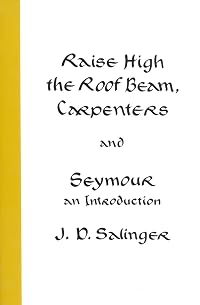
The last book-length work of fiction by J. D. Salinger published in his lifetime collects two novellas about "one of the liveliest, funniest, most fully realized families in all fiction" (New York Times).These two novellas, set seventeen years apart, are both concerned with Seymour Glass—the eldest son of J. D. Salinger's fictional Glass family—as recalled by his closest brother, Buddy.
"He was a great many things to a great many people while he lived, and virtually all things to his show more brothers and sisters in our somewhat outsized family. Surely he was all real things to us: our blue-striped unicorn, our double-lensed burning glass, our consultant genius, our portable conscience, our supercargo, and our one full poet...". show less
Tags
Recommendations






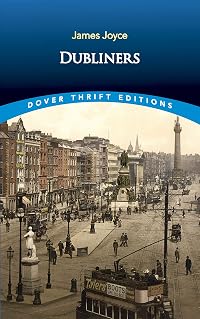
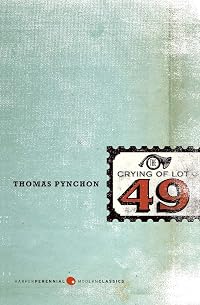






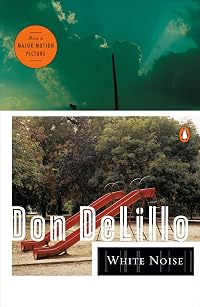

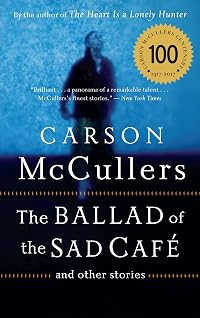









Member Recommendations

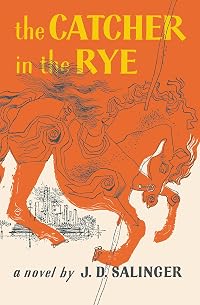
girlunderglass You'll know Seymour even better in this short story.

Publerati The famous family Salinger created is reminiscent of the Pendergast family we meet within Normal Family.


anonymous user Quiz kids

anonymous user Quiz kids
Member Reviews
Two novellas that expand upon Salinger's popular Glass family. "Raise High the Roof Beam, Carpenters" deals with the day of Seymour's wedding, while "Seymour - An Introduction" is Buddy's stream-of-consciousness discussion of his dead brother.
I adore Salinger's writing for many, many reasons, but my love rests most firmly on two basic elements: voice and style. His stories brim with both. They've got this wonderful elegance to them, even as they flirt with colloquial language and common speech patterns. He does some truly beautiful things with dialogue and internal monologue; however, I did find it difficult, on occasion, to really get inside Buddy's head. With another author, I would have found this intensely frustrating, but with show more Salinger it's all part of the game. Those brief, wonderful moments where Buddy's whole character just opens up are more than worth the moments of reticence and stylistic cover up.
Thematically, I find Salinger's work fascinating in that so much of it deals with dead brothers. I have a particular - and, admittedly, strange - fascination with the dead little brother in literature. It's a surprisingly common theme, (don't believe me? Just think about it for a bit), and one that Salinger works with in The Catcher in the Rye. Here, however, he is concerned with something similar but entirely different - namely, the dead older brother.
Though they deal with other things as well, all Salinger's Glass Family stories are influenced by Seymour's suicide. Anyone who's read Nine Stories or Franny and Zooey already knows what's happened and has seen some of the effects on the family. "Raise High the Roof Beam, Carpenters" instantly informs the uninitiated that Seymour has killed himself... then changes the game by rewinding and discussing an event in the past, when Seymour was very much alive. Though he himself makes no appearance in the story, we hear a great deal about him and cannot help but consider what we hear in light of his eventual death. The story is funny, emotional, and a true slice of human experience, but it becomes something potentially dark through our knowledge of Seymour's fate.
"Seymour - An Introduction" is much more raw. Salinger has pulled out all the stops this time around. We already know that Seymour has killed himself. Now we are invited to consider the effect his death has had on Buddy in a much more visceral way than was previously possible. Buddy tells us a great deal about Seymour without giving many concrete details. In fact, when he tries to give the reader anything substantial, he finds himself wandering off into tangents that illuminate his own character as much as Seymour's. It's a beautiful, engaging, and often frustrating look at literature, family, brotherhood and the self. There were moments when one of Salinger's images struck me so hard that I burst out laughing. There were moments when I thought I'd start sobbing wretchedly if I read another word. Like a previous reviewer, I feel that it adds a great deal to the wider Glass Family story... but I'm not sure I could return to it any time soon. I found it an emotionally draining read, but I wouldn't take it back for the world.
I highly recommend Salinger, but I'm not sure that these stories are really the best place to start. If you're new to his work, having somehow managed to avoid The Catcher in the Rye in high school and afterwards, I'd say Nine Stories is probably the best place to start. Save this one for last. It's beautiful, but it is probably the least accessible of Salinger's works. show less
I adore Salinger's writing for many, many reasons, but my love rests most firmly on two basic elements: voice and style. His stories brim with both. They've got this wonderful elegance to them, even as they flirt with colloquial language and common speech patterns. He does some truly beautiful things with dialogue and internal monologue; however, I did find it difficult, on occasion, to really get inside Buddy's head. With another author, I would have found this intensely frustrating, but with show more Salinger it's all part of the game. Those brief, wonderful moments where Buddy's whole character just opens up are more than worth the moments of reticence and stylistic cover up.
Thematically, I find Salinger's work fascinating in that so much of it deals with dead brothers. I have a particular - and, admittedly, strange - fascination with the dead little brother in literature. It's a surprisingly common theme, (don't believe me? Just think about it for a bit), and one that Salinger works with in The Catcher in the Rye. Here, however, he is concerned with something similar but entirely different - namely, the dead older brother.
Though they deal with other things as well, all Salinger's Glass Family stories are influenced by Seymour's suicide. Anyone who's read Nine Stories or Franny and Zooey already knows what's happened and has seen some of the effects on the family. "Raise High the Roof Beam, Carpenters" instantly informs the uninitiated that Seymour has killed himself... then changes the game by rewinding and discussing an event in the past, when Seymour was very much alive. Though he himself makes no appearance in the story, we hear a great deal about him and cannot help but consider what we hear in light of his eventual death. The story is funny, emotional, and a true slice of human experience, but it becomes something potentially dark through our knowledge of Seymour's fate.
"Seymour - An Introduction" is much more raw. Salinger has pulled out all the stops this time around. We already know that Seymour has killed himself. Now we are invited to consider the effect his death has had on Buddy in a much more visceral way than was previously possible. Buddy tells us a great deal about Seymour without giving many concrete details. In fact, when he tries to give the reader anything substantial, he finds himself wandering off into tangents that illuminate his own character as much as Seymour's. It's a beautiful, engaging, and often frustrating look at literature, family, brotherhood and the self. There were moments when one of Salinger's images struck me so hard that I burst out laughing. There were moments when I thought I'd start sobbing wretchedly if I read another word. Like a previous reviewer, I feel that it adds a great deal to the wider Glass Family story... but I'm not sure I could return to it any time soon. I found it an emotionally draining read, but I wouldn't take it back for the world.
I highly recommend Salinger, but I'm not sure that these stories are really the best place to start. If you're new to his work, having somehow managed to avoid The Catcher in the Rye in high school and afterwards, I'd say Nine Stories is probably the best place to start. Save this one for last. It's beautiful, but it is probably the least accessible of Salinger's works. show less
Two stories. The first (Roofbeams) struck me as a masterclass in narrative and characterization. An extended interaction between a small set of people, it's almost impossibly vivid; it reminds me of Raymond Carver, without the minimalism. What actually happens is not so important (although a mystery is solved by the end). It's the kind of story I want to read again just to study the technique. Needless to say, I also enjoyed it immensely as a scene.
The second (Seymour), by contrast, seemed pointless and self-indulgent. Nothing important is revealed, and the narrator's (apparently) amphetamine-fueled, self-conscious logorrhea is irritating and then exhausting. It's all too typical for the writer/narrator to interrupt a sentence with an show more extended parenthetical aside about what led him to write the sentence and how he feels about the sentence and why he's going to write the sentence despite his misgivings about how it might be interpreted. This gets old in a hurry. I found it a struggle to get through.
If it weren't too pat an assumption based on too little data, I'd say Salinger had run out of gas ("Seymour" was his last published story before "Hapworth 16, 1924," which by most accounts was even worse). If the Salinger heirs ever get over their own neuroses and publish the last several decades of their father's work, we might get to test that out. But I'm not holding my breath. show less
The second (Seymour), by contrast, seemed pointless and self-indulgent. Nothing important is revealed, and the narrator's (apparently) amphetamine-fueled, self-conscious logorrhea is irritating and then exhausting. It's all too typical for the writer/narrator to interrupt a sentence with an show more extended parenthetical aside about what led him to write the sentence and how he feels about the sentence and why he's going to write the sentence despite his misgivings about how it might be interpreted. This gets old in a hurry. I found it a struggle to get through.
If it weren't too pat an assumption based on too little data, I'd say Salinger had run out of gas ("Seymour" was his last published story before "Hapworth 16, 1924," which by most accounts was even worse). If the Salinger heirs ever get over their own neuroses and publish the last several decades of their father's work, we might get to test that out. But I'm not holding my breath. show less
While "Raise High the Roof Beam, Carpenters" is a good story, the second novella in this volume, "Seymour- An Introduction" is utterly pedantic, self-indulgent, and unnecessary. It adds very little to the narrative of the Glass family while retconning the final story from "Nine Stories" so that Buddy had written it. Interestingly, it posits a connection between the Glass Family and the Caulfield family (a Curtis Caulfield on pg. 193), but this largely goes nowhere. Overall, the Glass family and its stories reflect Salinger's later issues as described in David Shields and Shane Salerno's biography of the author.
Raise High:
I will readily admit that the reason I waited so long to read this one is because I hated the thought of no longer having a Salinger book to look forward to. I’ve read his other work and while I wasn’t a huge fan of The Catcher in the Rye (no more whining!); I adore his other books, Nine Stories and Franny and Zooey.
I’ve always been fascinated by the fictional Glass family and at least part of the family is featured in both of those books and in Raise High. Salinger has a unique ability to make the mundane interesting. He sucks me in so quickly and the pages fly by. He usually writes about one short period of time, like Holden wandering around New York for a few days in Catcher. Throughout that time we see flashbacks show more and reference to things that have already happened.
Raise High works in the same way. The story is told from Buddy’s point-of-view. He is the second of seven children in the Glass family. The eldest is the poetic but troubled Seymour. Buddy finds out his older brother is about to get married and the rest of his family can’t make it to the last minute wedding. Buddy manages to get leave from his boot camp to head to New York City for the ceremony. Once he arrives he finds out Seymour has stood up his bride-to-be and Buddy ends up in a limo with the furious Matron-of-Honor and a few other guests of the bride. As the heat rises and a parade halts their progress across the city things become tense.
The other Glass siblings from eldest to youngest are, Boo Boo (girl), the twins Walt and Waker, Zooey (boy) and Franny. They are featured in various stories, but Seymour is the most captivating of the lot. His tale reaches its conclusion in “A Perfect Day for Bananafish” one of the chapters in Nine Stories. Seymour is brilliant, but at times he becomes trapped inside his own head in a debilitating way.
Salinger adds small touches to his books that never seem to leave me. I remember reading Zooey for the first time and falling in love with the idea of covering your bedroom walls with quotes. In this book there’s a reference to the family’s tradition of leaving messages with soap slivers on the bathroom mirror as they were growing up. The title of the book actually comes from one such message left by Boo Boo for her brother. It’s a poem, “Raise high the roof beam, carpenters. Like Ares comes the bridegroom, taller far than a tall man.” There’s also a sweet deaf mute man (the bride’s father’s uncle) who felt like he could have been my own family member.
There is something so real about the diary entries Buddy shares from Seymour’s journal. It feels as though we are given a glimpse into the struggle of a person we all might know. His shining optimistic exterior provides a glaze to a tumultuous underbelly of self-doubt and critical thinking which gives him no peace. It’s characters like Seymour, who we never completely know, that make Salinger’s books so captivating.
“God knows it is sad. The human voice conspires to desecrate everything on earth.”
“He would despise her for her marriage motives as I’ve put them down here. But are they despicable? In a way, they must be, but yet they seem to me so human-size and beautiful that I can’t think of them even now as I write this without feeling deeply, deeply moved.”
“Marriage partners are to serve each other. Elevate, help, teach, strengthen each other, but above all, serve. Raise their children honorably, lovingly, and with detachment. A child is a guest in the house, to be loved and respected – never possessed, since he belongs to God.”
Seymour:
These two pieces by Salinger are always published together, but their styles are incredibly different. While Raise High tells us the events of a single day, Seymour is a reflection on one man’s entire life. They pair perfectly, complementing each other and slowly peeling back the layers of both Seymour and Buddy’s lives.
Both pieces are written by Buddy Glass, the second is a reflection of who Seymour was and how his siblings and friends saw him. But because it’s written by Buddy everything is seen through the filter of his eyes and he can’t help but idolize his older brother. Buddy describes every aspect of Seymour, his looks and beliefs and talks about his collected poems, but he can’t separate how he saw his brother and who his brother truly was.
The whole book is just beautiful and it a new favorite. I particularly loved Seymour’s notes and literary criticisms to Buddy. After Buddy would read a new piece he’d written to his brother, Seymour would wait awhile and process what he thought about the work, he would then write him a response. His notes would be both challenging and uplifting. He would encourage Buddy never to settle for being a people-pleasing writer, but instead to write what mattered to him. What wonderful advice for all writers!
“…but the fact that the great Kierkegaard was never a Kierkegaardian, let alone an existentialist, cheers one bush-league intellectual’s heart no end, never fails to reaffirm his faith in a cosmic poetic justice, if not a cosmic Santa Claus.”
BOTTOM LINE: I loved it. Salinger gets inside my head and touches my emotions in a way that few authors can. Don’t judge his work purely by his most famous book. In my opinion his other work far outshines Catcher in the Rye. show less
I will readily admit that the reason I waited so long to read this one is because I hated the thought of no longer having a Salinger book to look forward to. I’ve read his other work and while I wasn’t a huge fan of The Catcher in the Rye (no more whining!); I adore his other books, Nine Stories and Franny and Zooey.
I’ve always been fascinated by the fictional Glass family and at least part of the family is featured in both of those books and in Raise High. Salinger has a unique ability to make the mundane interesting. He sucks me in so quickly and the pages fly by. He usually writes about one short period of time, like Holden wandering around New York for a few days in Catcher. Throughout that time we see flashbacks show more and reference to things that have already happened.
Raise High works in the same way. The story is told from Buddy’s point-of-view. He is the second of seven children in the Glass family. The eldest is the poetic but troubled Seymour. Buddy finds out his older brother is about to get married and the rest of his family can’t make it to the last minute wedding. Buddy manages to get leave from his boot camp to head to New York City for the ceremony. Once he arrives he finds out Seymour has stood up his bride-to-be and Buddy ends up in a limo with the furious Matron-of-Honor and a few other guests of the bride. As the heat rises and a parade halts their progress across the city things become tense.
The other Glass siblings from eldest to youngest are, Boo Boo (girl), the twins Walt and Waker, Zooey (boy) and Franny. They are featured in various stories, but Seymour is the most captivating of the lot. His tale reaches its conclusion in “A Perfect Day for Bananafish” one of the chapters in Nine Stories. Seymour is brilliant, but at times he becomes trapped inside his own head in a debilitating way.
Salinger adds small touches to his books that never seem to leave me. I remember reading Zooey for the first time and falling in love with the idea of covering your bedroom walls with quotes. In this book there’s a reference to the family’s tradition of leaving messages with soap slivers on the bathroom mirror as they were growing up. The title of the book actually comes from one such message left by Boo Boo for her brother. It’s a poem, “Raise high the roof beam, carpenters. Like Ares comes the bridegroom, taller far than a tall man.” There’s also a sweet deaf mute man (the bride’s father’s uncle) who felt like he could have been my own family member.
There is something so real about the diary entries Buddy shares from Seymour’s journal. It feels as though we are given a glimpse into the struggle of a person we all might know. His shining optimistic exterior provides a glaze to a tumultuous underbelly of self-doubt and critical thinking which gives him no peace. It’s characters like Seymour, who we never completely know, that make Salinger’s books so captivating.
“God knows it is sad. The human voice conspires to desecrate everything on earth.”
“He would despise her for her marriage motives as I’ve put them down here. But are they despicable? In a way, they must be, but yet they seem to me so human-size and beautiful that I can’t think of them even now as I write this without feeling deeply, deeply moved.”
“Marriage partners are to serve each other. Elevate, help, teach, strengthen each other, but above all, serve. Raise their children honorably, lovingly, and with detachment. A child is a guest in the house, to be loved and respected – never possessed, since he belongs to God.”
Seymour:
These two pieces by Salinger are always published together, but their styles are incredibly different. While Raise High tells us the events of a single day, Seymour is a reflection on one man’s entire life. They pair perfectly, complementing each other and slowly peeling back the layers of both Seymour and Buddy’s lives.
Both pieces are written by Buddy Glass, the second is a reflection of who Seymour was and how his siblings and friends saw him. But because it’s written by Buddy everything is seen through the filter of his eyes and he can’t help but idolize his older brother. Buddy describes every aspect of Seymour, his looks and beliefs and talks about his collected poems, but he can’t separate how he saw his brother and who his brother truly was.
The whole book is just beautiful and it a new favorite. I particularly loved Seymour’s notes and literary criticisms to Buddy. After Buddy would read a new piece he’d written to his brother, Seymour would wait awhile and process what he thought about the work, he would then write him a response. His notes would be both challenging and uplifting. He would encourage Buddy never to settle for being a people-pleasing writer, but instead to write what mattered to him. What wonderful advice for all writers!
“…but the fact that the great Kierkegaard was never a Kierkegaardian, let alone an existentialist, cheers one bush-league intellectual’s heart no end, never fails to reaffirm his faith in a cosmic poetic justice, if not a cosmic Santa Claus.”
BOTTOM LINE: I loved it. Salinger gets inside my head and touches my emotions in a way that few authors can. Don’t judge his work purely by his most famous book. In my opinion his other work far outshines Catcher in the Rye. show less
Crap. Absolute crap. The most insufferable member of the Glass family, Buddy, both narrates and anchors these two stories. His presence is unavoidable and he is absolutely a pretentious ass and a bore. At least in Salinger's last book, Buddy stayed out of the way to talk about the titular characters, Franny and Zooey. Here you have a narrated story of a completely innocuous wedding event and a rambling collection of reminiscences about the most mysterious Glass, Seymour. Unfortunately, Seymour makes a much stronger presence in the masterful short story, "A Perfect Day For Bananafish" (which I'd recommend along with the book Nine Stories, which shows Salinger on the decline but more near the beginning of it so it's not so bad). All in show more all, I cannot recommend this book to anybody but the airiest of blockheads. Nobody would find the supposed geniuses in this book to their liking in any capacity of the word. I give the book an extra half-star because it at least shows a little of Salinger's compositional acumen, but if you want to read Salinger, chuck this book and pick up The Catcher In The Rye for another read. This one's a lemon. show less
A reread after a long time, I found Salinger’s prose so fun and refreshing. The plot of the first story is a marvel to me—I love its absurdity and its humanity. The images of this plot are still so bright in my mind, a testimony to the vitality of the prose.
The second story is so loving. To be loved as Buddy loves Seymour! I admire the holding-together of this underlying depth of love and the dapperness of its expression. That Buddy’s dapperness does indeed convey his love.
The second story is so loving. To be loved as Buddy loves Seymour! I admire the holding-together of this underlying depth of love and the dapperness of its expression. That Buddy’s dapperness does indeed convey his love.
Raise High was beautiful, a 4.5. Seymour: An Intro was bumbly in a charming way, still engrossing, but more a dramatic essay than a story (definitely the point). Sid by side they set up an intriguing contrast: one is all sparse narrative, the other a dramatic monologue with only intermittent scenes. Both, however, will linger with me. Seymour was, I think, less good, but it seemed an invaluable record of Salinger's struggles as an artist (a charming, bumbling manifesto).
Members
- Recently Added By
Lists

20th Century Literature
1,161 works; 55 members

1950s
340 works; 22 members

Books You Read During High School (For School)
301 works; 52 members

Publisher's Weekly Bestsellers - Part II - 1940 - 1979
355 works; 6 members

discontinued
24 works; 4 members

Books Read in 2007
326 works; 8 members

Nifty Fifties
129 works; 14 members

American Lit for Eng 11 Research Project
368 works; 6 members

Tonikat reading completed on Librarything journals
329 works; 2 members

Salinger Reading List
13 works; 1 member

Books We Love to Reread
695 works; 299 members
Books recommended by Calgary Public Library staff
1,588 works; 4 members

1960s
281 works; 16 members

Five star books
1,767 works; 110 members

Classics you know you should have read but probably haven't
421 works; 409 members
Talk Discussions
Past Discussions
Looking ahead to Salinger in Author Theme Reads (December 2013)
Author Information

J. D. Salinger was born in New York City on January 1, 1919. He attended Manhattan public schools, Valley Forge Military Academy in Pennsylvania, and three colleges, but received no degrees. He was from an upper class Jewish family and they lived on the upper west side of Manhattan on Park Avenue. Salinger joined the U. S. Army in 1942 and fought show more in the D-Day invasion at Normandy as well as the Battle of the Bulge, but suffered a nervous breakdown due to all he had seen and experienced in the war and checked himself into an Army hospital in Germany in 1945. In December 1945, his short story I'm Crazy was published in Collier's. In 1947, his short story A Perfect Day for Bananafish was published in The New Yorker. Throughout his lifetime, he wrote more than 30 short stories and a handful of novellas, which were published in magazines and later collected in works such as Nine Stories, Franny and Zooey, and Raise High the Roof Beam, Carpenters and Seymour: An Introduction. The Catcher in the Rye, published in 1951, was his only novel. His last published story, Hapworth 16, 1924, appeared in 1965. He spent the remainder of his years in seclusion and silence in a home in Cornish, New Hampshire. He died of natural causes on January 27, 2010 at the age of 91. Salinger always wanted to write the great American novel; when he succeeded in this with Catcher in the Rye, he was unprepared for the onslaught on privacy issues that this popularity brought on. He never wanted to be in the spotlight and retreated from all contacts he had in New York City. (Bowker Author Biography) show less
Some Editions
Awards and Honors
Series

Belongs to Publisher Series
Work Relationships
Common Knowledge
- Canonical title
- Raise High the Roof Beam, Carpenters and Seymour: An Introduction
- Original title
- Raise High Raise High the Roof Beam, Carpenters; Seymour: An Introduction
- Original publication date
- 1955 (Raise High) (Raise High); 1959 (Seymour) (Seymour)
- People/Characters
- Seymour Glass; Buddy Glass; Franny Glass; Muriel Fedder; Beatrice "Boo Boo" Glass; Edie Burwick (show all 8); Helen Silsburn; Mrs. Fedder
- Important places
- New York, New York, USA; Fort Monmouth, New Jersey, USA; USA
- Important events
- Seymour Glass's wedding ( [1942])
- Epigraph
- The actors by their presence always convince me, to my horror, that most of what I've written about them until now is false. It is false because I write about them with steadfast love (even now, while I write it down, this, t... (show all)oo, becomes false) but varying ability, and this varying ability does not hit off the real actors loudly and correctly but loses itself dully in this love that will never be satisfied with the ability and therefore thinks it is protecting the actors by preventing this ability from exercising itself.
It is (to describe it figuratively) as if an author were to make a slip of the pen, and as if this clerical error became conscious of being such. Perhaps this was no error but in a far higher sense was an essential part of th... (show all)e whole exposition. It is, then, as if this clerical error were to revolt against the author, out of hatred for Iron, were to forbid him to correct it, and were to say, 'No, I will not be erased, I will stand as a witness against thee, that thou art a very poor writer.' - Dedication
- If there is an amateur reader still left in the world - or anybody who just reads and runs - I ask him or her, with untellable affection and gratitude, to split the dedication of this book four ways with my wife and children.
- First words
- One night some twenty years ago, during a siege of mumps in our enormous family, my youngest sister, Franny, was moved, crib and all, into the ostensibly germ-free room I shared with my eldest brother, Seymour.
At times, frankly, I find it pretty slim pickings, but at the age of forty I look on my old fair-weather friend the general reader as my last deeply contemporary confidant, and I was rather strenuously requested, long before ... (show all)I was out of my teens, by at once the most exciting and the least fundamentally bumptious public craftsman I've ever personally known, to try to keep a steady and sober regard for the amenities of such a relationship, be it ever so peculiar or terrible; in my case, he saw it coming on from the first. - Quotations
- Raise high the roof beam, carpenters. Like Ares comes the bridegroom, taller far than a tall man.
- Last words
- (Click to show. Warning: May contain spoilers.)Quickly and slowly.
(Click to show. Warning: May contain spoilers.)Possibly with a blank sheet of paper enclosed, by way of explanation. - Disambiguation notice
- This LT work is only for Salinger's 1963 publication of two novellas together, Raise High the Roof Beam, Carpenters and Seymour: An Introduction. LT has separate works for each novella individually, "Raise High ... (show all)the Roof Beam, Carpenters" (1955) and "Seymour: An Introduction" (1959). Please do not combine either individual novella with this work. Thank you.
Classifications
Statistics
- Members
- 6,696
- Popularity
- 1,811
- Reviews
- 64
- Rating
- (4.00)
- Languages
- 19 — Catalan, Czech, Dutch, English, Estonian, French, German, Greek, Hungarian, Italian, Japanese, Lithuanian, Polish, Russian, Serbian, Spanish, Swedish, Turkish, Portuguese (Portugal)
- Media
- Paper, Ebook
- ISBNs
- 77
- UPCs
- 1
- ASINs
- 73