On This Page
Description
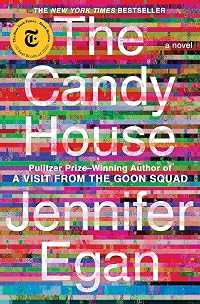
Named a Most Anticipated Book of the Year by Time , Entertainment Weekly , Vogue , Good Housekeeping , Oprah Daily , Glamour , USA TODAY , Parade , Bustle , San Francisco Chronicle , The Seattle Times , The Boston Globe , Tampa Bay Times , BuzzFeed , Vulture , and many more! From one of the most celebrated writers of our time, a literary figure with cult status, a "sibling novel" to her Pulitzer Prize– and NBCC Award–winning A Visit from the Goon Squad —an electrifying, deeply moving show more novel about the quest for authenticity and meaning in a world where memories and identities are no longer private. The Candy House opens with the staggeringly brilliant Bix Bouton, whose company, Mandala, is so successful that he is "one of those tech demi-gods with whom we're all on a first name basis." Bix is 40, with four kids, restless, desperate for a new idea, when he stumbles into a conversation group, mostly Columbia professors, one of whom is experimenting with downloading or "externalizing" memory. It's 2010. Within a decade, Bix's new technology, "Own Your Unconscious"—that allows you access to every memory you've ever had, and to share every memory in exchange for access to the memories of others—has seduced multitudes. But not everyone. In spellbinding interlocking narratives, Egan spins out the consequences of Own Your Unconscious through the lives of multiple characters whose paths intersect over several decades. Intellectually dazzling, The Candy House is also extraordinarily moving, a testament to the tenacity and transcendence of human longing for real connection, love, family, privacy and redemption. In the world of Egan's spectacular imagination, there are "counters" who track and exploit desires and there are "eluders," those who understand the price of taking a bite of the Candy House. Egan introduces these characters in an astonishing array of narrative styles—from omniscient to first person plural to a duet of voices, an epistolary chapter and a chapter of tweets. If Goon Squad was organized like a concept album, The Candy House incorporates Electronic Dance Music's more disjunctive approach. The parts are titled: Build, Break, Drop. With an emphasis on gaming, portals, and alternate worlds, its structure also suggests the experience of moving among dimensions in a role-playing game. The Candy House is a bold, brilliant imagining of a world that is moments away. Egan takes to stunning new heights her "deeply intuitive forays into the darker aspects of our technology-driven, image-saturated culture" ( Vogue ). The Candy House delivers an absolutely extraordinary combination of fierce, exhilarating intelligence and heart. show lessTags
Recommendations









Member Recommendations
kjuliff Jennifer Eagan’s exploration into literature style and novel construct for the 21st Century
Member Reviews
The Candy House by Jennifer Egan is a very highly recommended imaginative novel of our world, but different. The story is told through an interlocking narrative structure by multiple and inter-generational characters. This novel is brilliant!
Remember: Nothing is free! Only children expect otherwise, even as myths and fairy tales warn us: Rumpelstiltskin, King Midas, Hansel and Gretel. Never trust a candy house! It was only a matter of time before someone made them pay for what they thought they were getting for free.
Bix Bouton is a wildly successful tech giant of Mandala. What he is searching for now is eluding him; he is seeking a new idea or advancement. When he encounters a conversation group meeting after a talk at Columbia, he show more joins while disguised and finds the direction his next advancement will take. "Own Your Unconscious" allows people to download their memories giving them access to every memory they have ever had. They are stored in a Mandala Cube. This evolves into the ability to upload your memories to "the Collective Consciousness" which then gives you access to the thoughts and memories of everyone in the world who has also shared with the collective.
Millions are seduced, but not everyone. There is a problem that emerges about what to do with so much information. Additionally, not everything or every story needs to be told. There is a counter group of "eluders" who understand the temptation of the candy house and resist it while "counters" are those who track and exploit the measurable tendencies of people.
This is an ingenious, brilliantly written novel, technically accomplished and stylistically masterful. The three parts of the novel are titled: Build, Break, Drop. The chapters are all like interconnected short stories that build the narrative and plot through the voices of a variety of characters and narrative styles. Chapters range from omniscient to first person plural to a duet of voices, an epistolary chapter, an exchange of emails and a chapter of tweets. Characters from A Visit From the Goon Squad (2010) reappear here, but The Candy House is a stand-alone novel.
The characters and their children are all developed as complex individuals as the novel covers a large span of time. The voices and points-of-view of the characters are all unique. The advancement of the plot is told through the voices of all these characters in the unique chapters. It is impressive how the narrative threads in each chapter begin to coalesce to create a complex plot and compelling accomplished novel. I am in awe. One of the best books of the year!
Disclosure: My review copy was courtesy of Simon & Schuster via NetGalley.
http://www.shetreadssoftly.com/2022/03/the-candy-house.html
https://www.goodreads.com/review/show/4632834854 show less
Remember: Nothing is free! Only children expect otherwise, even as myths and fairy tales warn us: Rumpelstiltskin, King Midas, Hansel and Gretel. Never trust a candy house! It was only a matter of time before someone made them pay for what they thought they were getting for free.
Bix Bouton is a wildly successful tech giant of Mandala. What he is searching for now is eluding him; he is seeking a new idea or advancement. When he encounters a conversation group meeting after a talk at Columbia, he show more joins while disguised and finds the direction his next advancement will take. "Own Your Unconscious" allows people to download their memories giving them access to every memory they have ever had. They are stored in a Mandala Cube. This evolves into the ability to upload your memories to "the Collective Consciousness" which then gives you access to the thoughts and memories of everyone in the world who has also shared with the collective.
Millions are seduced, but not everyone. There is a problem that emerges about what to do with so much information. Additionally, not everything or every story needs to be told. There is a counter group of "eluders" who understand the temptation of the candy house and resist it while "counters" are those who track and exploit the measurable tendencies of people.
This is an ingenious, brilliantly written novel, technically accomplished and stylistically masterful. The three parts of the novel are titled: Build, Break, Drop. The chapters are all like interconnected short stories that build the narrative and plot through the voices of a variety of characters and narrative styles. Chapters range from omniscient to first person plural to a duet of voices, an epistolary chapter, an exchange of emails and a chapter of tweets. Characters from A Visit From the Goon Squad (2010) reappear here, but The Candy House is a stand-alone novel.
The characters and their children are all developed as complex individuals as the novel covers a large span of time. The voices and points-of-view of the characters are all unique. The advancement of the plot is told through the voices of all these characters in the unique chapters. It is impressive how the narrative threads in each chapter begin to coalesce to create a complex plot and compelling accomplished novel. I am in awe. One of the best books of the year!
Disclosure: My review copy was courtesy of Simon & Schuster via NetGalley.
http://www.shetreadssoftly.com/2022/03/the-candy-house.html
https://www.goodreads.com/review/show/4632834854 show less
Clever doesn’t begin to cover it. Although cleverness somehow seems more dull, less sharp, than clever. And cleverness abounds here. Without being tiresome, it may yet tire you out. It becomes a relief to have chapters departing in radically different styles with as-yet-unrelated characters, even if many of those characters will be little more than sketches, with quirks embedded as part of their DNA. Like Wes Anderson characters. And dialogue that almost sounds storyboarded. But before you have time to get really annoyed, another chapter zips you off in a different direction, slew-footing you as it passes.
If you can get past the cleverness and the trans-humanist distractions, there is probably a simple story here about the very human show more need for stories, our own and others. And surprisingly, a simple story can assuage a whole lot of cleverness. You might even find yourself ending up liking a book about which you had far too many reservations whilst reading. Maybe I’m just a sucker for a simple story.
Gently recommended. show less
If you can get past the cleverness and the trans-humanist distractions, there is probably a simple story here about the very human show more need for stories, our own and others. And surprisingly, a simple story can assuage a whole lot of cleverness. You might even find yourself ending up liking a book about which you had far too many reservations whilst reading. Maybe I’m just a sucker for a simple story.
Gently recommended. show less
With so many people recording their thoughts and actions on social media, Jennifer Egan takes it to the next step and creates a novel where people can save their memories. It is called a Mandala Cube, and the concept is “own your unconscious.” For example, one can keep unconscious thoughts and memories for use after a traumatic brain injury or restore losses due to Alzheimer's or other diseases. But, as with most inventions, there are unintended consequences. The collective unconscious, Jenifer Egan says, is akin to invasive omniscience.
Each chapter is a standalone episode told in a different voice. It is almost impossible to keep track of all of the characters that play a role in this cautionary tale. However, the relationships show more among many of the characters become apparent as the novel progresses. There are eluders in opposition to those who support the widespread sharing of memories in a searchable, Facebook-like fashion. Then there is the Mondrian, a network of role-playing proxies at odds with Mandala cube. And, as expected, there is government use of the new technologies and lots of luring of strangers and temptations to enter the metaphoric Candy House of the title.
Authenticity is a prominent theme, with some characters claiming to behave in ways that scream authenticity. Yet the different points of view continually remind us of the biases in determining the differences between fact and fiction, especially in the world of social media. Included in many episodes of this story is the role-playing game of Dungeons and Dragons, where characters are rated. The seriousness of role-playing games, especially in drug recovery centers, is strangely analogous to the quantifying that Social Media moguls conduct when assessing people’s online posts—counters, in Egan’s world, rate people’s memories. The scenarios in the book should serve as a warning for what can happen with the continued sharing of EVERYTHING on social media. Some questions to consider while reading include:
What is reality? Whose reality constitutes a fact?
When is it a good idea to share your consciousness?
Are we comfortable being assessed as people the way Dungeons and Dragons characters are rated?
Is it satisfactory to be a real person in a fake world?
Who or what is your actual identity? How much of it should you feel comfortable sharing?
How much fear is healthy or acceptable?
Have modern communication forms via technology led to losing the art of conversation?
See my reviews at
https://quipsandquotes.net/ show less
Each chapter is a standalone episode told in a different voice. It is almost impossible to keep track of all of the characters that play a role in this cautionary tale. However, the relationships show more among many of the characters become apparent as the novel progresses. There are eluders in opposition to those who support the widespread sharing of memories in a searchable, Facebook-like fashion. Then there is the Mondrian, a network of role-playing proxies at odds with Mandala cube. And, as expected, there is government use of the new technologies and lots of luring of strangers and temptations to enter the metaphoric Candy House of the title.
Authenticity is a prominent theme, with some characters claiming to behave in ways that scream authenticity. Yet the different points of view continually remind us of the biases in determining the differences between fact and fiction, especially in the world of social media. Included in many episodes of this story is the role-playing game of Dungeons and Dragons, where characters are rated. The seriousness of role-playing games, especially in drug recovery centers, is strangely analogous to the quantifying that Social Media moguls conduct when assessing people’s online posts—counters, in Egan’s world, rate people’s memories. The scenarios in the book should serve as a warning for what can happen with the continued sharing of EVERYTHING on social media. Some questions to consider while reading include:
What is reality? Whose reality constitutes a fact?
When is it a good idea to share your consciousness?
Are we comfortable being assessed as people the way Dungeons and Dragons characters are rated?
Is it satisfactory to be a real person in a fake world?
Who or what is your actual identity? How much of it should you feel comfortable sharing?
How much fear is healthy or acceptable?
Have modern communication forms via technology led to losing the art of conversation?
See my reviews at
https://quipsandquotes.net/ show less
Like GOON SQUAD, Egan handles a large ensemble of characters, connected in different ways throughout time, from past to future. In each section, she plunges the reader down into an individual life, or web of lives and relationships: parents and children, those same children as adults, exes, friends, colleagues, professors and artists and academics and musicians and drug dealers and recovering addicts. Two camps develop: there is Mandala, the company started by Bix Bouton, using the algorithms developed by Miranda Kline to create Own Your Unconscious. And there is Mondrian, those who seek to baffle and elude. Characters confront and wrestle with themes of technology, memory, privacy, and story. Some sections are written in narrative show more prose, in first (or sometimes second) person; others are e-mail exchanges, or, in Lulu's case, a set of instructions.
One might choose to take notes while reading, or make a web or map of how all the characters are connected; or, you can simply enjoy the flow of the story, which is as much of a pleasure to read as GOON SQUAD was.
See also: Emily St. John Mandel, Kate Atkinson, David Mitchell
Quotes
He felt the mystery of his own unconscious like a whale looming invisibly beneath a tiny swimmer. If he couldn't search or retrieve or view his own past, then it wasn't really his. It was lost. (Bix Bouton, 22)
...I understood with sudden clarity that doing the right thing - being right - gets you nothing in this world. It's the sinners everyone loves....There was nothing sexy about getting it right the first time. (Miles, re: Sasha, 50)
If my life has taught me anything, it's that curiosity and expediency have a sneaky, inexorable power. Resisting them is easy for a minute - a hundred minutes - even a year. But not forever. (Miles, 56)
...quantifiability doesn't make human life any less remarkable, or even...less mysterious - any more than identifying the rhyme scheme in a poem devalues the poem itself. The opposite! (Alfred Hollander, 82)
...I never know what's going on, and because my attempts to find out lack the tactful goo that typicals smear all over their actions and words to blunt their real purpose, I come across as lurching and off-putting. (Alfred, 88)
...even as myths and fairy tales warn us...Never trust a candy house! (Lana and Melora Kline, 125)
The Cube is her, in a way. It contains the entire contents of her mind: all the things she can and can't remember, every thought and feeling she has had. At last, she is the owner of her unconscious. She knows where everything can be found. (Roxy, 157)
...I'm nothing short of amazed by her kindness, this is not something you see in my world, kindness and coolness do not go together in girls, being cool means you leave people out, that is the actual definition of the word because if you're nice to everyone, then why should people near you feel special and why should people NOT near you WANT to be near you, and why should anyone assume that the Times they are having without you are worse than the Times they would be having with you? (Molly, 189)
The sound of waves against rocks existed millennia before there were creatures who could hear it. (Lulu, 200)
A sudden reconfiguration of your past can change the fit and feel of your adulthood. (Lulu, 208)
A new remote and unfamiliar place can make the prior remote and unfamiliar place seem like home. (Lulu, 211)
Each new phase of aloneness reveals that you were previously less alone than you thought. (Lulu, 216)
Tongue-in-cheek nostalgia is merely the portal, the candy house, if you will, through which we hope to lure in a new generation and bewitch them. (Bennie Salazar, 299)
One horror of motherhood lies in the moments when she can see both the exquisiteness of her child and his utter inconsequence to others. (Susan Hollander re: middle son Ames, 326)
But knowing everything is too much like knowing nothing; without a story, it's all just information. (333) show less
One might choose to take notes while reading, or make a web or map of how all the characters are connected; or, you can simply enjoy the flow of the story, which is as much of a pleasure to read as GOON SQUAD was.
See also: Emily St. John Mandel, Kate Atkinson, David Mitchell
Quotes
He felt the mystery of his own unconscious like a whale looming invisibly beneath a tiny swimmer. If he couldn't search or retrieve or view his own past, then it wasn't really his. It was lost. (Bix Bouton, 22)
...I understood with sudden clarity that doing the right thing - being right - gets you nothing in this world. It's the sinners everyone loves....There was nothing sexy about getting it right the first time. (Miles, re: Sasha, 50)
If my life has taught me anything, it's that curiosity and expediency have a sneaky, inexorable power. Resisting them is easy for a minute - a hundred minutes - even a year. But not forever. (Miles, 56)
...quantifiability doesn't make human life any less remarkable, or even...less mysterious - any more than identifying the rhyme scheme in a poem devalues the poem itself. The opposite! (Alfred Hollander, 82)
...I never know what's going on, and because my attempts to find out lack the tactful goo that typicals smear all over their actions and words to blunt their real purpose, I come across as lurching and off-putting. (Alfred, 88)
...even as myths and fairy tales warn us...Never trust a candy house! (Lana and Melora Kline, 125)
The Cube is her, in a way. It contains the entire contents of her mind: all the things she can and can't remember, every thought and feeling she has had. At last, she is the owner of her unconscious. She knows where everything can be found. (Roxy, 157)
...I'm nothing short of amazed by her kindness, this is not something you see in my world, kindness and coolness do not go together in girls, being cool means you leave people out, that is the actual definition of the word because if you're nice to everyone, then why should people near you feel special and why should people NOT near you WANT to be near you, and why should anyone assume that the Times they are having without you are worse than the Times they would be having with you? (Molly, 189)
The sound of waves against rocks existed millennia before there were creatures who could hear it. (Lulu, 200)
A sudden reconfiguration of your past can change the fit and feel of your adulthood. (Lulu, 208)
A new remote and unfamiliar place can make the prior remote and unfamiliar place seem like home. (Lulu, 211)
Each new phase of aloneness reveals that you were previously less alone than you thought. (Lulu, 216)
Tongue-in-cheek nostalgia is merely the portal, the candy house, if you will, through which we hope to lure in a new generation and bewitch them. (Bennie Salazar, 299)
One horror of motherhood lies in the moments when she can see both the exquisiteness of her child and his utter inconsequence to others. (Susan Hollander re: middle son Ames, 326)
But knowing everything is too much like knowing nothing; without a story, it's all just information. (333) show less
“Knowing everything is too much like knowing nothing; without a story, it’s all just information.”
Series of interconnected short stories, set in the present and near future, about the impact of technology on our lives. It is a follow-up to A Visit from the Goon Squad and contains several of the same characters. Entrepreneur Bix Bouton has developed the next level in social media, the Own Your Unconscious App, where memories can be collectively captured and shared. A segment of society rebels against this technology, attempting to live off the grid. They are called “eluders.” Main themes are privacy rights, memory, and authenticity (or lack thereof).
I have read two of her other works, and I tend to enjoy Jennifer Egan’s show more elegant writing style. This novel is creative and has an unusual structure. It is told in changing perspectives and nonlinear timeline. The plot (I use the term loosely) is difficult to describe, since it loops backward and forward, with common concepts appearing in different sections. There are a large number of characters. A minor character mentioned in the previous chapter becomes a key player in the next.
It is a concept novel – a challenge to our increasing reliance on technology for entertainment and daily living, substituting the artificial for the real. It definitely spurs questions. If such software existed, would we really want to share our memories with the “collective?” Would the benefits of retrieving pieces of our partially forgotten experiences be worth the loss of privacy?
There is a pleasing complexity to this novel. I particularly enjoyed the more straight-forward stories, even though they are told in fragments and must be mentally assembled by the reader. There are a few sections toward the end that abruptly change in style to a series of commands (similar to tweets), and another comprised of emails and text messages. These segments are a bit too scattered and disjointed for my taste. I think this book will appeal to those who have read and enjoyed A Visit to the Goon Squad, which I recommend reading first. show less
Series of interconnected short stories, set in the present and near future, about the impact of technology on our lives. It is a follow-up to A Visit from the Goon Squad and contains several of the same characters. Entrepreneur Bix Bouton has developed the next level in social media, the Own Your Unconscious App, where memories can be collectively captured and shared. A segment of society rebels against this technology, attempting to live off the grid. They are called “eluders.” Main themes are privacy rights, memory, and authenticity (or lack thereof).
I have read two of her other works, and I tend to enjoy Jennifer Egan’s show more elegant writing style. This novel is creative and has an unusual structure. It is told in changing perspectives and nonlinear timeline. The plot (I use the term loosely) is difficult to describe, since it loops backward and forward, with common concepts appearing in different sections. There are a large number of characters. A minor character mentioned in the previous chapter becomes a key player in the next.
It is a concept novel – a challenge to our increasing reliance on technology for entertainment and daily living, substituting the artificial for the real. It definitely spurs questions. If such software existed, would we really want to share our memories with the “collective?” Would the benefits of retrieving pieces of our partially forgotten experiences be worth the loss of privacy?
There is a pleasing complexity to this novel. I particularly enjoyed the more straight-forward stories, even though they are told in fragments and must be mentally assembled by the reader. There are a few sections toward the end that abruptly change in style to a series of commands (similar to tweets), and another comprised of emails and text messages. These segments are a bit too scattered and disjointed for my taste. I think this book will appeal to those who have read and enjoyed A Visit to the Goon Squad, which I recommend reading first. show less
"Knowing everything is too much like knowing nothing. Without a story it is all just information."
This quote from the very last moments of The Candy House serves on its own as a pretty thorough review of the book and a pretty thorough summation of much of what is wrong in the world. Last night I was having drinks with a much younger friend (just a few years older than my son) and I said that I think one of the things that leads to so much unhappiness and lack of connection in the 30 and under crowd is the deluge of uncontextualized information. It is exhausting trying to assimilate even a fraction of the information that is thrown at us every day, and all that energy would be so much more satisfyingly spent analyzing a few facts that show more will tell us more about something that means something to us and to our lives, or simply enhances expertise or satisfies true intellectual curiosity rather than simply making us feel a bit less FOMO. A lot of this book is about that. About tapping into other people's lives and experiences as a substitute for creating our own lives (The device to do this in the book is currently a bit of science fiction, but the experience of people staring at the inane input of influencers day after day rather than having experiences is the same.)
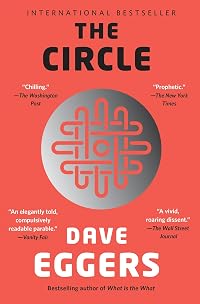
"The Candy House" of which the book speaks is a reference to the witch's house in Hansel and Gretel. It is the shiny appealing bit of short term satisfaction that spurs us to enter its doors and sacrifice all. "Abandon hope all ye who enter here." And we do abandon hope, or more explicitly we abandon privacy, individuality and all sense of self all to get a little gingerbread (or convenience), a few empty calories. BUT Egan is no Ishiguro or Eggers, happy to share their fear of the hobgoblin of technology and have that be the end of the story. That is lazy. I got a headache from rolling my eyes when I attempted to read The Circle. Egan sees past this threat, she sees a way out, she sees that what matters is how we connect to one another and what we give and get from the ways in which se share our stories. Also she sees the advantages of committing our life to the public record. Others ignore that, but we need to get something to willingly give up so much, we need to get something we truly value in this exchange. It is a nuanced look, it is a smart look, it is a compellingly human look at what now and what next. It is also a really fun, sometimes heartbreaking, always fascinating story about people, and the ways in which imagination and intellect can be a very dangerous thing. Here, one of our fascinating main characters, Miranda Kline, uses her brilliance and the passionate interest in learning how people relate to one another to develop a theory of patterns of affinity. Another intriguing character, Bix, filled with nothing but goodwill and a great mind (informed by a love of literature) turns this theory into an algorithm and then into a method of uploading the contents of people's unconscious and conscious minds and to use that record in various ways including the creation of a "collective consciousness." No more memories spurred by a madeleine, now a literal record of memory as an immediate sense impression and as that impression is processed by the person. It is not an owned memory anymore, it belongs to everyone in the collective, everyone has access to everyone's experience. (Or at least the things that stay in memory -- presumably the burger I ate last night is not permanently stored and available for download.) It seems like the end of wonder, but as one of our characters, a numbers guy charged with turning human behavior into algorithms says, the act of codifying behavior "doesn't make human life any less remarkable, or even (this is counterintuitive, I know) less mysterious — any more than identifying the rhyme scheme in a poem devalues the poem itself." I think that is right. I hope that is right.
One note -- this is a companion to A Visit from the Goon Squad, a book I loved very much, but there is no need to read Goon Squad to get this. Many of the characters that showed up in Goon Squad, some very briefly, show up here, but there is plenty of set up for each character and if I recall correctly Goon Squad doesn't provide backstory that would be helpful to understanding this book. It is just as creative and revelatory and captivating and delightful as Goon Squad but still absolutely its own book. show less
This quote from the very last moments of The Candy House serves on its own as a pretty thorough review of the book and a pretty thorough summation of much of what is wrong in the world. Last night I was having drinks with a much younger friend (just a few years older than my son) and I said that I think one of the things that leads to so much unhappiness and lack of connection in the 30 and under crowd is the deluge of uncontextualized information. It is exhausting trying to assimilate even a fraction of the information that is thrown at us every day, and all that energy would be so much more satisfyingly spent analyzing a few facts that show more will tell us more about something that means something to us and to our lives, or simply enhances expertise or satisfies true intellectual curiosity rather than simply making us feel a bit less FOMO. A lot of this book is about that. About tapping into other people's lives and experiences as a substitute for creating our own lives (The device to do this in the book is currently a bit of science fiction, but the experience of people staring at the inane input of influencers day after day rather than having experiences is the same.)
"The Candy House" of which the book speaks is a reference to the witch's house in Hansel and Gretel. It is the shiny appealing bit of short term satisfaction that spurs us to enter its doors and sacrifice all. "Abandon hope all ye who enter here." And we do abandon hope, or more explicitly we abandon privacy, individuality and all sense of self all to get a little gingerbread (or convenience), a few empty calories. BUT Egan is no Ishiguro or Eggers, happy to share their fear of the hobgoblin of technology and have that be the end of the story. That is lazy. I got a headache from rolling my eyes when I attempted to read The Circle. Egan sees past this threat, she sees a way out, she sees that what matters is how we connect to one another and what we give and get from the ways in which se share our stories. Also she sees the advantages of committing our life to the public record. Others ignore that, but we need to get something to willingly give up so much, we need to get something we truly value in this exchange. It is a nuanced look, it is a smart look, it is a compellingly human look at what now and what next. It is also a really fun, sometimes heartbreaking, always fascinating story about people, and the ways in which imagination and intellect can be a very dangerous thing. Here, one of our fascinating main characters, Miranda Kline, uses her brilliance and the passionate interest in learning how people relate to one another to develop a theory of patterns of affinity. Another intriguing character, Bix, filled with nothing but goodwill and a great mind (informed by a love of literature) turns this theory into an algorithm and then into a method of uploading the contents of people's unconscious and conscious minds and to use that record in various ways including the creation of a "collective consciousness." No more memories spurred by a madeleine, now a literal record of memory as an immediate sense impression and as that impression is processed by the person. It is not an owned memory anymore, it belongs to everyone in the collective, everyone has access to everyone's experience. (Or at least the things that stay in memory -- presumably the burger I ate last night is not permanently stored and available for download.) It seems like the end of wonder, but as one of our characters, a numbers guy charged with turning human behavior into algorithms says, the act of codifying behavior "doesn't make human life any less remarkable, or even (this is counterintuitive, I know) less mysterious — any more than identifying the rhyme scheme in a poem devalues the poem itself." I think that is right. I hope that is right.
One note -- this is a companion to A Visit from the Goon Squad, a book I loved very much, but there is no need to read Goon Squad to get this. Many of the characters that showed up in Goon Squad, some very briefly, show up here, but there is plenty of set up for each character and if I recall correctly Goon Squad doesn't provide backstory that would be helpful to understanding this book. It is just as creative and revelatory and captivating and delightful as Goon Squad but still absolutely its own book. show less
Like its predecessor A Visit from the Goon Squad, The Candy House has the feel of a series of interconnected stories surrounding a large cast of characters. Starting with Bix Bouton, who appeared briefly in Goon Squad as an old friend of Sasha's, this book centers loosely around his company and its use of sci-fi technology for the uploading and sharing of memories. A number of other characters make reappearances as well, notably Miranda (Mindy) Kline, who was previously shown on safari with Lou and now turns out to have done the very research that Bix draws upon for the work of his company. As in Goon Squad, a variety of perspectives and styles are used to tell stories focused around the characters, each chapter focusing on a different show more one.
Unlike Goon Squad, however, this book has a hopeful feel to it. Many chapters have happy endings or at least show their characters experiencing moments of happiness, and there are even redemption arcs. Whereas the first book left me feeling that this world and all the people in it were messed up and all that could be hoped for was continuing to endure in spite of it, this book seemed to extend the possibility that everything is going to be ok anyway.
In some cases, this seemed to flow quite naturally, but I must say that in others it seemed to stretch the bounds of my belief. There was one character in particular whose awful character traits seemed muted, but only around specific other characters who first appear in this book. There is an explanation for this, which involves him going out of his way to hide things from these characters, but it seemed a little hand-wavey to me. In fact, I wondered if it might be something of a retcon, just as some of the sci-fi elements that appeared at the end of Goon Squad seem to have been retconned in light of what has happened in the real world in the intervening years since that first book was published (2010).
In another case, I felt like I was supposed to be happy about the way things wrapped up for a particular character where I felt there was some moral ambiguity, at the very least, in terms of how that ending was gained. Looking back at the previous example mentioned, I think that's part of what's bothering me there as well, that a character who did some truly execrable things now doesn't seem to be quite so deplorable. While I certainly appreciate the adjustments to the tone of the novel as a whole, I wish it had been handled slightly differently.
Or maybe I was supposed to be feeling these sorts of reservations, and I'm missing some larger artistic point. I suppose that's entirely possible. It does seem like the sort of book that's attempting to encourage you to consider things for yourself rather than driving home a point. If you're looking for a book that openly condemns a piece of hypothetical technology, you'd be better off reading something like M. T. Anderson's Feed. This one seems to take the stance that the memory technology depicted would be an overall negative for society, but it does so very quietly, to the extent that I don't feel entirely certain of it. Certainly it didn't present a strong enough case to convince me personally that it couldn't be hypothetically regulated and/or reappropriated into a net positive for society rather than a societal evil.
Of course, I think that also gets into the fact that the technology itself is neither explained nor explored in as much detail as I would have liked as a sci-fi fan with a particular interest in computers. The technology is certainly present, and a number of characters are shown making use of it and/or rejecting it, but I had questions that I never got the answers to, and I didn't feel that I have enough information about the capabilities and effects of the technology to spend time in deep consideration of it or of any real world parallel.
In the end, this isn't a sci-fi book written in a literary style. It's a literary novel with a science fiction flavor. And that's perfectly ok if you're reading it for the excellent writing style (incredibly smooth and jaw-droppingly varied) or for stories about characters (there's an impressively varied cast as well, each person feeling like a unique individual) or simply for the enjoyment of seeing how so many characters and so many storylines weave together to form a whole (given that they weave together with Goon Squad also, this is particularly intricate—I could go on and on about how they all connect and quite enjoy my time spent doing so).
For my part, I'm glad I read Candy House after Goon Squad if for no other reason than it did succeed in brightening my mood. I'll also admit that I still don't know how Egan did such an amazing job of keeping me feverishly reading sentence after sentence and paragraph after paragraph and page after page without the high-stakes drama I typically associate with such an experience. I stand in envy of her prose, and I can only hope that I absorbed some intuitive knowledge of the craft through the act of reading it.
If you enjoyed A Visit from the Goon Squad, I definitely recommend this one, since it's so similar that you're practically bound to enjoy one if you enjoyed the other. As an added bonus, you'll be able to discover what happens to so many of the characters you'll recognize. If you're interested in reading it for the writing quality or the style, I dare you to pick it up at a bookstore or library or look it up on Amazon to take a peek at the first few pages and see if you're hooked. Don't expect Asimov levels of sci-fi, but appreciate it for what it is. show less
Unlike Goon Squad, however, this book has a hopeful feel to it. Many chapters have happy endings or at least show their characters experiencing moments of happiness, and there are even redemption arcs. Whereas the first book left me feeling that this world and all the people in it were messed up and all that could be hoped for was continuing to endure in spite of it, this book seemed to extend the possibility that everything is going to be ok anyway.
In some cases, this seemed to flow quite naturally, but I must say that in others it seemed to stretch the bounds of my belief. There was one character in particular whose awful character traits seemed muted, but only around specific other characters who first appear in this book. There is an explanation for this, which involves him going out of his way to hide things from these characters, but it seemed a little hand-wavey to me. In fact, I wondered if it might be something of a retcon, just as some of the sci-fi elements that appeared at the end of Goon Squad seem to have been retconned in light of what has happened in the real world in the intervening years since that first book was published (2010).
In another case, I felt like I was supposed to be happy about the way things wrapped up for a particular character where I felt there was some moral ambiguity, at the very least, in terms of how that ending was gained. Looking back at the previous example mentioned, I think that's part of what's bothering me there as well, that a character who did some truly execrable things now doesn't seem to be quite so deplorable. While I certainly appreciate the adjustments to the tone of the novel as a whole, I wish it had been handled slightly differently.
Or maybe I was supposed to be feeling these sorts of reservations, and I'm missing some larger artistic point. I suppose that's entirely possible. It does seem like the sort of book that's attempting to encourage you to consider things for yourself rather than driving home a point. If you're looking for a book that openly condemns a piece of hypothetical technology, you'd be better off reading something like M. T. Anderson's Feed. This one seems to take the stance that the memory technology depicted would be an overall negative for society, but it does so very quietly, to the extent that I don't feel entirely certain of it. Certainly it didn't present a strong enough case to convince me personally that it couldn't be hypothetically regulated and/or reappropriated into a net positive for society rather than a societal evil.
Of course, I think that also gets into the fact that the technology itself is neither explained nor explored in as much detail as I would have liked as a sci-fi fan with a particular interest in computers. The technology is certainly present, and a number of characters are shown making use of it and/or rejecting it, but I had questions that I never got the answers to, and I didn't feel that I have enough information about the capabilities and effects of the technology to spend time in deep consideration of it or of any real world parallel.
In the end, this isn't a sci-fi book written in a literary style. It's a literary novel with a science fiction flavor. And that's perfectly ok if you're reading it for the excellent writing style (incredibly smooth and jaw-droppingly varied) or for stories about characters (there's an impressively varied cast as well, each person feeling like a unique individual) or simply for the enjoyment of seeing how so many characters and so many storylines weave together to form a whole (given that they weave together with Goon Squad also, this is particularly intricate—I could go on and on about how they all connect and quite enjoy my time spent doing so).
For my part, I'm glad I read Candy House after Goon Squad if for no other reason than it did succeed in brightening my mood. I'll also admit that I still don't know how Egan did such an amazing job of keeping me feverishly reading sentence after sentence and paragraph after paragraph and page after page without the high-stakes drama I typically associate with such an experience. I stand in envy of her prose, and I can only hope that I absorbed some intuitive knowledge of the craft through the act of reading it.
If you enjoyed A Visit from the Goon Squad, I definitely recommend this one, since it's so similar that you're practically bound to enjoy one if you enjoyed the other. As an added bonus, you'll be able to discover what happens to so many of the characters you'll recognize. If you're interested in reading it for the writing quality or the style, I dare you to pick it up at a bookstore or library or look it up on Amazon to take a peek at the first few pages and see if you're hooked. Don't expect Asimov levels of sci-fi, but appreciate it for what it is. show less
Members
- Recently Added By
Lists

Top Five Books of 2022
736 works; 272 members

Books recommended by Barack Obama
295 works; 28 members

Books Read in 2023
5,547 works; 145 members

Books published and read in 2022
82 works; 5 members

Anticipated 2022 & Early 2023 Releases
209 works; 4 members

Best of 2022
30 works; 2 members

Maybe This Year? Books to Look Forward To
412 works; 9 members

Netgalley Reads
460 works; 3 members

Books Read in 2022
5,168 works; 114 members

Overdue Podcast
806 works; 9 members

Obama Reads
181 works; 3 members

Barak Obama's Summer Reads
14 works; 1 member

Which house?
423 works; 16 members

Top Five Books of 2023
767 works; 317 members

Books We Love to Reread
688 works; 296 members

Barack Obama's Summer Reading List 2022
14 works; 2 members
Best-Reviewed Books of 2022
10 works; 1 member
Author Information

14+ Works 20,228 Members
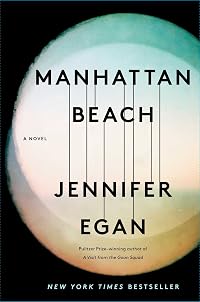
Jennifer Egan was born in Chicago, Illinois on September 6, 1962. She attended the University of Pennsylvania and St. John's College, Cambridge. She is the author of The Invisible Circus, Look at Me, Emerald City and Other Stories, The Keep, and Manhattan Beach, which won the Andrew Carnegie Medal for Excellence in Fiction in 2018. Her title, A show more Visit from the Goon Squad, won both the 2011 Pulitzer Prize and the 2011 National Book Critics Circle Award for fiction. Her short stories have appeared in numerous publications including The New Yorker, Harpers, and Granta. She is a recipient of a Guggenheim Fellowship, a National Endowment for the Arts Fellowship, and a Dorothy and Lewis B. Cullman Fellowship. Her non-fiction articles appear frequently in the New York Times Magazine and have won a number of awards. (Bowker Author Biography) show less
Some Editions
Awards and Honors
Series

Belongs to Publisher Series
Keltainen kirjasto (541)
Common Knowledge
- Canonical title
- The Candy House
- Original publication date
- 2022-04-05
- Epigraph
- The brain--is wider than the Sky--
For--put them side by side--
The one the other will contain
With ease--and You--beside--
Emily Dickinson
For nothing is more unbearable, once one has it, than freedom.
James Baldwin, Giovanni's Room - Dedication
- To my writing group---
Collaborators and compatriots,
Ruth Danon
Lisa Fugard
Melissa Maxwell
David Rosenstock
Elizabeth Tippens - First words
- "I have this craving," Bix said as he stood beside the bed stretching out his shoulders and spine, a nightly ritual before lying down.
- Original language*
- englanti
*Some information comes from Common Knowledge in other languages. Click "Edit" for more information.
Classifications
Statistics
- Members
- 1,908
- Popularity
- 11,218
- Reviews
- 84
- Rating
- (3.73)
- Languages
- 10 — Dutch, English, Finnish, French, German, Italian, Polish, Portuguese, Spanish, Swedish
- Media
- Paper, Audiobook, Ebook
- ISBNs
- 27
- ASINs
- 6