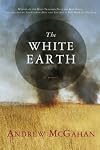
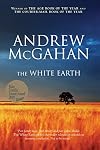
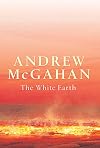
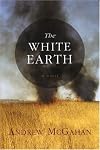
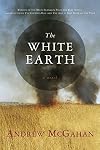
The White Earth
by Andrew McGahan
On This Page
Description
A haunting, powerful novel about the power of the land and the passions of people trying to make it their own.Tags
Recommendations















Member Reviews
A beautiful, timeless, gothic cathedral of a novel. Andrew McGahan, who passed away tragically young this year (2019), remains an underrated Australian novelist. While he is better known for his sardonic novellas capturing Queensland so well and - to younger readers - for his YA fiction, this is McGahan's great work.
Set during the Keating era and the passing of Native Title legislation (with flashbacks to the long dry years of the Menzies era), The White Earth is a story of our country's history, of a brewing war over that same history (a war that, in the 15 years since the novel was published, has erupted), and of the lies we tell to replace an unpalatable truth.
However, far from being didactic, McGahan grounds his examination in show more young William's discovery of his new world, Kunal Station, the farm where he and his recently-widowed mother have been taken in. The farm teems with gothic experiences and strange characters navigating their own paths. Importantly, the author also allows all of his characters to speak their truths, questioning that strange feeling (which I know only too well, as the descendant of a white family 200 years on this soil) of being the possessor of a stolen land while also having a genuine longstanding connection to the land oneself.
It is a novel of questions rather than answers, an earnest look at the challenges of land ownership, of Native Title, of family, and of history itself. show less
Set during the Keating era and the passing of Native Title legislation (with flashbacks to the long dry years of the Menzies era), The White Earth is a story of our country's history, of a brewing war over that same history (a war that, in the 15 years since the novel was published, has erupted), and of the lies we tell to replace an unpalatable truth.
However, far from being didactic, McGahan grounds his examination in show more young William's discovery of his new world, Kunal Station, the farm where he and his recently-widowed mother have been taken in. The farm teems with gothic experiences and strange characters navigating their own paths. Importantly, the author also allows all of his characters to speak their truths, questioning that strange feeling (which I know only too well, as the descendant of a white family 200 years on this soil) of being the possessor of a stolen land while also having a genuine longstanding connection to the land oneself.
It is a novel of questions rather than answers, an earnest look at the challenges of land ownership, of Native Title, of family, and of history itself. show less
I'm always a bit skeptical when something is described as "Dickensian"
but this time I think it very accurate...so I will reuse the
adjective! This ambitious, Dickensian and gothic tale, vividly set in
the plains of Queensland, Australia; is powerful and haunting. It is
the story of small boy who stands to inherit his elderly and
mysterious great uncle's crumbling estate. But it is also the uncle's
story - an unveiling of the events and terrain that has shaped this
man and created the rich and haunted legacy he may pass on. Like the
book below, this is definately on my shortlist for my
book-of-the-year.
but this time I think it very accurate...so I will reuse the
adjective! This ambitious, Dickensian and gothic tale, vividly set in
the plains of Queensland, Australia; is powerful and haunting. It is
the story of small boy who stands to inherit his elderly and
mysterious great uncle's crumbling estate. But it is also the uncle's
story - an unveiling of the events and terrain that has shaped this
man and created the rich and haunted legacy he may pass on. Like the
book below, this is definately on my shortlist for my
book-of-the-year.
Wonderful. A complicated Australian story across three generations, and the title ends up being a literal one. I especially enjoyed the reiterative 'man on fire' motif, and the complicated history of the station over time.
A sad tale of people whose lives are warped by early experiences through the 1900s and how those experiences damage their relationships with others. Set amid the 1990's Native Title reaction to the Mabo decision and the attitudes of different social groups to the movement. And one poor unfortunate child who was manipulated by those around him.
The blurb for the book describes it as Great Expectations sets in modern day Queensland, which I think put me off it for a while as I'm not a huge Dickens fan. It is about a young boy who goes to live with his strange great uncle on at his rundown house after his father dies with the hope that the uncle will like him enough to make him his heir. Interwoven with this is the life story of the uncle, explaining his obsession with the property. It was an interesting story with elements of the gothic (the mysterious house, ghostly figures, wicked housekeeper etc) mixed with commentary about Australia's history and the land rights of Aborigines. Sometimes, I found it hard to place the timing of the story - most of it is set in the 1990s, but show more it doesn't seem like the modern world. Towards the end of the book, I felt that too much of the history was just explained by one character rather than revealed to us through the plot, and it didn't seem believable that someone would be talking about this to a 9 year old boy. However, putting aside these niggles, it was still a decent read that drew me in and kept me interested to the end. show less
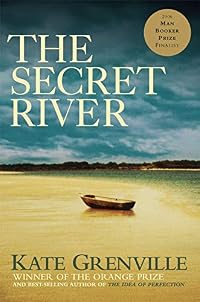
It would seem we have been leaning heavily towards the Australian novel this year with the completion of White Earth by Andrew McGahan. Set in rural Australia during the 1980's Mabo debate, young eight year old William finds himself used as a pawn by his widowed mother and distant uncle in a family struggle of homestead survival. As with Grenville's Secret River, which we read earlier this year, we have a great novel depicting both sides of the rual conflict for land.
It was agreed by most of our readers that it was interesting to read a novel that dealt with the history of our time. Aware of Mabo when it was happening, most of us could not relate to the issue at the time. We all found the characters to be realistic, even if William show more appeared to be a little too insightful for his eight years.
Sue suggested that the second half of the book was much more intriguing than the first half and Viti agreed. She felt the vocabulary was not elevated (say, to a Malouf level) enough to completely keep her interest, whereas Tera thought his description of the Australian bush was beautifully done and I had to agree with her. I found it simple and understated in a countrified way. Something Australians are very good at.
Ann loved its history, people, symbolism and social justice issues ... and it got extra points for the map!
We didn't get too deep with this book as I think we could all clearly see the picture the author was painting. I did think it interesting that Nancy and Denise both commented on the women in the story and their ineptness. This was not meant to be anything other than an observation, but clearly an interesing one as it brought us to the discussion of depression in rual areas and its impact.
The scores ran from 4 to 8, a tight run with Secret River in the popularity stakes for our group. White Earth won the Miles Franklin Award last year, so if you have an interest in Australian fiction, it really is a must read. show less
It was agreed by most of our readers that it was interesting to read a novel that dealt with the history of our time. Aware of Mabo when it was happening, most of us could not relate to the issue at the time. We all found the characters to be realistic, even if William show more appeared to be a little too insightful for his eight years.
Sue suggested that the second half of the book was much more intriguing than the first half and Viti agreed. She felt the vocabulary was not elevated (say, to a Malouf level) enough to completely keep her interest, whereas Tera thought his description of the Australian bush was beautifully done and I had to agree with her. I found it simple and understated in a countrified way. Something Australians are very good at.
Ann loved its history, people, symbolism and social justice issues ... and it got extra points for the map!
We didn't get too deep with this book as I think we could all clearly see the picture the author was painting. I did think it interesting that Nancy and Denise both commented on the women in the story and their ineptness. This was not meant to be anything other than an observation, but clearly an interesing one as it brought us to the discussion of depression in rual areas and its impact.
The scores ran from 4 to 8, a tight run with Secret River in the popularity stakes for our group. White Earth won the Miles Franklin Award last year, so if you have an interest in Australian fiction, it really is a must read. show less
Written by an Aussie author and set in Australia during early settlement days. The story of a man who obsesses over owning land and passing it to his family. a touch mystical, a touch dark, a touch historical.... a good read and interesting to learn a little about settling Australia.
Members
- Recently Added By
Lists

Unread books
1,063 works; 87 members

A Rainbow of Books: Colors in the Title
570 works; 24 members
Author Information

12 Works 1,288 Members
Andrew McGahan published his first book Praise in 1992. His other novels included 1988, Last Drinks, Underground, the Ship Kings series, and The Rich Man's House. He received the Miles Franklin and the Commonwealth Writers' prize in 2005 for The White Earth and the Aurealis Award for Wonders of a Godless World. He won the Matilda prize for his show more 1992 play Bait. He also wrote a collection of children's short stories entitled Treasures of the Deep. He died from pancreatic cancer on February 1, 2019 at the age of 52. (Bowker Author Biography) show less
Awards and Honors
Common Knowledge
- Important places
- Australia; Queensland, Australia
Classifications
Statistics
- Members
- 399
- Popularity
- 77,109
- Reviews
- 11
- Rating
- (3.66)
- Languages
- English, French, Turkish
- Media
- Paper, Audiobook, Ebook
- ISBNs
- 17
- ASINs
- 2