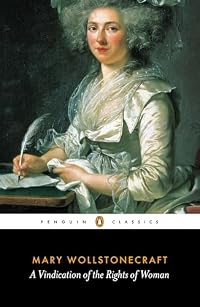
A Vindication of the Rights of Woman
by Mary Wollstonecraft
On This Page
Description
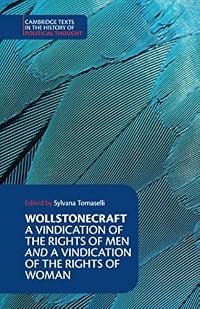
Mary Wollstonecraft wrote Vindication of the Rights of Woman in response to public debate and discussion about the education of women. She argues that women should be educated according to their station, and that they could be more than mere wives to their husbands and educators to their children.The text is one of the earliest works of feminist philosophy.
.
Tags
Recommendations





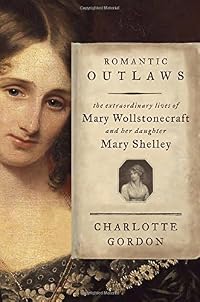


Member Recommendations

by anonymous user

Member Reviews
One of those books I was mildly embarrassed not to have read, so here I am finally getting around to it. Reading A Vindication of the Rights of Woman at a remove of more than two centuries from when it was first published, it was striking to me how much Mary Wollstonecraft's ideas seemed both very relevant (nepo babies! abolish the British monarchy! educate kids equally and let women have careers!) and very dated (classism, racism, and xenophobia, oh my! the Enlightenment Cult of Reason everywhere!) all at once.
For all that she has blinkers on when it comes to issues of class and race, Wollstonecraft is surprisingly acute at making the connection between broader issues of hierarchy and oppression and discrimination against women. Her show more flaying of Rousseau was also super satisfying ("'Educate women like men,' says Rousseau, 'and the more they resemble our sex the less power will they have over us.' This is the very point I aim at. I do not wish them to have power over men; but over themselves."), and I appreciated throughout Wollstonecraft's willingness to call bullshit, even if I didn't always agree with the points she was making.
Wollstonecraft probably has made all of her main points by halfway through A Vindication, and the internal structure of the book could have used some refining to make it less repetitive, but it still retains enough of its power that you can see why it was such a landmark manifesto. show less
For all that she has blinkers on when it comes to issues of class and race, Wollstonecraft is surprisingly acute at making the connection between broader issues of hierarchy and oppression and discrimination against women. Her show more flaying of Rousseau was also super satisfying ("'Educate women like men,' says Rousseau, 'and the more they resemble our sex the less power will they have over us.' This is the very point I aim at. I do not wish them to have power over men; but over themselves."), and I appreciated throughout Wollstonecraft's willingness to call bullshit, even if I didn't always agree with the points she was making.
Wollstonecraft probably has made all of her main points by halfway through A Vindication, and the internal structure of the book could have used some refining to make it less repetitive, but it still retains enough of its power that you can see why it was such a landmark manifesto. show less
A Vindication of the Rights of Woman was originally published in 1792. Nearly 180 years later when Source Book Press republished it, women were still clamoring for those rights. Title IX of the Education Amendments wasn't even a thing until 1972. Think about that for just one second. In 1792 Wollstonecraft was demanding justice for her half of the human race as loudly as she could. Hers was a plea for all womenkind and not a singular selfish act of only thinking of herself. She argued that reason, virtue, and knowledge were the keys to a successful life regardless of your sex. However, the notion that physical strength promotes power indicates a man's authority over a weaker woman exists even today. To put it crudely, inequality among show more the sexes is still a thing. To be sentimental is to be silly.
Wollstonecraft was not afraid to challenge her readers, asking us what does it mean to be respectable? To have virtue? To be a woman of quality? Are these traits euphemisms for weakness? She addresses the assumption that women are designed to feel before applying reason. Maybe that is why men are trained to never argue with a woman in public (she might become irrational) or allow a woman to exert physical strength (unseemly). Most of Wollstonecraft's arguments are disguised as philosophical and moral conversations with Rousseau. show less
Wollstonecraft was not afraid to challenge her readers, asking us what does it mean to be respectable? To have virtue? To be a woman of quality? Are these traits euphemisms for weakness? She addresses the assumption that women are designed to feel before applying reason. Maybe that is why men are trained to never argue with a woman in public (she might become irrational) or allow a woman to exert physical strength (unseemly). Most of Wollstonecraft's arguments are disguised as philosophical and moral conversations with Rousseau. show less
Terwijl de Franse Revolutie nog volop in beweging was, schreef de oermoeder van het feminisme, Mary Wollstonecraft, in 1792 haar Pleidooi voor de rechten van de vrouw. Daarin trok zij ten strijde tegen de achterstelling die vrouwen al sinds mensenheugenis moesten ondergaan en tegen de vooroordelen die vooraanstaande denkers uit die tijd over vrouwen koesterden. Vrouwen moesten wat haar betreft in alle opzichten dezelfde kansen krijgen als mannen. Ze moesten beroepen kunnen uitoefenen en bijvoorbeeld medicus of vroedvrouw kunnen worden. En vrouwen hoorden vertegenwoordigd te zijn in de politiek, zodat ze zich de wet niet langer hoefden te laten voorschrijven door mannelijke politici. Wollstonecraft schreef haar Pleidooi met grote felheid show more en levendigheid. show less
I'm torn on this one. One the one had, this is the founding document of feminism, of which I am a modern day beneficiary. On the other hand, I found a lot that I could not relate to.
It's a single volume of what was intended to be a 3 volume treatise, this isn't a fully finished article. It also has the feel of having been written swiftly, it doesn't follow an entirely logical sequence, and it repeats itself more than once. On the other hand, this gives it an impression of being written with feeling (which is ironic, when reading the view on emotions expressed in this).
What I didn't relate to:
The reasons for wanting to educate women is so that they can use reason to supplant emotions.
Passion is a sign of weakness.
Women should be show more equal so that they can gain merit in heaven for their souls
An educated women makes for a better mother to her children
That marriage & motherhood should be a woman's ideal.
There's a lot in there that I found impossible to relate to. It seems to me that she wants to make women into female men. The trouble with that being that she then wants to assign women to a set role in life, that of wife and mother. I can't see that suppressing emotion to reason is ever a good idea, it strikes me as a recipe for mental health issues. Life is a balance between head and heart, not the suppression of one to the other. And to argue that passion is not worth the same as reason is to ignore the impact that emotion can have on a life. It also strikes me that her life is not an example of practicing what she preaches. Her attempt to commit suicide after Imlay deserted her and her marriage to Godwin suggest, to me, that she would, herself, be unable to meet her own expectations. It strikes me as an argument that only works in the abstract.
The call on religion is, clearly, of its time and is something that makes a lot of this hard to take seriously. I also note that she fails to take issue with the attribution of God as male, which is something I find unpalatable.
The limitation of the women's role to the sphere of wife and mother is somewhat inexplicable. Mary Wollstencraft would seem to be an example of a woman who wanted a life outside that sphere, as she didn't fit that role herself. It seems an odd contrast again.
On the other hand, there is a lot of ambition in this. She wants equal opportunities for education of both sexes, in fact going as far as to propose primary schools on a national basis. There is the call for women to be represented in parliament (along with the point that the franchise is still very small at this time, and that the majority of the poor are also disenfranchised). There's the wish to change the law to allow women to have civil rights, to be able to hold their own property and have control of their own income.
The other oddity in this was that this is directed purely to middle class women. It's not intended as a broad rallying cry for women. I'm not sure I can understand the logic of this.
It's difficult to rate books from a different era, their starting point is so different from where we are now. I wanted to love this, to find it as a rallying cry that I could take up. It didn't work out like that, there was a lot of good, but there was too much that I found hard to get behind. show less
It's a single volume of what was intended to be a 3 volume treatise, this isn't a fully finished article. It also has the feel of having been written swiftly, it doesn't follow an entirely logical sequence, and it repeats itself more than once. On the other hand, this gives it an impression of being written with feeling (which is ironic, when reading the view on emotions expressed in this).
What I didn't relate to:
The reasons for wanting to educate women is so that they can use reason to supplant emotions.
Passion is a sign of weakness.
Women should be show more equal so that they can gain merit in heaven for their souls
An educated women makes for a better mother to her children
That marriage & motherhood should be a woman's ideal.
There's a lot in there that I found impossible to relate to. It seems to me that she wants to make women into female men. The trouble with that being that she then wants to assign women to a set role in life, that of wife and mother. I can't see that suppressing emotion to reason is ever a good idea, it strikes me as a recipe for mental health issues. Life is a balance between head and heart, not the suppression of one to the other. And to argue that passion is not worth the same as reason is to ignore the impact that emotion can have on a life. It also strikes me that her life is not an example of practicing what she preaches. Her attempt to commit suicide after Imlay deserted her and her marriage to Godwin suggest, to me, that she would, herself, be unable to meet her own expectations. It strikes me as an argument that only works in the abstract.
The call on religion is, clearly, of its time and is something that makes a lot of this hard to take seriously. I also note that she fails to take issue with the attribution of God as male, which is something I find unpalatable.
The limitation of the women's role to the sphere of wife and mother is somewhat inexplicable. Mary Wollstencraft would seem to be an example of a woman who wanted a life outside that sphere, as she didn't fit that role herself. It seems an odd contrast again.
On the other hand, there is a lot of ambition in this. She wants equal opportunities for education of both sexes, in fact going as far as to propose primary schools on a national basis. There is the call for women to be represented in parliament (along with the point that the franchise is still very small at this time, and that the majority of the poor are also disenfranchised). There's the wish to change the law to allow women to have civil rights, to be able to hold their own property and have control of their own income.
The other oddity in this was that this is directed purely to middle class women. It's not intended as a broad rallying cry for women. I'm not sure I can understand the logic of this.
It's difficult to rate books from a different era, their starting point is so different from where we are now. I wanted to love this, to find it as a rallying cry that I could take up. It didn't work out like that, there was a lot of good, but there was too much that I found hard to get behind. show less
As the rights of man were debated across Europe due to the revolutions in America and France, the other half of the population appeared to be forgotten about especially when French National Assembly was presented a report that women should almost expect a “domestic education”. A Vindication of the Rights of Women by Mary Wollstonecraft is an answer not only to that report to the French National Assembly and to Jean-Jacques Rousseau’s Emile where he also covered the education of women.
Through 255 pages of text Wollstonecraft examined the current dominate methods of educating women, criticism of those methods and other proposed methods, and finally putting forth her own argument for giving women a rational education. The key to her show more argument for Wollstonecraft is that women as mothers will be the first educators their children have before they are handed to professionals who’ll advance their learning, given their position women should be given a proper education to fulfill this role and if their husband were to pass, a proper education would allow them to ensure her family’s well-being until her children have grown up as well as secure her own well-being in her old age. Wollstonecraft proposed a national education system in which both boys and girls and from all social classes would learn together in their early years before separating to more specific education for their duties—though if a child of a lower social class were to be particularly gifted he should be sponsored by the government to further his education and thus benefit the whole nation. One of the major criticisms that Wollstonecraft had was that if women continued to be treated as mere future property of their husbands with an education only for that end instead of as “companions” of their husbands, as future mothers, and possible heads of household if unforeseen circumstances arose. Wollstonecraft continually brought up Rousseau’s suggestions for the education of women and attacked them, to the point where it was becoming repetitive and beyond what was needed, which she somewhat acknowledged late in the essay. Another critique I had about the essay was that Wollstonecraft decided to write it after reading the 1791 report on education by Charles Maurice de Talleyrand-Périgord that he presented to the French National Assembly that she disagreed with, yet she barely mentioned its existence even when discussing her counterproposals to it. However, even with those criticisms this is an important philosophical essay as well as political theory, which acknowledges that women are important for the body politic and whose education is important for the well-being of the next generation and that all children should receive the same education as provided by the state in their early years.
A Vindication of the Rights of Women is one of the two important works by Mary Wollstonecraft; its influence would be delayed but still be important in the two centuries after her death. show less
Through 255 pages of text Wollstonecraft examined the current dominate methods of educating women, criticism of those methods and other proposed methods, and finally putting forth her own argument for giving women a rational education. The key to her show more argument for Wollstonecraft is that women as mothers will be the first educators their children have before they are handed to professionals who’ll advance their learning, given their position women should be given a proper education to fulfill this role and if their husband were to pass, a proper education would allow them to ensure her family’s well-being until her children have grown up as well as secure her own well-being in her old age. Wollstonecraft proposed a national education system in which both boys and girls and from all social classes would learn together in their early years before separating to more specific education for their duties—though if a child of a lower social class were to be particularly gifted he should be sponsored by the government to further his education and thus benefit the whole nation. One of the major criticisms that Wollstonecraft had was that if women continued to be treated as mere future property of their husbands with an education only for that end instead of as “companions” of their husbands, as future mothers, and possible heads of household if unforeseen circumstances arose. Wollstonecraft continually brought up Rousseau’s suggestions for the education of women and attacked them, to the point where it was becoming repetitive and beyond what was needed, which she somewhat acknowledged late in the essay. Another critique I had about the essay was that Wollstonecraft decided to write it after reading the 1791 report on education by Charles Maurice de Talleyrand-Périgord that he presented to the French National Assembly that she disagreed with, yet she barely mentioned its existence even when discussing her counterproposals to it. However, even with those criticisms this is an important philosophical essay as well as political theory, which acknowledges that women are important for the body politic and whose education is important for the well-being of the next generation and that all children should receive the same education as provided by the state in their early years.
A Vindication of the Rights of Women is one of the two important works by Mary Wollstonecraft; its influence would be delayed but still be important in the two centuries after her death. show less
As convenient as it can sometimes be, a disadvantage of reading from anthologies is that one can graduate from college with the vague notion that one has read a work in its entirety, only to discover later that in fact one has read only a page and a half of it in a long-forgotten Eighteenth-Century British Literature class. Which, as you may have guessed, is exactly what happened to me with Mary Wollstonecraft's seminal 1792 treatise A Vindication of the Rights of Woman. I'm happy to have rectified my mistake at last and read Vindication from cover to cover. Unsurprisingly, Wollstonecraft's arguments assume a significant degree more complexity and idiosyncrasy on what I had, until recently, been thinking of as my "second time show more through."
And in fact, as much as she would probably have disapproved of the comment, it was Wollstonecraft's own character that particularly appealed to me throughout this reading. I agreed with her on some points and disagreed with her on others, but throughout I enjoyed her forthrightness, her willingness, to use a modern phrase, to call bullshit on all the male arguments used to claim that women's natural state is one of gentle, slavish devotion, and that women should not be allowed physical or mental exertion. In her impatience with sickly-sweet yet fundamentally condescending verbiage about the "angelic innocence" of women, and with male writers' self-serving insistence that women are formed for the sole purpose of pleasing men, I spied a kindred spirit and was cheering (and sometimes, out of recognition) chuckling along with her outrage. I love how, for example, halfway through a passage quoted from Rousseau on his proposed method of educating women, she can't stand to wait until the end to comment and appends a footnote reading only, "What nonsense!" Neither is she afraid of the exclamation point: "Without knowledge there can be no morality!" she exclaims, and "Ignorance is a frail base for virtue!" I felt throughout, however, that she earned those exclamation points: these are infuriatingly simple and logical conclusions that are nonetheless STILL often disregarded when we educate girls to be sexy rather than smart, charming and flighty rather than honest and self-respecting.
I'm reminded of the men who yell at me as I walk down the street lost in thought: "You'd be prettier if you smiled!" As if being eye candy for random men is somehow supposed to be my top priority. Oh sorry! I forgot to think about PLEASING STRANGE MEN while I was cogitating on existential literature! And again:
THANK YOU, MARY WOLLSTONECRAFT. Her discussions of what has come to be called "the male gaze"—the way in which girls and women are taught to think always of how their conduct will appear to men, and act accordingly, rather than acting to please themselves or in accordance with what is most appropriate to the situation—struck me as particularly insightful. In the paragraph following the one I quoted on Fordyce, for example, she points out that he (a preacher) tries to lure women into religious piety by arguing that men find it sexually attractive when women are lost in pious contemplation. Seriously, how insulting! I'm not even religious, and I understand how disrespectful that argument is to the deeply-held beliefs of people engaged with their faith. And yet, have things really changed? I'm reminded of so-called "womens' magazines" and the arguments they use to convince women to go to the gym: it's all about appearing more sexually attractive to a potential partner; and only lip-service is paid to the idea that a woman would value herself enough to want to make her body stronger and healthier for her own sake.
Not that there weren't areas where Wollstonecraft and I diverge. She shares, for example, the common Enlightenment belief in humankind's ability to approach perfection through rational discourse, to achieve a state closer to God through the application of reason. Although I agree with her that men and women both benefit by the frequent exercise of their physical and mental faculties, I'm skeptical about how perfectible or rational the human race, or any individual, really is. Moreover, either because or in spite of my religious atheism/agnosticism, I tend to find Enlightenment arguments about the human ability to know God through logic a bit silly:
I mean, what? Judeo-Christian friends: is that sound theology? Why does one quality necessarily imply the others? I can easily imagine omnipotence without goodness, for example, just like every day I experience perfectly robust morality with no particular basis in divinity. Arguments like this always strike me as simply a human being imagining all the good things he can think of, combining them in his imagination into one Being, and then claiming that because he can conceptualize this Being, it must exist. And when I say "he," I mean Descartes. But apparently Mary Wollstonecraft as well. It's as if I made a drawing of my dream house, and then claimed that because I drew it, it must be available for purchase. My drawing doesn't prove that the house isn't available; but neither is it proof that it is.
Not only that, but in her quest to agitate for the education of women as strong, rational creatures, Wollstonecraft veers so far in favor of strength and reason that she leaves little room for human vulnerability. Take the passage quoted above, for example, on the treatment of fear in girls and boys. While I agree that kids shouldn't be encouraged to be shrieking and cowering away from every little thing when they wouldn't be doing that naturally, I can hardly agree that their fear should be treated like that of boys in the sense of being sternly reprimanded, shamed, told that "boys don't cry," and so on. My personal ideal for both genders is a happy medium between the affected over-sensitivity that has historically been associated with women, and the repressive, uncommunicative stoicism that has often been expected of men. Humans feel fear, tenderness, anger, and so on for reasons, and it's illogical and unwise, in my opinion, to teach children to distort or disregard their true feelings rather than acknowledging those feelings and taking them into account when deciding how to act. (Not, of course, that a passing emotion should be the ONLY criterion for action; just that it should be, ideally, one piece of valid data among others.) Moreover, there's a difference between "fear" and "cowardice"; in equating the two, it seems to me Wollstonecraft is removing the possibility of courage, which I'd define as following through on a difficult action despite feeling afraid.
(And in passing, Wollstonecraft's aversion to instinct struck me as one of the strangest facets of the book. She denigrates it even to the point of arguing that animal instinct somehow doesn't reflect her God: "Thus [sensibility] is defined by Dr. Johnson, and the definition gives me no other idea than of the most exquisitely polished instinct. I discern not a trace of the image of God in either sensation or matter." Yet where else would it come from, given her own belief in an all-powerful creator Being? I realize that, for Enlightenment thinkers, the gift of reason is what elevates humans above animals, but surely a benevolent God wouldn't endow the animals with an outright malevolent quality? A very odd, if minor, point.)
Like most philosophers, then, Wollstonecraft takes certain positions with which I personally disagree; her feminism is, unsurprisingly, neither so radical nor so inclusive as that of certain more recent writers. Still, as an early, passionate step toward female equality, not to mention as a document of the tumultuous times (Wollstonecraft's argument is very tied up with the Republican rhetoric of democracy and equality which were giving rise to the American and French revolutions), Vindication of the Rights of Woman is an important and thought-provoking read, and one I'm glad to have in my repertoire. show less
And in fact, as much as she would probably have disapproved of the comment, it was Wollstonecraft's own character that particularly appealed to me throughout this reading. I agreed with her on some points and disagreed with her on others, but throughout I enjoyed her forthrightness, her willingness, to use a modern phrase, to call bullshit on all the male arguments used to claim that women's natural state is one of gentle, slavish devotion, and that women should not be allowed physical or mental exertion. In her impatience with sickly-sweet yet fundamentally condescending verbiage about the "angelic innocence" of women, and with male writers' self-serving insistence that women are formed for the sole purpose of pleasing men, I spied a kindred spirit and was cheering (and sometimes, out of recognition) chuckling along with her outrage. I love how, for example, halfway through a passage quoted from Rousseau on his proposed method of educating women, she can't stand to wait until the end to comment and appends a footnote reading only, "What nonsense!" Neither is she afraid of the exclamation point: "Without knowledge there can be no morality!" she exclaims, and "Ignorance is a frail base for virtue!" I felt throughout, however, that she earned those exclamation points: these are infuriatingly simple and logical conclusions that are nonetheless STILL often disregarded when we educate girls to be sexy rather than smart, charming and flighty rather than honest and self-respecting.
I particularly object to the lover-like phrases of pumped up passion, which are every where interspersed [in Fordyce's sermons]. If women be ever allowed to walk without leading-strings, why must they be cajoled into virtue by artful flattery and sexual compliments? Speak to them the language of truth and soberness, and away with the lullaby strains of condescending endearment! Let them be taught to respect themselves as rational creatures, and not led to have a passion for their own insipid persons. It moves my gall to hear a preacher descanting on dress and needle-work; and still more, to hear him address the British fair, the fairest of the fair, as if they had only feelings.
I'm reminded of the men who yell at me as I walk down the street lost in thought: "You'd be prettier if you smiled!" As if being eye candy for random men is somehow supposed to be my top priority. Oh sorry! I forgot to think about PLEASING STRANGE MEN while I was cogitating on existential literature! And again:
To carry the remark still further, if fear in girls, instead of being cherished, perhaps, created, were treated in the same manner as cowardice in boys, we should quickly see women with more dignified aspects. It is true, they could not then with equal propriety be termed the sweet flowers that smile in the walk of man; but they would be more respectable members of society, and discharge the important duties of life by the light of their own reason. 'Educate women like men,' says Rousseau, 'and the more they resemble our sex the less power will they have over us.' This is the very point I aim at. I do not wish them to have power over men; but over themselves.
THANK YOU, MARY WOLLSTONECRAFT. Her discussions of what has come to be called "the male gaze"—the way in which girls and women are taught to think always of how their conduct will appear to men, and act accordingly, rather than acting to please themselves or in accordance with what is most appropriate to the situation—struck me as particularly insightful. In the paragraph following the one I quoted on Fordyce, for example, she points out that he (a preacher) tries to lure women into religious piety by arguing that men find it sexually attractive when women are lost in pious contemplation. Seriously, how insulting! I'm not even religious, and I understand how disrespectful that argument is to the deeply-held beliefs of people engaged with their faith. And yet, have things really changed? I'm reminded of so-called "womens' magazines" and the arguments they use to convince women to go to the gym: it's all about appearing more sexually attractive to a potential partner; and only lip-service is paid to the idea that a woman would value herself enough to want to make her body stronger and healthier for her own sake.
Not that there weren't areas where Wollstonecraft and I diverge. She shares, for example, the common Enlightenment belief in humankind's ability to approach perfection through rational discourse, to achieve a state closer to God through the application of reason. Although I agree with her that men and women both benefit by the frequent exercise of their physical and mental faculties, I'm skeptical about how perfectible or rational the human race, or any individual, really is. Moreover, either because or in spite of my religious atheism/agnosticism, I tend to find Enlightenment arguments about the human ability to know God through logic a bit silly:
The only solid foundation for morality appears to be the character of the supreme Being; the harmony of which arises from a balance of attributes;—and, to speak with reverence, one attribute seems to imply the necessity of another. He must be just, because he is wise, he must be good, because he is omnipotent.
I mean, what? Judeo-Christian friends: is that sound theology? Why does one quality necessarily imply the others? I can easily imagine omnipotence without goodness, for example, just like every day I experience perfectly robust morality with no particular basis in divinity. Arguments like this always strike me as simply a human being imagining all the good things he can think of, combining them in his imagination into one Being, and then claiming that because he can conceptualize this Being, it must exist. And when I say "he," I mean Descartes. But apparently Mary Wollstonecraft as well. It's as if I made a drawing of my dream house, and then claimed that because I drew it, it must be available for purchase. My drawing doesn't prove that the house isn't available; but neither is it proof that it is.
Not only that, but in her quest to agitate for the education of women as strong, rational creatures, Wollstonecraft veers so far in favor of strength and reason that she leaves little room for human vulnerability. Take the passage quoted above, for example, on the treatment of fear in girls and boys. While I agree that kids shouldn't be encouraged to be shrieking and cowering away from every little thing when they wouldn't be doing that naturally, I can hardly agree that their fear should be treated like that of boys in the sense of being sternly reprimanded, shamed, told that "boys don't cry," and so on. My personal ideal for both genders is a happy medium between the affected over-sensitivity that has historically been associated with women, and the repressive, uncommunicative stoicism that has often been expected of men. Humans feel fear, tenderness, anger, and so on for reasons, and it's illogical and unwise, in my opinion, to teach children to distort or disregard their true feelings rather than acknowledging those feelings and taking them into account when deciding how to act. (Not, of course, that a passing emotion should be the ONLY criterion for action; just that it should be, ideally, one piece of valid data among others.) Moreover, there's a difference between "fear" and "cowardice"; in equating the two, it seems to me Wollstonecraft is removing the possibility of courage, which I'd define as following through on a difficult action despite feeling afraid.
(And in passing, Wollstonecraft's aversion to instinct struck me as one of the strangest facets of the book. She denigrates it even to the point of arguing that animal instinct somehow doesn't reflect her God: "Thus [sensibility] is defined by Dr. Johnson, and the definition gives me no other idea than of the most exquisitely polished instinct. I discern not a trace of the image of God in either sensation or matter." Yet where else would it come from, given her own belief in an all-powerful creator Being? I realize that, for Enlightenment thinkers, the gift of reason is what elevates humans above animals, but surely a benevolent God wouldn't endow the animals with an outright malevolent quality? A very odd, if minor, point.)
Like most philosophers, then, Wollstonecraft takes certain positions with which I personally disagree; her feminism is, unsurprisingly, neither so radical nor so inclusive as that of certain more recent writers. Still, as an early, passionate step toward female equality, not to mention as a document of the tumultuous times (Wollstonecraft's argument is very tied up with the Republican rhetoric of democracy and equality which were giving rise to the American and French revolutions), Vindication of the Rights of Woman is an important and thought-provoking read, and one I'm glad to have in my repertoire. show less
Mary Wollstonecraft is often credited with being the world’s first feminist. That may be something of an exaggeration, but her 1792 treatise A Vindication of the Rights of Woman is certainly renowned as the earliest, most powerful, most overtly feminist tract in the English language – despite having been written long before the word “feminism” was coined.
The dense wordy style of an eighteenth century political tract is easily enough to put off the majority of modern readers, but – for the brave or committed reader – this work more than repays the effort required. Indeed, what struck me is how much of what Wollstonecraft says in A Vindication resounds in the modern world.
Her argument (addressed primarily to the position of show more middle-class women) is that a lack of effective and appropriate education, and a distorted view of women’s purpose in life, have combined to render many or most women weak, foolish, vain, selfish, cunning and unfit for what Wollstonecraft sees as their peculiar (but not primary) duty – that of motherhood.
[Aside: much to my satisfaction, there are a number of pro-breastfeeding remarks in A Vindication, and Wollstonecraft repeatedly makes the point that beauty requirements and other foolish demands on women make them averse to breastfeeding with potentially disastrous consequences!]
She argues powerfully that society (by which she means, primarily, men – since they have all the education and the political and economic power) fails women in a number of ways.
For one thing, it makes them utterly dependent financially on men – fathers, husbands, brothers or other relatives. The effect is that for self-preservation women must adopt a subservient, self-abasing attitude to men. This degrades them twice: once in dignity; and then (which makes me think of Dickens’ Uriah Heep!) by forcing them to use cunning – those famous “womanly wiles” – to get what they want or need but cannot obtain for themselves.
Secondly, society assigns to women an obligation to please men, and to be pleasing to them. This springs in part from their aforementioned dependence on men, and is reinforced by the fact that precious little other outlet is given them for their emotions and ambitions. The consequence is that women, being admired far more for their persons than for their minds, expend all their care and effort on the former at the expense of the latter. They become vain, and bitchy, and obsessed with “beauty”, by which they mean weak delicate bodies decorated in whatever ornaments are currently in fashion.
More than all this, what women suffer is a total lack of any education worth the name. It is their want of a proper education which narrows their horizons and reinforces both their dependence on men and their inordinate concern for petty things such as their dress or (by outward show, if not in practice) maintenance of the one virtue that no woman must be without – chastity.
Such women as this, Wollstonecraft argues, inevitably become hopelessly caught up in “vice” – vanity and cupidity if nothing else – and will inevitably lack any real virtue such as genuine chastity, proper affection, loyalty or generosity, selfless friendship, or sound understanding. Moreover, such women as this will also invariably either neglect their children in favour of pursuing the “necessary” activity of continuing to please men by maintaining their beauty and other charms – or they will devote themselves excessively to their children but, because they lack both judgement and sound understanding, they will be unable to respond to their children properly and thus will risk spoiling either their health or their tempers, perhaps irremediably. In either case, such a woman as this will be unable to carry out her peculiar (but not primary) duty: to bring up children who are healthy, happy, well-behaved and suitably educated.
Wollstonecraft’s primary aims in A Vindication are twofold.
Firstly, she endeavours to sweep away the lingering idea – by making clear how nonsensical and self-contradictory it is – that Woman was made by God to be a plaything and propagator for Man, and that she has no true rationality or personhood of her own.
Secondy, she makes a strident plea for proper education for women. If women were given a level playing field and still fell behind men, she says, it would be appropriate to charge them with inferiority. Unless and until that happens, she insists that no man can prove women inferior. But, she says, even if we believe that women are in some way less than men, they are still human beings, still rational creatures, and still (as she says) given an immortal soul which it is their sacred duty to expand and develop. It is wrong for women to be oppressed and prevented from meeting this sacred duty, merely because of an (unproved!) idea that women will or may not actually achieve their aim in the same degree as men. Indeed, if that were not argument enough, it should be remembered that failing to educate women properly will prevent them from meeting their secondary duty – that of mothering – because it renders them unfit for the job.
In short: Women are Human! and Education for All!
More than that, Wollstonecraft anticiaptes, by around two centuries, a surprising number of modern feminist ideas. Women as sex class? The beauty myth? Socially constructed gender roles? The seeds of all these ideas and more can be found in A Vindication. Wollstonecraft even suggests – although tentatively, aware of the response that she would get for it – that perhaps women might at some point have a legitimate claim to taking some part in the government of their country. So we can credit her with “Votes for Women!” too.
Superb. show less
The dense wordy style of an eighteenth century political tract is easily enough to put off the majority of modern readers, but – for the brave or committed reader – this work more than repays the effort required. Indeed, what struck me is how much of what Wollstonecraft says in A Vindication resounds in the modern world.
Her argument (addressed primarily to the position of show more middle-class women) is that a lack of effective and appropriate education, and a distorted view of women’s purpose in life, have combined to render many or most women weak, foolish, vain, selfish, cunning and unfit for what Wollstonecraft sees as their peculiar (but not primary) duty – that of motherhood.
[Aside: much to my satisfaction, there are a number of pro-breastfeeding remarks in A Vindication, and Wollstonecraft repeatedly makes the point that beauty requirements and other foolish demands on women make them averse to breastfeeding with potentially disastrous consequences!]
She argues powerfully that society (by which she means, primarily, men – since they have all the education and the political and economic power) fails women in a number of ways.
For one thing, it makes them utterly dependent financially on men – fathers, husbands, brothers or other relatives. The effect is that for self-preservation women must adopt a subservient, self-abasing attitude to men. This degrades them twice: once in dignity; and then (which makes me think of Dickens’ Uriah Heep!) by forcing them to use cunning – those famous “womanly wiles” – to get what they want or need but cannot obtain for themselves.
Secondly, society assigns to women an obligation to please men, and to be pleasing to them. This springs in part from their aforementioned dependence on men, and is reinforced by the fact that precious little other outlet is given them for their emotions and ambitions. The consequence is that women, being admired far more for their persons than for their minds, expend all their care and effort on the former at the expense of the latter. They become vain, and bitchy, and obsessed with “beauty”, by which they mean weak delicate bodies decorated in whatever ornaments are currently in fashion.
More than all this, what women suffer is a total lack of any education worth the name. It is their want of a proper education which narrows their horizons and reinforces both their dependence on men and their inordinate concern for petty things such as their dress or (by outward show, if not in practice) maintenance of the one virtue that no woman must be without – chastity.
Such women as this, Wollstonecraft argues, inevitably become hopelessly caught up in “vice” – vanity and cupidity if nothing else – and will inevitably lack any real virtue such as genuine chastity, proper affection, loyalty or generosity, selfless friendship, or sound understanding. Moreover, such women as this will also invariably either neglect their children in favour of pursuing the “necessary” activity of continuing to please men by maintaining their beauty and other charms – or they will devote themselves excessively to their children but, because they lack both judgement and sound understanding, they will be unable to respond to their children properly and thus will risk spoiling either their health or their tempers, perhaps irremediably. In either case, such a woman as this will be unable to carry out her peculiar (but not primary) duty: to bring up children who are healthy, happy, well-behaved and suitably educated.
Wollstonecraft’s primary aims in A Vindication are twofold.
Firstly, she endeavours to sweep away the lingering idea – by making clear how nonsensical and self-contradictory it is – that Woman was made by God to be a plaything and propagator for Man, and that she has no true rationality or personhood of her own.
Secondy, she makes a strident plea for proper education for women. If women were given a level playing field and still fell behind men, she says, it would be appropriate to charge them with inferiority. Unless and until that happens, she insists that no man can prove women inferior. But, she says, even if we believe that women are in some way less than men, they are still human beings, still rational creatures, and still (as she says) given an immortal soul which it is their sacred duty to expand and develop. It is wrong for women to be oppressed and prevented from meeting this sacred duty, merely because of an (unproved!) idea that women will or may not actually achieve their aim in the same degree as men. Indeed, if that were not argument enough, it should be remembered that failing to educate women properly will prevent them from meeting their secondary duty – that of mothering – because it renders them unfit for the job.
In short: Women are Human! and Education for All!
More than that, Wollstonecraft anticiaptes, by around two centuries, a surprising number of modern feminist ideas. Women as sex class? The beauty myth? Socially constructed gender roles? The seeds of all these ideas and more can be found in A Vindication. Wollstonecraft even suggests – although tentatively, aware of the response that she would get for it – that perhaps women might at some point have a legitimate claim to taking some part in the government of their country. So we can credit her with “Votes for Women!” too.
Superb. show less
Members
- Recently Added By
Lists

100 Books to Read in a Lifetime (That Are Older Than 200 Years)
415 works; 173 members

Libertarian Books
102 works; 18 members

Best Feminist Literature
188 works; 26 members

The Road to Freedom (Will Durant's 100 Best Books for an Education)
100 works; 8 members

The Well-Educated Mind Reading Challenge
75 works; 7 members

Jenny, read this!
6 works; 1 member

Well-Educated Mind
150 works; 3 members

Política - Clásicos
164 works; 2 members

2021 - List of books read
53 works; 1 member

Books Read in 2026
1,796 works; 63 members

Reading LIst
648 works; 1 member

Recommended Reading : 600 Classics Reviewed, Editors of Salem Press, 2015
634 works; 6 members

The Well-Educated Mind, Susan Wise Bauer, 2016
179 works; 3 members

Philosophy, Politics and Economics
61 works; 1 member

Greatest Books, allegedly
484 works; 9 members

Read These Too
458 works; 9 members

1790s
6 works; 1 member
500 Great Books by Women
507 works; 60 members

My TBR Challenge Leftovers
22 works; 1 member

Northern Exposure's Chris in the Morning Reading List
31 works; 1 member

Women's reading list
50 works; 7 members
Female Author
1,235 works; 66 members
Literature About Women and Girls
394 works; 39 members

Books cited in Progress by Samuel McDonald
160 works; 1 member

Unread books
1,063 works; 85 members
Author Information

51+ Works 7,891 Members
Mary Wollstonecraft was born in London on April 27, 1759. She opened a school in Newington Green with her sister Eliza and a friend Fanny Blood in 1784. Her experiences lead her to attack traditional teaching methods and suggested new topics of study in Thoughts on the Education of Girls. In 1792, she published A Vindication of the Rights of show more Woman, in which she attacked the educational restrictions that kept women ignorant and dependant on men as well as describing marriage as legal prostitution. In Maria or the Wrongs of Woman, published unfinished in 1798, she asserted that women had strong sexual desires and that it was degrading and immoral to pretend otherwise. In 1793, Wollstonecraft became involved with American writer Gilbert Imlay and had a daughter named Fanny. After this relationship ended, she married William Godwin in March 1797 and had a daughter named Mary in August. Wollstonecraft died from complications following childbirth on September 10, 1797. Her daughter Mary later married Percy Bysshe Shelley and wrote Frankenstein. (Bowker Author Biography) show less
Some Editions
Awards and Honors
Notable Lists
The 20 Most Popular Books Throughout History (12: 1792)
Series
Belongs to Publisher Series
Penguin Great Ideas (11)
Work Relationships
Is contained in
Has the adaptation
Is abridged in
Has as a reference guide/companion
Has as a study
Has as a student's study guide
Common Knowledge
- Canonical title
- A Vindication of the Rights of Woman
- Original publication date
- 1792
- People/Characters
- Mary Wollstonecraft; Jean-Jacques Rousseau
- Important events
- French Revolution
- First words
- In the present state of society it appears necessary to go back to first principles in search of the most simple truths, and to dispute with some prevailing prejudice every inch of ground.
- Quotations
- "Educate women like men," says Rousseau, "and the more they resemble our sex the less power will they have over us." This is the very point I aim at. I do not wish them to have power over men; but over themselves.
- Original language
- English
- Canonical DDC/MDS
- 305.42
- Canonical LCC
- HQ1596.W6
Classifications
- Genres
- Sexuality and Gender Studies, Philosophy, General Nonfiction, Nonfiction, History
- DDC/MDS
- 305.42 — Society, government, & culture Social sciences, sociology & anthropology Social group - Age, Gender, Ethnicity Women Social role and status of women
- LCC
- HQ1596 .W6 — Social sciences The family. Marriage, Women and Sexuality The Family. Marriage. Women Women. Feminism
- BISAC
Statistics
- Members
- 4,682
- Popularity
- 3,061
- Reviews
- 36
- Rating
- (3.88)
- Languages
- 16 — Czech, Danish, Dutch, English, Finnish, French, German, Hungarian, Italian, Norwegian (Bokmål), Polish, Portuguese, Croatian, Spanish, Swedish, Turkish
- Media
- Paper, Audiobook, Ebook
- ISBNs
- 189
- UPCs
- 2
- ASINs
- 88