
A Room of One's Own / Three Guineas
by Virginia Woolf
On This Page
Description
Ranging from the silent fate of Shakespeare's gifted (imaginary) sister to Jane Austen, Charlotte Bront and the effects of poverty and sexual constraint on female creativity, A Room of One's Own, based on a lecture given at Girton College, Cambridge, is one of the great feminist polemics.Tags
Recommendations




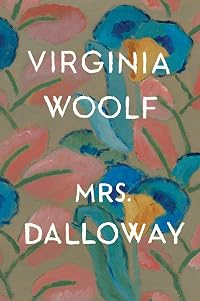






Member Recommendations
by anonymous user
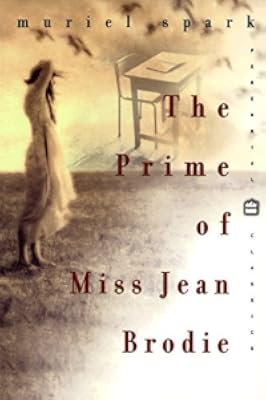
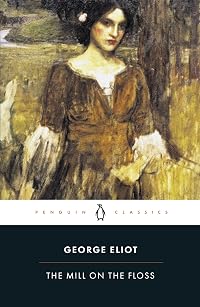
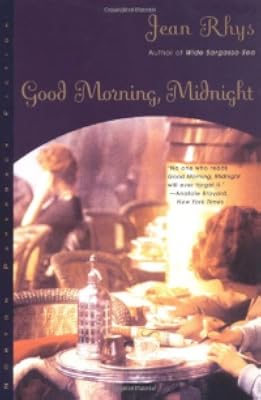
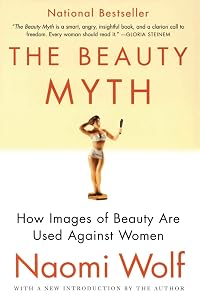
DLSmithies Both addressing, in their different ways, the relationship between financial security and the writing of fiction.
Member Reviews
This edition contained two linked feminist essays, the most famous of which is A Room of One's Own and definitely my favourite of the two. Displaying more dry humour than I remember in some of her fictional books, A Room of One's Own almost feels like the warm up act for The Three Guineas. Woolf is wry and clever with how she subtly builds her case around the shackles and constraints put on women over time, and I found it eye-opening. Why had I never considered before how difficult it must have been for the likes of Austen and the Brontes to forge a path in fictional writing, and how constrained they were by the narrowness of the experiences and opportunities open to them in life? How different would their writing have been had they show more been allowed to have an education and careers like their brothers, to earn their own salaries, to travel, study and follow whatever pursuits and interests they wished?
It's a while since I've read any Woolf, and A Room of One's Own reminded me just how delicious her turn of phrase was, and what an incredible mind she possessed.
Three Guineas had a different feel to it. While Woolf almost pretends to naively dance around the subject of feminism, casually throwing in on-point observations which are purposely yet quietly building up to support her argument, in Three Guineas the gloves are decidedly off and there's a much spikier feel to her writing. The essay is structured as Woolf's response to a letter from an unknown gentleman asking for her opinion in how to prevent war (which was looming in 1936/1937). Woolf, in musing about why she hasn't responded to the letter, wastes no time in arguing her case around how difficult it is for a woman, who has no access to education or the world of professions, to respond to such a question, given the limitations social structures puts on women. She also responds to two other letters requesting financial support for a women's college and an organisation to help women enter professions, making clear her feelings on she doesn't subscribe to the patriarchal vision for the focus of both.
Although both essays are centred around a similar topic, Three Guineas is much more of a polemic than A Room of One's Own, and I enjoyed much more the humour and writing style of Woolf in the latter.
3.5 stars - Three Guineas went on for much longer than I needed it too, but A Room of One's Own was very enjoyable. show less
It's a while since I've read any Woolf, and A Room of One's Own reminded me just how delicious her turn of phrase was, and what an incredible mind she possessed.
Three Guineas had a different feel to it. While Woolf almost pretends to naively dance around the subject of feminism, casually throwing in on-point observations which are purposely yet quietly building up to support her argument, in Three Guineas the gloves are decidedly off and there's a much spikier feel to her writing. The essay is structured as Woolf's response to a letter from an unknown gentleman asking for her opinion in how to prevent war (which was looming in 1936/1937). Woolf, in musing about why she hasn't responded to the letter, wastes no time in arguing her case around how difficult it is for a woman, who has no access to education or the world of professions, to respond to such a question, given the limitations social structures puts on women. She also responds to two other letters requesting financial support for a women's college and an organisation to help women enter professions, making clear her feelings on she doesn't subscribe to the patriarchal vision for the focus of both.
Although both essays are centred around a similar topic, Three Guineas is much more of a polemic than A Room of One's Own, and I enjoyed much more the humour and writing style of Woolf in the latter.
3.5 stars - Three Guineas went on for much longer than I needed it too, but A Room of One's Own was very enjoyable. show less
Amazing. The rhetoric skill of Three Guineas in particular is impressive.
This was my first read of 2010 because A Room of One's Own is mentioned, referenced or quoted from in almost every other feminist theory book I pick up, and it was starting to drive me around the bend. The reason it's quoted so much are now clear. These are a clearly argued, clever, funny and lively pair of works.
I particularly enjoyed Woolf's clear setting out of what economic independence means to a person's intellectual honesty, and their ability to hold and express opinions in opposition to power. I also liked her overall critique of the politics of domination, and the difference in public and private interactions between oppressor and oppressed.
Having show more struggled in the past with researching statistics to prove a point from poorly kept and haphazardly located records, I am rather in awe of Woolf's work in being able to present and provide references for her estimates of average income and spending on education for Victorian era women.
An excellent read. show less
This was my first read of 2010 because A Room of One's Own is mentioned, referenced or quoted from in almost every other feminist theory book I pick up, and it was starting to drive me around the bend. The reason it's quoted so much are now clear. These are a clearly argued, clever, funny and lively pair of works.
I particularly enjoyed Woolf's clear setting out of what economic independence means to a person's intellectual honesty, and their ability to hold and express opinions in opposition to power. I also liked her overall critique of the politics of domination, and the difference in public and private interactions between oppressor and oppressed.
Having show more struggled in the past with researching statistics to prove a point from poorly kept and haphazardly located records, I am rather in awe of Woolf's work in being able to present and provide references for her estimates of average income and spending on education for Victorian era women.
An excellent read. show less
I haven’t got a handle on Virginia Woolf’s novels yet (see review of Mrs. Dalloway), and I am willing to bet it’s me, not her. These two essays, however, are a different story. In particular, I found “A Room of One’s Own” to be engrossing and still incredibly relevant. That relevancy has changed from the original concept of the essay. This focuses on how much extra it takes for women to get ahead, for them to learn. This is still true, but much of this resonates better when thinking in terms of all minorities, not just women. The concepts of freedom to earn a living, freedom to learn, freedom to have the time to complete work may have been incredibly revolutionary at the time. (And, as is often pointed out in the second show more piece – “Three Guineas” – women had only recently been truly allowed to have their own money; their own possessions.) Well, it’s not as revolutionary today, but it is still true, and that is the saddening part – we all know this now (again, as it relates to all types of minorities; the old ones and the new ones), and we still accept it.
Quick note about the two essays – the first works better than the second. The thought processes seem more condensed in “A Room of One’s Own”. The other side of the coin (pun not intended), “Three Guineas” just seems to go on with the same thoughts a bit long. Nonetheless, both do an excellent job of forcing the reader to look into what he or she has accepted blindly. show less
Quick note about the two essays – the first works better than the second. The thought processes seem more condensed in “A Room of One’s Own”. The other side of the coin (pun not intended), “Three Guineas” just seems to go on with the same thoughts a bit long. Nonetheless, both do an excellent job of forcing the reader to look into what he or she has accepted blindly. show less
Both works are considered early feminist classics, and both are non-fictional works. A Room of One's Own is often said to be a book-length essay, while Three Guineas is a much longer work.
A Room of One's Own is much more readable than Three Guineas. The former work is more focused while the structure is clearer. The main idea is straightforward, and Woolf's eloquent writing assures a pleasurable read.
Three Guineas is much less accessible. It is a longer work that addresses various issues including feminism, pacifism, anti-facism and anti-imperialism. The structure is novel and unusual in the sense the much of the text is written as a response to letters raising questions. Basically, Three Guineas seems a bit too long and circular or show more repetitive.
Both works are now celebrated as classics, but to modern readers they feel rather dated, particularly the latter. The theme of A Room of One's Own is universal and timeless, while Three Guineas feels much more dated.
Despite the lesser interest of Three Guineas, reading both will deepen our understanding of Virginia Woolf and her time. show less
A Room of One's Own is much more readable than Three Guineas. The former work is more focused while the structure is clearer. The main idea is straightforward, and Woolf's eloquent writing assures a pleasurable read.
Three Guineas is much less accessible. It is a longer work that addresses various issues including feminism, pacifism, anti-facism and anti-imperialism. The structure is novel and unusual in the sense the much of the text is written as a response to letters raising questions. Basically, Three Guineas seems a bit too long and circular or show more repetitive.
Both works are now celebrated as classics, but to modern readers they feel rather dated, particularly the latter. The theme of A Room of One's Own is universal and timeless, while Three Guineas feels much more dated.
Despite the lesser interest of Three Guineas, reading both will deepen our understanding of Virginia Woolf and her time. show less
Clearly an important book, revolutionary in its time, full of wisdom nuggets, very quotable and quite inspiring. Easily five stars.
I found it a bit TOO artfully written, though. The author's writing is so twisty, self-deprecating, overly understated, and circuitous that it feels... manipulative. But I cannot fault Woolf for it: it is her style, and it was the way she learned how to be heard best, and I am by no means suggesting that she was a manipulative woman. Her style is just something that dates the work a little. I'm used to reading essays of this sort written much more directly, with not nearly as much ornamentation, and which I do like far better.
But, reminder: FIVE STARS, this book is a must-read.
I found it a bit TOO artfully written, though. The author's writing is so twisty, self-deprecating, overly understated, and circuitous that it feels... manipulative. But I cannot fault Woolf for it: it is her style, and it was the way she learned how to be heard best, and I am by no means suggesting that she was a manipulative woman. Her style is just something that dates the work a little. I'm used to reading essays of this sort written much more directly, with not nearly as much ornamentation, and which I do like far better.
But, reminder: FIVE STARS, this book is a must-read.
Category
Good
A famous feminist polemic based on talks and essays that Woolf created in answer to doing something on women in fiction. Why is there no female equivalent of Shakespeare? She posits the belief that until women have their own money and a room that they can retreat to without having to look after little ones then women were not able to find the time to write. Aphra Behn, George Elliott, the Brontes, Jane Austin and many many more. This is an intelligent and well-argued theory and well worth reading. It was first published in 1928 and it is both interesting and sobering to see how far we have come since women got the vote and were legally allowed to have their own money. It is also galling to see how little we’ve moved on show more some things, such as the depiction of women in books.
Overall – very important and an easy and enjoyable read show less
Good
A famous feminist polemic based on talks and essays that Woolf created in answer to doing something on women in fiction. Why is there no female equivalent of Shakespeare? She posits the belief that until women have their own money and a room that they can retreat to without having to look after little ones then women were not able to find the time to write. Aphra Behn, George Elliott, the Brontes, Jane Austin and many many more. This is an intelligent and well-argued theory and well worth reading. It was first published in 1928 and it is both interesting and sobering to see how far we have come since women got the vote and were legally allowed to have their own money. It is also galling to see how little we’ve moved on show more some things, such as the depiction of women in books.
Overall – very important and an easy and enjoyable read show less
Virginia Woolf spent her career slowly subverting various social and political assumptions that kept women from having a stronger voice in the affairs of the home and world. A Room of One's Own, and Three Guineas features two works filled with energy and wit wherein Woolf contemplates the implications of the historical exclusion of women from both education and economic independence. In A Room of One's Own she looks at women writers of the past and future, imagining the possibilities of their work in a time without the oppression of the past and the present, while Three Guineas is a call to political power for women.
Members
- Recently Added By
Lists

Libertarian Books
102 works; 19 members

el
1,139 works; 1 member

In Our Time books
4,934 works; 2 members
Author Information

653+ Works 119,117 Members
Virginia Woolf was born in London, England on January 25, 1882. She was the daughter of the prominent literary critic Leslie Stephen. Her early education was obtained at home through her parents and governesses. After death of her father in 1904, her family moved to Bloomsbury, where they formed the nucleus of the Bloomsbury Group, a circle of show more philosophers, writers, and artists. During her lifetime, she wrote both fiction and non-fiction works. Her novels included Jacob's Room, Mrs. Dalloway, To the Lighthouse, Orlando, and Between the Acts. Her non-fiction books included The Common Reader, A Room of One's Own, Three Guineas, The Captain's Death Bed and Other Essays, and The Death of the Moth and Other Essays. Having had periods of depression throughout her life and fearing a final mental breakdown from which she might not recover, Woolf drowned herself on March 28, 1941 at the age of 59. Her husband published part of her farewell letter to deny that she had taken her life because she could not face the terrible times of war. (Bowker Author Biography) show less
Some Editions
Work Relationships
Contains
Common Knowledge
- Canonical title
- A Room of One's Own / Three Guineas
- Original publication date
- 1929 (A Room of One's Own) (A Room of One's Own); 1938 (Three Guineas) (Three Guineas)
Classifications
Statistics
- Members
- 1,269
- Popularity
- 19,289
- Reviews
- 13
- Rating
- (4.06)
- Languages
- 6 — Czech, Dutch, English, German, Polish, Spanish
- Media
- Paper, Ebook
- ISBNs
- 28
- ASINs
- 14