On This Page
Description
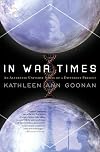
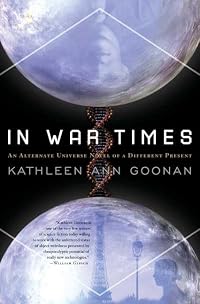
Sam Dance is a young enlisted soldier in 1941 when his older brother Keenan is killed at Pearl Harbor. Afterwards, Sam promises that he will do anything he can to stop the war.During his training, Sam begins to show that he has a knack for science and engineering, and he is plucked from the daily grunt work of twenty-mile marches by his superiors to study subjects like code breaking, electronics, and physics in particular, a science that is growing more important to the war effort. While show more studying, Sam is seduced by a mysterious female physicist that is teaching one of his courses, and given her plans for a device that will end the war, perhaps even end the human predilection for war forever. But the device does something less, and more, than that.After his training, Sam is sent throughout Europe to solve both theoretical and practical problems for the Allies. He spends his free time playing jazz, and trying to construct the strange device. It's only much later that he discovers that it worked, but in a way that he could have never imagined.At the Publisher's request, this title is being sold without Digital Rights Management Software (DRM) applied. show lessTags
Recommendations













Member Recommendations
AlanPoulter Both experimient with differnt outomes for World War Two
Member Reviews
The "Times" of Kathleen Ann Goonan's novel refers to at least three meanings of "times" - historical eras, the everyday time in which our lives are lived, and musical time signatures, as fractured and complicated by modern jazz. OK, at least four meanings - time as a physical dimension which may have branches and alternate paths.
This excellent story of alternate history, our own grim history, and the nature of consciousness follows Sam Dance through World War II and the postwar years. He serves in the war and lives out a civilian life afterward, while burdened with the knowledge of a strange technology that might permit altering history, or reaching alternate timelines.
The novel brings us the war and the early part of the occupation of show more Germany, the excitement and the grind of scientific and engineering research, and the politics of the era, and of the postwar years through the 1970 Cambodian invasion, seen through the well-imagined eyes of Sam. Best of all, perhaps, is his glimpse of the thrilling early days of the invention of bebop, on furloughs to New York. Every jazz fan wishes to have been in those smokey, after-hours clubs where Parker and Gillespie were inventing new ways to use harmonies - ways that give Goonan a metaphor for the changeable nature of time.
Dance comes to realize that the timeline he lives in has gone terribly wrong, with war never actually ending with the Japanese surrenders - the war times continue through the decades, and Dance cannot be free of a continuing connection to US intelligence intrigues. His burden is balanced by the hope that he can learn to use the time technology to restore his, and the world's, losses. show less
This excellent story of alternate history, our own grim history, and the nature of consciousness follows Sam Dance through World War II and the postwar years. He serves in the war and lives out a civilian life afterward, while burdened with the knowledge of a strange technology that might permit altering history, or reaching alternate timelines.
The novel brings us the war and the early part of the occupation of show more Germany, the excitement and the grind of scientific and engineering research, and the politics of the era, and of the postwar years through the 1970 Cambodian invasion, seen through the well-imagined eyes of Sam. Best of all, perhaps, is his glimpse of the thrilling early days of the invention of bebop, on furloughs to New York. Every jazz fan wishes to have been in those smokey, after-hours clubs where Parker and Gillespie were inventing new ways to use harmonies - ways that give Goonan a metaphor for the changeable nature of time.
Dance comes to realize that the timeline he lives in has gone terribly wrong, with war never actually ending with the Japanese surrenders - the war times continue through the decades, and Dance cannot be free of a continuing connection to US intelligence intrigues. His burden is balanced by the hope that he can learn to use the time technology to restore his, and the world's, losses. show less
I should have liked this book, because I love music and science fiction. The two of them together should be like heaven. But I found that the author tries to explain music in words that don't do a good job of conjuring up the experience, and seems to try to draw parallels between jazz and other aspects of life that just don't make sense and couldn't bring in a suspension of belief. She writes explicitly in her afterward that "the physicists, chemists, and biologists of the nineteenth and twentieth centures birthed modernity and its reflection and interpretation in literature, art, and music. Our art and our science are inextricably linked." That idea is the basis of a good part of the text, but I simply don't buy it. Jazz has definite show more roots, and they aren't in physics or chemistry or biology. The people involved with jazz knew little or nothing of those disciplines. There is a relationship in that both areas developed contemporaneously and both probably resulted from aspects of society. Yet, creativity in music and creativity in science are fundamentally different. For one thing, musicians strive endlessly to invent something brand-new, and it need not be founded on the past. Scientists strive endlessly to learn something new, and it is always based on what's been discovered in the past. The author has an interesting idea, but it just doesn't make sense to me though the author believes it.
There is a lot in the book about the development of radar which in my opinion makes good history of science but not a very interesting plot for a book of fiction. I do give the author credit for a good try, though! The author writes that her own father was involved in the development of radar, and portions of his actual written memories from the war are incorporated into the book verbatim. This had to be a great challenge to write, and was surely a work of love. Yet I think this self-imposed restriction on the content of the book hurts the narrative.
I wasn't able to get into this book from either of my supposed "lightning rods" and was disappointed. Someone else who relates to music differently or who would enjoy reading the history of some real technical developments interspersed with some far-future timetravel device will have different mileage. Not my cup of tea. Perhaps the next book she writes will appeal to me more. show less
There is a lot in the book about the development of radar which in my opinion makes good history of science but not a very interesting plot for a book of fiction. I do give the author credit for a good try, though! The author writes that her own father was involved in the development of radar, and portions of his actual written memories from the war are incorporated into the book verbatim. This had to be a great challenge to write, and was surely a work of love. Yet I think this self-imposed restriction on the content of the book hurts the narrative.
I wasn't able to get into this book from either of my supposed "lightning rods" and was disappointed. Someone else who relates to music differently or who would enjoy reading the history of some real technical developments interspersed with some far-future timetravel device will have different mileage. Not my cup of tea. Perhaps the next book she writes will appeal to me more. show less
This is the story of one man’s life starting with the death of his brother during the Japanese attack of Pearl Harbor and ending in the 1960’s. Sam Dance is a smart young enlisted soldier who is chosen by a mysterious female physicist to work on a device that can theoretically alter reality. The goal of the scientist is to find a way to change human being’s propensity for war. Sam and his army buddy, Wink, work on the device while they service in Europe. They don’t know how or if the device works. After the war they go there separate ways. Sam finds a job, gets married and starts a family. They meet again at a company reunion and discover that they don’t just live in different parts of the country, they live in different show more realities.
The story is well written with vivid descriptions of life during World War II. We see what it is like to by a young American soldier; drinking, carousing and playing jazz. We see the extermination camps, slave labor factories and German refugees after the allies have moved into Germany. This is more a story about the Second World War than it is a science fiction story. The science fiction elements do not come to the foreground until the second half of the book. This may discourage some science fiction readers. Those who enjoy good writing, whether or not it is genre fiction, should read this book. show less
The story is well written with vivid descriptions of life during World War II. We see what it is like to by a young American soldier; drinking, carousing and playing jazz. We see the extermination camps, slave labor factories and German refugees after the allies have moved into Germany. This is more a story about the Second World War than it is a science fiction story. The science fiction elements do not come to the foreground until the second half of the book. This may discourage some science fiction readers. Those who enjoy good writing, whether or not it is genre fiction, should read this book. show less
This is probably one of the worst books I have ever read. The main character is completely devoid of flaws, he is a handsome genius who is also approachable, funny, musically talented, popular, kind, with a strong sense of wrong and right; that is to say this character is extremely boring and I hated him about twenty pages in. The storytelling was consistently poor and in some points even unreadable. I don't think the author has a science background, the physics of her universe were described either in strictly philosophical terms instead of employing any actual science. The worst part is when she tries to use music theory to explain physics, it's a miserable failure. Skip this book.
The book broke my heart, but also rang with hope. Goonan's interview in Locus actually touched on a lot of what I got out of this tale, about hope and consciousness and humanity and the arts and sciences. The characters were real in a way that didn't need big, flashy action to reveal who they were. And the events of the story truly painted a strikingly vivid picture of the world as it used to be. And more frightening, it paints a vivid message about what the world is now.
It's a slow read. Don't expect to pick this up and get lots of action. It's soft SF, in a way. It's focused on character, on idea, but most important, on humanity. It's intellectual food for thought. And the parallels between jazz and quantum physics are simply the show more desert.
Fair warning: the more you know about this point in history (WWII through the Cold War, through King's assassination), the more you're going to get out of this novel. The more you know about music theory, particularly jazz, the more you're going to get out of this novel. And the more you know about quantum physics and the theory of the multiverse, the more you're going to get out of this novel.
This might be considered a flaw by some, but for me, it's a strength. It's a book to savor and enjoy, not to speed through. In many ways, the book is a portrait for what was, what is, what could have been, and what could be.
I look forward to reading more of Goonan's work. I'd love to see this book nominated for a Hugo.
For a full review, which may or may not include spoilers, please click here: http://calico-reaction.livejournal.com/41472.html show less
It's a slow read. Don't expect to pick this up and get lots of action. It's soft SF, in a way. It's focused on character, on idea, but most important, on humanity. It's intellectual food for thought. And the parallels between jazz and quantum physics are simply the show more desert.
Fair warning: the more you know about this point in history (WWII through the Cold War, through King's assassination), the more you're going to get out of this novel. The more you know about music theory, particularly jazz, the more you're going to get out of this novel. And the more you know about quantum physics and the theory of the multiverse, the more you're going to get out of this novel.
This might be considered a flaw by some, but for me, it's a strength. It's a book to savor and enjoy, not to speed through. In many ways, the book is a portrait for what was, what is, what could have been, and what could be.
I look forward to reading more of Goonan's work. I'd love to see this book nominated for a Hugo.
For a full review, which may or may not include spoilers, please click here: http://calico-reaction.livejournal.com/41472.html show less
a highly unusual foray, set in 1941-1980, during which the American government acquires technology that through the application of biochemistry, complexity theory, game theory, and quantum computing strives to create and manage alternate timelines. the changing landscape takes us through the creation of bebop to the ending of WW2 to a revisit of the Kennedy assassination, and gradually creates a chaotic set of lightly-managed futures in which some people move across the world into differing Whens without really noticing, with individual memories adjusting to the changes in a process compared in detail to the creation of music. a truly original idea, and the minute detail of the story as time and space pass through the narrative, show more changing gradually into a different modern world, makes it work. highly recommended. show less
This is a wonderful novel. It starts with Sam Dance hearing about Pearl Harbour on the radio. He finds out that his brother, serving in the US Navy, was killed there.This sets off the main theme of the novel, a continual rumination on why things happen and how different outcomes would have been better.
Two elements are used to give form to this continual 'why' question. One is a device, which continually changes shape to allow it to blend with the surrounding technology, and the other is music, jazz in particular, which is used to illustrate the ability to create the new by changing elements on the fly.
The device is first given to Sam by Dr. Eliani Handtz, a Hungarian physicist who will pop up again in the novel. Handtz teaches physics, show more and in her meeting with Sam, introduces him to her own weird synthesis of physics and biology that she believes will lead to a better understanding of human nature, and end the human race's propensity for fratricidal warfare. The device initially resembles the AA gun radar aimer that Sam and his buddy Wink are working on. By the end of the book it has passed through a variety of forms, ending up as part of a board game in the Dance household. Along the way it has also been at crucial foci like Hiroshima and a concentration camp.To add spice, the major Intelligence agencies are also after the device...
This novel sounds rather sad and grim but the jazz motif acts as a liberator of good feelings. Sam and Wink are lucky in getting to see some of the great jazz musicians of the time, although the military police jail them for being in 'off limits' clubs. What they hear inspires them to start their their own band, first playing dance music at venues in England, then more cutting-edge material after D-Day takes them to a comfortable billet at a German cafe.
After the war Sam and Wink part but at a company reunion discover that they live in different realities. Wink's world inspires Sam to hunt out his current Handtz device, which he discovers his radical daughter has been using...
The only false note of the novel for me comes with its climax in the Sixties, which seems too pat and concentrates on one obvious event too much for hindsight to credit.
Why did this book wait five years for a paperback version? show less
Two elements are used to give form to this continual 'why' question. One is a device, which continually changes shape to allow it to blend with the surrounding technology, and the other is music, jazz in particular, which is used to illustrate the ability to create the new by changing elements on the fly.
The device is first given to Sam by Dr. Eliani Handtz, a Hungarian physicist who will pop up again in the novel. Handtz teaches physics, show more and in her meeting with Sam, introduces him to her own weird synthesis of physics and biology that she believes will lead to a better understanding of human nature, and end the human race's propensity for fratricidal warfare. The device initially resembles the AA gun radar aimer that Sam and his buddy Wink are working on. By the end of the book it has passed through a variety of forms, ending up as part of a board game in the Dance household. Along the way it has also been at crucial foci like Hiroshima and a concentration camp.To add spice, the major Intelligence agencies are also after the device...
This novel sounds rather sad and grim but the jazz motif acts as a liberator of good feelings. Sam and Wink are lucky in getting to see some of the great jazz musicians of the time, although the military police jail them for being in 'off limits' clubs. What they hear inspires them to start their their own band, first playing dance music at venues in England, then more cutting-edge material after D-Day takes them to a comfortable billet at a German cafe.
After the war Sam and Wink part but at a company reunion discover that they live in different realities. Wink's world inspires Sam to hunt out his current Handtz device, which he discovers his radical daughter has been using...
The only false note of the novel for me comes with its climax in the Sixties, which seems too pat and concentrates on one obvious event too much for hindsight to credit.
Why did this book wait five years for a paperback version? show less
Members
- Recently Added By
Lists

Favorite Science Fiction by Women Authors
737 works; 196 members

ALA The Reading List
490 works; 28 members

Broderick and Di Filippo's Science Fiction: The 101 Best Novels 1985-2010
103 works; 7 members
Author Information

35+ Works 1,844 Members
Awards and Honors
Series

Common Knowledge
- Original publication date
- 2007
- People/Characters
- Sam Dance; Major Bette Elegante; Allen 'Wink' Winklemeyer; Dr. Eliani Hadntz; Jill Dance
- Important places
- Hawai'i, USA; Germany; Washington, D.C., USA; Midway Atoll; North Pacific Ocean; Pacific Ocean (show all 7); United Kingdom
- Important events
- World War II (1939 | 1945); World War II, Pacific Theater (1941-12-07 | 1945-09-02); Attack on Pearl Harbor (1941-12-07); Assassination of John F. Kennedy (1963-11-22), (1963-11-22)
- Epigraph
- Everything is determined by forces over which we have no control. It is determined for the insect as well as for the star. Human beings, vegetables, or cosmic dust - we all dance to a mysterious tune, intoned in the distanc... (show all)e by an invisible piper
-- Albert Einstein, The Saturday Evening Post, October 26, 1929
[Bergander] and his family listened avidly, if perilously, to the BBC. He heard the famous "black propaganda" broadcasts of the British journalist Sefton Delmer and - far more effectively from the Allied viewpoint - Glenn M... (show all)iller and Benny Goodman. To young Bergander, American music possessed the status of holy writ. He thought: people who make music like this must win the war.
-- Sir Max Hastings, Armageddon: The Battle For Germany, 1944-1945 - Dedication
- This book is dedicated to Thomas Edwin Goonan and to all of those who served in World War II.
- First words
- Dr. Eliani Hadntz was only five foot three, though she had seemed taller in the classroom, and Sam had not suspected that her tightly pulled-back hair was a mass of wild black curls until the evening she sat on the edge of hi... (show all)s narrow boardinghouse bed.
- Last words
- (Click to show. Warning: May contain spoilers.)Their collective title was, simply, In War Times.
- Blurbers
- Straub, Peter; Marusek, David; Jones, Gwyneth
- Original language
- English
Classifications
Statistics
- Members
- 211
- Popularity
- 154,218
- Reviews
- 13
- Rating
- (3.38)
- Languages
- English, Spanish
- Media
- Paper, Ebook
- ISBNs
- 4
- ASINs
- 3