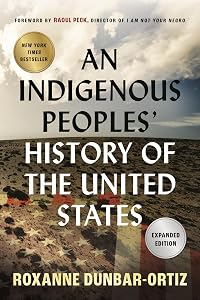
An Indigenous Peoples' History of the United States
by Roxanne Dunbar-Ortiz
On This Page
Description
Today in the United States, there are more than five hundred federally-recognized Indigenous nations comprising nearly three million people, descendants of the fifteen million Native people who once inhabited this land. The centuries-long genocidal program of the US settler-colonial regimen has largely been omitted from history. Now historian and activist Roxanne Dunbar-Ortiz offers a history of the United States told from the perspective of Indigenous peoples and reveals how Native show more Americans, for centuries, actively resisted expansion of the US empire. In An Indigenous Peoples' History of the United States, Dunbar-Ortiz challenges the founding myth of the United States and shows how policy against the Indigenous peoples was colonialist and designed to seize the territories of the original inhabitants, displacing or eliminating them. And as Dunbar-Ortiz reveals, this policy was praised in popular culture, through writers like James Fenimore Cooper and Walt Whitman, and in the highest offices of government and the military. As the genocidal policy reached its zenith under President Andrew Jackson, its ruthlessness was best articulated by US Army general Thomas S. Jesup, who, in 1836, wrote of the Seminoles: "The country can be rid of them only by exterminating them." show lessTags
Recommendations

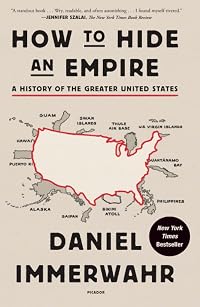
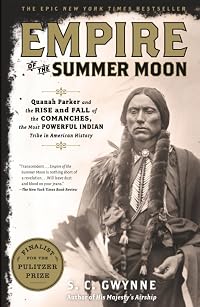
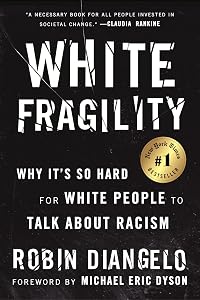
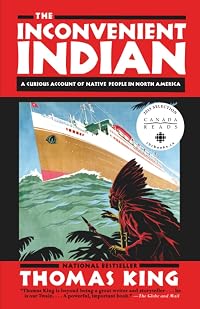

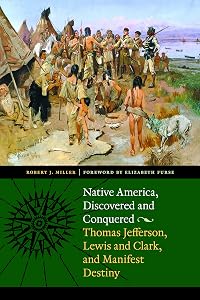
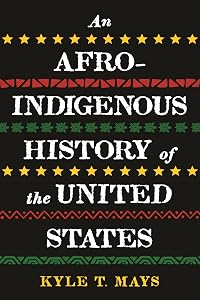
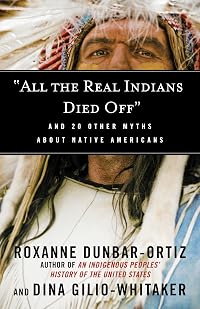
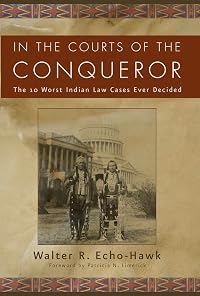

Member Recommendations
Member Reviews
Sometimes a book comes along that makes you re-think your very existence, your history, everything you think you know about your place in the world. An Indigenous Peoples' History of the United States by Roxanne Dunbar-Ortiz raised all those questions in my heart, mind, and soul. An Indigenous Peoples' History of the United States made me look at every history class I've ever taken through a different lens. Dunbar-Ortiz writes an engaging history that reminds us that whenever we declare people "enemy" we often strip them of their humanity in order to justify our own horrendous actions, from internment camps to genocide, while writing ourselves simultaneously as the victims and the heroes. I wish I had the power to make An Indigenous show more Peoples' History of the United States required reading, but I'll have to settle for recommending it to everyone I know and even people I don't know. show less
I'm very glad I picked up this book. The author does an excellent job of reframing the history of the United States, focusing on how settlers interacted (mostly violently) with the indigenous nations from the very beginning. She makes an excellent argument that genocidal violence has been baked into our country since before it was independent, and has been a major component of every "expansion" of the country. The insights about how this violence is embedded in US military culture even today were eye-opening.
Of course I also learned a bunch of specific facts, but I think the real value of this book is how it crafts a coherent narrative over centuries, showing us the patterns of violence that keep recurring.
My only quibble really is that show more the final "future" chapter doesn't fit in quite as well as the rest -- but I definitely understand why it's included, rather than just leaving off at the "end" of history up to this point. show less
Of course I also learned a bunch of specific facts, but I think the real value of this book is how it crafts a coherent narrative over centuries, showing us the patterns of violence that keep recurring.
My only quibble really is that show more the final "future" chapter doesn't fit in quite as well as the rest -- but I definitely understand why it's included, rather than just leaving off at the "end" of history up to this point. show less
From the title, I thought this book would be a general history of Indian tribes. Where they lived, what they ate, how they interacted with each other, etc. But it's not that. It is solely about their near-extinction at the hands of European Christians. Its detailed coverage of countless atrocities is as relentless as the Europeans who used war, disease, economic exploitation, treaty-breaking, and cultural assimilation to commit genocide.
It wasn't until halfway through the book that I took another look at the title and realized how accurate it was. This book really is a history of the United States from the point of view of indigenous people. And from their perspective, the United States has been nothing but a genocidal force.
I now have show more a deeper understanding of America's history and destructive nature. From Jamestown to Wounded Knee to the Vietnam War to the grim headlines of today, deadly imperialism has been dominant in Americans' DNA. Even William Tecumseh Sherman, who I've longed considered a heroic figure, told Ulysses S. Grant "We must act with vindictive earnestness against the Sioux, even to their extermination, men, women, and children."
The little-discussed Doctrine of Discovery that fueled the Europeans' taking of indigenous lands is still the cornerstone of American law and policy. Even as recently as the 1970s, the USA military forcibly removed thousands of indigenous people from sites with strategic military importance. When asked by a reporter about the deportation of the Micronesians, Secretary of State Henry Kissinger supposedly replied "There are only ninety thousand people out there. Who gives a damn?" And every time we get excited by fighter planes soaring overhead during the National Anthem at the Super Bowl, that sentiment reverberates in us.
This book is dense and unpleasant, but it made me realize that America can never become a great nation unless it exorcises its rapacious soul. The last chapter mentions some significant and hopeful steps toward this end, but those are just the beginning of a very long journey. If, even after the events of the last few years, part of you still believes "the myth of an exceptional US American people destined to bring order out of chaos, to stimulate economic growth, and to replace savagery with civilization--not just in North America but throughout the world," maybe you should read this book and become a part of that journey. show less
It wasn't until halfway through the book that I took another look at the title and realized how accurate it was. This book really is a history of the United States from the point of view of indigenous people. And from their perspective, the United States has been nothing but a genocidal force.
I now have show more a deeper understanding of America's history and destructive nature. From Jamestown to Wounded Knee to the Vietnam War to the grim headlines of today, deadly imperialism has been dominant in Americans' DNA. Even William Tecumseh Sherman, who I've longed considered a heroic figure, told Ulysses S. Grant "We must act with vindictive earnestness against the Sioux, even to their extermination, men, women, and children."
The little-discussed Doctrine of Discovery that fueled the Europeans' taking of indigenous lands is still the cornerstone of American law and policy. Even as recently as the 1970s, the USA military forcibly removed thousands of indigenous people from sites with strategic military importance. When asked by a reporter about the deportation of the Micronesians, Secretary of State Henry Kissinger supposedly replied "There are only ninety thousand people out there. Who gives a damn?" And every time we get excited by fighter planes soaring overhead during the National Anthem at the Super Bowl, that sentiment reverberates in us.
This book is dense and unpleasant, but it made me realize that America can never become a great nation unless it exorcises its rapacious soul. The last chapter mentions some significant and hopeful steps toward this end, but those are just the beginning of a very long journey. If, even after the events of the last few years, part of you still believes "the myth of an exceptional US American people destined to bring order out of chaos, to stimulate economic growth, and to replace savagery with civilization--not just in North America but throughout the world," maybe you should read this book and become a part of that journey. show less
When faced with the other side of history, it quickly diminishes the bright light of the US. It's such a fraction of what we learn in American History, yet Indigenous Peoples were here for millennia before the Western Hemisphere was "discovered" and over 400 years, nations were wiped out. There was a lot of repetition of the same events throughout each chapter, but each one tied to the next so it worked, especially if this was a slow read (choice of book to read slowly, not slow because it's boring).
This is a textbook example of what a textbook for a course in "What Your Teachers Never Taught You About Native Americans" would be. The focus on the "Doctrine of Discovery", which served as the justification for stealing and profiting from the confiscation and sales of tribal lands, is sobering. Another revelation is the creation of the "Rangers", the Indian fighters who were the forebearers of our modern military - "In Country", a/k/a Indian Country, as used in Vietnam to indicate anti-guerilla warfare against the inhabitants of the land. The relationship of Indian people to their lands and to the animals they managed was never as owners, but as stewards and protectors. The continued oppressive activities, including the theft of show more children and their placement into boarding schools (similar to the Magdelene Laundries of Ireland), are horrifying, and reparations equal to the level of harm done are difficult to imagine. My reading and discussions of this book were sponsored by the Social Justice Book Club hosted by Brad McKenna of the Wilmington Memorial Library. show less
I find An Indigenous Peoples' History of the United States an unusually difficult book to which to assign the stars that accompany these reviews. On the one hand, I am quite in agreement with most of the opinions and conclusions expressed by Dunbar-Ortiz and would willingly assign the book at least four strong stars for that aspect of the content. For example, she is the first published author I've encountered who asserts, as I have done, that the term “U.S. citizen” is not synonymous with the term “American,” there being many “people in the Western Hemisphere, who are . . . also Americans” (p. xiv). On the other hand, I'm disappointed in the tone or “voice” of her book. To me, it comes across as strident, hostile toward show more non-Indigenous readers, and highly repetitive in overusing the term “genocide.”
Dunbar-Ortiz also tends to engage in a great deal of name-calling, and, while I may agree wholeheartedly in her characterization of the person she is describing, the use of pejorative adjectives strikes me as a juvenile, unprofessional tactic. For example, she refers to Andrew Jackson as a “genocidal sociopath,” (p.94) which is probably quite accurate but which sounds sophomoric at best, particularly for a historian, from whom a modicum of objectivity, not judgment-laden epithets, should be expected. Probably equally accurate but objectionable for the same reason is her depiction of Kit Carson as a “colonial mercenary” (p. 122). Reconciling the excellence and accuracy of her observations with the continuously judgmental expression of those observations is simply not possible and the effort to do so leaves the reader with discordant views of the book. Before trying to determine a “star rating,” let us examine a few other examples of what readers will encounter:
Page 96 tells us that “Andrew Jackson was the implementer of the final solution for the Indigenous peoples east of the Mississippi.” Is the equating of Jackson's Indian-removal policies with the Nazi Holocaust a bit of linguistic overreach? In any event, the description seems aimed at arousing emotional rather than rational responses in the reader.
On page 101 we find that “The prolonged and fierce Second Seminole War (1835-42) was the longest foreign war waged by the United States up to the Vietnam War.” The phrase “foreign war” reinforces the position of Dunbar-Ortiz throughout the book that Indigenous peoples were (and are) citizens of sovereign nations on the American continent so that war waged against them by northern European settlers of Anglo-Saxon descent was no different from any war waged by one nation against another. Without examining the definition of “sovereign nation,” which is just a tad murky but which I'm willing to apply to organized groups of Indigenous peoples, the phrase “foreign war” in this instance strikes me as perhaps unnecessarily and intentionally provocative.
Page 106, along with many other pages, describes non-Indigenous settlers as “illegal squatters” on land occupied by Indigenous people. Similarly, the phrase “genocidal colonialism” appears on page 107 (and many others). Page 119 gives us this: “By 1846, the United States had invaded, occupied, and ethnically cleansed dozens of foreign nations east of the Mississippi.” Yes, it can be argued that such phrases and statements as these are not inaccurate. Still, the wording comes across not so much as describing the findings of objective historical investigation as connoting condemnatory judgment on the part of the author.
On page 120, citing Violence Over the Land by Ned Blackhawk, Dunbar-Ortiz informs us that “Lewis and Clark had headed into the far reaches of the newly acquired Louisiana Territory to gather [military] intelligence on the Mandan, Hidatsa, Paiute, Shoshone, Ute, and many other nations” just as Zebulon Pike “had orders to illegally enter Spanish territory to gather information that would later be used for military invasion.” These statements may be entirely correct, but they depart so drastically from the purposes of those expeditions as recorded by multiple other historians that an investigation into Ned Blackhawk's sources seems to be warranted before accepting them as accurate.
Later, the author speaks of U.S. government policies that would “eliminate Indigenous identity entirely through assimilation, a form of genocide” (p. 174). A United Nations convention describes genocide as “a crime committed with the intent to destroy a national, ethnic, racial or religious group, in whole or in part.” Is assimilating an ethnic group into another so that the two become one an act of destruction? Dunbar-Ortiz obviously thinks so, but I'm not as certain of that as she is. Of course, this is yet another of seemingly countless times throughout the book that she creates the opportunity to use her favorite word of “genocide” again.
I have generally not questioned the facts that Dunbar-Ortiz presents in her book—battles, dates, treaties, and so forth, but one possible fallacy jumped out at me. Beginning on page 153, she discusses the Ghost Dance and claims that “it was a simple dance performed by everyone, requiring only a specific kind of shirt that was to protect the dancers from gunfire.” In his book God's Red Son: the Ghost Dance Religion and the Making of Modern America, Louis S. Warren, Professor of Western U.S. History at the University of California, Davis, posits that this belief was actually promoted not by any Indigenous dancer but by those who wished to create a climate of fear against Indigenous people, all the better to bring about their destruction. The shirt, he adds, was not a requirement to perform the dance. Of course, I cannot say whether Dunbar-Ortiz or Warren is in error, but one of them certainly is—and Warren's book appears to have been quite meticulously researched.
Lest anyone mistakenly believe that the author has some goal that aligns with any major U.S. political party, be assured that she is disapproving of the imagery of President John F. Kennedy's “New Frontier” theme (p. 178) just as she castigates President George W. Bush, who “turned over control of U.S. Foreign policy to a long-gestating neoconservative and war mongering faction of the Pentagon and its civilian hawks” (p.218). She's probably not wrong, especially about Bush, and I mention this simply to show that both progressives and reactionaries fall before her scathing depiction of the U.S. as a militaristic, nationalist, and colonialist nation. Again, this depiction is likely all too accurate, but repetition of this theme throughout the book becomes tedious.
In summary, then, most, if not all, of the historical facts in An Indigenous Peoples' History of the United States are worthy of the learning. The observations that Dunbar-Ortiz makes are a valuable insight to one all-too-valid valid interpretation of the expansion of the United States, especially in terms of its expanding geographical boundaries. That Indigenous peoples on the continent were evicted from their lands, were brutalized, killed, subjugated, mandatorily sequestered on reservations, and suffered repeated abrogations of treaties when it behooved the U.S. government to do so has been thoroughly documented and is unarguable. Unfortunately, the style in which these facts are written, including the frequent and repetitive use of judgmental terminology (unbecoming in a history book irrespective of its accuracy), simply wears out the reader long before he or she reaches the final pages of text. The tone of the writing is shrill, shrewish, vindictive, and complaining. The “voice” of the book makes forging through it a real challenge for the reader. Of course, Edmund Wilson did observe that no two people ever read the same book, and others' experience with this one may be entirely different from mine. Give it a try and see what you think. To me, however, the style of the writing diminishes the potential value to the level of about two stars. show less
Dunbar-Ortiz also tends to engage in a great deal of name-calling, and, while I may agree wholeheartedly in her characterization of the person she is describing, the use of pejorative adjectives strikes me as a juvenile, unprofessional tactic. For example, she refers to Andrew Jackson as a “genocidal sociopath,” (p.94) which is probably quite accurate but which sounds sophomoric at best, particularly for a historian, from whom a modicum of objectivity, not judgment-laden epithets, should be expected. Probably equally accurate but objectionable for the same reason is her depiction of Kit Carson as a “colonial mercenary” (p. 122). Reconciling the excellence and accuracy of her observations with the continuously judgmental expression of those observations is simply not possible and the effort to do so leaves the reader with discordant views of the book. Before trying to determine a “star rating,” let us examine a few other examples of what readers will encounter:
Page 96 tells us that “Andrew Jackson was the implementer of the final solution for the Indigenous peoples east of the Mississippi.” Is the equating of Jackson's Indian-removal policies with the Nazi Holocaust a bit of linguistic overreach? In any event, the description seems aimed at arousing emotional rather than rational responses in the reader.
On page 101 we find that “The prolonged and fierce Second Seminole War (1835-42) was the longest foreign war waged by the United States up to the Vietnam War.” The phrase “foreign war” reinforces the position of Dunbar-Ortiz throughout the book that Indigenous peoples were (and are) citizens of sovereign nations on the American continent so that war waged against them by northern European settlers of Anglo-Saxon descent was no different from any war waged by one nation against another. Without examining the definition of “sovereign nation,” which is just a tad murky but which I'm willing to apply to organized groups of Indigenous peoples, the phrase “foreign war” in this instance strikes me as perhaps unnecessarily and intentionally provocative.
Page 106, along with many other pages, describes non-Indigenous settlers as “illegal squatters” on land occupied by Indigenous people. Similarly, the phrase “genocidal colonialism” appears on page 107 (and many others). Page 119 gives us this: “By 1846, the United States had invaded, occupied, and ethnically cleansed dozens of foreign nations east of the Mississippi.” Yes, it can be argued that such phrases and statements as these are not inaccurate. Still, the wording comes across not so much as describing the findings of objective historical investigation as connoting condemnatory judgment on the part of the author.
On page 120, citing Violence Over the Land by Ned Blackhawk, Dunbar-Ortiz informs us that “Lewis and Clark had headed into the far reaches of the newly acquired Louisiana Territory to gather [military] intelligence on the Mandan, Hidatsa, Paiute, Shoshone, Ute, and many other nations” just as Zebulon Pike “had orders to illegally enter Spanish territory to gather information that would later be used for military invasion.” These statements may be entirely correct, but they depart so drastically from the purposes of those expeditions as recorded by multiple other historians that an investigation into Ned Blackhawk's sources seems to be warranted before accepting them as accurate.
Later, the author speaks of U.S. government policies that would “eliminate Indigenous identity entirely through assimilation, a form of genocide” (p. 174). A United Nations convention describes genocide as “a crime committed with the intent to destroy a national, ethnic, racial or religious group, in whole or in part.” Is assimilating an ethnic group into another so that the two become one an act of destruction? Dunbar-Ortiz obviously thinks so, but I'm not as certain of that as she is. Of course, this is yet another of seemingly countless times throughout the book that she creates the opportunity to use her favorite word of “genocide” again.
I have generally not questioned the facts that Dunbar-Ortiz presents in her book—battles, dates, treaties, and so forth, but one possible fallacy jumped out at me. Beginning on page 153, she discusses the Ghost Dance and claims that “it was a simple dance performed by everyone, requiring only a specific kind of shirt that was to protect the dancers from gunfire.” In his book God's Red Son: the Ghost Dance Religion and the Making of Modern America, Louis S. Warren, Professor of Western U.S. History at the University of California, Davis, posits that this belief was actually promoted not by any Indigenous dancer but by those who wished to create a climate of fear against Indigenous people, all the better to bring about their destruction. The shirt, he adds, was not a requirement to perform the dance. Of course, I cannot say whether Dunbar-Ortiz or Warren is in error, but one of them certainly is—and Warren's book appears to have been quite meticulously researched.
Lest anyone mistakenly believe that the author has some goal that aligns with any major U.S. political party, be assured that she is disapproving of the imagery of President John F. Kennedy's “New Frontier” theme (p. 178) just as she castigates President George W. Bush, who “turned over control of U.S. Foreign policy to a long-gestating neoconservative and war mongering faction of the Pentagon and its civilian hawks” (p.218). She's probably not wrong, especially about Bush, and I mention this simply to show that both progressives and reactionaries fall before her scathing depiction of the U.S. as a militaristic, nationalist, and colonialist nation. Again, this depiction is likely all too accurate, but repetition of this theme throughout the book becomes tedious.
In summary, then, most, if not all, of the historical facts in An Indigenous Peoples' History of the United States are worthy of the learning. The observations that Dunbar-Ortiz makes are a valuable insight to one all-too-valid valid interpretation of the expansion of the United States, especially in terms of its expanding geographical boundaries. That Indigenous peoples on the continent were evicted from their lands, were brutalized, killed, subjugated, mandatorily sequestered on reservations, and suffered repeated abrogations of treaties when it behooved the U.S. government to do so has been thoroughly documented and is unarguable. Unfortunately, the style in which these facts are written, including the frequent and repetitive use of judgmental terminology (unbecoming in a history book irrespective of its accuracy), simply wears out the reader long before he or she reaches the final pages of text. The tone of the writing is shrill, shrewish, vindictive, and complaining. The “voice” of the book makes forging through it a real challenge for the reader. Of course, Edmund Wilson did observe that no two people ever read the same book, and others' experience with this one may be entirely different from mine. Give it a try and see what you think. To me, however, the style of the writing diminishes the potential value to the level of about two stars. show less
There were times when the prose in this book read like a conservative's parody of liberal academic writing. And yet if you focus solely on the facts presented, it is hard to escape the conviction that colonialism, racism, genocide, and total war are the only appropriate terms to apply. In the current climate in which so many people want to invalidate any historical perspective that would make them feel uncomfortable, guilty, or complicit, it is perhaps all the more important to challenge ourselves and our received cultural perspective with a different narrative.
Members
- Recently Added By
Lists

Native American / Indigenous Literature
172 works; 100 members

Indigenous America Reader
145 works; 12 members

Rainbow Gardens: Parent Collection
19 works; 1 member

GraceCollection TBR/To Buy List
106 works; 1 member

Books Read in 2026
2,040 works; 68 members

United States
35 works; 1 member

Books cited in Progress by Samuel McDonald
160 works; 1 member
Author Information

18+ Works 4,713 Members
Roxanne Dunbar-Ortiz is Professor Emerita of Ethnic Studies and Women's Studies at California State University, East Bay.
Some Editions
Awards and Honors
Series
Belongs to Publisher Series
Work Relationships
Common Knowledge
- Canonical title
- An Indigenous Peoples' History of the United States
- Original title
- An Indigenous Peoples' History of the United States
- Original publication date
- 2014
- Important places
- USA
- Epigraph
- Carrying their flints and torches, Native Americans were living in balance with Nature--but they had their thumbs on the scale.
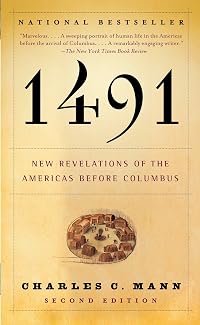
--Charles C. Mann, 1491 - Dedication
- To Howard Adams (1921-2001)
Vine Deloria Jr (1933-2005)
Jack Forbes (1934-2011 - First words
- Humanoids existed on Earth for around four million hyears as hunters and gatherers living in small communal groups that through their movements found and populated every continent.
Introduction: Under the crust of that portion of Earth called the United States of America--"from California...to the Gulf Stream waters"--are interred the bones, villages, fields, and sacred objects of American Indians.
Author's Note:As a student of history, having completed a master's degree and PhD in the discipline, I am grateful for all I learned from my professors and from the thousands of texts I studied. - Last words
- (Click to show. Warning: May contain spoilers.)In the words of Acoma poet Simon Ortiz:
The future will not be mad with loss and waste though the memory will
Be there: eyes will become kind and deep, and the bones of this nation
Will mend after the revolution. - Blurbers
- Kelley, Robin D. G.; Waziyatawin; Zah, Peterson; Ayers, Bill; Trask, Mililani B.; Ortiz, Simon J. (show all 9); Denetdale, Jennifer Nez; Tiller, Veronica E. Velarde; Prashad, Vijay
- Original language
- English
Classifications
Statistics
- Members
- 2,141
- Popularity
- 9,561
- Reviews
- 66
- Rating
- (4.13)
- Languages
- English, French, Spanish
- Media
- Paper, Audiobook, Ebook
- ISBNs
- 18
- ASINs
- 7
