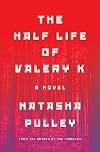
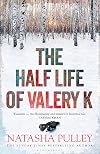
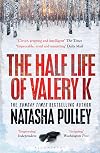
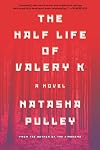
The Half Life of Valery K
by Natasha Pulley
On This Page
Description
In 1963, in a Siberian prison, former nuclear specialist Valery Kolkhanov has mastered what it takes to survive: the right connections to the guards for access to food and cigarettes, the right pair of warm boots, and the right attitude toward the small pleasures of life so he won't go insane. But one day, all that changes: Valery's university mentor steps in and sweeps him from the frozen camp to a mysterious unnamed city. It houses a set of nuclear reactors, and surrounding it is a forest show more so damaged it looks like the trees have rusted from within. In City 40, Valery is Dr. Kolkhanov once more, and he's expected to serve out his prison term studying the effect of radiation on local animals. But as Valery begins his work, he is struck by the questions his research raises. Why is there so much radiation in this area? What, exactly, is being hidden from the thousands who live in the town? And if he keeps looking for answers, will he live to serve out his sentence? show lessTags
Recommendations















Member Reviews
The scariest stories are true stories, or at least stories inspired by truth. In this novel inspired by the 1957 Kyshtym nuclear disaster, Pulley has crafted a tale where horrors are quotidian. The characters are exquisitely drawn, with every interaction cloaked in layers of mistrust and a desperate, strangled need to speak freely.
Received via NetGalley.
Received via NetGalley.
Natasha Pulley always manages to draw me in from the first page, and make me fall unexpectedly in love with her characters. I'm happy to say that The Half Life of Valery K lived up to this expectation completely. And while there is no fantasy element to this book the way there is in her previous ones, it did not feel lacking. The in depth but engaging discussions of the scientific elements of the story filled that gap for me. I loved this book and absolutely recommend it. Thank you much to the publisher and NetGalley for the eARC in exchange for an honest reivew.
The story is about Valery Kolkhanov, a biochemist specializing in the effects of radiation on living things, who starts the book as a political prisoner in a Russian gulag, show more where he has been for six years, and expects to be for four more, or until he dies. His life takes a surprise turn however when he is sent to a secret government lab in the middle of a mysteriously irradiated forest. The government claims everything is safe, and one does not argue with the Soviet government, but Valery cannot help but notice things are more deeply amiss than the research they brought him in for would indicate. In addition to that, he experiences kindness for the first time in a long time from an unexpected source, Konstantin Shenkov, the KJB officer in charge of security. For Shenkov, it is a punishment placement, and as the book unfolds we learn more about each man and how they came to be in this situation.
I loved Valery as a character, it is possible he is my favorite character from any Pulley novel. He is queer and most definitely neurodivergent, in a time and place when neither was accepted. He is the kind of person who cannot see an injustice without trying to do something to help. Part of this stems from having been in a terrible situation where he was unable to help, which we see in one of the flashback chapters, but part is just his innate nature. Shenkov the KGB officer is in his own way trying to help people, despite his position as the one who takes dissenters and rabble rousers out back and shoots them. He is in a sense trying to put the fire out while inside the house, but he is trying.
If you have read any of Pulley's novels before, you know the general direction it is going to go, but that is not a bad thing. How we get there is always different and fascinating, and I loved how much I actually learned about what radiation is and what exactly it can do in reading this book. A complaint I've had with her books before has been that the women are either unnecessarily unpleasant or just get killed off, but I am happy to say that was not the case in this book, with Shenkov's wife Anna being an excellent character, and Valery's friend Svetlana not having too much screen time but making the most of what she does have.
A couple of content warnings: there is an off screen sexual assault, and period realistic homophobia and ableism show less
The story is about Valery Kolkhanov, a biochemist specializing in the effects of radiation on living things, who starts the book as a political prisoner in a Russian gulag, show more where he has been for six years, and expects to be for four more, or until he dies. His life takes a surprise turn however when he is sent to a secret government lab in the middle of a mysteriously irradiated forest. The government claims everything is safe, and one does not argue with the Soviet government, but Valery cannot help but notice things are more deeply amiss than the research they brought him in for would indicate. In addition to that, he experiences kindness for the first time in a long time from an unexpected source, Konstantin Shenkov, the KJB officer in charge of security. For Shenkov, it is a punishment placement, and as the book unfolds we learn more about each man and how they came to be in this situation.
I loved Valery as a character, it is possible he is my favorite character from any Pulley novel. He is queer and most definitely neurodivergent, in a time and place when neither was accepted. He is the kind of person who cannot see an injustice without trying to do something to help. Part of this stems from having been in a terrible situation where he was unable to help, which we see in one of the flashback chapters, but part is just his innate nature. Shenkov the KGB officer is in his own way trying to help people, despite his position as the one who takes dissenters and rabble rousers out back and shoots them. He is in a sense trying to put the fire out while inside the house, but he is trying.
If you have read any of Pulley's novels before, you know the general direction it is going to go, but that is not a bad thing. How we get there is always different and fascinating, and I loved how much I actually learned about what radiation is and what exactly it can do in reading this book. A complaint I've had with her books before has been that the women are either unnecessarily unpleasant or just get killed off, but I am happy to say that was not the case in this book, with Shenkov's wife Anna being an excellent character, and Valery's friend Svetlana not having too much screen time but making the most of what she does have.
A couple of content warnings: there is an off screen sexual assault, and period realistic homophobia and ableism show less
Real Rating: 4.75* of five, rounded up because there's no real reason not to
The Publisher Says: In 1963, in a Siberian gulag, former nuclear specialist Valery Kolkhanov has mastered what it takes to survive: the right connections to the guards for access to food and cigarettes, the right pair of warm boots to avoid frostbite, and the right attitude toward the small pleasures of life so he won’t go insane. But on one ordinary day, all that changes: Valery’s university mentor steps in and sweeps Valery from the frozen prison camp to a mysterious unnamed town that houses a set of nuclear reactors and is surrounded by a forest so damaged it looks like the trees have rusted from within.
In City 40, Valery is Dr. Kolkhanov once more, and show more he’s expected to serve out his prison term studying the effect of radiation on local animals. But as Valery begins his work, he is struck by the questions his research raises: why is there so much radiation in this area? What, exactly, is being hidden from the thousands who live in the town? And if he keeps looking for answers, will he live to serve out his sentence?
Based on real events in a surreal Soviet city, and told with bestselling author Natasha Pulley’s inimitable style, The Half Life of Valery K is a sweeping new adventure for readers of Stuart Turton and Sarah Gailey.
I RECEIVED A DRC FROM THE PUBLISHER VIA NETGALLEY. THANK YOU.
My Review: There is nothing one Earth more appalling to me than the attitude "My ignorance is better than your education, training, and expertise." It's not just wrong-headed. It is dangerous. It leads to very, very deleterious results for the people who have no say in...often no awareness of...the risks they are being subjected to by the wilfully ignorant. The Yucca Flats, Nevada, nuclear-bomb testing disaster that People magazine broke the story of in 1980...the 1956 filming of The Conqueror ring any bells, fellow oldsters?...wasn't the only such official-denial event in the world. In the USSR, there was the Ozyorsk disaster, outed to the world in the New Scientist magazine in 1976 by a brave scientist called Medvedev. (I have to say that Siberia has a very unlucky past. This disaster occurred in 1957; the Tunguska event in 1908 was a holocaust; and sixty miles away from Ozyorsk is Chelyabinsk, of 2013 meteorite explosion fame!)
The story of the many "closed cities" in the USSR, and in today's Russia, is similarly grim, similarly marked by denial and obfuscation and outright lying. The Chernobyl disaster in 1986 was going to be treated that way, only it was far too big to tamp down and deny. So, Author Pulley has me by the nose-hairs again. Again! I am putty in this wicked writer's hands. She tells stories that make my ears perk up, the hair on the back of my neck do its wolfman imitation, and my breathing to become labored in eagerness.
Valery K. the nuclear scientist, exiled to a colder and less hospitable part of Siberia than City 40/Ozyorsk is in, is suddenly ripped from his wretched routine without explanation or preparation. He's in the gulag...this is terrifying. But his worst fears...interrogation? execution?...aren't realized. He's sent to this comparative demi-Paradise of a place to study field mice. To assess them for effects of radiation exposure.
So, all is explained. He's a criminal, but also a thorough scientist trained in matters nuclear. Trained, talented, expendable.
What follows is a litany of nuclear-waste exposure nightmares. The effects on people, on the environment, are grisly. In the one plot strand I am absolutely sure is fiction (it says here) the authorities conduct radiation-exposure experiments on the people of City 40. The other plot strands, the environmental disaster, the carelessness and mismanagement that led to and characterized the ongoing handling of the disaster, are real. (Follow the links!) And gosh golly gee, wowee zowie, those sorts of things don't *ever* happen now. Especially the official lying and misleading! That could never happen in any authoritarian state in the twenty-first century, we have satellites and technology to sniff out problems, and scientists who would *never* lie to us here in the West.
So, the timing of the title's publication is now explained.
As one expects from Author Pulley, there are two men falling in love with each other amid the chaos and carnage that they are powerless to stop. Also as one would expect, there are events that occur that cause them trouble personally and interpersonally. I've said it before, the curse of adulthood is one never, ever has an unmixed emotion. Valery tries, in his what-got-him-gulaged way, to force officialdom to face up to the scale of the disaster. He wants to help people, to save them. Shenkov, his belovèd, is a married father, is in the game because it's the way to get ahead. And stay out of the gulag. The story, in other words, of generations of gay and bisexual men. Hide! They won't kill you if they don't have to notice your deviance.
But like calls to like. Valery knows that Shenkov loves him; he knows he loves Shenkov; things won't go well for City 40, but can things go well for them as men, as people, as...a couple? Fortune, as always, favors the brave. There must always be blood sacrificed before one gets one's rewards.
Morally grey characters, men past pretty on life's curve, the necessity of moving the world's blockages to make room for your authentic life: boxes all checked. The life you want, well...what do you know about how much it will cost, about what it will extract from you. You'll find out, if you're lucky. Or maybe unlucky. Most likely both. Consider, after reading the book, the title and its layers of meaning.
The right kind of read for me, right now, and it went down like the oldest, smoothest, most deceptively sweet tequila there is. show less
The Publisher Says: In 1963, in a Siberian gulag, former nuclear specialist Valery Kolkhanov has mastered what it takes to survive: the right connections to the guards for access to food and cigarettes, the right pair of warm boots to avoid frostbite, and the right attitude toward the small pleasures of life so he won’t go insane. But on one ordinary day, all that changes: Valery’s university mentor steps in and sweeps Valery from the frozen prison camp to a mysterious unnamed town that houses a set of nuclear reactors and is surrounded by a forest so damaged it looks like the trees have rusted from within.
In City 40, Valery is Dr. Kolkhanov once more, and show more he’s expected to serve out his prison term studying the effect of radiation on local animals. But as Valery begins his work, he is struck by the questions his research raises: why is there so much radiation in this area? What, exactly, is being hidden from the thousands who live in the town? And if he keeps looking for answers, will he live to serve out his sentence?
Based on real events in a surreal Soviet city, and told with bestselling author Natasha Pulley’s inimitable style, The Half Life of Valery K is a sweeping new adventure for readers of Stuart Turton and Sarah Gailey.
I RECEIVED A DRC FROM THE PUBLISHER VIA NETGALLEY. THANK YOU.
My Review: There is nothing one Earth more appalling to me than the attitude "My ignorance is better than your education, training, and expertise." It's not just wrong-headed. It is dangerous. It leads to very, very deleterious results for the people who have no say in...often no awareness of...the risks they are being subjected to by the wilfully ignorant. The Yucca Flats, Nevada, nuclear-bomb testing disaster that People magazine broke the story of in 1980...the 1956 filming of The Conqueror ring any bells, fellow oldsters?...wasn't the only such official-denial event in the world. In the USSR, there was the Ozyorsk disaster, outed to the world in the New Scientist magazine in 1976 by a brave scientist called Medvedev. (I have to say that Siberia has a very unlucky past. This disaster occurred in 1957; the Tunguska event in 1908 was a holocaust; and sixty miles away from Ozyorsk is Chelyabinsk, of 2013 meteorite explosion fame!)
The story of the many "closed cities" in the USSR, and in today's Russia, is similarly grim, similarly marked by denial and obfuscation and outright lying. The Chernobyl disaster in 1986 was going to be treated that way, only it was far too big to tamp down and deny. So, Author Pulley has me by the nose-hairs again. Again! I am putty in this wicked writer's hands. She tells stories that make my ears perk up, the hair on the back of my neck do its wolfman imitation, and my breathing to become labored in eagerness.
Valery K. the nuclear scientist, exiled to a colder and less hospitable part of Siberia than City 40/Ozyorsk is in, is suddenly ripped from his wretched routine without explanation or preparation. He's in the gulag...this is terrifying. But his worst fears...interrogation? execution?...aren't realized. He's sent to this comparative demi-Paradise of a place to study field mice. To assess them for effects of radiation exposure.
So, all is explained. He's a criminal, but also a thorough scientist trained in matters nuclear. Trained, talented, expendable.
What follows is a litany of nuclear-waste exposure nightmares. The effects on people, on the environment, are grisly. In the one plot strand I am absolutely sure is fiction (it says here) the authorities conduct radiation-exposure experiments on the people of City 40. The other plot strands, the environmental disaster, the carelessness and mismanagement that led to and characterized the ongoing handling of the disaster, are real. (Follow the links!) And gosh golly gee, wowee zowie, those sorts of things don't *ever* happen now. Especially the official lying and misleading! That could never happen in any authoritarian state in the twenty-first century, we have satellites and technology to sniff out problems, and scientists who would *never* lie to us here in the West.
So, the timing of the title's publication is now explained.
As one expects from Author Pulley, there are two men falling in love with each other amid the chaos and carnage that they are powerless to stop. Also as one would expect, there are events that occur that cause them trouble personally and interpersonally. I've said it before, the curse of adulthood is one never, ever has an unmixed emotion. Valery tries, in his what-got-him-gulaged way, to force officialdom to face up to the scale of the disaster. He wants to help people, to save them. Shenkov, his belovèd, is a married father, is in the game because it's the way to get ahead. And stay out of the gulag. The story, in other words, of generations of gay and bisexual men. Hide! They won't kill you if they don't have to notice your deviance.
But like calls to like. Valery knows that Shenkov loves him; he knows he loves Shenkov; things won't go well for City 40, but can things go well for them as men, as people, as...a couple? Fortune, as always, favors the brave. There must always be blood sacrificed before one gets one's rewards.
Morally grey characters, men past pretty on life's curve, the necessity of moving the world's blockages to make room for your authentic life: boxes all checked. The life you want, well...what do you know about how much it will cost, about what it will extract from you. You'll find out, if you're lucky. Or maybe unlucky. Most likely both. Consider, after reading the book, the title and its layers of meaning.
The right kind of read for me, right now, and it went down like the oldest, smoothest, most deceptively sweet tequila there is. show less
This is the fifth [a:Natasha Pulley|8446650|Natasha Pulley|https://images.gr-assets.com/authors/1490274030p2/8446650.jpg] novel I’ve read and I’ve noticed that all her fiction has a distinctive atmosphere and particular characteristics. Although this latest novel, unlike the previous four, is ostensibly historical rather than fantastical, it felt the very similar to me. In the afterword Pulley comments that the (vivid, unsettling) setting is a fictionalised real place. That works well, but the dialogue, characterisation, and material details still seemed anachronistic and fantastical to me. This is not a complaint – I keep reading Pulley’s novels because I enjoy her particular style. However, I wonder how a reader who had not show more read any of her previous books would find [b:The Half Life of Valery K|58532153|The Half Life of Valery K|Natasha Pulley|https://i.gr-assets.com/images/S/compressed.photo.goodreads.com/books/1649657367l/58532153._SY75_.jpg|87458643], with its Serious Historical Fiction cover and blurb. The most succinct description I can come up with for Pulley’s fiction is a blend of whimsy and dread. All her novels also feature gay male protagonists that yearn, an octopus of some description, pragmatic and unsentimental female characters, spatially specific weirdness, hot beverages, light-hearted chat with or between murderers, and uncanny scientific experiments.
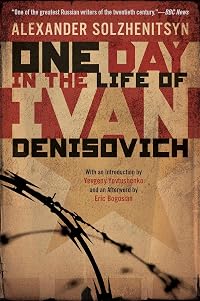
This latest is heavier on the dread, as it’s set in a secret USSR town where the titular protagonist is studying the effects of radiation on living organisms. He finds the reassurances that inhabitants are exposed to only minimal radiation increasingly unconvincing. Radiation sickness is of course terrifying, as it is poisoning by a means that human senses have no way to detect, which creates considerable tension. Pulley paces the narrative well as Valery investigates the secrets of the town. The place itself feels suitably uncanny and threatening. I found Valery’s backstory in the gulag less effective, because I’ve read Russian fiction that evoked it much more convincingly (e.g. [b:One Day in the Life of Ivan Denisovich|17125|One Day in the Life of Ivan Denisovich|Aleksandr Solzhenitsyn|https://i.gr-assets.com/images/S/compressed.photo.goodreads.com/books/1574794164l/17125._SY75_.jpg|838042]). While Pulley’s writing creates an involving and vivid world, it does not ring with historical veracity. This is of course a matter of taste – it’s not like I’ve ever been in a Soviet gulag! Similarly, maybe in 1963 Soviet radiation researchers did have televisions in their flats; I found such material comforts implausible. The moral and political quandaries faced by the main characters could also have been handled more substantially. Nonetheless, as a whimsical alternate-history mystery about grim Soviet radiation experiments, I thought it worked well and enjoyed it a good deal. show less
This latest is heavier on the dread, as it’s set in a secret USSR town where the titular protagonist is studying the effects of radiation on living organisms. He finds the reassurances that inhabitants are exposed to only minimal radiation increasingly unconvincing. Radiation sickness is of course terrifying, as it is poisoning by a means that human senses have no way to detect, which creates considerable tension. Pulley paces the narrative well as Valery investigates the secrets of the town. The place itself feels suitably uncanny and threatening. I found Valery’s backstory in the gulag less effective, because I’ve read Russian fiction that evoked it much more convincingly (e.g. [b:One Day in the Life of Ivan Denisovich|17125|One Day in the Life of Ivan Denisovich|Aleksandr Solzhenitsyn|https://i.gr-assets.com/images/S/compressed.photo.goodreads.com/books/1574794164l/17125._SY75_.jpg|838042]). While Pulley’s writing creates an involving and vivid world, it does not ring with historical veracity. This is of course a matter of taste – it’s not like I’ve ever been in a Soviet gulag! Similarly, maybe in 1963 Soviet radiation researchers did have televisions in their flats; I found such material comforts implausible. The moral and political quandaries faced by the main characters could also have been handled more substantially. Nonetheless, as a whimsical alternate-history mystery about grim Soviet radiation experiments, I thought it worked well and enjoyed it a good deal. show less
Valery was sent to the gulag six years ago. As an academic under Stalin's regime, it was to be expected. Now, he is removed from the camp, given a suit of civilian clothes, and taken to City 40, a mysterious closed city near the Ural mountains. There, he is Dr. Kolkhanov once again, working on research into the effects of radiation on local wildlife -- oh, because City 40 and the surrounding region was irradiated in an unreported disaster a few years ago. Valery is pretty sure that local levels of radiation are a good deal higher than his supervisors are saying, but if he starts asking questions, he may not live to discover the answers...
So, before I read this book, I could have told you about the two disasters ranked 7, the highest show more number on the International Nuclear and Radiological Events Scale -- Chernobyl and Fukushima, of course. But I'd never heard of the third most serious, the only nuclear event to rate a 6 on that scale: the Kyshtym Disaster, which happened in the Soviet Union in 1957, but was virtually unknown both inside and outside of Russia until 1990. An improperly maintained storage tank of nuclear waste ruptured, irradiating thousands of square miles in what is now known as the Eastern Ural Radioactive Trace, and contributing to nearby Lake Karachay's status as "the most contaminated place on Earth---
Oh, the book? You want me to review the book? It's gripping and compelling. There's an octopus, and a very delicately handled romance, and a lot of people who mean one thing and say something else. Pulley really gets the mentality of that time and place, when you know you can't even trust the people you like, and you have to watch every word out of your mouth and theirs. If any of this intrigues you, I recommend it. show less
So, before I read this book, I could have told you about the two disasters ranked 7, the highest show more number on the International Nuclear and Radiological Events Scale -- Chernobyl and Fukushima, of course. But I'd never heard of the third most serious, the only nuclear event to rate a 6 on that scale: the Kyshtym Disaster, which happened in the Soviet Union in 1957, but was virtually unknown both inside and outside of Russia until 1990. An improperly maintained storage tank of nuclear waste ruptured, irradiating thousands of square miles in what is now known as the Eastern Ural Radioactive Trace, and contributing to nearby Lake Karachay's status as "the most contaminated place on Earth---
Oh, the book? You want me to review the book? It's gripping and compelling. There's an octopus, and a very delicately handled romance, and a lot of people who mean one thing and say something else. Pulley really gets the mentality of that time and place, when you know you can't even trust the people you like, and you have to watch every word out of your mouth and theirs. If any of this intrigues you, I recommend it. show less
Natasha Pulley is a superb historical fiction author. Normally her books put a bit of a fantasical spin on history, but the most fantastical thing about The Half Life of Valery K is that in this one that's not the case—the events of this book, while told through fictional characters, are firmly based in real historical events in an area of Russia that was purposefully irradiated by the USSR. I figured it was all fictional until halfway through the book when I googled something, went on a Wikipedia spiral and had my mind blown. I read this one just as Russia began its invasion of Ukraine, and did some really questionable stuff at Chernobyl, so it was a little too close to home! All notes on human nature and history and the horrifically show more cyclical nature of both aside, The Half Life of Valery K also features Pulley's keen eye for engrossing characters and beautiful relationships. show less
Not science fiction, but dystopia of a very real 1960s (and earlier) Soviet Union, with a strong whiff of something rotten in the west wafting in at the end. Perhaps the most unlikely love story I have every read, the book was to restrained, detailed and deliberate for me to enthuse over currently, but it required every word for me to construct belief in its possibilities.
Members
- Recently Added By
Lists

Recommend the 20 best books you've read in the last five years
2,168 works; 606 members

Top Five Books of 2022
736 works; 272 members

Female Author
1,235 works; 65 members

Global Reads: Books Set in Eastern Europe
45 works; 10 members

Books published and read in 2022
82 works; 5 members

Books Read in 2022
5,166 works; 114 members

Favorite Books from the 2020s
32 works; 4 members

Good LGBT fiction for LGBT folk and friends
545 works; 52 members

Favorite Romance Fiction
247 works; 115 members

Your favorite 20 fiction books PUBLISHED in the last five years
20 works; 1 member

Books We Couldn't Put Down
443 works; 197 members

Library List 4.5
25 works; 1 member

1960s
281 works; 16 members
Author Information

10+ Works 5,105 Members
Awards and Honors
Distinctions
Notable Lists
Common Knowledge
- Canonical title*
- Stad 40
- Original publication date
- 2022-06-23
- People/Characters
- Dr Valery Kolkhanov; Konstantin Shenkov; Dr Elena Resovskaya; Ilenko; Boris the rat; Nanya (show all 17); Sasha; Sergei; Pyotr; Anna Shenkovna; Slavsky; Svetlana; Tatiana Shenkov; Albert the octopus; Harrison; Cecilia; Frank
- Important places
- Lubyanka Prison, Moscow; City 40; Chelyabinsk, Russia; The Lighthouse, Mayak facility; British Embassy, Sofia Quay, Moscow, USSR; Durham, County Durham, England, UK (show all 12); Kolyma, Siberia, Russia; Chelyabinsk-65; Ozersk, Russia; Chelyabinsk Hospital; Ministry of Medium Machine Building, Bolshaya Ordynka St, Moscow; The Chocolate Factory
- Important events
- Radioactive Explosion, Kyshtym Region, Russia (Sept 1957); Discovery of Disfigured Baby Alyoshenka (1996)
- Dedication
- For Claire, Larry, and Jacob, who put up with me telling them pointless facts about nuclear physics for the whole of lockdown
- First words
- Possibly because French made it sound fancy and respectable, the wake-up call for the prisoners was called reveille.
- Quotations
- I keep hearing all this about radiation, but frankly, comrade, if I can't see it and it doesn't bite, I'm not that worried.
- Last words
- (Click to show. Warning: May contain spoilers.)‘So it is,' Valery agreed, and as Shenkov turned on the record player, Monday seemed like forever away.
*Some information comes from Common Knowledge in other languages. Click "Edit" for more information.
Classifications
Statistics
- Members
- 350
- Popularity
- 90,089
- Reviews
- 22
- Rating
- (4.13)
- Languages
- Dutch, English
- Media
- Paper, Audiobook, Ebook
- ISBNs
- 12
- ASINs
- 3