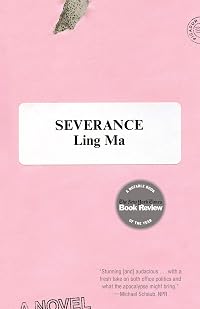
Severance: A Novel
by Ling Ma
On This Page
Description
Candace Chen, a millennial drone self-sequestered in a Manhattan office tower, is devoted to routine. With the recent passing of her Chinese immigrant parents, she's had her fill of uncertainty. She's content just to carry on: She goes to work, troubleshoots the teen-targeted Gemstone Bible, watches movies in a Greenpoint basement with her boyfriend. So Candace barely notices when a plague of biblical proportions sweeps New York. Then Shen Fever spreads. Families flee. Companies cease show more operations. The subways screech to a halt. Her bosses enlist her as part of a dwindling skeleton crew with a big end-date payoff. Soon entirely alone, still unfevered, she photographs the eerie, abandoned city as the anonymous blogger NY Ghost. Candace won't be able to make it on her own forever, though. Enter a group of survivors, led by the power-hungry IT tech Bob. They're traveling to a place called the Facility, where, Bob promises, they will have everything they need to start society anew. But Candace is carrying a secret she knows Bob will exploit. Should she escape from her rescuers? A send-up and takedown of the rituals, routines, and missed opportunities of contemporary life, Ling Ma's Severance is a moving family story, a quirky coming-of-adulthood tale, and a hilarious, deadpan satire. Most important, it's a heartfelt tribute to the connections that drive us to do more than survive. show lessTags
Recommendations





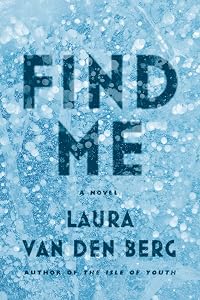
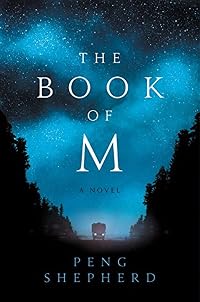
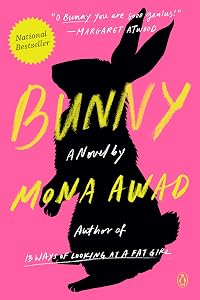
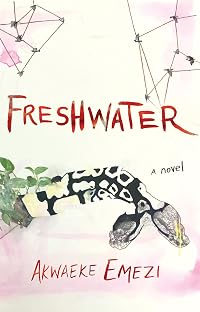



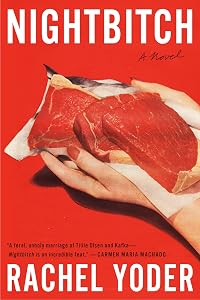
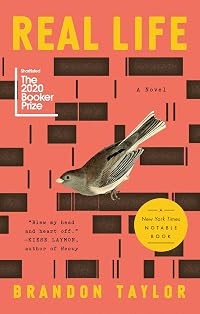
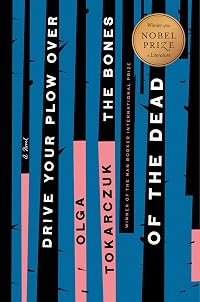
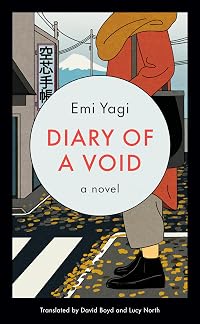
Member Recommendations

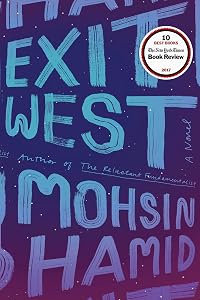
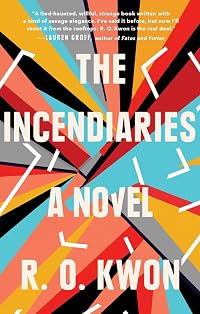
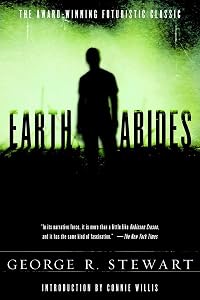
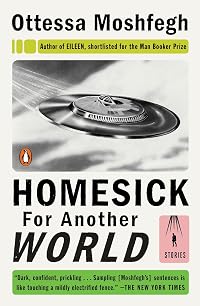
susanbooks Ma takes Whitehead's neoliberal zombie narrative further, making for a more satisfying read, but I'm not sure I'd have appreciated Ma's without Whitehead's.
30
jtoneill0 Also about post-millennial New York, similar sardonic and detached tone, similar sense of ennui
31
by anonymous user
Member Reviews
Oof! Not exactly a fun breezy read but very very good, incredibly cold and dark and sinister. It's hard to imagine any other book that does what this book does - a zombie apocalypse post capitalist satire of the American immigrant experience - and it does all of those elements really well. Iconic
'Severance' is not your typical post-apocalyptic thriller. If you're after a plague-based version of 'The Walking Dead', this isn't the book you're looking for. If you're looking for a book that explores being rootless, severed from your past, barely invested in your present and unable to imagine a future more satisfying than the habits and routines of your daily life, then 'Severance' will resonate with you.
'Severance' is a first-person account of the life of Candace Chen, who immigrated to America from China with her parents when she was a child and who, when the virus that changes everything hits the world, is in her twenties, working for a publishing firm in NYC, managing the logistics of outsourcing the printing of specialist show more Bibles to China.
'Severance' was published in the summer of 2018 but it reads eerily like a book written after having lived through the first wave of COVID in 2020. It imagines something called Shen Fever because it is believed to have originated in China. The early symptoms are very similar to those of COVID, so are just as hard to pin down. Ling Ma's description of the reaction of the government, companies and the general public to the fever now read like a summary of recent history. The fever she imagines is worse than COVID, not just because its rate of infection is very high but because what it does to people is cruel and deeply disturbing. She captures the slow slide from normalcy, through this-is-a-manageable-problem, through until-things-get-back-to-normal-we're-going-to-do-this-to-stay-safe, to the-world-we-knew-is-gone-and-it's-not-coming-back is lubricated by denial, self-deception and the persistence of hope even as people begin to drown in despair.
Yet, the plausible depiction of the apocalypse, chilling as it is, is not where the power of the book comes from. Ling Ma uses the global discontinuity produced by the Shen Fever pandemic as a large scale example of how we can become severed from the life we've always told ourselves we would have. That we can deny or ignore a 'severance' on the scale of the pandemic and tell ourselves that things will get back to normal shows the strength of our attachment to the lives we've imagined for ourselves in the face of evidence that it's not a life we will be able to lead. The pandemic reminded me of Michelle Obama's assertion that 'Being President doesn't change who you are, it reveals who you are.' 'Severance' recognises that we don't become new people in the face of discontinuous change. Rather, we reveal the essential reality of who we are as the dreams of who we might become and the pretences of daily life fall away.
'Severance' refuses to sink into the comfort of post-apocalyptic tropes in which crisis brings out the best and the worst in people, transforming them into heroes or villains. Instead, it blurs the lines between life before and after the apocalypse. It shows Shen Fever as just the biggest of a series of 'severances' in the life of Candace Chen and her parents. Her parents are severed from their culture and family and history in China. Candace's life in NYC is completely discontinuous from her childhood in Salt Lake City. Even before the pandemic hit, Candace was starting to recognise the gap between the NYC life she'd imagined and the one she was actually living. She's also aware that while she is good at the work she does and it in a place where that work is valued, she doesn't value what she does and this makes her life feel hollow.
Candace's story is told as a series of non-linear descriptions, driven forward by a growing sense of threat in her post-apocalypse life. A threat that will force her to abandon her habitual passivity and make difficult choices about how she will live.
We learn of Candace's childhood as the daughter of immigrant parents, one of whom embraces living in America while the other constantly mourns what has been left behind. We see how her life in NYC is not the dream she had hoped for but is rootless and unsatisfying. We watch the slow normalisation of loneliness and isolation. We see inertia slipping into apathy and then into terminal depression in a life held together by a mixture of distraction and routine and a denial of the possibility of choice.
I liked that Candace was the same person, with many of the same challenges, before and after Shen Fever hit and she found herself one of a handful of survivors.
Over the course of the book, Candace slowly starts to understand how adrift she had been. How she had become a passive observer of her own life. Even her blog of NYC photographs, her only real passion, is titled NYGhost, a name that comes to apply both to her and the city she is photographing. The post-apocalypse plotline puts Candace in a situation where she can remain passive, surrender agency, let go of identity and do what is required of her or she can take a risk. It struck me, as I'm sure it was supposed to, that many of us have found ourselves in that situation but without the stark light of an apocalypse to make the dilemma visible.
'Severance' is not an exciting book. The pace is gentle. The tone is passive. There is no escapism, only an unflinching look at how things are. I found the combination to be chilling and compelling. show less
***SPOILERS HIDDEN***
Severance is a blend of literary fiction and post-apocalyptic fiction that doesn't get either right. It starts with a lot of promise: an organized timeline shifts back and forth between the present-day, post-apocalyptic life of corporate drone Candace Chen, to the recent past, when she first learns of "Shen Fever" and watches it bloom into a deadly pandemic. The lack of development, though, shows how confused author Ling Ma was in how, exactly, to tell this complicated story. Her careful organization quickly fell apart as she veered into tangents. She found her way again toward the end, but it’s too little too late, and the book ends inconclusively.
The bleak new world Candace moves around in is hard to understand. show more New York City has become a ghost town with a palpable eeriness. The same seems to be true of the few other cities mentioned. But how, in detail, did this disease turn life upside down? How wide is Shen Fever’s reach? How many people have died worldwide? Aren’t some countries managing better than others? Candace travels with a found-family group of nine survivors; where are the other groups that surely must be out there?
With so many unanswered questions, it’s obvious Severance isn’t really about a pandemic. It’s about Candace and a deeper message.All other characters, especially those in her found family, are just names, given no defining features or anything to do. An intimidating group leader gets the most attention out of the nine, but here the story doesn’t flash back where it counts: to show how he became the leader everyone is a little scared of, or, for that matter, how these people banded together in the first place and how Candace found and joined them. Her group enters the present-day storyline complete and fully functioning, so Ma didn’t show any of the dramatic conflict that would naturally arise in a group of traumatized survivors. Any tensions among these people were resolved a while ago. The desperate work of gathering supplies, food, and vehicles has been done. Actual survival scenes showing the group in dire straits or scrounging and worrying or even just…mourning their pre-pandemic lives and deceased loved ones is missing.
This story is stoic to a bizarre degree. Only one scene shows the real, human, primal panic and sadness readers would expect a post-apocalyptic story to be overflowing with. Otherwise, characters are aimlessly present, surviving with Shen Fever lurking in the background as a mere nuisance, not the imminent threat it actually is.Two or three compelling scenes show the creepy personal devastation of the illness, but these are too few, too quick, and anti-climactic because Candace and her group are never in real danger.
Readers are inside Candace’s head the whole time, but it doesn’t matter because she has the emotional intensity of a rock:She breaks up with her beloved boyfriend without any second thoughts or period of grief; isn’t alarmed shortly afterward to find out she’s pregnant by him; shows no fear of contracting Shen Fever (a terrifying illness with no cure or even adequate treatment), despite seeing lots around her succumb; robotically continues working at her boring corporate job long after everyone in the building has left or died; doesn’t grieve the sudden, violent deaths of two in her found family; and isn’t scared when the leader imprisons her upon learning she’s pregnant. Her mind is a frighteningly unperturbed place.
The literary fiction aspect is strongly evident where Ma tried to add feeling and depth by digging into Candace’s past as she grapples with her Chinese-American identity. For this the author wove in anecdotes about this character’s mom, dad, and each of her four uncles. A work visit to a Chinese factory hints that Severance’s pandemic storyline exists only to emphasize the West’s reliance on Chinese labor. If so, this is an inspired vision, but Ma then confused matters by adding unnecessary details about the printing of Bibles and Candace’s shame over her parents’ uncultured hometown. This character’s ethnicity is irrelevant, and these background bits are boring. The social commentary is weak—never moving beyond the complaint phase, stuck in mere acknowledgement of a problematic situation.
I’m left feeling that the author was overly ambitious. It’s as if she was trying to make a profound statement about a few different things but ended up getting none of it across well or at all. I found myself longing for so much more from this sedate story: more world-building, more drama, more atmosphere, more vigor.
Ma’s writing style is enjoyable; however, she hasn’t mastered the art of plotting a story, and as a post-apocalyptic work Severance is breathtakingly undeveloped. She had only the most simplistic, tiniest germ of an idea yet forced it into the complex post-apocalyptic genre. As a literary fiction, the book is too meandering and slight to have emotional impact or to make a provocative social statement. Severance would have been better had Ma committed to either thought-provoking literary fiction or thrilling post-apocalyptic fiction, not a muddled combination that doesn’t succeed as either. show less
Severance is a blend of literary fiction and post-apocalyptic fiction that doesn't get either right. It starts with a lot of promise: an organized timeline shifts back and forth between the present-day, post-apocalyptic life of corporate drone Candace Chen, to the recent past, when she first learns of "Shen Fever" and watches it bloom into a deadly pandemic. The lack of development, though, shows how confused author Ling Ma was in how, exactly, to tell this complicated story. Her careful organization quickly fell apart as she veered into tangents. She found her way again toward the end, but it’s too little too late, and the book ends inconclusively.
The bleak new world Candace moves around in is hard to understand. show more New York City has become a ghost town with a palpable eeriness. The same seems to be true of the few other cities mentioned. But how, in detail, did this disease turn life upside down? How wide is Shen Fever’s reach? How many people have died worldwide? Aren’t some countries managing better than others? Candace travels with a found-family group of nine survivors; where are the other groups that surely must be out there?
With so many unanswered questions, it’s obvious Severance isn’t really about a pandemic. It’s about Candace and a deeper message.
This story is stoic to a bizarre degree. Only one scene shows the real, human, primal panic and sadness readers would expect a post-apocalyptic story to be overflowing with. Otherwise, characters are aimlessly present, surviving with Shen Fever lurking in the background as a mere nuisance, not the imminent threat it actually is.
Readers are inside Candace’s head the whole time, but it doesn’t matter because she has the emotional intensity of a rock:
The literary fiction aspect is strongly evident where Ma tried to add feeling and depth by digging into Candace’s past as she grapples with her Chinese-American identity. For this the author wove in anecdotes about this character’s mom, dad, and each of her four uncles. A work visit to a Chinese factory hints that Severance’s pandemic storyline exists only to emphasize the West’s reliance on Chinese labor. If so, this is an inspired vision, but Ma then confused matters by adding unnecessary details about the printing of Bibles and Candace’s shame over her parents’ uncultured hometown. This character’s ethnicity is irrelevant, and these background bits are boring. The social commentary is weak—never moving beyond the complaint phase, stuck in mere acknowledgement of a problematic situation.
I’m left feeling that the author was overly ambitious. It’s as if she was trying to make a profound statement about a few different things but ended up getting none of it across well or at all. I found myself longing for so much more from this sedate story: more world-building, more drama, more atmosphere, more vigor.
Ma’s writing style is enjoyable; however, she hasn’t mastered the art of plotting a story, and as a post-apocalyptic work Severance is breathtakingly undeveloped. She had only the most simplistic, tiniest germ of an idea yet forced it into the complex post-apocalyptic genre. As a literary fiction, the book is too meandering and slight to have emotional impact or to make a provocative social statement. Severance would have been better had Ma committed to either thought-provoking literary fiction or thrilling post-apocalyptic fiction, not a muddled combination that doesn’t succeed as either. show less
Reader/reviewers seem to have lobbed a number of criticisms at Severance, and, by and large, they're pretty much spot-on. "Severance" is an immigrant narrative and a post-apocalyptic zombie story and a coming-of-age-in-hipster-Brooklyn-in-the-oughts novel, and its disparate parts don't really blend together all that well. The novel can't quite make up its mind as to what it wants to be. The cult leader we meet could have been more compelling. The ending could have been better. Ling Ma writes well, but she's just not writer that Colson Whitehead is.
But I rather liked "Severance" because Ma managed to take her story into some very interesting thematic directions. Her main character, Candace Chen, has led a disjointed life: orphaned in show more young adulthood, she's a Chinese immigrant who grew up in Utah and expected to find something better in New York City. Candace's parents seem to have adapted in superficial ways but, cut off from their homeland and their families, don't often seem like all that emotionally well-developed. "Severance" would seem to be an obvious title for a narrative like this one. But while a lot of literature attempts to teach its readers how to draw strength from the past, Ma's attitude seems to be more conflicted. In a book that features zombies repeating the same actions they did in life until their bodies run down, the past often seems more of a danger than a resource. Candace's life in Brooklyn was unsatisfactory -- she was lonely and worked a job that was prestigious but not really remunerative or meaningful. Her boyfriend's hipster poverty seems increasingly threadbare by the time he leaves New York and he epidemic hits, leaving Candace without a job and without direction. Ultimately, her challenge, it might be said, is to try to find a livable present and a viable future. Sometimes, Ma seems to be arguing, it's impossible to draw a solid through-line that connects all your experiences, and you have to make do. Sometimes severance is necessary.
The other element of this book that impressed me was the way it addresses the strange contradictions global capitalism. Candace is Chinese-born and speaks a respectable Mandarin, but she's a foreigner in China and her counterparts and the printing company she deals with don't hesitate to let her know that they're aware of how they're being exploited. This ties Candace and the book's Chinese characters -- and, by extension, the rest of us -- together in uncomfortable ways. Saying that epidemics don't respect borders is pretty much a medical fact -- and these days, it's a lesson learned -- but Ma seems to be arguing that the exploitative elements of global capitalism can't be contained by borders either. She subtly demonstrates that everybody in the book is part of the same machine. Guilt and complicity are also unavoidably contagious. Yes, even her would-be writer boyfriend, who refuses to take jobs that threaten his "integrity." In this sense, the zombie epidemic provides Candace and her yet-to-be-born baby with a means of escape from a whole set of seemingly unresolvable problems: her boring job, her dying relationship, the standard immigrant dream she was more-or-less born into. It'd be nice, frankly, if our pandemic could open up the same sort of possibilities for us. We'll have to wait and see.
In closing, I will have to say that I rather liked Candace herself as a character. She's not, it must be said, the most fascinating person that I've met in a book, but I think that her very ordinariness is somewhat deliberate. At one point, Candace's mother implores her to "be of use," and in many ways, Candace is: she's hard working, responsible, and preternaturally efficient. A product of her background, then. She spends much of "Severance" learning that that, in itself, might not be enough. I can't say that she opens up, exactly, over the course of this novel, but, by the end of it, she has a better idea of her former life's limitations. This a problematic novel, but also one that I can recommend to those interested in immigrant narratives and transcultural stories. show less
But I rather liked "Severance" because Ma managed to take her story into some very interesting thematic directions. Her main character, Candace Chen, has led a disjointed life: orphaned in show more young adulthood, she's a Chinese immigrant who grew up in Utah and expected to find something better in New York City. Candace's parents seem to have adapted in superficial ways but, cut off from their homeland and their families, don't often seem like all that emotionally well-developed. "Severance" would seem to be an obvious title for a narrative like this one. But while a lot of literature attempts to teach its readers how to draw strength from the past, Ma's attitude seems to be more conflicted. In a book that features zombies repeating the same actions they did in life until their bodies run down, the past often seems more of a danger than a resource. Candace's life in Brooklyn was unsatisfactory -- she was lonely and worked a job that was prestigious but not really remunerative or meaningful. Her boyfriend's hipster poverty seems increasingly threadbare by the time he leaves New York and he epidemic hits, leaving Candace without a job and without direction. Ultimately, her challenge, it might be said, is to try to find a livable present and a viable future. Sometimes, Ma seems to be arguing, it's impossible to draw a solid through-line that connects all your experiences, and you have to make do. Sometimes severance is necessary.
The other element of this book that impressed me was the way it addresses the strange contradictions global capitalism. Candace is Chinese-born and speaks a respectable Mandarin, but she's a foreigner in China and her counterparts and the printing company she deals with don't hesitate to let her know that they're aware of how they're being exploited. This ties Candace and the book's Chinese characters -- and, by extension, the rest of us -- together in uncomfortable ways. Saying that epidemics don't respect borders is pretty much a medical fact -- and these days, it's a lesson learned -- but Ma seems to be arguing that the exploitative elements of global capitalism can't be contained by borders either. She subtly demonstrates that everybody in the book is part of the same machine. Guilt and complicity are also unavoidably contagious. Yes, even her would-be writer boyfriend, who refuses to take jobs that threaten his "integrity." In this sense, the zombie epidemic provides Candace and her yet-to-be-born baby with a means of escape from a whole set of seemingly unresolvable problems: her boring job, her dying relationship, the standard immigrant dream she was more-or-less born into. It'd be nice, frankly, if our pandemic could open up the same sort of possibilities for us. We'll have to wait and see.
In closing, I will have to say that I rather liked Candace herself as a character. She's not, it must be said, the most fascinating person that I've met in a book, but I think that her very ordinariness is somewhat deliberate. At one point, Candace's mother implores her to "be of use," and in many ways, Candace is: she's hard working, responsible, and preternaturally efficient. A product of her background, then. She spends much of "Severance" learning that that, in itself, might not be enough. I can't say that she opens up, exactly, over the course of this novel, but, by the end of it, she has a better idea of her former life's limitations. This a problematic novel, but also one that I can recommend to those interested in immigrant narratives and transcultural stories. show less
Allegory alert.
Ma succeeded, did well, 100% her own voice, this generation’s [b:The Road|6288|The Road|Cormac McCarthy|https://i.gr-assets.com/images/S/compressed.photo.goodreads.com/books/1600241424l/6288._SY75_.jpg|3355573]–I think, because I won’t read it, way too depressing–but you get the gist, right? Quality writing, characterization, Metaphor Locked in Place. I didn’t precisely mean to, but this became my fiction read while I was making my way through [b:Four Thousand Weeks: Time Management for Mortals|54785515|Four Thousand Weeks Time Management for Mortals|Oliver Burkeman|https://i.gr-assets.com/images/S/compressed.photo.goodreads.com/books/1627425434l/54785515._SY75_.jpg|85465206], and just guess which one felt more show more upbeat? Go on; I dare you. Double-dog, even. Yes, my perceptive little reader; the book about our fire-fly quick lives requiring us to make choices and sacrifices was downright cheerful compared to Severance. Just let that settle a minute.
“Memories beget memories. Shen Fever being a disease of remembering, the fevered are trapped indefinitely in their memories. But what is the difference between the fevered and us? Because I remember too, I remember perfectly. My memories replay, unprompted, on repeat. And our days, like theirs, continue in an infinite loop. We drive, we sleep, we drive some more.”
But I read nonetheless, focused, engrossed, intent, almost angrily. I’d take a break and find that my muscles were tense. Candace is too young, too indecisive, too amorphous and only knows what she wants when she’s in opposition. Candace, it turns out, is me.
“At work, they knew me to be capable but fragile. Quiet, clouded up with daydreams. Usually diligent, though sometimes inconsistent, moody. But also something else, something implacable: I was unsavvy in some fundamental, uncomfortable way.”
Narrative is two strands woven together, but each leaning heavily on childhood memories: Candace’s present where she is leaving New York with a survivor group; her five years in New York leading up to the pandemic that include her work at Spectra Publishing. The blurb also makes much of her being a millennial. I’m not sure it is about her generation, honestly; it sounds much like two of my besties who moved there after college in the 90s. This is more about the stage of life and the NYC experience--the corporate ladder was questionable even then, gentrification was a thing, rents were crazy high; how egotistical to think you are the first generation to face such things?
“I have always lived in the myth of New York more than in its reality. It is what enabled me to live there for so long, loving the idea of something more than the thing.”
Should you read it? Well, here’s my mental Venn for this book:
Does it pique your interest? Sound tolerable? It’s extremely well done. It was also, unfortunately or fortunately for Ma, written before the Covid pandemic, but she had her crystal ball solidly in place. It might trigger a bit of PTSD. I’ll be honest, it made a great companion book to Four Thousand Weeks. I even decided to leave my job while reading it. So thanks, Ma, for reminding me that routine and memories aren’t enough to keep us alive.
“What’s the book about? I asked. It’s about a man from a poor background who wants to better his life. Does he make it? My father smiled. He does, but it comes at a cost. There’s no happy ending.” show less
Ma succeeded, did well, 100% her own voice, this generation’s [b:The Road|6288|The Road|Cormac McCarthy|https://i.gr-assets.com/images/S/compressed.photo.goodreads.com/books/1600241424l/6288._SY75_.jpg|3355573]–I think, because I won’t read it, way too depressing–but you get the gist, right? Quality writing, characterization, Metaphor Locked in Place. I didn’t precisely mean to, but this became my fiction read while I was making my way through [b:Four Thousand Weeks: Time Management for Mortals|54785515|Four Thousand Weeks Time Management for Mortals|Oliver Burkeman|https://i.gr-assets.com/images/S/compressed.photo.goodreads.com/books/1627425434l/54785515._SY75_.jpg|85465206], and just guess which one felt more show more upbeat? Go on; I dare you. Double-dog, even. Yes, my perceptive little reader; the book about our fire-fly quick lives requiring us to make choices and sacrifices was downright cheerful compared to Severance. Just let that settle a minute.
“Memories beget memories. Shen Fever being a disease of remembering, the fevered are trapped indefinitely in their memories. But what is the difference between the fevered and us? Because I remember too, I remember perfectly. My memories replay, unprompted, on repeat. And our days, like theirs, continue in an infinite loop. We drive, we sleep, we drive some more.”
But I read nonetheless, focused, engrossed, intent, almost angrily. I’d take a break and find that my muscles were tense. Candace is too young, too indecisive, too amorphous and only knows what she wants when she’s in opposition. Candace, it turns out, is me.
“At work, they knew me to be capable but fragile. Quiet, clouded up with daydreams. Usually diligent, though sometimes inconsistent, moody. But also something else, something implacable: I was unsavvy in some fundamental, uncomfortable way.”
Narrative is two strands woven together, but each leaning heavily on childhood memories: Candace’s present where she is leaving New York with a survivor group; her five years in New York leading up to the pandemic that include her work at Spectra Publishing. The blurb also makes much of her being a millennial. I’m not sure it is about her generation, honestly; it sounds much like two of my besties who moved there after college in the 90s. This is more about the stage of life and the NYC experience--the corporate ladder was questionable even then, gentrification was a thing, rents were crazy high; how egotistical to think you are the first generation to face such things?
“I have always lived in the myth of New York more than in its reality. It is what enabled me to live there for so long, loving the idea of something more than the thing.”
Should you read it? Well, here’s my mental Venn for this book:
Does it pique your interest? Sound tolerable? It’s extremely well done. It was also, unfortunately or fortunately for Ma, written before the Covid pandemic, but she had her crystal ball solidly in place. It might trigger a bit of PTSD. I’ll be honest, it made a great companion book to Four Thousand Weeks. I even decided to leave my job while reading it. So thanks, Ma, for reminding me that routine and memories aren’t enough to keep us alive.
“What’s the book about? I asked. It’s about a man from a poor background who wants to better his life. Does he make it? My father smiled. He does, but it comes at a cost. There’s no happy ending.” show less
In the past I’ve been pretty critical of literary fiction that makes use of post-apocalyptic settings, notably the embarrassing [b:California|18774020|California|Edan Lepucki|https://images.gr-assets.com/books/1400863574s/18774020.jpg|26407781] and facile [b:Gold Fame Citrus|24612148|Gold Fame Citrus|Claire Vaye Watkins|https://images.gr-assets.com/books/1426092348s/24612148.jpg|44223210]. Here, on the other hand, is just such a novel done well. Ling Ma uses a global pandemic to comment intelligently on late capitalism, from the perspective of a young woman whose family emigrated from China to America when she was a child. Candace, the narrator, watches New York succumb to Shen Fever, a malady that causes its victims to mindlessly show more repeat tasks until they die. The analogy with employment is obvious and suitably unsettling. There is much more subtlety than a generic zombie apocalypse scenario, although at one point characters discuss the ways in which ‘the fevered’ are and aren’t like zombies. Ma also plays with the classic zombie defence setting of a shopping mall and the idea of there being a fine line between the behaviour of the fevered and unfevered. I noticed that the places surviving Shen Fever relatively unscathed (Iceland and the Nordic states) are also those that came through the 2008 financial crisis relatively well. They have a higher resistance to globalised hypercapitalism, thus also to a fictional disease spread by it. Shen Fever allegedly emerged from the Shenzen Special Economic Zone in China, exporting lethal fungal spores all over the world.
Candace observes as New York slowly grinds to a halt, photoblogging about it once her normal workload ceases to exist. She is a sympathetic and relatable millennial protagonist, who prior to the pandemic devotes all her energy to a tedious job in order to earn enough for rent. She both loves and is critical of urban living, argues with her boyfriend about whether escape from the rat race is possible, and has an ambivalent relationship with consumerism. In short, she is an interesting and complicated character, whose identity as an immigrant and family experiences are explored well. Unusually for such a book, I found the flashbacks to be the most appealing parts. The post-apocalyptic sequences read a little like [b:Rules for Werewolves|25279749|Rules for Werewolves|Kirk Lynn|https://images.gr-assets.com/books/1472573166s/25279749.jpg|45005879], albeit more coherent and meaningful. The most striking parts comment incisively on postmodern life before the pandemic:
No wonder I liked this book so much: rather than resting all the narrative weight on a romantic relationship (like [b:California|18774020|California|Edan Lepucki|https://images.gr-assets.com/books/1400863574s/18774020.jpg|26407781]), it uses the romantic relationship to demonstrate the alienation of late capitalism. Even after civilisation has collapsed, the same rituals recur; looting becomes the new consumerism. There is also some thoughtful commentary on religion as a cultural and economic force. The pacing is excellent and the writing wry and vivid. There is one truly terrifying moment and a great deal of striking urban disintegration imagery. The ending is open, with the potential for hope. This is not a post-apocalyptic novel that glorifies individualistic survivalism. Ma demonstrates that people live in societies even after catastrophes, as we can’t just leave behind the ingrained habits of the past even after those habits have destroyed the majority. While this message is in one sense deeply pessimistic, Candace is such a clear-sighted protagonist that I did not find it so. She is admirably pragmatic, a worthy successor to Lola, narrator of [b:Random Acts of Senseless Violence|1129928|Random Acts of Senseless Violence|Jack Womack|https://images.gr-assets.com/books/1348132999s/1129928.jpg|511869]. I do wonder why speech marks have gone out of fashion in literary circles, though. What did they do wrong? show less
Candace observes as New York slowly grinds to a halt, photoblogging about it once her normal workload ceases to exist. She is a sympathetic and relatable millennial protagonist, who prior to the pandemic devotes all her energy to a tedious job in order to earn enough for rent. She both loves and is critical of urban living, argues with her boyfriend about whether escape from the rat race is possible, and has an ambivalent relationship with consumerism. In short, she is an interesting and complicated character, whose identity as an immigrant and family experiences are explored well. Unusually for such a book, I found the flashbacks to be the most appealing parts. The post-apocalyptic sequences read a little like [b:Rules for Werewolves|25279749|Rules for Werewolves|Kirk Lynn|https://images.gr-assets.com/books/1472573166s/25279749.jpg|45005879], albeit more coherent and meaningful. The most striking parts comment incisively on postmodern life before the pandemic:
Manny looked up in surprise when I exited the elevator in the lobby. They let you leave! He said.
Yeah. They chain me to my desk all day.
He smiled. Any exciting plans tonight?
You know it, I said, as I walked through the revolving doors.
The crush of Times Square greeted me. The city was so big. It lulled you into thinking that there were so many options, but most of the options had to do with buying things: dinner entrees, cocktails, the cover charge at a nightclub. Then there was the shopping, big chain stores open late, up and down the streets, throbbing with bass-heavy music and lighting. In the Garment District, diminished to a limited span of blocks after apparel manufacture moved overseas, wholesale shops sold fabrics and trinkets imported from China, India, Pakistan.
In Jonathan’s apartment, we used to watch single-woman-in-Manhattan movies, a subgenre of New York movies. There was Picture Perfect, An Unmarried Woman, Sex and the City. The single heroine, usually white, romantic in her solitude. In those movies, there is almost always this power-walk shot, in which she is shown striding down some Manhattan street, possibly leaving work during rush hour at dusk, the traffic blaring all around and the buildings rising around her. The city was empowering. Even if a woman doesn’t have anything, the movies seemed to say, at least there is the city. The city was posited as the ultimate consolation.
[...]
I don’t understand this festive mood, Jonathan said, indicating outside the window.
Well, they won’t have to work tomorrow, I explained.
So? he asked, cutting a plantain with a plastic knife.
I was like everyone else. We all hoped the storm would knock things over, fuck things up enough but not too much. We hoped the damage would be bad enough to cancel work the next morning but not so bad that we couldn’t go to brunch instead.
Brunch? He echoed skeptically.
Okay, maybe not brunch, I conceded. If not brunch, then something else.
A day off meant we could do things we’d always meant to do. Like do to the Botanical Garden, the
Frick Collection, or something. Read some fiction. Leisure, the problem with the modern condition was the dearth of leisure. And finally, it took a force of nature to interrupt our routines. We just wanted to hit the reset button. We just wanted to feel flush with time to do things of no quantifiable value, our hopeful side pursuits like writing or drawing or something, something other than what we did for money. Like learning to be a better photographer. And even if we didn’t get around to it on that day, our free day, maybe it was enough to just feel the possibility that we could if we wanted to, which is another way of saying that we wanted to feel young, though many of us were that if nothing else.
I don’t know if you get that though, I said.
Of course I get that. I worked in an office. He took a bite of plantain.
[...]
I’m not like you.
What I didn’t say was: I know you too well. You live your life idealistically. You think it’s possible to opt out of the system. No regular income, no health insurance. You quit jobs on a dime. You think this is freedom but I see the bare, painstaking cheap way you live, the scrimping and saving, and that is not freedom either. You move in circumscribed circles. You move peripherally, on the margins of everything, pirating movies and eating dollar slices. I used to admire this about you, how fervently you clung to your beliefs – I called it integrity – but five years of watching you live this way has changed me. In this world, money is freedom. Opting out is not a real choice.
No wonder I liked this book so much: rather than resting all the narrative weight on a romantic relationship (like [b:California|18774020|California|Edan Lepucki|https://images.gr-assets.com/books/1400863574s/18774020.jpg|26407781]), it uses the romantic relationship to demonstrate the alienation of late capitalism. Even after civilisation has collapsed, the same rituals recur; looting becomes the new consumerism. There is also some thoughtful commentary on religion as a cultural and economic force. The pacing is excellent and the writing wry and vivid. There is one truly terrifying moment and a great deal of striking urban disintegration imagery. The ending is open, with the potential for hope. This is not a post-apocalyptic novel that glorifies individualistic survivalism. Ma demonstrates that people live in societies even after catastrophes, as we can’t just leave behind the ingrained habits of the past even after those habits have destroyed the majority. While this message is in one sense deeply pessimistic, Candace is such a clear-sighted protagonist that I did not find it so. She is admirably pragmatic, a worthy successor to Lola, narrator of [b:Random Acts of Senseless Violence|1129928|Random Acts of Senseless Violence|Jack Womack|https://images.gr-assets.com/books/1348132999s/1129928.jpg|511869]. I do wonder why speech marks have gone out of fashion in literary circles, though. What did they do wrong? show less
A prescient, literary take on the pandemic apocalypse/zombie genre. I found the book eerily relatable on the capitalist hellscape front, feeling stuck in a job and daydreaming about leaving but never actually pushing the button etc etc. This honestly helped me process some of my intrusive thoughts, like when does the comforting familiarity of a middling-pay office job turn into a rut that becomes a ditch that only an apocalypse can scare you out of? Low-key the wakeup call I need tbh. The book jumps between the past and the present in a way that didn't feel jarring, the infected are perpetually stuck doing routinary tasks and are the tamest iteration of zombies I've ever come across, which contributes to the bleak-but-not-quite-violent show more vibe of this apocalypse. The open ending was expected, but I can't help thinking that something was missing there. Felt like a very Staring Into The Void And The Void Stares Back kind of read, but the unpleasantness really will make you Think... show less
Members
- Recently Added By
Lists

Best Dystopias
280 works; 276 members

Top Five Books of 2020
982 works; 348 members

Books Set in New York City
127 works; 21 members

Female Protagonist
1,056 works; 57 members

Dystopian and Apocalyptic Literature
350 works; 74 members

Diversity in Fantasy and Science Fiction
219 works; 33 members

Kirkus Starred Fiction Reviews of Books Published in 2018
330 works; 3 members

Amazon best fictional genre picks monthly for 2018
418 works; 9 members

Diverse Horror
262 works; 6 members

The Atlantic's The Great American Novel
136 works; 12 members

.
184 works; 1 member

Books Read in 2021
5,361 works; 114 members
books featured on the book struggles twt
97 works; 2 members

sad girl books
51 works; 3 members

sad girl books
41 works; 2 members

Viral Outbreaks and Pandemics
82 works; 8 members

el
1,139 works; 1 member
Author Information

6+ Works 3,580 Members
Some Editions
Awards and Honors
Awards
Distinctions
Series
Belongs to Publisher Series
Unionsverlag Taschenbuch (938)
Common Knowledge
- Canonical title*
- Les enfiévrés
- Original title
- Severance
- Original publication date
- 2018
- People/Characters
- Candace Chen; Zhigang Chen; Ruifang Yang; Evan Marcher; Ashley Piker; Janelle Smith (show all 11); Bob Reamer; Adam Robinson; Rachel Aberdeen; Genevieve Goodwin; Todd Gaines
- Important places
- New York, New York, USA; Shenzhen, China; Fuzhou, Fujian, China; Chicago, Illinois, USA
- Dedication
- to my mother and father
- First words
- (Prologue) After the End came the Beginning.
(Chapter 1) The End begins before you are ever aware of it. - Last words
- (Click to show. Warning: May contain spoilers.)I get out and start walking.
- Blurbers
- Hunt, Samantha; Khong, Rachel; Park, Ed; Lennon, J. Robert; Schaub, Michael
- Canonical DDC/MDS
- 813.6
- Canonical LCC
- PS3613.A14
*Some information comes from Common Knowledge in other languages. Click "Edit" for more information.
Classifications
Statistics
- Members
- 2,998
- Popularity
- 5,966
- Reviews
- 128
- Rating
- (3.77)
- Languages
- 5 — English, French, German, Italian, Spanish
- Media
- Paper, Audiobook, Ebook
- ISBNs
- 17
- ASINs
- 4