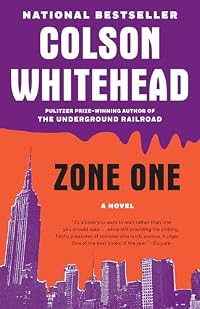
Zone One
by Colson Whitehead
On This Page
Description
In this wry take on the post-apocalyptic horror novel, a pandemic has devastated the planet. The plague has sorted humanity into two types: the uninfected and the infected, the living and the living dead. Now the plague is receding, and Americans are busy rebuilding civilization under orders from the provisional government based in Buffalo. Their top mission: the resettlement of Manhattan. Armed forces have successfully reclaimed the island south of Canal Street--aka Zone One--but show more pockets of plague-ridden squatters remain. While the army has eliminated the most dangerous of the infected, teams of civilian volunteers are tasked with clearing out a more innocuous variety--the "malfunctioning" stragglers, who exist in a catatonic state, transfixed by their former lives. Mark Spitz is a member of one of the civilian teams working in lower Manhattan. Alternating between flashbacks of Spitz's desperate fight for survival during the worst of the outbreak and his present narrative, the novel unfolds over three surreal days, as it depicts the mundane mission of straggler removal, the rigors of Post-Apocalyptic Stress Disorder, and the impossible job of coming to grips with the fallen world. And then things start to go wrong. Both spine chilling and playfully cerebral, Zone One brilliantly subverts the genre's conventions and deconstructs the zombie myth for the twenty-first century. show lessTags
Recommendations




Member Recommendations

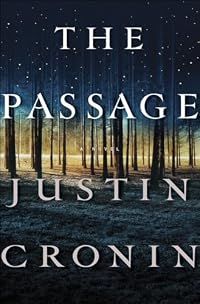
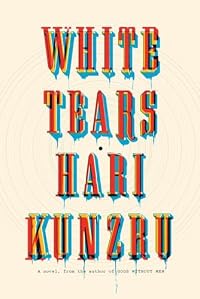
Euryale Another literary treatment of the breakdown of civilization. No zombies, but it does have more of a plot.
12

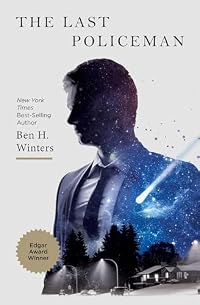
bertilak Living with the dead. Or not.
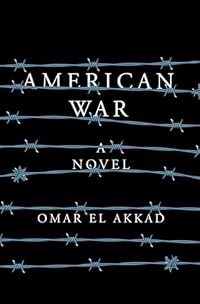
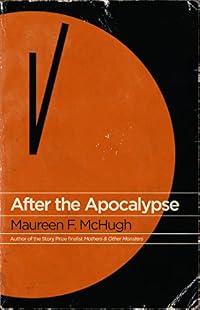
susanbooks Ma takes Whitehead's neoliberal zombie narrative further, making for a more satisfying read, but I'm not sure I'd have appreciated Ma's without Whitehead's.
Member Reviews
Mark Spitz -- not his real name -- is a sweeper. Meaning that it's his job to search room by room through the empty buildings of the walled-off section of Manhattan known as Zone One looking for any stray zombies the military might have missed in their initial attempts to reclaim the city for living humanity. Mostly all that's left are stragglers, that small percentage of the undead who, rather than shambling around biting people, simply freeze in place in some bizarre tableau of the actions they performed in life. When he's not shooting stragglers in the head, Mark Spitz contemplates his past and his PASD -- that's Post-Apocalyptic Stress Disorder, natch -- and carefully avoids envisioning a future.
This is most definitely a literary show more zombie novel, one in which subtle reflections on the human condition take center stage over plot and action, and in which every sentence is carefully crafted and evocative. It's a combination I like, one that might seem unlikely but feels like a natural fit to me. And what it's doing, it does really well.
My only complaint is that... Well, this is a novel that, in one way, feels very grounded in modern American culture, a post-apocalyptic scenario in which tacky chain restaurants serve as nostalgic reminders of the former world, and humanity's attempts at reconstruction come with corporate sponsorship and catchy optimistic theme songs. Which is clever and great, except that those cultural touchstones are weirdly vague. Familiar brands and companies are described at length so that you have no doubt what they are, but always referred to in generic terms, like "the multinational coffee concern." Or else their identities are ambiguous, leaving you wondering just which tacky chain restaurant you should be picturing. Or they don't quite correspond to anything familiar in a specific way, leaving the vague feeling that this universe is not quite our own, in more ways than just being one of those zombie apocalypse scenarios where nobody's ever heard the word "zombie." No doubt this is largely for legal reasons, but it did make things often feel very slightly off to me and sometimes more difficult to connect to than they should have been.
Despite that quibble, it's an impressive book, beautifully written, thought-provoking, and affecting. And having finished it, I find myself reluctant to pick up anything else for a little while, as the ending lingers with me. show less
This is most definitely a literary show more zombie novel, one in which subtle reflections on the human condition take center stage over plot and action, and in which every sentence is carefully crafted and evocative. It's a combination I like, one that might seem unlikely but feels like a natural fit to me. And what it's doing, it does really well.
My only complaint is that... Well, this is a novel that, in one way, feels very grounded in modern American culture, a post-apocalyptic scenario in which tacky chain restaurants serve as nostalgic reminders of the former world, and humanity's attempts at reconstruction come with corporate sponsorship and catchy optimistic theme songs. Which is clever and great, except that those cultural touchstones are weirdly vague. Familiar brands and companies are described at length so that you have no doubt what they are, but always referred to in generic terms, like "the multinational coffee concern." Or else their identities are ambiguous, leaving you wondering just which tacky chain restaurant you should be picturing. Or they don't quite correspond to anything familiar in a specific way, leaving the vague feeling that this universe is not quite our own, in more ways than just being one of those zombie apocalypse scenarios where nobody's ever heard the word "zombie." No doubt this is largely for legal reasons, but it did make things often feel very slightly off to me and sometimes more difficult to connect to than they should have been.
Despite that quibble, it's an impressive book, beautifully written, thought-provoking, and affecting. And having finished it, I find myself reluctant to pick up anything else for a little while, as the ending lingers with me. show less
If you were to say to me, "Hey, Kate, I suggest you read a post-apocalyptic zombie novel," I would have a) laughed b) explained that I wasn't laughing AT you, but at how unlikely it was that I'd ever get to a zombie novel when so many enticing non-gimmicky and rich novels awaited me and then c) tried to think of a zombie joke to ease the awkward tension between us.
So what the heck happened here? I seem to have read this book and then gave it four stars?
That naughty monkey Terry Gross is to blame. http://www.npr.org/2011/10/19/141422845/... Her interview on Fresh Air convinced me that Colson Whitehead had some amazing writing chops and that the subject was something I should not allow to deter me. (You can listen to the full interview show more via that link above.)
I agree with an earlier reviewer that although this book is not long, it bears slow and careful reading and that the beauty of the sentences is densely packed. The sense of humor feels freshly minted and the main character's ruminations on how all of his photographs and emails and memories are lost in "the cloud" of the (now destroyed) Internet was especially topical.
I love how Colson frames his "hero" as the individual whose skills hadn't been so rewarded in the pre-apocalyptic world but are exactly what is needed for surviving this fictional world's zombie plague.
I was also intrigued that initially Colson had wanted to write the "black Day of the Dead" or "black Zombie Apocalypse" but then ultimately didn't emphasize race in Zone One. But I also wanted to see what kind of zombie novel an African American writer would create.
Beautifully written and can't wait to check out The Intuitionist. show less
So what the heck happened here? I seem to have read this book and then gave it four stars?
That naughty monkey Terry Gross is to blame. http://www.npr.org/2011/10/19/141422845/... Her interview on Fresh Air convinced me that Colson Whitehead had some amazing writing chops and that the subject was something I should not allow to deter me. (You can listen to the full interview show more via that link above.)
I agree with an earlier reviewer that although this book is not long, it bears slow and careful reading and that the beauty of the sentences is densely packed. The sense of humor feels freshly minted and the main character's ruminations on how all of his photographs and emails and memories are lost in "the cloud" of the (now destroyed) Internet was especially topical.
I love how Colson frames his "hero" as the individual whose skills hadn't been so rewarded in the pre-apocalyptic world but are exactly what is needed for surviving this fictional world's zombie plague.
I was also intrigued that initially Colson had wanted to write the "black Day of the Dead" or "black Zombie Apocalypse" but then ultimately didn't emphasize race in Zone One. But I also wanted to see what kind of zombie novel an African American writer would create.
Beautifully written and can't wait to check out The Intuitionist. show less
I read Colson Whitehead's essay in the New Yorker about growing up in New York City addicted to B-grade horror movies acquired from mom-and-pop video stores. He described how he tried to write "Zone One" and then abandoned the manuscript, so I was very glad to see that this one had finally been published. I also know that this particular bloody zombie-killing adventure is really a labor of love. How often can you say that?
"Zone One" is a really great read, and I get the feeling that Whitehead had a great time writing it. His "The Intuitionist" aggravated me a bit because I found it too abstract and distant, but he seems to be tapping a much deeper, more personal vein of memory here. Kinetic, action-packed, gory and darkly humorous, it's show more filled with memorable, likable characters and plenty of good fight scenes. "Zone One" is a serious novel that you could take to the beach. It's also beautifully written: it's easy flow and impressive efficiency -- the author doesn't seem to waste a word -- suggests that he's at the top of his game here. In a sense, it's less political and more personal than the other Whitehead that I've read. Race -- often the focus of Whitehead's writing -- is mentioned only briefly, and many of Zone One's characters spend a lot of time trying to reconcile their favorite memories of a vanished world with a bizarre, violent present. This translates to a sort of middle class nostalgia. Mark Spitz, the book's main character, is a thoroughly average Long Island dude just trying to make it through the zombie apocalypse, and while trying to make it through the zombie apocalypse, he often feels nostalgic for the middle class comforts of his youth, which makes him, I suspect, a bit like the author. I also don't think it's a coincidence that Mark Spitz's unit is tasked with eliminating non-threatening zombies that, mysteriously, return to the places where they lived and worked to mindlessly perform repetitive actions. In any event, Mark Spitz's memories, and the tight friendship formed by the three members of his three-person unit, make "Zone One" a surprisingly warm and relatable reading experience. Warm and relatable for a novel that features a lot of flesh-eating and exploded craniums, I guess.
When "Zone One" gets political, it does get pretty dark. The ending's not an entirely optimistic one. Whitehead touched on the paranoia he used to feel while growing up in eighties New York, and that's certainly present here, too. The novel is a delicate balance between the hang-together attitude displayed by the characters as they try to clean up a world overtaken by the living dead and the author's suspicion, expressed in his essay, that the zombie apocalypse might be just around the corner and that anyone you know might suddenly want to take a chunk out of you. I'm so glad that Whitehead decided to go back and finish this this one up. Recommended. show less
"Zone One" is a really great read, and I get the feeling that Whitehead had a great time writing it. His "The Intuitionist" aggravated me a bit because I found it too abstract and distant, but he seems to be tapping a much deeper, more personal vein of memory here. Kinetic, action-packed, gory and darkly humorous, it's show more filled with memorable, likable characters and plenty of good fight scenes. "Zone One" is a serious novel that you could take to the beach. It's also beautifully written: it's easy flow and impressive efficiency -- the author doesn't seem to waste a word -- suggests that he's at the top of his game here. In a sense, it's less political and more personal than the other Whitehead that I've read. Race -- often the focus of Whitehead's writing -- is mentioned only briefly, and many of Zone One's characters spend a lot of time trying to reconcile their favorite memories of a vanished world with a bizarre, violent present. This translates to a sort of middle class nostalgia. Mark Spitz, the book's main character, is a thoroughly average Long Island dude just trying to make it through the zombie apocalypse, and while trying to make it through the zombie apocalypse, he often feels nostalgic for the middle class comforts of his youth, which makes him, I suspect, a bit like the author. I also don't think it's a coincidence that Mark Spitz's unit is tasked with eliminating non-threatening zombies that, mysteriously, return to the places where they lived and worked to mindlessly perform repetitive actions. In any event, Mark Spitz's memories, and the tight friendship formed by the three members of his three-person unit, make "Zone One" a surprisingly warm and relatable reading experience. Warm and relatable for a novel that features a lot of flesh-eating and exploded craniums, I guess.
When "Zone One" gets political, it does get pretty dark. The ending's not an entirely optimistic one. Whitehead touched on the paranoia he used to feel while growing up in eighties New York, and that's certainly present here, too. The novel is a delicate balance between the hang-together attitude displayed by the characters as they try to clean up a world overtaken by the living dead and the author's suspicion, expressed in his essay, that the zombie apocalypse might be just around the corner and that anyone you know might suddenly want to take a chunk out of you. I'm so glad that Whitehead decided to go back and finish this this one up. Recommended. show less
After a zombie apocalypse, the survivors struggle to pick up the pieces. A new government is formed and groups of sweepers go through Zone One, an area of New York City, to ensure that all zombies are truly eradicated. This book is told from the point of view of one of those sweepers as he does his job and reflects back on how it got to this point.
This book doesn't seem to have the large-scale appeal of Colson Whitehead's other books, but I truly enjoyed it and felt it was a perfect read for the time we're living through now with the world reacting to a global pandemic.
I could see how others might not love this book, especially if they were looking for a more traditional horror story about zombies. Here the z-word is never used; show more instead there are "skels" (the brain-eating, violent variety) and "stragglers" (undead and shuffling about with no purpose). The story is more about the people and how they are attempting to bring back some sense of normalcy in a world that will never be the same again.
Much of the book is told in flashbacks and ruminations as our main character thinks over all the things that have happened since "Last Night," the day that the zombie outbreak happened. This sort of musing and contemplation is not going to appeal to those who want an action-packed, 'let's slay zombies' kind of story (although there are some of those moments as well).
But for me, it was so interesting and engrossing, as Whitehead unpacks so much here about society. Consumerism is a big theme throughout, but there are other deep topics touched upon as well. There were so many passages that resonated deeply with me; I put some of those in the "Quotations" feature here on LibraryThing because they were too good not to share.
The ending is ambiguous and open to interpretation, which I suppose isn't for everyone but I think it worked well here. It seemed fitting with the elusiveness of hope that is seen throughout the book.
The audiobook narrator did a fine enough job for a book that is primarily in one character's head throughout. show less
This book doesn't seem to have the large-scale appeal of Colson Whitehead's other books, but I truly enjoyed it and felt it was a perfect read for the time we're living through now with the world reacting to a global pandemic.
I could see how others might not love this book, especially if they were looking for a more traditional horror story about zombies. Here the z-word is never used; show more instead there are "skels" (the brain-eating, violent variety) and "stragglers" (undead and shuffling about with no purpose). The story is more about the people and how they are attempting to bring back some sense of normalcy in a world that will never be the same again.
Much of the book is told in flashbacks and ruminations as our main character thinks over all the things that have happened since "Last Night," the day that the zombie outbreak happened. This sort of musing and contemplation is not going to appeal to those who want an action-packed, 'let's slay zombies' kind of story (although there are some of those moments as well).
But for me, it was so interesting and engrossing, as Whitehead unpacks so much here about society. Consumerism is a big theme throughout, but there are other deep topics touched upon as well. There were so many passages that resonated deeply with me; I put some of those in the "Quotations" feature here on LibraryThing because they were too good not to share.
The ending is ambiguous and open to interpretation, which I suppose isn't for everyone but I think it worked well here. It seemed fitting with the elusiveness of hope that is seen throughout the book.
The audiobook narrator did a fine enough job for a book that is primarily in one character's head throughout. show less
I wanted to like this one more, but ultimately I appreciated it for what it was trying to do, rather than the story itself. What we have here is a literary fiction approach to the zombie genre. It moves at a glacial pace, with the main character going about his days in a sweeper unit of Zone 1, in which he and 2 others on his crew look for any straggler "skels" that the military might have missed in their initial clear out of New York City. His thoughts jump around to different periods of time, from childhood, to times after the apocalypse, and what he was doing during Last Night, the night when the world died. The character waxes sardonic about life before the fall, and how useless it all seemed, and still seems. He, and most other show more survivors are suffering from a condition called PASD, post-Apocalyptic Stress Disorder, which makes them behave in unusual ways. I feel like all of the jumping around in time, the reminiscing, are all symptoms of PASD for our MC, something that helps him survive, but also keeps his focus drifting so that he doesn't think too much about one thing. Constant movement is constant survival. In fact, for the MC, nicknamed Mark Spitz (old monikers are part of the old life), he never fully trusts one location for too long. In fact, he is starting to become distrustful of Zone One because he has been there for too long and feels like it can't possibly hold for too much longer, despite all assurances otherwise. As far as the plot goes, much of the novel is just anecdotes, small stories told by Mark Spitz or between other characters. The actual plot is incidental to the eulogy to humanity that the character is giving. But the last 30 or so pages do become more action-packed, seemingly to make up for the previous 280 that weren't. For those looking for a fast-paced zombie thriller, look elsewhere. For those looking for a grief-stricken eulogy for what was, this is the book for you. show less
This post-apocalyptic book takes place in on Manhattan Island (Zone One), where Mark Spitz and his colleges work as "sweepers." Their job is to remove all the straggler-zombies from the area and bag them for disposal. This book isn't plot driven so much as world-building-driven. Whitehead uses beautiful prose to describe the "reconstruction" of America. As spell-binding as his sentences are, however, this flowery language distracts from the few action scenes...making this book not so much about zombies as about compulsive and overwhelming mediocrity. I don't mean that Whitehead's writing is mediocre--not in the slightest!--but that the book is about mediocrity. The mediocrity of Mark Spitz is described in beautifully pregnant prose. In show more fact, Mark had "unrivaled mediocrity" and all the "advantages this adaptation conferred in a mediocre world." The zombies themselves were a metaphor for the mediocre masses of Manhattan. Many of them harmlessly flipped non-existent burgers over ovens that had broken down long ago. They window shopped in front of boarded up displays and vegged in front of dead televisions. Thus, the book had a rather dark view of humanity...that we are descending irrepressibly into mediocrity.
On top of that mediocre metaphor, Whitehead flirts with an allegory for the post-Civil War reconstruction. He compares the "untold Americans" who were not a part of the reconstruction to "slaves who didn't know they'd been emancipated." I pondered the meaning of this slave metaphor for a long time. Did Whitehead mean that these slaves hadn't been told about the reconstruction? That there were untold numbers of them? That nobody would ever tell their story? Maybe he meant all of that? Following through with his mediocre-zombie metaphor, it seems that Whitehead meant that America is filled both with mediocre masses who live like zombies and their slaves...slaves of technology, slaves to the whim of the mediocre masses, slaves to the unpredictability of a fickle universe.
I had a hard time reading this book because of all the flashbacks and literary musings--I don't recommend people listen to the audiobook version due to these unexpected and frequent changes. I probably would have enjoyed it much, much more if I had physically read it. :) I think this is an excellent work for its meaning and its prose, but it's going to get bad reviews from the zombie-fiction-lovers out there, because, in the end, it's not really about zombies. show less
On top of that mediocre metaphor, Whitehead flirts with an allegory for the post-Civil War reconstruction. He compares the "untold Americans" who were not a part of the reconstruction to "slaves who didn't know they'd been emancipated." I pondered the meaning of this slave metaphor for a long time. Did Whitehead mean that these slaves hadn't been told about the reconstruction? That there were untold numbers of them? That nobody would ever tell their story? Maybe he meant all of that? Following through with his mediocre-zombie metaphor, it seems that Whitehead meant that America is filled both with mediocre masses who live like zombies and their slaves...slaves of technology, slaves to the whim of the mediocre masses, slaves to the unpredictability of a fickle universe.
I had a hard time reading this book because of all the flashbacks and literary musings--I don't recommend people listen to the audiobook version due to these unexpected and frequent changes. I probably would have enjoyed it much, much more if I had physically read it. :) I think this is an excellent work for its meaning and its prose, but it's going to get bad reviews from the zombie-fiction-lovers out there, because, in the end, it's not really about zombies. show less
For my tastes, the book didn’t lean in far enough on what seemed like an interesting theme about identity and identity politics. For short stretches, The Zombie Apocalypse sits in the background, representing a mythical hard reset on identity and its accumulation of social biases. In those moments, there is some engaging introspection on what it means to reclaim and rebuild when the institutions and places upon which former identities were built no longer really exist and the most meaningful personal distinctions that effectively matter anymore are between the living and the dead. Those parts of the book really worked for me. The parts where The Zombie Apocalypse took center stage felt unnecessary and distracting, like pop culture show more leftovers from the feast of Zombie Apocalypse that has been laid out for us for the past 15 years or so. show less
Members
- Recently Added By
Published Reviews
“Zone One” spares the form’s conventional reliance on summer-movie scares and chase scenes — though there’s plenty of those too — and instead turns an unsparing focus on the dark reality such a world-crumbling plague unleashes. ... At one point, Whitehead compares humanity’s shift to the ravenous undead as self-actualization for the secretly immoral or those too timid to chase show more their dreams. “I have always been like this,” Whitehead coldly observes in a mob of townspeople-turned-monsters. “Now I’m more me.” ... Linguistically cryptic military diagnoses, the PR churn of the war machine and a merciless city that fed on its own long before its citizens started feeding on one another still endure in Whitehead’s apocalypse, all the way to the bitter end. show less
added by Lemeritus
A literary novelist writing a genre novel is like an intellectual dating a porn star. It invites forgivable prurience: What is that relationship like? ... Colson Whitehead is a literary novelist, but his latest book, “Zone One,” features zombies, which means horror fans and gore gourmands will soon have him on their radar. He has my sympathy. Broad-spectrum marketing will attract readers show more for whom having to look up “cathected” or “brisant” isn’t just an irritant but a moral affront. These readers will huff and writhe and swear their way through (if they make it through) and feel betrayed and outraged and migrained. But unless they’re entirely beyond the beguilements of art they will also feel fruitfully disturbed, because “Zone One” will have forced them, whether they signed up for it or not, to see the strangeness of the familiar and the familiarity of the strange. ... There will be grumbling from self-appointed aficionados of the undead (Sir, I think the author will find that zombies actually . . .) and we’ll have to listen for another season or two to critics batting around the notion that genre-slumming is a recent trend, but none of that will hurt “Zone One,” which is a cool, thoughtful and, for all its ludic violence, strangely tender novel, a celebration of modernity and a pre-emptive wake for its demise. show less
added by Lemeritus
Cinematic in scope and nimble in its use of hard-core gore, it’s an absorbing read, crammed with thoughtful snapshots of the world the survivors have left behind... The implicit question: Have we all become zombies? Are 21st-century Americans wandering around in a stupor, drinking designer coffee from designer mugs, ordering the same modular sofas from the same big box retailers, standing in show more trances before copying machines in drab office buildings coast to coast? ... Whitehead’s answer appears to be “yes,” which can be problematic for the novel. As readers, we should be at liberty to mourn a civilization that appears to be gone for good — one with safer homes, loving families and, yes, flat screen TVs. But the book sometimes makes us feel naive, even foolish for courting these feelings, in the same way a smug New Yorker make a non-native feel like a hick. show less
added by Lemeritus
Lists

Best Zombie Books
77 works; 9 members

Vulture's 100 Best Books of the 21st Century (So Far)
98 works; 9 members

Best Dystopias
280 works; 276 members

Literature by People of Color
81 works; 9 members

Dystopian and Apocalyptic Literature
350 works; 74 members

Recommended Speculative Fiction by Women and People of Color
298 works; 45 members

Read in 2021
25 works; 1 member

Read-alike - Hollow Kingdom by Kira Buxton
16 works; 1 member

Best Horror Mega-List
342 works; 6 members

Books Read in 2022
5,164 works; 113 members

Diverse Horror
262 works; 6 members

BingoDOG - Books With Mythical Creatures
57 works; 16 members

Books Read in 2021
5,361 works; 114 members

BingoDOG - Genre Benders
74 works; 14 members

GoodReads Horror Choice Awards
160 works; 4 members

Reading Glasses Podcast
410 works; 3 members
Horror: Creature Features
70 works; 9 members

Kate & Cheyanne's Horror Extravaganza
144 works; 6 members

Books Read in 2025
4,090 works; 97 members

Reedsydiscovery 100 Best Horror Books of All Time
100 works; 5 members
Author Information

19+ Works 29,679 Members
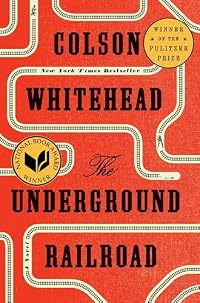
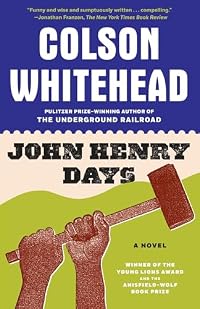
Colson Whitehead was born on November 6, 1969. He graduated from Harvard College and worked at the Village Voice writing reviews of television, books, and music. His first novel, The Intuitionist, won the Quality Paperback Book Club's New Voices Award. His other books include The Colossus of New York, Sag Harbor, and Zone One. He won the Young show more Lions Fiction Award and the Anisfield-Wolf Book Award for John Henry Days, the PEN/Oakland Award for Apex Hides the Hurt, and the National Book Award for fiction and the Pulitzer Prize for fiction for The Underground Railroad. His reviews, essays, and fiction have appeared in numerous publications including the New York Times, The New Yorker, New York Magazine, Harper's and Granta. He has received a MacArthur Fellowship, a Whiting Writers Award, and a fellowship at the Cullman Center for Scholars and Writers. (Bowker Author Biography) show less
Some Editions
Awards and Honors
Awards
Distinctions
Series
Belongs to Publisher Series
Stile libero [Einaudi] (Big)
Common Knowledge
- Canonical title
- Zone One
- Original title
- Zone One
- Original publication date
- 2011-10-18
- People/Characters
- Mark Spitz; Abel; Miss Alcott; Angela; Annie; Bozeman (show all 39); Carl; Chad; Chip; Miriam Cohen Levy; Richard Cowl (Foreskin); Fabio; Gary; Gladys; Neil Herkimer; Uncle Jack; Jerry; Joshua; Kaitlyn; Kyle; The Lieutenant; Lily; Ms. Macy; Margie; Nelson; No Mas; Richie; Harold Simon; Jennie Simon; Lonnie Simon; Rob Simon; The Quiet Storm; Gina Spens; Tad; Trevor; Cheyenne Tromanhauser; Doris Tromanhauser; Dylan Tromanhauser; Finn Tromanhauser
- Important places
- New York, New York, USA; New York, USA; Northampton, Massachusetts, USA; Massachusetts, USA; Atlantic City, New Jersey, USA; Buffalo, New York, USA (show all 7); New Jersey, USA
- Dedication
- To Bill Thomas
- First words
- He always wanted to live in New York. His Uncle Lloyd lived downtown on Lafayette, and in the long stretches between visits he daydreamed about living in his apartment.
- Quotations
- The last time he saw his childhood home was on Last Night. It, too, had looked normal from the outside, in the new meaning of normal that signified resemblance to the time before the flood. Normal meant "the past." Normal was... (show all) the unbroken idyll of life before. The present was a series of intervals differentiated from each other only by the degree of dread they contained. The future? The future was clay in their hands.
It was hard to argue with the logic of the Island die-hards and their sun-drenched dreams of carefree living once every meter inside the beach line had been swept. The ocean was a beautiful wall, the most majestic barricade. ... (show all)Living would be easy. They'd make furniture out of coconuts, forget technology, have litters of untamed children who said adorable things like, "Daddy, what's on demand?"
In practice, something always went wrong. The Carolinas, for example. Someone snuck back to the mainland for penicillin or scotch, or a boatful of aspirants rowed ashore bearing a stricken member of their party they refused to leave behind, sad orange life vests encircling their heaving chests. The new micro-societies inevitably imploded, on the island getaways, in reclaimed prisons, at the mountaintop ski lodge accessible only by sabotaged funicular, in the underground survivalist hideouts finally summoned to utility. The rules broke down.
Mark Spitz had met plenty of the divine-retribution folks over the months. This was their moment; they were umbrella salesmen standing outside a subway entrance in a downpour. The human race deserved the plague, we brought it... (show all) on ourselves for poisoning the planet, for the Death of God, the calculated brutalities of the global economic system, for driving primordial species to extinction: the entire collapse of values as evidenced by everything from nuclear fission to reality television to alternate side of the street parking. Mark Spitz could only endure these harangues for a minute or two before he split. It was boring. The plague was the plague. You were wearing galoshes, or you weren't.
He missed the stupid stuff everyone missed, the wifi and the workhorse chromium toasters, mass transportation and gratis transfers, rubbing cheese-puff dust on his trousers and calculating which checkout line was shortest, he... (show all) missed the things unconjurable in reconstruction. That which will escape. His people. His family and friends and twinkly-eyed lunchtime counterfolk. The dead. He missed the extinct. The unfit had been wiped out, how else to put it, and now all that remained were ruined like him.
When he used to watch disaster flicks and horror movies he convinced himself he’d survive the particular death scenario: happen to be away from his home zip code when the megatons fell, upwind of the fallout, covering the b... (show all)unker’s air vents with electrical tape. He was spread-eagled atop the butte and catching his breath when the tsunami swirled ashore, and in the lottery for a berth on the spacecraft, away from an Earth disintegrating under cosmic rays, his number was the last one picked and it happened to be his birthday. Always the logical means of evasion, he’d make it through as he always did. He was the only cast member to heed the words of the bedraggled prophet in Act I, and the plucky dude who slid the lucky heirloom knife from his sock and sawed at the bonds while in the next room the cannibal family bickered over when to carve him for dinner. He was the one left to explain it all to the skeptical world after the end credits, jibbering in blood-drenched dungarees before the useless local authorities, news media vans, and government agencies who spent half the movie arriving on the scene. I know it sounds crazy, but they came from the radioactive anthill, the sorority girls were dead when I got there, the prehistoric sea creature is your perp, dredge the lake and you’ll find the bodies in its digestive tract, check it out. By his sights, the real movie started after the first one ended, in the impossible return to things before.
New York City in death was very much like New York City in life. It was still hard to get a cab, for example.
Since the first person met the second person. The ones that keep other people out and our madness in so we can continue to live. That's the way we've always done it. It's what this country was built on. The plague merely made... (show all) it more literal, spelled it out in case you didn't get it before. How were we to get through the day without our barricades.
The human race deserved the plague, we brought it on ourselves for poisoning the planet, for the Death of God, the calculated brutalities of the global economic system, for driving primordial species to extinction: the entire... (show all) collapse of values as evidenced by everything from nuclear fission to reality television to alternate side of the street parking.
Hope is a gateway drug, don't do it.
Why do these yokels build a house there when they know it's a flood zone, why do they keep rebuilding. He say, Because this disaster is our home. I was born there.
...the nightly news footage of the venerable ice shelf splashing into the frigid seas, squeezed in if there were no more pressing outrages or a celebrity death. - Last words
- (Click to show. Warning: May contain spoilers.)He opened the door and walked into the sea of the dead.
- Blurbers
- Updike, John
- Original language
- English
- Canonical DDC/MDS
- 813.54
- Canonical LCC
- PS3573.H4768
Classifications
Statistics
- Members
- 2,351
- Popularity
- 8,260
- Reviews
- 139
- Rating
- (3.33)
- Languages
- 6 — Dutch, English, French, German, Italian, Spanish
- Media
- Paper, Audiobook, Ebook
- ISBNs
- 26
- ASINs
- 6