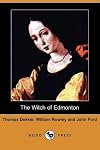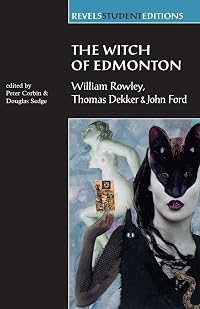
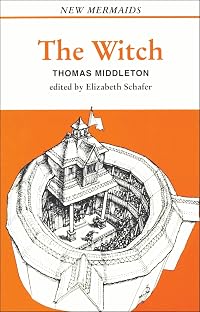
The Witch of Edmonton
by Thomas Dekker, John Ford, William Rowley
On This Page
Description
On 19 April 1621, a woman named Elizabeth Sawyer was hanged at Tyburn. Her story was on the bookstalls within days and within weeks was adapted for the stage as The Witch of Edmonton. The devil stalks Edmonton in the shape of a large black dog and, just as Elizabeth Sawyer makes her demonic pact, the newlywed Frank Thorney enters into his own dark bargain in the shape of a second, bigamous marriage. Torn between sympathy for Sawyer and Thorney and a clear-eyed assessment of their crimes, the show more play was the finest and most nuanced treatment of witchcraft that the stage would see for centuries. Lucy Munro's introduction provides students and scholars with a detailed understanding of this complex play. show lessTags
Recommendations













Member Recommendations

Sylak Based on the Salem Witch Trials of 1692.
Member Reviews
One of my favorite English Renaissance plays, The Witch of Edmonton is a collaboration by three master playwrights of the period. Each took charge of a different plotline: Dekker, the true-life story of Elizabeth Sawyer, a poor, elderly woman executed for witchcraft; Rowley, the comic plot of the dull-brained but innocent Cuddy Banks, whose greatest ambition is to play the hobby horse in the upcoming Morris dancing; and Ford, the tragic plot of Frank Thorney, who becomes first a bigamist and then a murderer, all in pursuit of money. Interweaving all three plots is Dog, a devil in disguise who provides Mother Sawyer with power and companionship, who the affable Cuddy attempts to reform from his devil-dog ways, and who pushes Frank show more Thorney into murdering Susan, his clingy second wife. Witchcraft, sex, murder, bloody tokens, ghosts, a devil dog, Morris dancing, women in male disguise, confessions and executions--what more could you ask for in a good piece of Renaissance drama? Social commentary, maybe? Well, there's plenty of that as well: the shift from land-based to money-based economy, the pressure to marry for money while companionate marriage is on the rise, the politics of witchcraft accusations, the diminshment of traditional rural life, the strictures of a patriarchy, and more.
Not to be missed if you enjoy early seventeenth-century drama. show less
Not to be missed if you enjoy early seventeenth-century drama. show less
Ratings
Members
- Recently Added By
Lists

Best Early Modern Plays Not By Shakespeare
78 works; 8 members

Early Modern (Shakesperean)
64 works; 2 members
Talk Discussions
Past Discussions
The Witch of Edmonton in The Globe: Shakespeare, his Contemporaries, and Context (February 2022)
Author Information

81+ Works 1,225 Members
Dekker was a popular, prolific writer who had a hand in at least 40 plays, which he wrote for Philip Henslowe, the theatrical entrepreneur. In the plays that seem to be completely by Dekker, he shows himself as a realist of London life, but even his most realistic plays have a strong undertone of romantic themes and aspirations. The Shoemaker's show more Holiday (1600), for example, glorifies the gentle craft of the shoemaker, and the character Simon Eyre speaks in an extravagant, hyperbolic style that is far from realistic. Dekker also wrote such prose pamphlets as the Bellman of London (1608) and The Gull's Hornbook (1609), the latter an entertaining account of the behavior of a country yokel and dupe in London. He died in debt. (Bowker Author Biography) show less
43+ Works 1,433 Members
Ford, the second son of a landed gentleman, did not begin his career as a playwright until 1621, with his collaboration with Dekker on The Witch of Edmonton. As a dramatist, Ford was extremely interested in psychology, especially abnormal psychology, and his best-known plays are studies in frustration and quiet suffering. His plots tend to be show more static and deterministic, with the characters unable to act against a crushing destiny. In The Broken Heart (1629), because all the crucial events are fixed before the play begins, there is a heavy emphasis on pathos. 'Tis Pity She's a Whore (1632) rewrites Romeo and Juliet with brother-sister incest and a violent revenge action. Perkin Warbeck (1633) is the last of the history plays. In it, the pretender to the throne of Henry VII hardly makes much pretense to establish his legitimate claims. Ford writes in an unusually plain, lyric style that resembles that of passionate and melancholy speech. (Bowker Author Biography) show less

25+ Works 1,214 Members
Some Editions
Series
Belongs to Publisher Series
Work Relationships
Common Knowledge
- Canonical title
- The Witch of Edmonton
- Original publication date
- 1621
- People/Characters
- Thomas Dekker; John Ford, playwright; William Rowley; Sir Arthur Clarington; Old Thorney; Old Carter (show all 13); Old Banks; Frank Thorney; Cuddy Banks; Sawgut; Poldavis; Mother Sawyer; Elizabeth Sawyer
- Important events
- Execution of Elizabeth Sawyer (1621-04-14)
- Dedication
- FOR
Roy Kendall
with gratitude
and to
Roy, Katina, Thomas and Laurence Kendall
with love - First words
- INTRODUCTION [to the New Mermaid edition]
The Authors
The title-page of the only extant early text of The Witch of Edmonton -- the quarto of 1658 -- notes that the play is 'A known true STORY. Compo... (show all)sed into A TRAGI-COMEDY By divers well-esteemed Poets; William Rowley, Thomas Dekker, John Ford, &c', and these three well-known playwrights have traditionally been credited with the entire work.
Prologue
The Town of Edmonton hath lent the Stage
A Devil and a Witch, both in an age.
Classifications
Statistics
- Members
- 162
- Popularity
- 201,975
- Reviews
- 1
- Rating
- (3.57)
- Languages
- English, Italian, Polish
- Media
- Paper, Ebook
- ISBNs
- 18
- ASINs
- 5