Passion
by Jude Morgan
On This Page
Description
They were the Romantic generation, famous and infamous, and in their short, extraordinary lives, they left a legacy of glamorous and often shocking legend. In PASSION the interwoven lives and vivid personalities of Byron, Shelley and Keats are explored through the eyes of the women who knew and loved them - scandalously, intensely and sometimes tragically. From the salons of the Whig nobles and the penury and vitality of Grub Street, to the beauty and corruption of Venice and the carrion show more field of Waterloo, PASSION presents the Romantic generation in a new and dramatic light - actors in a stormy history that unleashed the energies of the modern world. show lessTags
Recommendations


















Member Recommendations
Emma by Jane Austen
Imprinted Passion pays tribute to Jane Austen's novels in many ways but particularly to Emma (in the character of Annabella Milbanke).
Member Reviews
Wonderful account of Byron, Keats and Shelley and the women who formed part of their romantic and tragic circle. I had a general idea of some of the story but learnt so much; all the characters are so vivid, their personalities brought out in conversation; in occasional monologues.
Opening with the unhappy account of Mary Wollstonecraft's early, unconventional life, the narrative moves on to the daughter she leaves behind- Mary Godwin-; and the stepsister acquired by her father's second marriage- Jane (later Claire) Clairmont. Into their humble but literary life comes the poet Shelley. And later Byron...who has moved from disturbed Caroline Lamb to his married half sister to a short-lived marriage with a principled lady... And the most show more normal of the group- Keats - dying of consumption- and his beloved Fanny Brawne.,
I love Jude Morgan's books which bring history to life. show less
Opening with the unhappy account of Mary Wollstonecraft's early, unconventional life, the narrative moves on to the daughter she leaves behind- Mary Godwin-; and the stepsister acquired by her father's second marriage- Jane (later Claire) Clairmont. Into their humble but literary life comes the poet Shelley. And later Byron...who has moved from disturbed Caroline Lamb to his married half sister to a short-lived marriage with a principled lady... And the most show more normal of the group- Keats - dying of consumption- and his beloved Fanny Brawne.,
I love Jude Morgan's books which bring history to life. show less
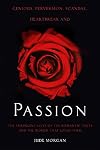
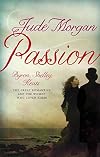
This is a bit of an epic -- a very dense 500-plus pages -- but fascinating. Not quite as good as the first of Morgan's books that I read under this pen-name (the others of his I've read were under the pseudonym of Hannah March; an excellent but short series of mysteries set in Georgian England.) It's kind of amazing when I conclude that the worst part of this book is the title and the cover, which give a solid historical novel the sense of being a formulaic bodice-ripper, when it's really anything but. (This is far closer to Hilary Mantel's Wolf Hall than to anything penned by Barbara Cartland or others...)
In this, Morgan sets out to look at the lives of the women whose fate was entangled with that of some of the Romantic poets, show more particularly Byron and Shelley. It's an ambitious undertaking, but it succeeds in large part to Morgan's extensive research that never feels as if it's being delivered in the shape of a 'lesson' for the reader, but more as incidental tidbits. Morgan's writing is excellent, and he has somehow managed to master different 'voices' for all the different women who feature here, and different dialogue formats. Lady Caroline Lamb speaks directly to the reader, in such a breathless and excited tone that you can certainly imagine her referring to Byron as "mad, bad and dangerous to know." On the other hand, the Lamb/Melbourne family's interactions are scripted as if they were part of the dialogue from a play -- reflective of the nature of the family's relationships, where appearance matters above all else. Then there is Byron's wife, who sounds for all the world like an intellectual yet stuffy refugee from Anthony Trollope's Barsetshire.
The core of the book deals with two characters: Mary Godwin, daughter of two scandalous parents (her mother, Mary Wollstonecraft, is best known today) who would go on to scandalize the world herself by running off with the married poet, Percy Bysshe Shelley. (Yup, that would be Frankenstein's Mary Shelley.) As portrayed by Morgan, she emerges from behind Shelley's life and that of her own fictional creation as a fascinating character, juggling domestic considerations with grand passion and literary creation. There is Byron, and all his innamorati -- Lady Caroline Lamb; Mary's stepsister, Claire Clairmont; and most infamously, his own half-sister, Augusta Leigh. The outlier -- although just as well-crafted -- is the relationship between John Keats and Fanny Brawne, which is more loosely connected to the others, and can't really be compared with the longer and more complex relationships. It could, IMO, easily have been put to one side and left what is already a long and complex narrative a little more manageable.
Morgan's theme is (surprise, surprise) passion, and the extent to which grand passion is capable of distorting one's life. The Romantic poets focused on passionate themes in their poetry, so it's intriguing to explore the idea of passion from another perspective.
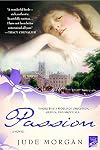
This book falls into my 'thumping good read' category, but it's also a great way for someone to get a feel for the period and the personalities. In other words, it's another great historical novel from this author. The cover on my edition, which features a swooning young woman en deshabille, does it a disservice. This is no romance novel, but rather a fascinating work of historical fiction of the kind that is getting hard to find. Jude Morgan is an author who should be getting a lot more attention, IMHO... show less
In this, Morgan sets out to look at the lives of the women whose fate was entangled with that of some of the Romantic poets, show more particularly Byron and Shelley. It's an ambitious undertaking, but it succeeds in large part to Morgan's extensive research that never feels as if it's being delivered in the shape of a 'lesson' for the reader, but more as incidental tidbits. Morgan's writing is excellent, and he has somehow managed to master different 'voices' for all the different women who feature here, and different dialogue formats. Lady Caroline Lamb speaks directly to the reader, in such a breathless and excited tone that you can certainly imagine her referring to Byron as "mad, bad and dangerous to know." On the other hand, the Lamb/Melbourne family's interactions are scripted as if they were part of the dialogue from a play -- reflective of the nature of the family's relationships, where appearance matters above all else. Then there is Byron's wife, who sounds for all the world like an intellectual yet stuffy refugee from Anthony Trollope's Barsetshire.
The core of the book deals with two characters: Mary Godwin, daughter of two scandalous parents (her mother, Mary Wollstonecraft, is best known today) who would go on to scandalize the world herself by running off with the married poet, Percy Bysshe Shelley. (Yup, that would be Frankenstein's Mary Shelley.) As portrayed by Morgan, she emerges from behind Shelley's life and that of her own fictional creation as a fascinating character, juggling domestic considerations with grand passion and literary creation. There is Byron, and all his innamorati -- Lady Caroline Lamb; Mary's stepsister, Claire Clairmont; and most infamously, his own half-sister, Augusta Leigh. The outlier -- although just as well-crafted -- is the relationship between John Keats and Fanny Brawne, which is more loosely connected to the others, and can't really be compared with the longer and more complex relationships. It could, IMO, easily have been put to one side and left what is already a long and complex narrative a little more manageable.
Morgan's theme is (surprise, surprise) passion, and the extent to which grand passion is capable of distorting one's life. The Romantic poets focused on passionate themes in their poetry, so it's intriguing to explore the idea of passion from another perspective.
This book falls into my 'thumping good read' category, but it's also a great way for someone to get a feel for the period and the personalities. In other words, it's another great historical novel from this author. The cover on my edition, which features a swooning young woman en deshabille, does it a disservice. This is no romance novel, but rather a fascinating work of historical fiction of the kind that is getting hard to find. Jude Morgan is an author who should be getting a lot more attention, IMHO... show less
Historical fiction told from the points of view of women who loved three of the most famous Romatnic poets: Byron, Shelley, and Keats. It hews very closely to the known facts, revealing opinions and personalities so unobtrusively and naturally that the prodigious amount of research Morgan must have done is invisible. Beautifully told, with natural dialog and evocative imagery and metaphors. Impressively, I came away from this novel feeling strongly for each of the historical personages, even Byron who I usually dislike. I really wish this had been several equally long books, instead of just one: I would have loved an entire novel of Fanny Brawne and Keats teasing and sighing over each other, for instance.
Despite its unfortunate title (which sounds like something by Danielle Steel), Passion is a wonderful historical novel. (I agree with the reviewer who said this is NOT really a historical romance.) I was so delighted by it that I sought out everything I could find by Jude Morgan, and I've been recommending this book to anyone I know who loves historical fiction.
Personally, I liked the shifting narrative, and I think that Morgan did an excellent job of creating believable, individual voices for each of the women: Mary Wollstonecraft, Lady Caroline Lamb, Augusta Leigh, Mary Shelley, and Fanny Brawne (with extra appearances by Claire Clairemont and a bevy of Byron's other lovers). I agree that the sections on Keats and Fanny were the show more least successful; I suspect this is because Keats was really not really a part of the social circle of Byron and Shelley.
Overall, Passion ranks very high on my list of favorite historical novels. Highly recommended. show less
Personally, I liked the shifting narrative, and I think that Morgan did an excellent job of creating believable, individual voices for each of the women: Mary Wollstonecraft, Lady Caroline Lamb, Augusta Leigh, Mary Shelley, and Fanny Brawne (with extra appearances by Claire Clairemont and a bevy of Byron's other lovers). I agree that the sections on Keats and Fanny were the show more least successful; I suspect this is because Keats was really not really a part of the social circle of Byron and Shelley.
Overall, Passion ranks very high on my list of favorite historical novels. Highly recommended. show less
Passion- all of its many meanings are represented in this wonderful historical novel about Byron, Shelley, and Keats, as told through the eyes of the women they loved and who loved them in return. They lived extraordinary, scandalous lives filled with love, hate, and lust, touched by genius and tragedy. Perhaps the most outrageous was Byron, whose most famous affairs were with Lady Caroline Lamb, Claire (Jane) Clairmont Godwin, and his half sister Augusta Leigh. He was forced to leave England and move to Italy. Shelley had ideals that were outside the norm and his affair and then marriage to Mary Godwin Shelley also forced them to move from England. They all travelled in a circle of like minded rebels, and their passions destroyed them. show more The time that Fanny Brawne and John Keats spent together seemed to be more normal, but all too brief. The men all had very early tragic deaths and their genius was not wholly recognized until much later. Jude Morgan captures all of this in a well researched novel that sticks close to the facts as I know them, embellished by the dialog that makes this fiction. The book is told through the different voices of these women, and in different ways. The briefest part is told through Fanny Brawne, although I think I liked her best. The brevity is probably due partly to the fact that Keats had burned all of her letters and they were not at hand for research, and also to the fact that their time together was very brief.
I really enjoyed this book. If you love historical novels, I think you would love this.
Read February 2015 show less
I really enjoyed this book. If you love historical novels, I think you would love this.
Read February 2015 show less
This book is sure to appeal to a range of readers - firstly there are those who are interested in anything about Byron, Shelley, Keats and their circle. And who wouldn't be - you have grand passion, adultery, incest, talent, genius, madness and horror. Even if you know nothing about these writers, this book would appeal to anyone who likes a well written, involving story with a complex plot involving intertwined characters. Don't worry though, the characters are such individuals you are not likely to be scratching your head trying to remember who is who! This is also a book for lovers of historical fiction at its best.
Whatever the case, this is an interesting book. While historical fiction, it stays, as far as i can tell, very close to show more the facts. The main protagonists are all women, their connecting thread being the men they loved (or at least thought they loved): the 'great' poets Byron, Shelley and Keats. While one of the women was famous in her own right - Mary Shelley, the author of 'Frankenstein' - these women are best known for who they associated with rather than what they really did. Yet they are all fascinating characters.
We read about the lives and loves of these women, from great passions to the mundane details of household living. While this is historical fiction that has obviously been meticulously researched, the author does not bombard us with unnessasary historical detail to prove this research, but rather weaves snippets into the story. This light touch is the type of historical fiction i like to read, so i was happy at this approach.
Two quibbles - firstly is the sections on Keats and Fanny Brawne. It felt as though it wasn't really a part of the story, but rather added in because you 'have to' mention Keats when you write about Byron and Shelley. Secondly, there are some sections where the protagonists speak to the reader directly, and i didn't find these as well written as the 'normal' narrative. But these facts are overcome by the ability of the author to look beyond the established notions of who these characters were, and present to the reader interesting, real characters, with motivations for why they did what they did. And all packaged in an engaging read. show less
Whatever the case, this is an interesting book. While historical fiction, it stays, as far as i can tell, very close to show more the facts. The main protagonists are all women, their connecting thread being the men they loved (or at least thought they loved): the 'great' poets Byron, Shelley and Keats. While one of the women was famous in her own right - Mary Shelley, the author of 'Frankenstein' - these women are best known for who they associated with rather than what they really did. Yet they are all fascinating characters.
We read about the lives and loves of these women, from great passions to the mundane details of household living. While this is historical fiction that has obviously been meticulously researched, the author does not bombard us with unnessasary historical detail to prove this research, but rather weaves snippets into the story. This light touch is the type of historical fiction i like to read, so i was happy at this approach.
Two quibbles - firstly is the sections on Keats and Fanny Brawne. It felt as though it wasn't really a part of the story, but rather added in because you 'have to' mention Keats when you write about Byron and Shelley. Secondly, there are some sections where the protagonists speak to the reader directly, and i didn't find these as well written as the 'normal' narrative. But these facts are overcome by the ability of the author to look beyond the established notions of who these characters were, and present to the reader interesting, real characters, with motivations for why they did what they did. And all packaged in an engaging read. show less
This historical fiction novel focuses on the women who loved Shelley, Byron, and Keats, and how these three poets had a profound effect on their lives and loves.
It was certainly interesting. I knew little about these poets’ lives and I feel somewhat enlightened, at least as much as I can verify as truth, and I think Morgan managed to capture the attitude of the time very well and the inspiration for these poets’ greatest works. Some of the women were sympathetic characters, especially Mary and Fanny, but the novel spent far too much time on Caroline Lamb, who was the least interesting and had the least influence on any of the poets. I felt sorry for her in a strange sort of way, but during her parts it felt as though the plot show more wasn’t moving and I was far more interested in getting back to the other women. Fanny disappears for about 200 pages, which is a shame because I liked her.
Except for the fact that the plot is loose and doesn’t move much, it’s a good book. There is certainly a plot there, but the tension is occasionally ruined by a focus on other, less interesting characters. I understand that real life is not like a novel, but a novelist should structure the work to keep the reader interested, not focus on characters whose importance to the book faded halfway through.
I liked the variety of prose styles; occasionally Morgan tosses in a first person perspective or a play, which seems like it could be too clever but worked well. I liked her writing in general and I liked some of the characters. Another good historical fiction, but not great.
http://chikune.com/blog/?p=47 show less
It was certainly interesting. I knew little about these poets’ lives and I feel somewhat enlightened, at least as much as I can verify as truth, and I think Morgan managed to capture the attitude of the time very well and the inspiration for these poets’ greatest works. Some of the women were sympathetic characters, especially Mary and Fanny, but the novel spent far too much time on Caroline Lamb, who was the least interesting and had the least influence on any of the poets. I felt sorry for her in a strange sort of way, but during her parts it felt as though the plot show more wasn’t moving and I was far more interested in getting back to the other women. Fanny disappears for about 200 pages, which is a shame because I liked her.
Except for the fact that the plot is loose and doesn’t move much, it’s a good book. There is certainly a plot there, but the tension is occasionally ruined by a focus on other, less interesting characters. I understand that real life is not like a novel, but a novelist should structure the work to keep the reader interested, not focus on characters whose importance to the book faded halfway through.
I liked the variety of prose styles; occasionally Morgan tosses in a first person perspective or a play, which seems like it could be too clever but worked well. I liked her writing in general and I liked some of the characters. Another good historical fiction, but not great.
http://chikune.com/blog/?p=47 show less
Members
- Recently Added By
Author Information

8+ Works 1,587 Members
Common Knowledge
- Canonical title
- Passion
- Original publication date
- 2004
- People/Characters
- Mary Wollstonecraft Shelley; Lady Caroline Lamb; Augusta Leigh; Fanny Brawne; Claire Clairmont; Mary Wollstonecraft (show all 11); Fanny Imlay; Elizabeth Lamb, Viscountess Melbourne; Lord Byron; Percy Bysshe Shelley; Leigh Hunt
- Important places
- London, England, UK; Rome, Italy
- Dedication
- For Adam Wilson- welcome
- First words
- (prologue) No one is watching the woman on her way towards death.
- Last words
- (Click to show. Warning: May contain spoilers.)And then wipes her eyes, and continues with her work.
Classifications
Statistics
- Members
- 363
- Popularity
- 86,349
- Reviews
- 11
- Rating
- (3.77)
- Languages
- English, French
- Media
- Paper, Ebook
- ISBNs
- 6
- ASINs
- 5