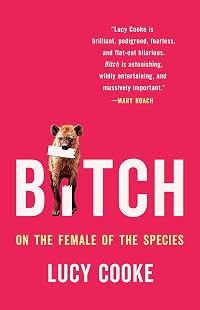
Bitch: A Revolutionary Guide to Sex, Evolution, and the Female Animal
by Lucy Cooke
On This Page
Description
A leading zoologist takes a fierce and often humorous look at the females of the animal kingdom and subverts the prevailing opinion among evolutionary biologists who have insisted that males are more interesting. Humans are locked in a battle over sex and gender: one side argues that evolutionary biology dictates how we should be, and the other that it's a patriarchal tool that shouldn't matter at all. Rewriting the science of evolution and sex, she shows how feminist biologists have show more uncovered nature's dizzying diversity of bodies, brains and behavior that evolution has created. With a new perspective on the female animal of a variety of species, Cooke reveals a new understanding of what being female can mean, and how evolution itself can work. -- adapted from jacket show lessTags
Recommendations









Member Reviews
I absolutely LOVED this one. I've already bought myself a copy and sent it home with my mom, to loan to my aunt, who I thought might enjoy it. My aunt apparently saw the title and went "Ooh, Bitch! I have to read this book!"
I can't wait to see her in a few weeks so we can chat about some of the absolutely astounding things present in Bitch from corkscrew-shaped vaginas to lesbian albatrosses to orca menopause. I personally cannot wait to discuss how Marlin in Finding Nemo should have changed sex into Marla after the death of his wife!
I was both fascinated and furious by how much of science is biased not only against human women but against female animals too! So much of not only basic science but also our general concepts of sex and show more gender within the natural world comes from the indubitably biased mentality that prioritized things that were male, white, British, and upper class. (Indeed, a previous bedtime bookclub read [b:For All the Tea in China: Espionage, Empire and the Secret Formula for the World's Favourite Drink|3081255|For All the Tea in China Espionage, Empire and the Secret Formula for the World's Favourite Drink|Sarah Rose|https://i.gr-assets.com/images/S/compressed.photo.goodreads.com/books/1328015835l/3081255._SY75_.jpg|3112300] goes in depth into how difficult it was to even study science if you weren't of the right class in Britain) Cooke interviews several experts in their zoological fields, some of whom are even close friends, and their excitement over their subjects was palpable. You could feel their frustrations with having to fight doubly hard for every inch of intellectual ground gained by nature of being women and by their desire to study the bodies and behaviours of females (as well as males). As anyone who has ever sought to study an aspect of themselves in academia, be it gender or race or sexuality, knows that there's always a specific cadre of people who will scoff at the attempt and say the person is "pushing an agenda".
Not only is Bitch fascinating because of the animals it covers, but it is incredibly timely. 2022 has seen only an increase in hatred against LGBT community, especially trans people, in a variety of terrifying and dangerous ways. The hatred spewed by these people is often backed by anti-feminist gender essentialism (despite their claim to the opposite) and shoddy science. That it is shoddy science is made very clear by Cooke in Bitch over and over again as she explains that sex is very complicated and not at all uniform in any species, let alone ones as complicated as humans.
I thought the author covered a great selection of animals across the globe and across taxonomies; from that old biology classic the prodigious fruit fly to birds of all sizes (songbirds! albatrosses! peacocks!) to big cats and killer whales. She also delivers a phenomenal amount of information in a fun and engaging way that made it a delight to read. show less
I can't wait to see her in a few weeks so we can chat about some of the absolutely astounding things present in Bitch from corkscrew-shaped vaginas to lesbian albatrosses to orca menopause. I personally cannot wait to discuss how Marlin in Finding Nemo should have changed sex into Marla after the death of his wife!
I was both fascinated and furious by how much of science is biased not only against human women but against female animals too! So much of not only basic science but also our general concepts of sex and show more gender within the natural world comes from the indubitably biased mentality that prioritized things that were male, white, British, and upper class. (Indeed, a previous bedtime bookclub read [b:For All the Tea in China: Espionage, Empire and the Secret Formula for the World's Favourite Drink|3081255|For All the Tea in China Espionage, Empire and the Secret Formula for the World's Favourite Drink|Sarah Rose|https://i.gr-assets.com/images/S/compressed.photo.goodreads.com/books/1328015835l/3081255._SY75_.jpg|3112300] goes in depth into how difficult it was to even study science if you weren't of the right class in Britain) Cooke interviews several experts in their zoological fields, some of whom are even close friends, and their excitement over their subjects was palpable. You could feel their frustrations with having to fight doubly hard for every inch of intellectual ground gained by nature of being women and by their desire to study the bodies and behaviours of females (as well as males). As anyone who has ever sought to study an aspect of themselves in academia, be it gender or race or sexuality, knows that there's always a specific cadre of people who will scoff at the attempt and say the person is "pushing an agenda".
Not only is Bitch fascinating because of the animals it covers, but it is incredibly timely. 2022 has seen only an increase in hatred against LGBT community, especially trans people, in a variety of terrifying and dangerous ways. The hatred spewed by these people is often backed by anti-feminist gender essentialism (despite their claim to the opposite) and shoddy science. That it is shoddy science is made very clear by Cooke in Bitch over and over again as she explains that sex is very complicated and not at all uniform in any species, let alone ones as complicated as humans.
I thought the author covered a great selection of animals across the globe and across taxonomies; from that old biology classic the prodigious fruit fly to birds of all sizes (songbirds! albatrosses! peacocks!) to big cats and killer whales. She also delivers a phenomenal amount of information in a fun and engaging way that made it a delight to read. show less
This book is an attempt to take on a massive subject, and Cooke does a great job of making it understandable, interesting, and occasionally funny. She covers both the massive diversity in sex-linked behavior and the diversity in sexes themselves, so her topics range from bdelloid rotifers to elephants, from laysan albatrosses to clownfish. She also extensively addresses the biases that pervade biology, especially evolutionary biology and zoology, and the deleterious effect those biases have had on science as a whole.
The book does have animal harm and climate horror in it -- no book about animals these days could avoid it -- but, unusually, the most depressing part of reading it was, for me, when I looked at the top reviews on show more Goodreads. The top one (when I checked) complained that the book was too feminist and the second one said "less misandrist than I expected," which -- wow. That's especially depressing considering the extreme pains Cooke takes to specify that when she says feminist, she's only talking about the kind that believes the sexes are equal.
Basically, I heartily recommend this book for anyone interested in sex, gender, or biology (and also for anyone who writes speculative fiction, since this is a great source for alternate ways of constructing societies).
(Now for one tiny complaint. I deeply, deeply wish that whoever gave Cooke the big chart of "Words to Say Instead of Said" had not done that. I mean, I don't know that anyone did, but there must be some reason that people all through the book are venturing, revealing, and snapping rather than just saying. It's hugely distracting. Just say said!) show less
The book does have animal harm and climate horror in it -- no book about animals these days could avoid it -- but, unusually, the most depressing part of reading it was, for me, when I looked at the top reviews on show more Goodreads. The top one (when I checked) complained that the book was too feminist and the second one said "less misandrist than I expected," which -- wow. That's especially depressing considering the extreme pains Cooke takes to specify that when she says feminist, she's only talking about the kind that believes the sexes are equal.
Basically, I heartily recommend this book for anyone interested in sex, gender, or biology (and also for anyone who writes speculative fiction, since this is a great source for alternate ways of constructing societies).
(Now for one tiny complaint. I deeply, deeply wish that whoever gave Cooke the big chart of "Words to Say Instead of Said" had not done that. I mean, I don't know that anyone did, but there must be some reason that people all through the book are venturing, revealing, and snapping rather than just saying. It's hugely distracting. Just say said!) show less
An excellent and thorough demolition of misogynist myths about sexuality in nonhuman animals. The writing style is humorous and accessible, without being crass or dumbing down its message. As someone who studied under Richard Dawkins himself, Cooke is well qualified to write this book critiquing some of biology's more stubborn Victorian dogmas. I recommend this book to a general population of people interested in either evolutionary biology or in combining gender studies and science studies.
In a Nutshell: Not as misandrist as I had assumed. Way funnier than I had anticipated! Insightful, relevant, comprehensive, mind-blowing. Go for it!
Science is always said to be objective. But we need to ask ourselves how objective can a subject be if it has excluded the thoughts of half of the world’s population, if it has observed phenomena through masculine-filtered lenses, if it has dismissed any change in traditional masculine superiority as an aberration than as a possible norm. British zoologist and digital personality Lucy Cooke raises an array of questions and provides a throng of answers about various elements of nature where things aren’t quite what we have been taught either in school or through research papers or even show more through television documentaries.
In one of her Youtube videos, Cooke says, “If you want to tell a story and reach a wider audience, it helps if you are a bit playful about it.” She applies this principle with heart and soul to this book. Every anecdote is peppered with an underlying tone of fun, and every chapter shines a spotlight on her sense of humour.
Right at the start, we have the author's note on the use of language, and here itself, the tone of the book is set. The author makes it clear why we have dual gender-based terms in biology, how the terms are used in the book, and how we should refrain from using the terms unless needed. As we all know, the concept of gender is very fluid, so the traditional theory of the male and female binary doesn’t stand on its feet anymore. Her note clarifies why she resorts to these words at times, while still declaring, “Gendered ideas based on binary sex are nonsense."
Most biology/zoology textbooks teach us things from the perspective of the male of the species. When it comes to females, the information is limited to mothering a baby and sometimes, being the queen of a colony. So the content of this book took me by surprise. Thanks to the documentaries of my favourite nature guru Sir David Attenborough, I did know a few of the facts, such as the female praying mantis biting off the head of her “lover” while the poor guy is indulging in copulation, the story of Darwin’s finches, or the mating hierarchy of certain ape groups. But most of the animal anecdotes were totally new to me. (I am never going to look at meerkats or ducks the same way again! *shudder*)
Fighting for a mate, queening over a group or colony, “pleasuring themselves”, the truth about monogamy, “virgin births”, power struggles,… the book throws one interesting chapter after another, all ideas being supported by ample data and examples from the animal world. As Cooke herself declares, it is high time the “sexist mythology in biology and zoology” is shattered. Along the way, she raises awareness about other topics such as climate change and the impact it is having on the natural world.
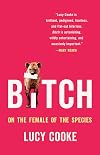
The author’s methodology ensures that even those unfamiliar with the animal world will comprehend her points. Her writing is balanced with plenty of light-hearted remarks, multiple anecdotes, and an empathetic approach. She also peppers the content with a few examples from movies such as ‘Finding Nemo’, making it even more relatable. It does get a bit technical at times, but you can safely skip over anything you find esoteric without hampering your understanding of the book. As long as you were able to understand that the animal on the cover is a hyena and not a dog, you’re good to go. show less
Science is always said to be objective. But we need to ask ourselves how objective can a subject be if it has excluded the thoughts of half of the world’s population, if it has observed phenomena through masculine-filtered lenses, if it has dismissed any change in traditional masculine superiority as an aberration than as a possible norm. British zoologist and digital personality Lucy Cooke raises an array of questions and provides a throng of answers about various elements of nature where things aren’t quite what we have been taught either in school or through research papers or even show more through television documentaries.
In one of her Youtube videos, Cooke says, “If you want to tell a story and reach a wider audience, it helps if you are a bit playful about it.” She applies this principle with heart and soul to this book. Every anecdote is peppered with an underlying tone of fun, and every chapter shines a spotlight on her sense of humour.
Right at the start, we have the author's note on the use of language, and here itself, the tone of the book is set. The author makes it clear why we have dual gender-based terms in biology, how the terms are used in the book, and how we should refrain from using the terms unless needed. As we all know, the concept of gender is very fluid, so the traditional theory of the male and female binary doesn’t stand on its feet anymore. Her note clarifies why she resorts to these words at times, while still declaring, “Gendered ideas based on binary sex are nonsense."
Most biology/zoology textbooks teach us things from the perspective of the male of the species. When it comes to females, the information is limited to mothering a baby and sometimes, being the queen of a colony. So the content of this book took me by surprise. Thanks to the documentaries of my favourite nature guru Sir David Attenborough, I did know a few of the facts, such as the female praying mantis biting off the head of her “lover” while the poor guy is indulging in copulation, the story of Darwin’s finches, or the mating hierarchy of certain ape groups. But most of the animal anecdotes were totally new to me. (I am never going to look at meerkats or ducks the same way again! *shudder*)
Fighting for a mate, queening over a group or colony, “pleasuring themselves”, the truth about monogamy, “virgin births”, power struggles,… the book throws one interesting chapter after another, all ideas being supported by ample data and examples from the animal world. As Cooke herself declares, it is high time the “sexist mythology in biology and zoology” is shattered. Along the way, she raises awareness about other topics such as climate change and the impact it is having on the natural world.
The author’s methodology ensures that even those unfamiliar with the animal world will comprehend her points. Her writing is balanced with plenty of light-hearted remarks, multiple anecdotes, and an empathetic approach. She also peppers the content with a few examples from movies such as ‘Finding Nemo’, making it even more relatable. It does get a bit technical at times, but you can safely skip over anything you find esoteric without hampering your understanding of the book. As long as you were able to understand that the animal on the cover is a hyena and not a dog, you’re good to go. show less
this is pretty fantastic and really full of some very interesting and unusual evolutionary history. i love what she's doing here, which basically is saying that science has neglected to focus on the female of the species (whatever the species is) and sharing some of the work that has been ignored as well as postulating how much it matters (and why) to include females in scientific study. also how much has been misunderstood or overlooked because it didn't fit into the male paradigm that the (male) scientists were operating in. evolution and animal behavior are so interesting, and this was a new look that i really enjoyed. also great tone throughout.
i did find it odd, though, that almost no mention was made of sex being a behavioral show more choice because it feels good. true that it probably doesn't for all animals/creatures, but certainly for many it does, so to ignore that seems strange, especially in the context of this book.
still, very good. and a nice read after wordslut. show less
i did find it odd, though, that almost no mention was made of sex being a behavioral show more choice because it feels good. true that it probably doesn't for all animals/creatures, but certainly for many it does, so to ignore that seems strange, especially in the context of this book.
still, very good. and a nice read after wordslut. show less
An excellent and valuable read! Cooke, Oxford-trained zoologist, filmmaker, and writer - compiles a deep collection of research on sex in the animal kingdom: from tiny bdelloid rotifers to killer whales, including numerous primates. Through extensive interviews and field excursions - most often with authoritative female scientists - she demonstrates the mind-boggling variety of sexual structures, behavior, cultures, and genetic arrays across a multiplicity of species. From Darwin well into the 21st century, she documents the overwhelming influence of male judgements about the role and value of females as being "passive" and uninteresting, to the extent that no one bothered to study them, and the women who decided to do so faced show more obstacles of indifference, exclusion and ridicule. Her compilation is a crucial rebuttal to evolutionary biologist (and transphobe) Colin Wright's flat statements that sex is "bimodal," male or female, period, no "spectrum" allowed. Cooke trots out species who change from male to female and back - some over their lifetime, some several times in a day. There are lizards who are all female, and produce viable daughters who produce daughters of their own, with no males in sight. The platypus, not content with the typical mammalian XY chromosome arrangement, has evolved females with XXXXXXXXXX and males with XXXXXYYYYY... and neither of them carry the important SRY gene that in other animals triggers the development of testes. And have a look at nature's actual anemonefish (aka Nemo), where individual fish can switch from male to female and back in all functions based on environmental need.
Female spider monkeys or female hyenas with enormous clitori that are indistinguishable from penises, female bonobos enjoying frequent mutual sexual gratification, other female primates who solicit sex with high-ranking males when they are outside the estrus period because it will help protect their offspring from violence at the hands of those males because the males might think their subsequent babies are theirs. Female birds who sing when there aren't enough males around. Female albatross couples who join forces for life to raise their chicks. Female birds who select one male to help raise the kids, while sneaking off to mate with a studlier guy.
There are also fascinating looks into social behavior and sexual roles. For the most violent, murderous, totalitarian societies, look to those cute little meerkats: each colony presided over by a single female who kills and eats the babies of any lower-ranking female except (maybe) their own daughters. And then there are killer whales, female-led troops where the young males stay with their mamas for years... the longer he sticks by Mom, the greater his chances of living another year because Mom (and "menopausal" grannies) are fonts of wisdom and experience for feeding sites and survival. And the chapter on maternal instinct is significant in how it takes down this concept as a very human-centered one, imposed on human females by culture and societal expectations (handed down by the males), while it is decidedly contradicted by many examples in other species.
This is intended to be a popular read, and Cooke can't resist the occasional wisecrack or "cute" joke, which I could have lived without. She also teeters on, and sometimes falls off, the cliff of anthropomorphism. There are behaviors described that suggest a certain consciousness and deliberate thought of some animals. But it seems unlikely to me that a male lion who kills all the existing cubs in a pride he has joined is doing so because he knows he is making way for his own genetic legacy to come. It's just that by doing so for generations, the offspring of such males survive to mate and generate more males who are more likely to behave that way.
One might argue that you can't extrapolate from rotifers and fish and birds or even chimpanzees to humans. But if we see this amazing variability among species across the animal kingdom, then must we not then accept the power of social and cultural influences to further bend them in all kinds of directions? An important read. show less
Female spider monkeys or female hyenas with enormous clitori that are indistinguishable from penises, female bonobos enjoying frequent mutual sexual gratification, other female primates who solicit sex with high-ranking males when they are outside the estrus period because it will help protect their offspring from violence at the hands of those males because the males might think their subsequent babies are theirs. Female birds who sing when there aren't enough males around. Female albatross couples who join forces for life to raise their chicks. Female birds who select one male to help raise the kids, while sneaking off to mate with a studlier guy.
There are also fascinating looks into social behavior and sexual roles. For the most violent, murderous, totalitarian societies, look to those cute little meerkats: each colony presided over by a single female who kills and eats the babies of any lower-ranking female except (maybe) their own daughters. And then there are killer whales, female-led troops where the young males stay with their mamas for years... the longer he sticks by Mom, the greater his chances of living another year because Mom (and "menopausal" grannies) are fonts of wisdom and experience for feeding sites and survival. And the chapter on maternal instinct is significant in how it takes down this concept as a very human-centered one, imposed on human females by culture and societal expectations (handed down by the males), while it is decidedly contradicted by many examples in other species.
This is intended to be a popular read, and Cooke can't resist the occasional wisecrack or "cute" joke, which I could have lived without. She also teeters on, and sometimes falls off, the cliff of anthropomorphism. There are behaviors described that suggest a certain consciousness and deliberate thought of some animals. But it seems unlikely to me that a male lion who kills all the existing cubs in a pride he has joined is doing so because he knows he is making way for his own genetic legacy to come. It's just that by doing so for generations, the offspring of such males survive to mate and generate more males who are more likely to behave that way.
One might argue that you can't extrapolate from rotifers and fish and birds or even chimpanzees to humans. But if we see this amazing variability among species across the animal kingdom, then must we not then accept the power of social and cultural influences to further bend them in all kinds of directions? An important read. show less
If you're interested in animals, feminism, sex, gender, sexuality, and the impossibility of removing human biases from even the best-intentioned science, look no further. Lucy Cooke's Bitch is fun and informative, and surprising in so many ways other than the zoological that--if we were really any good at objective science--really shouldn't be.
The starting pitch is that pretty much everything we know about what is "natural" male and female behavior is wrong, and it's mostly Darwin's fault for projecting Victorian ideals onto animals in his Origin of Species follow-up, The Decent of Man, and Selection in Relation to Sex. His editing daughter's delicate Victorian sense of propriety didn't help; nor did his Origin co-publisher Alfred show more Russell Wallace (who published a book called Darwinism arguing that even Darwin's tepid suggestions that sex might not always be straightforward were just ludicrous); nor did Angus John Bateman, who extrapolated the results of a poorly-designed experiment with fruit flies onto the rest of the animal kingdom--including human women. When we know something to be true, we usually see it, and if we don't see it, we look for it until we do. Scientific researchers, most of them male beneficiaries of Darwin's theorized superiority, put this into practice. And so it went, even in science, which we would all like to believe is impartial.
Cooke's book is absolutely excellent. Like Mary Roach and Sarah Murray, who wowed me earlier this year with Making an Exit, Cooke manages a delicate balancing act with apparent ease: show-stopping examples of female animals that upend the traditional idea of females as small, weak, maternal, and at the complete mercy of the males; entertaining anecdotes from her meetings with scientists of different genders and sexual orientations who may or may not identify as feminist but are sick of the assumption that females are just a variation of males; and easy-to-comprehend explanations of seminal books, papers, and experiments, with their sometimes good or at least neutral intentions, forward thinking (when present), and--given the book's topic--many flaws.
To be clear, it’s not all sunshine and roses in the revisited female world. A woman scientist in the 1980s got on board with labeling aggression in female birds “pre-mating syndrome” rather than recognize that female aggression was the species norm. There are some truly brutal wild monkeys in which the order of the day is males battering females and killing offspring. And in one spider species, males team up to tie up an aggressive female to copulate without being killed.
There's so much packed in here that I'll just point out a few of the most interesting things I learned:
>> The big one is that rape is not natural, something that humans have been saying for years to justify rape and intimidate women. Even when forced copulation happens in the wild (the scientific term for an act that, in animals, does not have the kind of emotional, psychological, and even social traumas that come with human rape), animal females have evolved mechanisms to control their own reproduction, such as vaginas that must be entered at an angle almost impossible to get right without "consent". Across many species, we're finding that the most successful mates are almost always the males that can woo a female not just with spectacle and strength, but by reading and responding to her cues to completely convince her to mix genes.
(One of Cooke's two main examples of this is ducks. Thanks to John Oliver, many people know that the males have spiral penises that shoot out at 75 miles per hour. What science has only learned in the last couple of decades is that females have corresponding spiral vaginas that are very hard to get into properly without the female's cooperation. With this knowledge in mind, I cheerfully greeted some brown mallards on the lake with, "may all your copulations be unforced!")
>> Scientist David Crews said there are five kinds of sex: chromosomal, gonadal, hormonal, morphological, and behavioral. Mother nature can mix and match all five!
>> For many species, we know more about penises than about anything else, and they're so different that they're sometimes the only reason similar animals are classified as different species...but females were just assumed to all have tube-like vaginas. Seriously, scientists didn't even bother to dissect the females! Criminitely...
>> Female naked mole rats are absolutely vicious when the "queenship" is in jeopardy or up for grabs.
>> That active male/passive female stereotype extended to evolution; scientists long assumed that many male spiders shrank so they could dodge females that want to eat them. Instead, studies are showing that the males haven't changed--the females got bigger to better care for their young!
[…]
I am finally admitting to myself a month later that I am not going to finish this review. I loved the book, I just don’t have the energy to keep going. There are awesome menopausal killer whales, dominant leaping lemurs, caring hormones flooding the brains of parents of all genders, sacrificial mothers and fathers… Look, I had so much fun with this book that I’m considering buying it. If you like Mary Roach, read it!
(Oh, and nerdy me wants to say that I loved how the citations were done. Instead of endnotes, a large section in the back lists the page number, the words at the beginning and end of the text/quote in question, and then the source. It’s very nondisruptive for the lay reader but still seems like it would be functional (if a little annoying) for someone who had to cite pages. show less
The starting pitch is that pretty much everything we know about what is "natural" male and female behavior is wrong, and it's mostly Darwin's fault for projecting Victorian ideals onto animals in his Origin of Species follow-up, The Decent of Man, and Selection in Relation to Sex. His editing daughter's delicate Victorian sense of propriety didn't help; nor did his Origin co-publisher Alfred show more Russell Wallace (who published a book called Darwinism arguing that even Darwin's tepid suggestions that sex might not always be straightforward were just ludicrous); nor did Angus John Bateman, who extrapolated the results of a poorly-designed experiment with fruit flies onto the rest of the animal kingdom--including human women. When we know something to be true, we usually see it, and if we don't see it, we look for it until we do. Scientific researchers, most of them male beneficiaries of Darwin's theorized superiority, put this into practice. And so it went, even in science, which we would all like to believe is impartial.
Cooke's book is absolutely excellent. Like Mary Roach and Sarah Murray, who wowed me earlier this year with Making an Exit, Cooke manages a delicate balancing act with apparent ease: show-stopping examples of female animals that upend the traditional idea of females as small, weak, maternal, and at the complete mercy of the males; entertaining anecdotes from her meetings with scientists of different genders and sexual orientations who may or may not identify as feminist but are sick of the assumption that females are just a variation of males; and easy-to-comprehend explanations of seminal books, papers, and experiments, with their sometimes good or at least neutral intentions, forward thinking (when present), and--given the book's topic--many flaws.
To be clear, it’s not all sunshine and roses in the revisited female world. A woman scientist in the 1980s got on board with labeling aggression in female birds “pre-mating syndrome” rather than recognize that female aggression was the species norm. There are some truly brutal wild monkeys in which the order of the day is males battering females and killing offspring. And in one spider species, males team up to tie up an aggressive female to copulate without being killed.
There's so much packed in here that I'll just point out a few of the most interesting things I learned:
>> The big one is that rape is not natural, something that humans have been saying for years to justify rape and intimidate women. Even when forced copulation happens in the wild (the scientific term for an act that, in animals, does not have the kind of emotional, psychological, and even social traumas that come with human rape), animal females have evolved mechanisms to control their own reproduction, such as vaginas that must be entered at an angle almost impossible to get right without "consent". Across many species, we're finding that the most successful mates are almost always the males that can woo a female not just with spectacle and strength, but by reading and responding to her cues to completely convince her to mix genes.
(One of Cooke's two main examples of this is ducks. Thanks to John Oliver, many people know that the males have spiral penises that shoot out at 75 miles per hour. What science has only learned in the last couple of decades is that females have corresponding spiral vaginas that are very hard to get into properly without the female's cooperation. With this knowledge in mind, I cheerfully greeted some brown mallards on the lake with, "may all your copulations be unforced!")
>> Scientist David Crews said there are five kinds of sex: chromosomal, gonadal, hormonal, morphological, and behavioral. Mother nature can mix and match all five!
>> For many species, we know more about penises than about anything else, and they're so different that they're sometimes the only reason similar animals are classified as different species...but females were just assumed to all have tube-like vaginas. Seriously, scientists didn't even bother to dissect the females! Criminitely...
>> Female naked mole rats are absolutely vicious when the "queenship" is in jeopardy or up for grabs.
>> That active male/passive female stereotype extended to evolution; scientists long assumed that many male spiders shrank so they could dodge females that want to eat them. Instead, studies are showing that the males haven't changed--the females got bigger to better care for their young!
[…]
I am finally admitting to myself a month later that I am not going to finish this review. I loved the book, I just don’t have the energy to keep going. There are awesome menopausal killer whales, dominant leaping lemurs, caring hormones flooding the brains of parents of all genders, sacrificial mothers and fathers… Look, I had so much fun with this book that I’m considering buying it. If you like Mary Roach, read it!
(Oh, and nerdy me wants to say that I loved how the citations were done. Instead of endnotes, a large section in the back lists the page number, the words at the beginning and end of the text/quote in question, and then the source. It’s very nondisruptive for the lay reader but still seems like it would be functional (if a little annoying) for someone who had to cite pages. show less
Members
- Recently Added By
Published Reviews
ThingScore 100
Dat ook de wetenschap soms, wellicht wel beter gezegd, vaak gebukt ging en gaat onder vooroordelen en vooringenomenheid mag enigszins bekend worden geacht...lees verder >
added by Jordaan
Lists

Science: Zoology
107 works; 1 member

2023 Notable Books for Adults
26 works; 2 members

Books Read in 2023
5,547 works; 145 members

Books Read in 2024
4,623 works; 126 members
Author Information

12 Works 1,120 Members
Lucy Cooke is an award-winning filmmaker for the BBC, PBS, Discovery, and National Geographic. Her first book, A Little Book of Sloth, was a New York Times bestseller. She has written for the Wall Street Journal and the New York Times, and she holds an MA in zoology from the University of Oxford. She lives in London.
Awards and Honors
Awards
Distinctions
Common Knowledge
- Canonical title
- Bitch: A Revolutionary Guide to Sex, Evolution, and the Female Animal
- Alternate titles
- Bitch: On the Female of the Species
- Original publication date
- 2022-06-14
- People/Characters
- Patricia Gowaty; Sarah Blaffer Hrdy; David Crews; Amy Parish; Joan Roughgarden; Chris Faulkes (show all 11); Patricia Brennan; Frans de Waal; Deborah Giles; Mary Jane West Eberhard; Jeanne Altmann
- Dedication
- To all the bitches in my life
Thank you for the love and inspiration - First words
- Studying zoology made me feel like a sad misfit.
- Last words
- (Click to show. Warning: May contain spoilers.)The fight for biological truth is crucial if we are to forge a more inclusive society that can work together to protect the future of our planet and all that live on it.
- Original language
- English
Classifications
Statistics
- Members
- 417
- Popularity
- 74,027
- Reviews
- 17
- Rating
- (4.31)
- Languages
- 5 — Dutch, English, French, German, Spanish
- Media
- Paper, Audiobook, Ebook
- ISBNs
- 18
- ASINs
- 8