On This Page
Tags
Recommendations




Member Reviews
There are books we all remember from our pasts. I’ve got a whole raft of them, some of which I still revisit. But one group of them had an interesting impact – interesting in that I cannot remember specific details, only that I felt “impacted” after I read them. These were the series of short story collections which contained new and somewhat experimental science fiction – varying degrees of science fiction’s new wave. Universe, Orbit, Nova, New Dimensions, New Worlds Quarterly – these books represented the way science fiction was growing – in content and in volume.
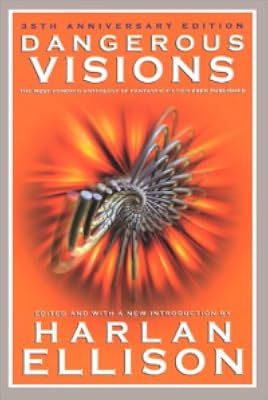
I believe the reason I cannot remember specifics is because there was so much going on at the same time. I was of an age where I inhaled what came out, and show more probably didn’t really stop to think about what I had just read, too ready to dive into the next one. (The exception is Ellison’s Dangerous Visions collections, but those hold a different and rarified level than the collections previously mentioned.)
So now, whenever possible, I am trying to go back to these books and take a slower, more sober approach to reading them. I have found, as I fully expected, the results to be a mixed bag. In some cases, the stories are still steeped in the tradition of “classic” science fiction; in others, they are so obtuse and weird as to be nearly unreadable.
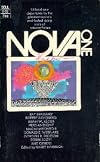
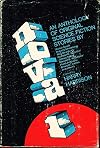
My reading of Nova One by Harry Harrison represents my latest foray into those collections.
Harrison began the Nova series in 1970 (stories actually written in ’69) and, to the best of my knowledge, only four were produced. I consider Harrison to be a writer of more “hard” science fiction, and the collection reflects that taste. But that is not to say it is classic SF. Each of these stories – to a greater or lesser extent – reflects the trends (new wave) of the time.
Which means that, in some cases, you can see the authors trying really hard. You see, that was one of the problems of the times. In experimenting, some authors tried too hard; the new approaches did not come easily. So, there are stories here that, while fine, just do not ring as true as they might a few years later – when the authors had more practice at this new stuff.
I will only defend these attempts by saying that, unlike so many experiments of the time, they do not become tedious. (And if you have read some of that experimentation, you will know exactly what I mean.)
There are a lot of nice stories in this collection – and only a couple of good old-fashioned clunkers. If you stumble across the book and are looking for a decent read, you could do much worse. But what is interesting is that, while enjoyable, none stand out as fantastic/memorable/jaw-dropping/insert-your-favorite-adjective-here stories that make you want to run for more of that author’s outpourings.
And that is not a good thing when the authors list includes Silverberg, Malzberg, Aldiss, Wolfe, and Gerrold, to name a few. (I am not including Bradbury in that list because his contribution is a poem which, if my sources are correct, was even a reprint.) Each of these authors are excellent writers (I’m not telling you anything you don’t already know), and each of their stories within the collection are well written. But, again, nothing stands out as great or important.
And therein may be the ultimate problem when I talk about not remembering many of the stories or collections. I read them because they (usually) had good stories, and they were a joy to read. But the number of stand outs were few and far between.
Meaning it may not be my fault they didn’t stick in my memory. Maybe it’s just of function of the fact that they were good, but not memorable (at least not 40 years later.) show less
I believe the reason I cannot remember specifics is because there was so much going on at the same time. I was of an age where I inhaled what came out, and show more probably didn’t really stop to think about what I had just read, too ready to dive into the next one. (The exception is Ellison’s Dangerous Visions collections, but those hold a different and rarified level than the collections previously mentioned.)
So now, whenever possible, I am trying to go back to these books and take a slower, more sober approach to reading them. I have found, as I fully expected, the results to be a mixed bag. In some cases, the stories are still steeped in the tradition of “classic” science fiction; in others, they are so obtuse and weird as to be nearly unreadable.
My reading of Nova One by Harry Harrison represents my latest foray into those collections.
Harrison began the Nova series in 1970 (stories actually written in ’69) and, to the best of my knowledge, only four were produced. I consider Harrison to be a writer of more “hard” science fiction, and the collection reflects that taste. But that is not to say it is classic SF. Each of these stories – to a greater or lesser extent – reflects the trends (new wave) of the time.
Which means that, in some cases, you can see the authors trying really hard. You see, that was one of the problems of the times. In experimenting, some authors tried too hard; the new approaches did not come easily. So, there are stories here that, while fine, just do not ring as true as they might a few years later – when the authors had more practice at this new stuff.
I will only defend these attempts by saying that, unlike so many experiments of the time, they do not become tedious. (And if you have read some of that experimentation, you will know exactly what I mean.)
There are a lot of nice stories in this collection – and only a couple of good old-fashioned clunkers. If you stumble across the book and are looking for a decent read, you could do much worse. But what is interesting is that, while enjoyable, none stand out as fantastic/memorable/jaw-dropping/insert-your-favorite-adjective-here stories that make you want to run for more of that author’s outpourings.
And that is not a good thing when the authors list includes Silverberg, Malzberg, Aldiss, Wolfe, and Gerrold, to name a few. (I am not including Bradbury in that list because his contribution is a poem which, if my sources are correct, was even a reprint.) Each of these authors are excellent writers (I’m not telling you anything you don’t already know), and each of their stories within the collection are well written. But, again, nothing stands out as great or important.
And therein may be the ultimate problem when I talk about not remembering many of the stories or collections. I read them because they (usually) had good stories, and they were a joy to read. But the number of stand outs were few and far between.
Meaning it may not be my fault they didn’t stick in my memory. Maybe it’s just of function of the fact that they were good, but not memorable (at least not 40 years later.) show less
Robin Scott: gran conexión; Robert Silverberg: Un día feliz de 2381; Barry N. Malzberg: Terminus Est; Chan Davis: Hexamnion; Ray Bradbury: Y esto hizo Dante; John R. Pierce: El mundo superior; Brian W. Aldiss. ¡Svastica!; Gene Wolfe: Los Horars; David Gerrold: Historia de amor en tres actos; Gordon R. Dickson: Jean Duprès; K. M. O'Donnell: Hombres de bolsillo; Naomi Mitchison: Mary y Joe; James Sallis: Rostros y manos; Donald E. Westlake: El vencedor; Piers Anthony: Toda la verdad
Mar 30, 2020Spanish
Diese Sammlung enthält die meisten Geschichten aus der Originalausgabe von Nova 1; an anthology of original science fiction stories:
Die ganz grosse Schaltung (The Big Connection), von Robin Scott
Ein glücklicher Tag im Jahre 2381 (A Happy Day in 2381), von Robert Silverberg
Terminus Est (Terminus Est), von Barry N. Malzberg
Die hoeheren Dinge (The Higher Things), von John R. Pierce
Die HORARS des Krieges (The HORARS of War), von Gene Wolfe
Love Story in drei Akten (Love Story in Three Acts), von David Gerrold
Jean Dupres (Jean Dupres), von Gordon R. Dickson
In der Gewalt (In the Pocket), von K. M. O.Donnell
Der Sieger (The Winner), von Donald E. Westlake
Die ganze Wahrheit (The Whole Truth), von Piers Anthony
Nicht enthalten sind:
Hexamination, show more von Chandler Davis
And This Did Dante Do, von Ray Bradbury (1967)
Swastika! von Brian W. Aldiss
Mary and Joe, von Naomi Mitchison (1962)
Faces & Hands, von James Sallis show less
Die ganz grosse Schaltung (The Big Connection), von Robin Scott
Ein glücklicher Tag im Jahre 2381 (A Happy Day in 2381), von Robert Silverberg
Terminus Est (Terminus Est), von Barry N. Malzberg
Die hoeheren Dinge (The Higher Things), von John R. Pierce
Die HORARS des Krieges (The HORARS of War), von Gene Wolfe
Love Story in drei Akten (Love Story in Three Acts), von David Gerrold
Jean Dupres (Jean Dupres), von Gordon R. Dickson
In der Gewalt (In the Pocket), von K. M. O.Donnell
Der Sieger (The Winner), von Donald E. Westlake
Die ganze Wahrheit (The Whole Truth), von Piers Anthony
Nicht enthalten sind:
Hexamination, show more von Chandler Davis
And This Did Dante Do, von Ray Bradbury (1967)
Swastika! von Brian W. Aldiss
Mary and Joe, von Naomi Mitchison (1962)
Faces & Hands, von James Sallis show less
Oct 15, 2007German
Ratings
Members
- Recently Added By
Author Information

Harry Harrison was born Henry Maxwell Dempsey on March 12, 1925 in Stamford, Connecticut. He was drafted into the U. S. Air Corps in 1943 and became a sharpshooter, a military policeman, a gunnery instructor, and a specialist in the prototypes of computer-guided bomb-sights and gun turrets. After being discharged, he graduated from Hunter College show more with a degree in art. By the end of the 1940s, he was running a small studio that specialized in selling illustrations to comics and science-fiction magazines. He then moved on to editing some of the magazines. As the market for comics began to shrink, he started writing for science-fiction magazines. He wrote short science fiction stories and novels including Deathworld, Captive Universe, Montezuma's Revenge, Star Smashers of the Galaxy Rangers, Stonehenge, West of Eden, Stars and Stripes Forever. He also wrote the Stainless Steel Rat series and the Bill, the Galactic Hero series. His novel Make Room! Make Room! Was the inspiration for the movie Soylent Green. He also wrote under the pseudonyms Hank Dempsey, Felix Boyd, Wade Kaempfert, Cameron Hall, Philip St. John, and Leslie Charteris. He died on August 15, 2012 at the age of 87. (Bowker Author Biography) show less
All Editions
Some Editions
Awards and Honors
Awards
Series

Belongs to Publisher Series
Edaf Ciencia Ficción (20)
Science Fiction Book Club (2238)
Work Relationships
Contains
Common Knowledge
- Canonical title
- Nova 1
- Original title
- Nova One
- Original publication date
- 1970
- Original language*
- Inglés
- Disambiguation notice
- Please distinguish between this Harry Harrison anthology, Nova One (1970), and the 1973 German edition, Nova. Five of the fifteen original stories are not included in the German edition. Thank you.
Please distinguish between this 1973 German edition of Harry Harrison's anthology, Nova, and his 1970 anthology, Nova 1. Five of the fifteen original stories are not included here. Thank you.
*Some information comes from Common Knowledge in other languages. Click "Edit" for more information.
Classifications
Statistics
- Members
- 146
- Popularity
- 224,113
- Reviews
- 3
- Rating
- (3.10)
- Languages
- English, German, Spanish
- Media
- Paper
- ISBNs
- 5
- ASINs
- 17