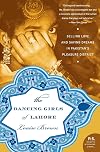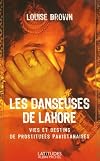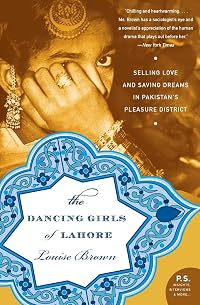
The Dancing Girls of Lahore: Selling Love and Saving Dreams in Pakistan's Ancient Pleasure District
by Louise Brown
On This Page
Description
An unforgettable and compassionate look at the lives of the residents of Lahore's pleasure district The Dancing Girls of Lahore inhabit the Diamond District in the shadow of a great mosque. The 21st century goes on outside the walls, this ancient quarter, but scarcely registers within. Though their trade can be described with accuracy as prostitution, the dancing girls have an illustrious history: beloved by sultans, their sophisticated art encompassed the best of Mughal culture. The modern show more day Bollywood aesthetic, with its love of gaudy spectacle, music, and dance, is their distant legacy. But the life of the pampered courtesan is not the one now being lived by Maha and her three girls. What they do is forbidden by Islam, though tolerated; but they are, unclean, and Maha's daughters, like her, are born into the business and will not leave it. Sociologist Louise Brown spent four years in the most intimate study of the family life of one Lahori courtesan. Beautifully understated, it turns a novelist's eye on a true story that beggars the imagination. Maha, at fourteen a classically trained dancer of exquisite grace, had her virginity sold to the Sultan of Dubai; when her own daughter Nena comes of age and Maha cannot bring in the money she once did, she faces a terrible decision as the agents of the Sultan come calling once more. show lessTags
Recommendations








Member Reviews
A beautifully scripted heart wrenching saga on the turbulent life of Maha( a veteran in sex trade) in the illustrious red light area of Heera Mandi /Diamond Market in Lahore, Pakistan.
Heera Mandi once famous for its artistic aura of courtesans known purely for their dancing and singing skills has now been reduced to a commercial sex factory. A similar fate experienced by the courtesans of Lucknow (India) and the Geishas of Japan.
Brown’s protagonist Maha who is at the dusk of her career (prostitution was looked as a profession), fights the dilemmas of her burdensome life encompassing struggles from being the sole breadwinner to being a mother to five children. Her family is yet to find the respect privileged to the so called civil show more world. In her prime, Maha was sold to a wealthy Arab in Dubai at the age of 12. A few years later she donned the role of a mistress to a wealthy Pakistani man. As years passed by, she was disowned by her wealthy benefactor compelling Maha to live on the charity of an opium addicted businessman. Moreover, her daughter’s incidental attraction to her world worsens her dilemmas.
Maha’s story does not have a happy ending. It is not a fairytale but a reality that overwhelms many lives of young innocent victims of sex-trade. Brown’s characterization of Maha is an eye opener which exposes the dark underbelly of a civilized society. Maha is one the countless blameless outcasts of a situation created by lecherous sexual elements. show less
Heera Mandi once famous for its artistic aura of courtesans known purely for their dancing and singing skills has now been reduced to a commercial sex factory. A similar fate experienced by the courtesans of Lucknow (India) and the Geishas of Japan.
Brown’s protagonist Maha who is at the dusk of her career (prostitution was looked as a profession), fights the dilemmas of her burdensome life encompassing struggles from being the sole breadwinner to being a mother to five children. Her family is yet to find the respect privileged to the so called civil show more world. In her prime, Maha was sold to a wealthy Arab in Dubai at the age of 12. A few years later she donned the role of a mistress to a wealthy Pakistani man. As years passed by, she was disowned by her wealthy benefactor compelling Maha to live on the charity of an opium addicted businessman. Moreover, her daughter’s incidental attraction to her world worsens her dilemmas.
Maha’s story does not have a happy ending. It is not a fairytale but a reality that overwhelms many lives of young innocent victims of sex-trade. Brown’s characterization of Maha is an eye opener which exposes the dark underbelly of a civilized society. Maha is one the countless blameless outcasts of a situation created by lecherous sexual elements. show less
This book was a simple read, but not an easy read. It is no dry text, but a tender personal journey with several individuals making the best of the realities of life as prostitutes. This book will be eye opening for many (and be warned, the language may be shocking for some), but it is an honest portrayal of the lives and values of the girls, for whom--ironically--honor is the largest personal asset in such poverty. The girls are shown not as statistics or examples for the author's thesis, but human beings with their own personalities, strengths, and faults. This book was a touching reminder that things are not always so simple as they might appear from the outside; I recommend the eye-opener.
I picked this up from the library mainly because I was curious to learn about a subject that I - an American-born & raised female of Pakistani origin - knew nothing about, since my relatives in Lahore are the well-off, Westernized sort who would never discuss such things with me. Despite having visited Lahore, including a visit during one of the months when the author was there, the Lahore described here is completely foreign to me. It is also both fascinating and compelling: like the author, I felt for these women and wished there were a way for them to break out of the perpetual cycle of prostitution. Definitely an eye-opener, and recommended.
Rather than being simply a collection of statistics and essays about prostitution or women's disempowerment, this book takes the reader right into the heart of one family's experience. Louise Brown lives for several years in Heera Mandi, particularly with one woman, "Maha," and her family. Brown eats their food, attends their parties, participates in their religious festivals, and sees the children grow older---and, sadly, sees the generationl cycle of prostitution carrying itself on in the maturing children. There are also fascinating sojourns with other people in Heera Mandi, including other prostitutes, pimps, an artist, and a family of Christian street-sweepers.
The book does an excellent job of describing and evoking the sights, show more sounds and smells of Heera Mandi and elsewhere, and of bringing the people and places to vivid life. As well, Brown admirably portrays the people therein not as faceless caricatures or pitiable Third-World statistics, but as living humans with dignity and worth, humans who sometimes show great resilience in adapting to or resisting the often bleak circumstances into which they are born.
It is a book that is as moving as it is informative. show less
The book does an excellent job of describing and evoking the sights, show more sounds and smells of Heera Mandi and elsewhere, and of bringing the people and places to vivid life. As well, Brown admirably portrays the people therein not as faceless caricatures or pitiable Third-World statistics, but as living humans with dignity and worth, humans who sometimes show great resilience in adapting to or resisting the often bleak circumstances into which they are born.
It is a book that is as moving as it is informative. show less
I do not think I’ve read a book - fiction nor nonfiction - that took place in Pakistan before. And, getting a glimpse into the lives of people who are probably not often talked about was an opportunity I’m very glad I got by having this book introduced to me. There are parts of the book that are written very well and do much to convey a sense of what life is like for those in Heera Mandi.
However, some of Brown’s choices made me consider not finish reading the book. One of the main ones being the way she describes and talks about certain people. While it makes a lot of sense when she comments how the people and society would perceive the appearance of someone, when she continues to make it a focal point about a person being show more ‘fat’ or ‘ugly’ it began to feel a bit unsettling because the majority of the time these points had no bearing on anything else that happened and the text would have felt more like a glimpse into the lives of those she talked about, but instead became more and more like an opinion piece filled with biases.
Another aspect of the book I think was not executed well was her use of Urdu and Punjabi words. Most of the time, her use helped ground the story in its setting and were things that did not translate well into English. But, she also uses Urdu or Punjabi words for things like ‘lane’ and ‘intersection.’ And I just do not see what that adds to the text because if there is a nuance in those words which do not exist in the English, there is no indication in the text itself nor in the glossary at the end of the book.
The final thing that makes this book a bit hard to get into is the large number of people she writes about. While it is good to be introduced to a wide range of people who live in the area she writes about, the structure of the book is such that it becomes rather challenging to remember who certain people are because they are brought up only occasionally and each mention is rather far removed from others. Though, on the whole, the chronological structure does work well because the majority of the focus is on one family.
If this is a topic you are interested, it is a book worth reading, but if it’s not something that you are interested in, I wouldn’t recommend trying to get through it.
Content Warnings: physical and emotional abuse, especially of people under 18 years old, animal abuse, and mentions of rape and people - in particular girls under 18 - being forced to have sexual contact with significantly older men, drug abuse, etc. show less
However, some of Brown’s choices made me consider not finish reading the book. One of the main ones being the way she describes and talks about certain people. While it makes a lot of sense when she comments how the people and society would perceive the appearance of someone, when she continues to make it a focal point about a person being show more ‘fat’ or ‘ugly’ it began to feel a bit unsettling because the majority of the time these points had no bearing on anything else that happened and the text would have felt more like a glimpse into the lives of those she talked about, but instead became more and more like an opinion piece filled with biases.
Another aspect of the book I think was not executed well was her use of Urdu and Punjabi words. Most of the time, her use helped ground the story in its setting and were things that did not translate well into English. But, she also uses Urdu or Punjabi words for things like ‘lane’ and ‘intersection.’ And I just do not see what that adds to the text because if there is a nuance in those words which do not exist in the English, there is no indication in the text itself nor in the glossary at the end of the book.
The final thing that makes this book a bit hard to get into is the large number of people she writes about. While it is good to be introduced to a wide range of people who live in the area she writes about, the structure of the book is such that it becomes rather challenging to remember who certain people are because they are brought up only occasionally and each mention is rather far removed from others. Though, on the whole, the chronological structure does work well because the majority of the focus is on one family.
If this is a topic you are interested, it is a book worth reading, but if it’s not something that you are interested in, I wouldn’t recommend trying to get through it.
Content Warnings: physical and emotional abuse, especially of people under 18 years old, animal abuse, and mentions of rape and people - in particular girls under 18 - being forced to have sexual contact with significantly older men, drug abuse, etc. show less
Read in January 2011. Edited August 2011 about three times)
This book wasn't what I thought it was going to be - an academic's study on the sex trade in Lahore so all the time I keep hoping the book will get to the nitty-gritty but it never does and it is explained in the afterword that the author does intend to write the sociological book the title implies 'at some point'. In the afterword!
The book is about the time the author spent living with a particular 'dancing girl' and her family in extended visits over a period of nearly five years. What got me is the mealy-mouthed approach to sex. If these had been fruit sellers the author would have written about varieties and their differences, supply, pricing, display, preservation, show more marketing curve etc. But this is about sex so we never get to learn what any of the dancing girls' attitudes were towards it specifically, what exactly they offered and for what price. There are few details about customers, pimps, brothels, training and the actual act they are selling. All of this is very sketchy and to be filled out with the reader's own knowledge.
But what do I know? Should I presume that brothels are alike all across the world, that pimps are always exploitative, that all prostitutes hate sex and will never kiss their customers? On the island I live on there is a very fair system of brothels - the prostitute pays double normal rent for a room and is expected to spend a lot of time in the bar (brothels always have bars here). She can go with whom she pleases or no-one at all and all her money is hers to keep. Or is Lahore like Nevada - the girls pay a huge commission to the brothel owners and must have sex with any customer that selects them? Its just too sketchy....
The most interesting parts are the descriptions of the transvestites who are very reality-tv but poorer, the disgusting trade in virgins with the Arab states and the Shia religious ceremonies which I am somewhat familiar with as they also take place in Trinidad. The difference is that in Trinidad, the ceremonies are celebrated with much alcohol, food and ganja and are open to all of any faith (its a party after all), whereas in Lahore they are more strictly Muslim and forego the stimulants and take things much more seriously.
The book would make a great documentary, the sort that appears deep on the surface, but not that much is deep in a 50 minute program. I could have done with more depth in the book but I would read Louise Brown again on the strength of her writing, but this time I would search preface and afterword carefully to find out if the title is going to deliver what it promises before I bought the book. show less
This book wasn't what I thought it was going to be - an academic's study on the sex trade in Lahore so all the time I keep hoping the book will get to the nitty-gritty but it never does and it is explained in the afterword that the author does intend to write the sociological book the title implies 'at some point'. In the afterword!
The book is about the time the author spent living with a particular 'dancing girl' and her family in extended visits over a period of nearly five years. What got me is the mealy-mouthed approach to sex. If these had been fruit sellers the author would have written about varieties and their differences, supply, pricing, display, preservation, show more marketing curve etc. But this is about sex so we never get to learn what any of the dancing girls' attitudes were towards it specifically, what exactly they offered and for what price. There are few details about customers, pimps, brothels, training and the actual act they are selling. All of this is very sketchy and to be filled out with the reader's own knowledge.
But what do I know? Should I presume that brothels are alike all across the world, that pimps are always exploitative, that all prostitutes hate sex and will never kiss their customers? On the island I live on there is a very fair system of brothels - the prostitute pays double normal rent for a room and is expected to spend a lot of time in the bar (brothels always have bars here). She can go with whom she pleases or no-one at all and all her money is hers to keep. Or is Lahore like Nevada - the girls pay a huge commission to the brothel owners and must have sex with any customer that selects them? Its just too sketchy....
The most interesting parts are the descriptions of the transvestites who are very reality-tv but poorer, the disgusting trade in virgins with the Arab states and the Shia religious ceremonies which I am somewhat familiar with as they also take place in Trinidad. The difference is that in Trinidad, the ceremonies are celebrated with much alcohol, food and ganja and are open to all of any faith (its a party after all), whereas in Lahore they are more strictly Muslim and forego the stimulants and take things much more seriously.
The book would make a great documentary, the sort that appears deep on the surface, but not that much is deep in a 50 minute program. I could have done with more depth in the book but I would read Louise Brown again on the strength of her writing, but this time I would search preface and afterword carefully to find out if the title is going to deliver what it promises before I bought the book. show less
3,5
Its been some time since I read this book.But it still remain fresh in my mind.Its a sordid world the author presents,with young girls who become prostitutes,sometimes even guided into the world by their own mothers.Seems there is a tradition of that sort of thing in Pakistan More about that here
Womens emancipation has come a long way since we got the vote. That is in the western world. But if you are poor and female in that part of the world...things arent so great.
The author debates with herself throughout the book if she should break her role as an objective observer and step in to help some of the girls she encounter.
She does try to talk with the mother of the family about their sitation,but its clear that the mother is unable show more to understand her viewpoint.To them this is their way of life that has been going on for generations.
I would recommend this book,despite its grim premise its a riveting read. You really start to care about the persons the author meets and interacts with.And your heart breaks for them. show less
Its been some time since I read this book.But it still remain fresh in my mind.Its a sordid world the author presents,with young girls who become prostitutes,sometimes even guided into the world by their own mothers.Seems there is a tradition of that sort of thing in Pakistan More about that here
Womens emancipation has come a long way since we got the vote. That is in the western world. But if you are poor and female in that part of the world...things arent so great.
The author debates with herself throughout the book if she should break her role as an objective observer and step in to help some of the girls she encounter.
She does try to talk with the mother of the family about their sitation,but its clear that the mother is unable show more to understand her viewpoint.To them this is their way of life that has been going on for generations.
I would recommend this book,despite its grim premise its a riveting read. You really start to care about the persons the author meets and interacts with.And your heart breaks for them. show less
Members
- Recently Added By
Author Information

Some Editions
Awards and Honors
Awards
Common Knowledge
- Original publication date
- 2005
- Important places
- Pakistan; Lahore, Punjab, Pakistan
- Dedication
- For Maha
- First words
- Five new girls are staying in the thin pimp's brothel.
- Last words
- (Click to show. Warning: May contain spoilers.)Maha, Nisha, Nena, and Ariba, what thanks can I write for you, when words will never be enough?
- Original language
- English
Classifications
- Genres
- Nonfiction, General Nonfiction
- DDC/MDS
- 306.742095491 — Society, government, & culture Social sciences, sociology & anthropology Social Behavior - Dating, Marriage, Divorce Sexual relations Sex work and prostitution Prostitution by females Female sex workers by place
- LCC
- HQ1745.5 .Z9 .L333 — Social sciences The family. Marriage, Women and Sexuality The Family. Marriage. Women Women. Feminism
- BISAC
Statistics
- Members
- 286
- Popularity
- 112,839
- Reviews
- 8
- Rating
- (3.56)
- Languages
- 5 — Dutch, English, French, German, Swedish
- Media
- Paper, Ebook
- ISBNs
- 10
- ASINs
- 6