On This Page
Description
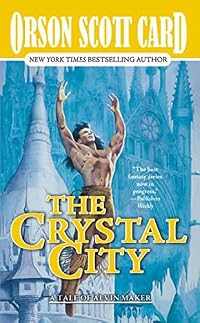
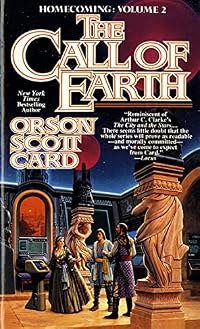
This full-cast production of Orson Scott Card's newest title is finally available on audioFrom the end of the 18th century, Americans travelled west to find new homes and new lands. They brought with them the magics of plain people. It is from these roots of the American dream that award-winning writer Orson Scott Card has crafted what the Charlotte Observer called "a uniquely American fantasy." Using the lore and the folk magic of the men and women who settled a continent, and the beliefs show more of the tribes who were here before them, Card has created an alternate frontier America. Charms, beseechings, hexes, and potions all have a place in the lives of the people of this world.
Alvin Miller is the seventh son of a seventh son, born while his six brothers all still lived. Such a birth is a powerful magic; such a boy is destined to perhaps become a Maker. Rejoin the tale of Alvin and his wife Peggy as they work to create the Crystal City of Alvin's vision, where all people can live together in peace.
. show less
Tags
Recommendations

Member Reviews
Card is an extremely good writer, and his books are always a pleasure to read, but at times I did feel that the stories here occasionally suffered for being too allegorical, and too much about Card's ideas of morality.
6th, and at the moment last volume: 'The Crystal City.' Starting out at an unofficial orphanage for mixed-race children, Alvin unwittingly, by trying to help a sick woman, causes a plague of yellow fever, and ends up getting run out of town. Taking the orphans with him, and then meeting a voodoo queen, La Tia, Alvin somehow finds himself at the head of an 'army' of escaped slaves, freeing more as they make their way north, seeking a place to live free. Of course, these could be the citizens of Alvin's dream of a perfect show more city. And Abe Lincoln, a genial shopkeeper, will do what he can to help. Meanwhile, Calvin goes off with some decidedly not-nice men to conquer Mexico and kill everyone there - which seems to be OK, as they do human sacrifice. At the end, it is made overly clear that Alvin's vision is about the Mormon Tabernacle, which is a bit annoying. show less
6th, and at the moment last volume: 'The Crystal City.' Starting out at an unofficial orphanage for mixed-race children, Alvin unwittingly, by trying to help a sick woman, causes a plague of yellow fever, and ends up getting run out of town. Taking the orphans with him, and then meeting a voodoo queen, La Tia, Alvin somehow finds himself at the head of an 'army' of escaped slaves, freeing more as they make their way north, seeking a place to live free. Of course, these could be the citizens of Alvin's dream of a perfect show more city. And Abe Lincoln, a genial shopkeeper, will do what he can to help. Meanwhile, Calvin goes off with some decidedly not-nice men to conquer Mexico and kill everyone there - which seems to be OK, as they do human sacrifice. At the end, it is made overly clear that Alvin's vision is about the Mormon Tabernacle, which is a bit annoying. show less
Originally posted at FanLit. http://www.fantasyliterature.com/reviews/the-crystal-city/
The Crystal City is the (maybe) final novel in Orson Scott Cardƒ??s TALES OF ALVIN MAKER. This series started off strongly with Seventh Son and Red Prophet, but it bogged down during books three and four (Prentice Alvin and Alvin Journeyman) and I was ready to give up. However, since I had already downloaded the audio version of the sixth book, The Crystal City, from my library, I decided to finish the series. (My library didnÂ??t have the fifth book, Heartfire, so I just read a plot summary of that one.)
Alvin and Peggy are married and have lost a child. Alvin continues his work as a Maker, trying to prepare people for his Crystal City, while Peggy show more is trying to end slavery. Alvin and Arthur are now in New Orleans. When Alvin heals a woman with yellow fever, she is well enough to go outside and spread it among the city, starting a plague. Alvin tries to heal as many as he can and, in the process, is suspected of witchery. ItÂ??s looking like a good time to leave New Orleans, so when a woman asks Alvin to lead thousands of runaway slaves and French refugees across the Mississippi river to freedom, he agrees to do it.
Thus The Crystal City is the Exodus story and Alvin is both a Moses figure and a Jesus figure. He teams up with his old friend Tenskwa-Tawa, the Red Prophet, to lead 5,000 people out of slavery and into the promised land. Other highlights include the introductions of Jim Bowie and Abraham Lincoln and, finally, AlvinÂ??s dawning understanding of his purpose and the beginnings of the crystal city.
The Crystal City was hard to get through for the same reason I had trouble with books three and four in this series. The plot drags because thereÂ??s too much brooding interior monologue and far too much teasing banter amongst the characters. Almost every conversation on nearly every page of the novel is snarky or sarcastic. This is usually playful (e.g.,Â? I hope I grow up to be as perfect as you!Â?Â) and it feels very realistic, but it becomes incredibly boring after listening to it for so long during this series. I had to skim some of it in order to finish The Crystal City. I listened to the audio version, so basically I sped up the narration to about triple the normal rate in parts, especially the dialogue. The Blackstone audio versions are very good, by the way, though I always had to speed them up. The narrator Stephen Hoye is particularly excellent in this series.
ItÂ??s not clear whether there will be any more books in the TALES OF ALVIN MAKER series. The ending is open and some readers will be disappointed that it doesnÂ??t tie up all the loose ends. IÂ??m at the point that I donÂ??t care. Either way, IÂ??m done with Alvin Maker. show less
The Crystal City is the (maybe) final novel in Orson Scott Cardƒ??s TALES OF ALVIN MAKER. This series started off strongly with Seventh Son and Red Prophet, but it bogged down during books three and four (Prentice Alvin and Alvin Journeyman) and I was ready to give up. However, since I had already downloaded the audio version of the sixth book, The Crystal City, from my library, I decided to finish the series. (My library didnÂ??t have the fifth book, Heartfire, so I just read a plot summary of that one.)
Alvin and Peggy are married and have lost a child. Alvin continues his work as a Maker, trying to prepare people for his Crystal City, while Peggy show more is trying to end slavery. Alvin and Arthur are now in New Orleans. When Alvin heals a woman with yellow fever, she is well enough to go outside and spread it among the city, starting a plague. Alvin tries to heal as many as he can and, in the process, is suspected of witchery. ItÂ??s looking like a good time to leave New Orleans, so when a woman asks Alvin to lead thousands of runaway slaves and French refugees across the Mississippi river to freedom, he agrees to do it.
Thus The Crystal City is the Exodus story and Alvin is both a Moses figure and a Jesus figure. He teams up with his old friend Tenskwa-Tawa, the Red Prophet, to lead 5,000 people out of slavery and into the promised land. Other highlights include the introductions of Jim Bowie and Abraham Lincoln and, finally, AlvinÂ??s dawning understanding of his purpose and the beginnings of the crystal city.
The Crystal City was hard to get through for the same reason I had trouble with books three and four in this series. The plot drags because thereÂ??s too much brooding interior monologue and far too much teasing banter amongst the characters. Almost every conversation on nearly every page of the novel is snarky or sarcastic. This is usually playful (e.g.,Â? I hope I grow up to be as perfect as you!Â?Â) and it feels very realistic, but it becomes incredibly boring after listening to it for so long during this series. I had to skim some of it in order to finish The Crystal City. I listened to the audio version, so basically I sped up the narration to about triple the normal rate in parts, especially the dialogue. The Blackstone audio versions are very good, by the way, though I always had to speed them up. The narrator Stephen Hoye is particularly excellent in this series.
ItÂ??s not clear whether there will be any more books in the TALES OF ALVIN MAKER series. The ending is open and some readers will be disappointed that it doesnÂ??t tie up all the loose ends. IÂ??m at the point that I donÂ??t care. Either way, IÂ??m done with Alvin Maker. show less
This is a continuation of Card's alternate history series about Alvin Maker in his version of early America. Card blends in historical figures, magic and Alvin's effect on the colonies to make an intriguing history. Unfortunately, this book feels a little less finished than the others, almost as if Alvin has something else to do, that even he doesn't know about. Still good reading.
The Crystal City is the sixth book in an eventual seven book series called The Tales of Alvin Maker. I'd been waiting for it since 1998 so I was very excited when it was released this past November. This review tells quite a lot of the story but nothing that would ruin the suspense because there is no suspense..and that's the problem.
I started reading the Tales of Alvin Maker series by Orson Scott Card in 1987 with the first volume, Seventh Son. A fantasy alternative telling of American history in the frontier days, the first novel thrilled me by introducing me to the people of Hatrack River, many of whom had interesting magical "knacks" such as second sight, dousing, healing, or hexes, potions, come-hithers, glamours and all manner of show more other tantalizing folk magic talents. It is here that we meet the baby Alvin Miller, born the seventh son of a seventh son, who grows to possess the greatest knack of all. Alvin is what is known as a "Maker." He has the magical ability of understanding how things are put together, how to create and how to heal and repair things when they are broken. He can penetrate the minds of animals and people and get them to do his bidding. He can rearrange the molecules in an object and change its shape and function. He can create a storm or calm one down. Throughout the series Alvin's talents develop as he grows older and his modesty, honesty and kindness develop in similar measure. He becomes Alvin Maker and meets up with many figures from history along the way. He has adventures that shape the course of history. His family and community relationships deepen and take the reader on myriad interesting journeys.
The author released Volume II, Red Prophet in 1988 and Volume III, Prentice Alvin in 1989. So far so good. There was only a gap of about one year between installments and thankfully so because the books definitely left one hanging. Alvin had gone on to become a powerful and well-intended magus who had a vision of a Crystal City where one day he would gather all those with good hearts and teach them the ways of Makery so they could work together to build a world of peace and harmony.
Even though it was obvious that Card, a devout Mormon was fashioning an allegorical story based upon the life of his religion's founder, Joseph Smith, his story-telling while filled with spiritual concepts refrained from outright religiosity and at least for me, the author's spiritual beliefs didn't effect my enjoyment of the tale in any way. The plots can all be enjoyed on several levels and at the very least make up a very good yarn and a very creative alternate history. The characters are interesting. Their special "knacks" are fun to experience. Alvin as the most powerful Maker of them all is pitted against the formidable foe, the Unmaker...obviously the Devil, Satan, Chaos, what have you...who tries to trip him up at every step and comes close to killing him many times.
The fourth book in the series, Alvin Journeyman wasn't released until 1995, six years after its predecessor. By that time I could barely remember any details from the first three books but I remembered that I enjoyed them and so I eagerly read it as soon as it was released. By the time of this book Card has stretched Alvin's knack to the point where he has created a plowshare made of "living" gold that he will use to break ground when he finds the place where he is to build his Crystal City. Religion has become less subtle and more overt as the saga continues. Never mind, I sometimes found it a bit cloying but the story-telling had me hooked.
Another gap of three years this time brings us to 1998 and the release of Book V, Heartfire in which Peggy, a girl who has known Alvin literally since birth is now married to him. Peggy is a "Torch" and can see into each person's heart and can trace their future life lines to see what is in store for their lives. She sees war down the lifelines of every American as she predicts the coming Civil War. Sadly, I've forgotten so much about the nuances of the stories over the eleven years that I've been waiting for Card to get to the point that I no longer really care much about Alvin's Crystal City. The spiritual vibes have finally started to seem like religiosity to me and while I continued reading mainly to see how it all turns out, I picked up this fifth book with less excitement than before. Still Card managed to win me over and get me back on track only to leave me hanging yet again until six MORE years have passed and it's November of 2003.
With a title like The Crystal City, the news of this book's impending release filled me with anticipation. I was almost jubilant! At last, I thought, Alvin's going to get to build his city. Alas, the book does not deliver what the title promises. Instead Alvin starts the work on his crystal city but we have to wait, (how many more years?) until the final Book VII, Master Alvin makes its appearance to find out how it all ends.
I really, really did not like this book. When I read Seventh Son back in 1987 if I had known how badly this series was going to go down hill to the point of ending up with the rushed and over-zealous, predictable and uninteresting, at times racist, at times down-right silly concoction that this turned out to be, I would not have read it at all even though for many years it was one of my favorite books. I truly wish I had known then what I know now.
The plot in The Crystal City finds Alvin and his brother-in-law Arthur Stuart in Nuevos Barcelona or New Orleans under Spanish occupation. Alvin's been sent there by his wife Peggy who sees that he can possibly prevent the Civil War by going there. In the second chapter we are introduced to Papa Moose and Mama Squirrel, two abolitionists that know Peggy and who run a sort of illegal orphanage for poor French orphans, and black and half-breed children. If the idea of a squirrel and a moose sounds vaguely familiar to you from the days of Rocky and Bullwinkle cartoons, it's not a coincidence. One of Card's fans won a contest that promised as its prize that Card would name a character in his next book after him. The fan's online name was Papa Moose and his wife's online identity was Squirrel because they liked Rocky and Bullwinkle. So that silliness is how two serious and important characters in this book got such strange and unlikely names. To me this is a good indicator of the lack of seriousness with which Card treated this book.
In this book Alvin treats a Portuguese prostitute who is stricken with Yellow Fever. He makes her well enough to fight off the disease on her own but not before mosquitoes carry her diseased blood to thousands of other people starting a plague and a superstitious panic. He meets up with various other local characters with interesting knacks such as a Voodoo Queen and a girl who can tell when someone is dying. He also comes up against his old nemesis Jim Bowie (yeah, the guy with the big knife), Steve Austin (of Texas fame) and his own youngest brother, Calvin, also a maker but with no discipline and no humility and plenty of "issues." The Unmaker is lurking around, too.
The main event in this book is to get 5,000 to 6,000 impoverished French immigrants, runaway slaves and ex-slaves and the orphans of Squirrel and Moose out of Nuevos Barcelona and away to safety as the hateful mob rises up to murder them all in blame for the plague. Luckily, Alvin knows Abe Lincoln, who in the course of this book meets a friend of Alvin's who turns him on to the lawyer profession. Abe helps figure out where all these people can go to live in peace and safety after Alvin turns the waters of the Mississippi River into a crystal bridge by draining his own blood into the waters. A county is created in Abe's home state of Noisy River (Illinois) and Alvin with the help of his living plow of gold carves out the foundation for the Crystal City. (By the way, the plow can float in mid air, moving with a mind of its own and people can see this but they don't freak out.) Alvin creates the crystal blocks from which the city is to be built by mixing his own blood with the waters as he did when he made the crystal bridge across the Mississippi River. The crystal reflects back mysterious clairvoyant visions whenever someone looks into it.
There is a sub-plot that has Jim Bowie and Steve Austin and bad boy Calvin trying to defeat the blood-thirsty Mexica Indians and take over as Emperors.
In order to get all the escaped people from Louisiana to Illinois Alvin puts them in the charge of Arthur Stuart who is learning to be a maker. They run into many tight spots on the road to freedom but of course the super handy knacks always win the day...like melting gun barrels so they won't fire and talking alligators into chasing after people and of course, parting the Mississippi and drying up the river bottom so people can walk across it. They heal a few sick slave-owners along the way and release many hundreds more slaves. All goes entirely too hunky-dory for my taste. It was just plain predictable and boring.
We meet up with the Red Prophet, Tenskwa-Tawa from the second book. He is now in charge of all lands west of the Mississippi and is...well, a red prophet. He has been busy uniting all the tribes and converting them from warring enemies to a unified people of peace. He's been cooking up a powerful volcano that's going to blow the Mexica Indians to smithereens if they don't come over to the peace side and give up their reliance upon the power drawn from fear and pain and blood sacrifices. The Voodoo Queen is helping out with this. Tenskwa-Tawa grants Alvin's band of escapees safe passage across his Indian lands and his people feed and shelter the escapees along the way.
Meanwhile, Peggy is about to give birth to Alvin's son who comes prematurely and as if Alvin doesn't have enough on his plate, he has to heal the baby as it's being born because it's lungs aren't developed enough. He tried healing their first baby unsuccessfully when it too was born early.
The story jumps back and forth between several different plot elements and it seemed to me that Card rushed through all of it. There was nothing new or exciting. Every hardship or obstacle encountered by the "good guys" was solved in the moments by their knacks. Everyday people seemed quite unconcerned by the knacks, floating plows, and mysterious fogs that came up out of nowhere. Crystal bridges were happily crossed by thousands upon thousands of refugees without a thought. Card justs seemed to think that just because he says so, that's good enough for the readership. This was totally implausible even for a fantasy story. The characters were not developed. The plot was moved along by dialog as is especially common with Card but the dialog in this book was amateurish and stilted and seemed forced. He even used the word "pis sed-offedness" once and described a group of women who were meeting to discuss the city's name as a "gaggle". Here's the actual first three sentences of that enlightening paragraph, "But Measure left the work and came along. And when they got to Alvin's cabin, there inside it were a gaggle of women." Shouldn't that be "there inside it was a gaggle of women"? I think the goose connotation is a bit unnecessary.
Various tribes of Native Americans are discussed with simplistic racist tones. The "Irrakwa and the Cherriky" are painted to be sell-outs wearing white man's clothes who once were blood-thirsty varmints who like the Mexica Indians used the magic of fear and pain and death. The Navajo are just about subdued and taught the error of their likewise bloody ways against the Hopi by the Red Prophet. The Plains Indians are portrayed as beings who harken to the Greensong, a magical mysterious song of Nature that allows them to run faster and jump higher (kind of like Keds or Red Ball Jets). I loved the concept of the Greensong when it was first introduced in book two and I still do but in this book it is used so cheaply as an easy way to get from improbable Point A to ridiculous Point B that it seemed stripped of all its magic. I realize this is a fantasy and that it is an imaginary alternate vision of history, but in real life there are real Native Americans with real spirituality and I found the heavy handed and simplistic explanations of Native spirituality disrespectful, racist and ill-conceived. How does Mr. Card think a young person of Mayan descent will enjoy his simplistic portrayal of Native Americans? Or how will a person of Navajo descent feel or "Irrakwas" like my friends here in Wisconsin, the Oneidas? His portrayal of black people is paternalistic and not well balanced either.
Alvin's character has become a crashing bore in this book. He is just too perfect. He makes mistakes like curing the prostitute which leads to thousands more dying from the plague but he is always so focused on his duty. He is so long-suffering, so pristine in his motivations. Even when the Unmaker attacks him by taking over the body of a gator that rips his leg out of the socket Alvin keeps it together and continues on his journey to the Crystal City. He is careful not to hurt the poor misused gator. We never doubt it for a single second that all the good guys will triumph over all the bad guys...always and forever. By this book Alvin is no longer even a likable human being. He's pious and as sweet and gentle as a lamb and about as interesting. His relationship with his wife Peggy has deteriorated into nothing..no passion, nothing much of joy...just their interminable duties to their knacks and their visions.
Finally, after Alvin has led everyone to his promised land and the building of the Crystal City has begun, the ladies of the community get together and they decide to name this new city that they are about to help build, Tabernacle. Okay. It's Card's book, not mine...but I didn't think I was signing on for a religion class when I bought the first book in the Sci-Fi /Fantasy section of my local book store way back when. There was no indication that it was going to be a religious series. The following is a sample of the religious tone of the book. Decide for yourself if you like the tone. I did not.
"What's the topic?" asked Alvin.
"The name of that thing what you build," said La Tia.
"I don't like what Verily call it, me."
Peggy laughed. "Nobody likes what anybody calls it," she said. "But La Tia was reading in the Bible and she has a name."
"You lead us out like Moses," said La Tia. "And Arthur Stuart, he lead us like Joshua when you gone. Not like Aaron, no! We got no golden calf! But we the book of Exodus, us. So this thing you build, I find out in the Bible, she a tabernacle."
Alvin frowned. "Makes it sound like a church meeting place."
"Oui!" cried Rien. "Only instead of you go and a priest pretend to be God, we go inside and find out where he live in our heart!"
This book was such a let-down for me with it's convoluted but skimmed over plot that I'm not even sure I'll read the last book when it comes out. I have counted Orson Scott Card among my top favorite writers for many years and I have read most of his books. This one is the absolute biggest disappointment. What should have been a triumphant story petered out to become just a preachy, hurried half-effort that I sadly cannot recommend to anyone but true die-hard fans of the Alvin Maker series. show less
I started reading the Tales of Alvin Maker series by Orson Scott Card in 1987 with the first volume, Seventh Son. A fantasy alternative telling of American history in the frontier days, the first novel thrilled me by introducing me to the people of Hatrack River, many of whom had interesting magical "knacks" such as second sight, dousing, healing, or hexes, potions, come-hithers, glamours and all manner of show more other tantalizing folk magic talents. It is here that we meet the baby Alvin Miller, born the seventh son of a seventh son, who grows to possess the greatest knack of all. Alvin is what is known as a "Maker." He has the magical ability of understanding how things are put together, how to create and how to heal and repair things when they are broken. He can penetrate the minds of animals and people and get them to do his bidding. He can rearrange the molecules in an object and change its shape and function. He can create a storm or calm one down. Throughout the series Alvin's talents develop as he grows older and his modesty, honesty and kindness develop in similar measure. He becomes Alvin Maker and meets up with many figures from history along the way. He has adventures that shape the course of history. His family and community relationships deepen and take the reader on myriad interesting journeys.
The author released Volume II, Red Prophet in 1988 and Volume III, Prentice Alvin in 1989. So far so good. There was only a gap of about one year between installments and thankfully so because the books definitely left one hanging. Alvin had gone on to become a powerful and well-intended magus who had a vision of a Crystal City where one day he would gather all those with good hearts and teach them the ways of Makery so they could work together to build a world of peace and harmony.
Even though it was obvious that Card, a devout Mormon was fashioning an allegorical story based upon the life of his religion's founder, Joseph Smith, his story-telling while filled with spiritual concepts refrained from outright religiosity and at least for me, the author's spiritual beliefs didn't effect my enjoyment of the tale in any way. The plots can all be enjoyed on several levels and at the very least make up a very good yarn and a very creative alternate history. The characters are interesting. Their special "knacks" are fun to experience. Alvin as the most powerful Maker of them all is pitted against the formidable foe, the Unmaker...obviously the Devil, Satan, Chaos, what have you...who tries to trip him up at every step and comes close to killing him many times.
The fourth book in the series, Alvin Journeyman wasn't released until 1995, six years after its predecessor. By that time I could barely remember any details from the first three books but I remembered that I enjoyed them and so I eagerly read it as soon as it was released. By the time of this book Card has stretched Alvin's knack to the point where he has created a plowshare made of "living" gold that he will use to break ground when he finds the place where he is to build his Crystal City. Religion has become less subtle and more overt as the saga continues. Never mind, I sometimes found it a bit cloying but the story-telling had me hooked.
Another gap of three years this time brings us to 1998 and the release of Book V, Heartfire in which Peggy, a girl who has known Alvin literally since birth is now married to him. Peggy is a "Torch" and can see into each person's heart and can trace their future life lines to see what is in store for their lives. She sees war down the lifelines of every American as she predicts the coming Civil War. Sadly, I've forgotten so much about the nuances of the stories over the eleven years that I've been waiting for Card to get to the point that I no longer really care much about Alvin's Crystal City. The spiritual vibes have finally started to seem like religiosity to me and while I continued reading mainly to see how it all turns out, I picked up this fifth book with less excitement than before. Still Card managed to win me over and get me back on track only to leave me hanging yet again until six MORE years have passed and it's November of 2003.
With a title like The Crystal City, the news of this book's impending release filled me with anticipation. I was almost jubilant! At last, I thought, Alvin's going to get to build his city. Alas, the book does not deliver what the title promises. Instead Alvin starts the work on his crystal city but we have to wait, (how many more years?) until the final Book VII, Master Alvin makes its appearance to find out how it all ends.
I really, really did not like this book. When I read Seventh Son back in 1987 if I had known how badly this series was going to go down hill to the point of ending up with the rushed and over-zealous, predictable and uninteresting, at times racist, at times down-right silly concoction that this turned out to be, I would not have read it at all even though for many years it was one of my favorite books. I truly wish I had known then what I know now.
The plot in The Crystal City finds Alvin and his brother-in-law Arthur Stuart in Nuevos Barcelona or New Orleans under Spanish occupation. Alvin's been sent there by his wife Peggy who sees that he can possibly prevent the Civil War by going there. In the second chapter we are introduced to Papa Moose and Mama Squirrel, two abolitionists that know Peggy and who run a sort of illegal orphanage for poor French orphans, and black and half-breed children. If the idea of a squirrel and a moose sounds vaguely familiar to you from the days of Rocky and Bullwinkle cartoons, it's not a coincidence. One of Card's fans won a contest that promised as its prize that Card would name a character in his next book after him. The fan's online name was Papa Moose and his wife's online identity was Squirrel because they liked Rocky and Bullwinkle. So that silliness is how two serious and important characters in this book got such strange and unlikely names. To me this is a good indicator of the lack of seriousness with which Card treated this book.
In this book Alvin treats a Portuguese prostitute who is stricken with Yellow Fever. He makes her well enough to fight off the disease on her own but not before mosquitoes carry her diseased blood to thousands of other people starting a plague and a superstitious panic. He meets up with various other local characters with interesting knacks such as a Voodoo Queen and a girl who can tell when someone is dying. He also comes up against his old nemesis Jim Bowie (yeah, the guy with the big knife), Steve Austin (of Texas fame) and his own youngest brother, Calvin, also a maker but with no discipline and no humility and plenty of "issues." The Unmaker is lurking around, too.
The main event in this book is to get 5,000 to 6,000 impoverished French immigrants, runaway slaves and ex-slaves and the orphans of Squirrel and Moose out of Nuevos Barcelona and away to safety as the hateful mob rises up to murder them all in blame for the plague. Luckily, Alvin knows Abe Lincoln, who in the course of this book meets a friend of Alvin's who turns him on to the lawyer profession. Abe helps figure out where all these people can go to live in peace and safety after Alvin turns the waters of the Mississippi River into a crystal bridge by draining his own blood into the waters. A county is created in Abe's home state of Noisy River (Illinois) and Alvin with the help of his living plow of gold carves out the foundation for the Crystal City. (By the way, the plow can float in mid air, moving with a mind of its own and people can see this but they don't freak out.) Alvin creates the crystal blocks from which the city is to be built by mixing his own blood with the waters as he did when he made the crystal bridge across the Mississippi River. The crystal reflects back mysterious clairvoyant visions whenever someone looks into it.
There is a sub-plot that has Jim Bowie and Steve Austin and bad boy Calvin trying to defeat the blood-thirsty Mexica Indians and take over as Emperors.
In order to get all the escaped people from Louisiana to Illinois Alvin puts them in the charge of Arthur Stuart who is learning to be a maker. They run into many tight spots on the road to freedom but of course the super handy knacks always win the day...like melting gun barrels so they won't fire and talking alligators into chasing after people and of course, parting the Mississippi and drying up the river bottom so people can walk across it. They heal a few sick slave-owners along the way and release many hundreds more slaves. All goes entirely too hunky-dory for my taste. It was just plain predictable and boring.
We meet up with the Red Prophet, Tenskwa-Tawa from the second book. He is now in charge of all lands west of the Mississippi and is...well, a red prophet. He has been busy uniting all the tribes and converting them from warring enemies to a unified people of peace. He's been cooking up a powerful volcano that's going to blow the Mexica Indians to smithereens if they don't come over to the peace side and give up their reliance upon the power drawn from fear and pain and blood sacrifices. The Voodoo Queen is helping out with this. Tenskwa-Tawa grants Alvin's band of escapees safe passage across his Indian lands and his people feed and shelter the escapees along the way.
Meanwhile, Peggy is about to give birth to Alvin's son who comes prematurely and as if Alvin doesn't have enough on his plate, he has to heal the baby as it's being born because it's lungs aren't developed enough. He tried healing their first baby unsuccessfully when it too was born early.
The story jumps back and forth between several different plot elements and it seemed to me that Card rushed through all of it. There was nothing new or exciting. Every hardship or obstacle encountered by the "good guys" was solved in the moments by their knacks. Everyday people seemed quite unconcerned by the knacks, floating plows, and mysterious fogs that came up out of nowhere. Crystal bridges were happily crossed by thousands upon thousands of refugees without a thought. Card justs seemed to think that just because he says so, that's good enough for the readership. This was totally implausible even for a fantasy story. The characters were not developed. The plot was moved along by dialog as is especially common with Card but the dialog in this book was amateurish and stilted and seemed forced. He even used the word "pis sed-offedness" once and described a group of women who were meeting to discuss the city's name as a "gaggle". Here's the actual first three sentences of that enlightening paragraph, "But Measure left the work and came along. And when they got to Alvin's cabin, there inside it were a gaggle of women." Shouldn't that be "there inside it was a gaggle of women"? I think the goose connotation is a bit unnecessary.
Various tribes of Native Americans are discussed with simplistic racist tones. The "Irrakwa and the Cherriky" are painted to be sell-outs wearing white man's clothes who once were blood-thirsty varmints who like the Mexica Indians used the magic of fear and pain and death. The Navajo are just about subdued and taught the error of their likewise bloody ways against the Hopi by the Red Prophet. The Plains Indians are portrayed as beings who harken to the Greensong, a magical mysterious song of Nature that allows them to run faster and jump higher (kind of like Keds or Red Ball Jets). I loved the concept of the Greensong when it was first introduced in book two and I still do but in this book it is used so cheaply as an easy way to get from improbable Point A to ridiculous Point B that it seemed stripped of all its magic. I realize this is a fantasy and that it is an imaginary alternate vision of history, but in real life there are real Native Americans with real spirituality and I found the heavy handed and simplistic explanations of Native spirituality disrespectful, racist and ill-conceived. How does Mr. Card think a young person of Mayan descent will enjoy his simplistic portrayal of Native Americans? Or how will a person of Navajo descent feel or "Irrakwas" like my friends here in Wisconsin, the Oneidas? His portrayal of black people is paternalistic and not well balanced either.
Alvin's character has become a crashing bore in this book. He is just too perfect. He makes mistakes like curing the prostitute which leads to thousands more dying from the plague but he is always so focused on his duty. He is so long-suffering, so pristine in his motivations. Even when the Unmaker attacks him by taking over the body of a gator that rips his leg out of the socket Alvin keeps it together and continues on his journey to the Crystal City. He is careful not to hurt the poor misused gator. We never doubt it for a single second that all the good guys will triumph over all the bad guys...always and forever. By this book Alvin is no longer even a likable human being. He's pious and as sweet and gentle as a lamb and about as interesting. His relationship with his wife Peggy has deteriorated into nothing..no passion, nothing much of joy...just their interminable duties to their knacks and their visions.
Finally, after Alvin has led everyone to his promised land and the building of the Crystal City has begun, the ladies of the community get together and they decide to name this new city that they are about to help build, Tabernacle. Okay. It's Card's book, not mine...but I didn't think I was signing on for a religion class when I bought the first book in the Sci-Fi /Fantasy section of my local book store way back when. There was no indication that it was going to be a religious series. The following is a sample of the religious tone of the book. Decide for yourself if you like the tone. I did not.
"What's the topic?" asked Alvin.
"The name of that thing what you build," said La Tia.
"I don't like what Verily call it, me."
Peggy laughed. "Nobody likes what anybody calls it," she said. "But La Tia was reading in the Bible and she has a name."
"You lead us out like Moses," said La Tia. "And Arthur Stuart, he lead us like Joshua when you gone. Not like Aaron, no! We got no golden calf! But we the book of Exodus, us. So this thing you build, I find out in the Bible, she a tabernacle."
Alvin frowned. "Makes it sound like a church meeting place."
"Oui!" cried Rien. "Only instead of you go and a priest pretend to be God, we go inside and find out where he live in our heart!"
This book was such a let-down for me with it's convoluted but skimmed over plot that I'm not even sure I'll read the last book when it comes out. I have counted Orson Scott Card among my top favorite writers for many years and I have read most of his books. This one is the absolute biggest disappointment. What should have been a triumphant story petered out to become just a preachy, hurried half-effort that I sadly cannot recommend to anyone but true die-hard fans of the Alvin Maker series. show less
Certainly not the strongest of the series, but still a necessary read to understand all of Card's authoring capabilities. I personally felt as though the characters lost all of the drive of the former books once the ending was in sight. This was sad and disappointing, given that the "end" of the series was not necessarily final. Rather, it was a closing of a journey and the beginning of real growth. (This reader appreciates that kind of ending, making me realize that a character's life can continue even though I am no longer a witness to it.)
The characters just kind of dwindled into what they had been. Perhaps the lesson was that a person needs to learn to accept their true personality in order to find fulfillment... I want to see more show more from a novel, though. show less
The characters just kind of dwindled into what they had been. Perhaps the lesson was that a person needs to learn to accept their true personality in order to find fulfillment... I want to see more show more from a novel, though. show less
Though it felt in some of the middle books like the series was spinning out of control, in this last volume Card brought it to a satisfying finish.
From the end of the 18th century, Americans traveled west to find new homes and new lands. They brought with them the magics of plain people. It is from these roots of the American dream that award-winning writer Orson Scott Card has crafted what the Charlotte Observer called "a uniquely American fantasy." Using the lore and the folk magic of the men and women who settled a continent, and the beliefs of the tribes who were here before them, Card has created an alternate frontier America. Charms, beseechings, hexes, and potions all have a place in the lives of the people of this world.
Alvin Miller is the seventh son of a seventh son, born while his six brothers all still lived. Such a birth is a powerful magic; such a boy is destined to show more perhaps become a Maker. Rejoin the tale of Alvin and his wife Peggy as they work to create the Crystal City of Alvin's vision, where all people can live together in peace. show less
Alvin Miller is the seventh son of a seventh son, born while his six brothers all still lived. Such a birth is a powerful magic; such a boy is destined to show more perhaps become a Maker. Rejoin the tale of Alvin and his wife Peggy as they work to create the Crystal City of Alvin's vision, where all people can live together in peace. show less
Members
- Recently Added By
Lists

Books Read in 2021
5,361 works; 114 members
Author Information

575+ Works 213,369 Members
Orson Scott Byron Walley Card, was born in 1951 and studied theater at Brigham Young University. He received his B.A. in 1975 and his M.A. in English in 1981. He wrote plays during that time, including Stone Tables (1973) and the musical, Father, Mother, Mother and Mom (1974). A Mormon, Scott served a two-year mission in Brazil before starting show more work as a journalist in Utah. He also designed games at Lucas Film Games, 1989-92. He is best known for his science fiction novels, including the popular Ender series. Well known titles include A Planet Called Treason (1979), Treasure Box (1996), and Heartfire (1998). He has also written the guide called How to Write Science Fiction and Fantasy (1990). His novel Ender's Game and its sequel Speaker for the Dead, both won Hugo and Nebula awards, making Card the only author to win both prizes in consecutive years. His titles Shadows in Flight, Ruins and Ender's Game made The New York Times Best Seller List. He is also the author of The First Formic War Series, which includes the titles Earth Unaware, Earth Afire, and Earth Awakens. (Bowker Author Biography) show less
Some Editions
Awards and Honors
Distinctions
Series

Belongs to Publisher Series
Work Relationships
Is contained in
Common Knowledge
- Canonical title
- The Crystal City
- Original title
- The Crystal City
- Original publication date
- 2003
- People/Characters
- Alvin Miller, Jr.; Arthur Stuart; Papa Moose; Mama Squirrel; Marie d'Espoir; La Tia (show all 12); Micele; Calvin Miller; Jim Bowie; Verily Cooper; Steve Austin; Abraham Lincoln
- Important places
- Nueva Barcelona; Hatrack River; Crystal City, Furrowspring County, Noisy River; Mexico City, Mexico; True Cross, Mexico; Springfield, Noisy River, USA (show all 8); Springfield, Illinois, USA; New Orleans, Louisiana, USA
- Dedication
- To Chris and Christi Baughan
Evenly matched - First words
- It seemed like everyone and his brother was in Nueva Barcelona these days.
- Quotations
- “That’s the French,” said Moose. “They may not know what’s right, but they know everybody else is wrong.”
Meanwhile, Arthur Stuart ran such errands for the house as a sharp-witted, trusted slave boy might be sent on. And as he went he kept his ears open. People said things in front of slaves, English-speakers especially said thin... (show all)gs in front of slaves who seemed to speak only Spanish, and Spanish-speakers in front of English-speaking slaves. The French talked in front of anybody.
Maybe that’s how God will get out of it, when he gathers us at his judgment seat and tries to explain why he let so many awful things go on. Maybe he’ll say, “Can’t you take a joke?”
More likely, though, heâ€... (show all)™ll just tell the truth. “I didn’t do it,” he’ll say. “I’m just the one who has to clean up your mess.” Like a servant. Nobody ever says, How can we make things easier for God? No. We just make messes and expect he’ll come around later and clean it all up.
“So you’re gonna teach me everything?”
“Everything I think of.”
“Who taught you?”
“My own stupid mistakes.”
“So if stupid mistakes have done so much for you... (show all), how come you won’t let me study from the same teacher?”
Alvin had no answer to that, just a laugh. - Last words
- (Click to show. Warning: May contain spoilers.)"Like you, Measure. I choose to be a maker, because I love the making."
- Original language
- English
Classifications
Statistics
- Members
- 1,804
- Popularity
- 12,031
- Reviews
- 19
- Rating
- (3.47)
- Languages
- 5 — English, French, Hungarian, Polish, Spanish
- Media
- Paper, Audiobook, Ebook
- ISBNs
- 24
- ASINs
- 15