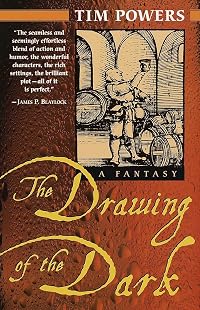
The Drawing of the Dark
by Tim Powers
On This Page
Description
Brian Duffy, aging soldier of fortune, had been hired in Venice by a strange old man who called himself Aurelianus Ambrosius. He was supposed to go to Vienna and act as bouncer at an inn where the fabulous Herzwesten beer was brewed. That was clear enough. But why was he guided and guarded on the trip by creatures from the ancient legends? Why should he be attacked by ifrits and saved by mythical dwarfs? What was so important about the Herzwesten beer to the Fisher King -- whoever he was? show more Why was Duffy plagued by visions of a sword and an arm rising from a lake? And what had a bunch of drunken, ancient Vikings to do with it all? Then there was no time for speculation as Vienna was besieged by the Turkish armies of Suleiman. Duffy found himself drawn into a war of desperation and magic. It was up to him to preserve the West until the drawing of the Dark. show lessTags
Recommendations


























Member Recommendations


Member Reviews
Battles, beer, broken swords and burial mounds.
Tim Powers uses familiar mythological characters and themes to create a truly original story, with the mystical elements of the story slotting seamlessly into the realistic historical setting of Vienna in 1529. I never come away from one of his books thinking I've read it before, nor does he feel the need to stretch a story over twelve volumes when one will do.
While the citizens of Vienna and their hired mercenaries prepare for a siege and wonder why the Turks are attacking so late in the year, other forces are at work. Something older and more mysterious than the clash between the Ottoman Empire and the Holy Roman Empire. The mystical king of the West is wounded and his weakness affects show more the land, so the East is in the ascendant.
The forces of the East head for Vienna, intending to prevent the king's health from being renewed on All Hallow's Eve, while the heroes of the West, as remembered in myth and story across Europe, converge on Vienna to protect the wounded king and make a last stand against the East. They make their headquartes at the millennia-old Herzwesten brewery, which has been protected over the years by a Roman fort, a monastery and then an inn.
The hero of the book, Brian Duffy, is a middle-aged mercenary, battle-hardened, disappointed in love and not keen on believing in the supernatural, even though he has had strange experiences since boyhood. He is relieved to realise that the brocken spectre that he sees on his way across the Alps is a natural phenomenon, and dismayed when it is immediately followed by the ghostly shapes of legendary creatures. He is much better equipped to face the human assassins sent to prevent him from reaching his destination, than the strange creatures, both friendly and unfriendly, that dog his path on his journey from Venice to Vienna. Duffy is an amusingly stroppy hero, never willing to do anything just because Aurelianus tells him to. One of the funniest things in the book is Aurelianus' shock at Duffy's reaction to being given a legendary sword after his own is broken:
". . . if I were going to use this in combat, I'd want the blade narrowed and shortened by at least a foot, the grip shortened by five inches, and a solid bellguard welded around this crosspiece. . . I think I'd be more comfortable with a regular rapier, thanks. Save this for scything wheat.
It wasn't until I'd finished the book that I saw a mention of the 'punning title' in a review, and even then it took me ages before it hit me. And then it occurred to me that I ought to check what Herzwesten means, and discovered that the brewery at the heart of the story is called Westheart or Heart of the West, which makes sense. show less
Tim Powers uses familiar mythological characters and themes to create a truly original story, with the mystical elements of the story slotting seamlessly into the realistic historical setting of Vienna in 1529. I never come away from one of his books thinking I've read it before, nor does he feel the need to stretch a story over twelve volumes when one will do.
While the citizens of Vienna and their hired mercenaries prepare for a siege and wonder why the Turks are attacking so late in the year, other forces are at work. Something older and more mysterious than the clash between the Ottoman Empire and the Holy Roman Empire. The mystical king of the West is wounded and his weakness affects show more the land, so the East is in the ascendant.
The forces of the East head for Vienna, intending to prevent the king's health from being renewed on All Hallow's Eve, while the heroes of the West, as remembered in myth and story across Europe, converge on Vienna to protect the wounded king and make a last stand against the East. They make their headquartes at the millennia-old Herzwesten brewery, which has been protected over the years by a Roman fort, a monastery and then an inn.
The hero of the book, Brian Duffy, is a middle-aged mercenary, battle-hardened, disappointed in love and not keen on believing in the supernatural, even though he has had strange experiences since boyhood. He is relieved to realise that the brocken spectre that he sees on his way across the Alps is a natural phenomenon, and dismayed when it is immediately followed by the ghostly shapes of legendary creatures. He is much better equipped to face the human assassins sent to prevent him from reaching his destination, than the strange creatures, both friendly and unfriendly, that dog his path on his journey from Venice to Vienna. Duffy is an amusingly stroppy hero, never willing to do anything just because Aurelianus tells him to. One of the funniest things in the book is Aurelianus' shock at Duffy's reaction to being given a legendary sword after his own is broken:
". . . if I were going to use this in combat, I'd want the blade narrowed and shortened by at least a foot, the grip shortened by five inches, and a solid bellguard welded around this crosspiece. . . I think I'd be more comfortable with a regular rapier, thanks. Save this for scything wheat.
It wasn't until I'd finished the book that I saw a mention of the 'punning title' in a review, and even then it took me ages before it hit me. And then it occurred to me that I ought to check what Herzwesten means, and discovered that the brewery at the heart of the story is called Westheart or Heart of the West, which makes sense. show less
Since I realized that I never reviewed what is probably my favorite Tim Powers novel, The Drawing of the Dark, I decided to rectify my appalling lack. A secret history, written in what has come to be Powers’ defining style, The Drawing of the Dark is a fusion of European myth with the events of the 1529 Siege of Vienna by Suleiman the Magnificent. In accord with my editorial policy, I am going to discuss what makes the book interesting, which may or may not accord with modern notions of “no spoilers”. Since this book is older than I am, I don’t care.
Written in 1979, The Drawing of the Dark is only Powers’ third novel, but there was a notable increase in polish compared to the two previous books, The Skies DIscrowned and An show more Epitaph in Rust. Unlike his approximate contemporary, Timothy Zahn, Powers usually takes about three years to write one of his novels. That is not pulp speed, but it does allow Powers to do some amazing things in his books that no other author does.
In this book, Powers creates a clash between rival civilizations that has a vaguely Spenglerian cyclicity and also manages to accept and invert Fraser’s The Golden Bough. Balder not only pre-figures Christ, he actively participated in making the future Christendom fertile ground.
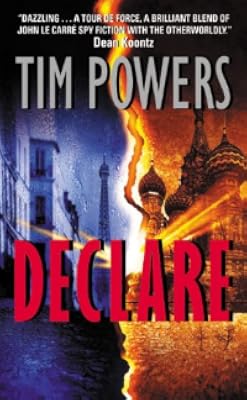
Declare is sometimes talked about as Tim Powers’ first explicitly Catholic novel, but like The Lord of the Rings, the structure of the plot in The Drawing of the Dark follows the liturgical year. An example of why it takes Powers so long to write a book is that he makes a plot that not only follows the cycle of major feasts and saint days, but also matches up with secular history.
I assume that Powers took more liberties with history in The Drawing of the Dark than Declare, as the pivotal and unsubtly named Herzwestern Brewery, which the protagonist Brian Duffy is hired to protect, does not actually exist in Vienna, but the major structure of events in the siege is well-attested, and Powers deftly weaves his story around it. Duffy is hired in Venice by Aurelianus, a shifty old wizard, on Ash Wednesday. Duffy spends most of Lent traveling to Vienna, but he arrives before Easter, when the bock beer will be served at the Brewery.
On Holy Saturday, Duffy and Aurelianus travel to the Viennese underworld, following an attempt to destroy the Herzwestern brewery on Good Friday, when God is dead. Much like the period now known as ordinary time, there is an extended pause over the summer, and things pick up again about Michaelmas. The deadline for the eponymous drawing of the dark is All Hallow’s Eve. Nearly everything that happens in the book follows this pattern.
On the other hand, Brian Duffy is a pretty scandalous character, in the technical sense of Catholic theology. A boozy old soldier, Duffy sees things on his journey to Vienna that he might have attempted to pass off as the effects of delirium tremens if not for the repeated way in the which the pious recoil in horror from him and his otherworldly attendants. Duffy oversees a cremation, in an era in which cremation was generally not practiced by Christians. Indeed, on the very day that Aurelianus hires him, Ash Wednesday, a universal day of fasting and penance, Duffy is fresh from a banquet in Venice, and full of victuals and drink.
On the gripping hand, everything that happens to Duffy displays the touch of Providence. Which is not to say he leads a charmed life, precisely. Duffy repeatedly ends up where is supposed to be, whether he likes it or not. Since Duffy participates in the life of earlier heroes of the West such as Sigmund and Arthur, his life is rather more tragic than he would prefer.
I first read The Drawing of the Dark long before King, Warrior, Magician, Lover, but my appreciation for Powers’ work is deeply rooted in that psychological analysis of the masculine archetypes presented in that book. Aurelianus and Duffy very much are archetypes, so this isn’t really surprising, but Powers manages to write the two men in a way that resonates with me.
They instantiate the magician and the warrior, cleverness and action respectively, but at the same time they also seem like real men who somehow manage to be somewhat fond of each other despite frequently being at odds over how to approach a problem. Much like Tyrus and Casper in Galaxy’s Edge, they work best as a team, but sometimes that is difficult.
This book is also quite funny. Powers has an eye for the absurd and strange things that nonetheless actually happen, and he peppers the text with them. Sometimes we get such observations from Duffy’s black sense of humor, or Aurelianus’ waspish one, but we also get the narrator chiming in as well. That a book with such a deep and subtle crafting can also manage to be laugh out loud funny is a remarkable accomplishment.
The Drawing of the Dark has rewarded me everytime I’ve come back to it. I encourage anyone with a love of chanson de geste, adventure, or myth to give it a try. And hoist a beer for Brian Duffy, who saved that brewery. show less
Written in 1979, The Drawing of the Dark is only Powers’ third novel, but there was a notable increase in polish compared to the two previous books, The Skies DIscrowned and An show more Epitaph in Rust. Unlike his approximate contemporary, Timothy Zahn, Powers usually takes about three years to write one of his novels. That is not pulp speed, but it does allow Powers to do some amazing things in his books that no other author does.
In this book, Powers creates a clash between rival civilizations that has a vaguely Spenglerian cyclicity and also manages to accept and invert Fraser’s The Golden Bough. Balder not only pre-figures Christ, he actively participated in making the future Christendom fertile ground.
Declare is sometimes talked about as Tim Powers’ first explicitly Catholic novel, but like The Lord of the Rings, the structure of the plot in The Drawing of the Dark follows the liturgical year. An example of why it takes Powers so long to write a book is that he makes a plot that not only follows the cycle of major feasts and saint days, but also matches up with secular history.
I assume that Powers took more liberties with history in The Drawing of the Dark than Declare, as the pivotal and unsubtly named Herzwestern Brewery, which the protagonist Brian Duffy is hired to protect, does not actually exist in Vienna, but the major structure of events in the siege is well-attested, and Powers deftly weaves his story around it. Duffy is hired in Venice by Aurelianus, a shifty old wizard, on Ash Wednesday. Duffy spends most of Lent traveling to Vienna, but he arrives before Easter, when the bock beer will be served at the Brewery.
On Holy Saturday, Duffy and Aurelianus travel to the Viennese underworld, following an attempt to destroy the Herzwestern brewery on Good Friday, when God is dead. Much like the period now known as ordinary time, there is an extended pause over the summer, and things pick up again about Michaelmas. The deadline for the eponymous drawing of the dark is All Hallow’s Eve. Nearly everything that happens in the book follows this pattern.
On the other hand, Brian Duffy is a pretty scandalous character, in the technical sense of Catholic theology. A boozy old soldier, Duffy sees things on his journey to Vienna that he might have attempted to pass off as the effects of delirium tremens if not for the repeated way in the which the pious recoil in horror from him and his otherworldly attendants. Duffy oversees a cremation, in an era in which cremation was generally not practiced by Christians. Indeed, on the very day that Aurelianus hires him, Ash Wednesday, a universal day of fasting and penance, Duffy is fresh from a banquet in Venice, and full of victuals and drink.
On the gripping hand, everything that happens to Duffy displays the touch of Providence. Which is not to say he leads a charmed life, precisely. Duffy repeatedly ends up where is supposed to be, whether he likes it or not. Since Duffy participates in the life of earlier heroes of the West such as Sigmund and Arthur, his life is rather more tragic than he would prefer.
I first read The Drawing of the Dark long before King, Warrior, Magician, Lover, but my appreciation for Powers’ work is deeply rooted in that psychological analysis of the masculine archetypes presented in that book. Aurelianus and Duffy very much are archetypes, so this isn’t really surprising, but Powers manages to write the two men in a way that resonates with me.
They instantiate the magician and the warrior, cleverness and action respectively, but at the same time they also seem like real men who somehow manage to be somewhat fond of each other despite frequently being at odds over how to approach a problem. Much like Tyrus and Casper in Galaxy’s Edge, they work best as a team, but sometimes that is difficult.
This book is also quite funny. Powers has an eye for the absurd and strange things that nonetheless actually happen, and he peppers the text with them. Sometimes we get such observations from Duffy’s black sense of humor, or Aurelianus’ waspish one, but we also get the narrator chiming in as well. That a book with such a deep and subtle crafting can also manage to be laugh out loud funny is a remarkable accomplishment.
The Drawing of the Dark has rewarded me everytime I’ve come back to it. I encourage anyone with a love of chanson de geste, adventure, or myth to give it a try. And hoist a beer for Brian Duffy, who saved that brewery. show less
Brian Duffy is strangely recruited in Venice to work as a bouncer in Vienna. His journey is both imperiled and aided by strange mythic beings, and the eventual siege by the Turks provides the reason for his involvement, a fight for the existence of the West, which is somehow deeply connected to the brewing vat of a Vienna inn.
Though the clear West vs. East dichotomy, however current, is a bit shopworn, observing Brian Duffy's determination to be himself, whoever he is the reincarnation of, and to hold to values that require him to accept the imperatives of that inheritance, is still a great experience.
Though the clear West vs. East dichotomy, however current, is a bit shopworn, observing Brian Duffy's determination to be himself, whoever he is the reincarnation of, and to hold to values that require him to accept the imperatives of that inheritance, is still a great experience.
THE DRAWING OF THE DARK is Tim Powers at his most playful.
Sure, he drags a whole bevvy of archetypes on stage as is his wont, with Fisher Kings and wise men to the fore. But we also get drunk Vikings, enchanted swords, wild journeys with high magic through the mountains, more beer, and large-scale battle scenes.
The plot revolves around the secret history of Europe, and a brewery that conjures up the stuff that champions are made of. It's fantasy, Jim, but not as we know it.
It's early powers, so it's not as intricate or tight as his later work, and not as densely lyrical. But it's an awful lot of fun, especially after the Vikings turn up and the mayhem proper gets under way.
And did I mention that Merlin is in there too? And that he has show more a fondness for smoking dried snakes?
Powers invention is fully to the fore in this one, and also his way with a set piece, with the aforementioned trip through the mountains being a highlight, along with a descent deep into the bowels under the brewery with Merlin, where much that is hidden is revealed and the plot, and the beer, thickens.
A fantasy novel about beer, and Arthurian archetypes by one of the greatest novelists of our time? That'll do for me. show less
Sure, he drags a whole bevvy of archetypes on stage as is his wont, with Fisher Kings and wise men to the fore. But we also get drunk Vikings, enchanted swords, wild journeys with high magic through the mountains, more beer, and large-scale battle scenes.
The plot revolves around the secret history of Europe, and a brewery that conjures up the stuff that champions are made of. It's fantasy, Jim, but not as we know it.
It's early powers, so it's not as intricate or tight as his later work, and not as densely lyrical. But it's an awful lot of fun, especially after the Vikings turn up and the mayhem proper gets under way.
And did I mention that Merlin is in there too? And that he has show more a fondness for smoking dried snakes?
Powers invention is fully to the fore in this one, and also his way with a set piece, with the aforementioned trip through the mountains being a highlight, along with a descent deep into the bowels under the brewery with Merlin, where much that is hidden is revealed and the plot, and the beer, thickens.
A fantasy novel about beer, and Arthurian archetypes by one of the greatest novelists of our time? That'll do for me. show less
Wandering Irishman Brian Duffy has a chance meeting with a strange old man in Venice, who hires him to be the bouncer at his old inn and brewery in Vienna. Brian knows a girl in Vienna that he'd like to see again, so he takes the job. Little does he know, events are in motion for a battle that pits East against West, and Vienna is going to be the crux of a legendary battle, in which Duffy will play a major role.
Eh, I liked it well enough. I'm still mad about something that happened with one character (if you've read it, I'll bet you can guess which one), but the plot was solid and it played with various mythologies in a satisfying way.
Eh, I liked it well enough. I'm still mad about something that happened with one character (if you've read it, I'll bet you can guess which one), but the plot was solid and it played with various mythologies in a satisfying way.
My reactions to reading this novel in 2002.
This is the most humorous Powers’ novel I’ve read, a delightful placing of the Arthur myth into the 1529 Siege of Vienna. Powers said in an interview that the book started out as part of a series placing King Arthur in various historic settings. However, the project was cancelled, and Powers used his notes to produce this novel.
Like other historical fantasies I’ve read by Powers, The Anubis Gates and On Stranger Tides, Powers manages, at times, in his unornate prose, to create a sense of place and time. Here, it was in the battle scenes outside of Vienna.
I liked how the humorous book progressively got darker with Brian Duffy finding himself possessed (body switching and possession are show more archetypal Powers’ themes) by Arthur, a player in schemes not to his liking, manipulated by fate and Aurelianus/Merlin to be the champion of the West and the Fisher King. Powers is a master at knowing when to be explicit and when to be, for maximum effect, strategically vague. Aurelianus tells him that the battle for Vienna is the battle between East and West without telling us exactly what that means, what philosophies and moralities are at stake. Powers leaves that up to the reader’s imagination, perhaps informed by his reader’s cultural background.
Eventually, Duffy is present at the accidental death (or, perhaps, suicide or even accidental homicide) of his beloved Epiphany. He survives the end of the novel, but his friends and Epiphany are dead, and he has little to show. His is not even a champion anymore, Arthur’s spirit is in hibernation again, just a solider of fortune.
As usual, Powers combines a lot of mythologies: Finn MacCool, the Fisher King (the Fisher King waxing and waning and connected with the state of the land or vice versa seems to be somewhat inconsistently similar to the dead Balder of Norse mythology who the antique Vikings believe to be buried in Vienna -- it’s MacCool), Arthur, Sigmund from Teutonic myths, Arabic beasts, and Japanese myth. (Powers seems to have made a mistake in his figure of Antoku Ten-No, an actual Japanese child-emperor who died in 1183 not, as Merlin says, eight hundred years before 1529.)
Powers' skill is seeming to reveal all to interest his reader, wow him with his invention, and then introduce even more wonders. He does a nice job with Duffy who really, most of the time, doesn’t want to be a champion, an incarnation of author. I liked the scene where Duffy is escorted across the Alps by mythical creatures. I also liked how Powers evoked the emotion of song Arthur sings through Duffy; Powers does it by telling of events the music resembles but not in a programmatic way. This novel also makes use of Powers’ characteristic notion of blood and grounded magic. I also liked the future King John I of Hungary showing up as Zapolya.
It’s not hard to see why this was the novel that made Powers’ reputation. . show less
Like other historical fantasies I’ve read by Powers, The Anubis Gates and On Stranger Tides, Powers manages, at times, in his unornate prose, to create a sense of place and time. Here, it was in the battle scenes outside of Vienna.
I liked how the humorous book progressively got darker with Brian Duffy finding himself possessed (body switching and possession are
Eventually, Duffy is present at the accidental death (or, perhaps, suicide or even accidental homicide) of his beloved Epiphany. He survives the end of the novel, but his friends and Epiphany are dead, and he has little to show. His is not even a champion anymore, Arthur’s spirit is in hibernation again, just a solider of fortune.
As usual, Powers combines a lot of mythologies: Finn MacCool, the Fisher King (the Fisher King waxing and waning and connected with the state of the land or vice versa seems to be somewhat inconsistently similar to the dead Balder of Norse mythology who the antique Vikings believe to be buried in Vienna -- it’s MacCool), Arthur, Sigmund from Teutonic myths, Arabic beasts, and Japanese myth. (Powers seems to have made a mistake in his figure of Antoku Ten-No, an actual Japanese child-emperor who died in 1183 not, as Merlin says, eight hundred years before 1529.)
Powers' skill is seeming to reveal all to interest his reader, wow him with his invention, and then introduce even more wonders. He does a nice job with Duffy who really, most of the time, doesn’t want to be a champion, an incarnation of author. I liked the scene where Duffy is escorted across the Alps by mythical creatures. I also liked how Powers evoked the emotion of song Arthur sings through Duffy; Powers does it by telling of events the music resembles but not in a programmatic way. This novel also makes use of Powers’ characteristic notion of blood and grounded magic. I also liked the future King John I of Hungary showing up as Zapolya.
It’s not hard to see why this was the novel that made Powers’ reputation. .
Set in 1529 in the months leading up to the during the Turkish siege of Vienna, this novel follows Irishman Brian Duffy as he is hired by a strange old man to be a bouncer for the inn that houses Herzwesten brewery. As it turns out, Duffy is in for a lot more than he may have bargained for, because everyone is more than he seems – including Brian himself – and there’s more at stake in the upcoming invasion than he could imagine.
This is the second Powers novel I’ve read, and I suspect it won’t be the last. He’s a master at drawing fun and fascinating characters, plopping them down into equally interesting plots, and scattering unique twists on various mythologies into the mix. Definitely recommended.
This is the second Powers novel I’ve read, and I suspect it won’t be the last. He’s a master at drawing fun and fascinating characters, plopping them down into equally interesting plots, and scattering unique twists on various mythologies into the mix. Definitely recommended.
Members
- Recently Added By
Lists

Magic Realism
371 works; 52 members

Survey of Fantasy Classics
111 works; 22 members

Cawthorn and Moorcock's Fantasy: The 100 Best Books
110 works; 7 members

Fantasy Masterworks
66 works; 5 members

Modern Arthurian Fiction
237 works; 16 members

Blue Pyramid 1,276 Best Books of All Time
1,248 works; 32 members
Author Information

76+ Works 20,947 Members
Some Editions
Awards and Honors
Notable Lists
Series
Belongs to Publisher Series
Fantasy Masterworks (34)
Common Knowledge
- Canonical title
- The Drawing of the Dark
- Original title
- The Drawing of the Dark
- Original publication date
- 1979-06
- People/Characters
- Brian Duffy; Aurelainus; Fisher King; King Arthur
- Important places
- Vienna, Austria; Venice, Veneto, Italy
- Important events
- Siege of Vienna (1529)
- Epigraph
- If we Christians have our beer,
Nothing's to fear.
- Sir William Ashbless - Dedication
- To Dorothea Kenny
For measures aid and advice,
and, once again,
to my parents,
Noel and Richard Powers - First words
- With almost ludicrous care the old man carried the pitcher of beer across the sunlit room toward the still older man who reclined propped up in a bed by the window.
- Last words
- (Click to show. Warning: May contain spoilers.)From the southeast the Turkish cannons began firing, but the wind blew most of the sound away, and to Merlin it sounded like nothing but plodding footsteps receding away in the distance.
- Blurbers
- Blaylock, James P.; Brin, David; Kushner, Ellen; Budrys, Algis
- Original language
- English
Classifications
- Genres
- Fantasy, Fiction and Literature, General Fiction, Historical Fiction
- DDC/MDS
- 813.54 — Literature & rhetoric American literature in English American fiction in English 1900-1999 1945-1999
- LCC
- PS3566 .O95 .D73 — Language and Literature American literature American literature Individual authors 1961-
- BISAC
Statistics
- Members
- 1,646
- Popularity
- 13,618
- Reviews
- 31
- Rating
- (3.91)
- Languages
- 6 — Czech, English, French, Hebrew, Italian, Spanish
- Media
- Paper, Audiobook, Ebook
- ISBNs
- 22
- ASINs
- 9