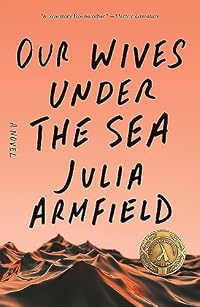
Our Wives Under the Sea
by Julia Armfield
On This Page
Description
"Leah is changed. Months earlier, she left for a routine expedition, only this time her submarine sank to the sea floor. When she finally surfaces and returns home, her wife Miri knows that something is wrong. Barely eating and lost in her thoughts, Leah rotates between rooms in their apartment, running the taps morning and night. As Miri searches for answers, desperate to understand what happened below the water, she must face the possibility that the woman she loves is slipping from her show more grasp. By turns elegiac and furious, wry and heartbreaking, Our Wives Under the Sea is a genre-bending exploration of the depths of love and grief at the heart of a marriage"-- show lessTags
Recommendations








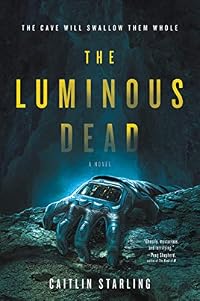

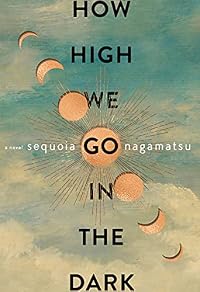
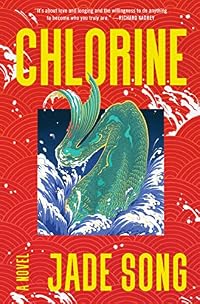



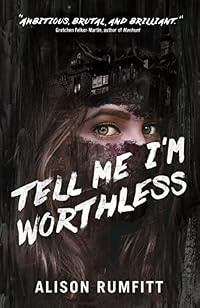






















Member Recommendations


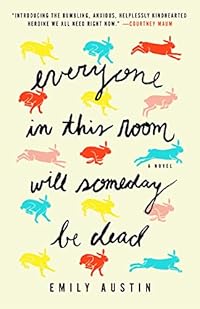
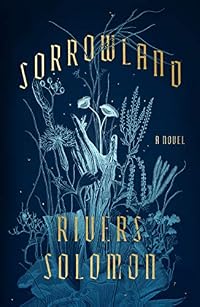
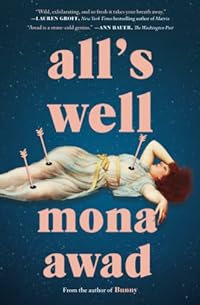
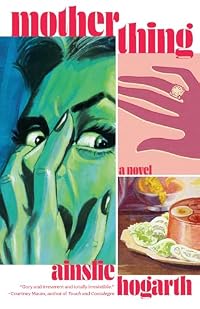
Charon07 Both are at heart love stories and, while they contain fantastical elements, might be disappointing to those who are expecting science fiction or horror. But if you want sad, strange, and beautiful stories that explore what it is we love when we love someone, these are both good choices.
Member Reviews
4.75 stars. the writing in this book is absolutely stunning. i really loved this, right from the start, and it only continued to awe me as it went.
i think a lot of people will read this as a book of horror or science fiction and maybe that's what it is. but to me it's one giant metaphor for how we live when someone we love changes. whether that's just people who change separately so the relationship doesn't fit anymore, or something happens to change someone like a trauma or accident, or if someone transitions maybe. there are so many ways this can be true, and that's why i love reading it this way. we change in all sorts of ways, so many of which could be antithetical to the relationship that worked so well before. maybe it can still show more work, but maybe it can't. and what does it look like as you figure that out? i think it looks kind of like this. for most of the book i thought that miri was unrealistically passive. i wanted to yell at her to just do something, anything, but really, i don't know what's more realistic than being frozen with uncertainty, want, and sadness, as you see the world you had made crumbling. as someone who freezes under pressure myself, i should have given her more leeway throughout the book. i can see just moving forward while trying to hold on to whatever you can of the past and the person you love, not knowing what to do, until you do.
"I see my mother in myself, though less in the sense of inherited features and more in the sense of an intruder poor hidden behind a curtain."
"My heart is a thing thing, these days -- shred of paper blown between the spaces in my ribs."
the only line i didn't like and that really rubbed me the wrong way: "The problem with relationships between women is that neither one of you is automatically the wronged party, which frankly takes a lot of the fun out of an argument." this felt way too pat and frankly not worthy of the rest of the book this is in. show less
i think a lot of people will read this as a book of horror or science fiction and maybe that's what it is. but to me it's one giant metaphor for how we live when someone we love changes. whether that's just people who change separately so the relationship doesn't fit anymore, or something happens to change someone like a trauma or accident, or if someone transitions maybe. there are so many ways this can be true, and that's why i love reading it this way. we change in all sorts of ways, so many of which could be antithetical to the relationship that worked so well before. maybe it can still show more work, but maybe it can't. and what does it look like as you figure that out? i think it looks kind of like this. for most of the book i thought that miri was unrealistically passive. i wanted to yell at her to just do something, anything, but really, i don't know what's more realistic than being frozen with uncertainty, want, and sadness, as you see the world you had made crumbling. as someone who freezes under pressure myself, i should have given her more leeway throughout the book. i can see just moving forward while trying to hold on to whatever you can of the past and the person you love, not knowing what to do, until you do.
"I see my mother in myself, though less in the sense of inherited features and more in the sense of an intruder poor hidden behind a curtain."
"My heart is a thing thing, these days -- shred of paper blown between the spaces in my ribs."
the only line i didn't like and that really rubbed me the wrong way: "The problem with relationships between women is that neither one of you is automatically the wronged party, which frankly takes a lot of the fun out of an argument." this felt way too pat and frankly not worthy of the rest of the book this is in. show less
I loved this book, and it was interesting to read it not very long after having read Jeff VanderMeer's Annihilation. Though comparisons are inevitable, these are very different works, and while I enjoyed VanderMeer's novel, Armfield's strikes at the heart in a very different way. Whereas Annihilation undoubtedly leans into gothic horror, marketing Armfield's book as a horror novel is a mistake, though certainly what happens in it is nothing short of horrific. On the surface Annihilation is about what makes us human and about human tendencies. It's more nuanced than that, but I'm talking about at the most superficial level. Our Wives Under the Sea is about grief. Again, that's superficial but also potent, real, and personal.
When in the show more throes of grief, people often do things that seem strange or "wrong" to those who aren't living under the same influence of shock, dismay, and denial. Miri makes many choices that come off as illogical because they are, but she's as deeply under the ocean of grief and confusion as Leah is deep down in the unknown sea. We will learn that Leah goes through her own process of grieving and missing Miri, both while she is trapped in the submersible and when she is trapped in whatever metamorphosis is overtaking and erasing her.
We don't get any real answers. Who is behind the Centre, what was the real nature of their mission, what is really down there? These things don't matter. What happened and what's happening is what matters. Who or what Miri becomes is as mysterious to Leah as it is to the reader, but the fact of the matter is the whole of this metamorphosis also changes the couple's relationship, and it changes Leah. These things are inevitable; when the onslaught of grief comes there's no stopping it, and it is a solitary, re-defining experience that cuts the griever off from the rest of the world. Whether you lose someone to an accident, an illness, age, or unforgivable behavior, the effect is the same. You can lose someone all at once or over long periods of time. Either way, the very moment in which that loss is finalized always comes a surprise. You find you have lost but also that you have become lost. Left behind isn't a place that feels orienting. You get taken under, left with selected memories of what was and what will no longer ever be.
Armfield's writing is elegant, lyrical, and to me, deeply satisfying even if I keep asking myself why 4 stars and not 5. I don't know, and that is likely appropriate since that's also an element of this work: accepting the not knowing. show less
When in the show more throes of grief, people often do things that seem strange or "wrong" to those who aren't living under the same influence of shock, dismay, and denial. Miri makes many choices that come off as illogical because they are, but she's as deeply under the ocean of grief and confusion as Leah is deep down in the unknown sea. We will learn that Leah goes through her own process of grieving and missing Miri, both while she is trapped in the submersible and when she is trapped in whatever metamorphosis is overtaking and erasing her.
We don't get any real answers. Who is behind the Centre, what was the real nature of their mission, what is really down there? These things don't matter. What happened and what's happening is what matters. Who or what Miri becomes is as mysterious to Leah as it is to the reader, but the fact of the matter is the whole of this metamorphosis also changes the couple's relationship, and it changes Leah. These things are inevitable; when the onslaught of grief comes there's no stopping it, and it is a solitary, re-defining experience that cuts the griever off from the rest of the world. Whether you lose someone to an accident, an illness, age, or unforgivable behavior, the effect is the same. You can lose someone all at once or over long periods of time. Either way, the very moment in which that loss is finalized always comes a surprise. You find you have lost but also that you have become lost. Left behind isn't a place that feels orienting. You get taken under, left with selected memories of what was and what will no longer ever be.
Armfield's writing is elegant, lyrical, and to me, deeply satisfying even if I keep asking myself why 4 stars and not 5. I don't know, and that is likely appropriate since that's also an element of this work: accepting the not knowing. show less
The biggest question is what happens to a marriage when the person you married is no longer the person you married? Leah and Miri find themselves having to come to terms with that question. The two women had always had a conventional marriage of mostly comfortable routine. They shared a love of movies, and genuine happiness at having actually found each other. Then Leah, who is a marine scientist, goes on a three-week submarine expedition on which things go disastrously wrong. She and her shipmates disappear for six months to the bottom of the ocean. Most of the story from here is in Miri’s narrative which is composed mostly from excerpts from Leah’s diary of the mission. We learn of their growing awareness and grudging management show more of the changes and relationship losses they both endured as a result of their prolonged separation. Although Leah returns home, things do not go as Miri had envisioned. From the time of her return there has been an unanticipated transformation, a terrifying dissolution of her human form into something unfamiliar and strange which heavily challenges Miri’s assumptions about the course of what their life was to be for them together. Life for them grows deeper and darker as the novel slowly reveals that the horrific situation Leah tolerated may not have been as accidental as it first was revealed to be. The unearthly circumstances of Leah’s underwater captivity and mutation are horrible enough, but take on new meaning in relation to other, more understandable situations Miri has faced in her life...the metamorphosis her mother underwent during a fatal illness and the sometimes-irritating voices she hears constantly emanating from an unseen neighbor’s television. Is Leah's current circumstance just further along the lines associated with human understanding of loss and endurance...or is it something much less understood or expected? The author does a great job of guiding the reader through the unsure and unexpected parts of the couple’s lives and even sometimes approaching them with ironic humor. We see that the bleakest horror story can often also be a love story. show less
A strange, unsettling, weird, sad love story about the things we’ll do and the things we’ll sacrifice for the one we love. The fantastical/science fictional elements are surreal, dreamlike. I was reminded of those nightmares where something awful is happening and there’s nothing you can do about it—you can’t find your house, you can’t remember something essential, your teeth are falling out—when in real life you’d just ask for directions or see a dentist. So the actual plot is nightmarishly nonsensical. The real strength of this book is the myriad tiny everyday details that make up a loving relationship, that make up our concept of the one we love: the small gestures cherished, fragments of conversations remembered, even show more the fights and annoyances. It’s a love story, above all. show less
I absolutely loved this weird little story, despite the writing being very dark and meandering! The author's turn of phrase is both amusing - 'Carmen typically speaks about him the way one might refer to a degree: a three-year period one has to endure in order to talk with overbearing authority on exactly one subject' - and thought provoking - 'To drop below the surface is still to sink, however intentionally – a simple matter of taking on water, just as drowning only requires you to open your mouth.' And of course, reading this in June 2023, with the loss of the 'Titanic' submersible now confirmed, there is an unintentionally poignant aspect to the text:
“What are they going to do,” she said, her impulse to pray apparently cut show more short by irritation, “send a search party ten thousand feet then throw a rope ladder the rest of the way?”
Told in alternating chapters of first person narration, marine biologist Leah recounts her descent to the depths of the ocean on a research expedition to study life in the 'Hadal Zone', while her wife Miri realises that the woman who returned to her after six months below the sea is no longer the same person, and that she might not be human at all. I loved the sci-fi element, very reminiscent of the excellent Blackwater books by Michael McDowell, but also couldn't stop thinking about the metaphysical subtext of love and loss. Miri has to face being married to a stranger, but also starts to grieve for Leah before she has to let her go. I prefer character-driven narratives, and loved learning about Miri's fractious history with her late mother and Leah's love of the sea, complete with 'did you know?' trivia. Their relationship did seem a little cutesy, full of details about favourite films and personal observations, but the rose-tinted past is balanced by the horror of the present and the pain of the future. And as Miri observes:
I want to explain her in a way that would make you love her, but the problem with this is that loving is something we all do alone and through different sets of eyes.
To paraphrase Johnny Nash, I was left with more questions than answers, but was completely captivated by the story and the characters - I nearly missed my stop while reading on the way to work, and I was only a couple of chapters in! show less
“What are they going to do,” she said, her impulse to pray apparently cut show more short by irritation, “send a search party ten thousand feet then throw a rope ladder the rest of the way?”
Told in alternating chapters of first person narration, marine biologist Leah recounts her descent to the depths of the ocean on a research expedition to study life in the 'Hadal Zone', while her wife Miri realises that the woman who returned to her after six months below the sea is no longer the same person, and that she might not be human at all. I loved the sci-fi element, very reminiscent of the excellent Blackwater books by Michael McDowell, but also couldn't stop thinking about the metaphysical subtext of love and loss. Miri has to face being married to a stranger, but also starts to grieve for Leah before she has to let her go. I prefer character-driven narratives, and loved learning about Miri's fractious history with her late mother and Leah's love of the sea, complete with 'did you know?' trivia. Their relationship did seem a little cutesy, full of details about favourite films and personal observations, but the rose-tinted past is balanced by the horror of the present and the pain of the future. And as Miri observes:
I want to explain her in a way that would make you love her, but the problem with this is that loving is something we all do alone and through different sets of eyes.
To paraphrase Johnny Nash, I was left with more questions than answers, but was completely captivated by the story and the characters - I nearly missed my stop while reading on the way to work, and I was only a couple of chapters in! show less
The Aquanaut's Wife
Review of the Flatiron Books US hardcover edition (July 12, 2022) of the Picador UK hardcover (March 3, 2022)
[I spoiler blocked most of this review as I discuss several elements which are otherwise only gradually revealed during the book. I don't reveal the conclusion though.]
We are what we read, and we review based on what we've read & seen before. So for me, reading Our Wives Under the Sea generated a whole host of allusions that ranged from H.P. Lovecraft's the Old Ones and the Deep Ones, to Kafka's The Metamorphosis and to an early Johnny Depp / Charlize Theron movie "The Astronaut's Wife" (1999). Author Armfield perhaps was even winking at those readers who knew the latter movie, as there is an extended section occupied with the message boards of wives with fictional husbands lost in space. This was a 5-star read for me due to its writing and its extended universe, but it does come with a qualifier that its blend of romance with horror is likely not for all tastes. There is also the need for an Ambiguous Ending Alert ™, as many elements are left open for your interpretation.
NGO grant application writer Miri has been reunited with her wife Leah, a deep-sea researcher who had been missing for 6 months during what had been expected to be only a 3-week deep-sea dive in a 3-person submersible craft with crewmembers Jefka and Matteo. The research mission is a project of the mysterious Centre for Marine Enquiry, mostly ominously described throughout as "The Centre". Although initially helpful during the MIA phase and periodically thereafter with offers of funding for therapy, the Centre becomes uncommunicative and gradually disappears from the scene, as if its temporary purpose had been served.
There are some foreshadowing elements which you should note in the occasional One-Eye symbolism of the Centre and with the One-Eye of the "Old One/Deep One" which the expedition has been apparently sent to encounter. The Centre's purpose is probably the area where you most have to make your own interpretation. The exact fates of all the crewmembers also may not be sufficiently explained to everyone's satisfaction. Does a religious inclination lead to a certain outcome? Does sitting in a circle of artificial flashlights provide an element of protection from outside influence?
What becomes evident after Leah's return is that she is not the same as the person who left. This eventually will lead to a crisis which Miri has to solve. Throughout Miri's portion of the text we hear the stories of their early romance and life together which adds to the heartbreak of the loss which we begin to anticipate is yet to come. Leah's texts are interspersed throughout and we eventually discover that they are from a diary which she was keeping during the 6-month absence and from which we gradually learn the events of the expedition.
See photograph at https://i.guim.co.uk/img/media/6e367b906a3b57d3a6625f6405614b669bfaa641/0_58_672...
Getty Images photograph used for the Guardian review linked below
I found Our WIves Under the Sea to be compulsively readable with its blend of yearning romance and young lust and its gradual unveiling of horror and metamorphosis. Whether intended or not, Armfield's allusions to past horror fictions was an especial attraction for me. Her expressive writing overall though is the main reason for my rating. There is nothing overt about the COVID lockdown in this book but it was probably written during that time, and in a way it is a memento and memoriam to those periods of isolation which we went through and the friends and family which we may have lost along the way.
Other Reviews
Deep Emotions by Aida Edemarium in The Guardian, March 9, 2022.
Trivia and Link
There is an earlier interview with author Julia Armfield made at the time of the release of her first book, the short story collection [book:Salt Slow|42870948] (2019), which you can read at The Guardian here May 30, 2019. show less
Review of the Flatiron Books US hardcover edition (July 12, 2022) of the Picador UK hardcover (March 3, 2022)
[I spoiler blocked most of this review as I discuss several elements which are otherwise only gradually revealed during the book. I don't reveal the conclusion though.]
We are what we read, and we review based on what we've read & seen before. So for me, reading Our Wives Under the Sea generated a whole host of allusions that ranged from H.P. Lovecraft's the Old Ones and the Deep Ones, to Kafka's The Metamorphosis and to an early Johnny Depp / Charlize Theron movie "The Astronaut's Wife" (1999). Author Armfield perhaps was even winking at those readers who knew the latter movie, as there is an extended section
NGO grant application writer Miri has been reunited with her wife Leah, a deep-sea researcher who had been missing for 6 months during what had been expected to be only a 3-week deep-sea dive in a 3-person submersible craft with crewmembers Jefka and Matteo. The research mission is a project of the mysterious Centre for Marine Enquiry, mostly ominously described throughout as "The Centre". Although initially helpful during the MIA phase and periodically thereafter with offers of funding for therapy, the Centre becomes uncommunicative and gradually disappears from the scene, as if its temporary purpose had been served.
There are some foreshadowing elements which you should note in the occasional One-Eye symbolism of the Centre and with the One-Eye of the "Old One/Deep One" which the expedition has been apparently sent to encounter. The Centre's purpose is probably the area where you most have to make your own interpretation. The exact fates of all the crewmembers also may not be sufficiently explained to everyone's satisfaction. Does a religious inclination lead to a certain outcome? Does sitting in a circle of artificial flashlights provide an element of protection from outside influence?
What becomes evident after Leah's return is that she is not the same as the person who left. This eventually will lead to a crisis which Miri has to solve. Throughout Miri's portion of the text we hear the stories of their early romance and life together which adds to the heartbreak of the loss which we begin to anticipate is yet to come. Leah's texts are interspersed throughout and we eventually discover that they are from a diary which she was keeping during the 6-month absence and from which we gradually learn the events of the expedition.
See photograph at https://i.guim.co.uk/img/media/6e367b906a3b57d3a6625f6405614b669bfaa641/0_58_672...
Getty Images photograph used for the Guardian review linked below
I found Our WIves Under the Sea to be compulsively readable with its blend of yearning romance and young lust and its gradual unveiling of horror and metamorphosis. Whether intended or not, Armfield's allusions to past horror fictions was an especial attraction for me. Her expressive writing overall though is the main reason for my rating. There is nothing overt about the COVID lockdown in this book but it was probably written during that time, and in a way it is a memento and memoriam to those periods of isolation which we went through and the friends and family which we may have lost along the way.
Other Reviews
Deep Emotions by Aida Edemarium in The Guardian, March 9, 2022.
Trivia and Link
There is an earlier interview with author Julia Armfield made at the time of the release of her first book, the short story collection [book:Salt Slow|42870948] (2019), which you can read at The Guardian here May 30, 2019. show less
I absolutely adored this book. A beautiful exploration of horror, body horror, the depths of the ocean, and queer love.
Members
- Recently Added By
Published Reviews
Death and the ocean beguile Julia Armfield’s debut novel Our Wives Under the Sea, a work that plumbs with striking subtlety what it feels like to live with the mystery of both. The book explores the transformations that test intimacy, ones that are perhaps even more unsettling than the sure fact of death....Blending elements of horror, gothic, and realism, Our Wives Under the Sea takes the show more bottom of the ocean as a speculative topography on which to explore the terrors of the mysterious gravitational pull we exert on each other....The ocean intrigues us for the same reasons love does: the challenge of knowing someone to their depths seduces us despite — or maybe because of — its seeming impossibility. Armfield’s work is an elliptical, leaky manual on how to live in the half-known life: the in-betweens of intimacy, the flux of not knowing, and the waves of surrealism that inundate the everyday. show less
added by Lemeritus
This is a novel in which one of the narrators says, “For a long time nothing happened,” and she means it. There is little movement here in the fetid atmosphere that drifts between convalescence and hospice.... “Panic is a misuse of oxygen,” Leah warns, but by the climax of this eerie novel, I was misusing it with abandon.
added by Lemeritus
A turn toward horror at the end will satisfyingly rachet up the tension for some readers but may discomfit others. Told in stunning language, Armfield’s heartrending story of two people forced apart by trauma is enough.
added by Lemeritus
Lists

Recommend the 20 best books you've read in the last five years
2,167 works; 601 members

Female Author
1,235 works; 67 members

Top Five Books of 2022
736 works; 272 members

Books Read in 2023
5,547 works; 145 members

LGBTQ+ Speculative Fiction
818 works; 51 members

Books Read in 2022
5,164 works; 113 members

GoodReads Horror Choice Awards
160 works; 4 members

Horror Spotlight Readalong
37 works; 2 members

2023 Hugo Awards -- Eligible Works -- Novels
70 works; 21 members
Books That Made Us Cry
278 works; 145 members

Top Five Books of 2023
767 works; 317 members

Top Five Books of 2024
795 works; 264 members

Books With Water Words in the Title
186 works; 12 members
naturallogg's 2025 in Books
50 works; 1 member

Books Mentioned in the A+ Autostraddle Pop Up Discords Nov 2022 & Dec 2022
223 works; 3 members

Books Read in 2026
1,684 works; 62 members

SFF standalone novellas with female protagonists
101 works; 4 members
Author Information

6+ Works 2,589 Members
Some Editions
Awards and Honors
Awards
Distinctions
Notable Lists
Work Relationships
Is contained in
Common Knowledge
- Canonical title
- Our Wives Under the Sea
- Original publication date
- 2022
- People/Characters
- Miri; Leah
- Epigraph
- Consider the subtleness of the sea; how its most dreaded creatures glide under water, unapparent for the most part, and treacherously hidden beneath the loveliest tints of azure. Consider also the devilish brilliance and beau... (show all)ty of many of its most remorseless tribes, as the dainty embellished shape of many species of sharks. Consider, once more, the universal cannibalism of the sea; all whose creatures prey upon each other, carrying on eternal war since the world began.
Consider all this; and then turn to the green, gentle, and most docile earth; consider them both, the sea and the land; and do you not find a strange analogy to something in yourself? For as this appalling ocean surrounds the verdant land, so in the soul of man there lies one insular Tahiti, full of peace and joy, but encompassed by all the horrors of the half-known life. God keep thee! Push not off from that isle, thou canst never return!
—Moby-Dick
ELLEN BRODY: There's a clinical name for it, isn't there?
MARTIN BRODY: Drowning.
—Jaws - Dedication
- For Rosalie, on dry land and elsewhere
- First words
- The deep sea is a haunted house: a place in which things that ought not to exist move about in the darkness.
- Quotations
- “I guess it must be weird,” she says—the sweet plum of her voice, the way her vowels seem to take up more space than the shape of her mouth allows—“living with someone again after such a long absence. I guess it mus... (show all)t be weird,” she says, “having to share your space.”
The problem with relationships between women is that neither one of you is automatically the wronged party, which frankly takes a lot of the fun out of an argument.
Rather in the way that it's very easy to kill an orchid, it often seemed little short of inevitable.
Miri said this to me once: Every horror movie ends the way you know it will. If you're watching a movie about werewolves, you can be almost certain your hero will become one by the end. If you're watching a movie about vampir... (show all)es, same thing. Ghosts, too, I think, if the hero wasn't already a ghost to begin with. I thought about this a little, at the end of things.
I'm a Catholic, I said at one point, so I believe in punishment but not reward.
Something I learned very quickly was that grieving was complicated by lack of certainty, that the hope inherent in a missing loved one was also a species of curse.
Grief is selfish: we cry for ourselves without the person we have lost far more than we cry for the person—but more than that, we cry because it helps. The grief process is also the coping process and if the grief is frozen... (show all) by ambiguity, by the constant possibility of reversal, then so is the ability to cope. It's not grief, one woman posted, it's more like a haunting.
The afternoon was strange-colored, inconsistent, the way the sky goes dark before a thunderstorm but the grass is still lit up and you can't figure out where the light is coming from. - Last words
- (Click to show. Warning: May contain spoilers.)I know all this, and I know that as my head cleared, finally, of everything, sunken thoughts receding with the thing that we had left below, I thought to myself Miri Miri Miri and I waited for the ocean to end.
- Blurbers
- Waters, Sarah; Arnett, Kristen; Johnson, Daisy; Attenberg, Jami; Welch, Florence; Mukherjee, Neel (show all 7); Lazarin, Danielle
- Canonical DDC/MDS
- 823.92
- Canonical LCC
- PR6101.R638
Classifications
Statistics
- Members
- 1,772
- Popularity
- 12,312
- Reviews
- 80
- Rating
- (3.81)
- Languages
- 5 — Dutch, English, Italian, Polish, Spanish
- Media
- Paper, Audiobook, Ebook
- ISBNs
- 18
- ASINs
- 6