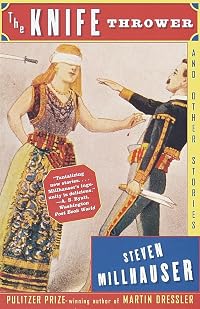
The Knife Thrower
by Steven Millhauser
On This Page
Description
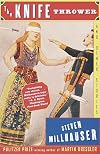
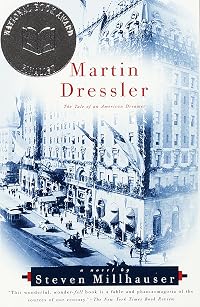
Best known for his Pulitzer Prize-winning novel,Martin Dressler: The Tale of an American Dreamer,Steven Millhauser has always been most at home with the short story. This new collection of twelve stories puts his rich and varied talents on dazzling display, demonstrating why this singular writer is acclaimed as one of the most subtle, magical, and penetrating explorers of the American imagination. Whether chronicling the phastasmagoric excesses of an amusement park entrepreneur in "Paradise show more Park," or the dangerously addictive delights of the largest department store ever conceived in "The Dream of the Consortium," Millhauser's fictions explore not only the magnificent obsessions of the unfettered imagination, but also the darker, subterranean desires that fuel them. From the odd corners of life that persist below the sunlit world in "Beneath the Cellars of Our Town," to views from the heavens in "Flying Carpets" and "Balloon Flight, 1870," he takes us on a tour beyond the everyday, to realms we recognize only in dreams. In "The Way Out," an illicit affair leads an exhausted lover into a sunrise appointment with death. In "Claire de Lune" and "The Sisterhood of Night," he magically evokes the enigmatic otherness of the adolescent soul. Like the knife thrower in the title story, Millhauser's fictions beguile and beckon us into hitherto unexplored realms, where spectral truths, enchanting vistas, and the mysteries of art await us. show lessTags
Recommendations









Member Reviews
An amazing collection of surreal short stories that tread the border between normal and supernatural, generally on the topic of what's real and our desires. Only one or two have explicitly supernatural elements but they all have something that feels close to it - you're never sure if it's something that could actually happen or if it's fantasy. I shelved it as "horror" even though it's not really because it comes close a lot - it reminds me a bit of someone like Ligotti, with far fewer horror elements but with similar topics, questioning our hold on reality and how solid our attachment society really is. His writing style reminds me of Kafka a bit with the way the sentences are structured.
Lots of good stories. His descriptions of things show more are great and highly imaginative so even the stories which are mostly description and don't really have a climax - Paradise Park and The Dream of the Consortium - are fascinating and make you think a lot on the idea behind them (a huge sophisticated amusement park and a giant department store, respectively). Maybe the highlight is "Kaspar Hauser Speaks", a short speech from the historical figure (although from a time after he'd died in real life) which contains a section which I felt perfectly encapsulated the feeling of being different in a way that forcefully separates you from others.
Other people have mentioned that he recycles themes a bit and I wouldn't disagree - some of the stories are similar to the others. But he brings a lot of new imagery and ideas to each one and personally they're themes that fascinate me so I didn't mind at all, although it'd maybe pall over multiple books.
A great collection if you're at all interested in surreal short fiction. show less
Lots of good stories. His descriptions of things show more are great and highly imaginative so even the stories which are mostly description and don't really have a climax - Paradise Park and The Dream of the Consortium - are fascinating and make you think a lot on the idea behind them (a huge sophisticated amusement park and a giant department store, respectively). Maybe the highlight is "Kaspar Hauser Speaks", a short speech from the historical figure (although from a time after he'd died in real life) which contains a section which I felt perfectly encapsulated the feeling of being different in a way that forcefully separates you from others.
Other people have mentioned that he recycles themes a bit and I wouldn't disagree - some of the stories are similar to the others. But he brings a lot of new imagery and ideas to each one and personally they're themes that fascinate me so I didn't mind at all, although it'd maybe pall over multiple books.
A great collection if you're at all interested in surreal short fiction. show less
Aun los que nos rendimos ante estas obras sentimos cierto desasosiego, pues nos perturban como placeres prohibidos, como crímenes secretos.
Steven Millhauser es todo un ilusionista. Te muestra una historia que no ha sido pero que pudo haber sido, y lo sabes, aunque al leerla estás más que satisfecho de que te engañe durante lo que dura uno de sus cuentos. Sus historias hablan de hechos, lugares y personajes que nunca existieron, con ciertos elementos de realismo mágico, o directamente elementos fantásticos. Y todo ello rodeado de un halo de nostalgia que lo impregna todo, de tal manera que querrías haber visto algunos de los autómatas de los que habla, por ejemplo. Pero si hay una característica que defina la prosa y las show more historias de Millhauser, esa es el desasosiego, impregnado de ciertos placeres oscuros como ese lanzador de cuchillos de uno de sus relatos.
No cabe duda de que Millhauser es un escritor que desciende de clásicos como Poe y Hawthorne, lo que queda patente en su manera de escribir, elegante, nítida y elocuente. Otra característica a destacar de los cuentos de Millhauser es que no es de los que se guardan un golpe de efecto para el final de los mismos. Su maestría radica en ir calándonos con la trama durante todo su desarrollo, de tal modo que el cuento al completo es la sorpresa en sí. En mi opinión, esto no es nada fácil.
Estos son los doce relatos contenidos en ’El lanzador de cuchillos y otros cuentos’:
El lanzador de cuchillos, en el que asistimos al esperado espectáculo de Hensch, ¡el lanzador de cuchillos!, capaz de realizar las cosas más increíbles con sus afiladas dagas. Millhauser, con un pulso narrativo soberbio, no deja de perturbarnos.
Una visita, en el que el protagonista es invitado por el que fue su mejor amigo, al que no ve desde hace nueve años, a visitar su hogar y conocer a su esposa. Extraño cuento, donde el elemento fantástico es un pretexto para mostrarnos la peculiar vida del amigo.
La Hermandad de la Noche, en el que asistimos a la preocupación de toda una ciudad por el extraño comportamiento de algunas de sus muchachas. Y es que hay mucha confusión: ¿qué hacen durante esas noches en el bosque, rituales demoníacos, eróticos, estéticos? Poco a poco, con una particular estructura narrativa por parte de Millhauser, que casi parece un artículo periodístico (al más puro estilo ‘Las vírgenes suicidas’, de Eugenides), iremos sabiendo más sobre estas jóvenes. Magnífico relato.
La salida, en el que un hombre sorprende a Harter, el protagonista, con su mujer. ¿Qué decidirá hacer este hombrecillo? ¿Y Harter, qué salida tiene? Muy buen cuento.
Alfombras mágicas, en el que el mayor deseo del protagonista, así como de sus amigos, es tener una alfombra con la que surcar los cielos. Un cuento maravilloso, que destila pura nostalgia por una época pasada.
El nuevo teatro de autómatas, en el que sabremos de la pasión de toda una ciudad por la fabricación y el espectáculo con autómatas, arte que está al alcance de unos pocos maestros. Hasta que aparece un genio atípico, Heinrich Graum, y sus nuevas ideas. Gran relato.
Clair de lune, en el que una noche de verano, un chico de quince años no puede conciliar el sueño, quizás debido a la extraordinaria luminosidad de la luna, así que decide salir a pasear. Buen cuento, también de corte nostálgico.
El sueño del consorcio, en el que un consorcio se hace con unos grandes almacenes, ante el escepticismo de algunos ciudadanos. Las extraordinarias ideas de los nuevos dueños no se harán esperar. Magnífico relato, que recuerda a su novela ‘Martin Dressler’, ganadora del Premio Pulitzer.
Vuelo en globo, 1870, en el que acompañamos a un soldado francés y a su piloto, mientras sobrevuelan en globo las líneas prusianas. Quizás el cuento más flojo.
Paradise Park, en el que conocemos la increíble historia del parque de atracciones Paradise Park, desde su inauguración en 1912, hasta su terrible destrucción a causa de un incendio en 1924. Sarabee, su artífice, fue todo un visionario, capaz de dar forma a las más fantásticas atracciones, con un único afán, superarse continuamente. Gran relato.
Habla Kaspar Hauser, en el que asistimos a la conferencia impartida en Nuremberg por Kaspar Hauser, en la que nos contará su historia, partiendo del hecho de su terrible encierro en una torre a oscuras durante años. Nueva versión del mito del pequeño salvaje. Buen relato.
Bajo los sótanos de nuestra ciudad, en el que se nos relata la afición que tiene una ciudad por sus túneles, de origen indio, que más que una curiosidad son un refugio, una obsesión. Buen cuento, donde brilla la imagen de esos ancianos faroleros alumbrando los pasadizos.
Solo puedo decir una cosa de Millhauser: haceros con cualquier libro que lleve su nombre. No os arrepentiréis.
En los largos veranos de mi infancia, los juegos estallaban súbitamente, ardían con un resplandor y desaparecían para siempre. Los veranos eran tan largos que poco a poco llegaban a durar más que el año entero, se estiraban lentamente más allá del borde de nuestras vidas, pero en cada instante de su vastedad estaban por terminar, pues eso hacían los veranos: nos acicateaban con el final, marchaban siempre hacia la larga sombra que arrojaba el final de las vacaciones.show less
My father had taught me not to believe in stories about Martians and spaceships, and these tales were like those stories: even as you refused to believe them, you saw them, as if the sheer effort of not believing them made them glow in your mind.
-The Flying Carpets
In a world dense with understanding, oppressive with explanation and insight and love, the members of the silent sisterhood long to evade definition, to remain mysterious and ungraspable. Tell us! we cry, our voices shrill with love. Tell us everything! Then we will forgive you. But the girls do not wish to tell us anything, they don't wish to be heard at all.
- The Sisterhood of Night
I am having the hardest time pulling together what I want to say about this book, so I show more apologize in advance if any of this is unclear, and I will come back and do this better if better ever comes together.
Remember when albums mattered? When you had to buy music not song by song but as a collection of connected songs? How some artists would actually arrange the whole album as a piece of collective art above and beyond the particular songs themselves? That is this book. The whole work taken together comprises a meditation much greater than the parts. Some of the parts don't even work all that well without the whole.
The theme of the collection emerged with surprising clarity as I was fighting with "Paradise Park," which at first appeared to be a retread of "The Dream of the Consortium." But as I picked apart analogies and worked the puzzles, it turned out to be a revisit to "The New Automaton Theater" and "The Knife Thrower." Then after a brief WTH moment with "Kaspar Hauser Speaks," Millhauser turns full back to the thread of the theme and expands it out with "Beneath the Cellars of Our Town." By this point the book is no longer an anthology of short stories. It is an extended meditation on imagination, particularly the creation and consumption of art and the relationships between art, artist, and consumer (reader). It is one of those books that almost need to be reread as soon as finished, because once its theme emerges in the last pages, the whole work need re-examination with the new perspective in mind. (I am going to wait a bit on that myself, but I will do it eventually.) There is also a nice rhythm to this collection. The stories move from night to day and back again in an almost unbroken progression. There is also a pattern of rising and falling, from flights to explorations of subterranean worlds that begs for a closer examination. The seams of the work are showing in places, and the repetitive nature of the anthology is a little frustrating, but between the meat of the theme and the beauty of the writing (particularly "Flying Carpets," "Clair de Lune," "The Dream of the Consortium," and "Balloon Flight, 1870"), there is really very little to complain about here. I loved it even the moments of frustration.
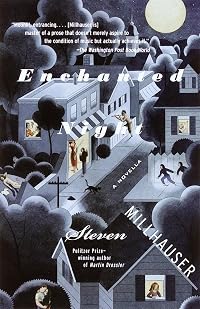
(I see in other reviews that some have dismissed this as derivative of [a:Italo Calvino|155517|Italo Calvino|https://d.gr-assets.com/authors/1403100215p2/155517.jpg] and recommended [b:Invisible Cities|9809|Invisible Cities|Italo Calvino|https://d.gr-assets.com/books/1388395463s/9809.jpg|68476] instead. I do very much want to read that (not just because I get Lorde's "Team" stuck in my head when I hear the title), but I think I will read [b:Dangerous Laughter|1540810|Dangerous Laughter|Steven Millhauser|https://d.gr-assets.com/books/1437485127s/1540810.jpg|1533013] and [b:Enchanted Night|229579|Enchanted Night|Steven Millhauser|https://d.gr-assets.com/books/1403185401s/229579.jpg|222327] first. There is nothing new under the sun, and revisiting the same concepts from a different angle does not strike me as an immense burden.) show less
-The Flying Carpets
In a world dense with understanding, oppressive with explanation and insight and love, the members of the silent sisterhood long to evade definition, to remain mysterious and ungraspable. Tell us! we cry, our voices shrill with love. Tell us everything! Then we will forgive you. But the girls do not wish to tell us anything, they don't wish to be heard at all.
- The Sisterhood of Night
I am having the hardest time pulling together what I want to say about this book, so I show more apologize in advance if any of this is unclear, and I will come back and do this better if better ever comes together.
Remember when albums mattered? When you had to buy music not song by song but as a collection of connected songs? How some artists would actually arrange the whole album as a piece of collective art above and beyond the particular songs themselves? That is this book. The whole work taken together comprises a meditation much greater than the parts. Some of the parts don't even work all that well without the whole.
The theme of the collection emerged with surprising clarity as I was fighting with "Paradise Park," which at first appeared to be a retread of "The Dream of the Consortium." But as I picked apart analogies and worked the puzzles, it turned out to be a revisit to "The New Automaton Theater" and "The Knife Thrower." Then after a brief WTH moment with "Kaspar Hauser Speaks," Millhauser turns full back to the thread of the theme and expands it out with "Beneath the Cellars of Our Town." By this point the book is no longer an anthology of short stories. It is an extended meditation on imagination, particularly the creation and consumption of art and the relationships between art, artist, and consumer (reader). It is one of those books that almost need to be reread as soon as finished, because once its theme emerges in the last pages, the whole work need re-examination with the new perspective in mind. (I am going to wait a bit on that myself, but I will do it eventually.) There is also a nice rhythm to this collection. The stories move from night to day and back again in an almost unbroken progression. There is also a pattern of rising and falling, from flights to explorations of subterranean worlds that begs for a closer examination. The seams of the work are showing in places, and the repetitive nature of the anthology is a little frustrating, but between the meat of the theme and the beauty of the writing (particularly "Flying Carpets," "Clair de Lune," "The Dream of the Consortium," and "Balloon Flight, 1870"), there is really very little to complain about here. I loved it even the moments of frustration.
(I see in other reviews that some have dismissed this as derivative of [a:Italo Calvino|155517|Italo Calvino|https://d.gr-assets.com/authors/1403100215p2/155517.jpg] and recommended [b:Invisible Cities|9809|Invisible Cities|Italo Calvino|https://d.gr-assets.com/books/1388395463s/9809.jpg|68476] instead. I do very much want to read that (not just because I get Lorde's "Team" stuck in my head when I hear the title), but I think I will read [b:Dangerous Laughter|1540810|Dangerous Laughter|Steven Millhauser|https://d.gr-assets.com/books/1437485127s/1540810.jpg|1533013] and [b:Enchanted Night|229579|Enchanted Night|Steven Millhauser|https://d.gr-assets.com/books/1403185401s/229579.jpg|222327] first. There is nothing new under the sun, and revisiting the same concepts from a different angle does not strike me as an immense burden.) show less
Imagine if Edgar Allen Poe were writing today, and you'll get an idea of the way Millhauser writes. This is a great introduction to the author. If you like this, you can tackle "Martin Dressler" next.
Ratings
Members
- Recently Added By
Lists

"We" narration
49 works; 2 members
Author Information

45+ Works 5,693 Members
Awards and Honors
Notable Lists
Work Relationships
Common Knowledge
- Canonical title
- The Knife Thrower
- Original publication date
- 1999
- Dedication
- To Steve Stern
- Last words
- (Click to show. Warning: May contain spoilers.)You who mock us, you laugh laughters and surface crawlers, you restless sideways-sliders and flatland voyagers - don't we irk you, don't we exasperate you, we mole-folk, we pale amphibians?
Classifications
Statistics
- Members
- 435
- Popularity
- 71,033
- Reviews
- 5
- Rating
- (3.92)
- Languages
- English, French, Russian, Spanish
- Media
- Paper, Ebook
- ISBNs
- 10
- UPCs
- 1
- ASINs
- 1