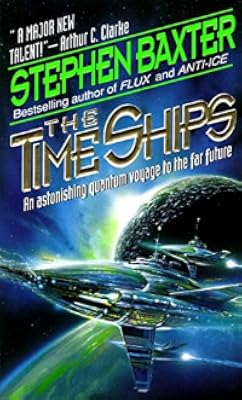
The Time Ships
by Stephen Baxter
On This Page
Description
The highly acclaimed sequel to H G Wells's THE TIME MACHINE, from the heir to Arthur C. Clarke. Written to celebrate the centenary of the publication of H G Wells's classic story The Time Machine, Stephen Baxter's stunning sequel is an outstanding work of imaginative fiction. The Time Traveller has abandoned his charming and helpless Eloi friend Weena to the cannibal appetites of the Morlocks, the devolved race of future humans from whom he was forced to flee. He promptly embarks on a second show more journey to the year AD 802,701, pledged to rescue Weena. He never arrives! The future was changed by his presence... and will be changed again. Hurled towards infinity, the Traveller must resolve the paradoxes building around him in a dazzling temporal journey of discovery. He must achieve the impossible if Weena is to be saved. show lessTags
Recommendations

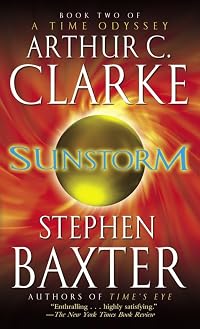
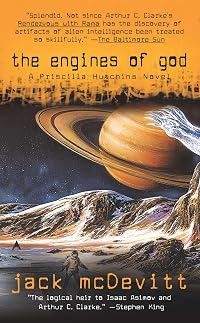
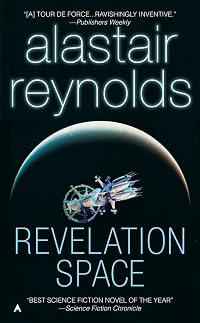
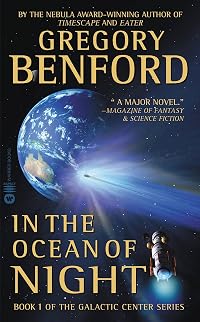



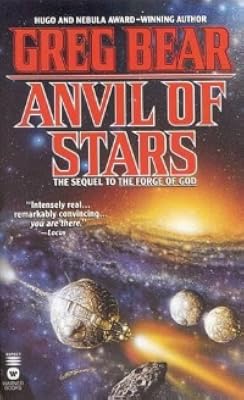
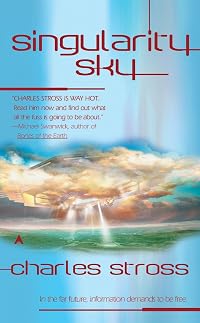
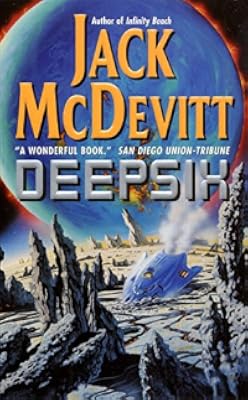

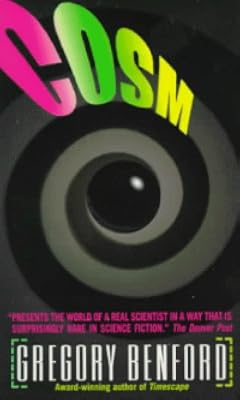
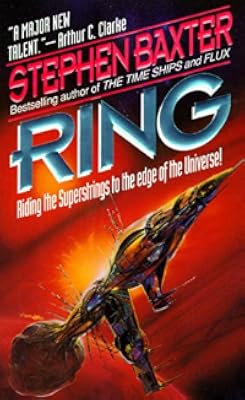
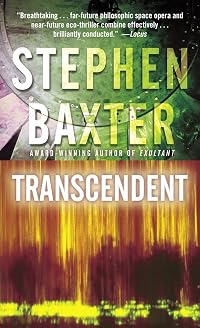
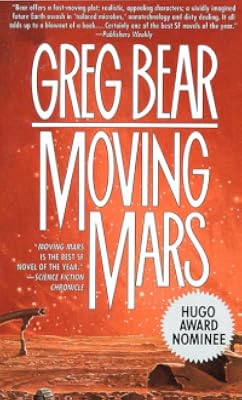
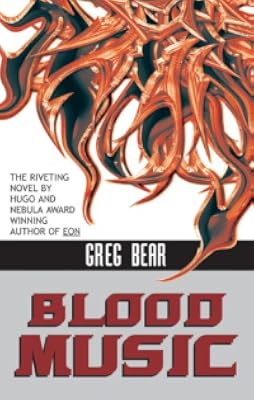




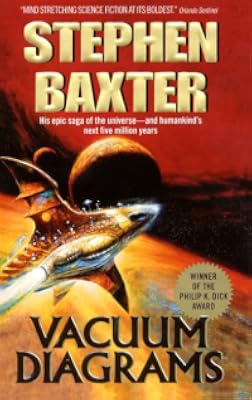

Member Recommendations
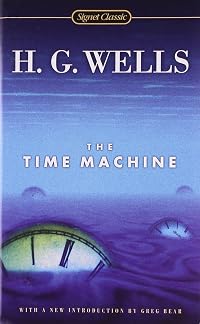
sturlington The Time Ships is a sequel to The Time Machine.
Member Reviews
This was a splendid sequel to The Time Machine, dealing with the knock on effects throughout Time of the nameless Traveller's first trip forwards to 802701. As per Wells, whose writing style this closely resembles, this is more a novel of ideas than non-stop action. This is fine, though at times, especially in The Time Ships section, I thought this was perhaps a little overdone. There is one major spoiler on p193 of my edition where it says: "I could not have relished my breakfast more if I had known - which I did not - that it was the last nineteenth century meal I should ever enjoy". Great stuff.
Time travel has always been my favorite genre of science fiction, yet it is probably one of the hardest to get right. Aside from the science of time travel, there's the eternal paradoxes that time travel poses - such as how one can travel to the past, effect change (after all, where's the fun in traveling through time if you can't muck about with it?), and not create an impossible conundrum in the process. Wells's classic The Time Machine neatly stepped around the whole problem by having his unnamed Traveler voyage into the future rather than the past. By contrast, Stephen Baxter tackles these issues head-on in this follow-up to Wells's story, a worthy sequel to a landmark work of science fiction.
Picking up neatly where Wells left off, show more Baxter's tale ranges far into the future and back to the beginning of Time itself, encountering realities profoundly affected by the invention of time travel. Accompanying the Traveler is Nebogipfel, a Morlock unlike any invented by Wells. Nebogipfel is a sensitive character who supplies the modern scientific explanations to what the 19th century narrator encounters, and the friendship that emerges between the two of them is one of the highlights of this book,
Nebogipfel also serves to answer many of the traditional paradoxes of time travel that appear in the course of their travels in time. Though many will find the explanations unsatisfactory, Baxter should be commended for confronting them head-on and creating a much richer novel in the process. Fans of the original novel will also respect his homage to Wells and the respect that Baxter pays to many of the Wells's ideas, though in the end this is a must-read for any fan of brilliantly imagined, well-written science fiction. show less
Picking up neatly where Wells left off, show more Baxter's tale ranges far into the future and back to the beginning of Time itself, encountering realities profoundly affected by the invention of time travel. Accompanying the Traveler is Nebogipfel, a Morlock unlike any invented by Wells. Nebogipfel is a sensitive character who supplies the modern scientific explanations to what the 19th century narrator encounters, and the friendship that emerges between the two of them is one of the highlights of this book,
Nebogipfel also serves to answer many of the traditional paradoxes of time travel that appear in the course of their travels in time. Though many will find the explanations unsatisfactory, Baxter should be commended for confronting them head-on and creating a much richer novel in the process. Fans of the original novel will also respect his homage to Wells and the respect that Baxter pays to many of the Wells's ideas, though in the end this is a must-read for any fan of brilliantly imagined, well-written science fiction. show less
My reactions upon reading this book in 1996. Spoilers follow.
I liked this book but not so much for its nifty ideas as its explicit and implicit comments on H. G. Wells’ sf.
To be sure there is a very broad vista of adventure here as the Time Traveler returns from the world of the Eloi and Morlocks of Wells’ The Time Machine and then goes into an alternate version of that future back to an alternate version of his past into an alternate version of Europe circa 1938 then back to the Paleocene then in to the far future back to the beginning of time and back to the Time Traveler’s world then a final return to The Time Machine world. Along the way a lot of philosophical and speculative science ideas are introduced but, for my mind show more (perhaps unfairly since most sf authors steal their ideas from science), their impact is blunted by being introduced to them before: the multiple world interpretation of quantum mechanics which allows time travel into the past and creation of seeming paradoxes, the idea of machine intelligence and its evolution, the Morlock Dyson sphere. The multiple world quantum interpretation and circular nature of the Time Traveler’s epic journey reminded me of George Zebrowski’s Stranger Suns and Poul Anderson’s “Flight to Forever” respectively.
I did find some startling new notions: the creation of life from scratch via a logical progression in nanotechnology, the purpose of sentient life is to acquire knowledge (perhaps beyond the universe), the idea of Kurt Godel that – as no system of logic can be free of unprovable statements – no ultimate meaning of a timeline must be sought outside in the Multiplicity, perhaps Baxter’s Watcher is the mind that observes the Multiplicity.
However, I liked Baxter’s comments on and homage to Wells’ work from the description of the journalist (the Writer of The Time Machine) to the brief allusion to the red weed of The War of the Worlds, the huge tanks a la “The Land Ironclads” to the aerial wars of The War in the Air and The Shape of Things to Come. I liked Baxter maintaining, in their physical separation on the Dyson Sphere, the distance between Eloi and Morlock. I liked the Time Traveler deciding that, despite his epic journey and being reconstituted from the dead by ant-like machine intelligences, he decides that his actions in the Multiplicity have meaning, to revel in the physicality of his existence, and to find ultimate happiness and satisfaction in friendship and his love of Weena (whose death in The Time Machine he reverse). (His actions have quite a lot of meaning but he decides that all human lives have meaning. He also embarks on a course of attempting to alter the Eloi-Morlock relationship.
But the part of the novel I liked best was the grim domed over London locked in a war out of The Shape of Things to Come since 1914. Here Baxter seems to criticize the rationalistic utopian notions (the phrase “the dangerous, murderous and utopic drive in all our hearts” by Michael Novak comes to mind) of socialist Wells. In this world, Wells, aka the Writer, speaks of the “Uplands of the Future”, of the cleansing of man’s soul, is a propagandist for the war. The Uplands of the future is a totalitarian theory of democracy’s failure, a future of “re-nucleation” where the industrial age has rendered the family obsolete (somewhat in line with the Time Traveler’s speculation in The Time Machine that women, due to industrialization, became physically more like men and are divorced from child rearing), opposition outlawed, everything planned by government, no private property, planning of all resources including humans, euthanasia, racial hygiene. The Time Traveler – unlike Wells -- is horrified by the “New World Order”. In Wells' view, people should not have to be asked what they want. They should be told what they ought to want and what they want. Wells, here, comes off as an example of the scientist/writer with a totalitarian streak. ) – (a contemporary satire and a possible reason to consider Baxter a libertarian writer). Other fictional characters of Wells' as well as real historical figures put in appearances. Orwell (another favorite figure of recursive sf – at least lately) puts in a cameo as a Home Guard. I also liked Nebgropifel as the wise Morlock. show less
I liked this book but not so much for its nifty ideas as its explicit and implicit comments on H. G. Wells’ sf.
To be sure there is a very broad vista of adventure here as the Time Traveler returns from the world of the Eloi and Morlocks of Wells’ The Time Machine and then goes into an alternate version of that future back to an alternate version of his past into an alternate version of Europe circa 1938 then back to the Paleocene then in to the far future back to the beginning of time and back to the Time Traveler’s world then a final return to The Time Machine world. Along the way a lot of philosophical and speculative science ideas are introduced but, for my mind show more (perhaps unfairly since most sf authors steal their ideas from science), their impact is blunted by being introduced to them before: the multiple world interpretation of quantum mechanics which allows time travel into the past and creation of seeming paradoxes, the idea of machine intelligence and its evolution, the Morlock Dyson sphere. The multiple world quantum interpretation and circular nature of the Time Traveler’s epic journey reminded me of George Zebrowski’s Stranger Suns and Poul Anderson’s “Flight to Forever” respectively.
I did find some startling new notions: the creation of life from scratch via a logical progression in nanotechnology, the purpose of sentient life is to acquire knowledge (perhaps beyond the universe), the idea of Kurt Godel that – as no system of logic can be free of unprovable statements – no ultimate meaning of a timeline must be sought outside in the Multiplicity, perhaps Baxter’s Watcher is the mind that observes the Multiplicity.
However, I liked Baxter’s comments on and homage to Wells’ work from the description of the journalist (the Writer of The Time Machine) to the brief allusion to the red weed of The War of the Worlds, the huge tanks a la “The Land Ironclads” to the aerial wars of The War in the Air and The Shape of Things to Come. I liked Baxter maintaining, in their physical separation on the Dyson Sphere, the distance between Eloi and Morlock. I liked the Time Traveler deciding that, despite his epic journey and being reconstituted from the dead by ant-like machine intelligences, he decides that his actions in the Multiplicity have meaning, to revel in the physicality of his existence, and to find ultimate happiness and satisfaction in friendship and his love of Weena (whose death in The Time Machine he reverse). (His actions have quite a lot of meaning but he decides that all human lives have meaning. He also embarks on a course of attempting to alter the Eloi-Morlock relationship.
But the part of the novel I liked best was the grim domed over London locked in a war out of The Shape of Things to Come since 1914. Here Baxter seems to criticize the rationalistic utopian notions (the phrase “the dangerous, murderous and utopic drive in all our hearts” by Michael Novak comes to mind) of socialist Wells. In this world, Wells, aka the Writer, speaks of the “Uplands of the Future”, of the cleansing of man’s soul, is a propagandist for the war. The Uplands of the future is a totalitarian theory of democracy’s failure, a future of “re-nucleation” where the industrial age has rendered the family obsolete (somewhat in line with the Time Traveler’s speculation in The Time Machine that women, due to industrialization, became physically more like men and are divorced from child rearing), opposition outlawed, everything planned by government, no private property, planning of all resources including humans, euthanasia, racial hygiene. The Time Traveler – unlike Wells -- is horrified by the “New World Order”. In Wells' view, people should not have to be asked what they want. They should be told what they ought to want and what they want. Wells, here, comes off as an example of the scientist/writer with a totalitarian streak. ) – (a contemporary satire and a possible reason to consider Baxter a libertarian writer). Other fictional characters of Wells' as well as real historical figures put in appearances. Orwell (another favorite figure of recursive sf – at least lately) puts in a cameo as a Home Guard. I also liked Nebgropifel as the wise Morlock. show less
There's so much and so little here. Regarding the latter, what happens is comparatively easy to describe: Wells' traveler returns to Morlock future, find it's changed, meets advanced Morlocks on their sun-spanning Sphere, returns to 1870s with Nebogipfel, takes younger version of self to C20, finds nonstop war with Germans in domed London, retreats to Paleocene, advances to White Earth, goes back to beginning of time and space with advanced constructor robots, returns to original timeline to 'finish' off Wells' original narrative. Within that, though, is pretty much every single expectation and hope and inevitability any time-travel narrative fan could think of: paradox, multiple histories, the extended descriptions of watching big time show more advance quickly, meeting different versions of self, the rise and fall of civilizations, far future, far past, causal loops/paradoxes. And, the thing is, all of that is great fun. What's there to say after though? What's a bit more interesting (and mostly by being a little less interesting) are the (largely nonexistent) ways in which Baxter deals with character. It probably helps that the Time Traveler is meant to be an anonymous cipher, mainly an id for action and mouthpiece for wonderment, because that's what he is. The ideology of the book is interesting, as well, as it, in many ways, fully comprehends Wells' humanitarian and socialist impulses and works them into the narrative -- although largely denuded of practical implications, except for, perhaps, the bit about the New Humans destruction of their natural world -- at the same time as it advances a libertarian, proto-Silicon-Valley ethos of post-humanism and Information Acquisition as the ne plus ultra of human evolution and existence. show less
https://nwhyte.livejournal.com/3248667.html
This is a sequel to The Time Machine, authorised as such by the H.G. Wells estate. (I've had more dealings with the estates of deceased writers in the last week than I can remember from my whole life before the Worldcon.) I have previously mentioned that I always appreciate the breadth and scope of Baxter's vision - the commitment to sensawunda if you like - but that he doesn't always succeed in communicating it in a human way to me. I thought this book ticked the right boxes. The Time Traveller of Wells' novel tries to return to the year 802,701 and save Weena, but gets caught up in the parallel universes of the Many Worlds theory, and visits a number of very well depicted possible futures and show more pasts along with a friendly Morlock called Nebogipfel. Particularly vivid passages are set in a war-torn London of 1938, where the exiled Kurt Gödel is helping the British government, and a Paleocene setting where they become involved in setting up a wildly premature human colony in the past. Other bits are a little duller, but the overall plot of time paradoxes, which seems in danger of veering out of control at one point, is wrapped up very satisfactorily. Apparently there are lots of references to other H.G. Wells stories as well, which I missed due to not being in that fandom. Overall I enjoyed it. show less
This is a sequel to The Time Machine, authorised as such by the H.G. Wells estate. (I've had more dealings with the estates of deceased writers in the last week than I can remember from my whole life before the Worldcon.) I have previously mentioned that I always appreciate the breadth and scope of Baxter's vision - the commitment to sensawunda if you like - but that he doesn't always succeed in communicating it in a human way to me. I thought this book ticked the right boxes. The Time Traveller of Wells' novel tries to return to the year 802,701 and save Weena, but gets caught up in the parallel universes of the Many Worlds theory, and visits a number of very well depicted possible futures and show more pasts along with a friendly Morlock called Nebogipfel. Particularly vivid passages are set in a war-torn London of 1938, where the exiled Kurt Gödel is helping the British government, and a Paleocene setting where they become involved in setting up a wildly premature human colony in the past. Other bits are a little duller, but the overall plot of time paradoxes, which seems in danger of veering out of control at one point, is wrapped up very satisfactorily. Apparently there are lots of references to other H.G. Wells stories as well, which I missed due to not being in that fandom. Overall I enjoyed it. show less
I picked this up after reading [b:Anno Dracula|33535|Anno Dracula (Anno Draculae #1)|Kim Newman|http://photo.goodreads.com/books/1221011425s/33535.jpg|1731834] because I wanted something solidly futuristic. As it turns out, however, this is a sequel to H.G. Wells's [b:The Time Machine|2493|The Time Machine|H.G. Wells|http://ecx.images-amazon.com/images/I/41PRHZqppUL._SL75_.jpg|3234863]. So that may have something to do with my reaction, but I don't really think so. In this book, the narrator is the Time Traveler himself. And although the story is engaging, and the physics is plausible enough to keep you going, the Traveler is not a great protagonist; he is prone to fits of temper, not very charming, frequently boorish, highly impulsive, show more and - despite being a crack scientist and tinkerer - just not very smart. That is to say, he doesn't learn from his experiences; he makes the same mistakes over and over again. And while much of characterization is consistent with what I remember from Wells, when the story is an incredible, epic journey, like this one is, one has an expectation that the main character will grow over the course of the journey, to be ready for what's to come at the end of it. But this character never does, until the very end, and even there only slightly.
Now on the positive side, the science really is quite fun. Baxter re-imagines how a time machine must work based on contemporary quantum theory, in particular the many-worlds interpretation. Having returned (in Wells's book) from the future back to 1891 and told his tale to the Writer and his other friends, the Traveler heads forward again into a very different future. And then back to the past, and to a different again future, and so on through multiple timelines. And what timelines! There are lots of interesting technological twists and turns, and interesting and surprising alternate histories. Best of all, Baxter offers some delightful spins on what evolution is capable of over truly significant time scales, blowing Asimov out of the water.
To sum it up, I found a lot to enjoy in this novel, but the lack of character development left me more than a little disappointed. I'm almost certain to read another or two of Baxter's books, but I have to remember to slot him to that subgroup of SF authors for whom the characters don't matter much. show less
Now on the positive side, the science really is quite fun. Baxter re-imagines how a time machine must work based on contemporary quantum theory, in particular the many-worlds interpretation. Having returned (in Wells's book) from the future back to 1891 and told his tale to the Writer and his other friends, the Traveler heads forward again into a very different future. And then back to the past, and to a different again future, and so on through multiple timelines. And what timelines! There are lots of interesting technological twists and turns, and interesting and surprising alternate histories. Best of all, Baxter offers some delightful spins on what evolution is capable of over truly significant time scales, blowing Asimov out of the water.
To sum it up, I found a lot to enjoy in this novel, but the lack of character development left me more than a little disappointed. I'm almost certain to read another or two of Baxter's books, but I have to remember to slot him to that subgroup of SF authors for whom the characters don't matter much. show less
The Time Ships is an interesting book. I honestly don’t know how many stars to give it. One could argue it’s an epic masterpiece and deserves five stars. One could argue it’s darn good, but drags a bit toward the end, thus bringing the rating down to four stars. One could say this is an ambitious novel but the last third drags so much, it only deserves an average three star rating. One could say the book is overly ambitious, the science is imperfect, the ending is disappointing and it deserves two stars. And one could say this book flat out bores the hell out of you, is far too long, drags incessantly in the second half, and the ending is so obscenely stupid and disappointing it only merits one star. What to do?
This book is indeed show more ambitious. It’s an officially approved sequel to H.G. Wells’ classic The Time Machine and starts up immediately where the previous one ended. However, even though it’s a classic and I’m showing my ignorance here, I’ve never read it, so I didn’t understand dozens and dozens of things in this book that were alluded to in the former. And then, from my understanding, Baxter starts taking liberties, using quantum physics as his scientific reason for doing so. We discover alternate histories and futures. We discover what becomes the future of the human race and of Earth itself, while the protagonist and his Morlock friend from the future also travel back 50 million years to the Paleocene age to see and help human life begin on Earth. In fact, this book is even more ambitious than that, and we travel even further back, though I won’t say any more, as I don’t want to give away an important section of the book. However, while being stuck in the Paleocene age was theoretically interesting, it soon became somewhat of a caricature, the lone man (or beings) stranded alone on an island, or in this case, on a world with nothing else there. After awhile, it’s like ho hum. So too, the White Earth. Good God, I thought those chapters would never end! Could those have been anything more boring? I don’t know what the author was thinking when he wrote this huge section (being paid by word count?), but it sure wasn’t anything to do with entertaining his readers. And then there’s the unnamed scientist who built the Time Machine in 1891 and discovered time travel. When he discovers Morlocks hundreds of thousands of years in the future, his traveling companion, one of them named Nebogipfel, turns out to be the godlike intelligent one of the pair, while the British scientist is reduced to having the intelligence of a pumpkin. It’s a little bizarre how every single time something happens to them no matter where it is or how many millions of years they’re away from their previous location, Nebogipfel always knows exactly what the situation is and has to explain everything to the brain dead human scientist. Just a bit odd. Finally, there’s the damned annoying issue of every single time the Time Machine stops, no matter how many decades or tens of millions of years in the future or past, it’s at the scientist’s house in the London area and he immediately recognizes the Thames, various roads and fields – even when the world is a giant ice ball with no identifiable features and even when the world has pretty much just been created and there’s nothing there but land and sea. He can see his place in London. WTF? Seriously??? We’re supposed to believe that? Why don’t they land in Hong Kong or Perth or Chicago or anywhere else? Why is it always at this nonexistent home by the Thames? That’s pretty stupid. But then, for all I know, it could be something that Wells did in his original and Baxter is simply assuming we all know that story by heart, so we’ll understand automatically. Maybe. But I doubt it.
This is one of the more ambitious books I have read, but it literally took me weeks to finish it, while it typically takes me two or three days to finish a 500 page book while I’m reading five or six at the same time. It took me so long because after awhile, I was no longer interested. I didn’t care. I just wanted it to be over. I just couldn’t give a shit about what happened to the characters. The last third of the book was tortuously boring. I’d pick it up and read a couple of chapters every few days. I often give up on books when I don’t like them, but I had read too many pages to feel like I could do that with this one, so I had to finish and I’m so happy to be done with this. This was one of the less enjoyable sci fi books I’ve read recently. Great concept and theory, yes, but in practice, flat out boring and stupid. I’d rather read a cookbook. Two stars instead of one for its ambition and originality. Not recommended. show less
This book is indeed show more ambitious. It’s an officially approved sequel to H.G. Wells’ classic The Time Machine and starts up immediately where the previous one ended. However, even though it’s a classic and I’m showing my ignorance here, I’ve never read it, so I didn’t understand dozens and dozens of things in this book that were alluded to in the former. And then, from my understanding, Baxter starts taking liberties, using quantum physics as his scientific reason for doing so. We discover alternate histories and futures. We discover what becomes the future of the human race and of Earth itself, while the protagonist and his Morlock friend from the future also travel back 50 million years to the Paleocene age to see and help human life begin on Earth. In fact, this book is even more ambitious than that, and we travel even further back, though I won’t say any more, as I don’t want to give away an important section of the book. However, while being stuck in the Paleocene age was theoretically interesting, it soon became somewhat of a caricature, the lone man (or beings) stranded alone on an island, or in this case, on a world with nothing else there. After awhile, it’s like ho hum. So too, the White Earth. Good God, I thought those chapters would never end! Could those have been anything more boring? I don’t know what the author was thinking when he wrote this huge section (being paid by word count?), but it sure wasn’t anything to do with entertaining his readers. And then there’s the unnamed scientist who built the Time Machine in 1891 and discovered time travel. When he discovers Morlocks hundreds of thousands of years in the future, his traveling companion, one of them named Nebogipfel, turns out to be the godlike intelligent one of the pair, while the British scientist is reduced to having the intelligence of a pumpkin. It’s a little bizarre how every single time something happens to them no matter where it is or how many millions of years they’re away from their previous location, Nebogipfel always knows exactly what the situation is and has to explain everything to the brain dead human scientist. Just a bit odd. Finally, there’s the damned annoying issue of every single time the Time Machine stops, no matter how many decades or tens of millions of years in the future or past, it’s at the scientist’s house in the London area and he immediately recognizes the Thames, various roads and fields – even when the world is a giant ice ball with no identifiable features and even when the world has pretty much just been created and there’s nothing there but land and sea. He can see his place in London. WTF? Seriously??? We’re supposed to believe that? Why don’t they land in Hong Kong or Perth or Chicago or anywhere else? Why is it always at this nonexistent home by the Thames? That’s pretty stupid. But then, for all I know, it could be something that Wells did in his original and Baxter is simply assuming we all know that story by heart, so we’ll understand automatically. Maybe. But I doubt it.
This is one of the more ambitious books I have read, but it literally took me weeks to finish it, while it typically takes me two or three days to finish a 500 page book while I’m reading five or six at the same time. It took me so long because after awhile, I was no longer interested. I didn’t care. I just wanted it to be over. I just couldn’t give a shit about what happened to the characters. The last third of the book was tortuously boring. I’d pick it up and read a couple of chapters every few days. I often give up on books when I don’t like them, but I had read too many pages to feel like I could do that with this one, so I had to finish and I’m so happy to be done with this. This was one of the less enjoyable sci fi books I’ve read recently. Great concept and theory, yes, but in practice, flat out boring and stupid. I’d rather read a cookbook. Two stars instead of one for its ambition and originality. Not recommended. show less
Members
- Recently Added By
Lists

The Guardian's 1000 Novels Everyone Must Read
1,005 works; 552 members

Best Time Travel Novels
165 works; 125 members

Best time travel books
56 works; 22 members

Arthur C. Clarke Award Winners and Shortlisted Books
219 works; 14 members

Stories Inspired by Other Fiction
127 works; 24 members
Author Information

Some Editions
Awards and Honors
Awards
Series
Belongs to Publisher Series
Work Relationships
Is a (non-series) sequel to
Is abridged in
Common Knowledge
- Canonical title
- The Time Ships
- Original title
- The Time Ships
- Original publication date
- 1995-01
- People/Characters
- Nebogipfel; Moses; Hilary Bond; Weena
- Dedication
- To my wife Sandra, and the memory of H. G.
- First words
- On the Friday morning after my return from futurity, I awoke long after dawn, from the deepest of dreamless sleeps.
- Last words
- (Click to show. Warning: May contain spoilers.)I have enjoyed the loyalty and patience of Nebogipfel, the friendship of Moses, and the human warmth of Hilary Bond; and none of my achievements or adventures - no visions of time, no infinite star-scapes - will live in my heart as long as the moment, on that first, bright morning after my return here, when I sat by the river and bathed Weena's diamond face, and her chest at last lifted and she coughed, and her pretty eyes fluttered open for the first time, and I saw that she was alive; and, as she recognized me, her lips parted in a smile of gladness.
- Blurbers
- Clarke, Arthur C.
- Original language
- English
Classifications
Statistics
- Members
- 1,539
- Popularity
- 15,015
- Reviews
- 38
- Rating
- (3.66)
- Languages
- 8 — English, Estonian, French, German, Hungarian, Italian, Polish, Spanish
- Media
- Paper, Ebook
- ISBNs
- 20
- ASINs
- 10