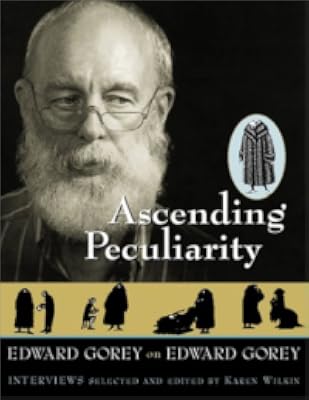
Ascending Peculiarity: Edward Gorey on Edward Gorey
by Edward Gorey 
On This Page
Description
Culled from dozens of interviews, this portrait of the famous artist showcases Gorey's ideas about French symbolist poetry, soap operas, George Balanchine, ballet, and Victorian snuff photography, among other topics.Tags
Recommendations



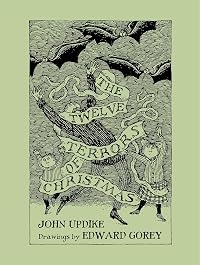
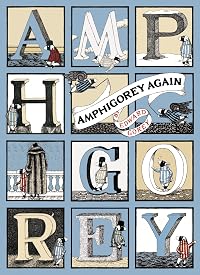









Member Reviews
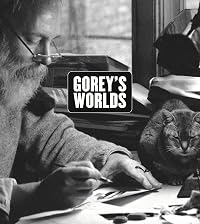
This is a sort of mini-autobiography of artist/writer Edward Gorey (1925-2000), presented through the medium of interviews that took place over the years from 1973 to 1999. Edward Gorey has- and has had, for many years- a cult following for his slightly skewed, morbid but funny books. Working almost exclusively in pen and ink, his drawings most often present a late Victorian or Edwardian setting, frequently drawn with lush detail- particularly the backgrounds- where something is just off. Gardens contain plants that eat people; strange looking guests appear uninvited, people die off constantly. But Gorey was not just interesting for his work; he was a bona fide eccentric, dressing in sneakers, ankle length fur coats, and lots of chunky show more jewelry. And, of course, his cats. He loved his cats above all things, allowing them to do their will unimpeded, and left his estate to animal charities.
Telling a person’s life through interviews results in being able to see what Gorey thought about from various times in his life. A lot of things didn’t change; his voracious appetite for reading, his lack of need for human contact, his artistic style. Some things did; he moved away from New York City permanently because the one thing that held him there, the ballet, evolved into something he no longer cared for.
Because interviewers tend to ask the same questions as each other, there is a lot of repetition in the book. Throughout the years, he tends to answer them the same way every time. It would have been hard to edit all the repetitions out, and it’s easy enough to skim past those sections. But even with the repetitions, each interview reveals something just a little different about Gorey. The book has illustrations from his various works scattered throughout. It’s a fun, interesting book that’s fast to read. show less
Telling a person’s life through interviews results in being able to see what Gorey thought about from various times in his life. A lot of things didn’t change; his voracious appetite for reading, his lack of need for human contact, his artistic style. Some things did; he moved away from New York City permanently because the one thing that held him there, the ballet, evolved into something he no longer cared for.
Because interviewers tend to ask the same questions as each other, there is a lot of repetition in the book. Throughout the years, he tends to answer them the same way every time. It would have been hard to edit all the repetitions out, and it’s easy enough to skim past those sections. But even with the repetitions, each interview reveals something just a little different about Gorey. The book has illustrations from his various works scattered throughout. It’s a fun, interesting book that’s fast to read. show less
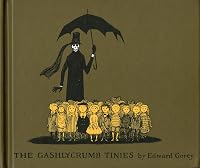
I always liked Gorey's work, though I was never really in his cult (probably driven away by the cult members who had "The Gashlycrumb Tinies" memorized and would recite the whole thing at every opportunity - the same thing that soured me on Monty Python). I'm pretty sure there were a couple of his books around the house when I was growing up; they're exactly the kind of thing my dad would have brought home. I hope they're in the garage somewhere. Anyway, this is a book of interviews. I really enjoyed them because his esthetic and tastes are so similar to mine. I really wish I'd known him. As it happens, an old friend of my mother was friends with him. I'll have to ask her about him next time I see her.
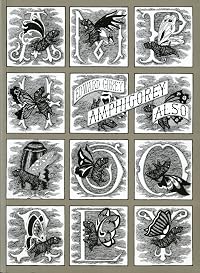
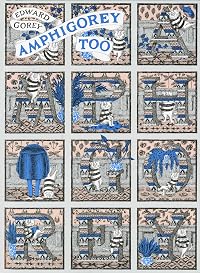
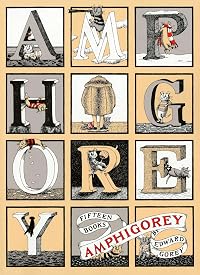
The book is a little repetitive show more and it annoyingly has several references to a 1974 Paul Theroux Esquire interview that isn't in the book. How badly do I want to find it on eBay? There's a good chance that it, too, is in the garage. Like so many artists, Gorey has a hard time expressing why he draws and writes the things he does, though he does say a lot of interesting stuff about creativity, art, and all manner of things. He makes reference to many artists and writers who I want to look into. The book takes itself a little seriously - footnotes and an index. Now I must get out my Amphigorey anthologies and revisit his books. show less
The book is a little repetitive show more and it annoyingly has several references to a 1974 Paul Theroux Esquire interview that isn't in the book. How badly do I want to find it on eBay? There's a good chance that it, too, is in the garage. Like so many artists, Gorey has a hard time expressing why he draws and writes the things he does, though he does say a lot of interesting stuff about creativity, art, and all manner of things. He makes reference to many artists and writers who I want to look into. The book takes itself a little seriously - footnotes and an index. Now I must get out my Amphigorey anthologies and revisit his books. show less
An engaging book of interviews and articles about Edward Gorey. He was a truly weird individual! I would've liked more of his artwork, but it was great to have a look into the psyche of one of my favorite illustrators.
A collection of interviews done over the years with the author/illustrator. The nature of the beast necessitates some repetition of content but overall it was very interesting. I enjoyed his often biting comments about some of the literary "greats" - and discovered references to a couple authors that I would like to explore on my own.
The only draw back for me was the separation of the numbered Notes to the end of the book - I was constantly flipping back and forth - instead of either at the end of each interview or as footnotes.
More illustrations would have been nice but then there are never enough of his...
The only draw back for me was the separation of the numbered Notes to the end of the book - I was constantly flipping back and forth - instead of either at the end of each interview or as footnotes.
More illustrations would have been nice but then there are never enough of his...
Overall, the book was pretty interesting, although there was a lot of redundant information between all the interviews. I like meeting and learning about people who are odd. I'm not talking about people who act odd to be interesting and intriguing, but people who are innately strange and don't hide it from the rest of the world. Edward Gorey definitely fits into the odd person category.
Collecting various interviews with Gorey over the years, this just ends up feeling like the same conversation repeated over and over again. Did you know he went to all of the performances of the New York City Ballet one year? Did you know he had a lot of cats? Probably not worth it unless you're some kind of ultra-obsessive. (The parts where they get him talking about silent movies are pretty good, though.)
Eh, I guess I was expecting him to be more of a weird eccentric. To me he came off a bit pretentious. I like his work, but not as enamored by the man and his life as I thought I would be. It was an okay read, but I'll stick to his work rather than his life.
Members
- Recently Added By
Author Information

281+ Works 24,855 Members
Edward Gorey has a Legacy Library. Legacy libraries are the personal libraries of famous readers, entered by LibraryThing members from the Legacy Libraries group.
All Editions
Common Knowledge
- Original publication date
- 2001
- People/Characters
- Edward Gorey; George Balanchine; Charles Dodgson / Lewis Carroll
- Important places
- New York, USA; New York, New York, USA
- Quotations
- Sometimes I think my life would have been completely different if I had ever learned to draw.
I was trying to figure out what he was saying and he was trying to figure out what I was saying; both of us were trying to figure out what the third person present was saying. This was not too long before he died. - Blurbers
- Hollander, John; Ernst, Max
Classifications
Statistics
- Members
- 760
- Popularity
- 37,050
- Reviews
- 13
- Rating
- (3.93)
- Languages
- English, Japanese
- Media
- Paper
- ISBNs
- 4
- ASINs
- 5