On This Page
Description
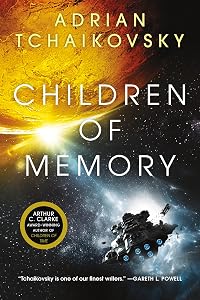
On Imir, Captain Holt founded a new colony on an empty world. In the process, he created hope and a new future for humanity. But generations later, his descendants are struggling to survive. As harvests worsen and equipment fails, strangers appear in a town where everyone knows their neighbor. Now the inexplicable lurks in the woods and the community fears it's being observed - that they're not alone. They'd be right, as explorers from the stars had arrived in secret to help this lost show more outpost. Confident of their superior technology, and overseen by the all-knowing construct of Doctor Avrana Kern, they begin to study their long-lost cousins from Earth. Yet the planet hides deeper mysteries. It seems the visitors aren't the only watchers. And when the starfarers discover the scale of their mistake, it will be far too late to escape. Children of Memory by Arthur C. Clarke Award-winning author Adrian Tchaikovsky is a far-reaching space opera spanning generations, species and galaxies. show lessTags
Recommendations


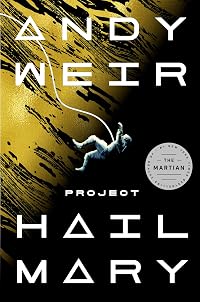
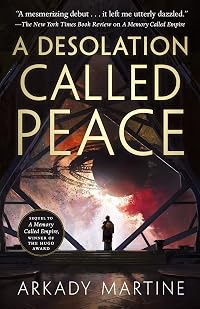
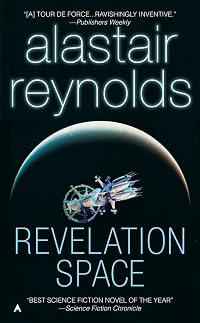
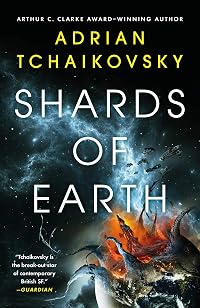







Member Recommendations
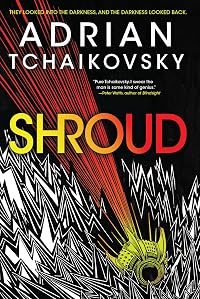
Aquila If you enjoyed trying to work out wtf was going on in Harrow you'll enjoy Children of Memory, but you probably need to read the first two books first (if you're going from Children of Memory to Harrow you definitely need to read Gideon the Ninth first).
Member Reviews
This is proper complex science fiction. It's one of AT's least popular works, but in my mind much better than the preceding one in this series looking at Other ways to be sentient.
The portia and humans now have technology to traverse deep spaces and times, and with the Nod helping with the communication and exploration, and a deep sense of curiosity they push ever further into reaches thought unexplored. Here they stumble upon a human colony ship in orbit around a minimally adapted world. Most of the colonists remain in deep freeze as the original descendants struggle to make ends meet enough to justify more people.
Interleaving between the characters from the colony and the explorers trying to blend in and not impose their 'modern' show more understandings and technology in the small community it slowly becomes apparent that there's something very weird going on here (even by AT normal standards!).
This is a very clever look at some of what it means to be sentient/human and what may or may not count in the future - this is what science fiction is supposed to be and do. As with the previous volumes there's also some subtle humour and clever play of other concepts. I wasn't totally taken with Odin's ravens Thought and Memory, but it is certainly unusual. The question of whether that is enough to be sentient is not quite answered, but makes you think. show less
The portia and humans now have technology to traverse deep spaces and times, and with the Nod helping with the communication and exploration, and a deep sense of curiosity they push ever further into reaches thought unexplored. Here they stumble upon a human colony ship in orbit around a minimally adapted world. Most of the colonists remain in deep freeze as the original descendants struggle to make ends meet enough to justify more people.
Interleaving between the characters from the colony and the explorers trying to blend in and not impose their 'modern' show more understandings and technology in the small community it slowly becomes apparent that there's something very weird going on here (even by AT normal standards!).
This is a very clever look at some of what it means to be sentient/human and what may or may not count in the future - this is what science fiction is supposed to be and do. As with the previous volumes there's also some subtle humour and clever play of other concepts. I wasn't totally taken with Odin's ravens Thought and Memory, but it is certainly unusual. The question of whether that is enough to be sentient is not quite answered, but makes you think. show less
Quoth the raven…
Every single Tchaikovsky book I have ever read has been very interesting, very good or brilliant. Well, this one belongs in the latter category and for me, it’s the best in the series so far.
Let’s see who is here: humans of Enkidu, another ark ship born out of desperation – the ship is barely holding together and they are trying to establish a colony on a somewhat terraformed world of Imir; the crew of Skipper – Humans, spiders, octopuses, something else (read book 2), and a pair of ravens (wow) – they come to Imir to try and find a lost colony; humans of Imir who are trying to get by.
They will be part of a story that is space opera-ish in all the best ways, fascinating, heartbreaking and mind boggling. Among show more the questions of what reality is, of what sentience is, of what self is, the most important question will be – what is the right thing to do? The characters are awesome. Miranda of the good ship Skipper and Liff of Imir have my heart.
The ravens have my heart too. They alone are worth all the stars. The ravens make me want to fly around the author in circles, screeching and fangirling in embarrassingly incoherent ways.
Here is a sample of ravens talking:
- Honestly, things would have been simpler if we’d never learned to talk like humans.
- The red plague rid you for learning me your language!
- What?
- Literature.
- Meaning what?
- Meaning… a thing that a human wrote once that seems tangentially relevant, by context and linguistic pattern analysis, to the topic of our conversation. So I threw it in there to seem clever.
If you don’t love this, I don’t know what to tell you.
In the last few chapters, Tchaikovsky will turn your mind and heart upside down and inside out. I was there for it.
More quotes:
”Liff is aware she’s maybe not making the best life choices, but that sort of thing falls by the wayside once you’ve decided to let yourself be guided by two magical talking ravens.”
”Sometimes today is just a tomorrow that got lost.” show less
Every single Tchaikovsky book I have ever read has been very interesting, very good or brilliant. Well, this one belongs in the latter category and for me, it’s the best in the series so far.
Let’s see who is here: humans of Enkidu, another ark ship born out of desperation – the ship is barely holding together and they are trying to establish a colony on a somewhat terraformed world of Imir; the crew of Skipper – Humans, spiders, octopuses, something else (read book 2), and a pair of ravens (wow) – they come to Imir to try and find a lost colony; humans of Imir who are trying to get by.
They will be part of a story that is space opera-ish in all the best ways, fascinating, heartbreaking and mind boggling. Among show more the questions of what reality is, of what sentience is, of what self is, the most important question will be – what is the right thing to do? The characters are awesome. Miranda of the good ship Skipper and Liff of Imir have my heart.
The ravens have my heart too. They alone are worth all the stars. The ravens make me want to fly around the author in circles, screeching and fangirling in embarrassingly incoherent ways.
Here is a sample of ravens talking:
- Honestly, things would have been simpler if we’d never learned to talk like humans.
- The red plague rid you for learning me your language!
- What?
- Literature.
- Meaning what?
- Meaning… a thing that a human wrote once that seems tangentially relevant, by context and linguistic pattern analysis, to the topic of our conversation. So I threw it in there to seem clever.
If you don’t love this, I don’t know what to tell you.
In the last few chapters, Tchaikovsky will turn your mind and heart upside down and inside out. I was there for it.
More quotes:
”Liff is aware she’s maybe not making the best life choices, but that sort of thing falls by the wayside once you’ve decided to let yourself be guided by two magical talking ravens.”
”Sometimes today is just a tomorrow that got lost.” show less
This book is nominally about crows and a human colony, but mostly it's about sentience. Do the Corvids of this book have it? Do the humans? Do any of us? Which means that this is the book where Tchaikovsky's underlying beliefs are most obvious. There's a theme running through his writing that humans aren't quite ready for sentience. We're missing essential pieces. We're not a fully functional species. (And to be clear: cosigned.) I enjoyed having him state this pretty much flat out.
I also very much enjoyed the results of this belief: a story in which humans are not the point, not the end-all, not even one (or first) among equals. Science fiction has this tendency to default to "humans are pretty great, or at least the best we can do," show more a tendency to see everything through a human-shaped lens. Tchaikovsky, with his belief that humans are a kind of first draft of sentience (needing a lot of editing and reshaping and discussion to get even close to a finished, workable sentience), writes about alien minds and societies that are genuinely different, genuinely alien -- even when those minds originated on Earth. And that's why I love this series.
So, basically, this is a book that does exactly what you'd expect from reading the first two books. And I hope the series continues, and continues to do that. It's everything I want from SF. show less
I also very much enjoyed the results of this belief: a story in which humans are not the point, not the end-all, not even one (or first) among equals. Science fiction has this tendency to default to "humans are pretty great, or at least the best we can do," show more a tendency to see everything through a human-shaped lens. Tchaikovsky, with his belief that humans are a kind of first draft of sentience (needing a lot of editing and reshaping and discussion to get even close to a finished, workable sentience), writes about alien minds and societies that are genuinely different, genuinely alien -- even when those minds originated on Earth. And that's why I love this series.
So, basically, this is a book that does exactly what you'd expect from reading the first two books. And I hope the series continues, and continues to do that. It's everything I want from SF. show less
The [b:Children of Time|25499718|Children of Time (Children of Time, #1)|Adrian Tchaikovsky|https://i.gr-assets.com/images/S/compressed.photo.goodreads.com/books/1431014197l/25499718._SY75_.jpg|45276208] trilogy is such an impressive achievement and a joy to read. It's rare for me to give five stars to every book in a series; the only other example that springs to mind is the [b:Rosewater|38362809|Rosewater (The Wormwood Trilogy, #1)|Tade Thompson|https://i.gr-assets.com/images/S/compressed.photo.goodreads.com/books/1534300082l/38362809._SX50_.jpg|51884865] trilogy. I found the examination of humanity's scattered reminants encountering other intelligent beings utterly compelling. Each book introduces new and fascinating forms of show more intelligence, raising profound questions about what consciousness is and how it arises. The whole trilogy brilliantly manages that difficult trick needed for hard scifi to succeed: bridging the gap in scale between individual characters and the vastness of space. This also requires careful handling of long timescales, which Tchaikovsky also does incredibly well. I loved [b:Children of Time|25499718|Children of Time (Children of Time, #1)|Adrian Tchaikovsky|https://i.gr-assets.com/images/S/compressed.photo.goodreads.com/books/1431014197l/25499718._SY75_.jpg|45276208] and [b:Children of Ruin|40376072|Children of Ruin (Children of Time, #2)|Adrian Tchaikovsky|https://i.gr-assets.com/images/S/compressed.photo.goodreads.com/books/1548701599l/40376072._SX50_.jpg|62663185]; [b:Children of Memory|60850767|Children of Memory (Children of Time, #3)|Adrian Tchaikovsky|https://i.gr-assets.com/images/S/compressed.photo.goodreads.com/books/1655929460l/60850767._SY75_.jpg|95966083] is every bit as good and makes an excellent conclusion.
[b:Children of Memory|60850767|Children of Memory (Children of Time, #3)|Adrian Tchaikovsky|https://i.gr-assets.com/images/S/compressed.photo.goodreads.com/books/1655929460l/60850767._SY75_.jpg|95966083] introduces the planet Imir, where colonists are struggling with a hostile environment they'd hoped would be terraformed by the time they arrived. Liff, a young girl living in the planet's only town, is an effective point of view to show this struggle and the social conflict it breeds. Increasingly odd inconsistencies in her account create a growing sense of unease about the instability of memory and time on Imir. This is compounded by the other protagonists, a group of beings familiar from the previous books who are intrigued by Imir and trying to investigate it. The build towards revelation of what is actually happening on the planet is beautifully paced; it made the book hard to put down.
Corvids steal the show in [b:Children of Memory|60850767|Children of Memory (Children of Time, #3)|Adrian Tchaikovsky|https://i.gr-assets.com/images/S/compressed.photo.goodreads.com/books/1655929460l/60850767._SY75_.jpg|95966083]. The spiders, octopodes, humans, and sentinent goo are all puzzled by these birds, who are adept at analysis yet deny being an intelligent species. Their consciousness appears split between a pair of birds, each of which is specialised in either memory or problem-solving. Only together can they emulate the behaviour of other intelligent species, begging the question: at what point does imitation become genuine intelligence? This is a particularly relevant question in the age of generative so-called AI, although that still seems way too inaccurate to be mistaken for anything like actual intelligence. I really enjoyed how this was explored, notably these comments by the corvids:
Ultimately a new form of intelligent being joins the spiders, octopodes, corvids, goo, and humans: avatars from a simulation created by the alien recording device on Imir. Although the plot feels quite distinctive from the two prior books, ultimately what propels it hasn't changed: attempts at communication and understanding between very different forms of intelligent being. Tchaikovsky is particularly great at evoking non-human perspectives and the range of different beings who narrate is my favourite element of the trilogy. What a rewarding, involving, and thought-provoking series; I highly recommend it to any scifi reader. show less
[b:Children of Memory|60850767|Children of Memory (Children of Time, #3)|Adrian Tchaikovsky|https://i.gr-assets.com/images/S/compressed.photo.goodreads.com/books/1655929460l/60850767._SY75_.jpg|95966083] introduces the planet Imir, where colonists are struggling with a hostile environment they'd hoped would be terraformed by the time they arrived. Liff, a young girl living in the planet's only town, is an effective point of view to show this struggle and the social conflict it breeds. Increasingly odd inconsistencies in her account create a growing sense of unease about the instability of memory and time on Imir. This is compounded by the other protagonists, a group of beings familiar from the previous books who are intrigued by Imir and trying to investigate it. The build towards revelation of what is actually happening on the planet is beautifully paced; it made the book hard to put down.
"On this basis, either everything of sufficient complexity is sentient, whether it feels itself to be or not, or nothing is," Gethli tells her. "We tend towards the latter. We know we don't think, so why should anything else?"
"And in the grander scheme of things, it's not important," Gothi concludes imperiously.
"It is not," her counterpart agrees. "In the same way that it's not important whether this here now is a simulation. Given that it is indistinguishable from a sufficiently advanced simulation, and given that we three all recently inhabited a sufficiently advanced simulation and were unable to distinguish it from that wider, possibly real, possibly simulated experience we call the universe. Given the limitation of senses and instruments, and the limitation of brains and so on and so forth." Gethli puffs out his chest feathers and preens them, very satisfied with himself indeed. "Imagine how it feels for the simulation."
Ultimately a new form of intelligent being joins the spiders, octopodes, corvids, goo, and humans: avatars from a simulation created by the alien recording device on Imir.
SPOILERS
This is a good book, original and engaging, as his others have been, but unlike the others, bloody hell is it grim. I would recommend it, but not if you're in any kind of dark place. It left me emotionally drained and grieving, for the twist.
This is a good book, original and engaging, as his others have been, but unlike the others, bloody hell is it grim. I would recommend it, but not if you're in any kind of dark place. It left me emotionally drained and grieving, for the twist.
9.5/10
Oh yes, I also spent some time being confused while reading this book. Kind of like Liff—realizing things were not quite right but unable to reconcile what was real and what was dream (only to finally find out it was all simulation!!).
The thoughts that stuck with me:
— Terraforming is incredibly difficult and luck plays a larger role than one might think/hope.
— What is intelligence? What is sentience? What is personhood? And who decides on the definitions?
— Do we humans always need someone to blame?Obviously the engine creating the simulation thought so; the simulation repeatedly generated the ubiquitous “others” (them) who would do evil things, causing hardship to and ultimately the destruction of the “good” show more people (us).
— Both parts of the Corvid intelligence were “left brained”—sorting and categorization functions in one bird and analysis and communication functions in the other. Neither exhibited “right brain” functions of creativity, intuition, and emotion. I thought that was an interesting choice on the author’s part and reminded me of the Portiid’s use of the ant colonies as computational tools.
— Just as the book raised the question of what is sentience, it also raised the question of what is reality. Whose definition do we use and who gets to decide?
— I was repeatedly struck by Liff’s name and its similarity to “Life”.
While the earlier books gave us a wider stage (not just a planet or planetary system, but colony spaceships as well, and human/spider/octopus/Human/AI perspectives and narrative PoVs), this book was somewhat narrower in focus with just Imir and the Skipper (and a short section on Rourke) and the POVs of mainly Liff and Miranda. It felt almost claustrophobic to me.
I don’t know which book of the trilogy was my favorite. Together they told a story spanning centuries and worlds, but they still managed to be intimate and personal. show less
Oh yes, I also spent some time being confused while reading this book. Kind of like Liff—realizing things were not quite right but unable to reconcile what was real and what was dream (only to finally find out it was all simulation!!).
The thoughts that stuck with me:
— Terraforming is incredibly difficult and luck plays a larger role than one might think/hope.
— What is intelligence? What is sentience? What is personhood? And who decides on the definitions?
— Do we humans always need someone to blame?
— Both parts of the Corvid intelligence were “left brained”—sorting and categorization functions in one bird and analysis and communication functions in the other. Neither exhibited “right brain” functions of creativity, intuition, and emotion. I thought that was an interesting choice on the author’s part and reminded me of the Portiid’s use of the ant colonies as computational tools.
— Just as the book raised the question of what is sentience, it also raised the question of what is reality. Whose definition do we use and who gets to decide?
— I was repeatedly struck by Liff’s name and its similarity to “Life”.
While the earlier books gave us a wider stage (not just a planet or planetary system, but colony spaceships as well, and human/spider/octopus/Human/AI perspectives and narrative PoVs), this book was somewhat narrower in focus with just Imir and the Skipper (and a short section on Rourke) and the POVs of mainly Liff and Miranda. It felt almost claustrophobic to me.
I don’t know which book of the trilogy was my favorite. Together they told a story spanning centuries and worlds, but they still managed to be intimate and personal. show less
The final volume in this wonderful sci-fi trilogy.
I loved the imagination and creativity of the author - this is how sci-fi should be! Weaving plausible evolutionary development into sci-fi broadens plot possibilities. Having a little fun with the gender role reversal with the Portiid characters was a hit with me. And having female characters in some of the lead roles is so much of an improvement on just another Caprain Kirk.
But, I also felt that this volume was not quite as satisfying as the earlier two. Maybe the author found himself a little constricted by the process of winding up the narrative? Who knows? But even Tchaikovsky's second best towers well above the average of the genre.
I loved the imagination and creativity of the author - this is how sci-fi should be! Weaving plausible evolutionary development into sci-fi broadens plot possibilities. Having a little fun with the gender role reversal with the Portiid characters was a hit with me. And having female characters in some of the lead roles is so much of an improvement on just another Caprain Kirk.
But, I also felt that this volume was not quite as satisfying as the earlier two. Maybe the author found himself a little constricted by the process of winding up the narrative? Who knows? But even Tchaikovsky's second best towers well above the average of the genre.
Members
- Recently Added By
Lists

2024 Hugo Awards -- Eligible Works -- Novels
44 works; 6 members

Simulated Reality in Fiction
124 works; 7 members

Books Read in 2023
5,547 works; 145 members

Kindle Fantasy/Science Fiction Re-Read
151 works; 1 member
Author Information

133+ Works 27,901 Members
Adrian Tchaikovsky is a British fantasy and science fiction author, born on June 14, 1972 in Woodhall Spa, Lincolnshire. He studied Zoology and Psychology at the University of Reading. His career focus changed to law and has worked as a Legal Executive in both Reading and Leeds. He's the author of the Shadows of the Apt series, and his standalone show more novel Children of Time is the winner of the 2016 Arthur C Clarke Award for Best Science Fiction Novel. (Bowker Author Biography) show less
Awards and Honors
Awards
Series

Work Relationships
Is contained in
Common Knowledge
- Canonical title
- Children of Memory
- Original title
- Children of Memory
- Original publication date
- 2022-11-24
Classifications
Statistics
- Members
- 1,162
- Popularity
- 21,622
- Reviews
- 34
- Rating
- (3.82)
- Languages
- 7 — Czech, Dutch, English, German, Hungarian, Italian, Spanish
- Media
- Paper, Audiobook, Ebook
- ISBNs
- 20
- ASINs
- 5