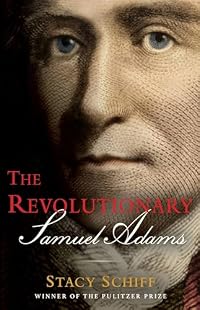
The Revolutionary: Samuel Adams
by Stacy Schiff
On This Page
Description
"Thomas Jefferson asserted that if there was any leader of the Revolution, "Samuel Adams was the man." With high-minded ideals and bare-knuckle tactics, Adams led what could be called the greatest campaign of civil resistance in American history. Stacy Schiff returns Adams to his seat of glory, introducing us to the shrewd and eloquent man who supplied the moral backbone of the American Revolution. He employed every tool available to rally a town, a colony, and eventually a band of colonies show more behind him, creating the cause that created a country. For his efforts he became the most wanted man in America: When Paul Revere rode to Lexington in 1775, it was to warn Samuel Adams that he was about to be arrested for treason. In The Revolutionary: Samuel Adams, Schiff brings her masterful skills to Adams's improbable life, illuminating his transformation from aimless son of a well-off family to tireless, beguiling radical who mobilized the colonies"-- show lessTags
Recommendations








Member Reviews
Samuel Adams often feels like a Founding Father doomed to be overlooked. My previous impressions of him (from snippets in books and documentaries) were of a rabble rouser, someone who participated in the early days of the American Revolution but who didn't really have the intellectual foundations of figures like his cousin John Adams. This biography is well positioned to reframe that impression. Samuel Adams was a Harvard graduate, a member of the Massachusetts house of representatives, and one of the most influential figures in the early American Revolution. Adams was actively involved in organizing protests against the Sugar Act and the Stamp Act, and he had a role in many of the incidents which centered around Boston such as the show more Boston Massacre and the Boston Tea Party. Politically active and influential until the end of his life, Adams emerges in this biography as a pivotal revolutionary in American history, and I appreciate the fresh approach to a Founding Father who has received less attention. show less
Summary: A biography of this Boston revolutionary who, working mostly behind the scenes, fanned into flame the colonists decision to seek independence.
For many, the name of Samuel Adams calls to mind a beer. And indeed, Adams was a maltster for part of his life. But one of the things that emerges is that Adams was a failure at everything he did except for kindling the fires that led to a revolution. He inherited debt from a failed land scheme of his father. He failed as a tax collector, perhaps unsurprisingly. He really got by with the help of his friends.
What Stacy Schiff makes clear is that there was one thing that Samuel Adams was good at: igniting a revolution. It might well be said that Samuel Adams played as large a part in show more stirring up the movement that led to a revolution as his more famous peers, is cousin John Adams, Ben Franklin, Thomas Jefferson, and George Washington.
Yet we know much less of him. What we learn from reading Schiff is that much of this was necessary because his activities could easily lead to arrest if known. As it is, he often had to flee writs of arrest, as he did in consequence of Paul Revere’s ride to warn him that the British authorities were marching to Lexington, in part, to arrest him, as well to seize ammunition stores. He often destroyed papers, or published pieces anonymously, planned in back rooms, maintaining an elusive presence that gave him what we might call “plausible deniability.” All of this makes the historian’s job harder.
Schiff focuses on the 15 years beginning with 1764 and the Stamp Act that inflamed feeling. Adams was able to put his finger on the fundamental issue of taxation without representation. He was not present at the destruction of the home of the man who represented the British opposition, Thomas Hutchinson, but he certainly inflamed the feeling of fellow-Bostonians that led to the act. He awakened his fellow colonists that they were being treated as inferiors with little or no say about how they were governed when, in fact they had shown them capable of self-government in their town councils and in colonial legislative bodies.
The introduction of British troops further escalated his efforts, and led to campaigns of misinformation, including allegations that the British troops assaulted young girls. Later a blockade on trade led him to set up committees of correspondence between the colonies, the first steps down the road to Philadelphia and the Declaration of Independence. He was one of the first to moot the idea of independence and to recognize this would mean armed resistance.
He was the skilled propagandist who turned a military action in which five Bostonians died into the Boston Massacre, memorialized each year with public speeches. When imports of East India tea were forced on Bostonians, he disingenuously arranged for the protection of the cargo while covertly planning its destruction by “redskins.” Schiff gives the most extensive account of this episode I’ve read, emphasizing that those who dumped the tea into Boston harbor even cleaned up the ship afterwards!
For anything else than making revolution, he wasn’t terribly practical. His second wife had to work while he was at the Continental Congress. People were relieved in his later years when he finally resigned as Massachusetts governor. But his ability to articulate the case for American independence emboldened others, including his younger cousin John Adams. His network of relationships, represented eventually in the committees of correspondence reflected his ability to forge a movement of disparate persons. While he was not above underhanded means, he held to high ideals for the country, including an early opposition to slavery. Offered a slave, he required her to be freed first.
Schiff’s work transforms Adams from a figure in the background to one whose dynamic role in fostering the revolution necessarily required work in the background. Schiff helps us understand how this singularly skilled man played a far bigger role in mobilizing colonies into the revolt that became what we call the War of Independence that created a nation. When most simply wanted to resolve grievances, Adams saw that, risky as it was, breaking with British rule was where things were headed, seeing further and sooner than most. show less
For many, the name of Samuel Adams calls to mind a beer. And indeed, Adams was a maltster for part of his life. But one of the things that emerges is that Adams was a failure at everything he did except for kindling the fires that led to a revolution. He inherited debt from a failed land scheme of his father. He failed as a tax collector, perhaps unsurprisingly. He really got by with the help of his friends.
What Stacy Schiff makes clear is that there was one thing that Samuel Adams was good at: igniting a revolution. It might well be said that Samuel Adams played as large a part in show more stirring up the movement that led to a revolution as his more famous peers, is cousin John Adams, Ben Franklin, Thomas Jefferson, and George Washington.
Yet we know much less of him. What we learn from reading Schiff is that much of this was necessary because his activities could easily lead to arrest if known. As it is, he often had to flee writs of arrest, as he did in consequence of Paul Revere’s ride to warn him that the British authorities were marching to Lexington, in part, to arrest him, as well to seize ammunition stores. He often destroyed papers, or published pieces anonymously, planned in back rooms, maintaining an elusive presence that gave him what we might call “plausible deniability.” All of this makes the historian’s job harder.
Schiff focuses on the 15 years beginning with 1764 and the Stamp Act that inflamed feeling. Adams was able to put his finger on the fundamental issue of taxation without representation. He was not present at the destruction of the home of the man who represented the British opposition, Thomas Hutchinson, but he certainly inflamed the feeling of fellow-Bostonians that led to the act. He awakened his fellow colonists that they were being treated as inferiors with little or no say about how they were governed when, in fact they had shown them capable of self-government in their town councils and in colonial legislative bodies.
The introduction of British troops further escalated his efforts, and led to campaigns of misinformation, including allegations that the British troops assaulted young girls. Later a blockade on trade led him to set up committees of correspondence between the colonies, the first steps down the road to Philadelphia and the Declaration of Independence. He was one of the first to moot the idea of independence and to recognize this would mean armed resistance.
He was the skilled propagandist who turned a military action in which five Bostonians died into the Boston Massacre, memorialized each year with public speeches. When imports of East India tea were forced on Bostonians, he disingenuously arranged for the protection of the cargo while covertly planning its destruction by “redskins.” Schiff gives the most extensive account of this episode I’ve read, emphasizing that those who dumped the tea into Boston harbor even cleaned up the ship afterwards!
For anything else than making revolution, he wasn’t terribly practical. His second wife had to work while he was at the Continental Congress. People were relieved in his later years when he finally resigned as Massachusetts governor. But his ability to articulate the case for American independence emboldened others, including his younger cousin John Adams. His network of relationships, represented eventually in the committees of correspondence reflected his ability to forge a movement of disparate persons. While he was not above underhanded means, he held to high ideals for the country, including an early opposition to slavery. Offered a slave, he required her to be freed first.
Schiff’s work transforms Adams from a figure in the background to one whose dynamic role in fostering the revolution necessarily required work in the background. Schiff helps us understand how this singularly skilled man played a far bigger role in mobilizing colonies into the revolt that became what we call the War of Independence that created a nation. When most simply wanted to resolve grievances, Adams saw that, risky as it was, breaking with British rule was where things were headed, seeing further and sooner than most. show less
Samuel Adams is a difficult figure. An ardent patriot who was tireless and fully committed to the cause of the colonists. And yet he could be disingenuous, unreasonable and unlikable. However, as this biography makes clear, Adams was a highly effective contributor in the early stages of the revolutionary period.
The book itself is well researched and contains an excellent amount of detail. Unfortunately, the author’s writing style can be tedious. The work itself is not only quite long, but it contains a very significant amount of original quotes which can try the reader after some point.
A good, interesting but certainly not outstanding biography.
The book itself is well researched and contains an excellent amount of detail. Unfortunately, the author’s writing style can be tedious. The work itself is not only quite long, but it contains a very significant amount of original quotes which can try the reader after some point.
A good, interesting but certainly not outstanding biography.
As I write this, it is March 5, the anniversary of the Boston Massacre (or an "Unhappy Disturbance" if you were British) on a cold night in 1770. It started as an argument between a British soldier and several Boston residents and soon escalated as a crowd gathered, chasing the soldier back to the Customs House, where a sentry stood guard. Other British soldiers came out to defend the soldier as the crowd taunted, throwing snowballs and pieces of ice (and perhaps objects) at the soldiers, daring them to fire. Then, in the confusion, shots were fired, and when the smoke cleared, five people lay dead, while three more were injured.
Famously, John Adams became the man chosen to defend the British soldiers, though he was by no means a show more supporter of the British soldiers in Boston. The soldiers--two thousand strong--had arrived in 1768 to quell riots and to enforce the Townsend Duties, which taxed glass, lead, paint, paper, and tea; set up courts to prosecute smugglers; and allowed British officials to search colonists' homes.
You can imagine how popular all that was. For many years Boston had been the center of colonial discontent. Tensions were already high, and the arrival of the soldiers, 1 for every 8 Bostonians, was destined to create and exacerbate the friction.
It was no accident that the deaths quickly became the center of an ongoing war of words in the press, the Committees of Correspondence throughout the American Colonies, and the efforts of the Sons of Liberty. And while there were many men in the midst of these efforts one man sticks out as the chief rabble-rouser, a man that King George called the "most dangerous man in the colonies": Samuel Adams.
Who was this man? To me, my experience with Samuel was as the older cousin of John Adams, the man who saved the Revolution by securing financing for it from Europe, who wrote the Massachusetts constitution, helped write the Declaration of Independence, and became our second president. Sam barely gets a supporting role in that story. And yet, if you were to poll Americans and British of the day, Samuel Adams was among the leading voices, if not the leading voice, in the years up to and during the Revolution.
So on this anniversary of the Boston Massacre, a seminal event in the years before the American Revolution, I read Stacy Schiff's biography of Samuel Adams, appropriately titled "The Revolutionary." In these pages, we see Samuel as a gifted orator and writer, the man of a hundred pseudonyms, a planner and connecter, an "everyman" who is anything but that. Unique among the Founding Fathers, he never had money, never had resources, and yet was at one point the most wanted man in America.
Even as the Revolution passed into the Founding of the nation and he began to fade, he remained forefront in the minds of those who did not. On the eve of the anniversary of the Boston Massacre in 1801, Thomas Jefferson acknowledged his role in bringing about the break with England, calling him the "patriarch of liberty" and asking himself if Samuel would approve of his speech. Having read Samuel's rise in spite of failure, I am convinced that it was no amount of hyperbole to see him as more than just a rabble-rouser, but a gifted politician and leader who predicted almost every aspect of the fight for independence, and was seen as almost as important as George Washington by his contemporaries.
And there's this: it's a really good piece of history and a great addition to the modern understanding of the Founding generation. show less
Famously, John Adams became the man chosen to defend the British soldiers, though he was by no means a show more supporter of the British soldiers in Boston. The soldiers--two thousand strong--had arrived in 1768 to quell riots and to enforce the Townsend Duties, which taxed glass, lead, paint, paper, and tea; set up courts to prosecute smugglers; and allowed British officials to search colonists' homes.
You can imagine how popular all that was. For many years Boston had been the center of colonial discontent. Tensions were already high, and the arrival of the soldiers, 1 for every 8 Bostonians, was destined to create and exacerbate the friction.
It was no accident that the deaths quickly became the center of an ongoing war of words in the press, the Committees of Correspondence throughout the American Colonies, and the efforts of the Sons of Liberty. And while there were many men in the midst of these efforts one man sticks out as the chief rabble-rouser, a man that King George called the "most dangerous man in the colonies": Samuel Adams.
Who was this man? To me, my experience with Samuel was as the older cousin of John Adams, the man who saved the Revolution by securing financing for it from Europe, who wrote the Massachusetts constitution, helped write the Declaration of Independence, and became our second president. Sam barely gets a supporting role in that story. And yet, if you were to poll Americans and British of the day, Samuel Adams was among the leading voices, if not the leading voice, in the years up to and during the Revolution.
So on this anniversary of the Boston Massacre, a seminal event in the years before the American Revolution, I read Stacy Schiff's biography of Samuel Adams, appropriately titled "The Revolutionary." In these pages, we see Samuel as a gifted orator and writer, the man of a hundred pseudonyms, a planner and connecter, an "everyman" who is anything but that. Unique among the Founding Fathers, he never had money, never had resources, and yet was at one point the most wanted man in America.
Even as the Revolution passed into the Founding of the nation and he began to fade, he remained forefront in the minds of those who did not. On the eve of the anniversary of the Boston Massacre in 1801, Thomas Jefferson acknowledged his role in bringing about the break with England, calling him the "patriarch of liberty" and asking himself if Samuel would approve of his speech. Having read Samuel's rise in spite of failure, I am convinced that it was no amount of hyperbole to see him as more than just a rabble-rouser, but a gifted politician and leader who predicted almost every aspect of the fight for independence, and was seen as almost as important as George Washington by his contemporaries.
And there's this: it's a really good piece of history and a great addition to the modern understanding of the Founding generation. show less
Stacy Schiff is the best-selling author of several biographies, including Vera (Mrs. Vladimir Nabokov), her Pulitzer Prize winning "portrait of a marriage" and biography of Vera Nabokov. In her 2022 book The Revolutionary she turns her attention to Samuel Adams, the second cousin of our second president John Adams, and someone who most of us today know only as a brand of beer.
Consider these points:
When Paul Revere made his famous ride it was primarily to warn Samuel Adams that he was about to be arrested for treason.
Thomas Jefferson said that if there was anyone who could be called the leader of the Revolution, "Samuel Adams was the man."
Ron Chernow, a Pulitzer Prize winner himself for his biography of Washington and well known as the show more author of his biography of Alexander Hamilton on which the play Hamilton is based, called Samuel Adams the “most essential” Founding Father.
So why is it that most of us only know the name Samuel Adams because of the beer named after him?
It's actually Adams' own fault. Or perhaps better said, it's by design and the designer was Adams himself.
Samuel Adams came from a prominent Boston family that made its living as "malsters" who dried and prepared barley for fermentation by brewers. But Samuel himself by middle age was a failure, in part due to his own lack of business sense, and in part due to the failure of the "Land Bank", a scheme designed to bring liquidity to the Massachusetts economy that his father had invested in and served as Director of, and that was upended by the British Parliament.
Samuel’s hard luck led to his stint as a tax collector, the first governmental role he played in pre-Revolutionary Boston. He would go on to become a member of the Massachusetts House and a firmly principled advocate for the rights of the colonists in America.
Adams saw that, as full British citizens, the colonist’s rights were under attack by the British Parliament, which, through a series of Acts, was taxing Americans who had no representative in that legislative body. Adams worked both inside the system, as a member of the Massachusetts House, and outside of it - writing and publishing under multiple pseudonyms - to lead resistance to these Acts.
Because he himself was a member of the government Adams had to be careful to not be seen as going too far or he risked arrest. He tended to work behind the scenes and left few notes behind. Even after the conclusion of the Revolutionary War he was reticent to go into detail about his role. And his personality lent itself better to resistance than to governing, which meant he did not play much of a role in the government of the new country once its freedom was won. Thus, he has slowly faded into the background of our collective national memory.
Schiff’s book is a combination of well-known events and lesser-known actions, mostly behind the scenes, showing Adams drumming up support, and driving resistance to the actions of the British Parliament. These events all led to the conclusion by the colonies that they had been left with no other choice but to separate from the mother country.
What Schiff’s book shows is that, without the work of Adams that conclusion may not have been seen as inevitable. Without the impetus of the behind the scenes work of Samuel Adams our American Revolution likely would not have unfolded as it did. Adams may not be recognized as such in the history books, but he was indeed The Revolutionary. show less
Consider these points:
When Paul Revere made his famous ride it was primarily to warn Samuel Adams that he was about to be arrested for treason.
Thomas Jefferson said that if there was anyone who could be called the leader of the Revolution, "Samuel Adams was the man."
Ron Chernow, a Pulitzer Prize winner himself for his biography of Washington and well known as the show more author of his biography of Alexander Hamilton on which the play Hamilton is based, called Samuel Adams the “most essential” Founding Father.
So why is it that most of us only know the name Samuel Adams because of the beer named after him?
It's actually Adams' own fault. Or perhaps better said, it's by design and the designer was Adams himself.
Samuel Adams came from a prominent Boston family that made its living as "malsters" who dried and prepared barley for fermentation by brewers. But Samuel himself by middle age was a failure, in part due to his own lack of business sense, and in part due to the failure of the "Land Bank", a scheme designed to bring liquidity to the Massachusetts economy that his father had invested in and served as Director of, and that was upended by the British Parliament.
Samuel’s hard luck led to his stint as a tax collector, the first governmental role he played in pre-Revolutionary Boston. He would go on to become a member of the Massachusetts House and a firmly principled advocate for the rights of the colonists in America.
Adams saw that, as full British citizens, the colonist’s rights were under attack by the British Parliament, which, through a series of Acts, was taxing Americans who had no representative in that legislative body. Adams worked both inside the system, as a member of the Massachusetts House, and outside of it - writing and publishing under multiple pseudonyms - to lead resistance to these Acts.
Because he himself was a member of the government Adams had to be careful to not be seen as going too far or he risked arrest. He tended to work behind the scenes and left few notes behind. Even after the conclusion of the Revolutionary War he was reticent to go into detail about his role. And his personality lent itself better to resistance than to governing, which meant he did not play much of a role in the government of the new country once its freedom was won. Thus, he has slowly faded into the background of our collective national memory.
Schiff’s book is a combination of well-known events and lesser-known actions, mostly behind the scenes, showing Adams drumming up support, and driving resistance to the actions of the British Parliament. These events all led to the conclusion by the colonies that they had been left with no other choice but to separate from the mother country.
What Schiff’s book shows is that, without the work of Adams that conclusion may not have been seen as inevitable. Without the impetus of the behind the scenes work of Samuel Adams our American Revolution likely would not have unfolded as it did. Adams may not be recognized as such in the history books, but he was indeed The Revolutionary. show less
Biography of Samuel Adams, second cousin of John Adams, and one of the lesser-known leaders of the American Revolution. This book explains some reasons he is not as well- known as some of the other founding fathers. It gives the reader a good idea of his personality – determined, frugal, and occasionally abrasive. I particularly enjoyed the three major set pieces – the Battle of Lexington and Concord, Boston Massacre, and Boston Tea Party. This book contains some of the most detailed accounts I have read of the sequence of events. Regarding the latter it covers what is known of the planning, execution, and aftermath. It shatters the myth that the Bostonians intentionally blamed Indians. It was well-planned and meticulously executed, show more even locking up afterward. Samuel Adams was leading or involved in one form or another in all of them. It can be a little dry at times, but when discussing major events, I found it riveting. show less
A great biography on an unsung here of the revolution. Schiff's writing is clever, sometimes biting and always enjoyable. The way Adams dealt with Hutchinson sounds like sit com.
Members
- Recently Added By
Lists

Books recommended by Barack Obama
295 works; 28 members

al.vick-wishlist-history
70 works; 2 members

Obama Reads
181 works; 3 members

Governerds Insider
32 works; 1 member
Author Information

10+ Works 10,886 Members
Stacy Schiff was born on October 26, 1961 in Adams, Massachusetts. She received a B.A. degree from Williams College in 1982. She was a Senior Editor at Simon and Schuster until 1990. She is the author of several nonfiction books including Saint-Exupéry: A Biography about Antoine de Saint Exupéry, Cleopatra: A Life, and The Witches: Salem 1692. show more She won the Pulitzer Prize for biography for Véra: Mrs. Vladimir Nabokov in 2000. (Bowker Author Biography) show less
Awards and Honors
Awards
Distinctions
Notable Lists
Common Knowledge
- Original publication date
- 2022-10
- People/Characters
- Samuel Adams
- Dedication
- For Nancy Faust Sizer
- First words
- Samuel Adams delivered what may count as the most remarkable second act in American life.
- Last words
- (Click to show. Warning: May contain spoilers.)Samuel Adams offered his blessing.
- Blurbers
- Chernow, Ron
- Original language
- English US
Classifications
- Genres
- Biography & Memoir, History, General Nonfiction, Nonfiction
- DDC/MDS
- 973.3092 — History & geography History of North America United States Revolution and confederation (1775-89) Personal narratives--American Revolution
- LCC
- E302.6 .A2 .S35 — History of the United States United States Revolution to the Civil War, 1775/1783-1861 General
- BISAC
Statistics
- Members
- 806
- Popularity
- 34,166
- Reviews
- 14
- Rating
- (4.06)
- Languages
- English
- Media
- Paper, Audiobook, Ebook
- ISBNs
- 10
- ASINs
- 3