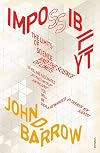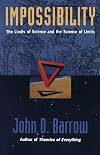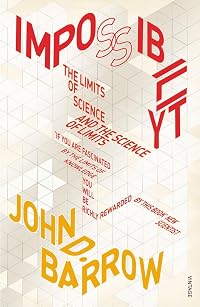
Impossibility: The Limits of Science and the Science of Limits
by John D. Barrow
On This Page
Description
In 'Impossibility', John D. Barrow - one of our most elegant and accomplished science writers - argues convincingly that there are limits to human discovery, that there are things that are ultimately unknowable, undoable, or unreachable. Barrow first examines the limits of the human mind: our brain evolved to meet the demands of our immediate environment, and much that lies outside this small circle may also lie outside our understanding. He investigates practical impossibilities, such as show more those imposed by complexity, uncomputability, or the finiteness of time, space, and resources. Is the universe finite or infinite? Can information be transmitted faster than the speed of light? The book also examines deeper theoretical restrictions on our ability to know, including Go?del's theorem, which proved that there were things that could not be proved. show lessTags
Recommendations











Member Reviews
Is it possible, even in principle, to know everything? Is there a limit to the places science can take us, not because there are mystical realms accessible only by mystical means, but because complete comprehensibility just isn't built into the nature of things? Barrow discusses some of the more obvious, scientifically-established limits to what we can know, such as Heinsenberg's Uncertainty Principle (although that actually gets surprisingly little coverage), the fact that the unbreakable speed of light limits how much of the universe we can ever see, and the way Gödel's Incompleteness Theorem tells us there are some mathematical truths that cannot be arrived at mathematically. But much of the book deals with more abstract, even show more philosophical questions. Is it possible that the universe, despite what physicists like to believe, is so infinitely complicated that the closer we look, the more we'll see, forever? Is the human brain, which, after all, evolved to help us survive and reproduce and has only produced our ability to do math and science as a sort of side effect, even capable of truly understanding the universe? Will human knowledge continue increasing forever, or is the absolute best we can hope for a future in which it takes more and more effort to discover less and less? And so on.
It makes for a somewhat rambling trip through a wide variety of subjects, some of which seem more relevant to the main thrust of the book than others. Some sections are clear and fascinating. Others, I think, are just a bit too dense, while still others feel oddly lacking in substance. Ultimately much of what Barrow has to say is, by its very nature, unsatisfying, because on many of these subjects, all one can really do is pose the question, stare at it for a while, and then shrug and walk away. Far too often we don't even know what it is we don't know. But it is certainly a wide-ranging and thought-provoking journey that Barrow takes us on in the course of contemplating all these unknowns. show less
It makes for a somewhat rambling trip through a wide variety of subjects, some of which seem more relevant to the main thrust of the book than others. Some sections are clear and fascinating. Others, I think, are just a bit too dense, while still others feel oddly lacking in substance. Ultimately much of what Barrow has to say is, by its very nature, unsatisfying, because on many of these subjects, all one can really do is pose the question, stare at it for a while, and then shrug and walk away. Far too often we don't even know what it is we don't know. But it is certainly a wide-ranging and thought-provoking journey that Barrow takes us on in the course of contemplating all these unknowns. show less
This is a complex fairly difficult book.Certainly took me a while to work my way through it and I'm still trying to wrap my head around Arrow's theorem and the conditions which must apply to Godel's theorem. But he writes very clearly and is rfhalatively easy to follow. I'm not especially convinced by his boostering of string theory and of multiple worlds and he seems to fly off into flights of fantasy about what MIGHT be beyond the visible horizon. I'm not convinced by any of these speculations that can't be tested.
Anyway, here are some extracts that I found especially noteworthy and which i might refer to in there future.
Book Extracts: Impossibility: The limits of science and the science of limits.
Practitioners start to wonder show more whether the end is in sight whether their theory might be able to explain everything within its encompass, But then something strange happens. The theory predicts that it cannot predict. It turns out to be not simply limited in scope, but self limiting. This pattern is so strikingly recurrent that it suggests to us that we can recognize mature scientific theories by their self-limiting character.
Our study of the limits of science and the science of limits will take us from the consideration of practical limits of cost, computability, and complexity to the restrictions imposed on what we can know by our location in the middle of the Natures spectra of size, age, and complexity. We shall speculate about our possible technological futures and locate our current abilities on the spectrum of possibilities for the manipulation of Nature in the realms of the large, the small, and the complex. But practicalities are not the only limits we face. There may be limits imposed by the nature of our humanity. The human brain was not evolved with science in mind. Scientific investigation, like our artistic senses, are by-products of a mixed bag of attributes that survived preferentially.
Next, we shall start to pick at the edges of possible knowledge. We shall learn that many of the great cosmological questions about the beginning, the end, and the structure of our Universe are unanswerable. Despite the confident exposition of the modern view of the Universe by astronomers, these expositions are invariably simplified in ways that disguise the reasons why we cannot know whether or not the Universe is finite or infinite, open or closed, of finite age or eternal. Finally, we delve into the mysteries of the famous theorems of Gödel concerning the limitations of mathematics. We know that there must exist statements of arithmetic whose truth we can never confirm or deny. What does this really mean? What is the fine print on this theorem? What are its implications for science?
Finally, we shall explore some of the strange implications of trying to pass from the consideration of individual choices to collective choices. Whether it is the outcome of an election or the making up of one's mind in the face of the brain's competing options, we find a deep impossibility that may have ramifications throughout the domain of complex systems.
consider two aspects only: whether or not there is an unlimited store of fundamental information about Nature to be uncovered, and whether or not our capabilities are limited or not. This makes possible four distinct futures:
Type 1 future: Nature unlimited and human capability unlimited;
Type 2 future: Nature unlimited and human capability limited;
Type 3 future: Nature limited and human capability unlimited;
Type 4 future: Nature limited and human capability limited.
We tend to think of the number of possible snowflakes, the number of possible musical works, or the number of genetically possible human beings, as being 'unlimited in our casual use of this word. But in each of these cases the number of possibilities is not unlimited: it is a huge, but none the less a finite number..... If there are an infinite variety of distinctive forms of complexity, then we are faced with an insuperable challenge.
In mapping out the course of events which might lead to each of our four futures it is useful to introduce a graph of the change of knowledge with time (Fig. 3.3). The line charts the increase of knowledge about the Universe. The region above the curve of progress is the unknown; that below it is the known. [I have some difficulties with this graph. It’s not clear from the graph whether the “unknown” is finite or infinite. From the graph it kind of looks like it is finite...and I also notice that Figs 3.3 is duplicated....Why?].
If our minds evolved primarily to deal with a sequence of complicated environments that our distant ancestors faced for millions of years, then that process will have endowed our minds with particular biases that were appropriate for dealing with the problems they faced.
Those problems did not include passing examination papers in particle physics.
ago........ Inanimate things tend to be asymmetrical but living things generally display left-right symmetry. They don't usually have up-down symmetry because of gravity, and do not have front-back symmetry if they are able to move. By detecting symmetry in a confused scene, one picks out potential predators, mates, and meals looking straight at you. Such an awareness provides a significant marginal advantage over those who do not possess it...... When our ancestors looked at the stars they saw all sorts of patterns: from ploughs and serpents, to bears and hunters.
Modern astronomers are no less susceptible to this tendency; the Egg Nebula, the Crab Nebula, the Horsehead Nebula.
Many people, even scientists who should know better, have been so seduced by the amazing intricacy of the adaptations that living things posses, that they assume they are perfect adaptations. But this is far from the truth. The human eye is a remarkable optical instrument, but it is far from the best possible!..... This means that there is no reason to expect the human brain to be the best possible all-purpose reasoning instrument...... ways. If our minds are fallible instruments we need to inquire more carefully into how their intrinsic limitations might bias and restrict what we can know of the physical world around us..... reached. Our DNA may differ from that of chimpanzees by merely a couple of per cent, but the consequent intellectual complexities are light years ahead of a chimpanzee's..... There seems to be no reason why our early history need have equipped us to deal with tricky mathematical problems about quarks and black holes.
It is often suspected that mathematics is so miraculously effective a tool in the unearthing of Nature's workings that it might well be that Nature is mathematical in some ultimate sense. Thus, our mathematical description of Nature is actually a process of discovery rather than one of invention. While this might well be the case, we still have to worry about how we have come to select certain types of mathematics to apply to the world, how we have set up our notations and concepts. Here, I believe, there are unsuspected links with our linguistic abilities.
The fact that quantities had to be talked about before they could be represented by symbols ensures that the way they are talked about influences the manner in which they are denoted by marks and symbols. At first, numbers seem to have been used as nouns. There was a word for three stones, another for three sticks, another for three fish.! The concept of threeness was always allied with the identities of things. This leads to a profusions of terms and symbols.
But, think of numbers as adjectives and you can streamline your language with one word for three, which you place beside the word for any of the things whose number you want to describe.
One of the characteristic features of appreciated music in all cultures is the way that it combines sequences of sounds to produce an optimum balance of surprise and predictability. Too much surprise and we have unengaging random noise; too much predictability and our minds are soon bored. Somewhere in between lies the happy medium. This intuition can be put on a firmer footing.
Some years ago, two physicists at Berkeley, Richard Voss and John Clarke, discovered that human music has a characteristic spectral form. 5 The spectrum of a sequence of sounds is a way of gauging how the sound intensity is distributed over different frequencies. What Voss and Clarke discovered was that all the musical forms they examined had a characteristic spectral form, called 'If noise' (pronounced 'one-over-eff noise) by engineers, which is precisely the optimal balance between unpredictability and predictability: there are correlations over all time intervals in the sound sequence.
One of the great unsolved problems of modern mathematics is to determine whether no NP problem is a P problem; that is, to discover whether you can find a solution in polynomial time if you only need polynomial time to verify that it is true.
The problem that molecular biologists would like to solve is this: if we start with a given linear chain of amino acids, what is the particular three-dimensional configuration into which it will fold? Remarkably, we see chains of several thousand amino acids folding into their final pattern in about one second. We think that the final shape is one that minimizes the energy required to support its structure, but when we try to program a computer to fold a protein, it seems to be impossible. If there were just 100 amino acids in the chain it appears to require more than 10^27 years to effect the folding!...... The intractability of problems which are very simple to pose, like finding the factors of a very large number, is currently so great that they form the basis of modern forms of encryption....... However advanced our computer technology becomes, we shall be faced with trying to carry out tasks that are astronomically long.
One of the most noticeable effects of global connectionism among scientists is the way in which it facilitates and encourages of a large international collaborations and groupings.... developed. One adverse result of this trend, which might multiply when extrapolated into the far future, is a reduction in diversity of view. Gradually, each subject area tends to become a single research group..... Single, central paradigms are now strongly reinforced, and young researchers become increasingly involved in detailed elaborations of them....... If you need to search for an article that you remember appeared in the journal Societ Astronomy, some time in the mid- 1980s, then you will need to search the subject or author index of several volumes to track it down.....Invariably, in my experience, that search process leads you to discover other interesting things: some directly relevant to your current interests, others, striking, but off-beat, to be filed away in your memory for some future application. By contrast, a computer archive would allow you to find what you were looking for without any risk of serendipitous discovery.
I want to show that it is quite reasonable to speculate that technological societies never progress far beyond the point at which they have the means to destroy themselves....... Thus, we can envisage a future in which human fallibility becomes more and more significant. When mistakes are made and wrong conclusions drawn from evidence, they could be categorized by the amount of time it takes for the error to be corrected..... This pattern of scientific demise has much in common with some theories of human ageing and death.
Is there some psychological component to pronouncements about the limits of science? Does a certain experience of science itself induce a particular attitude towards the future progress of science...... This bias in our education of scientists, particularly those engaged in the mathematical sciences, leads to the unconscious assumption that all problems are soluble..... Scientists who have invested years of time and vast amounts of energy in a line of inquiry that demonstrably fails rarely change direction and pursue a new one. They find it difficult to accept the new scheme.
So far, there is no general theory of complexity. Like life, it is hard to define, but we know it when we see it. .......but no simple set of laws has emerged which captures the essence of all forms of complexity. This might be too much to hope for..... self-organizing criticality (SOC). The central paradigm of SOC is the simple example of the sand pile.
A Swiss physicist, Daniel Spreng, has schematized the interdependence of energy, time, and information as a triangle Any two of the three attributes (energy, E, time, t, and information, I) can be traded in for the other two. Any point in the triangle represents a particular mixture of the three ingredients needed to accomplish a given task.
Unfortunately, our technological powers are confronted by a variety of limits.
Some are financial and practical. Democracies will not be willing to devote large fractions of their GNP to activities which offer no immediate return when society is confronted with serious environmental or medical problems that require scientific solutions...... The development of technology, and the ability to test the theories that we have about the behaviour of matter under extreme conditions, require us to manipulate matter, energy, and information over scales that are increasingly divorced from those of our everyday experience. Intriguingly, the decisive features of the laws of Nature appear to be manifested in these extreme environments.
Unfortunately, we cannot experiment on the Universe; we can only look at what it has to offer. When we look at astronomical objects, like stars and planets, we can take the outsider's view, but when it comes to the Universe as a whole we cannot get outside it: we are part of the system we are trying to describe. This creates some peculiar problems that the scientific method was never designed to deal with.
The Universe is assumed, as a first approximation, to be the same everywhere and to expand at the same rate in every direction. This expansion can then be described by a single quantity, the scale factor....... many of the questions that popular accounts of cosmology raise, and sometimes even confidently answer, appear to unanswerable. Answers can be given only because some untestable assumptions have been smuggled in to simplify the problem.
First, we must distinguish between two meanings of 'universe. There is the Universe with a capital U-that is, everything there is. This may be finite, or it may be infinite. In addition, there is also something smaller that we call the visible universe. This is a spherical region centred on us, from within which light has had time to reach us since the Universe began.
If the Universe does possess an unusual topology, then its identifying features appear to be hidden beyond our visible horizon today.
The information needed to determine the overall topology of the Universe is inaccessible to us.
Western cultures have several religious traditions in which the world has a beginning...... This cultural background provided a fertile environment for the picture of an expanding Universe. It naturally supports the idea of a universe that 'began' a finite time ago..... The scientific basis for a beginning was not in itself new. In the nineteenth century the early investigators of thermodynamics had applied the second law of thermodynamics to deduce that there must have been a past moment of maximum order, which they interpreted as a beginning." In fact, this argument is not quite right. The entropy does not need to have a minimum just because it is always increasing.?
The opaqueness of the universe to photons means that we have to look for the products of nucleosynthesis, But inflation erects a serious shield. If inflation turns out to be one of those beautifully simple ideas that the Architect of the Universe chose not to include in his plans, then we might be able to look farther back by observing gravitons flying freely to us through space and time from the Planck scale. But. superstring theories are the only current theories of physics which do not lead to internal contradictions or to predictions that measurable quantities have infinite values when gravity is merged with the other forces of Nature. Yet these consistent theories of the fundamental forces of Nature appear to require the Universe to have many more dimensions of space than the three that we habitually experience..... The possibility that our Universe contains many more than three dimensions of space, trapped at the Planck scale of size, means that our access to the overall structure of the Universe might be limited even more dramatically than we have previously suspected. [Barrow is clearly an enthusiast for string theory but it has not led to significant breakthroughs and as far as I can ascertain has now fallen out of favour with physicists].
Despite the success of Einstein's theory of gravity in describing the universe that we can see, we know that there exist fundamental limits to the cosmological quest. The finiteness of the speed of light partitions the Universe into parts which are out of causal contact with each other. We can gather information about the Universe only from the region within the horizon that the speed of light defines for us. This prevents us from ever answering deep questions about the origin or the global structure of the entire Universe. We cannot discover whether or not it is infinite, whether it had an origin in time, whether its entropy increases like that of small systems, or whether it is open or closed...... The inflationary universe theory, in all its developments, persuades us that we should expect to find the Universe complex in its spatial structure and in its temporal development. We appear likely to sit in a particular expanding bubble. [I find it a bit strange that Barrow says this but then goes on in the rest of the book to explore all manner of fantasies which can’t be tested or proven].
Although it was clear that arithmetic was a bigger system that geometry, it was not obvious that there was anything intrinsically different about it. Yet Hilbert was unable to extend his elegant proofs of the completeness of geometry to larger systems; later, he would discover why it was proving so difficult. In 1930, Kurt Gödel (the very same Gödel who, 19 years later, would surprise the world of science with the discovery that Einstein's equations allowed time travel.......... announced a sensational and completely unexpected result: that any logical system rich enough to contain arithmetic must be either incomplete or inconsistent. There must exist statements of arithmetic whose truth or falsity cannot be established using the axioms and deductive rules of arithmetic...... One should not misunderstand what Godel's theorem says about the consistency of arithmetic. It does not say that we cannot prove the consistency of arithmetic. We can. But our proof cannot be formalized within the language of arithmetic....... The discoveries of Gödel and Turing have created a wave of modern interest in the consequences of their work for philosophy. These were, however, by no means the first 'impossibility' theorems to be proved by mathematicians. In the nineteenth century, the first proofs were given that certain geometrical constructions, like the trisecting of an angle with rules and compasses, are impossible.
It is useful to lay out the precise assumptions that underlie Gödel's deduction of incompleteness. Gödel's theorem shows that if a formal system is (1) finitely specified, (2) large enough to include arithmetic, and (3) consistent, then it is incomplete.
There is no deep reason why space and time are continuous, rather than discrete, at their most fundamental microscopic level; in fact, there are some theories of quantum gravity that assume that they are not. .... Curiously, if we give up this continuity, so that there is not necessarily another point in between any two sufficiently close points you care to choose, space-time structure becomes vastly more complicated. Many more complicated things can happen. This question of finiteness might also be bound up with the question of whether the Universe is finite in volume and whether the number of elementary particles (or whatever the most elementary entities might be) of Nature are finite or infinite in number. Thus there might exist only a finite number of terms to which the ultimate logical theory of the physical world applies. Hence, it would be complete..... The deep structure of the Universe may be rooted in a much simpler logic than that of full arithmetic, and hence be complete. All this would require would be for the underlying structure to contain either addition or multiplication but not both. Recall that all the sums that you have ever done have used multiplication simply as a shorthand for addition. They would be possible in Presburger arithmetic as well..... There is another important aspect of the situation to be kept in view. Even if a logical system is complete, it always contains unprovable 'truths. These are the axioms which are chosen to define the system.
An activity like economic forecasting displays the inevitable dependence of what is being forecast on the forecasting process that was displayed by Mackay's consideration of human choices. However, despite this self-evident problem, it is striking to find the Nobel prize-winning economist Herbert Simon making the erroneous claim that it is possible to make predictions of elections that are automatically adjusted to take voter reaction into account. Political scientists have dubbed the problem 'The Reaction Paradox, but seem completely unaware of the work of Popper and Mackay on the problem.* In fact, Simon goes so far as to claim that his result 'refutes, therefore, that it would be logically impossible to make an accurate prediction (of public predictions........ In fact, Simon's proof is wrong. It makes illegal use of a theorem of mathematics called the Brouwer Fixed Point theorem. There would need to be an infinitely large electorate and a continuum of predictions and responses in order for this theorem to be applicable. Remarkably, this false 'theorem' seems to occupy quite a prominent place in the literature of polítical science.
Democratic voting seems to create a logical contradiction. As we pass from individual choices to some form of collective choice a paradox arises. Collective rationality does not seem to be merely the sum of individual rationalities......Social choices are quite different beasts from individual choices, despite the fact that social choices are composed of individual choices. As a result, collective social choices sometimes exhibit an arbitrariness that does not reflect the way that personal decisions are made.
The official result of the election was close: D'Amato received 45 per cent of the vote, Holtzman 44 per cent and Javits just 11 per cent. But look at the results of a head-to-head contest according to the exit polls.... Clearly the outcome of an election depends rather sensitively on how you handle the votes.....These paradoxes of rational choice display what logicians call intransitivity: the fact that A prefers B, and B prefers C does not mean that A prefers C.
The situation with regard to Godel's theorem is far from as simple as earlier commentators have unpled. We saw how the fine print of Godel's theorem allows all manner of different conclusions to be drawn about its impact (or non-impact) upon the scientific enterprise. Many scientists have sought to use Godel’s ideas to place restrictions upon the scope of computers to do what the human mind does. So far, these do not seem to be entirely persuasive. Computers will be able to frame the same arguments about human minds. Only by taking seriously the fallibility of human minds are we able to distinguish their scope from that of artificial intelligences. The contributions of Turing, Popper, and Mackay take us further into the psychological consequences of these results, showing how they shed new light upon the cogency of the famous problem of free will. Along the way we discovered that a much-quoted theorem of mathematical politics regarding the predictability of elections is in fact false. Finally, we have probed further into the realm of the social sciences to explore the strange impossibility that Arrow has discovered in rational voting systems. The process of passing democratically from individual to collective choices is doomed by impossibility: there is no reliable way of establishing rational collective choices.
Summary:
We are surrounded by a host of practical problems, too complicated for the human brain to solve unaided, which even the fastest computers that Nature allows cannot solve. These problems are intractable.
Many of them sound simple, but their solution requires more space and time than the entire Universe allows.
All the great questions about the nature of the Universe— from its beginning to its end— turn out to be unanswerable. There is a fundamental divide between the part of the Universe that we can observe and the entire, possibly infinite, whole.
Until quite recently scientists believed it reasonable to assume that what there is of the Universe beyond our horizon is the same, on average, as the part that we can see. Unfortunately, our most compelling theories of the evolution and structure of the Universe sweep away these simple expectations; we expect the Universe to be endlessly diverse both geographically and historically. It is most unlikely to be every-where, even roughly, the same..... The speed at which light travels is limited and so, therefore, is our knowledge of the structure of the Universe. We cannot know whether it is finite or infinite, whether it had a beginning or will have an end [or] whether the structure of physics is the same everywhere.
As a logical structure is made more complex, there is a sudden change. When it reaches a particular critical level of complexity it becomes impossible to understand it fully: impossible to show that it is self-consistent..... These deep limitations spread out into the realms of computation, mathematical deduction, and the assessment of complexity and randomness.
Others see these deep limits as the ultimate insurance policy against any full understanding of Nature's laws. For if mathematics cannot capture all truth within a finite set of rules, it will surely not be possible for physicists to capture the workings of physical reality in a finite collection of laws of Nature? This argument is a leap too far. We saw how the small print of Gödel's famous incompleteness theorems is important.
In the last chapter, we traced the possible implications of these deep forms of impossibility for some aspects of the human mind. We looked at free will and determinism, and learned why computers and minds cannot fully understand themselves, or predict their own futures. Time travel challenges us to conceive of worlds which are not only unpredictable but inconsistent. We saw how many common paradoxes of time travel hide confusions rather than contradictions.
Finally, we encountered puzzling impossibility in any voting process. .....it is impossible to translate individual rational choices into collective rationality. Again, we see a threat to our confident extrapolations about the behaviour of complex collective intelligences in the far distant future. Our experience of complex systems is that they display a tendency to organize themselves into critical states that are optimally sensitive, so that small adjustments can produce compensating effects throughout the system. As a result, they are unpredictable in detail. Whether it is sand grains or thoughts that are being self-organized, their next move is always a surprise.
Whilst I have some issues/difficulties with his views, it's certainly worth five stars from me. show less
Anyway, here are some extracts that I found especially noteworthy and which i might refer to in there future.
Book Extracts: Impossibility: The limits of science and the science of limits.
Practitioners start to wonder show more whether the end is in sight whether their theory might be able to explain everything within its encompass, But then something strange happens. The theory predicts that it cannot predict. It turns out to be not simply limited in scope, but self limiting. This pattern is so strikingly recurrent that it suggests to us that we can recognize mature scientific theories by their self-limiting character.
Our study of the limits of science and the science of limits will take us from the consideration of practical limits of cost, computability, and complexity to the restrictions imposed on what we can know by our location in the middle of the Natures spectra of size, age, and complexity. We shall speculate about our possible technological futures and locate our current abilities on the spectrum of possibilities for the manipulation of Nature in the realms of the large, the small, and the complex. But practicalities are not the only limits we face. There may be limits imposed by the nature of our humanity. The human brain was not evolved with science in mind. Scientific investigation, like our artistic senses, are by-products of a mixed bag of attributes that survived preferentially.
Next, we shall start to pick at the edges of possible knowledge. We shall learn that many of the great cosmological questions about the beginning, the end, and the structure of our Universe are unanswerable. Despite the confident exposition of the modern view of the Universe by astronomers, these expositions are invariably simplified in ways that disguise the reasons why we cannot know whether or not the Universe is finite or infinite, open or closed, of finite age or eternal. Finally, we delve into the mysteries of the famous theorems of Gödel concerning the limitations of mathematics. We know that there must exist statements of arithmetic whose truth we can never confirm or deny. What does this really mean? What is the fine print on this theorem? What are its implications for science?
Finally, we shall explore some of the strange implications of trying to pass from the consideration of individual choices to collective choices. Whether it is the outcome of an election or the making up of one's mind in the face of the brain's competing options, we find a deep impossibility that may have ramifications throughout the domain of complex systems.
consider two aspects only: whether or not there is an unlimited store of fundamental information about Nature to be uncovered, and whether or not our capabilities are limited or not. This makes possible four distinct futures:
Type 1 future: Nature unlimited and human capability unlimited;
Type 2 future: Nature unlimited and human capability limited;
Type 3 future: Nature limited and human capability unlimited;
Type 4 future: Nature limited and human capability limited.
We tend to think of the number of possible snowflakes, the number of possible musical works, or the number of genetically possible human beings, as being 'unlimited in our casual use of this word. But in each of these cases the number of possibilities is not unlimited: it is a huge, but none the less a finite number..... If there are an infinite variety of distinctive forms of complexity, then we are faced with an insuperable challenge.
In mapping out the course of events which might lead to each of our four futures it is useful to introduce a graph of the change of knowledge with time (Fig. 3.3). The line charts the increase of knowledge about the Universe. The region above the curve of progress is the unknown; that below it is the known. [I have some difficulties with this graph. It’s not clear from the graph whether the “unknown” is finite or infinite. From the graph it kind of looks like it is finite...and I also notice that Figs 3.3 is duplicated....Why?].
If our minds evolved primarily to deal with a sequence of complicated environments that our distant ancestors faced for millions of years, then that process will have endowed our minds with particular biases that were appropriate for dealing with the problems they faced.
Those problems did not include passing examination papers in particle physics.
ago........ Inanimate things tend to be asymmetrical but living things generally display left-right symmetry. They don't usually have up-down symmetry because of gravity, and do not have front-back symmetry if they are able to move. By detecting symmetry in a confused scene, one picks out potential predators, mates, and meals looking straight at you. Such an awareness provides a significant marginal advantage over those who do not possess it...... When our ancestors looked at the stars they saw all sorts of patterns: from ploughs and serpents, to bears and hunters.
Modern astronomers are no less susceptible to this tendency; the Egg Nebula, the Crab Nebula, the Horsehead Nebula.
Many people, even scientists who should know better, have been so seduced by the amazing intricacy of the adaptations that living things posses, that they assume they are perfect adaptations. But this is far from the truth. The human eye is a remarkable optical instrument, but it is far from the best possible!..... This means that there is no reason to expect the human brain to be the best possible all-purpose reasoning instrument...... ways. If our minds are fallible instruments we need to inquire more carefully into how their intrinsic limitations might bias and restrict what we can know of the physical world around us..... reached. Our DNA may differ from that of chimpanzees by merely a couple of per cent, but the consequent intellectual complexities are light years ahead of a chimpanzee's..... There seems to be no reason why our early history need have equipped us to deal with tricky mathematical problems about quarks and black holes.
It is often suspected that mathematics is so miraculously effective a tool in the unearthing of Nature's workings that it might well be that Nature is mathematical in some ultimate sense. Thus, our mathematical description of Nature is actually a process of discovery rather than one of invention. While this might well be the case, we still have to worry about how we have come to select certain types of mathematics to apply to the world, how we have set up our notations and concepts. Here, I believe, there are unsuspected links with our linguistic abilities.
The fact that quantities had to be talked about before they could be represented by symbols ensures that the way they are talked about influences the manner in which they are denoted by marks and symbols. At first, numbers seem to have been used as nouns. There was a word for three stones, another for three sticks, another for three fish.! The concept of threeness was always allied with the identities of things. This leads to a profusions of terms and symbols.
But, think of numbers as adjectives and you can streamline your language with one word for three, which you place beside the word for any of the things whose number you want to describe.
One of the characteristic features of appreciated music in all cultures is the way that it combines sequences of sounds to produce an optimum balance of surprise and predictability. Too much surprise and we have unengaging random noise; too much predictability and our minds are soon bored. Somewhere in between lies the happy medium. This intuition can be put on a firmer footing.
Some years ago, two physicists at Berkeley, Richard Voss and John Clarke, discovered that human music has a characteristic spectral form. 5 The spectrum of a sequence of sounds is a way of gauging how the sound intensity is distributed over different frequencies. What Voss and Clarke discovered was that all the musical forms they examined had a characteristic spectral form, called 'If noise' (pronounced 'one-over-eff noise) by engineers, which is precisely the optimal balance between unpredictability and predictability: there are correlations over all time intervals in the sound sequence.
One of the great unsolved problems of modern mathematics is to determine whether no NP problem is a P problem; that is, to discover whether you can find a solution in polynomial time if you only need polynomial time to verify that it is true.
The problem that molecular biologists would like to solve is this: if we start with a given linear chain of amino acids, what is the particular three-dimensional configuration into which it will fold? Remarkably, we see chains of several thousand amino acids folding into their final pattern in about one second. We think that the final shape is one that minimizes the energy required to support its structure, but when we try to program a computer to fold a protein, it seems to be impossible. If there were just 100 amino acids in the chain it appears to require more than 10^27 years to effect the folding!...... The intractability of problems which are very simple to pose, like finding the factors of a very large number, is currently so great that they form the basis of modern forms of encryption....... However advanced our computer technology becomes, we shall be faced with trying to carry out tasks that are astronomically long.
One of the most noticeable effects of global connectionism among scientists is the way in which it facilitates and encourages of a large international collaborations and groupings.... developed. One adverse result of this trend, which might multiply when extrapolated into the far future, is a reduction in diversity of view. Gradually, each subject area tends to become a single research group..... Single, central paradigms are now strongly reinforced, and young researchers become increasingly involved in detailed elaborations of them....... If you need to search for an article that you remember appeared in the journal Societ Astronomy, some time in the mid- 1980s, then you will need to search the subject or author index of several volumes to track it down.....Invariably, in my experience, that search process leads you to discover other interesting things: some directly relevant to your current interests, others, striking, but off-beat, to be filed away in your memory for some future application. By contrast, a computer archive would allow you to find what you were looking for without any risk of serendipitous discovery.
I want to show that it is quite reasonable to speculate that technological societies never progress far beyond the point at which they have the means to destroy themselves....... Thus, we can envisage a future in which human fallibility becomes more and more significant. When mistakes are made and wrong conclusions drawn from evidence, they could be categorized by the amount of time it takes for the error to be corrected..... This pattern of scientific demise has much in common with some theories of human ageing and death.
Is there some psychological component to pronouncements about the limits of science? Does a certain experience of science itself induce a particular attitude towards the future progress of science...... This bias in our education of scientists, particularly those engaged in the mathematical sciences, leads to the unconscious assumption that all problems are soluble..... Scientists who have invested years of time and vast amounts of energy in a line of inquiry that demonstrably fails rarely change direction and pursue a new one. They find it difficult to accept the new scheme.
So far, there is no general theory of complexity. Like life, it is hard to define, but we know it when we see it. .......but no simple set of laws has emerged which captures the essence of all forms of complexity. This might be too much to hope for..... self-organizing criticality (SOC). The central paradigm of SOC is the simple example of the sand pile.
A Swiss physicist, Daniel Spreng, has schematized the interdependence of energy, time, and information as a triangle Any two of the three attributes (energy, E, time, t, and information, I) can be traded in for the other two. Any point in the triangle represents a particular mixture of the three ingredients needed to accomplish a given task.
Unfortunately, our technological powers are confronted by a variety of limits.
Some are financial and practical. Democracies will not be willing to devote large fractions of their GNP to activities which offer no immediate return when society is confronted with serious environmental or medical problems that require scientific solutions...... The development of technology, and the ability to test the theories that we have about the behaviour of matter under extreme conditions, require us to manipulate matter, energy, and information over scales that are increasingly divorced from those of our everyday experience. Intriguingly, the decisive features of the laws of Nature appear to be manifested in these extreme environments.
Unfortunately, we cannot experiment on the Universe; we can only look at what it has to offer. When we look at astronomical objects, like stars and planets, we can take the outsider's view, but when it comes to the Universe as a whole we cannot get outside it: we are part of the system we are trying to describe. This creates some peculiar problems that the scientific method was never designed to deal with.
The Universe is assumed, as a first approximation, to be the same everywhere and to expand at the same rate in every direction. This expansion can then be described by a single quantity, the scale factor....... many of the questions that popular accounts of cosmology raise, and sometimes even confidently answer, appear to unanswerable. Answers can be given only because some untestable assumptions have been smuggled in to simplify the problem.
First, we must distinguish between two meanings of 'universe. There is the Universe with a capital U-that is, everything there is. This may be finite, or it may be infinite. In addition, there is also something smaller that we call the visible universe. This is a spherical region centred on us, from within which light has had time to reach us since the Universe began.
If the Universe does possess an unusual topology, then its identifying features appear to be hidden beyond our visible horizon today.
The information needed to determine the overall topology of the Universe is inaccessible to us.
Western cultures have several religious traditions in which the world has a beginning...... This cultural background provided a fertile environment for the picture of an expanding Universe. It naturally supports the idea of a universe that 'began' a finite time ago..... The scientific basis for a beginning was not in itself new. In the nineteenth century the early investigators of thermodynamics had applied the second law of thermodynamics to deduce that there must have been a past moment of maximum order, which they interpreted as a beginning." In fact, this argument is not quite right. The entropy does not need to have a minimum just because it is always increasing.?
The opaqueness of the universe to photons means that we have to look for the products of nucleosynthesis, But inflation erects a serious shield. If inflation turns out to be one of those beautifully simple ideas that the Architect of the Universe chose not to include in his plans, then we might be able to look farther back by observing gravitons flying freely to us through space and time from the Planck scale. But. superstring theories are the only current theories of physics which do not lead to internal contradictions or to predictions that measurable quantities have infinite values when gravity is merged with the other forces of Nature. Yet these consistent theories of the fundamental forces of Nature appear to require the Universe to have many more dimensions of space than the three that we habitually experience..... The possibility that our Universe contains many more than three dimensions of space, trapped at the Planck scale of size, means that our access to the overall structure of the Universe might be limited even more dramatically than we have previously suspected. [Barrow is clearly an enthusiast for string theory but it has not led to significant breakthroughs and as far as I can ascertain has now fallen out of favour with physicists].
Despite the success of Einstein's theory of gravity in describing the universe that we can see, we know that there exist fundamental limits to the cosmological quest. The finiteness of the speed of light partitions the Universe into parts which are out of causal contact with each other. We can gather information about the Universe only from the region within the horizon that the speed of light defines for us. This prevents us from ever answering deep questions about the origin or the global structure of the entire Universe. We cannot discover whether or not it is infinite, whether it had an origin in time, whether its entropy increases like that of small systems, or whether it is open or closed...... The inflationary universe theory, in all its developments, persuades us that we should expect to find the Universe complex in its spatial structure and in its temporal development. We appear likely to sit in a particular expanding bubble. [I find it a bit strange that Barrow says this but then goes on in the rest of the book to explore all manner of fantasies which can’t be tested or proven].
Although it was clear that arithmetic was a bigger system that geometry, it was not obvious that there was anything intrinsically different about it. Yet Hilbert was unable to extend his elegant proofs of the completeness of geometry to larger systems; later, he would discover why it was proving so difficult. In 1930, Kurt Gödel (the very same Gödel who, 19 years later, would surprise the world of science with the discovery that Einstein's equations allowed time travel.......... announced a sensational and completely unexpected result: that any logical system rich enough to contain arithmetic must be either incomplete or inconsistent. There must exist statements of arithmetic whose truth or falsity cannot be established using the axioms and deductive rules of arithmetic...... One should not misunderstand what Godel's theorem says about the consistency of arithmetic. It does not say that we cannot prove the consistency of arithmetic. We can. But our proof cannot be formalized within the language of arithmetic....... The discoveries of Gödel and Turing have created a wave of modern interest in the consequences of their work for philosophy. These were, however, by no means the first 'impossibility' theorems to be proved by mathematicians. In the nineteenth century, the first proofs were given that certain geometrical constructions, like the trisecting of an angle with rules and compasses, are impossible.
It is useful to lay out the precise assumptions that underlie Gödel's deduction of incompleteness. Gödel's theorem shows that if a formal system is (1) finitely specified, (2) large enough to include arithmetic, and (3) consistent, then it is incomplete.
There is no deep reason why space and time are continuous, rather than discrete, at their most fundamental microscopic level; in fact, there are some theories of quantum gravity that assume that they are not. .... Curiously, if we give up this continuity, so that there is not necessarily another point in between any two sufficiently close points you care to choose, space-time structure becomes vastly more complicated. Many more complicated things can happen. This question of finiteness might also be bound up with the question of whether the Universe is finite in volume and whether the number of elementary particles (or whatever the most elementary entities might be) of Nature are finite or infinite in number. Thus there might exist only a finite number of terms to which the ultimate logical theory of the physical world applies. Hence, it would be complete..... The deep structure of the Universe may be rooted in a much simpler logic than that of full arithmetic, and hence be complete. All this would require would be for the underlying structure to contain either addition or multiplication but not both. Recall that all the sums that you have ever done have used multiplication simply as a shorthand for addition. They would be possible in Presburger arithmetic as well..... There is another important aspect of the situation to be kept in view. Even if a logical system is complete, it always contains unprovable 'truths. These are the axioms which are chosen to define the system.
An activity like economic forecasting displays the inevitable dependence of what is being forecast on the forecasting process that was displayed by Mackay's consideration of human choices. However, despite this self-evident problem, it is striking to find the Nobel prize-winning economist Herbert Simon making the erroneous claim that it is possible to make predictions of elections that are automatically adjusted to take voter reaction into account. Political scientists have dubbed the problem 'The Reaction Paradox, but seem completely unaware of the work of Popper and Mackay on the problem.* In fact, Simon goes so far as to claim that his result 'refutes, therefore, that it would be logically impossible to make an accurate prediction (of public predictions........ In fact, Simon's proof is wrong. It makes illegal use of a theorem of mathematics called the Brouwer Fixed Point theorem. There would need to be an infinitely large electorate and a continuum of predictions and responses in order for this theorem to be applicable. Remarkably, this false 'theorem' seems to occupy quite a prominent place in the literature of polítical science.
Democratic voting seems to create a logical contradiction. As we pass from individual choices to some form of collective choice a paradox arises. Collective rationality does not seem to be merely the sum of individual rationalities......Social choices are quite different beasts from individual choices, despite the fact that social choices are composed of individual choices. As a result, collective social choices sometimes exhibit an arbitrariness that does not reflect the way that personal decisions are made.
The official result of the election was close: D'Amato received 45 per cent of the vote, Holtzman 44 per cent and Javits just 11 per cent. But look at the results of a head-to-head contest according to the exit polls.... Clearly the outcome of an election depends rather sensitively on how you handle the votes.....These paradoxes of rational choice display what logicians call intransitivity: the fact that A prefers B, and B prefers C does not mean that A prefers C.
The situation with regard to Godel's theorem is far from as simple as earlier commentators have unpled. We saw how the fine print of Godel's theorem allows all manner of different conclusions to be drawn about its impact (or non-impact) upon the scientific enterprise. Many scientists have sought to use Godel’s ideas to place restrictions upon the scope of computers to do what the human mind does. So far, these do not seem to be entirely persuasive. Computers will be able to frame the same arguments about human minds. Only by taking seriously the fallibility of human minds are we able to distinguish their scope from that of artificial intelligences. The contributions of Turing, Popper, and Mackay take us further into the psychological consequences of these results, showing how they shed new light upon the cogency of the famous problem of free will. Along the way we discovered that a much-quoted theorem of mathematical politics regarding the predictability of elections is in fact false. Finally, we have probed further into the realm of the social sciences to explore the strange impossibility that Arrow has discovered in rational voting systems. The process of passing democratically from individual to collective choices is doomed by impossibility: there is no reliable way of establishing rational collective choices.
Summary:
We are surrounded by a host of practical problems, too complicated for the human brain to solve unaided, which even the fastest computers that Nature allows cannot solve. These problems are intractable.
Many of them sound simple, but their solution requires more space and time than the entire Universe allows.
All the great questions about the nature of the Universe— from its beginning to its end— turn out to be unanswerable. There is a fundamental divide between the part of the Universe that we can observe and the entire, possibly infinite, whole.
Until quite recently scientists believed it reasonable to assume that what there is of the Universe beyond our horizon is the same, on average, as the part that we can see. Unfortunately, our most compelling theories of the evolution and structure of the Universe sweep away these simple expectations; we expect the Universe to be endlessly diverse both geographically and historically. It is most unlikely to be every-where, even roughly, the same..... The speed at which light travels is limited and so, therefore, is our knowledge of the structure of the Universe. We cannot know whether it is finite or infinite, whether it had a beginning or will have an end [or] whether the structure of physics is the same everywhere.
As a logical structure is made more complex, there is a sudden change. When it reaches a particular critical level of complexity it becomes impossible to understand it fully: impossible to show that it is self-consistent..... These deep limitations spread out into the realms of computation, mathematical deduction, and the assessment of complexity and randomness.
Others see these deep limits as the ultimate insurance policy against any full understanding of Nature's laws. For if mathematics cannot capture all truth within a finite set of rules, it will surely not be possible for physicists to capture the workings of physical reality in a finite collection of laws of Nature? This argument is a leap too far. We saw how the small print of Gödel's famous incompleteness theorems is important.
In the last chapter, we traced the possible implications of these deep forms of impossibility for some aspects of the human mind. We looked at free will and determinism, and learned why computers and minds cannot fully understand themselves, or predict their own futures. Time travel challenges us to conceive of worlds which are not only unpredictable but inconsistent. We saw how many common paradoxes of time travel hide confusions rather than contradictions.
Finally, we encountered puzzling impossibility in any voting process. .....it is impossible to translate individual rational choices into collective rationality. Again, we see a threat to our confident extrapolations about the behaviour of complex collective intelligences in the far distant future. Our experience of complex systems is that they display a tendency to organize themselves into critical states that are optimally sensitive, so that small adjustments can produce compensating effects throughout the system. As a result, they are unpredictable in detail. Whether it is sand grains or thoughts that are being self-organized, their next move is always a surprise.
Whilst I have some issues/difficulties with his views, it's certainly worth five stars from me. show less
Our study of the limits of science and the science of limits will take us from the considerations of practical limits of cost, computability, and complexity to the restrictions imposed on what we can know by our location in the middle of the Nature's spectra of size, age, and complexity. We shall speculate about our possible technological futures and locate our current abilities on the spectrum of possibilities for the manipulation of Nature in the realms of the large, the small, and the complex. But practicalities are not the only limits we face. There may be limits imposed by the nature of our humanity. The human brain was not evolved with science in mind. Scientific investigation, like our artistic senses, are by-products of a mixed show more bag of attributes that survived preferentially because they were better adapted to survive in the environments they faced in the far distant past. Perhaps those ambitious origins will compromise our quest for an understanding of the Universe? Next, we shall start to pick at the edges of possible knowledge. We shall learn that many of the great cosmological questions about the beginning, the end, and the structure of our Universe are unanswerable. Despite the confident exposition of the modern view of the Universe by astronomers, these expositions are invariably simplified in ways that disguise the reasons why we cannot know whether or not the Universe is finite or infinite, open or closed, of finite age or eternal. Finally, we delve into the mysteries of the famous theorems of Godel concerning the limitations of mathematics. We know that there must exist statements of arithmetic whose truth we can never confirm or deny. What does this really mean? What is the fine print on this theorem? What are its implications for science? Does it mean that there are scientific questions that we can never answer? We shall see that the answers are unexpected and lead us to consider the possible meaning of inconsistency in Nature, of the paradoxes of time travel, the nature of freewill and the workings of the mind. Finally we explore some of the strange implications of trying to pass from the consideration of individual choices to collective choices. Whether it is the outcome of an election or the making up of one's mind in the face of the brain's competing options, we find a deep impossibility that may have ramifications throughout the domain of complex systems. show less
Ratings
Members
- Recently Added By
Author Information

38+ Works 6,166 Members
John D. Barrow is a scientist who writes accessibly about astrophysics and cosmology for both the general reader and the expert. Born in 1952, in London, England, Barrow earned a B.S. degree with first-class honors from the University of Durham in 1974. Three years later he received his doctorate from Magdalen College, Oxford. He was a junior show more research lecturer in astrophysics at Oxford University from 1977 to 1980 and became a lecturer in astronomy at the University of Sussex in Brighton in 1981. With coauthor Joseph Silk, Barrow published The Left Hand of Creation: The Origin and Evolution of the Expanding Universe in 1983. The book, which explains particle physics and its application to the creation and evolution of the universe, quickly won praise for its lucid style. Barrow delved further into this topic in 1994 with The Origin of the Universe. In this work he explored such questions as the possibility of extra dimensions to space, the beginning of time, and how human existence is part and parcel of the origin and composition of the universe. Barrow's other books include Pi and the Sky; Theories of Everything; and The World Within the World. He has also contributed many articles to such professional journals as New Scientist, Scientific American, and Nature. (Bowker Author Biography) John D. Barrow is research professor of mathematical sciences at Cambridge University. His previous books include "Between Inner & Outer Space", "The Universe That Discovered Itself", & "The Origin of the Universe". He lives in England. (Bowker Author Biography) show less
Common Knowledge
- Original title
- Impossibility: The Limits of Science and the Science of Limits
- Original publication date
- 1998
- Dedication
- In memory of Roger Tayler
- First words
- Bookshelves are stuffed with volumes that expound the successes of the mind and the silicon chip.
- Last words
- (Click to show. Warning: May contain spoilers.)Ultimately, we may even find that the fractal edge of our knowledge of the Universe defines its character more precisely than its contents; that what cannot be known is more revealing than what can.
Classifications
Statistics
- Members
- 441
- Popularity
- 69,967
- Reviews
- 4
- Rating
- (3.64)
- Languages
- 6 — English, German, Italian, Portuguese, Spanish, Turkish
- Media
- Paper, Ebook
- ISBNs
- 13
- ASINs
- 3