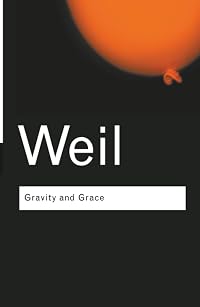
Gravity and Grace
by Simone Weil
On This Page
Description
Gravity and Grace was the first ever publication by the remarkable thinker and activist, Simone Weil. In it Gustave Thibon, the farmer to whom she had entrusted her notebooks before her untimely death, compiled in one remarkable volume a compendium of her writings that have become a source of spiritual guidance and wisdom for countless individuals. On the fiftieth anniversary of the first English edition - by Routledge & Kegan Paul in 1952 - this Routledge Classics edition offers English show more readers the complete text of this landmark work for the first time ever, by incorporating a specially commissioned translation of the controversial chapter on Israel. Also previously untranslated is Gustave Thibon's postscript of 1990, which reminds us how privileged we are to be able to read a work which offers each reader such 'light for the spirit and nourishment for the soul'. This is a book that no one with a serious interest in the spiritual life can afford to be without. show lessTags
Recommendations
















Member Recommendations

caflores Las ideas son antitéticas, pero por eso resultan complementarias.
Member Reviews
I must admit: I don’t think I understand this book. It seems to me Weil is attempting to verbalize something ineffable, so that may have something to do with it. I've recently finished Cioran's The Problem of Being Born and Nietzsche's Beyond Good & Evil, both of which are written in a similarly aphoristic style. Cioran responded to criticism that his aphoristic writings lacked consistency by saying that this is why he liked writing in this way, he wasn't burdened by the weight of having to establish and carry and idea at length and could even contradict himself on the same page. The difference between him and Weil in this regard is pretty stark. (Sidenote: I came to this book after seeing a review somewhere lamenting the fact that show more Weil and Cioran never had the chance to meet and share ideas - I'm not sure if I agree that they would have so much in common) Weil seems to be building a worldview here, even a kind of unified religious conception, so she doesn't have the luxury of Cioran's wide-ranging eye. The latter's book, despite being tagged as a kind of philosophy, is more of a poetic discourse on death, language, and depression, and as such has all the license of poetry. But I guess we are supposed to come away from Weil's book knowing something more. I will say there are moments of extremely clarity and clear brilliance in this book, especially in the latter half. But I often had to read the same sentence over again to find, again, that I didn't know what she was talking about.
I think I had the hindrance of reading this book through several layers of "static" - the first being the obvious pitfalls of reading a book in translation; the second being Gustav Thibon's arrangement and editing of the notebooks that Weil bequeathed to him to make this book; the third being the fact that these writings were drawn from a notebook that (as far as I know) wasn't written for public consumption. The first layer of static needs no explanation. The second's importance is unclear, but if I go by Thibon's introduction, where he blathers on about himself, his awkward feelings about jews, and his redundant explanation of Weil's ideas to follow, I don't think his influence as editor of this book was benign. The third layer of static became clear to me at points of the book where I felt like I was reading ideas of a complex nature that was written in a kind of personal shorthand. Weil uses heavy words like love, imagination, and religion in ways which I couldn't be quite sure of her meaning. This is a writer who thought about very old and well-worn concepts in an atypical way - as such I wish she could have explained what she meant a little more when she used such words, but why would you if you were writing in your own private notebook, where the only audience (namely, you) would know exactly what you meant. This question of meaning takes double importance in the context of an aphorism, where every word, space, and punctuation takes on outsized influence.
In the first 100 pages, I was thinking about giving up on this one. I'm glad I stuck it out, because there are lots of interesting things here, written by someone who was clearly brilliant. Two final thoughts:
- In the last year, I have been consuming a lot of art with religious preoccupations. This is new territory for me, and a topic I never devoted much thought to before. The Brothers Karamazov, a book with a very positive view of Christianity, I can now count as one of my favorites. The thing that makes this book great, in my opinion as a non-Christian, is that despite Dostoyevsky's clear opinion that Christianity is correct, he allows space for his characters to express the complete breadth of what it means to human, and as such displays a tremendous love and tolerance for humanity in all its permutations, good or ugly. Weil comes off as rigid and strict in this book, and therefore I feel that this book is too pure, too sanctified, offering no sympathy for the ugly, passionate, destructive side of human beings which also makes life interesting and beautiful.
- I wonder if this book would still be the most popular thing Weil had written if she hadn't died so young. There is a feeling of finality about so much in this book, as if these are pronouncements shouted from high and meant to be handed down. Surely, if the author had lived, she would have developed these ideas more, as she already had in her short life before publishing this book. Maybe part of what makes Karamazov so great, and so universal, is that it was written later in Dostoyevsky's life, giving him time to work through the trauma of youthful conceptions of perfection destroyed, whereas Weil was in the thick of it. show less
I think I had the hindrance of reading this book through several layers of "static" - the first being the obvious pitfalls of reading a book in translation; the second being Gustav Thibon's arrangement and editing of the notebooks that Weil bequeathed to him to make this book; the third being the fact that these writings were drawn from a notebook that (as far as I know) wasn't written for public consumption. The first layer of static needs no explanation. The second's importance is unclear, but if I go by Thibon's introduction, where he blathers on about himself, his awkward feelings about jews, and his redundant explanation of Weil's ideas to follow, I don't think his influence as editor of this book was benign. The third layer of static became clear to me at points of the book where I felt like I was reading ideas of a complex nature that was written in a kind of personal shorthand. Weil uses heavy words like love, imagination, and religion in ways which I couldn't be quite sure of her meaning. This is a writer who thought about very old and well-worn concepts in an atypical way - as such I wish she could have explained what she meant a little more when she used such words, but why would you if you were writing in your own private notebook, where the only audience (namely, you) would know exactly what you meant. This question of meaning takes double importance in the context of an aphorism, where every word, space, and punctuation takes on outsized influence.
In the first 100 pages, I was thinking about giving up on this one. I'm glad I stuck it out, because there are lots of interesting things here, written by someone who was clearly brilliant. Two final thoughts:
- In the last year, I have been consuming a lot of art with religious preoccupations. This is new territory for me, and a topic I never devoted much thought to before. The Brothers Karamazov, a book with a very positive view of Christianity, I can now count as one of my favorites. The thing that makes this book great, in my opinion as a non-Christian, is that despite Dostoyevsky's clear opinion that Christianity is correct, he allows space for his characters to express the complete breadth of what it means to human, and as such displays a tremendous love and tolerance for humanity in all its permutations, good or ugly. Weil comes off as rigid and strict in this book, and therefore I feel that this book is too pure, too sanctified, offering no sympathy for the ugly, passionate, destructive side of human beings which also makes life interesting and beautiful.
- I wonder if this book would still be the most popular thing Weil had written if she hadn't died so young. There is a feeling of finality about so much in this book, as if these are pronouncements shouted from high and meant to be handed down. Surely, if the author had lived, she would have developed these ideas more, as she already had in her short life before publishing this book. Maybe part of what makes Karamazov so great, and so universal, is that it was written later in Dostoyevsky's life, giving him time to work through the trauma of youthful conceptions of perfection destroyed, whereas Weil was in the thick of it. show less
Simone Weil, a twentieth-century French philosopher and political activist, possessed excellent academic training and worked in the Spanish leftist political movements. Around the advent of World War II, however, she became disillusioned with the totalitarian politics of Europe and made a reflective move inward. She began to convert to a Roman Catholic form of Christianity. Unfortunately, she died in obscurity before the war’s end as a result of a longstanding struggle with anorexia. She had labored at farms in the French countryside and entrusted a notebook/journal of writings to a French philosopher/farmer/friend. Seeing their value, he soon published these writings and a decade later, they were translated into English. They show more demonstrate an active mind and spirit seeking to understand reality amidst profound alienation.
These writings fall somewhere within the realms of personal philosophy and of a spirituality of a seeker. Though Christian in orientation, they do not teach any specific theological creed. They allude to religious rites like the Eucharist, but neither at length nor centrally. Weil was born into Judaism and graduated at the top of her class in philosophy at Paris. These writings show a clear – if not dominant – influence from these traditions.
The topics are varied, including love, evil, the social framework, and asceticism. She practices spiritual disciplines using the so-called via negativa (or negative way), wherein she acknowledges her own frailty and inadequacies in light of the Divine. (This seemed to go hand-in-hand with her anorexia.) She acknowledges two deep forces in the universe: gravity and grace. Gravity, intellectually understood from physics, holds the universe together, but God’s grace allows “the good” to grow. (Weil was a longtime Platonist.) She sees these two scientific and theological forces as complementary, not competitive.
Centuries earlier, another French genius Blaise Pascal left his Pensées, written on scraps of paper and published posthumously. Similarly, Weil’s writings were shared after her untimely death. Her life did not meet with nearly as much acclaim as Pascal’s did in scientific fields. Nonetheless, both’s forays into religious philosophy leave enduring legacies that deserve to be consulted by philosophical theists. Both maintain the role of a seeker, not a strict adherent to a creed, yet both overlap with orthodox Roman Catholic beliefs. They will be remembered in forthcoming centuries for their honesty and intellectual probing. Thinking Christians will value Weil’s contributions here, in her most accessible work that inspires spiritual pondering more than preaching. show less
These writings fall somewhere within the realms of personal philosophy and of a spirituality of a seeker. Though Christian in orientation, they do not teach any specific theological creed. They allude to religious rites like the Eucharist, but neither at length nor centrally. Weil was born into Judaism and graduated at the top of her class in philosophy at Paris. These writings show a clear – if not dominant – influence from these traditions.
The topics are varied, including love, evil, the social framework, and asceticism. She practices spiritual disciplines using the so-called via negativa (or negative way), wherein she acknowledges her own frailty and inadequacies in light of the Divine. (This seemed to go hand-in-hand with her anorexia.) She acknowledges two deep forces in the universe: gravity and grace. Gravity, intellectually understood from physics, holds the universe together, but God’s grace allows “the good” to grow. (Weil was a longtime Platonist.) She sees these two scientific and theological forces as complementary, not competitive.
Centuries earlier, another French genius Blaise Pascal left his Pensées, written on scraps of paper and published posthumously. Similarly, Weil’s writings were shared after her untimely death. Her life did not meet with nearly as much acclaim as Pascal’s did in scientific fields. Nonetheless, both’s forays into religious philosophy leave enduring legacies that deserve to be consulted by philosophical theists. Both maintain the role of a seeker, not a strict adherent to a creed, yet both overlap with orthodox Roman Catholic beliefs. They will be remembered in forthcoming centuries for their honesty and intellectual probing. Thinking Christians will value Weil’s contributions here, in her most accessible work that inspires spiritual pondering more than preaching. show less
These words seem to encapsulate what Weil means by "grace": "May the eternal life give, not a reason for living and working, but a sense of completeness which makes the search for any such reason unnecessary." (222) This complex work focuses its exploration on gravity (search and striving, delusions of faith, attachments to things seen and unseen, the weight of existence) which is fundamentally what it means to be human. It requires a sustained reading because in addition to being philosophical, its theology is largely meditative, almost intuitive. And so I'll have to read it again when I won't have to stop in the middle of things so frequently. Weil's prose is very controlled, elusive, and sometimes completely obscure (I have not read show more the original French)-- and for those very reasons, I was drawn to it. She articulates the sanctity of the divine, and this requires a language which follows the very practice Weil advocates over and over--a humility before the absolute, the human striving towards nothingness. It is wise without being preachy. It is a book which will require another reading when there are fewer distractions in my life and more mental space to reflect upon it. show less
From the introduction written by Simone Weil’s confidante Gustave Thibon, it is clear that understanding Weil’s philosophy will be tiring work, as many of her thoughts are obscure to me and necessitate serious contemplation. Her philosophy is not, I think, main stream any religion - Thibon concedes she was neither a Catholic nor an orthodox Christian either. However she may have hero-worshipped Jesus Christ, living, as she did, by self effacing notions and dieing young. She is portrayed as someone who never stopped living according to her beliefs and it has been suggested (by BBC Radio 4 Great Lives program) that her beliefs may have contributed to her untimely death. As such perhaps her views should be read with caution.
Gravity and Grace was the first ever publication by the remarkable thinker and activist, Simone Weil. In it Gustave Thibon, the farmer to whom she had entrusted her notebooks before her untimely death, compiled in one remarkable volume a compendium of her writings that have become a source of spiritual guidance and wisdom for countless individuals
philosophy
No se me dan bien los libros de aforismos. No soy capaz de concentrarme tanto como para sacar el supuesto jugo a cada palabra y me despisto con frecuencia. Eso, sumado a la naturaleza un poco anárquica de estos escritos, hacen que los mantenga lejos. Pero este parecía breve y relativamente sencillo. Me equivoqué. Bueno, breve sí que lo es, pero uno tarda en leerlo lo mismo que un tomo del doble de extensión. Parece que la mayor parte de estos textos fueron escritos por Weil en Marsella entre 1940 y 1942 en unos cuadernos que, al marchar hacia Londres, entregó a un escritor amigo. Tras la guerra y la muerte de la autora, su amigo editó un selección de esos cuadernos tal como aparecen aquí. Así que deben tanto a Simone Weil como show more a este escritor, Gustave Thibon.
Con todo, hay muchas cosas del pensamiento de Weil que me han gustado. Insiste en la cercanía de los contrarios, representados por la gravedad que nos lleva hacia abajo y la gracia que, viniendo desde fuera, nos eleva. Por eso, cuanto más bajo caemos, en particular en el sufrimiento y el dolor, más cerca estamos de nuestra ascensión definitiva. Pero eso no vendrá de forma mecánica ni material, sino que solo una fuerza exterior, que Weil parece identificar con el Dios cristiano católico, puede conseguir esa transformación. No se olvide que la autora mantuvo buena amistad con varios escritores y sacerdotes católicos, pero siempre rehusó claramente bautizarse. Hay varios pasajes en los que la autora se esfuerza en distinguir entre la concepción católica de Dios y la de otras religiones, y resulta especialmente dura con el judaísmo, al final del libro. También hay acercamientos al hinduismo, algo más ocasionales. Ya digo que esta santificación del sufrimiento me ha gustado especialmente, sobre todo porque Weil fue en su vida totalmente coherente con ello, a veces rozando el ridículo propio de las leyendas de santos medievales. En muchas ocasiones se trasluce su profunda compasión con los sentimientos ajenos, incluso con los de las personas que no conoce, y su empeño en darle a eso un ropaje racional o al menos razonable. show less
Con todo, hay muchas cosas del pensamiento de Weil que me han gustado. Insiste en la cercanía de los contrarios, representados por la gravedad que nos lleva hacia abajo y la gracia que, viniendo desde fuera, nos eleva. Por eso, cuanto más bajo caemos, en particular en el sufrimiento y el dolor, más cerca estamos de nuestra ascensión definitiva. Pero eso no vendrá de forma mecánica ni material, sino que solo una fuerza exterior, que Weil parece identificar con el Dios cristiano católico, puede conseguir esa transformación. No se olvide que la autora mantuvo buena amistad con varios escritores y sacerdotes católicos, pero siempre rehusó claramente bautizarse. Hay varios pasajes en los que la autora se esfuerza en distinguir entre la concepción católica de Dios y la de otras religiones, y resulta especialmente dura con el judaísmo, al final del libro. También hay acercamientos al hinduismo, algo más ocasionales. Ya digo que esta santificación del sufrimiento me ha gustado especialmente, sobre todo porque Weil fue en su vida totalmente coherente con ello, a veces rozando el ridículo propio de las leyendas de santos medievales. En muchas ocasiones se trasluce su profunda compasión con los sentimientos ajenos, incluso con los de las personas que no conoce, y su empeño en darle a eso un ropaje racional o al menos razonable. show less
Feb 4, 2024Spanish
Members
- Recently Added By
Lists

Blackwell's Five Foot Bookshelf
72 works; 4 members

Geotrauma
30 works; 1 member

Books Read in 2025
4,128 works; 98 members

In Our Time books
4,934 works; 2 members
Author Information

220+ Works 7,496 Members
Born in Paris, Weil came from a highly intellectual family. After a brilliant academic career at school and university, she taught philosophy interspersed with periods of hard manual labor on farms and in factories. Throughout her life she combined sophisticated and scholarly interests with an extreme moral intensity and identification with the show more poor and oppressed. A twentieth-century Pascal (see Vol. 4), this ardently spiritual woman was a social thinker, sensitive to the crises of modern humanity. Jewish by birth, Christian by vocation, and Greek by aesthetic choice, Weil has influenced religious thinking profoundly in the years since her death. "Humility is the root of love," she said as she questioned traditional theologians and held that the apostles had badly interpreted Christ's teaching. Christianity was, she thought, to blame for the heresy of progress. During World War II, Weil starved herself to death, refusing to eat while victims of the war still suffered. (Bowker Author Biography) show less
Some Editions
Series
Belongs to Publisher Series
Common Knowledge
- Canonical title
- Gravity and Grace
- Original title
- La pesanteur et la grâce
- Alternate titles
- Gravity & Grace
- Original publication date
- 1948
- First words
- Tutti i moti 'naturali' dell'anima sono retti da leggi analoghe a quelle della pesantezza materiale.
All the natural movements of the soul are controlled by laws analogous to those of physical gravity. - Quotations
- Perfect joy excludes even the very feeling of joy, for in the soul filled by the object no corner is left for saying "I".
Everything, without exception, that is of value in me comes from somewhere other than myself, not as a gift, but as a loan which must be ceaselessly renewed.
For no connection is formed if thought does not bring it about. Two and two remain indefinitely as two and two, unless thought adds them together to make them into four.
We hate the people who try to make us form the conn... (show all)ections we do not want to form.
Obedience to a man whose authority is not illuminated by legitimacy--that is a nightmare.
Socialism consists in imputing good to the conquered, and racialism in imputing good to the conquerors. But the revolutionary wing of socialism makes use of those who, though lowly born, are by nature and by vocation conquero... (show all)rs. Thus it ends up by having the same form of ethics. - Last words
- (Click to show. Warning: May contain spoilers.)Nessuna poesia che abbia per tema il popolo può essere autentica se non vi è la fatica, se non vi sono la fame e la sete che vengono dalla fatica.
(Click to show. Warning: May contain spoilers.)No poetry concerning the people is authentic if fatigue does not figure in it, and the hunger and thirst which come from fatigue. - Canonical DDC/MDS
- 194
- Canonical LCC
- B2430.W473P43
Classifications
Statistics
- Members
- 1,065
- Popularity
- 24,174
- Reviews
- 9
- Rating
- (4.06)
- Languages
- 16 — Catalan, Czech, Dutch, English, Finnish, French, German, Hungarian, Italian, Japanese, Norwegian (Bokmål), Portuguese, Russian, Spanish, Swedish, Turkish
- Media
- Paper, Ebook
- ISBNs
- 46
- ASINs
- 16