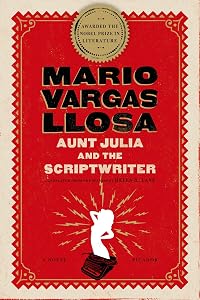
Aunt Julia and the Scriptwriter
by Mario Vargas Llosa
On This Page
Description
Reality merges with fantasy in this hilarious comic novel about the world of radio soap operas and the pitfalls of forbidden passion by the bestselling author of The Storyteller. Sexy, sophisticated, older Aunt Julia, now divorced, seeks a new mate who can support her in high style. She finds instead her libidinous nephew, and their affair shocks both family and community.Tags
Recommendations












Member Recommendations
gust De echte autobiografie.
Member Reviews
A head-spinningly egocentric novel but young Marito has so much puckish charm and zest for life it’s impossible not to take a shine to him. Similar to Augie March in that respect. The romance with Aunt Julia is young love at its best and the chaotic energy of the radio serials boils over spectacularly. There’s only really one character here but you have to admire the sheer exuberance of it all. This is the kind of maximalist lit I can’t not dig. Did I groan at the all-pervasive chauvinism? Yes. Did I find the anti-Argentine running gag hilarious? Also yes.
18-year-old Mario is working at a Lima radio station putting together news broadcasts, while pursuing his law studies and trying to become a writer. This book is the story of his love affair with Julia (his aunt by marriage) and his friendship with Pedro Camacho who is hired to write soap operas for the sister radio station next door.
This is one of my favourite books, but it should only be read by people who are 'the very soul of rectitude and goodness'.
This is one of my favourite books, but it should only be read by people who are 'the very soul of rectitude and goodness'.
A tour de force from Mario Vargas Llosa, who has become one of my favorite authors. In this story which is based on his own life and first marriage, an 18-year-old aspiring writer falls in love with his divorced 32-year-old aunt (by marriage) and begins secretly courting her, first trying to overcome her feeling that he’s just a boy, and then his family’s view that he’s throwing his life away over a passing fancy. The young man works at a radio station in Lima that has just hired an extremely popular soap opera scriptwriter, and Vargas Llosa cleverly makes every other chapter one of the stories that’s read over the air, a fact he conceals until chapter five.
Vargas Llosa has a beautiful way with words, and this novel has it all. show more It transports you to Peru in the 1950’s. The love affair is forbidden; Aunt Julia is sexy and young Marito is sweet. Pedro Camacho, the scriptwriter, is a manic genius interesting in his own right, and he creates funny and entertaining stories. Without giving away how it all plays out, I’ll just say I found the final chapter, which fast forwards to the future (or perhaps, present), excellent. In a subtle way, Vargas Llosa emphasizes the point that these moments or intervals in time in our lives are just that, intervals, and that time and life march on. We all go on the paths we’re on, some converging, some diverging; the ending amplifies the feeling of sentimental remembrance in everything that precedes it.
Quotes:
On being 50:
“…Camacho had held forth, dogmatically and eloquently, on the subject of the man in his fifties. The age at which his intellectual powers and his sensuality are at their peak, he had said, the age at which he has assimilated all his experiences. That age at which one is most desired by women and most feared by men. And he had insisted, in a highly suspect way, that old age was an ‘optative’ phenomenon, I had deduced that the Bolivian scriptwriter was fifty himself and terrified at the prospect of old age: a tiny crack of human frailty in that spirit as solid as marble.”
On love, and this forbidden relationship:
“…we never made any sort of plans for the future. This was a subject that by tacit agreement was banished from our conversations, no doubt because both of us were equally convinced that our relationship was destined not to have a future. Nonetheless, I think that what had begun as a game little by little became serious in the course of these chaste meetings in the smoke-filled cafes of downtown Lima. It was in such places that, without our realizing it, we gradually fell in love.”
“In the space of just a few seconds I went from hating her with all my heart to missing her with all my soul.”
“’I know what it’s like, down to the very last detail, I saw it in a crystal ball,’ Aunt Julia said to me, without the least trace of bitterness. ‘In the best of cases, our love affair will last three, maybe four years or so; that is to say, till you meet up with a little chick who’ll be the mother of your children. Then you’ll throw me over and I’ll have to seduce another gentleman friend. And at that point the words THE END appear.’”
On seduction:
“Despite the fact that her turgescent horizons and gelatinous jiggling when she walked ought to have alerted him to the danger, Father Serefino Huanca Leyva committed (attraction of the abyss that has seen monolithic virtues succumb) the insane error of taking her on as an assistant, believing that, as she claimed, her aim was to save souls and kill parasites. In reality, she wanted to lead him into sin. She put her program for so doing into practice, coming to live in the adobe hovel, sleeping on a makeshift bed separated from him by a ridiculous little curtain which, moreover, was transparent. At night, by candlelight, on the pretext that they made her sleep better and kept her in good physical health, the temptress did exercises. But was Swedish gymnastics the proper term for that Thousand and One Nights harem dance that the Basque woman performed, standing in one spot waggling her hips, shaking her shoulders, wriggling her legs, and coiling her arms, a spectacle that the panting ecclesiastic witnessed through the little curtain lighted by the flickering candle as though watching a disturbing Chinese shadow play? And later, as everyone in Mendocita lay silently sleeping, Mayte Unzategui, on hearing the creaking of the bed on the other side of the curtain, had the audacity to ask, in a mellifluous voice: ‘Are you having trouble getting to sleep, Father dear?’”
On sex:
“’But it’s all false, from beginning to end. The physical something secondary? It’s what matters most for two people to be able to put up with each other, Varguitas.’” show less
Vargas Llosa has a beautiful way with words, and this novel has it all. show more It transports you to Peru in the 1950’s. The love affair is forbidden; Aunt Julia is sexy and young Marito is sweet. Pedro Camacho, the scriptwriter, is a manic genius interesting in his own right, and he creates funny and entertaining stories. Without giving away how it all plays out, I’ll just say I found the final chapter, which fast forwards to the future (or perhaps, present), excellent. In a subtle way, Vargas Llosa emphasizes the point that these moments or intervals in time in our lives are just that, intervals, and that time and life march on. We all go on the paths we’re on, some converging, some diverging; the ending amplifies the feeling of sentimental remembrance in everything that precedes it.
Quotes:
On being 50:
“…Camacho had held forth, dogmatically and eloquently, on the subject of the man in his fifties. The age at which his intellectual powers and his sensuality are at their peak, he had said, the age at which he has assimilated all his experiences. That age at which one is most desired by women and most feared by men. And he had insisted, in a highly suspect way, that old age was an ‘optative’ phenomenon, I had deduced that the Bolivian scriptwriter was fifty himself and terrified at the prospect of old age: a tiny crack of human frailty in that spirit as solid as marble.”
On love, and this forbidden relationship:
“…we never made any sort of plans for the future. This was a subject that by tacit agreement was banished from our conversations, no doubt because both of us were equally convinced that our relationship was destined not to have a future. Nonetheless, I think that what had begun as a game little by little became serious in the course of these chaste meetings in the smoke-filled cafes of downtown Lima. It was in such places that, without our realizing it, we gradually fell in love.”
“In the space of just a few seconds I went from hating her with all my heart to missing her with all my soul.”
“’I know what it’s like, down to the very last detail, I saw it in a crystal ball,’ Aunt Julia said to me, without the least trace of bitterness. ‘In the best of cases, our love affair will last three, maybe four years or so; that is to say, till you meet up with a little chick who’ll be the mother of your children. Then you’ll throw me over and I’ll have to seduce another gentleman friend. And at that point the words THE END appear.’”
On seduction:
“Despite the fact that her turgescent horizons and gelatinous jiggling when she walked ought to have alerted him to the danger, Father Serefino Huanca Leyva committed (attraction of the abyss that has seen monolithic virtues succumb) the insane error of taking her on as an assistant, believing that, as she claimed, her aim was to save souls and kill parasites. In reality, she wanted to lead him into sin. She put her program for so doing into practice, coming to live in the adobe hovel, sleeping on a makeshift bed separated from him by a ridiculous little curtain which, moreover, was transparent. At night, by candlelight, on the pretext that they made her sleep better and kept her in good physical health, the temptress did exercises. But was Swedish gymnastics the proper term for that Thousand and One Nights harem dance that the Basque woman performed, standing in one spot waggling her hips, shaking her shoulders, wriggling her legs, and coiling her arms, a spectacle that the panting ecclesiastic witnessed through the little curtain lighted by the flickering candle as though watching a disturbing Chinese shadow play? And later, as everyone in Mendocita lay silently sleeping, Mayte Unzategui, on hearing the creaking of the bed on the other side of the curtain, had the audacity to ask, in a mellifluous voice: ‘Are you having trouble getting to sleep, Father dear?’”
On sex:
“’But it’s all false, from beginning to end. The physical something secondary? It’s what matters most for two people to be able to put up with each other, Varguitas.’” show less
Take a love-torn teenager, a sexy older woman, an eccentric writer, and a supporting cast of misfit radio artists, romantic friends and enraged relatives and you get this semi-fictional, semi-autobiographical comic novel of life, love and literature.
In 1950ish Lima, Peru, 18-year-old Marito Varguitas studies law and works writing news bulletins for a local radio station’s top-of-the-hour broadcast. There he befriends the station’s new scriptwriter – Pedro Camacho – who can turn out 10 novelas (soap operas) daily. When Marito’s aunt by marriage (no blood relation) arrives from Boliva following an acrimonious divorce, he is quickly smitten. The young man’s aspirations quickly take a back seat to winning the love of Aunt show more Julia, and the resulting scandal alternately horrifies some family members, while it captures the romantic imagination of others. Meanwhile, Pedro’s intricate plots become more incoherent, and the scriptwriter slowly falls apart.
I really liked this romp of a novel, though I’ll admit to some confusion with the interspersed soap opera plots (which alternate with the main Aunt Julia story). Pedro is portrayed as a pseudointellectual, wanna-be-Bohemian, whose outlandish and intricate plots capture the attention and avid following of the populace. I wish he had played more of a part in the story itself, instead of just serving as a counterpoint to reality. What I’d really like to do now, however, is get my hands on the book that “Aunt” Julia Urquidi wrote in response to her ex-husband’s novel (titled What Little Vargas Didn’t Say. THAT should be an interesting story … show less
In 1950ish Lima, Peru, 18-year-old Marito Varguitas studies law and works writing news bulletins for a local radio station’s top-of-the-hour broadcast. There he befriends the station’s new scriptwriter – Pedro Camacho – who can turn out 10 novelas (soap operas) daily. When Marito’s aunt by marriage (no blood relation) arrives from Boliva following an acrimonious divorce, he is quickly smitten. The young man’s aspirations quickly take a back seat to winning the love of Aunt show more Julia, and the resulting scandal alternately horrifies some family members, while it captures the romantic imagination of others. Meanwhile, Pedro’s intricate plots become more incoherent, and the scriptwriter slowly falls apart.
I really liked this romp of a novel, though I’ll admit to some confusion with the interspersed soap opera plots (which alternate with the main Aunt Julia story). Pedro is portrayed as a pseudointellectual, wanna-be-Bohemian, whose outlandish and intricate plots capture the attention and avid following of the populace. I wish he had played more of a part in the story itself, instead of just serving as a counterpoint to reality. What I’d really like to do now, however, is get my hands on the book that “Aunt” Julia Urquidi wrote in response to her ex-husband’s novel (titled What Little Vargas Didn’t Say. THAT should be an interesting story … show less
Mario Vargas Llosa’s semi-autobiographical portrait of young Mario, a would-be writer, is terrifically funny and entertaining. It has an almost metafictional structure that at times reminded me of Calvino. Mario, the narrator, is bored with law school and works at a radio station writing news copy to pay the bills. His life becomes more exciting with the arrival of two new people – his Aunt Julia (his uncle’s sister-in-law – no blood relation) and Pedro Camacho, the much-in-demand writer of radio soap operas. Mario is at first a bit put off Aunt Julia but soon they start a relationship. He befriends the odd Pedro Camacho, whose quirks and crazy work schedule begin to cause havoc in the radio station. Well-written and wonderfully show more entertaining.
The contrast between the two stories works well – a romance with his aunt should be scandalous and crazy (incest!) but it actually plays out as a low-key, affectionate relationship until the end, when things get a little frantic. Pedro Camacho writes dramas, but merely works at a radio station. However, this storyline incorporates all sorts of weirdness. The chapters alternate – one about Mario’s life, one a story from Pedro Camacho. His stories always end on cliffhangers, then move on to another one (I like odd structures like this - If on a Winter’s Night a Traveler is a favorite). They aren’t just trashy romances but gothic, labyrinthine tales. The narratives eventually start to bleed into one another and become confused. At work, Pedro Camacho has odd habits, some ridiculous quirks and turns the recording studio into a rigidly disciplined, fantastical production. The writing and story were so good that I never minded reading about the ordinary interaction - Mario bantering with his coworkers or strategizing with his cousin and best friend. Highly recommended. show less
The contrast between the two stories works well – a romance with his aunt should be scandalous and crazy (incest!) but it actually plays out as a low-key, affectionate relationship until the end, when things get a little frantic. Pedro Camacho writes dramas, but merely works at a radio station. However, this storyline incorporates all sorts of weirdness. The chapters alternate – one about Mario’s life, one a story from Pedro Camacho. His stories always end on cliffhangers, then move on to another one (I like odd structures like this - If on a Winter’s Night a Traveler is a favorite). They aren’t just trashy romances but gothic, labyrinthine tales. The narratives eventually start to bleed into one another and become confused. At work, Pedro Camacho has odd habits, some ridiculous quirks and turns the recording studio into a rigidly disciplined, fantastical production. The writing and story were so good that I never minded reading about the ordinary interaction - Mario bantering with his coworkers or strategizing with his cousin and best friend. Highly recommended. show less
Wow.
This was an excellent book. I loved both paths of the story, one of which was multi-pronged, since we followed the fraying threads of Don Pedro Camacho's serials about men in their fifties, the prime of their life, with their aquiline noses. The serials and the reactions of the public we see to them in Marito's story as he tries to navigate his love affair with his newly divorced Aunt Julia are a ton of (gruesome) fun as Don Pedro begins his long, slow mental decline.
As the serials implode (almost literally) Mario and Julia's story takes on the aspect of one of Don Pedro's own creations and you almost forget that you're in the real world chapters when things escalate with Mario's parents towards the end.
Makes me want to run out and show more get more of Llosa's stuff. show less
This was an excellent book. I loved both paths of the story, one of which was multi-pronged, since we followed the fraying threads of Don Pedro Camacho's serials about men in their fifties, the prime of their life, with their aquiline noses. The serials and the reactions of the public we see to them in Marito's story as he tries to navigate his love affair with his newly divorced Aunt Julia are a ton of (gruesome) fun as Don Pedro begins his long, slow mental decline.
As the serials implode (almost literally) Mario and Julia's story takes on the aspect of one of Don Pedro's own creations and you almost forget that you're in the real world chapters when things escalate with Mario's parents towards the end.
Makes me want to run out and show more get more of Llosa's stuff. show less
This is a wonderful novel by an author with imagination and fully in control of his characters and plots and their complex interweavings. Mario, the protagonist through whose eyes we see most of the story, works as a news editor for a radio station while also trying to establish himself as a writer in his own right. Aunt Julia, some 15 years his senior, is an audacious divorcee and against all odds, her better judgment and condemnation from all sides of the families, they fall in love and want to marry. At the same time a famous Bolivian writer of radio serials comes to work at Mario’s radio station and he makes the station immensely popular, and profitable, with his radio stories; plots of eight or ten radio stories are interspersed show more throughout the novel. But while the lives of Mario and Aunt Julia follow, more or less, a straight line development, the Bolivian writer begins to lose control of his stories, his characters, his plots; he changes the names of characters, gives them the same name but different lives in different stories, changes histories and roles, even kills-off characters only to have them reappear in another story.
This is rather like life that is not the linear progression that we, and especially others, tend to see of each life (kind of like our lives being patterned by a script writer), when it is in fact largely the result happenstance that at any given moment, depending on circumstances, could take us in quite different directions and develop different persona (like a script writer losing control). The Bolivian writer’s mixing of story-lines is a fine representation of the guiding principle of happenstance and so art mirrors life.
There is a hilarious episode with Mario and Julia, and two of Mario’s friends as sidekicks and supporters, visiting every village, no matter how tiny, to try to find a mayor willing to overlook the fact that Mario is underage to marry and does not have parental consent.
Llosa also celebrates the sheer complexity of life and people and relationships, and the infinitely complex web of relationships that hold us all and sometimes nurture, sometimes exasperate us, and in extremis, even harm us. Well worth reading. show less
This is rather like life that is not the linear progression that we, and especially others, tend to see of each life (kind of like our lives being patterned by a script writer), when it is in fact largely the result happenstance that at any given moment, depending on circumstances, could take us in quite different directions and develop different persona (like a script writer losing control). The Bolivian writer’s mixing of story-lines is a fine representation of the guiding principle of happenstance and so art mirrors life.
There is a hilarious episode with Mario and Julia, and two of Mario’s friends as sidekicks and supporters, visiting every village, no matter how tiny, to try to find a mayor willing to overlook the fact that Mario is underage to marry and does not have parental consent.
Llosa also celebrates the sheer complexity of life and people and relationships, and the infinitely complex web of relationships that hold us all and sometimes nurture, sometimes exasperate us, and in extremis, even harm us. Well worth reading. show less
Members
- Recently Added By
Lists

1001 Books You Must Read Before You Die
1,448 works; 1,133 members

Metafiction
84 works; 21 members

Best of World Literature
432 works; 51 members

Latin American Literature
50 works; 11 members

BBC Radio 4 Bookclub
340 works; 13 members

1970s
657 works; 23 members

real people in fiction circumstances
74 works; 10 members

Fiction with Women's Names in the Title
378 works; 15 members

Reading Globally
136 works; 16 members

Read These Too
458 works; 9 members
Speculative Fiction from around the World
610 works; 18 members

BBC World Book Club
265 works; 5 members

Books With Family Relationships in the Title
44 works; 4 members
Talk Discussions
Past Discussions
Aunt Julia and the Scriptwriter in Author Theme Reads (February 2012)
Author Information

386+ Works 34,500 Members
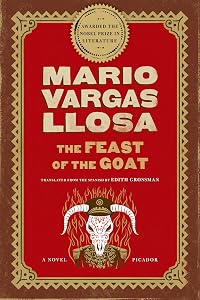
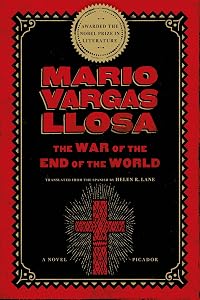
Mario Vargas Llosa was born in Arequipa, Peru on March 28, 1936. He studied literature and law at the National University of San Marcos and received a Ph.D from the University of Madrid in 1959. He is a writer, politician, and journalist. His works vary in genre from literary criticism and journalism to comedies, murder mysteries, historical show more novels, and political thrillers. His books include The Time of the Hero, The Green House, Conversation in the Cathedral, Aunt Julia and the Scriptwriter, The Feast of the Goat, and The War of the End of the World. He has received numerous awards including the Rómulo Gallegos International Novel Prize, the Premio Leopoldo Alas in 1959, the Premio Biblioteca Breve in 1962, the Premio Planeta in 1993, the Miguel de Cervantes Prize in 1994, the Jerusalem Prize in 1995, and the Nobel Prize in Literature in 2010. (Bowker Author Biography) show less
Some Editions
Awards and Honors
Series
Belongs to Publisher Series
Punane raamat (85)
Biblioteca Sábado (16)
Otavan kirjasto (100)
Meulenhoff editie (638)
suhrkamp taschenbuch (1520)
Gallimard, Folio (1649)
Work Relationships
Is contained in
Has as a study
Has as a student's study guide
Common Knowledge
- Canonical title
- Aunt Julia and the Scriptwriter
- Original title
- La tía Julia y el escribidor
- Alternate titles*
- 愛情萬歲
- Original publication date
- 1977
- People/Characters
- Pedro Camacho; Aunt Julia; Mario; Pascual; Genero Jr.; Nancy (show all 7); Patricia
- Important places
- Lima, Peru; Miraflores, Lima, Peru
- Related movies
- Tune in Tomorrow... (1990 | IMDb)
- Dedication
- To Julia Urquidi Illanes, to whom this novel and I owe so much
- First words
- In those long-ago days, I was very young and lived with my grandparents in a villa with white walls in Calle Ocharán, in Miraflores.
- Last words
- (Click to show. Warning: May contain spoilers.)My cousin Patricia is a girl with lots of spirit, quite capable of doing precisely what she's promised.
- Original language
- Spanish
*Some information comes from Common Knowledge in other languages. Click "Edit" for more information.
Classifications
Statistics
- Members
- 2,981
- Popularity
- 5,984
- Reviews
- 76
- Rating
- (3.90)
- Languages
- 29 — Armenian, Bulgarian, Czech, Danish, Dutch, English, Estonian, Finnish, French, Georgian, German, Greek, Hebrew, Hungarian, Italian, Lithuanian, Norwegian (Bokmål), Norwegian, Polish, Romanian, Russian, Serbian, Croatian, Sinhalese, Spanish, Swedish, Turkish, Portuguese (Portugal), Chinese, traditional
- Media
- Paper, Audiobook, Ebook
- ISBNs
- 116
- ASINs
- 45