
Music & Silence
by Rose Tremain
On This Page
Description
In the year 1629, a young English lutenist named Peter Claire arrives at the Danish Court to join King Christian IV's Royal Orchestra.From the moment when he realises that the musicians perform in a freezing cellar underneath the royal apartments, Peter Clair understands that he's come to a place where the opposing states of light and dark, good and evil, are waging war to the death.Designated the King's 'Angel' because of his good looks, he finds himself falling in love with the young woman show more who is the companion of the King's adulterous and estranged wife, Kirsten. With his loyalties fatally divided between duty and passion, how can Peter Claire find the path that will realise his hopes and save his soul? show lessTags
Recommendations

















Member Recommendations
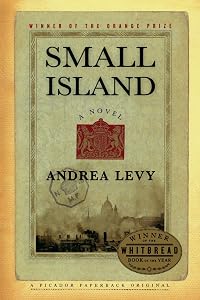
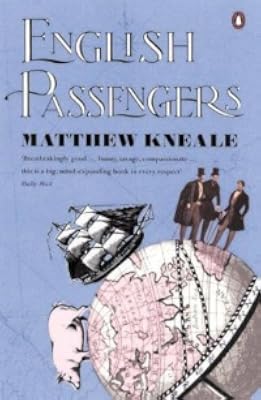
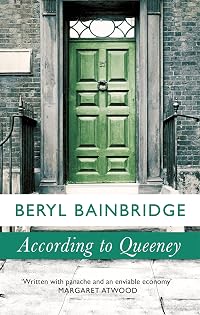
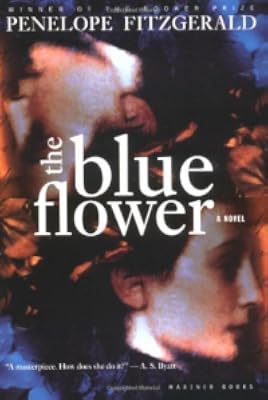
rrmmff2000 Covers another earlier period of Danish royal history, complete with its own machinations and intrigues.
Member Reviews
Music and Silence is a historical novel, set in 1629-1630 in Denmark at the court of King Christian IV - who is depressingly short on money and spends much of his time trying to come up with get-rich-quick schemes that tend to go horribly wrong. He also has nightmares and general hang-ups from his youth and requires the constant presence of his musicians - who he keeps pent-up in a freezing wine cellar that they might pipe seemingly magical music into his throne room unseen. His new favorite is Peter Claire, the golden blond English lutenist "angel", who reminds him of his boyhood friend. We also follow Christian's sex-crazed selfish wife Kirsten and her infidelities, her lady-in-waiting Emilia (who catches Peter's eye), Emilia's family show more back in Jutland who is dealing with a similarly sexually manipulative stepmother and her odd (magical plot moppet) little brother Marcus who can imagine himself into the being of animals (or something). Occasionally we also glimpse Peter's former lover, an Italian lady married to a music-obsessed Irish count, King Christian's scheming mother, Kirsten's scheming mother, King Charles I of England and the fates of the villagers near the failed silver mine.
In short, true to its title, Tremain weaves different strains of story to create a whole meditation on insanity, power struggles, happiness and selfishness and gender politics. And I just didn't like it. I didn't care for any of the characters who all seemed painfully self-centered and uncaring of their actions' effects on others - unless they were reveling in the pain they caused. I found the blatant sexual manipulations by both Kirsten and Magdalena incredibly distasteful, and neither of them showed much in terms of redeeming qualities. And the women's use of sex as a tool was echoed by men's casual contemplations of rape as an imposition of their rightful power and violence (sexual or otherwise) as an attempt to subvert and take back the power the women gained through sex.
The only stories I actually enjoyed reading were Charlotte's (for the most part) and Francesca's (after the end of her husband's crazed violence). But even in each of these storylines were warnings of the dangers a woman faced if she bowed to the societally accepted role of wife and mother (even for love) - as she becomes completely dependent on him and his continued goodwill.
So I started off the year with a literary melancholy contemplation of power dynamics, the role of women, the nature of love and madness. And I am now firmly convinced that it is time to return to my 'happy' books as my forays into the literary world always seem to leave me unsettled and irritated.
More posted at A Hoyden's Look at Literature. show less
In short, true to its title, Tremain weaves different strains of story to create a whole meditation on insanity, power struggles, happiness and selfishness and gender politics. And I just didn't like it. I didn't care for any of the characters who all seemed painfully self-centered and uncaring of their actions' effects on others - unless they were reveling in the pain they caused. I found the blatant sexual manipulations by both Kirsten and Magdalena incredibly distasteful, and neither of them showed much in terms of redeeming qualities. And the women's use of sex as a tool was echoed by men's casual contemplations of rape as an imposition of their rightful power and violence (sexual or otherwise) as an attempt to subvert and take back the power the women gained through sex.
The only stories I actually enjoyed reading were Charlotte's (for the most part) and Francesca's (after the end of her husband's crazed violence). But even in each of these storylines were warnings of the dangers a woman faced if she bowed to the societally accepted role of wife and mother (even for love) - as she becomes completely dependent on him and his continued goodwill.
So I started off the year with a literary melancholy contemplation of power dynamics, the role of women, the nature of love and madness. And I am now firmly convinced that it is time to return to my 'happy' books as my forays into the literary world always seem to leave me unsettled and irritated.
More posted at A Hoyden's Look at Literature. show less
This is Rose Tremain's eighth novel and is an entertaining tale that also exhibits a compelling psychological and moral density. It begins in 1629 as Peter Claire, a young English "lutenist" who’s been summoned to the court of King Christian IV, arrives in Denmark to become the newest member of the royal orchestra. Following this beginning Tremain presents a number of increasingly interlocking narratives (each keyed to a different character's consciousness), She explores a considerable range of human responses to, and involvements with, the overt expressiveness of ``music'' and the ``silence'' that pervades hearts and minds given to introversion and secrecy. Christian's embattled boyhood and sudden ascension to the throne is a sort of show more Hans Christian Andersen fable of a mind eagerly expanding, then possessively contracting as it dramatizes a hungry spirit's resolute perfectionism. The "confessions" of Christian's adulterous consort Kirsten vividly demonstrate her self-indulgence and subterfuge. And the parallel tale of the love between Peter Claire and Kirsten's favorite handmaiden, Emilia, who’s also been traumatized by a complex legacy of intrigue and lust—ironically echoes the royal drama. Tremain's deepening characterization of King Christian—both as an incarnation of acquisitiveness who believes in his own divine right, and a sensitive seeker of higher things—is masterly and, ultimately, very moving. show less
Music & Silence brought to life the most memorable characters. King Christian IV of Denmark is an absolute ruler who commands his orchestra to play from the cellar, yet he is almost a slave to his Consort, Kirsten, who has to be one of the most selfish, petty, vulgar, yet humorous characters I have ever met in fiction. And one who I actually felt pity for at the end. Peter Claire, the talented and decent lutest for the King, holds the story together yet is not the focus. Emilia, Kristen's "general lady" truly has a good heart. Her stepmother, Magadelena, a big, baudy peasant woman has a sexual appetite that includes her stepsons. George Middleton, Peter's future brother-in-law is an overweight successful gentleman who is genuinely in show more love with Charlotte, a young naïve innocent who is lives a charmed life surrounded by people who love her. Sophie, the Dowager Queen, and Ellen Marsvin, Kirsten's mother, are survivors saved by cynicism. No one is perfect, no one is totally evil (well maybe Kirsten), no one totally wins and no one totally loses. The short chapters told from different viewpoints give a quality of different instruments playing in the orchestra, some are direct and bold while others merely provide the background. I particularly looked forward to reading Kristen's version "From her private papers." Besides great characters, Tremain does an excellent job of painting the cold and dampness of Denmark. Although a different time and place, a different writing style, and different characters, if you enjoyed "Crimson Petal and White" you will certainly enjoy "Music and Silence" - even more so.
Reread 5-1-2018: Loved it just as much as the first reading. Tremain is an excellent writer of historical fiction painting a believable story based on reality. show less
Reread 5-1-2018: Loved it just as much as the first reading. Tremain is an excellent writer of historical fiction painting a believable story based on reality. show less
A wonderful fairytale of a novel. With at least a couple of wicked witches - Kirsten the wife and almost queen of the King of Denmark (Christian) and Magdalena, the second wife of Emilia's father, who enchants the whole family with the exception of Emilia and Marcus her youngest brother. The narrative is told in various ways, including diaries and letters and begins when Peter Claire, a lutenist, joins the Danish court orchestra. Peter Claire becomes a favourite of the king. Emilia is sent from her home in Jutland to the court as a companion for Kirsten, the almost queen, by her step mother. The two young people meet and fall in love. This is the basis of the fairytale that includes erotic sex scenes, whispering conversations with show more animals, a silver mine and, of course, perilous sea voyages. Rose Tremain manages to keep control of so many characters and intrigues and weave a complex fairytale of 17th century life. show less
I thought this was delightful. A historical fiction about King Christian of Denmark circa 1630 and his wife the notorious Kirsten Munk. Our other main character is Peter Claire, the King's handsome young lutenist and Emilia Tilsen, one of Kirsten's handmaids, who falls in love with the lutenist. The story has many characters and subplots ranging from King Christian's dyslexic childhood friend, the collapse of a mine in rural Denmark, an Irish Count's deterioration into madness after a dream of beautiful music, Emilia's stepmother's lecherous ways, The King's mother's secret stash of gold, and of course - the story of the two romances - the King and Kirsten; and Peter and Emilia.
Tremain's writing is exquisite - beautiful prose, magical show more details (Gerda the pet hen, the rope dancers, and the earwig,) deft characterization - big sweaty King Christian and his elflock in particular I found a heartbreaking rendering. There were a few points that I felt things moved a bit too slowly and seemed to switch to another plot line just as soon as I was settling in - but really a minor quibble.
This is only the second of Tremain's books I've read - the first being her newest 'Trespass' and I am quite impressed. This novel is that rare blend of literary, historical, entertaining, accessible fiction that I love. Other books like it that I've loved: Barry Unger's 'Sacred Hunger' and Bernier's 'Captain Corelli's Mandolin.' show less
Tremain's writing is exquisite - beautiful prose, magical show more details (Gerda the pet hen, the rope dancers, and the earwig,) deft characterization - big sweaty King Christian and his elflock in particular I found a heartbreaking rendering. There were a few points that I felt things moved a bit too slowly and seemed to switch to another plot line just as soon as I was settling in - but really a minor quibble.
This is only the second of Tremain's books I've read - the first being her newest 'Trespass' and I am quite impressed. This novel is that rare blend of literary, historical, entertaining, accessible fiction that I love. Other books like it that I've loved: Barry Unger's 'Sacred Hunger' and Bernier's 'Captain Corelli's Mandolin.' show less
Is it possible for Rose Tremain to write a BAD book? From my experience so far, the answer would have to be "No." Music and Silence is absolutely exquisite. Tremain gets just right the mix of opulence and stringency, melancholy and joy, hope and despair that war with one another in the 17th century court of King Chistian of Denmark. All of her characters may not be likeable (the selfish Kristin, for one, and Tillson's second wife Mordalena, for another); but each one is unique and fascinating in his or her own right. What is Music and Silence about? The disappointment of love--and the perseverance of love. The power of art and the power of words. Family dynamics that can almost destroy its members yet somehow manages to pull them show more together. The influence of the past and the persistence of memory. And so much more. To give you any more details, if you haven't read this beautiful novel, would spoil the experience. Highly recommended! show less
King Christian IV was the King of both Denmark and Norway from 1588 until his death in 1648. Known as a reformer, King Christian IV implemented a series of domestic reforms, built new fortresses, and initiated a policy of overseas trade during his nearly 60 years as Monarch. The year 1629 ushered in a period of financial distress, and domestic unhappiness when the King discovered his second wife - Kirsten Munk - was sustaining an extramarital affair with a German officer. King Christian IV ultimately expelled Kirsten from Copenhagen to live out her days in Jutland - the western, continental part of Denmark which separates the North Sea from the Kattegat and Baltic Sea.
It is this part of King Christian IV’s reign (1629 - 1630) which show more serves as the backdrop to Rose Tremain’s Whitbread/Costa Award winning novel Music and Silence. This lush story is told from multiple points of view. The manipulative and seductive Kirsten Munk is introduced through her journal entries. Her self-centered musings create a character who is perhaps one of the most intriguing villains in literature…one who is blackly humorous, yet ultimately sad.
The reader also meets Peter Claire - an English lutenist who arrives in Denmark to become part of the royal orchestra - only to become smitten with Kirsten’s female companion Emilia. Throughout the narrative, Tremain intersperses the life of the King in his youth (and his friendship with Bror Brorson which haunts him), with his dreams, turmoils and fears of adulthood.
In Tremain’s competent hands, this historical novel becomes a symphony of romantic twists and turns, and a saga which encompasses all the excesses and political intrigue of royal life in seventeenth century Europe. Tremain explores such complex themes as order vs. chaos, love vs. hate, dreams vs. reality, and betrayal vs. loyalty - all through the metaphor of music and silence. The novel’s thematic elements are connected beautifully to setting, as when King Christian journeys to Norway to spearhead the development of a silver mine during the harsh winter months. He gazes at a waterfall - the Isfoss - which has frozen solid, and imagines the tiny crystals of ice forming in the roaring water.
'They acquire thickness, length and weight. The water is transparent clay, moulding them, layer upon layer, and as the layers accumulate, the roar of the river has become muffled. The human ear has to strain to hear it. And then, in the space of a single night, it falls silent.' -From Music and Silence, page 107-
It is the beauty of these kinds of images which transform Tremain’s novel from an historical piece of fiction into an extraordinary work of literature. Music and Silence is exceptionally wrought - a delicious tale which I highly recommend. show less
It is this part of King Christian IV’s reign (1629 - 1630) which show more serves as the backdrop to Rose Tremain’s Whitbread/Costa Award winning novel Music and Silence. This lush story is told from multiple points of view. The manipulative and seductive Kirsten Munk is introduced through her journal entries. Her self-centered musings create a character who is perhaps one of the most intriguing villains in literature…one who is blackly humorous, yet ultimately sad.
The reader also meets Peter Claire - an English lutenist who arrives in Denmark to become part of the royal orchestra - only to become smitten with Kirsten’s female companion Emilia. Throughout the narrative, Tremain intersperses the life of the King in his youth (and his friendship with Bror Brorson which haunts him), with his dreams, turmoils and fears of adulthood.
In Tremain’s competent hands, this historical novel becomes a symphony of romantic twists and turns, and a saga which encompasses all the excesses and political intrigue of royal life in seventeenth century Europe. Tremain explores such complex themes as order vs. chaos, love vs. hate, dreams vs. reality, and betrayal vs. loyalty - all through the metaphor of music and silence. The novel’s thematic elements are connected beautifully to setting, as when King Christian journeys to Norway to spearhead the development of a silver mine during the harsh winter months. He gazes at a waterfall - the Isfoss - which has frozen solid, and imagines the tiny crystals of ice forming in the roaring water.
'They acquire thickness, length and weight. The water is transparent clay, moulding them, layer upon layer, and as the layers accumulate, the roar of the river has become muffled. The human ear has to strain to hear it. And then, in the space of a single night, it falls silent.' -From Music and Silence, page 107-
It is the beauty of these kinds of images which transform Tremain’s novel from an historical piece of fiction into an extraordinary work of literature. Music and Silence is exceptionally wrought - a delicious tale which I highly recommend. show less
Members
- Recently Added By
Published Reviews
ThingScore 75
In Großbritannien ist die 1943 in London geborene Rose Tremain, die heute in Norfolk lebt, seit langem eine erfolgreiche Romanautorin, berühmt vor allem durch ihre Historienromane. Ohne Zweifel ist auch "Melodie der Stille" ein Roman, in dem nicht nur das Orchester im Keller den historischen Tatsachen entspricht. Doch beim Abwägen zwischen Historie und Roman schlägt die Waage zugunsten der show more Fiktion aus. Tremain hat kein verkapptes Geschichtslehrbuch geschrieben, in dem eine ,Story' die Aufnahme historischer Fakten erleichtern soll. Ihr Roman ist ein Vollblutexemplar seiner Gattung ( mit genauen Beobachtungen und Liebe fürs Detail. Tremains Beschreibungen der Landschaft gehören ebenso zur erzählten Geschichte wie die historischen Räume, die die Stimmungen ihrer Bewohner spiegeln. Die Charaktere, dualistisch getrennt in gut und böse, sind dennoch psychologisch fein entwickelt. Die Guten haben ihre Gründe fürs Gut-Sein, die Bösen Gründe für ihren Hass. Und selbst eine engelhafte Gestalt wie Peter Claire hat nicht immer Antworten auf die Fragen des Daseins ( zumal, wenn es um sein eigenes geht. Doch glücklicherweise zählt Rose Tremains Roman zu denjenigen, in denen es allen Figuren am Ende ein wenig besser geht als am Anfang, sogar den Bösewichten. Das ist nicht überraschend, hinterlässt aber ein Gefühl in der Magengegend wie eine Tasse heißer Schokolade mit Sahne. show less
added by Indy133
Lists

The Guardian's 1000 Novels Everyone Must Read
1,005 works; 551 members

Historical Fiction
889 works; 90 members

music to my eyes
86 works; 12 members

BBC Radio 4 Bookclub
341 works; 13 members
Read These Too
458 works; 9 members
Author Information

38+ Works 10,028 Members
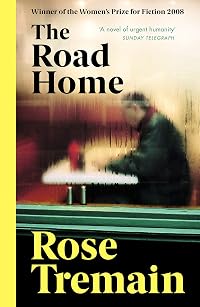
Rose Tremain was born in London, England on August 2, 1943. She has written several novels including The Way I Found Her, Merivel: A Man of His Time, and The American Lover. Restoration was adapted into a movie in 1995 and a stage production in 2009. She has won numerous awards including the James Tait Memorial Prize and the Prix Femina Etranger show more for Sacred Country, the Whitbread Novel of the Year Award for Music and Silence, and the Orange Prize for Fiction in 2008 for The Road Home. She was made a CBE in 2007. (Bowker Author Biography) show less
Some Editions
Awards and Honors
Awards
Series
Belongs to Publisher Series
Net [Il Saggiatore] (91)
Common Knowledge
- Canonical title
- Music & Silence
- Original title
- Music and Silence
- Original publication date
- 1999
- People/Characters
- Christian IV, King of Denmark; Dowager Queen Sofie; Kirsten Munk (his consort); Ellen Marsvin (her mother); Peter Claire (lutenist); Emilia Tilsen (Kirsten's woman) (show all 7); Countess O'Fingan (Francesca)
- Important places
- Copenhagen, Denmark; Jutland, Denmark; Rosenborg Palace; Frederiksborg Castle
- Dedication
- For my daughter, Eleanor
Love always - First words
- A lamp is lit.
- Last words
- (Click to show. Warning: May contain spoilers.)Lift me up and let me fly.
- Original language
- English
Classifications
Statistics
- Members
- 1,448
- Popularity
- 16,244
- Reviews
- 33
- Rating
- (3.76)
- Languages
- 13 — Danish, Dutch, English, Finnish, French, German, Italian, Norwegian (Bokmål), Norwegian, Portuguese, Spanish, Swedish, Turkish
- Media
- Paper, Audiobook, Ebook
- ISBNs
- 44
- ASINs
- 13