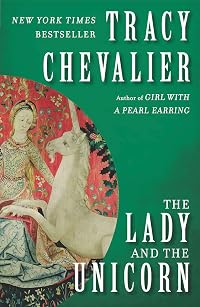
The Lady and the Unicorn
by Tracy Chevalier
On This Page
Description
Fiction. Literature. Romance. Historical Fiction. HTML:A tour de force of history and imagination, The Lady and the Unicorn is Tracy Chevalier’s answer to the mystery behind one of the art world’s great masterpieces—a set of bewitching medieval tapestries that hangs today in the Cluny Museum in Paris. They appear to portray the seduction of a unicorn, but the story behind their making is unknown—until now. Paris, 1490. A shrewd French nobleman commissions six lavish tapestries show more celebrating his rising status at Court. He hires the charismatic, arrogant, sublimely talented Nicolas des Innocents to design them. Nicolas creates havoc among the women in the house—mother and daughter, servant, and lady-in-waiting—before taking his designs north to the Brussels workshop where the tapestries are to be woven. There, master weaver Georges de la Chapelle risks everything he has to finish the tapestries—his finest, most intricate work—on time for his exacting French client. The results change all their lives—lives that have been captured in the tapestries, for those who know where to look.In The Lady and the Unicorn, Tracy Chevalier weaves fact and fiction into a beautiful, timeless, and intriguing literary tapestry—an extraordinary story exquisitely told.
. show less
Tags
Recommendations
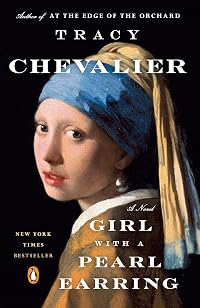
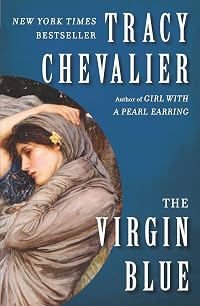
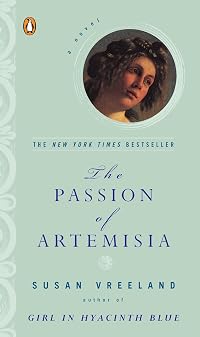





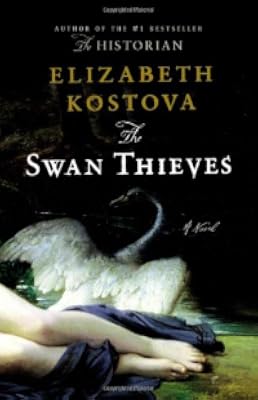
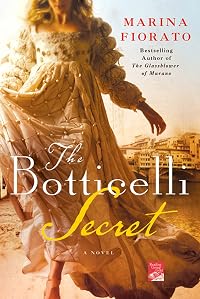

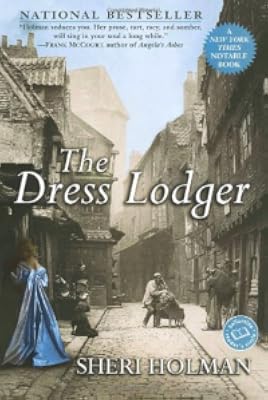
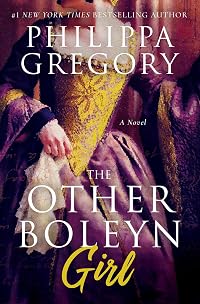











Member Recommendations

Member Reviews
Tracy Chevalier's tale of artistic creation and late-medieval amours, The Lady and the Unicorn is a subtle study in social power and the conflicts between love and duty. Nicolas des Innocents has been commissioned by the Parisian nobleman Jean Le Viste to design a series of large tapestries for his great hall (in real life, the famous Lady and the Unicorn cycle, now in Paris's Musee National du Moyen-Age Thermes de Cluny). While Nicolas is measuring the walls, he meets a beautiful girl who turns out to be Jean Le Viste's daughter. Their passion is impossible for their world--so forbidden, given their class differences, that its only avenue of expression turns out to be those magnificent tapestries. The historical evidence on which this show more story is based is slight enough to allow the full play of Chevalier's imagination in this cleverly woven tale. show less
I liked this much better than Virgin Blue, but not as much as Pearl Earring. I felt that although the characters were drawn well and I cared about them, there was no intimacy. In Pearl Earring, I felt close to the heroine, that her pain was my pain. In this, I don’t as closely identify with anyone.
Nicholas is a jerk, through and through. We learn from the outset that he’ll try to screw (or plow as he so elegantly puts it) anything in skirts. What an asshole. But he’s talented so people put up with him. Sounds like familiar territory. The details of guilds and weaving and the running of the shop were interesting although I have no idea how accurate any of it was. The central family is very tight-knit and it was enjoyable to read show more about how they looked out for each other and protected each other. The whole was just as important as the individual, something you rarely see now. show less
Nicholas is a jerk, through and through. We learn from the outset that he’ll try to screw (or plow as he so elegantly puts it) anything in skirts. What an asshole. But he’s talented so people put up with him. Sounds like familiar territory. The details of guilds and weaving and the running of the shop were interesting although I have no idea how accurate any of it was. The central family is very tight-knit and it was enjoyable to read show more about how they looked out for each other and protected each other. The whole was just as important as the individual, something you rarely see now. show less
Once again Tracy Chevalier shows she can write about art in a way that makes you not only want to view the topic of her book but helps you to understand and appreciate it. The Lady and the Unicorn tapestries are the subject of this book. There was an intense discussion of the oppression of women, and all of the lower classes in the 15th century. I'm always amazed when I can like a book and thoroughly dislike its main characters. Both the artist and the young girl about whom he obsesses are very deficient in character. The only people with whom the reader has any sympathy are the artisans, and they bring the tapestries to life. I would be tempted to overlook the mille-fleurs, but Chevalier shows just how much thought was put into placing show more the right flowers in these tapestries that exemplify the 5 senses touch, taste, sight, hearing and smell while they also show the seduction of an innocent and the accumulation or rejection of worldly goods. It seems Chevalier is a master of any subject she pursues. show less
A ravishing fictional account of the making of the famous French tapestries. I couldn't put this one down. Chevalier's simple, elegant prose fits this literary conjecture perfectly. Especially illuminating was the spotlight put on the very few life choices women had back in the 15th century. I enjoyed seeing how all of the main female characters were eventually represented in the tapestries themselves. A quick, engrossing read.
A fictionalized account of the weaving of the Unicorn tapestries that are now in the Museum at Cluny, France, a series of six depicting the romancing of a unicorn by a lady. Woven through the story of their creation are the stories of the wife and daughter of the wealthy aristocrat who commissions them, Jean LeViste, and their life – mostly in Paris – and the lives of the weaver, Georges De La Chapelle, his wife Christine, their blind daughter Alienor in Brussels as they work on the creation of the tapestries. Appearing in both locations is the talented artist, Nicolas Des Innocents, a painter and the creator of the concept of the Unicorn Tapestries, who is less than admirable at the beginning of the story. The individual chapters show more are all told in first person narratives by different characters.
Nicolas beds whatever girl he is able to work into the horizontal and has no feeling for them afterward. At the very beginning, he encounters a servant girl in the LeViste household who is in danger of losing her place because he has impregnated her. His idea of shouldering responsibility is to toss a few coins her way. Doubtless, this is the way such matters were usually handled during the 15th/16th century when servant girls found themselves in a fix, but it does not help me to like Nicolas. He takes a liking to the eldest daughter of his patron and plans to seduce her – an easy task, for the girl’s hormones are raging – but never gets the chance. Even later on when Nicolas travels to Brussels to help with execution of the tapestries he is arrogant and dismissive both of the work the weavers do and of Brussels itself. Fortunately, time and circumstances do something toward redeeming Nicolas in my eyes, but Chevalier does not try to impose our standards upon him, nor for that matter upon any of the other characters. Their time and place dictate the way their stories turn out and I like that.
I liked the chapters concerning Genevieve and Claude LeViste, the mother and eldest daughter of Jean’s household well enough, but I truly liked the ones concerning the Chapelle family in Brussels – in particular the blind Alienor – the best. Poor Alienor is being pursued by the woad-maker (woad is a blue dye), Jaques LeBoeuf, who smells revoltingly – and eternally - of sheep piss – the down side of his trade. He wants to marry her and badgers her parents to agree to it. They do not want to make Alienor unhappy, but after all she is damaged and LeBoeuf being their source for woad – well, business is business. But not to worry. Alienor has a solution to her problem.
I think I have read reviews somewhere where the reviewer found the copious descriptions of how the tapestries were woven tedious, but I did not find that they took away from my enjoyment of the book. This book is not the same as Girl With A Pearl Earring, but I liked it just as well. show less
Nicolas beds whatever girl he is able to work into the horizontal and has no feeling for them afterward. At the very beginning, he encounters a servant girl in the LeViste household who is in danger of losing her place because he has impregnated her. His idea of shouldering responsibility is to toss a few coins her way. Doubtless, this is the way such matters were usually handled during the 15th/16th century when servant girls found themselves in a fix, but it does not help me to like Nicolas. He takes a liking to the eldest daughter of his patron and plans to seduce her – an easy task, for the girl’s hormones are raging – but never gets the chance. Even later on when Nicolas travels to Brussels to help with execution of the tapestries he is arrogant and dismissive both of the work the weavers do and of Brussels itself. Fortunately, time and circumstances do something toward redeeming Nicolas in my eyes, but Chevalier does not try to impose our standards upon him, nor for that matter upon any of the other characters. Their time and place dictate the way their stories turn out and I like that.
I liked the chapters concerning Genevieve and Claude LeViste, the mother and eldest daughter of Jean’s household well enough, but I truly liked the ones concerning the Chapelle family in Brussels – in particular the blind Alienor – the best. Poor Alienor is being pursued by the woad-maker (woad is a blue dye), Jaques LeBoeuf, who smells revoltingly – and eternally - of sheep piss – the down side of his trade. He wants to marry her and badgers her parents to agree to it. They do not want to make Alienor unhappy, but after all she is damaged and LeBoeuf being their source for woad – well, business is business. But not to worry. Alienor has a solution to her problem.
I think I have read reviews somewhere where the reviewer found the copious descriptions of how the tapestries were woven tedious, but I did not find that they took away from my enjoyment of the book. This book is not the same as Girl With A Pearl Earring, but I liked it just as well. show less
Based on the description on the back of this book, I expected an elegantly written, cozy, sophisticated, intriguing, engrossing Medievalish fantasy. What I got was a badly written, tawdry romance filled with cheesy innuendos that entirely lacked depth. I don't mind a tawdry romance, but 1) it was completely at odds with how this book is touted so I wasn't prepared for it and 2) even the least sophisticated romance I've read has never come close to this level of groan-worthy, eye-rolling text. To this day I am still not sure what the author was trying to accomplish, aside from making me guffaw.
A book by Tracy Chevalier is always good value. She tells a good yarn, and while her subject matter is well-researched, she wears her learning lightly. This book got off on the wrong foot however. The tale of the over-sexed miniature painter, Nicholas des Innnocents, and his first foray into tapestry design struck a false note with me from the earliest pages. I simply didn't believe that the 14 year old daughter of nobleman Jean le Viste would all but give herself, on the slightest of acquaintance, and under the table at that, to this artist.
Things improved. I was interested in the weavers of Bruges who have to interpret Nicholas' design. The difficulties they encountered and the personalities involved got me interested. I wanted to show more know how the story would play out. It was a pity that at the end of the book, there was more scarcely credible under-the-table action.
The tapestries exists to this day. The story that Chevalier weaves is in no sense an account of its history. But it's an involving story, with just a few incredible plot details that somewhat spoilt the book for me. show less
Things improved. I was interested in the weavers of Bruges who have to interpret Nicholas' design. The difficulties they encountered and the personalities involved got me interested. I wanted to show more know how the story would play out. It was a pity that at the end of the book, there was more scarcely credible under-the-table action.
The tapestries exists to this day. The story that Chevalier weaves is in no sense an account of its history. But it's an involving story, with just a few incredible plot details that somewhat spoilt the book for me. show less
Members
- Recently Added By
Lists

Historical Fiction
889 works; 90 members

a picture or a thousand words
39 works; 5 members

Authors from the United States
245 works; 3 members

Biggest Disappointments
606 works; 163 members

Florida
366 works; 3 members

Unread books
1,063 works; 87 members
Author Information

27+ Works 43,095 Members
Tracy Chevalier was born on October 19, 1962 in Washington, D.C. After receiving a B.A. in English from Oberlin College, she moved to England in 1984 where she worked several years as a reference book editor. Leaving her job in 1993, she began a year-long M.A in creative writing at the University of East Anglia. She is the author of several novels show more including The Virgin Blue, Burning Bright, Remarkable Creatures, and The Last Runaway. Her novel Girl with a Pearl Earring was made into a film starring Colin Firth and Scarlett Johansson. (Bowker Author Biography) show less
Some Editions
Awards and Honors
Distinctions
Series
Belongs to Publisher Series
Work Relationships
Is contained in
Common Knowledge
- Canonical title
- The Lady and the Unicorn
- Original title
- The Lady and the Unicorn
- Original publication date
- 2003
- People/Characters
- Nicolas des Innocents; Jean Le Viste; Claude Le Viste; Genevieve de Nanterre; Leon Le Vieux ; Beatrice (show all 13); Georges De La Chapelle; Georges Le Jeune; Philippe De La Tour; Christine Du Sablon; Alienor De La Chapelle; Jacques Le Boeuf; Marie-Celeste
- Important places
- Paris, France; Brussels, Belgium
- Dedication
- For my sister Kim
- First words
- The messenger said I was to come at once.
- Last words
- (Click to show. Warning: May contain spoilers.)Leon LeVieux died in his own bed, his wife and children at his side.
- Original language
- English
- Canonical DDC/MDS
- 813.54
- Canonical LCC
- PS3553.H4367
Classifications
Statistics
- Members
- 5,090
- Popularity
- 2,728
- Reviews
- 129
- Rating
- (3.51)
- Languages
- 20 — Catalan, Danish, Dutch, English, Finnish, French, German, Greek, Hebrew, Hungarian, Italian, Japanese, Lithuanian, Norwegian (Nynorsk), Norwegian (Bokmål), Polish, Portuguese, Romanian, Spanish, Swedish
- Media
- Paper, Audiobook, Ebook
- ISBNs
- 90
- UPCs
- 1
- ASINs
- 20