
Barney's Version
by Mordecai Richler
On This Page
Description
Charged with comic energy and a steely disregard for any pieties whatsoever, Barney's Version is a major Richler novel, the most personal and feeling book of a long and distinguished career.Told in the first person, it gives us the life (and what a life!) of Barney Panofsky--whose trashy TV company, Totally Useless Productions, has made him a small fortune; whose three wives include a martyred feminist icon, a quintessential JCP (Jewish-Canadian Princess), and the incomparable Miriam, the show more perfect wife, lover, and mother--alas, now married to another man; who recalls with nostalgia and pain his young manhood in the Paris of the early fifties, and his lifelong passion for wine, women, and the Montreal Canadiens; who either did or didn't murder his best friend, Boogie, after discovering him in bed with The Second Mrs. Panofsky; whose satirical eye for the idiocies of today's Quebec separatists (as well as for every other kind of political correctness) manages to offend his entire acquaintanceship (and will soon be offending readers everywhere); and whose memory--though not his bile--is, in his sixty-seventh year, definitely slipping . . .
From the Hardcover edition.
. show less
Tags
Recommendations





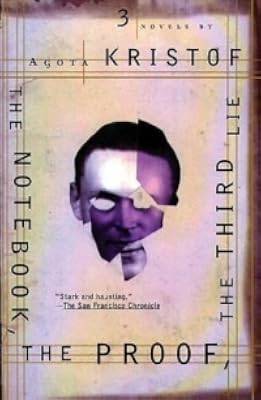


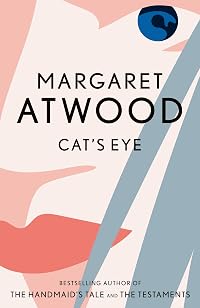
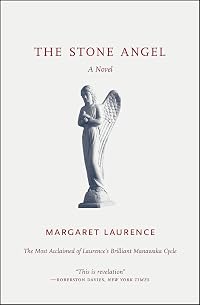
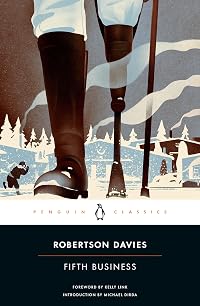











Member Recommendations
UrliMancati It has been said that Barney is Holden at the end of his life. While the twos do not have so much in common, the reader will definitively love both characters.
02
Member Reviews
Quite frankly, I'd never even heard of Mordecai Richler until I read the autobiography of his British editor and publisher, Diana Athill. She predicted he'd become the grand old man of Canadian literature, and apparently he did. Lord only knows what I was busy doing at the time. In any event, I picked up a cheap kindle copy of "Barney's Version". It's a book that should be, in certain ways, familiar to fans of the mid-century New York golden age -- Roth, Bellow, Mailer, and all the rest -- but we're in Montreal, Canada if we're not hanging around the bohemian quarters of Paris after the war, and the titular Barney's a die-hard Canadiens fan. Still, the novel's prose is a joy: equal parts nostalgic, quick-witted and swinging. Also, the show more frequent footnotes, that undercut Barney's eponymous version, prove themselves to be a surprisingly effective comic and literary device.
Barney, it must be said, is a bit more of a jerk than most of the main characters created by the aforementioned authors: acerbic, moneyed, hard-drinking. But he's not without his charm, or his attractions, at least to his three wives, all of whom are rendered wonderfully, if not exactly fondly. "Barney's Version" is a bit more of a comedy than the sort of book the aforementioned Big Three usually produced: Richler seems willing much more willing to play his main character's eccentricities, terrible decisions, pet peeves, and misfortunes for genuine laughs than any of those authors would have. Filled with good bits and big characters and even an unsolved murder mystery, "Barney's Version" is, if absolutely nothing else, a lot of fun to read.
But it's more than fun, really. Barney's more-or-less past his prime when we meet him, and much of the book's plot describes his slow slide into irrelevance. Barney's a grouch, sure, but Richler still presents his halting progress toward death with genuine pathos. Whatever mistakes he has made in his life, Barney has made sure to surround himself with friends and family, most of whom stick by him as he prepares to leave this world. Barney, we learn, has grown rich off of connections with talents bigger than himself and middling, often state-supported Canadian television shows. But the author goes out of his way to show us that never losing track of the neighborhood kids he grew up with and showing undying loyalty to his kids -- even at their most problematic, were two things that Barney -- God rest his soul -- did right. Recommended. show less
Barney, it must be said, is a bit more of a jerk than most of the main characters created by the aforementioned authors: acerbic, moneyed, hard-drinking. But he's not without his charm, or his attractions, at least to his three wives, all of whom are rendered wonderfully, if not exactly fondly. "Barney's Version" is a bit more of a comedy than the sort of book the aforementioned Big Three usually produced: Richler seems willing much more willing to play his main character's eccentricities, terrible decisions, pet peeves, and misfortunes for genuine laughs than any of those authors would have. Filled with good bits and big characters and even an unsolved murder mystery, "Barney's Version" is, if absolutely nothing else, a lot of fun to read.
But it's more than fun, really. Barney's more-or-less past his prime when we meet him, and much of the book's plot describes his slow slide into irrelevance. Barney's a grouch, sure, but Richler still presents his halting progress toward death with genuine pathos. Whatever mistakes he has made in his life, Barney has made sure to surround himself with friends and family, most of whom stick by him as he prepares to leave this world. Barney, we learn, has grown rich off of connections with talents bigger than himself and middling, often state-supported Canadian television shows. But the author goes out of his way to show us that never losing track of the neighborhood kids he grew up with and showing undying loyalty to his kids -- even at their most problematic, were two things that Barney -- God rest his soul -- did right. Recommended. show less
C'è così tanta vita, e passioni, e amore in questo libro che si rimane incantati dalla sua grandezza. Barney e' senz'altro il personaggio letterario che più di ogni altro mi e' rimasto in memoria nell'ultimo decennio e la visione del film e' servita per decidermi a rileggere questo masterpiece: una delle scelte più felici delle ultime settimane. Qualcuno una volta mi disse che la vita si divide in 'prima e dopo' aver letto l'Ivan I'lic di Tolstoj: pur non sconfessando l'affermazione, sono propenso ad un cambio di libro. Con questo la lettura tonifica, stupisce, solleva e rinfranca. Come una camminata sul crinale di una esistenza, con la vista meravigliosa delle bellezze a valle e lo scorcio tremendo ma inevitabile della guglia di show more roccia la' in cima. show less
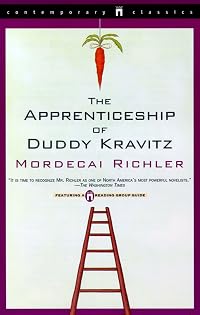
Richler layers on enough historical and cultural references (including Duddy Kravitz and St. Urbain Street) within the first five pages that his novel starts requiring footnotes. Actually, the footnotes are there by design, added by a fictional editor of this fictional memoir by a fictional character named Barney Panofsky, who is out to redeem his reputation in his twilight years after a long-time acquaintance slanders him in another autobiography.
Barney's memory is beginning to suffer, demonstrated as he stumbles a bit to recollect certain trivia while rambling all over his personal timeline through the early chapters. Eventually he settles down to follow something more chronological, interspersed with notes from his present, and the show more narrative becomes easier to follow through its three parts delineated by his marriages. Barney's dry, sarcastic wit does him service and lends some rich humour, though he also succumbs to lashing out in anger as he knows how to hold (and act upon) a grudge.
Barney's background is Jewish Quebecois (just like Richler's own), but many of his reflections are universal: the too swift passage of time, the unremitting memories, the odd ways in which people can come and go from one's life. Regrets and honest self-assessments mount. There is no clear takeaway at the end this story, not even in the epilogue, which is perhaps the best verisimilitude of all. Even if it was sometimes absurd, Barney's was not so bad as lives go, and it feels like ending enough. show less
Barney's memory is beginning to suffer, demonstrated as he stumbles a bit to recollect certain trivia while rambling all over his personal timeline through the early chapters. Eventually he settles down to follow something more chronological, interspersed with notes from his present, and the show more narrative becomes easier to follow through its three parts delineated by his marriages. Barney's dry, sarcastic wit does him service and lends some rich humour, though he also succumbs to lashing out in anger as he knows how to hold (and act upon) a grudge.
Barney's background is Jewish Quebecois (just like Richler's own), but many of his reflections are universal: the too swift passage of time, the unremitting memories, the odd ways in which people can come and go from one's life. Regrets and honest self-assessments mount. There is no clear takeaway at the end this story, not even in the epilogue, which is perhaps the best verisimilitude of all. Even if it was sometimes absurd, Barney's was not so bad as lives go, and it feels like ending enough. show less
Go past the first part, which is often a bit too political and didascalic. Know your English and your American culture: you'll need it.
But I cannot help loving a book that makes me wanna try cognac.
Culturally voracious, adamant about his shortcomings, generous and uncompromising, if somewhat unbearable. "Now I know. The monster was me"
Splendid - but still inferior to the very similar "Till we have faces" and "L'età dell'oro".
But I cannot help loving a book that makes me wanna try cognac.
Culturally voracious, adamant about his shortcomings, generous and uncompromising, if somewhat unbearable. "Now I know. The monster was me"
Splendid - but still inferior to the very similar "Till we have faces" and "L'età dell'oro".
Barney Panofsky is a fictional character but from what I have read of the author's persona and life he is largely drawn from Richler's own experiences. This book was the last one Richler completed before his death and it is a fitting tribute to his career I think. Of course, I haven't read any of the other books Richler wrote but I do still remember the film made from The Apprenticeship of Duddy Kravitz which I thought was equal parts hilarious and disturbing. (Duddy Kravitz makes a few cameo appearances in this book.)
Barney is in his 60s living on his own since his third wife left him but still continuing to direct his TV production company, drinking at the bar and at home, and smoking cigars at all hours. He has learned that an old show more compatriot, Terry McIvor, is publishing an autobiography which will paint Barney in a very bad light and so he has decided to write his own autobiography which will contain his version of events. Barney divides the book into three parts named for his three wives (Clara, the Second Mrs. Panofsky and Miriam) but don't expect a straightfoward narrative from Barney. He does eventually get to the point but it is a long and winding, albeit fascinating, road. We do eventually learn that his first wife Clara was someone he met while living in Paris and that she committed suicide very young. Barney returned to Montreal determined to make more of his life and that meant finding another woman to marry. At his wedding reception to the Second Mrs. Panofsky he met Miriam and fell instantly in love. In case you think this is artistic license this same scenario played out between Richler and his second wife. His second marriage ended when he found his wife in bed with his close friend at the cottage he owned in the Laurentians. Barney was secretly glad to have a reason to divorce his wife so that he could woo Miriam but when his friend never returned to the cottage after going for a swim in the lake Barney was charged with his murder. Barney swore to the end that he did not kill the man but are we to believe Barney who has proven to be an unreliable narrator about events both big and small. Although the police could find no body nor any blood they charged him with murder. Barney was acquitted by a jury but most people believe he got away with murder. Miriam, however, did believe him and they did get married, have children and live together quite happily. And then Barney committed one mistake that Miriam could not forgive so she left him and married a younger man. Barney continues to be devastated about losing Miriam and thinks they will eventually reconcile. He also thinks his friend will show up out of the blue proving that he was innocent all along. As Barney continues to pen this autobiography it becomes clear that he is having memory problems and very quickly he deteriorates until he has been put into a personal care home. The book is corrected for errors by his son who also adds an Afterword which sheds some more light on Barney Panofsky, the man, the husband and the father.
Although I felt like I should abhor this character I actually grew to love Barney Panofsky. I'm sure he would have been horrendous to live with but life would not have been dull. And I suspect the same applies to Mordecai Richler. This book was selected by CBC as one of 100 Novels that Make us Proud to be Canadian and I think it was an inspired choice. show less
Barney is in his 60s living on his own since his third wife left him but still continuing to direct his TV production company, drinking at the bar and at home, and smoking cigars at all hours. He has learned that an old show more compatriot, Terry McIvor, is publishing an autobiography which will paint Barney in a very bad light and so he has decided to write his own autobiography which will contain his version of events. Barney divides the book into three parts named for his three wives (Clara, the Second Mrs. Panofsky and Miriam) but don't expect a straightfoward narrative from Barney. He does eventually get to the point but it is a long and winding, albeit fascinating, road. We do eventually learn that his first wife Clara was someone he met while living in Paris and that she committed suicide very young. Barney returned to Montreal determined to make more of his life and that meant finding another woman to marry. At his wedding reception to the Second Mrs. Panofsky he met Miriam and fell instantly in love. In case you think this is artistic license this same scenario played out between Richler and his second wife. His second marriage ended when he found his wife in bed with his close friend at the cottage he owned in the Laurentians. Barney was secretly glad to have a reason to divorce his wife so that he could woo Miriam but when his friend never returned to the cottage after going for a swim in the lake Barney was charged with his murder. Barney swore to the end that he did not kill the man but are we to believe Barney who has proven to be an unreliable narrator about events both big and small. Although the police could find no body nor any blood they charged him with murder. Barney was acquitted by a jury but most people believe he got away with murder. Miriam, however, did believe him and they did get married, have children and live together quite happily. And then Barney committed one mistake that Miriam could not forgive so she left him and married a younger man. Barney continues to be devastated about losing Miriam and thinks they will eventually reconcile. He also thinks his friend will show up out of the blue proving that he was innocent all along. As Barney continues to pen this autobiography it becomes clear that he is having memory problems and very quickly he deteriorates until he has been put into a personal care home. The book is corrected for errors by his son who also adds an Afterword which sheds some more light on Barney Panofsky, the man, the husband and the father.
Although I felt like I should abhor this character I actually grew to love Barney Panofsky. I'm sure he would have been horrendous to live with but life would not have been dull. And I suspect the same applies to Mordecai Richler. This book was selected by CBC as one of 100 Novels that Make us Proud to be Canadian and I think it was an inspired choice. show less
Barney Panofsky is an aging Jewish businessman from Montreal whose made the bulk of his fortune producing what he himself would define as schlock Canadian television programs. When an old acquaintance from his time spent in Paris as a young man publishes a book which features unflattering mentions about him, he decides to write a memoir relating his own version of events, hence, Barney’s Version. What’s clear right off the bat is that Barney is an unpleasant old coot who takes pride in offending people and whatever sensibilities they might have, and also that he has a badly faltering memory (he calls one of his sons in London England just so he can help him remember the names of the seven dwarves). All of which of course makes him a show more delightfully unreliable narrator since we also quickly learn that Barney is a heavy drinker who enjoys his Macallan single malt scotch accompanied with plenty of cigars, morning, noon and night.
The novel is divided into three parts which are ostensibly dedicated to his three former wives. We eventually learn the details of how he came to be married to them and how the marriages have ended, although Barney’s storytelling is far from linear and tends to jump all over the place, so there are anecdotes aplenty. Barney may or may not have killed his best friend, the talented writer Bernard “Boogie” Moscovitch, who has disappeared without a trace, and he aims to redeem himself and come clean once and for all about the events which led to his arrest for that alleged murder, but as he progresses in his storytelling, his lapses in memory become more and more frequent until he can no longer be certain of what had taken place on that fateful day.
It took me a good 100 pages or so before I began to enjoy this book and very nearly dropped it before I got there because Barney jumps into a bunch of jumbled-up stories, naming places and individuals and incidents big and small and skipping through time willy-nilly in the opening section, which made it hard to figure out what the heck was going on. But as I progressed, I began to see there was a method to the madness, and the story that does emerge is well-worth the initial confusion. All told, a masterful novel I’ll look forward revisiting eventually and which does not lack in originality. show less
The novel is divided into three parts which are ostensibly dedicated to his three former wives. We eventually learn the details of how he came to be married to them and how the marriages have ended, although Barney’s storytelling is far from linear and tends to jump all over the place, so there are anecdotes aplenty. Barney may or may not have killed his best friend, the talented writer Bernard “Boogie” Moscovitch, who has disappeared without a trace, and he aims to redeem himself and come clean once and for all about the events which led to his arrest for that alleged murder, but as he progresses in his storytelling, his lapses in memory become more and more frequent until he can no longer be certain of what had taken place on that fateful day.
It took me a good 100 pages or so before I began to enjoy this book and very nearly dropped it before I got there because Barney jumps into a bunch of jumbled-up stories, naming places and individuals and incidents big and small and skipping through time willy-nilly in the opening section, which made it hard to figure out what the heck was going on. But as I progressed, I began to see there was a method to the madness, and the story that does emerge is well-worth the initial confusion. All told, a masterful novel I’ll look forward revisiting eventually and which does not lack in originality. show less
Quando lo scrittore di origini ebraiche Mordecai Richler muore a settanta anni nel suo grande paese, il Canada, ha alle spalle una lunga carriera di giornalista, opinionista, scrittore. Ha scritto romanzi, saggi, articoli, libri per bambini, insomma è diventato un intellettuale, uno di quelli più scomodi nel panorama culturale del Canada.
Questo suo libro esce nel 1997 ed ha un grande successo sopratutto a causa delle moltissime polemiche che suscita il suo protagonista, per il suo atteggiamento controcorrente ed irriverente nei confronti di diversi argomenti. Donne, omosessuali, ebrei, intellettuali, televisione, cinema, letteratura, miti e mitologie, sesso, usi e costumi, abbigliamento. Insomma, non gli sfugge alcun argomento sul show more quale esprime il proprio pensiero sempre secondo la sua versione.
Insomma si comporta come un vero e proprio orso. Da questa situazione nasce il titolo del libro diventato poi un proverbiale modo di dire controcorrente: la sua versione. Il libro ha uno scopo ben preciso. Il protagonista del libro, Barney Panofsky, alla sua età, dopo aver avuto tre mogli, girato per due continenti, dopo mezzo secolo di vita vissuta ai limiti, dopo litri di whisky bevuti e migliaia di sigari cubani fumati, in preda di una galoppante senilità, ci fornisce una spiegazione della sua vita, su come sono andate realmente le cose che gli sono accadute.
Su di lui aleggiano sospetti gravi e senza nulla nasconderci ci racconta la sua vita. La sua versione. Follie e entusiamsi giovanili, amori altrui, figuracce esilaranti, comiche e tragiche, errori madornali. Man mano che il racconto va avanti, in chi legge sorgono, però, dei dubbi. Ci si accorge di molte esattezze, di una vaga reticenza, insomma Panofsky ci prende in giro, ci descrive la realtà del suo vissuto da diversi punti di vista sempre più incredibili.
Sembra proprio che ci voglia dire questo: che la realtà supera la fantasia a condizione che la fantasia la sappia raccontare ... show less
Questo suo libro esce nel 1997 ed ha un grande successo sopratutto a causa delle moltissime polemiche che suscita il suo protagonista, per il suo atteggiamento controcorrente ed irriverente nei confronti di diversi argomenti. Donne, omosessuali, ebrei, intellettuali, televisione, cinema, letteratura, miti e mitologie, sesso, usi e costumi, abbigliamento. Insomma, non gli sfugge alcun argomento sul show more quale esprime il proprio pensiero sempre secondo la sua versione.
Insomma si comporta come un vero e proprio orso. Da questa situazione nasce il titolo del libro diventato poi un proverbiale modo di dire controcorrente: la sua versione. Il libro ha uno scopo ben preciso. Il protagonista del libro, Barney Panofsky, alla sua età, dopo aver avuto tre mogli, girato per due continenti, dopo mezzo secolo di vita vissuta ai limiti, dopo litri di whisky bevuti e migliaia di sigari cubani fumati, in preda di una galoppante senilità, ci fornisce una spiegazione della sua vita, su come sono andate realmente le cose che gli sono accadute.
Su di lui aleggiano sospetti gravi e senza nulla nasconderci ci racconta la sua vita. La sua versione. Follie e entusiamsi giovanili, amori altrui, figuracce esilaranti, comiche e tragiche, errori madornali. Man mano che il racconto va avanti, in chi legge sorgono, però, dei dubbi. Ci si accorge di molte esattezze, di una vaga reticenza, insomma Panofsky ci prende in giro, ci descrive la realtà del suo vissuto da diversi punti di vista sempre più incredibili.
Sembra proprio che ci voglia dire questo: che la realtà supera la fantasia a condizione che la fantasia la sappia raccontare ... show less
Members
- Recently Added By
Published Reviews
ThingScore 75
Obwohl er aufgrund seiner ökonomischen Stellung zuweilen dem Opportunismus nicht ausweichen kann, bleibt Barney - etwa in der Parodie von "politisch korrekten Briefen" für das eine oder andere vermeintlich gemeinnützige Anliegen - ein Subversiver, der sich durch nichts einschüchtern lässt. In dieser Anarchie liegt - neben der virtuosen Handhabung von Zeitsprüngen, Rückblenden, show more Imaginationen, Rückspulungen und Digressionen - die Stärke des Buches. Oder mit Barney Panofsky gesprochen: "Das Leben ist absurd, und kein Mensch kann einen anderen wirklich verstehen." Damit lässt es sich selbst im Falschen bis auf Widerruf aushalten. show less
added by Indy133
Lists

The Best of Canadian Literature
235 works; 33 members

Fiction Featuring Cranky, Eccentric Old Folks
80 works; 35 members

501 Must-Read Books
529 works; 72 members

Jewish Books
367 works; 24 members
CBC Books - Canada's 100 (+ bonus 10): Which have you read?
110 works; 23 members

Unreliable Narrators
170 works; 43 members

Giller Prize Winners
32 works; 6 members

did I say that I didn't mean that (unreliable narrators)
34 works; 7 members

Canada Reads Winners and Nominees
129 works; 9 members

Books Set in Canada
57 works; 10 members

Open Book 2021
17 works; 2 members

Most Depressing Books
69 works; 16 members

Books I Own But Haven't Read
144 works; 2 members

Fiction with Men's Given Names in the Title
302 works; 11 members

Alphabetical Books
211 works; 3 members
1001 Books You Must Read Before You Die
1,448 works; 1,134 members
Author Information

53+ Works 9,074 Members
Novelist, journalist and screenwriter Mordecai Richler was born on January 27, 1931 in Montreal, Quebec, Canada. He attended Sir George Williams College for two years. He lived in Paris, Spain and England, and while in England worked as a journalist and radio and television scriptwriter. His fourth novel, The Apprenticeship of Duddy Kravitz show more (1959), was received with far more enthusiasm than previous efforts. He has written a number of screenplays (including Fun with Dick and Jane and the script for The Apprenticeship of Duddy Kravitz). His awards include the Governor-General Awards, the Commonwealth Writer's Prize and the Ruth Schwartz Children's Book Award. (Bowker Author Biography) Mordecai Richler, the author of such distinguished novels as "The Apprenticeship of Duddy Kravitz," "St. Urbain's Horseman," & "Solomon Gursky Was Here," was born in Montreal in 1931. He has won the Commonwealth Prize, the Paris Review Humour Prize, & was nominated for an Academy Award for his screenplay of "Duddy Kravitz." Over the years he has contributed to "Atlantic Monthly," "GQ," "Esquire," "Harper's," "The New York Review of Books," "The New York Times Book Review," & "The New Yorker" (which will publish a portion of "On Snooker"). Richler is married & has five children; he now divides his time between winters in London & seven months at a cottage on Lake Memphremagog in Quebec. (Publisher Provided) show less
Some Editions
Awards and Honors
Awards
Series
Belongs to Publisher Series
Work Relationships
Has the adaptation
Common Knowledge
- Canonical title
- Barney's Version
- Original title
- Barney's Version
- Original publication date
- 1997
- People/Characters
- Barney Panofsky; Duddy Kravitz
- Important places
- Montréal, Québec, Canada; Toronto, Ontario, Canada; Paris, France; Laurentians, Québec, Canada
- Related movies
- Barney's Version (2010 | IMDb)
- Dedication
- For Florence, and in memory of four absent friends: Jack Clayton, Ted Allan, Tony Godwin, and Ian Mayer
- First words
- Terry's the spur.
- Quotations
- Before his brain began to shrink, Barney Panofsky clung to two cherished beliefs: Life was absurd, and nobody ever truly understood anybody else.
- Last words
- (Click to show. Warning: May contain spoilers.)Damn, damn, damn.
- Original language
- English
Classifications
Statistics
- Members
- 2,006
- Popularity
- 10,488
- Reviews
- 40
- Rating
- (4.02)
- Languages
- 8 — Catalan, Dutch, English, French, German, Italian, Portuguese, Spanish
- Media
- Paper, Audiobook, Ebook
- ISBNs
- 39
- UPCs
- 1
- ASINs
- 8