On This Page
Description
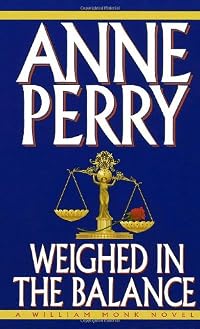
Fiction. Mystery. Suspense. Thriller. When Countess Zorah Rostova asks London barrister Sir Oliver Rathbone to defend her against a charge of slander, he is astonished to find himself accepting. For without a shred of evidence, the countess has publicly insisted that the onetime ruler of her small German principality was murdered by his wife, the woman who was responsible for the prince’s exile to Venice twenty years before. Private investigator William Monk and his friend Hester Latterly show more journey to the City of Water in an attempt verify the countess’s claims, and though the two manage to establish that the prince was indeed murdered, as events unfold the likeliest suspect seems to be Countess Zorah herself. show lessTags
Recommendations































Member Recommendations

Member Reviews
Oliver Rathbone takes on a slander case which he has little chance of winning. He enlists the aid of William Monk to investigate on his behalf. Monk's evidence shows that the person being accused of the murder is the only one who could not have committed it, and it appears the chief suspect of the murder would be Rathbone's client. It's a novel involving European politics. The pacing on this novel as with most attorney-driven novels was a bit slow for me. It's been awhile since I have read other books in this series, but I'm glad that I had read them. A newcomer to the series starting with this book would have found the main recurring characters undeveloped. It was, however, an intriguing puzzle that kept the reader wondering how the show more crime was committed and by whom until the final pages. I definitely prefer the author's Thomas & Charlotte Pitt series to the William Monk one. show less
Rather extreme dislike of William Monk continues and I HAVE GOT TO KNOW whether the author will ever resolve this.
This may have been my least favorite so far in the series. Monk still regularly noticing how beautiful women can't seem to help but notice him, getting distracted completely by said beautiful women, and this time actually resents the people who have paid for him to go off and mingle with beautiful women. People continue to have 'aquiline' noses or noses that are too long, sensitive mouths, etc.
A very charming train of thought by Monk: "He was so much more attracted to women who were fun, uncritical, charming; who knew when to speak, how to flatter and laugh, how to enjoy themselves; who knew how to be vulnerable in the show more little things it was so easy to supply, and yet not discard the great things, the sacrifices which cost too much, asked of the fabric of his nature and his dreams."
OH IS THAT ALL.
I like the atmosphere of these books, I love Hester and Rathbone, and things generally get pretty page-turning in the last half. Thus on to #8. show less
This may have been my least favorite so far in the series. Monk still regularly noticing how beautiful women can't seem to help but notice him, getting distracted completely by said beautiful women, and this time actually resents the people who have paid for him to go off and mingle with beautiful women. People continue to have 'aquiline' noses or noses that are too long, sensitive mouths, etc.
A very charming train of thought by Monk: "He was so much more attracted to women who were fun, uncritical, charming; who knew when to speak, how to flatter and laugh, how to enjoy themselves; who knew how to be vulnerable in the show more little things it was so easy to supply, and yet not discard the great things, the sacrifices which cost too much, asked of the fabric of his nature and his dreams."
OH IS THAT ALL.
I like the atmosphere of these books, I love Hester and Rathbone, and things generally get pretty page-turning in the last half. Thus on to #8. show less
I read this novel in two parts because over the Christmas period I prefer to be reading something more festive.
I was not hooked until the last twenty percent of the story when the court case began. I am aware that time must be taken to set the scene and develop the plot but this process has been more enjoyable in previous novels in the series. I did enjoy the international element of the plot though.
Regarding the slowly developing relationship between the central characters, it seemed things were almost at a standstill if not taking a step backwards. Monk seems to be going through a very long phase of battling between the depth of character in Hester and superficial charms of other women. It seems strange to me that it can take him so show more many months/years to work this out as it has been going on for a few books now. I am aware that Monk lost his memory of the person he was before his accident, but the person he saw himself as afterwards seems remarkable indecisive in these matters which is a stark contrast to how he thinks about the cases he works.
I am hoping the next novel has a more significant development in these central characters relationships. show less
I was not hooked until the last twenty percent of the story when the court case began. I am aware that time must be taken to set the scene and develop the plot but this process has been more enjoyable in previous novels in the series. I did enjoy the international element of the plot though.
Regarding the slowly developing relationship between the central characters, it seemed things were almost at a standstill if not taking a step backwards. Monk seems to be going through a very long phase of battling between the depth of character in Hester and superficial charms of other women. It seems strange to me that it can take him so show more many months/years to work this out as it has been going on for a few books now. I am aware that Monk lost his memory of the person he was before his accident, but the person he saw himself as afterwards seems remarkable indecisive in these matters which is a stark contrast to how he thinks about the cases he works.
I am hoping the next novel has a more significant development in these central characters relationships. show less
When Sir Oliver Rathbone chooses to defend Countess Zorah Rostova in a slander case, he finds he has picked a difficult cause. Zorah has accused Princess Gisela of murdering her husband, a Prince who gave up his throne for her love. Rathbone hires Monk to discover what he can about the case and Hester becomes involved in nursing a young man whose family is associated with the case.
One of the reasons I enjoy this series so much is the social and historical aspects that Ms. Perry emphasizes. The political situation in Europe at this time is reflected in her story which adds the reader's involvement in the background to the slander/murder part of the story.
Monk didn't accomplish much in this book except on a personal level, and I was show more glad to see him acknowledge respect and admiration for Hester. The subplot with Hester's nursing patient was also interesting.
Another great book in this series. show less
One of the reasons I enjoy this series so much is the social and historical aspects that Ms. Perry emphasizes. The political situation in Europe at this time is reflected in her story which adds the reader's involvement in the background to the slander/murder part of the story.
Monk didn't accomplish much in this book except on a personal level, and I was show more glad to see him acknowledge respect and admiration for Hester. The subplot with Hester's nursing patient was also interesting.
Another great book in this series. show less
Where to start? Countess Zorah Rostova hires Sir Oliver Rathbone to defend her against a charge of slander - and he agrees. Zorah has accused Princess Gisela of murdering her husband Prince Frederich. (Both living in exile because he married her and his parents, the King and Queen of a small German principality called Felzburg, exiled them both.) It seems there is no evidence to support the murder claim and yet Zorah will not back down no matter what it might cost her. Monk investigates in Venice, Felzburg and England. Hester is nursing a young man in London, bedridden from a fever and his parents are also from Felzburg. Interesting twists. Historical info about the unification of Germany and the politics of Europe in that time period.
This is a series set in England after the Crimean War with the main character as William Monk. In this escapade, Monk must aid his friend, Sir Oliver Rathbone, prepare for a slander trial. The investigation into the death of German Prince Friedrich has Monk traveling to Venice and falling under the spell of the "good life". Anne Perry presents a colorful, yet dismal picture of the German aristocracy, and paints a picture that parallels the Wallis Simpson and Crown Prince Edward story. Perry weaves a history lesson concerning all the various German independent states and the belief that a united Germany is a better proposition. The story centers on a belief that Prince Friedrich was improving from his fall, but that someone poisoned him. show more In the last chapter, Perry discovers another flower used as a poison. Perry does a wonderful job of presenting dimensional characters and vivid settings. show less
I enjoyed this &. Reread the end to see where I had missed the clues which ultimately revealed the guilt. It actually took me awhile to get into the book but I did by half way there and at the end, it all made sense.
Members
- Recently Added By
Lists

Books Read in 2017
4,249 works; 129 members

mom
729 works; 1 member
Author Information

198+ Works 54,954 Members
Anne Perry was born Juliet Hume on October 28, 1938 in Blackheath, London. Sent to Christchurch, New Zealand to recover from a childhood case of severe pneumonia, she became very close friends with another girl, Pauline Parker. When Perry's family abandoned her, she had only Parker to turn to, and when the Parkers planned to move from New Zealand, show more Parker asked that Perry be allowed to join them. When Parker's mother disagreed, Perry and Parker bludgeoned her to death. Perry eventually served five and a half years in an adult prison for the crime. Once she was freed, she changed her name and moved to America, where she eventually became a writer. Her first Victorian novel, The Cater Street Hangman, was published in 1979. Although the truth of her past came out when the case of Mrs. Parker's murder was made into a movie (Heavenly Creatures), Perry is still a popular author and continues to write. She has written over 50 books and short story collections including the Thomas Pitt series, the William Monk series, and the Daniel Pitt series. Her story, Heroes, won the 2001 Edgar Award for Best Short Story. Her title's Blind Justice and The Angel Court Affair made The New York Times Best Seller List. (Bowker Author Biography) show less
Some Editions
Series

Belongs to Publisher Series
Il giallo Mondadori (2581)
Work Relationships
Is contained in
Common Knowledge
- Canonical title*
- Scandale et calomnie
- Original title
- Weighed in the Balance
- Original publication date
- 1996-10
- People/Characters
- Hester Latterly; William Monk; Oliver Rathbone; Countess Zorah Rostova; Rolf Landsdorff; Count Klaus von Seidlitz (show all 17); Countess Evelyn von Seidlitz; Stephan von Emden; Florent Barberini; Robert Ollenheim; Baron Bernd Ollenheim; Baroness Dagmar Ollenheim; Victoria Stanhope; Henry Rathbone; Brigitte von Arlsbach; Gisela Berentz; John Rainsford
- Important places
- London, England, UK; Germany
- Important events
- Victorian Era (1837 | 1901)
- Dedication
- Dedicated to Jane Merrow in friendship
- First words
- Sir Oliver Rathbone sat in his chambers in Vere Street, just off Lincoln's Inn Fields, and surveyed the room with eminent satisfaction.
- Quotations
- Thou art weighed in the balances, and art found wanting. Daniel 5:27
- Last words
- (Click to show. Warning: May contain spoilers.)"You are pompous, opinionated and insufferable - but you are right."
- Original language*
- Anglais
*Some information comes from Common Knowledge in other languages. Click "Edit" for more information.
Classifications
Statistics
- Members
- 844
- Popularity
- 32,160
- Reviews
- 11
- Rating
- (3.76)
- Languages
- English, French, German, Spanish
- Media
- Paper, Audiobook, Ebook
- ISBNs
- 26
- ASINs
- 12