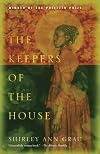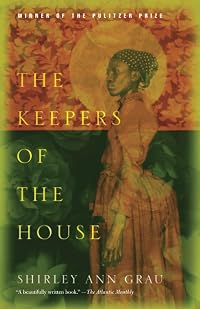
The Keepers of the House
by Shirley Ann Grau
On This Page
Description
A "beautifully written" Pulitzer Prize-winning novel about prejudice and a distinguished family's secrets in the American South (The Atlantic Monthly). Seven generations of the Howland family have lived in the Alabama plantation home built by an ancestor who fought for Andrew Jackson in the War of 1812. Over the course of a century, the Howlands accumulated a fortune, fought for secession, and helped rebuild the South, establishing themselves as one of the most respected families in the show more state. But that history means little to Abigail Howland. The inheritor of the Howland manse, Abigail hides the long-buried secret of her grandfather's thirty-year relationship with his African American mistress. Her fortunes reverse when her family's mixed-race heritage comes to light and her community-locked in the prejudices of the 1960s-turns its back on her. Faced with such deep-seated racism, Abigail is pushed to defend her family at all costs. A "novel of real magnitude," The Keepers of the House is an unforgettable story of family, tradition, and racial injustice set against the richly drawn backdrop of the American South (Kirkus Reviews). show lessTags
Recommendations
















Member Recommendations
vwinsloe Southern values shortly before the civil rights era
Member Reviews
I've been talking with some friends in an online space about what makes writing beautiful, and then I happened to read this book, which has truly beautiful writing. She sets the background in Alabama with descriptions of the scents and sounds of a farm, a journey by canoe in a swamp, the meaningful contents of a house. Other reviewers complain that the story dragged, but I loved these word pictures and see how they were needed to describe the Howland family's ties to the land.
It's not a spoiler to say that William Howland had a relationship with Margaret, his black housekeeper, and had children with her, though key details are revealed later. His granddaughter Abigail, the main character, seems to have no problem with this and show more understands why Margaret sends her children to school in the north, where they can pass as white. She grows up to marry John, a lawyer with political ambitions who runs for governor on a segregationist ticket.
What I didn't understand was (spoiler)
.
.
.
.
.
.
.
.
why Margaret's son Robert returned to the south, or how his existence, and relationship to Abigail and John, became known so that it could be used against John. Did he mean to hurt the campaign? Why? Or was it simply dug up by John's rivals? I also didn't understand Abigail's anger towards Robert and his sister, and why she said cruel things to him at the end. show less
It's not a spoiler to say that William Howland had a relationship with Margaret, his black housekeeper, and had children with her, though key details are revealed later. His granddaughter Abigail, the main character, seems to have no problem with this and show more understands why Margaret sends her children to school in the north, where they can pass as white. She grows up to marry John, a lawyer with political ambitions who runs for governor on a segregationist ticket.
What I didn't understand was (spoiler)
.
.
.
.
.
.
.
.
why Margaret's son Robert returned to the south, or how his existence, and relationship to Abigail and John, became known so that it could be used against John. Did he mean to hurt the campaign? Why? Or was it simply dug up by John's rivals? I also didn't understand Abigail's anger towards Robert and his sister, and why she said cruel things to him at the end. show less
This 1964 Pulitzer Prize winning novel reads almost like historical fiction. It has a dreamy quality, but it's a nightmare for Margaret, a "freejack" woman of Native American and Black ancestry, who meets a much older wealthy white widower, Will Howland, in her hidden backwater community. Abandoned by her mother and seeing no life for herself in the crowded home of her grandfather, she moves in with Will and they build a life together with their four children. As Will is the wealthiest man in the area and has established most of the businesses that employ the residents, any objections to their relationship in the community are suppressed. Margaret insists on sending their children away to boarding schools in New Orleans at a young age, show more where they pass for white. Will's daughter from his first marriage leaves her husband and returns home with her daughter Abigail, who adores her grandfather and accepts Margaret as housekeeper/stepmother, admiring the deep love between them. She ends up marrying a man with political ambitions, and when he runs for office, the relationship between Will and Margaret, now both deceased, is exposed by Margaret’s son, and wrecks their his campaign and their marriage. The story is told from the viewpoints of Will, Abigail, and Margaret, though her voice is the quietest, and that is the only flaw I can see. I think this book bears comparison to Toni Morrison's Sula and to the novels of Carson McCullers. The haunted South and its deep seated legacy of inherited misery is here in all its swamps and screams and secrets.
Quote: "The inner workings of old people moved to the outside. Their muscles and sinews got hard and ropy and hung on the outside of their skins. Their veins rose up, like cords wrapping their way across the backs of hands and along legs." show less
Quote: "The inner workings of old people moved to the outside. Their muscles and sinews got hard and ropy and hung on the outside of their skins. Their veins rose up, like cords wrapping their way across the backs of hands and along legs." show less
Here's a funny thing. I'd been looking at this book for a couple of years harbouring the fear that I may find it boring. More fool me.
The theme of racial disharmony in the South is a well trodden path, but what Shirley Ann Grau delivers is fundamentally a love story. The writing is beautiful.
Set in Alabama, William Howland, a Southern gentleman of substance, does the unthinkable. He falls in love with a black woman (Margaret), has children with her and then marries her (in secret). Margaret is a fantastic character, dignified and intelligent. The sacrifice she makes for her children cannot be understated .
The majority of the book is seen through the eyes of Abigail, William's granddaughter. She's wonderfully phlegmatic and when word show more gets out about William and Margret's marriage things become quite hairy, but she deals with it magnificently.
It's a real shame that The Keepers of the House, it won the Pulitzer prize in 1965, has been somewhat forgotten. This should be taught on the school curriculum for the simple reason that the writing is clever and wise. show less
The theme of racial disharmony in the South is a well trodden path, but what Shirley Ann Grau delivers is fundamentally a love story. The writing is beautiful.
Set in Alabama, William Howland, a Southern gentleman of substance, does the unthinkable. He falls in love with a black woman (Margaret), has children with her and then marries her (in secret). Margaret is a fantastic character, dignified and intelligent. The sacrifice she makes for her children cannot be understated .
The majority of the book is seen through the eyes of Abigail, William's granddaughter. She's wonderfully phlegmatic and when word show more gets out about William and Margret's marriage things become quite hairy, but she deals with it magnificently.
It's a real shame that The Keepers of the House, it won the Pulitzer prize in 1965, has been somewhat forgotten. This should be taught on the school curriculum for the simple reason that the writing is clever and wise. show less
This is a sweeping tale of a Southern family, racial prejudice, and human integrity. The Howlands are those Southerners--the ones with lots of money, power and name. After the death of his first wife, Will Howland fathers three children with his black housekeeper, Margaret, a woman he loves. Everyone knows this, but no one acknowledges it. Even inside the Howland home, this is a visible secret.
We meet both Will and Margaret before they meet one another. Margaret is one of the most unique, believable and interesting characters that I have ever encountered. Will, a strong man, handles his situation in the most upstanding manner that he believes a man in that day and age can do. This is a tale of family; a tale of blood, and sometimes a show more tale of how little we know about the people that we know the best. Will’s granddaughter, Abigail, is left to handle the consequences of this legacy, and she draws on the strength of her grandfather’s blood in a way that leaves you cheering for her aloud.
The most shocking thing about this book is that it is not more widely known and appreciated. It received the Pulitzer prize in 1965, and I can imagine that it caused a bit of a stir in the South, a region in the throes of desegregation. Like Lamb in His Bosom, another Pulitzer that I only discovered this year, this book has just faded into obscurity, and that is hard to understand. Perhaps people feel it does not have any true relevance anymore, but I think it speaks to the humanity of every character in the most relevant of ways. Are we not still, and always, being encouraged to view our world through the most politically expedient optics? How many of us decide what we think and feel based on what we are told we ought to think and feel? How many of us have the courage to lead a life that is opposed to that norm?
Along the way, Grau scatters little bits of wisdom that are completely true, completely universal, and yet so seldom voiced:
We’ll remember him, she thought. For a time, a little time, before it starts slipping away from us, and we won’t remember hardly at all. Then we’ll be dead too, and that’ll be the end of him, for good. And isn’t it funny, she thought, that it takes two generations to kill off a man? ...First him, and then his memory…
I have often thought exactly this. Everyone who personally knew my grandparents is dead, excepting my generation of siblings and cousins. When we are gone, no one on earth will remember them and many of our children will probably not even be able to identify them in photographs. But we are made up of these people. Many of the things I have passed to the next generation have come directly from them, many of the most precious stories I know are their stories. In so many ways, that is what this book is really about, the passage of time and the passage of something unidentifiable, in the blood, that is about who we are and where we come from. show less
We meet both Will and Margaret before they meet one another. Margaret is one of the most unique, believable and interesting characters that I have ever encountered. Will, a strong man, handles his situation in the most upstanding manner that he believes a man in that day and age can do. This is a tale of family; a tale of blood, and sometimes a show more tale of how little we know about the people that we know the best. Will’s granddaughter, Abigail, is left to handle the consequences of this legacy, and she draws on the strength of her grandfather’s blood in a way that leaves you cheering for her aloud.
The most shocking thing about this book is that it is not more widely known and appreciated. It received the Pulitzer prize in 1965, and I can imagine that it caused a bit of a stir in the South, a region in the throes of desegregation. Like Lamb in His Bosom, another Pulitzer that I only discovered this year, this book has just faded into obscurity, and that is hard to understand. Perhaps people feel it does not have any true relevance anymore, but I think it speaks to the humanity of every character in the most relevant of ways. Are we not still, and always, being encouraged to view our world through the most politically expedient optics? How many of us decide what we think and feel based on what we are told we ought to think and feel? How many of us have the courage to lead a life that is opposed to that norm?
Along the way, Grau scatters little bits of wisdom that are completely true, completely universal, and yet so seldom voiced:
We’ll remember him, she thought. For a time, a little time, before it starts slipping away from us, and we won’t remember hardly at all. Then we’ll be dead too, and that’ll be the end of him, for good. And isn’t it funny, she thought, that it takes two generations to kill off a man? ...First him, and then his memory…
I have often thought exactly this. Everyone who personally knew my grandparents is dead, excepting my generation of siblings and cousins. When we are gone, no one on earth will remember them and many of our children will probably not even be able to identify them in photographs. But we are made up of these people. Many of the things I have passed to the next generation have come directly from them, many of the most precious stories I know are their stories. In so many ways, that is what this book is really about, the passage of time and the passage of something unidentifiable, in the blood, that is about who we are and where we come from. show less
I read a lot of fiction as a young adult, but as a middle-aged adult I read mostly non-fiction. Most fiction I pick up today does not hold my attention. This book was riveting. It has been a long time since a novel has put me in another world like this one did. My heart was literally beating fast in the final scene, that never happens to me. The writing was gorgeous. My favorite scene is William in the swamp. My least favorite scenes are Abigail in her years of college and marriage; as I read, I felt the book really sagged there, but in retrospect I feel, maybe the book had to sag there to reflect the laziness and routine of her life at the time, and to make the ending that much more powerful. I would love to read a sequel that told me show more what happened with Margaret's children, and that had more written from Margaret's point of view. One issue I struggled with was, as a reviewer on Amazon I think put it, Abigail's lack of compassion for Margaret's children. It's not what we as modern-day readers expect. But I think there is an essential truth to it. How much was white privilege, a feeling that they should be grateful for what they had and not expect anymore? And how much of it is was, as another reviewer put it, family dysfunction?
He crossed the open marsh, and then a small lake. This one, now, seemed to be fed by sulphur springs, because the odor lay heavy over its almost still surface. With the last of the dusk the full moon rose, heavy and yellow, behind him. His shadow and the shadow of the skiff stretched out longer and longer like rubber on the water ahead. With the rising moon, cats began to prowl in the distance. He heard a couple of panthers yeowl, and a couple of screeches that he recognized as bobcats. As the water birds settled for the night gators began to prey on them, and he heard the loud snapping of their huge jaws. show less
He crossed the open marsh, and then a small lake. This one, now, seemed to be fed by sulphur springs, because the odor lay heavy over its almost still surface. With the last of the dusk the full moon rose, heavy and yellow, behind him. His shadow and the shadow of the skiff stretched out longer and longer like rubber on the water ahead. With the rising moon, cats began to prowl in the distance. He heard a couple of panthers yeowl, and a couple of screeches that he recognized as bobcats. As the water birds settled for the night gators began to prey on them, and he heard the loud snapping of their huge jaws. show less
I'm not sure how this 1964 Classic wound up on my TBR list but I'm so glad it did. It is a captivating story of generations of a land-owning family in Alabama, racial attitudes and injustice found throughout the southern states, and the events that lead Abigail to discover her strength, independence, and power.
As a person who grew up in the 1950s/60s in Montgomery, Al., I found Shirley Ann Grau’s Keepers of the House a compelling read. It drew me back into memories of a chaotic time filled with the strongest of Southern passions: extreme love for and identification with family history and land; a prevailing sense of loss, both past and present; and the horrors of racial hatred and violence.
Before developing the story of William Howland and his family, which reaches back to the Battle of 1812, Grau presents a brief scene set in the present moment. “They are dead, all of them,” says William’s granddaughter Abigail in the opening pages. “I am caught and tangled around by their doings. It’s as if their lives left a weaving of show more invisible threads in the air of this house, of this town, of this county. And I stumbled and fell into them.” An abiding theme of Southern fiction, expressed most aptly perhaps by William Faulkner, “The past is never dead; it’s not even past.” Thus we begin with the picture of an embittered empty woman, unloved and unloving, entangled in the web of the past, brooding on present grief. The rest of the novel explores the threads of that web, eventually uncovering the one central to our understanding of Abigail’s current situation.
This is a well written novel with a plot that moves along at exactly the right pace, very believable characters, beautiful descriptions of the land and Abigail’s relationship to it. I recommend Keepers of the House to anyone interested in Southern fiction. show less
Before developing the story of William Howland and his family, which reaches back to the Battle of 1812, Grau presents a brief scene set in the present moment. “They are dead, all of them,” says William’s granddaughter Abigail in the opening pages. “I am caught and tangled around by their doings. It’s as if their lives left a weaving of show more invisible threads in the air of this house, of this town, of this county. And I stumbled and fell into them.” An abiding theme of Southern fiction, expressed most aptly perhaps by William Faulkner, “The past is never dead; it’s not even past.” Thus we begin with the picture of an embittered empty woman, unloved and unloving, entangled in the web of the past, brooding on present grief. The rest of the novel explores the threads of that web, eventually uncovering the one central to our understanding of Abigail’s current situation.
This is a well written novel with a plot that moves along at exactly the right pace, very believable characters, beautiful descriptions of the land and Abigail’s relationship to it. I recommend Keepers of the House to anyone interested in Southern fiction. show less
Members
- Recently Added By
Lists

Pulitzer Prize Winners for Fiction
102 works; 54 members

Classics you know you should have read but probably haven't
421 works; 407 members
Southern Fiction
212 works; 52 members
500 Great Books by Women
507 works; 60 members

Willoyd's Tour of the USA
25 works; 1 member

Llibres que he llegit el 2026
44 works; 2 members
Author Information

16+ Works 1,356 Members
Shirley Ann Grau was born on July 28, 1929 in New Orleans. She is an author who's work is set for the most part in the Deep South and concerns issues of race and gender. She graduated from Newcomb College in 1950. Her collection of stories, The Black Prince, was nominated for the National Book Award in 1956. She won the 1965 Pulitzer Prize for show more Fiction for her work, The Keepers of the House. Her last novel was Roadwalkers, published in 1994. her last short story collection was Selected Stories, published in 2006. Shirley Ann Grau died on August 3, 2020 at the age of 91. (Bowker Author Biography) show less
Awards and Honors
Series
Belongs to Publisher Series
Common Knowledge
- Canonical title
- The Keepers of the House
- Original title
- The Keepers of the House
- Original publication date
- 1964
- People/Characters
- Will Howland; Margaret Carmichael; Abigail Howland; John Tolliver
- Epigraph
- In the day when the keepers of the house shall tremble, and the strong men whall bow themselves, and the grinders cease because they are few, and those that look out of the windows be darkened,
AND the doors shall be ... (show all)shut in the streets, when the sound of the grinding is low, and he shall rise up at the voice of the bird, and all the daughters of musick shall be brought low;
ALSO when they shall be afraid of that which is high, and fears shall be in the way, and the almond tree shall flourish, and the grasshopper shall be a burden, and desire shall fail because man goeth to his long home, and the mourners go about the streets.
Ecclesiastes 12:3-5 - First words
- November evenings are quiet and still and dry.
- Last words
- (Click to show. Warning: May contain spoilers.)I went on crying until I slipped off the chair. And cried on the floor, huddled fetus-like against the cold unyielding boards.
Classifications
Statistics
- Members
- 866
- Popularity
- 31,564
- Reviews
- 41
- Rating
- (3.87)
- Languages
- 5 — Dutch, English, German, Italian, Spanish
- Media
- Paper, Audiobook, Ebook
- ISBNs
- 19
- ASINs
- 20