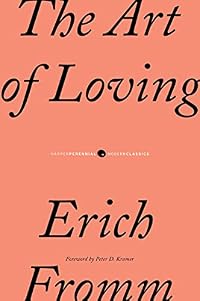
The Art of Loving
by Erich Fromm
On This Page
Description
The international bestseller that launched a movement with its powerful insight: "Love is the only sane and satisfactory answer to the problem of human existence." The Art of Loving is a rich and detailed guide to love-an achievement reached through maturity, practice, concentration, and courage. In the decades since the book's release, its words and lessons continue to resonate. Erich Fromm, a celebrated psychoanalyst and social psychologist, clearly and sincerely encourages the development show more of our capacity for and understanding of love in all of its facets. He discusses the familiar yet misunderstood romantic love, the all-encompassing brotherly love, spiritual love, and many more. A challenge to traditional Western notions of love, The Art of Loving is a modern classic about taking care of ourselves through relationships with others. This ebook features an illustrated biography of Erich Fromm including rare images and never-before-seen documents from the author's estate. show lessTags
Recommendations





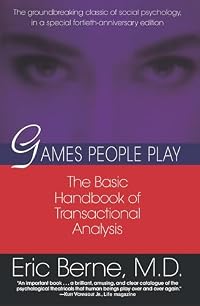

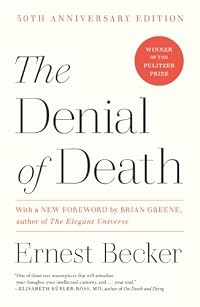
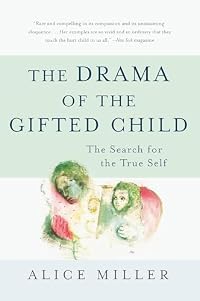
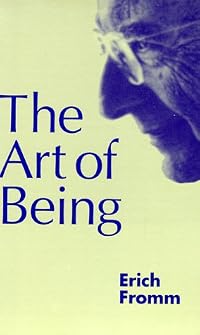

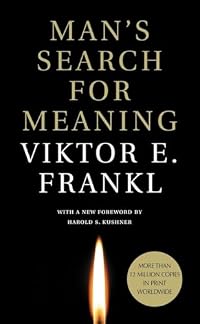



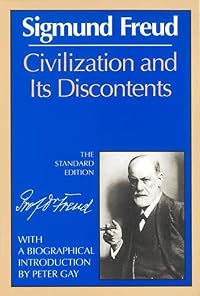
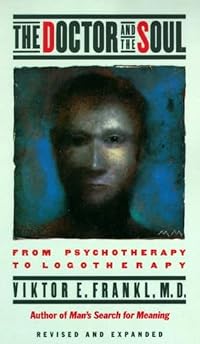
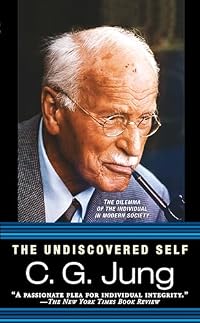





Member Recommendations

Member Reviews
"The experience of separateness arouses anxiety; it is, indeed, the source of all anxiety."
This is the first work of contemporary philosophy that I've read and the assumptions are interesting. There's no attempt to define separateness, nor to prove that there is any other source of anxiety, but when I read that sentence and the argument that follows it, it rang my bell. Whether it's true or not in all its parts is almost irrelevant as it works for me. Lots of stuff just like this in this book. I would recommend it to other humans.
This is the first work of contemporary philosophy that I've read and the assumptions are interesting. There's no attempt to define separateness, nor to prove that there is any other source of anxiety, but when I read that sentence and the argument that follows it, it rang my bell. Whether it's true or not in all its parts is almost irrelevant as it works for me. Lots of stuff just like this in this book. I would recommend it to other humans.
A është vërtet dashuria art? Në qoftë se po, atëherë ajo kërkon punë dhe dijeni. Nëse ajo nuk është gjë tjetër veçse një ndjesi e këndshme, përjetimi i së cilës është diçka e rastësishme, një gjendje që e provoni po t'ju ecë fati, atëherë puna ndryshon. Ky libërth bazohet mbi këtë hipotezë, ndërsa shumica e njerëzve sot besojnë pa dyshim ndryshe.
Though old-fashioned in places, and more philosophical than practical, I nevertheless greatly enjoyed and learned much from this slim tome.
He convincingly shows that a lot of the sadness and discombobulation of modern life comes from wanting to "have fun" until it's not fun any more, and a lack of concentration and discipline (stemming, perhaps, from an overindulgence in stark rigidity at times in our lives).
"The sexual act without love never bridges the gap between two human beings, except momentarily"
3:11 PM "in fact, they take the intensity of the infatuation, this being "crazy" about each other, for proof of the intensity of their love, while it may only prove the degree of their preceding loneliness"
"what most people in our show more culture mean in our culture by being lovable is essentially a mixture between being popular and having sex appeal" show less
He convincingly shows that a lot of the sadness and discombobulation of modern life comes from wanting to "have fun" until it's not fun any more, and a lack of concentration and discipline (stemming, perhaps, from an overindulgence in stark rigidity at times in our lives).
"The sexual act without love never bridges the gap between two human beings, except momentarily"
3:11 PM "in fact, they take the intensity of the infatuation, this being "crazy" about each other, for proof of the intensity of their love, while it may only prove the degree of their preceding loneliness"
"what most people in our show more culture mean in our culture by being lovable is essentially a mixture between being popular and having sex appeal" show less
This is the second in a set of three books that I bought about love. I was interested to hear what the world of psychology and philosophy had to say on the subject and this book did not disappoint despite it not being as good, I thought, as Conditions of Love by John Armstrong which I read in June.
Fromm was a German Jew who left Germany on the rise to power of the Nazi Party in the early 1930s. Ending up in New York, he continued his rise as one of the leading scholars in psychoanalysis. The Art of Loving was his most popular book and was first published in 1954.
Again, like Conditions of Love, Fromm states that love is not a feeling. He went further than I felt Armstrong did though in stating that love is a skill that should be show more developed through disciplines such as meditation, reflection and self-control. He draws a great deal from his reading of Eastern religions such as Christianity and Hinduism.
I think the most important aspect of his book which is often misunderstood, particularly in modern day Christianity, is the concept of self-love. He goes to some pains to argue that unless we make taking care of ourselves a priority, then we are unlikely to ever be able to love another as we are intended to. Along with his premise that love is a skill, he argues convincingly that unless we become mature and developed in our own characters, our ability to love will remain handicapped. I know this to be true in my own life and experience.
Like Armstrong, he soundly castigates the modern Austenesque misconception of love as a romantic ideal. I feel we really can’t hear this message enough these days and our literature has an appalling lack of the true reality of love as a willful commitment to the undeserving.
While Conditions of Love spoke more to the marital side of love in my life, Fromm spoke more to my love of God. The quotes below resonated so strongly with me especially with my experiences of knowing God and being with him so very intimately that questions of theology pale and become unimportant. I wish more of us could experience this, particular within my Christian circles. show less
Fromm was a German Jew who left Germany on the rise to power of the Nazi Party in the early 1930s. Ending up in New York, he continued his rise as one of the leading scholars in psychoanalysis. The Art of Loving was his most popular book and was first published in 1954.
Again, like Conditions of Love, Fromm states that love is not a feeling. He went further than I felt Armstrong did though in stating that love is a skill that should be show more developed through disciplines such as meditation, reflection and self-control. He draws a great deal from his reading of Eastern religions such as Christianity and Hinduism.
I think the most important aspect of his book which is often misunderstood, particularly in modern day Christianity, is the concept of self-love. He goes to some pains to argue that unless we make taking care of ourselves a priority, then we are unlikely to ever be able to love another as we are intended to. Along with his premise that love is a skill, he argues convincingly that unless we become mature and developed in our own characters, our ability to love will remain handicapped. I know this to be true in my own life and experience.
Like Armstrong, he soundly castigates the modern Austenesque misconception of love as a romantic ideal. I feel we really can’t hear this message enough these days and our literature has an appalling lack of the true reality of love as a willful commitment to the undeserving.
While Conditions of Love spoke more to the marital side of love in my life, Fromm spoke more to my love of God. The quotes below resonated so strongly with me especially with my experiences of knowing God and being with him so very intimately that questions of theology pale and become unimportant. I wish more of us could experience this, particular within my Christian circles. show less
ENGLISH: How many broken hearts, how many separations, how many divorces saved if books like this had been read. It's a non-fiction classic about love, written by psychologist Erich Fromm in 1956. The book has survived its author, it doesn't go out of style and is more necessary than ever. It makes a very successful analysis of the evils of this society and its lack of values. A wisdom that goes against the current world.
The book distinguishes mere falling in love with true love. It describes wrong or incomplete ways of loving. It develops the qualities that the mature person must have. It does it from psychology, in a clear and pleasant way. It brings out very interesting examples and biblical references. It gives practical examples to show more assimilate these skills. Terms such as: faith, courage, hope, concentration, effort, work, vitality, image of the other, nuclei, narcissism, giving, gratitude, care, respect, responsibility, objectivity, reality, knowledge - are treated.
We are talking about a renegade Jew of his faith. Clearly influenced by socialism and enlightened humanism. He ended up embracing Eastern spirituality. But paradoxically, his work validates the evangelical love of Christianity. It does it from the strictest foundations of psychology. It's a similar case to other non-believers, such as Gandhi. In short, a classic recommended for believers and non-believers. In general for anyone who wants to take their emotional world seriously, their relationship with themselves and others.
More opinion on this entry of my blog.
ESPAÑOL: Cuántos corazones rotos, cuántas separaciones, cuántos divorcios ahorrados si se hubieran leído libros como éste. Se trata de un clásico de no ficción sobre el amor, escrito por el psicólogo Erich Fromm en 1956. El libro ha sobrevivido a su autor, no pasa de moda y es más necesario que nunca. Hace un análisis muy acertado de los males de esta sociedad y su falta de valores. Una sabiduría que va contracorriente del mundo actual.
Distingue el mero enamoramiento del amor verdadero. Describe formas erróneas o incompletas de amar. Desarrolla las cualidades que debe tener la persona madura. Lo hace desde la psicología, de una manera clara y amena. Saca a relucir ejemplos y referencias bíblicas muy interesantes. Pone ejemplos prácticos para asimilar estas habilidades. Se tratan términos como: fe, coraje, esperanza, concentración, esfuerzo, trabajo, vitalidad, imagen del otro, núcleos, narcisismo, dar, gratitud, cuidado, respeto, responsabilidad, objetividad, realidad, conocimiento.
Estamos hablando de un judío renegado de su fe. Claramente influenciado por el socialismo y el humanismo ilustrado. Terminó abrazando la espiritualidad oriental. Pero paradójicamente, su obra valida el amor evangélico del cristianismo. Lo hace desde los más estrictos fundamentos de la psicología. Es un caso similar al de otros no creyentes, como por ejemplo Gandhi. En definitiva, una clásico recomendado a creyentes y no creyentes. En general para todo aquel que quiera tomarse en serio su afectividad, su relación consigo mismo y los demás.
Más opinión en esta entrada de mi blog. show less
The book distinguishes mere falling in love with true love. It describes wrong or incomplete ways of loving. It develops the qualities that the mature person must have. It does it from psychology, in a clear and pleasant way. It brings out very interesting examples and biblical references. It gives practical examples to show more assimilate these skills. Terms such as: faith, courage, hope, concentration, effort, work, vitality, image of the other, nuclei, narcissism, giving, gratitude, care, respect, responsibility, objectivity, reality, knowledge - are treated.
We are talking about a renegade Jew of his faith. Clearly influenced by socialism and enlightened humanism. He ended up embracing Eastern spirituality. But paradoxically, his work validates the evangelical love of Christianity. It does it from the strictest foundations of psychology. It's a similar case to other non-believers, such as Gandhi. In short, a classic recommended for believers and non-believers. In general for anyone who wants to take their emotional world seriously, their relationship with themselves and others.
More opinion on this entry of my blog.
ESPAÑOL: Cuántos corazones rotos, cuántas separaciones, cuántos divorcios ahorrados si se hubieran leído libros como éste. Se trata de un clásico de no ficción sobre el amor, escrito por el psicólogo Erich Fromm en 1956. El libro ha sobrevivido a su autor, no pasa de moda y es más necesario que nunca. Hace un análisis muy acertado de los males de esta sociedad y su falta de valores. Una sabiduría que va contracorriente del mundo actual.
Distingue el mero enamoramiento del amor verdadero. Describe formas erróneas o incompletas de amar. Desarrolla las cualidades que debe tener la persona madura. Lo hace desde la psicología, de una manera clara y amena. Saca a relucir ejemplos y referencias bíblicas muy interesantes. Pone ejemplos prácticos para asimilar estas habilidades. Se tratan términos como: fe, coraje, esperanza, concentración, esfuerzo, trabajo, vitalidad, imagen del otro, núcleos, narcisismo, dar, gratitud, cuidado, respeto, responsabilidad, objetividad, realidad, conocimiento.
Estamos hablando de un judío renegado de su fe. Claramente influenciado por el socialismo y el humanismo ilustrado. Terminó abrazando la espiritualidad oriental. Pero paradójicamente, su obra valida el amor evangélico del cristianismo. Lo hace desde los más estrictos fundamentos de la psicología. Es un caso similar al de otros no creyentes, como por ejemplo Gandhi. En definitiva, una clásico recomendado a creyentes y no creyentes. En general para todo aquel que quiera tomarse en serio su afectividad, su relación consigo mismo y los demás.
Más opinión en esta entrada de mi blog. show less
If you can get past the dated thoughts on gender, there's some real wisdom in this little book, which is anything but a Hallmarky piece of self-help.
The international bestseller that launched a movement with its powerful insight: “Love is the only sane and satisfactory answer to the problem of human existence.” The Art of Loving is a rich and detailed guide to love—an achievement reached through maturity, practice, concentration, and courage. In the decades since the book’s release, its words and lessons continue to resonate. Erich Fromm, a celebrated psychoanalyst and social psychologist, clearly and sincerely encourages the development of our capacity for and understanding of love in all of its facets. He discusses the familiar yet misunderstood romantic love, the all-encompassing brotherly love, spiritual love, and many more. A challenge to traditional Western notions of show more love, The Art of Loving is a modern classic about taking care of ourselves through relationships with others. This ebook features an illustrated biography of Erich Fromm including rare images and never-before-seen documents from the author’s estate. show less
Members
- Recently Added By
Lists

Psicología - Clásicos
165 works; 2 members

Tom's Bookstore
346 works; 2 members

1950s
340 works; 22 members

Recommended Non-Fiction Books
26 works; 2 members

My List
302 works; 1 member

1970s
657 works; 23 members

Books mentioned in bell hooks' All About Love
70 works; 1 member
Author Information

Psychologist and philosopher Erich Fromm was born in Frankfurt, Germany on March 23, 1900. He received a Ph.D in sociology from the University of Heidelberg in 1922 and finished his psychoanalytical training at the Psychoanalytical Institute in Berlin in 1930. He started his own clinical practice and joined the Frankfurt Institute for Social show more Research. In 1934, he moved to New York and became a professor at Columbia University. In 1950, he moved to Mexico City and became a professor at the Universidad Nacional Autónoma de Mexico, where he created a psychoanalytic section at the medical school. He retired from there in 1965 and moved to Muralto, Switzerland in 1974. Throughout his life, Fromm maintained a clinical practice and wrote books. His writings were notable for both their social and political commentary and their philosophical and psychological underpinnings. He became known for linking human personality types with socioeconomic and political structures. His most popular book, The Art of Loving, was first published in 1956 and became an international bestseller. He died on March 18, 1980. (Bowker Author Biography) show less
Some Editions
Awards and Honors
Series
Belongs to Publisher Series
Work Relationships
Common Knowledge
- Canonical title
- The Art of Loving
- Original title
- The Art of Loving
- Original publication date
- 1956
- Epigraph
- He who knows nothing, loves nothing. He who can do nothing understands nothing. He who understands nothing is worthless. But he who understands also loves, notices, sees.... The more knowledge is inherent in a thing, the g... (show all)reater the love.... Anyone who imagines that all fruits ripen at the same time as the strawberries knows nothing about grapes. -- Paracelsus
- First words
- Is love an art?
- Quotations
- While irrational faith is rooted in submission to a power which is felt to be overwhelmingly strong, omniscient and omnipotent, and in the abdication of one's own power and strength, rational faith is based upon the opposite ... (show all)experience. We have this faith in a thought because it is the result of our own observation and thinking. We have faith in the potentialities of others, of ourselves, and of mankind because, and only to the degree to which, we have experienced the growth of our own potentialities, the reality of growth in ourselves, the strength of our own power of reason and of love. The basis of rational faith is productiveness; to live by our faith means to live productively. It follows that the belief in power (in the sense of domination) and the use of power are the reverse of faith. To believe in power that exists is identical with disbelief in the growth of potentialities which are as yet unrealized. It is a prediction of the future based solely on the manifest present; but it turns out to be a grave miscalculation, profoundly irrational in its oversight of the human potentialities and human growth. There is no rational faith in power. There is submission to it or, on the part of those who have it, the wish to keep it. While to many power seems to be the most real of all things, the history of man has proved it to be the most unstable of all human achievements. Because of the fact that faith and power are mutually exclusive, all religions and political systems which originally are built on rational faith become corrupt and eventually lose what strength they have, if they rely on power or ally themselves with it.
To have faith requires courage, the ability to take a risk, the readiness even to accept pain and disappointment. Whoever insists on safety and security as primary conditions of life cannot have faith; whoever shuts himself off in a system of defense, where distance and possession are his means of security, makes himself a prisoner. To be loved, and to love, need courage, the courage to judge certain values as of ultimate concern—and to take the jump and stake everything on these values.
Religion allies itself with auto-suggestion and psychotherapy to help man in his business activities. In the twenties one had not yet called upon God for purposes of “improving one's personality.” The best-seller in the y... (show all)ear 1938, Dale Carnegie’s How to Win Friends and Influence People, remained on a strictly secular level. What was the function of Carnegie's book at that time is the function of our greatest bestseller today, The Power of Positive Thinking by the Reverend N. V. Peale. In this religious book it is not even questioned whether our dominant concern with success is in itself in accordance with the spirit of monotheistic religion. On the contrary, this supreme aim is never doubted, but belief in God and prayer is recommended as a means to increase one's ability to be successful. Just as modern psychiatrists recommend happiness of the employee, in order to be more appealing to the customers, some ministers recommend love of God in order to be more successful. “Make God your partner”, means to make God a partner in business, rather than to become one with Him in love, justice and truth. Just as brotherly love has been replaced by impersonal fairness, God has been transformed into a remote General Director of Universe, Inc.; you know that he is there, he runs the show (although it would probably run without him too), you never see him, but you acknowledge his leadership while you are “doing your part.”
Another form of projection is the projection of one’s own problems on the children. First of all such projection takes place not infrequently in the wish for children. In such cases the wish for children is primarily determ... (show all)ined by projecting one’s own problem of existence on that of the children. When a person feels that he has not been able to make sense of his own life, he tries to make sense of it in terms of the life of his children. But one is bound to fail within oneself and for the children. The former because the problem of existence can be solved by each one only for himself, and not by proxy; the latter because one lacks in the very qualities which one needs to guide the children in their own search for an answer. Children serve for projective purposes also when the question arises of dissolving an unhappy marriage. The stock argument of parents in such a situation is that they cannot separate in order not to deprive the children of the blessings of a unified home. Any detailed study would show, however, that the atmosphere of tension and unhappiness within the “unified family” is more harmful to the children than an open break would be—which teaches them at least that man is able to end an intolerable situation by a courageous decision.
The situation as far as love is concerned corresponds, as it has to by necessity, to this social character of modern man. Automatons cannot love; they can exchange their “personality packages” and hope for a fair bargain.... (show all) One of the most significant expressions of love, and especially of marriage with this alienated structure, is the idea of the “team.” In any number of articles on happy marriage, the ideal described is that of the smoothly functioning team. This description is not too different from the idea of a smoothly functioning employee; he should be “reasonably independent” co-operative, tolerant, and at the same time ambitious and aggressive. Thus, the marriage counselor tells us, the husband should “understand” his wife and be helpful. He should comment favorably on her new dress, and on a tasty dish. She, in turn, should understand when he comes home tired and disgruntled, she should listen attentively when he talks about his business troubles, should not be angry but understanding when he forgets her birthday. All this kind of relationship amounts to is the well-oiled relationship between two persons who remain strangers all their lives, who never arrive at a “central relationship” but who treat each other with courtesy and who attempt to make each other feel better.
Love isn’t something natural. Rather it requires discipline, concentration, patience, faith, and the overcoming of narcissism. It isn’t a feeling, it is a practice.
All this kind of relationship amounts to is the well-oiled relationship between two persons who remain strangers all their lives, who never arrive at a “central relationship” but who treat each other with courtesy and who... (show all) attempt to make each other feel better. - Last words
- (Click to show. Warning: May contain spoilers.)To have faith in the possibility of love as a social and not only exceptional-individual phenomenon, is a rational faith based on the insight into the very nature of man.
- Original language
- English
Classifications
- Genres
- Nonfiction, Philosophy, General Nonfiction, Religion & Spirituality
- DDC/MDS
- 152.41 — Philosophy and Psychology Psychology Sensory perception, movement, emotions, physiological drives Emotions Love and Affection
- LCC
- HQ33 .F77 — Social sciences The family. Marriage, Women and Sexuality The Family. Marriage. Women Sexual life Sex instruction and sexual ethics
- BISAC
Statistics
- Members
- 4,839
- Popularity
- 2,914
- Reviews
- 57
- Rating
- (3.82)
- Languages
- 29 — Catalan, Chinese, Czech, Danish, Dutch, English, Estonian, Finnish, French, German, Greek, Hungarian, Indonesian, Italian, Japanese, Latvian, Lithuanian, Norwegian (Bokmål), Norwegian, Polish, Portuguese, Russian, Serbian, Croatian, Slovenian, Spanish, Swedish, Turkish, Ukrainian
- Media
- Paper, Audiobook, Ebook
- ISBNs
- 204
- ASINs
- 92