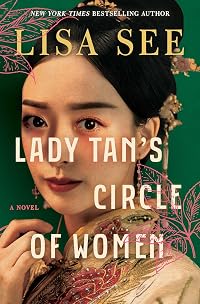
Lady Tan's Circle of Women
by Lisa See
On This Page
Description
INSTANT NEW YORK TIMES BESTSELLERThe latest historical novel from New York Times bestselling author Lisa See, inspired by the true story of a woman physician from 15th-century China—perfect for fans of See's classic Snow Flower and the Secret Fan and The Island of Sea Women.
According to Confucius, "an educated woman is a worthless woman," but Tan Yunxian—born into an elite family, yet haunted by death, separations, and loneliness—is being raised by her grandparents to be of use. Her show more grandmother is one of only a handful of female doctors in China, and she teaches Yunxian the pillars of Chinese medicine, the Four Examinations—looking, listening, touching, and asking—something a man can never do with a female patient.
From a young age, Yunxian learns about women's illnesses, many of which relate to childbearing, alongside a young midwife-in-training, Meiling. The two girls find fast friendship and a mutual purpose—despite the prohibition that a doctor should never touch blood while a midwife comes in frequent contact with it—and they vow to be forever friends, sharing in each other's joys and struggles. No mud, no lotus, they tell themselves: from adversity beauty can bloom.
But when Yunxian is sent into an arranged marriage, her mother-in-law forbids her from seeing Meiling and from helping the women and girls in the household. Yunxian is to act like a proper wife—embroider bound-foot slippers, pluck instruments, recite poetry, give birth to sons, and stay forever within the walls of the family compound, the Garden of Fragrant Delights.
How might a woman like Yunxian break free of these traditions, go on to treat women and girls from every level of society, and lead a life of such importance that many of her remedies are still used five centuries later? How might the power of friendship support or complicate these efforts? Lady Tan's Circle of Women is a captivating story of women helping other women. It is also a triumphant reimagining of the life of a woman who was remarkable in the Ming dynasty and would be considered remarkable today. show less
Tags
Recommendations




Member Reviews
I've never read a book set in China during the Ming Dynasty (1368-1644) and I'm not into women's literature, so when this book arrived in my mailbox, I took one look at the title and cover design and assumed I probably wouldn't enjoy it. I do love historical fiction though, so I decided to give the first 10 pages a chance, remaining convinced I wouldn't connect. How wrong I was!
I was instantly engaged by the young character's plight as she receives instruction from her mother - Respectful Lady - about the pains of foot binding.
Yes, foot binding! The author seized my attention so quickly I felt dizzy, and Lady Tan's Circle of Women by Lisa See went on to become a stellar read.
Set in 15th century China, this is the fictional account of show more the life of Tan Yunxian, a woman who became a practicing doctor in China at a time it was extremely rare and severely frowned upon. Yunxian was so successful looking after her female patients, she published a book of medical cases in 1511 and to date, it's the oldest known medical book written by a woman in China.
In the beginning of Lady Tan's Circle of Women, young Yunxian learns how to treat women from her Grandmother and the medicine prescribed is not what we'd recognise today. Firstly, to diagnose an illness, Yunxian is instructed to use the Four Examinations of looking; asking and listening; smelling and pulse taking. Treating only women and encountering a range of medical problems, Grandmother teaches:
"We are also governed by the Seven Emotions of elation, anger, sadness, grief, worry, fear, and fright. Of the Five Fatigues, three specifically target women: fatigue from grief brought on by losing a child or husband, fatigue from worry about finances, a wayward husband, or an ailing child, and fatigue from trying to lift her family to a higher status. If women are prone to the Five Fatigues, then men are apt to fall victim to the Four Vices of drink, lust, desire for riches, and anger." Page 50
Centuries later, and I can still relate to these insights, however some of the methodologies were astounding. Here's an example, how many pulses do you think you can detect? Yunxian learns multiple layers of pulse taking from her Grandmother, who advises:
"In time, you will learn to identify twenty-eight separate and distinct types of pulses." Page 51
These pulses can be floating, slippery, knotted, scattered, hidden and more. Fascinating isn't it?
We follow Yunxian from 1469, through her Milk Days, Hair-Pinning Days, Rice and Salt Days right through to her Sitting Quietly days, which formed a wonderful structure for her story and life progression. The relationships Yunxian has with her mother Respectful Lady, mother-in-law Lady Kuo, her father's concubine Miss Zhao, and her friend Meiling drive the character development and plot forward in an interesting and engaging way.
The differences between the sexes were stark, and Yunxian rarely sees her husband, instead spending most of her days with the other women also living in the family compound.
"Men have physical cravings for food and bedchamber affairs, but we women ooze affection and desire, love and hatred, envy and jealousy, nervousness and vindictiveness, bitterness and revenge." Page 101
While much of the medical assistance Yunxian provides relates to women's health problems, fertility and childbirth, it was the foot binding tradition that held my attention.
In this next scene, Yunxian is in bed with her husband. He takes one of her feet into the palm of his hand, noting that with each step she takes, her golden lilies bloom beneath her.
"He brings my slippered foot to his nose so he can appreciate its aroma. But mostly it's as I've always been told. My feet are physical proof of the pain I suffered to give him this treasure so dear to him. He'll never see them naked, but he knows from the books that taught him about bedroom affairs that hidden beneath the binding cloth is the deep cleft formed where my toes meet my heel." Page 113
It's hard for us to imagine any beauty in the cruel and disfiguring practice of foot binding, but I didn't know that a husband never saw his wife's (bound) naked foot. Instead he only viewed or touched his wife's bound feet while she was wearing delicately designed hand-embroidered slippers.
"As men, we admire the sacrifice and pain our women endure to give us this beauty to enjoy, but it leaves them unstable." Page 144
Some of the foot binding scenes may be a little gruesome for some readers, but not this one. I leant heavily into these sections, and keenly soaked up any and every crumb of information about the practice.
During the novel, Yunxian travels to the capital, known as the Forbidden City, where she encounters the presence of eunuchs for the first time. Boy eunuchs undertake intimate work for women within the empress's inner circle and their inclusion here goes to show how little I know of Chinese history:
"The boy eunuchs change the cloths the women wear during their monthly moon water, wipe their mistresses' behinds over chamber pots, and see to perfuming a woman's feet when she knows her husband will be seeking her company." Page 228
This is my first time reading any of Lisa See's work, and early on I realised I was in the hands of an author capable of conducting a tonne of research and writing a novel that immerses the reader in the era without the research 'showing' so to speak. Some of my favourite historical fiction writers also achieve this feat, including: Ken Follett, Philippa Gregory, Maggie O'Farrell and Alison Weir. Despite having little to no knowledge of the historical setting of their novels, these talented authors are able to immerse readers deep into the time period of their choice with - what seems like - relative ease, and I can now comfortably include Lisa See in this category.
Lady Tan's Circle of Women by Lisa See was a complete surprise and a timely reminder not to judge a book by its cover. This could very well end up in my Top 10 books of 2023, and may even deserve a place in the Top 5, so lesson well and truly learned.
Highly recommended!
* Copy courtesy of Simon & Schuster * show less
I was instantly engaged by the young character's plight as she receives instruction from her mother - Respectful Lady - about the pains of foot binding.
Yes, foot binding! The author seized my attention so quickly I felt dizzy, and Lady Tan's Circle of Women by Lisa See went on to become a stellar read.
Set in 15th century China, this is the fictional account of show more the life of Tan Yunxian, a woman who became a practicing doctor in China at a time it was extremely rare and severely frowned upon. Yunxian was so successful looking after her female patients, she published a book of medical cases in 1511 and to date, it's the oldest known medical book written by a woman in China.
In the beginning of Lady Tan's Circle of Women, young Yunxian learns how to treat women from her Grandmother and the medicine prescribed is not what we'd recognise today. Firstly, to diagnose an illness, Yunxian is instructed to use the Four Examinations of looking; asking and listening; smelling and pulse taking. Treating only women and encountering a range of medical problems, Grandmother teaches:
"We are also governed by the Seven Emotions of elation, anger, sadness, grief, worry, fear, and fright. Of the Five Fatigues, three specifically target women: fatigue from grief brought on by losing a child or husband, fatigue from worry about finances, a wayward husband, or an ailing child, and fatigue from trying to lift her family to a higher status. If women are prone to the Five Fatigues, then men are apt to fall victim to the Four Vices of drink, lust, desire for riches, and anger." Page 50
Centuries later, and I can still relate to these insights, however some of the methodologies were astounding. Here's an example, how many pulses do you think you can detect? Yunxian learns multiple layers of pulse taking from her Grandmother, who advises:
"In time, you will learn to identify twenty-eight separate and distinct types of pulses." Page 51
These pulses can be floating, slippery, knotted, scattered, hidden and more. Fascinating isn't it?
We follow Yunxian from 1469, through her Milk Days, Hair-Pinning Days, Rice and Salt Days right through to her Sitting Quietly days, which formed a wonderful structure for her story and life progression. The relationships Yunxian has with her mother Respectful Lady, mother-in-law Lady Kuo, her father's concubine Miss Zhao, and her friend Meiling drive the character development and plot forward in an interesting and engaging way.
The differences between the sexes were stark, and Yunxian rarely sees her husband, instead spending most of her days with the other women also living in the family compound.
"Men have physical cravings for food and bedchamber affairs, but we women ooze affection and desire, love and hatred, envy and jealousy, nervousness and vindictiveness, bitterness and revenge." Page 101
While much of the medical assistance Yunxian provides relates to women's health problems, fertility and childbirth, it was the foot binding tradition that held my attention.
In this next scene, Yunxian is in bed with her husband. He takes one of her feet into the palm of his hand, noting that with each step she takes, her golden lilies bloom beneath her.
"He brings my slippered foot to his nose so he can appreciate its aroma. But mostly it's as I've always been told. My feet are physical proof of the pain I suffered to give him this treasure so dear to him. He'll never see them naked, but he knows from the books that taught him about bedroom affairs that hidden beneath the binding cloth is the deep cleft formed where my toes meet my heel." Page 113
It's hard for us to imagine any beauty in the cruel and disfiguring practice of foot binding, but I didn't know that a husband never saw his wife's (bound) naked foot. Instead he only viewed or touched his wife's bound feet while she was wearing delicately designed hand-embroidered slippers.
"As men, we admire the sacrifice and pain our women endure to give us this beauty to enjoy, but it leaves them unstable." Page 144
Some of the foot binding scenes may be a little gruesome for some readers, but not this one. I leant heavily into these sections, and keenly soaked up any and every crumb of information about the practice.
During the novel, Yunxian travels to the capital, known as the Forbidden City, where she encounters the presence of eunuchs for the first time. Boy eunuchs undertake intimate work for women within the empress's inner circle and their inclusion here goes to show how little I know of Chinese history:
"The boy eunuchs change the cloths the women wear during their monthly moon water, wipe their mistresses' behinds over chamber pots, and see to perfuming a woman's feet when she knows her husband will be seeking her company." Page 228
This is my first time reading any of Lisa See's work, and early on I realised I was in the hands of an author capable of conducting a tonne of research and writing a novel that immerses the reader in the era without the research 'showing' so to speak. Some of my favourite historical fiction writers also achieve this feat, including: Ken Follett, Philippa Gregory, Maggie O'Farrell and Alison Weir. Despite having little to no knowledge of the historical setting of their novels, these talented authors are able to immerse readers deep into the time period of their choice with - what seems like - relative ease, and I can now comfortably include Lisa See in this category.
Lady Tan's Circle of Women by Lisa See was a complete surprise and a timely reminder not to judge a book by its cover. This could very well end up in my Top 10 books of 2023, and may even deserve a place in the Top 5, so lesson well and truly learned.
Highly recommended!
* Copy courtesy of Simon & Schuster * show less
Absorbing historical fiction set in China in the 15th century.
Although this is fiction, the novel was based on the true story of Tan Yunxian, raised in an elite family and trained in the ancient ways on how to be a wife and mother. Her upbringing, however, was framed by her grandmother, one of only a few female Chinese doctors, and she teaches Yunxian medicine specific to female patients. Most of the illnesses of women relate to childbearing and Yunxian learns about those along with a girl of her own age in training to be a midwife. Meiling and Yunxian become forever friends who share in each other's joy and anguish throughout their lives.
Yunxian is married out in an arranged marriage and is subject to a mother-in-law who forbids the show more friendship and also prevents her from treating the women and girls in the large household compound known as the Garden of Fragrant Delights. Confined to the grounds, Yunxian finds ways to reach her destiny despite many travails.
This novel was epic in scope and evoked all the feelings. I often find books that show how women were treated and seen in the past to be difficult to stomach. As a heath care professional, I also have to shudder at some of the thoughts and practices about disease and treatments that were common in that era, 5 centuries ago, and in a country that I know little to nothing about as far as beliefs and culture. The descriptions about the people, the class differences, the foot binding, the concubines, the feelings about children, and so many other details were absolutely fascinating. I should have been doing so many other necessary chores but could not put this down. I will be thinking of this book for a very long time. This ultimately was a book about women helping women during the Ming dynasty era, but also is true of the way women still support and care for each other because it is true that only women can understand some things about women's health.
I listened to the audiobook narrated by Jennifer Chen and Justin Chien while also following along in the e-book. The narrators did a marvelous job of voicing the characters. Their inflection, intonation, and expressiveness added to my enjoyment of the story. It is an excellent production. show less
Although this is fiction, the novel was based on the true story of Tan Yunxian, raised in an elite family and trained in the ancient ways on how to be a wife and mother. Her upbringing, however, was framed by her grandmother, one of only a few female Chinese doctors, and she teaches Yunxian medicine specific to female patients. Most of the illnesses of women relate to childbearing and Yunxian learns about those along with a girl of her own age in training to be a midwife. Meiling and Yunxian become forever friends who share in each other's joy and anguish throughout their lives.
Yunxian is married out in an arranged marriage and is subject to a mother-in-law who forbids the show more friendship and also prevents her from treating the women and girls in the large household compound known as the Garden of Fragrant Delights. Confined to the grounds, Yunxian finds ways to reach her destiny despite many travails.
This novel was epic in scope and evoked all the feelings. I often find books that show how women were treated and seen in the past to be difficult to stomach. As a heath care professional, I also have to shudder at some of the thoughts and practices about disease and treatments that were common in that era, 5 centuries ago, and in a country that I know little to nothing about as far as beliefs and culture. The descriptions about the people, the class differences, the foot binding, the concubines, the feelings about children, and so many other details were absolutely fascinating. I should have been doing so many other necessary chores but could not put this down. I will be thinking of this book for a very long time. This ultimately was a book about women helping women during the Ming dynasty era, but also is true of the way women still support and care for each other because it is true that only women can understand some things about women's health.
I listened to the audiobook narrated by Jennifer Chen and Justin Chien while also following along in the e-book. The narrators did a marvelous job of voicing the characters. Their inflection, intonation, and expressiveness added to my enjoyment of the story. It is an excellent production. show less
Lisa See's feminist novels about Asian women are beloved by many, and this one is probably the favorite. It is based on the life of Tan Yunxian (1461-1554) during the Ming dynasty in China. Yunxian is born into a family of doctors and scholars, but is bereft when her mother dies of an infection in her bound feet. Sent to live with her grandparents, who are doctors, she learns valuable lessons in treating women's ailments and also meets a midwife's daughter, Meiling, her first friend. Sent away at seventeen for her arranged marriage to the only son of a wealthy family, Yunxian is reviled by her domineering mother-in-law, is abandoned by her father as he becomes a judge, and is discouraged from any contact with Meiling. After giving birth show more to three daughters, Yunxian's medical skills become known to the Empress Wu and she is summoned to Peking to cure her of an eye infection. When she arrives, Yunxian discovers that she, Meiling, and the Empress are all pregnant. The ramifications drive the suspense of the plot, which also include a murder and the loss of one of the pregnancies. The rigidity of Chinese culture and traditions, especially for women, and the penalties for disobedience, are startling and fascinating. The listener will be bereft when this audio book ends. show less
I've read a number of Lisa See's books and this one is one of the best. She wrote it mostly during the pandemic lockdown which presented certain difficulties in doing research but it doesn't show.
Tan Yunxian was born to a well-off and learned family in the fifteenth century in China. As a girl, her future was circumscribed since females stayed inside their family compound until they married, when they moved to their husband's family compound. Her feet were bound so if she travelled anywhere it was by palanquin or carriage or boat. Her entire life was devoted to producing male offspring for her husband. Despite these strictures, Lady Tan achieved great things in her life. She became a renowned practitioner of traditional Chinese show more medicine and saved many lives. Much of her knowledge of medicine came from her grandmother who Yunxian went to live with after her mother died. Her grandmother was also the person who brought her friend, Meiling, into her life. Meiling was the daughter of Midwife Shi who helped deliver all the babies in her grandparents' compound. Meiling was being taught to become a midwife as well. Midwives were considered unclean because their hands came into contact with blood and other bodily fluids. They also examined dead bodies. It was unusual that Yunxian would be friendly with such a person but her grandmother thought the two girls would be good companions. And so it proved to be. After they both married, it became more difficult for them to remain in touch because Yunxian's mother-in-law did not approve of the friendship. However, when Lady Tan had childbirth difficulties her maid, Poppy, fetched Midwife Shi and Meiling and they saved her and the baby. Meiling was called to the Imperial Palace to assist the Empress in birth and she recommended Yunxian to take care of the Empress's eye condition. Both Meiling and Yunxian were pregnant while in service to the Empress. It was Meiling's first pregnancy so she was anxious to have a healthy baby. Unfortunately, her early delivery corresponded with the Empress's and Meiling was considered to have defiled the Empress. She was sentenced to death but Yunxian and the Empress intervened and her sentence was commuted to whipping. That almost killed her too but Yunxian was able to treat her so she survived. Lady Tan's pregnancy resulted in a successful delivery of a male child, ensuring her husband's family would continue. Her arrival back in her husband's compound was marred by an outbreak of smallpox. Yunxian had caught smallpox as a young child so she was immune. Yunxian treated the sick and the dying in a pavilion in the garden and the infection was finally curtailed. There's a subplot about the male doctor who works in the compound that has interesting consequences but I'm not going to spoil that. Suffice it to say, that Yunxian and Meiling have very successful careers while still staying within the rules for women of their classes. It was fascinating learning about this historical period from the point of view of women.
One final tidbit: smallpox was controlled in China even at this time by exposing children to the scabs of other victims. However, just like anti-vaxxers now, there were families that didn't allow that and outbreaks such as that Yunxian encountered when she returned home still happened. show less
Tan Yunxian was born to a well-off and learned family in the fifteenth century in China. As a girl, her future was circumscribed since females stayed inside their family compound until they married, when they moved to their husband's family compound. Her feet were bound so if she travelled anywhere it was by palanquin or carriage or boat. Her entire life was devoted to producing male offspring for her husband. Despite these strictures, Lady Tan achieved great things in her life. She became a renowned practitioner of traditional Chinese show more medicine and saved many lives. Much of her knowledge of medicine came from her grandmother who Yunxian went to live with after her mother died. Her grandmother was also the person who brought her friend, Meiling, into her life. Meiling was the daughter of Midwife Shi who helped deliver all the babies in her grandparents' compound. Meiling was being taught to become a midwife as well. Midwives were considered unclean because their hands came into contact with blood and other bodily fluids. They also examined dead bodies. It was unusual that Yunxian would be friendly with such a person but her grandmother thought the two girls would be good companions. And so it proved to be. After they both married, it became more difficult for them to remain in touch because Yunxian's mother-in-law did not approve of the friendship. However, when Lady Tan had childbirth difficulties her maid, Poppy, fetched Midwife Shi and Meiling and they saved her and the baby. Meiling was called to the Imperial Palace to assist the Empress in birth and she recommended Yunxian to take care of the Empress's eye condition. Both Meiling and Yunxian were pregnant while in service to the Empress. It was Meiling's first pregnancy so she was anxious to have a healthy baby. Unfortunately, her early delivery corresponded with the Empress's and Meiling was considered to have defiled the Empress. She was sentenced to death but Yunxian and the Empress intervened and her sentence was commuted to whipping. That almost killed her too but Yunxian was able to treat her so she survived. Lady Tan's pregnancy resulted in a successful delivery of a male child, ensuring her husband's family would continue. Her arrival back in her husband's compound was marred by an outbreak of smallpox. Yunxian had caught smallpox as a young child so she was immune. Yunxian treated the sick and the dying in a pavilion in the garden and the infection was finally curtailed. There's a subplot about the male doctor who works in the compound that has interesting consequences but I'm not going to spoil that. Suffice it to say, that Yunxian and Meiling have very successful careers while still staying within the rules for women of their classes. It was fascinating learning about this historical period from the point of view of women.
One final tidbit: smallpox was controlled in China even at this time by exposing children to the scabs of other victims. However, just like anti-vaxxers now, there were families that didn't allow that and outbreaks such as that Yunxian encountered when she returned home still happened. show less
“A woman is a woman whether born in the dirt or on silk.”
Lisa See’s books are always solid reads for me, and this one was no exception. What I love about her work is how she weaves educational historical fiction with deeply personal, female-centered stories. While you connect with the characters, you’re also learning about fascinating historical periods and cultural practices.
This novel follows a wealthy woman in ancient China who, despite societal constraints, has the privilege of becoming a doctor. As always, Lisa See’s character development is phenomenal—she makes it easy to bond with the main characters and feel deeply invested in their struggles.
I had no idea that women in ancient China could be doctors, let alone that show more there were strict rules preventing doctors from being around blood. This book shed light on the the essential, but overlooked, role of women in the world of medicine in historical China.
That said, parts of this book were difficult to read, particularly the graphic details of foot binding and the way women were treated. Even more unsettling was how deeply women themselves had internalized these oppressive customs. It made me wonder: Would history have been different if women had revolted more?
Despite the harsh realities depicted, this book was beautifully written and deeply immersive, offering a powerful look at the resilience of women in the face of societal limitations.
A little tidbit about Lisa See...her interest in Chinese history stems from her own family background—her great-grandfather was Chinese, and her family owned one of the first Chinese-owned businesses in Los Angeles. Her deep personal connection to Chinese culture influences the meticulous research and authenticity in her novels. show less
Lisa See’s books are always solid reads for me, and this one was no exception. What I love about her work is how she weaves educational historical fiction with deeply personal, female-centered stories. While you connect with the characters, you’re also learning about fascinating historical periods and cultural practices.
This novel follows a wealthy woman in ancient China who, despite societal constraints, has the privilege of becoming a doctor. As always, Lisa See’s character development is phenomenal—she makes it easy to bond with the main characters and feel deeply invested in their struggles.
I had no idea that women in ancient China could be doctors, let alone that show more there were strict rules preventing doctors from being around blood. This book shed light on the the essential, but overlooked, role of women in the world of medicine in historical China.
That said, parts of this book were difficult to read, particularly the graphic details of foot binding and the way women were treated. Even more unsettling was how deeply women themselves had internalized these oppressive customs. It made me wonder: Would history have been different if women had revolted more?
Despite the harsh realities depicted, this book was beautifully written and deeply immersive, offering a powerful look at the resilience of women in the face of societal limitations.
A little tidbit about Lisa See...her interest in Chinese history stems from her own family background—her great-grandfather was Chinese, and her family owned one of the first Chinese-owned businesses in Los Angeles. Her deep personal connection to Chinese culture influences the meticulous research and authenticity in her novels. show less
“For much of my life I felt alone, but over the years a circle of women came to love me, and I came to love each of those women in return.”
Lady Tan’s Circle of Women by Lisa See is a splendid historical novel inspired by the life of a woman who lived in China during the Ming Dynasty.
Born into privilege, Yunxian’s Tan’s future is predetermined. She will be married off at fifteen to the advantage of her family, expected to bear her husband sons, and uphold the rules and traditions of her new home as befits a lady of status. When the novel opens, Yunxian is just eight years old, and her beloved mother, Respectful Lady, is dying. On her passing, Yunxian is sent to live with her paternal grandparents, where she is absorbed into show more their busy household. Unusually her Grandmother Ru is a practitioner of fuke - medicine for women, and she offers Yunxian the opportunity to learn from her.
“A thousand years in the past, a thousand years in the future—no matter where you live or how rich or poor you are—the four phases of a woman’s life are the same”
Guided by meticulous research, See sheds light on the lives of women in 15th century China as she leads us through Yunxian’s life, from her Milk (childhood) Days, through to her Hair-Pinning (marriage) Days, Rice and Salt (child-rearing) Days, and into her Sitting Quietly (post-menopause) days. No matter their status, women had very little agency over their lives, and See explores this in the novel by introducing wives and mothers, spinsters and concubines, peasants and servants.
“In our friendship—with all its twists and moments of tumult—was the yin and yang of life.”
For all her privilege, Yunxian’s world is severely confined, both figuratively, and literally given the cloistered living conditions and awful practice of footbinding. Working with her Grandmother however leads her to friendship with Meiling, the daughter of the family’s midwife. See explores the importance of this unusual bond over Yunxian’s lifetime, as well as the transformative nature of relationships she forms with other women.
“Oh, our feet may take different shapes and mark us by class, but we share breasts and the travails of the child palace. We are connected through blood and Blood.”
I learnt so much about the history of traditional Chinese medicine in Lady Tan’s Circle of Women. Adhering to Confucius principles and social mores, Doctors, who were almost exclusively male, treated women with an intermediary from behind a screen, never actually examining their patient. Yunxian eagerly learns medicine from her grandmother, though, with the naivety of privilege and youth, it takes her time to fully appreciate its value. I really enjoyed Yunxian maturing into her role as a doctor, and found the principles of diagnosis and treatment fascinating.
“You must speak if you wish to be heard.”
I found myself utterly absorbed in Lady Tan’s Circle of Women, Yunxian Tan is a compelling character and was obviously a remarkable woman. This is a rich, interesting, and engrossing story. show less
Lady Tan’s Circle of Women by Lisa See is a splendid historical novel inspired by the life of a woman who lived in China during the Ming Dynasty.
Born into privilege, Yunxian’s Tan’s future is predetermined. She will be married off at fifteen to the advantage of her family, expected to bear her husband sons, and uphold the rules and traditions of her new home as befits a lady of status. When the novel opens, Yunxian is just eight years old, and her beloved mother, Respectful Lady, is dying. On her passing, Yunxian is sent to live with her paternal grandparents, where she is absorbed into show more their busy household. Unusually her Grandmother Ru is a practitioner of fuke - medicine for women, and she offers Yunxian the opportunity to learn from her.
“A thousand years in the past, a thousand years in the future—no matter where you live or how rich or poor you are—the four phases of a woman’s life are the same”
Guided by meticulous research, See sheds light on the lives of women in 15th century China as she leads us through Yunxian’s life, from her Milk (childhood) Days, through to her Hair-Pinning (marriage) Days, Rice and Salt (child-rearing) Days, and into her Sitting Quietly (post-menopause) days. No matter their status, women had very little agency over their lives, and See explores this in the novel by introducing wives and mothers, spinsters and concubines, peasants and servants.
“In our friendship—with all its twists and moments of tumult—was the yin and yang of life.”
For all her privilege, Yunxian’s world is severely confined, both figuratively, and literally given the cloistered living conditions and awful practice of footbinding. Working with her Grandmother however leads her to friendship with Meiling, the daughter of the family’s midwife. See explores the importance of this unusual bond over Yunxian’s lifetime, as well as the transformative nature of relationships she forms with other women.
“Oh, our feet may take different shapes and mark us by class, but we share breasts and the travails of the child palace. We are connected through blood and Blood.”
I learnt so much about the history of traditional Chinese medicine in Lady Tan’s Circle of Women. Adhering to Confucius principles and social mores, Doctors, who were almost exclusively male, treated women with an intermediary from behind a screen, never actually examining their patient. Yunxian eagerly learns medicine from her grandmother, though, with the naivety of privilege and youth, it takes her time to fully appreciate its value. I really enjoyed Yunxian maturing into her role as a doctor, and found the principles of diagnosis and treatment fascinating.
“You must speak if you wish to be heard.”
I found myself utterly absorbed in Lady Tan’s Circle of Women, Yunxian Tan is a compelling character and was obviously a remarkable woman. This is a rich, interesting, and engrossing story. show less
This book is historical fiction based on a real person, Tan Yunxian, and set in China in the 15th century. Yunxian’s mother died when she was a child, and she was sent by her father to live with her grandparents. Her grandmother, one of the few female doctors, taught her Eastern medicine in the treatment of women. The family followed Confucianism so the emphasis for a woman’s life was that of being a good wife and mother. Yunxian and the midwife’s daughter, Meiling, become forever friends. The storyline follows their friendship, marriages, children, and experiences throughout their lives.
When Yunxian marries, she moves into her husband’s compound, the Garden of Fragrant Delights, and is subjected to the control of a stern show more mother-in-law. The lives of women in that culture were extremely limited. Propriety and family honor are valued, and Yunxian must ensure she acts appropriately. Even so, she eventually discovers ways to expand her freedoms and use her medical skills.
The story is a sweeping epic of family and culture. As with most of See’s works, there is a heavy emphasis on women’s issues. I can only say I am very glad not to have lived in that time and place, where women were under the strict control of their fathers, husbands, or sons. I found some of the so-called treatments very unusual and wonder how they ever could have worked, but apparently, they did (for the most part).
I feel that the author did a good job of placing the reader into the historical milieu. It even contains a bit of a murder mystery as well as contact with the rulers of the Ming Dynasty. The author does not shy away from describing the difficulties encountered by women of the period, but in the end, I found it an uplifting story of female friendships and women helping other women. show less
When Yunxian marries, she moves into her husband’s compound, the Garden of Fragrant Delights, and is subjected to the control of a stern show more mother-in-law. The lives of women in that culture were extremely limited. Propriety and family honor are valued, and Yunxian must ensure she acts appropriately. Even so, she eventually discovers ways to expand her freedoms and use her medical skills.
The story is a sweeping epic of family and culture. As with most of See’s works, there is a heavy emphasis on women’s issues. I can only say I am very glad not to have lived in that time and place, where women were under the strict control of their fathers, husbands, or sons. I found some of the so-called treatments very unusual and wonder how they ever could have worked, but apparently, they did (for the most part).
I feel that the author did a good job of placing the reader into the historical milieu. It even contains a bit of a murder mystery as well as contact with the rulers of the Ming Dynasty. The author does not shy away from describing the difficulties encountered by women of the period, but in the end, I found it an uplifting story of female friendships and women helping other women. show less
Members
- Recently Added By
Lists

ALA Reading List: Historical Fiction 2021-2026
30 works; 4 members

Phi Beta Kappa reading list
260 works; 8 members

Violette's Best Historical Fiction of 2023
10 works; 1 member

Top Five Books of 2024
795 works; 264 members
Author Information

20+ Works 33,152 Members
Lisa See was born in Paris but grew up in Los Angeles, spending much of her time in Chinatown. She is of Chinese decent. Her first book, On Gold Mountain: The One Hundred Year Odyssey of My Chinese-American Family (1995), was a national bestseller and a New York Times Notable Book. The book traces the journey of Lisa's great-grandfather, Fong See. show more Her first fiction novel, Flower Net (1997) was a national bestseller, a New York Times Notable Book, and on the Los Angeles Times Best Books List for 1997. Flower Net was also nominated for an Edgar award for best first novel. In addition to writing books, Ms. See was the Publishers Weekly West Coast Correspondent for 13 years. Her bestselling novels, all inspired by her Chinese heritage, include Snow Flower and the Secret Fan, A Peony in Love, Shanghi Girls, Dreams of Joy and China Dolls. Among her awards and recognitions are the Organization of Chinese Americans Women's 2001 award as National Woman of the Year and the 2003 History Makers Award presented by the Chinese American Museum. See serves as a Los Angeles City Commissioner. (Bowker Author Biography) show less
Some Editions
Awards and Honors
Awards
Distinctions
Notable Lists
Work Relationships
Has as a student's study guide
Common Knowledge
- Canonical title
- Lady Tan's Circle of Women
- Original publication date
- 2023
- People/Characters
- Yunxian Tan; Respectful Lady; Yifang; Miss Zhao; Poppy; Inky (show all 25); Master Tan; Lady Ru; Lady Huang; Midwife Shi; Meiling Shi; Maoren Yang; Kailoo Zhang; Master Yang; Lady Kuo; Miss Chen; Yuelan Yang; Chunlan Yang; Ailan Yang; Fengshi Yang (Spinster Aunt); Dr. Wong; Empress Zhang; Lin Ta; Lian Yang; Manzi
- Important places
- Lanzhou, China; Wuxi, China; Mansion of Golden Light; Garden of Fragrant Delights; Beijing, China
- Dedication
- In memory of Marina Bokelman,
second mother, healer, folklorest, embroiderer - First words
- Out ancient land has birthed many famous doctors, some of whom were female.
“A thousand years in the past, a thousand years in the future—no matter where you live or how rich or poor you are—the four phases of a woman's life are the same,” Respectful Lady says. - Quotations
- It takes a lifetime to make a friend, but you can lose one in an hour. Life without a friend is life without sun. Life without a friend is death.
No mud, no lotus.
An unblemished face will grow wrinkles in time and the white petals of the azalea will turn brown and fall. It is a never ending cycle that will continue through eternity n - Last words
- (Click to show. Warning: May contain spoilers.)But who knows, really, how many days might be left for a woman such as my self, and what yet I might do when surrounded by so much beauty and love?
(Click to show. Warning: May contain spoilers.)I offer this postscript in the thirteenth year of the Wanli emperor [1585] with one hundred obeisances.
Respectfully,
Tan Xiu - Original language*
- Englisch
*Some information comes from Common Knowledge in other languages. Click "Edit" for more information.
Classifications
Statistics
- Members
- 1,880
- Popularity
- 11,438
- Reviews
- 77
- Rating
- (4.12)
- Languages
- 9 — Catalan, Czech, Dutch, English, French, Hungarian, Polish, Portuguese, Spanish
- Media
- Paper, Audiobook, Ebook
- ISBNs
- 28
- ASINs
- 9