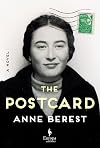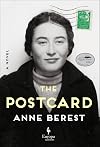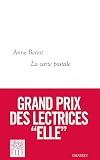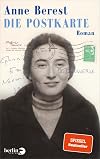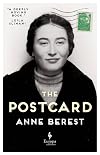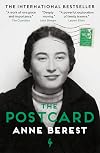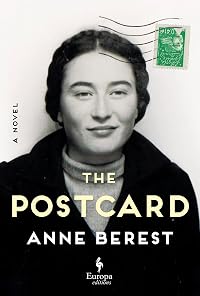
The Postcard
by Anne Berest
On This Page
Description
"Anne Berest's The Postcard is among the most acclaimed and beloved French novels of recent years. Luminous and gripping to the very last page, it is an enthralling investigation into family secrets, a poignant tale of mothers and daughters, and a vivid portrait of twentieth-century Parisian intellectual and artistic life. January, 2003. Together with the usual holiday cards, an anonymous postcard is delivered to the Berest family home. On the front, a photo of the Opéra Garnier in Paris. show more On the back, the names of Anne Berest's maternal great-grandparents, Ephraïm and Emma, and their children, Noémie and Jacques--all killed at Auschwitz. Fifteen years after the postcard is delivered, Anne, the heroine of this novel, is moved to discover who sent it and why. Aided by her chain-smoking mother, family members, friends, associates, a private detective, a graphologist, and many others, she embarks on a journey to discover the fate of the Rabinovitch family: their flight from Russia following the revolution, their journey to Latvia, Palestine, and Paris. What emerges is a moving saga of a family devastated by the Holocaust and partly restored through the power of storytelling that shatters long-held certainties about Anne's family, her country, and herself." -- show lessTags
Recommendations









Member Reviews
But, in the midst of this enlightened discourse, there was that word that kept returning, circling back like a dark star, like some bizarre constellation, surrounded by a halo of mystery. Jew.
from the Postcard by Anne Berest
Anne Berest has a remarkable family history. Her grandparents moved from country to country seeking a safe harbor. Her grandmother married a Spanish Dada artist. She survived the Holocaust, worked in the Resistance, while her parents and younger siblings disappeared into the death camps. Berest’s mother was a political activist who never told her she was Jewish. Berest recalls asking about the family members with numbers on their arms and was told it was their telephone numbers.
Each generation contended with the show more same legacy, each a victim of anti-Semitism. Even Berest’s daughter. 1925. 1950. 1980. “The pattern was undeniable,” Berest writes, yet wondering “What does it mean to be Jewish?”
History can not be erased or forgotten. “Every time I met someone, I’d wonder: victim or perpetrator?” Berest brings to life the world that made this question a chilling reality.
She takes us into Vichy France, to the concentration camps, into hiding and the Resistance, and the chilling scenes where the survivors, walking skeletons, are repatriated.
Her journey began with a post card, written decades before it was mailed and delivered. On it were written the names of her mother’s parents and siblings who died in the death camps. Who had sent it? Why did it take so long to be mailed?
She researched and interviewed and pressed her mother for information, seeking to recreate her family’s lives and experiences. Decades of repressed memories is a wall she must break through. She feels the legacy of trauma carried in her own body, demanding to understand what her ancestors endured.
Intensely drawn, these people come to life on the page in this shattering and haunting story.
I received a free ebook from the publisher through Edelweiss. My review is fair and unbiased. show less
from the Postcard by Anne Berest
Anne Berest has a remarkable family history. Her grandparents moved from country to country seeking a safe harbor. Her grandmother married a Spanish Dada artist. She survived the Holocaust, worked in the Resistance, while her parents and younger siblings disappeared into the death camps. Berest’s mother was a political activist who never told her she was Jewish. Berest recalls asking about the family members with numbers on their arms and was told it was their telephone numbers.
Each generation contended with the show more same legacy, each a victim of anti-Semitism. Even Berest’s daughter. 1925. 1950. 1980. “The pattern was undeniable,” Berest writes, yet wondering “What does it mean to be Jewish?”
History can not be erased or forgotten. “Every time I met someone, I’d wonder: victim or perpetrator?” Berest brings to life the world that made this question a chilling reality.
She takes us into Vichy France, to the concentration camps, into hiding and the Resistance, and the chilling scenes where the survivors, walking skeletons, are repatriated.
Her journey began with a post card, written decades before it was mailed and delivered. On it were written the names of her mother’s parents and siblings who died in the death camps. Who had sent it? Why did it take so long to be mailed?
She researched and interviewed and pressed her mother for information, seeking to recreate her family’s lives and experiences. Decades of repressed memories is a wall she must break through. She feels the legacy of trauma carried in her own body, demanding to understand what her ancestors endured.
Intensely drawn, these people come to life on the page in this shattering and haunting story.
I received a free ebook from the publisher through Edelweiss. My review is fair and unbiased. show less
The Postcard by Anne Berest is a beautifully written (and beautifully translated by Tina Kover) work of autofiction, taking the reader through both the trauma of the holocaust and the contemporary world of thinly (sometimes) disguised hatred that shares many characteristics with the hatred of the past.
As I read more works that fall under the heading of autofiction, I come to appreciate what it has to offer. For example, when you read Hemingway's fiction, much of it based on personal experience, it is not a retelling of actual events but his fictionalized telling of his perception of the events. Autofiction, however, tracks much closer to a work of nonfiction but uses the tools of fiction to make the narrative flow better. Dialogue that show more didn't take place but could have, time compression to place events in closer proximity to emphasize connectedness, things like that. But the events are the actual events, the story is the actual story. No doubt there are times this doesn't work, but the works I've read so far have used this approach very well.
I know that many approach this as historical fiction, and it is, but because the story is confined to what actually happened, there isn't the same freedom to embellish things to make it more sensationalized, so what is gained through autofiction can also limit its appeal as historical fiction. For me, however, knowing these are actual events, not simply a story based on actual events, more than makes up for any minor shortcomings.
The timeline involving WWII era is, like most holocaust literature, heartbreaking. The knowledge that such family tragedy mirrors societal tragedy, and that this is being passed down from generation to generation (both as oral history and genetically) makes the story more powerful.
The contemporary timeline is disturbing because it seems to highlight just how little we have learned about our worst tendencies as human beings and how history, while maybe not actually repeating itself, does run in similar cycles. It is in this timeline where we can more easily relate to the characters, their lives are familiar to us, so disturbances in them make more sense to us.
Empathy is a positive emotion, but it needs to be a catalyst, not the ending point. Become an activist against hate. That doesn't necessarily mean marching in the streets, though that isn't a bad idea at times. But stand up to the comments we all hear from time to time within our own circle of friends. Don't let casual hate go unchecked just because confronting it might be uncomfortable. Silence is usually taken as agreement when comments are made. We don't need hate thinking it is the majority.
There were times I thought maybe the book dragged, but I couldn't think of anything I wanted to potentially not have known. I also found that the pacing often reflected what was happening in the lives. While looking back it seems like things progressed rapidly, and in a historical sense they did, the lived experience was gradual. A little at a time so there wouldn't be much resistance. The writing during these periods reflect that. We don't go from a growing family to concentration camps and murder in a few short pages. We experience it gradually, and painfully, similar to how it was for the characters. So, ultimately, I think both the length and the pacing work very well here.
I would highly recommend this to any reader who enjoys living in the novel they're reading and not just watching a quick synopsis of the characters' lives. Any readers who simply can't stay focused on a book over a couple hundred pages might want to skip it, this is meant to be experienced, not breezed through, so you probably won't enjoy it.
Reviewed from a copy made available by the publisher via NetGalley. show less
As I read more works that fall under the heading of autofiction, I come to appreciate what it has to offer. For example, when you read Hemingway's fiction, much of it based on personal experience, it is not a retelling of actual events but his fictionalized telling of his perception of the events. Autofiction, however, tracks much closer to a work of nonfiction but uses the tools of fiction to make the narrative flow better. Dialogue that show more didn't take place but could have, time compression to place events in closer proximity to emphasize connectedness, things like that. But the events are the actual events, the story is the actual story. No doubt there are times this doesn't work, but the works I've read so far have used this approach very well.
I know that many approach this as historical fiction, and it is, but because the story is confined to what actually happened, there isn't the same freedom to embellish things to make it more sensationalized, so what is gained through autofiction can also limit its appeal as historical fiction. For me, however, knowing these are actual events, not simply a story based on actual events, more than makes up for any minor shortcomings.
The timeline involving WWII era is, like most holocaust literature, heartbreaking. The knowledge that such family tragedy mirrors societal tragedy, and that this is being passed down from generation to generation (both as oral history and genetically) makes the story more powerful.
The contemporary timeline is disturbing because it seems to highlight just how little we have learned about our worst tendencies as human beings and how history, while maybe not actually repeating itself, does run in similar cycles. It is in this timeline where we can more easily relate to the characters, their lives are familiar to us, so disturbances in them make more sense to us.
Empathy is a positive emotion, but it needs to be a catalyst, not the ending point. Become an activist against hate. That doesn't necessarily mean marching in the streets, though that isn't a bad idea at times. But stand up to the comments we all hear from time to time within our own circle of friends. Don't let casual hate go unchecked just because confronting it might be uncomfortable. Silence is usually taken as agreement when comments are made. We don't need hate thinking it is the majority.
There were times I thought maybe the book dragged, but I couldn't think of anything I wanted to potentially not have known. I also found that the pacing often reflected what was happening in the lives. While looking back it seems like things progressed rapidly, and in a historical sense they did, the lived experience was gradual. A little at a time so there wouldn't be much resistance. The writing during these periods reflect that. We don't go from a growing family to concentration camps and murder in a few short pages. We experience it gradually, and painfully, similar to how it was for the characters. So, ultimately, I think both the length and the pacing work very well here.
I would highly recommend this to any reader who enjoys living in the novel they're reading and not just watching a quick synopsis of the characters' lives. Any readers who simply can't stay focused on a book over a couple hundred pages might want to skip it, this is meant to be experienced, not breezed through, so you probably won't enjoy it.
Reviewed from a copy made available by the publisher via NetGalley. show less
A postcard arrives with four names on it. The names are of family members who perished in the Holocaust. Who sent the card? Why was it sent? The author takes us on a journey like no other as she explores her family roots through a fictional account of the search. This is finely crafted historical fiction told in a propelling narrative with a perfect ending. What more do you want?
Berest introduces us to characters representing a variety of experiences as she traces her grandmother’s story from 1939 forward. The plot unfolds slowly as we get to know each one more deeply. In doing so we can examine the decisions made in light of their time and place in the world. Of course, parts of the story are gritty as families struggle to survive show more or meet their end during war time, but it is not graphic.
For me one of the loudest messages is the importance of filling the silence. Each generation has an obligation to leave behind a record of their lifetime experiences. Whether it is oral or written it helps the descendants find their place in history. Revealing the whole story helps hold the family together backwards and forwards. show less
Berest introduces us to characters representing a variety of experiences as she traces her grandmother’s story from 1939 forward. The plot unfolds slowly as we get to know each one more deeply. In doing so we can examine the decisions made in light of their time and place in the world. Of course, parts of the story are gritty as families struggle to survive show more or meet their end during war time, but it is not graphic.
For me one of the loudest messages is the importance of filling the silence. Each generation has an obligation to leave behind a record of their lifetime experiences. Whether it is oral or written it helps the descendants find their place in history. Revealing the whole story helps hold the family together backwards and forwards. show less
NOTE: This multi-award-winning, TRUE family saga was first published in France in 2021. I was given early access to the English version (translated by Tina Kover) in exchange for writing an impartial review. The English publication date is May 16, 2023. Thank you edelweis and Europa.
This is one of the most emotionally powerful books I've ever read. It is horrifying, brutally honest, and painful to read -- but also a story you won't be able to put down. Five stars does not do it justice. It's genuinely brilliant.
THE POSTCARD begins in 2003 when the author's family receives a postcard from an unknown sender. On it are four names -- the names of four relatives who perished during the Holocaust. What does it mean? Is it some sort of show more message? Is someone still alive? Could it be a warning of some kind? The book then recounts the diligent, forensic-like research involved in trying to find out who sent the postcard. And through this research, like the author's family, we slowly come to learn the story of Anne Berest's ancestors, along with the lasting devastation the Holocaust inflicted across generations of this family. For me, it also felt like I was living through different aspects of World War II -- alongside those who fought, those who hid, some who spied, and others who got caught.
Berest is at the center of the research effort, relying heavily on her mother Lelia's often painful memories. Both work to flesh out details from Lelia's mother's (Myriam) life during the war. The book moves back and forth in time and does not follow the structure of a traditional novel. Many sections read like a novel but another section might be an exchange of letters between family members. Another could recount a trip to find old friends whose memories might shed light on the mystery. For me, some of the unpredictability of the book's construction helped me experience the process of genealogy research -- where often one bit of information is found at a time. And only when you have enough bits are you able to put together a full picture of someone's life.
The story of the Rabinovitch family begins when they are forced to leave Russia and then follows members of the family as they move around -- to Poland, Palestine, Spain, England, and France. Their story mirrors the story of thousands (perhaps millions) of Jewish families caught up in the virulent antisemitism pervasive throughout Europe in the 20th century, culminating in Nazi Germany's systematic genocide. And lingers today.
What makes the story so emotional and so powerful is how deeply the reader becomes immersed in the family. Following four generations, both children and adults, we witness their quarrels, their dreams and disappointments, their loves, and their unpredictable fates. Out of the dozens of books I've read about World War II and the Holocaust (so many of which end with the end of the war), none has illustrated the aftermath, the lasting guilt and devastation experienced by survivors as well as THE POSTCARD. I felt what it was like to be in Paris after the war ended. I saw the condition of concentration camp survivors returning home. I accompanied members of this family as they tried to track down missing family members. All of this is part of what made it such a hard book to read.
If you read Suite Francais by Irene Nemirovsky you have some sense of how powerfully a gifted writer can make real the truth of a wretched episode of history. For all lovers of historical fiction, for those interested in World War II, and for those who share my fascination with the Holocaust story -- this is a book NOT to be missed. show less
This is one of the most emotionally powerful books I've ever read. It is horrifying, brutally honest, and painful to read -- but also a story you won't be able to put down. Five stars does not do it justice. It's genuinely brilliant.
THE POSTCARD begins in 2003 when the author's family receives a postcard from an unknown sender. On it are four names -- the names of four relatives who perished during the Holocaust. What does it mean? Is it some sort of show more message? Is someone still alive? Could it be a warning of some kind? The book then recounts the diligent, forensic-like research involved in trying to find out who sent the postcard. And through this research, like the author's family, we slowly come to learn the story of Anne Berest's ancestors, along with the lasting devastation the Holocaust inflicted across generations of this family. For me, it also felt like I was living through different aspects of World War II -- alongside those who fought, those who hid, some who spied, and others who got caught.
Berest is at the center of the research effort, relying heavily on her mother Lelia's often painful memories. Both work to flesh out details from Lelia's mother's (Myriam) life during the war. The book moves back and forth in time and does not follow the structure of a traditional novel. Many sections read like a novel but another section might be an exchange of letters between family members. Another could recount a trip to find old friends whose memories might shed light on the mystery. For me, some of the unpredictability of the book's construction helped me experience the process of genealogy research -- where often one bit of information is found at a time. And only when you have enough bits are you able to put together a full picture of someone's life.
The story of the Rabinovitch family begins when they are forced to leave Russia and then follows members of the family as they move around -- to Poland, Palestine, Spain, England, and France. Their story mirrors the story of thousands (perhaps millions) of Jewish families caught up in the virulent antisemitism pervasive throughout Europe in the 20th century, culminating in Nazi Germany's systematic genocide. And lingers today.
What makes the story so emotional and so powerful is how deeply the reader becomes immersed in the family. Following four generations, both children and adults, we witness their quarrels, their dreams and disappointments, their loves, and their unpredictable fates. Out of the dozens of books I've read about World War II and the Holocaust (so many of which end with the end of the war), none has illustrated the aftermath, the lasting guilt and devastation experienced by survivors as well as THE POSTCARD. I felt what it was like to be in Paris after the war ended. I saw the condition of concentration camp survivors returning home. I accompanied members of this family as they tried to track down missing family members. All of this is part of what made it such a hard book to read.
If you read Suite Francais by Irene Nemirovsky you have some sense of how powerfully a gifted writer can make real the truth of a wretched episode of history. For all lovers of historical fiction, for those interested in World War II, and for those who share my fascination with the Holocaust story -- this is a book NOT to be missed. show less
What does it mean to be Jewish?"
***************************
"I carry it within me, inscribed in the very cells of my body, the memory of an experience of danger so violent that sometimes I think I really lived it myself, or that I'll be forced to relive it one day. To me, death always feels near. I have a sense of being hunted. I often feel subjected to a kind of self-obliteration."
This is an example of what seems to be an increasingly popular form (genre?) of book described as "autofiction." At least it seems to be the type of book I am reading more frequently than I have encountered in the past.
In 2003 Anne Berest's mother Leila received an anonymous postcard on which the only inscription was four names, Ephraim and Emma (Leila's show more grandparents), and their children Noemie and Jacques (Leila's aunt and uncle). All four of these people died at Auschwitz. Of the family, only the third child, Myriam, the mother of Leila and grandmother of Anne, survived.
Anne was always aware that she was Jewish, but she was raised nonobservant. When Leila received the postcard, she and Anne puzzled over it, but did nothing for several years. Then, an anti-semitic incident involving Anne's young daughter as well as an incident at a seder attended by Anne caused her to want to explore her heritage and to discover more about the history of her family and what actually happened to them, as well as to find out who sent the postcard in 2003 and why. The book describes Anne's family history as well as a step by step detailing of her search for answers to the mystery of the postcard.
At the time I read this in September, I noted that it was one of the best books I have read this year, and that is still the case. It is a deep dive into what it means to be Jewish, and a reinforcement of the message that the world can never be allowed to forget what happened in the Holocaust. I was amazed by how long it took France to recognize the the damages done to its Jewish population during WW II by the Nazis and their French collaborators. It wasn't until 1997 with the Matteoli Commission that an investigation began to study the conditions under which the property belonging to Jews in France was confiscated or otherwise taken from the Jews. This was in addition to the failure of France to acknowledge the responsibility of the French government for the deportation of thousands of Jews to the death camps during WW II until 2009.
Highly recommended, 4 1/2 stars show less
***************************
"I carry it within me, inscribed in the very cells of my body, the memory of an experience of danger so violent that sometimes I think I really lived it myself, or that I'll be forced to relive it one day. To me, death always feels near. I have a sense of being hunted. I often feel subjected to a kind of self-obliteration."
This is an example of what seems to be an increasingly popular form (genre?) of book described as "autofiction." At least it seems to be the type of book I am reading more frequently than I have encountered in the past.
In 2003 Anne Berest's mother Leila received an anonymous postcard on which the only inscription was four names, Ephraim and Emma (Leila's show more grandparents), and their children Noemie and Jacques (Leila's aunt and uncle). All four of these people died at Auschwitz. Of the family, only the third child, Myriam, the mother of Leila and grandmother of Anne, survived.
Anne was always aware that she was Jewish, but she was raised nonobservant. When Leila received the postcard, she and Anne puzzled over it, but did nothing for several years. Then, an anti-semitic incident involving Anne's young daughter as well as an incident at a seder attended by Anne caused her to want to explore her heritage and to discover more about the history of her family and what actually happened to them, as well as to find out who sent the postcard in 2003 and why. The book describes Anne's family history as well as a step by step detailing of her search for answers to the mystery of the postcard.
At the time I read this in September, I noted that it was one of the best books I have read this year, and that is still the case. It is a deep dive into what it means to be Jewish, and a reinforcement of the message that the world can never be allowed to forget what happened in the Holocaust. I was amazed by how long it took France to recognize the the damages done to its Jewish population during WW II by the Nazis and their French collaborators. It wasn't until 1997 with the Matteoli Commission that an investigation began to study the conditions under which the property belonging to Jews in France was confiscated or otherwise taken from the Jews. This was in addition to the failure of France to acknowledge the responsibility of the French government for the deportation of thousands of Jews to the death camps during WW II until 2009.
Highly recommended, 4 1/2 stars show less
A slightly fictionalized story of Anne's own family, who received a postcard in 2003 with four names: Ephraim, Emma, Noémie and Jacques. Anne's mother, Lélia, tells her that Ephraim and Emma were her mother, Myriam's, parents and Noémie and Jacques her siblings. All four died in concentration camps in World War 2. Some time later, Anne is pregnant with her daughter and becomes interested in the story, so Lélia begins telling her the results of her research.
The Postcard is divided into four parts: the first, Lélia telling Anne the story of her great-grandparents, Noémie and Jacques; the second, about six years later in the narrative present, Anne learns that something happened to her daughter at school and begins researching who show more might have sent the postcard; the third, an email exchange between Anne and her sister; the fourth, Myriam's - the survivor's - story. It starts out somewhat straightforward historical fiction, but becomes ever more complicated as Lélia's and Anne's research intertwines, and Anne reflects on both generational trauma and her own Jewishness, as one who doesn't practice and never has, but who nevertheless is a descendant of those murdered by the Nazis. It's not easy to read. It does not shy away from the horrors of the German occupation and the collaboration of the French government and people. A powerful read. show less
The Postcard is divided into four parts: the first, Lélia telling Anne the story of her great-grandparents, Noémie and Jacques; the second, about six years later in the narrative present, Anne learns that something happened to her daughter at school and begins researching who show more might have sent the postcard; the third, an email exchange between Anne and her sister; the fourth, Myriam's - the survivor's - story. It starts out somewhat straightforward historical fiction, but becomes ever more complicated as Lélia's and Anne's research intertwines, and Anne reflects on both generational trauma and her own Jewishness, as one who doesn't practice and never has, but who nevertheless is a descendant of those murdered by the Nazis. It's not easy to read. It does not shy away from the horrors of the German occupation and the collaboration of the French government and people. A powerful read. show less
In 2003, Anne Berest's mother received a postcard listing her grandparents and aunt and uncles names who were all killed at Auschwitz. There was nothing else on the card and so it is this mystery that sets up the frame for the story. Who sent it and why?
What is then revealed is the story of Berest's ancestors, first her grandparents, Ephraim and Emma and then in the second half of the book Myriam, the survivor of that time. And it also sets up what it means to be a secular Jew in modern-day France, particularly relevant today. 'An old story, which is a very new story.'
The book shows how the tentacles of trauma from the holocaust stretch down the generations and into the future, how it can never be laid to rest and must always be show more remembered. The book is part historical novel and part detective as memories and documents of the family are tracked down.
There are many difficult moments in the book but imagine being invited into a house, pretending that you a researcher looking for pictures from the 1930s, only to be handed your own family photographs and to see your family piano standing in the corner of the lounge. These things are still alive and living in French houses up and down the country.
At the end the sender of the postcard is identified and Berest has a much clearer idea of her ancestry and herself.
I can't forget them. If I do, there will be no one left to remember that they ever existed.
p474
It is a very well-written and translated book that drops surprise, hurt, anguish and desperation into the family's life and ours as readers. It is a powerful exploration of family trauma or 'cellular memory', exploring what it means to be a witness generations later. This is all supported by the use of emails and official documents interspersed with the narrative. I was particularly moved by the emails between Anne and her sister about having the same traits as their mother and aunt whose names they had as their middle name.
Wonderful. show less
What is then revealed is the story of Berest's ancestors, first her grandparents, Ephraim and Emma and then in the second half of the book Myriam, the survivor of that time. And it also sets up what it means to be a secular Jew in modern-day France, particularly relevant today. 'An old story, which is a very new story.'
The book shows how the tentacles of trauma from the holocaust stretch down the generations and into the future, how it can never be laid to rest and must always be show more remembered. The book is part historical novel and part detective as memories and documents of the family are tracked down.
There are many difficult moments in the book but imagine being invited into a house, pretending that you a researcher looking for pictures from the 1930s, only to be handed your own family photographs and to see your family piano standing in the corner of the lounge. These things are still alive and living in French houses up and down the country.
At the end the sender of the postcard is identified and Berest has a much clearer idea of her ancestry and herself.
I can't forget them. If I do, there will be no one left to remember that they ever existed.
p474
It is a very well-written and translated book that drops surprise, hurt, anguish and desperation into the family's life and ours as readers. It is a powerful exploration of family trauma or 'cellular memory', exploring what it means to be a witness generations later. This is all supported by the use of emails and official documents interspersed with the narrative. I was particularly moved by the emails between Anne and her sister about having the same traits as their mother and aunt whose names they had as their middle name.
Wonderful. show less
Members
- Recently Added By
Lists

Jewish Books
367 works; 24 members

Fiction: Historical
288 works; 3 members

Books Read in 2024
4,727 works; 128 members
Author Information

13 Works 1,360 Members
Some Editions
Awards and Honors
Awards
Distinctions
Common Knowledge
- Canonical title*
- De ansichtkaart
- Original title
- La carte postale
- Original publication date
- 2021
- People/Characters
- Ephraïm Rabinovitch; Emma Rabinovitch; Noémie Rabinovitch; Jacques Rabinovitch
- Important events
- The rise of Hitler and the Nazis
- Dedication
- This book is dedicated to Gregoire, and to all the descendants of the Rabinovitch family.
- First words
- My mother lit her first lung-charring cigarette of the morning, the one she enjoyed the most, and stepped outside to admire the whiteness blanketing the entire neighborhood.
- Last words
- (Click to show. Warning: May contain spoilers.)I can't forget them. If I ever do there will be no one left to remember that they ever existed.
- Blurbers
- Slimani, Leila; Elkin, Lauren
- Original language
- French
*Some information comes from Common Knowledge in other languages. Click "Edit" for more information.
Classifications
Statistics
- Members
- 788
- Popularity
- 35,460
- Reviews
- 38
- Rating
- (4.38)
- Languages
- 7 — Danish, Dutch, English, French, German, Italian, Spanish
- Media
- Paper, Audiobook, Ebook
- ISBNs
- 25
- ASINs
- 13