On This Page
Description
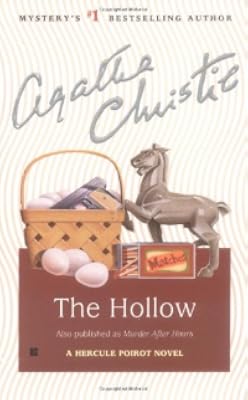
Agatha Christie's classic, The Hollow, finds Poirot entangled in a nasty web of family secrets when he comes across a fresh murder at an English country manor.A far-from-warm welcome greets Hercule Poirot as he arrives for lunch at Lucy Angkatell's country house. A man lies dying by the swimming pool, his blood dripping into the water. His wife stands over him, holding a revolver.
As Poirot investigates, he begins to realize that beneath the respectable surface lies a tangle of family show more secrets and everyone becomes a suspect.
. show less
Tags
Recommendations














Member Reviews
"Sometimes," she said meditatively, "things arrange themselves quite simply. I've asked dthe Crime man to lunch on Sunday. It will make a distraction, don't you think so?"
"Crime man?"
"Like an egg," said Lady Angkatell.
Christie, Agatha. The Hollow: Hercule Poirot Investigates (Hercule Poirot series Book 25) (p. 7). HarperCollins. Kindle Edition.
Hercule Poirot is invited to lunch but is disappointed to find his hosts so crass as to stage a murder as the entertainment. Only his hosts are as surprised as he to find the charming Doctor John Cristow dead with his newly widowed wife, Gerda Christow holding the gun.
This was fantastic. A seemingly simple crime turns complex as Poirot pits his wits against his most fiendishly good villain yet or do gooder as the case may be. . Every clue is a red herring leaving both Poirot and Inspector Grange scratching their heads. Okay I'll admit, and me. I was jumping from suspect to suspect sure I was finally right. Of course, I was wrong but I had a great time trying to puzzle my way out of this one. I loved Henrietta and Lady Lucy Angkatell best but I was also pretty fond of Midge and Gerda. Lucy cracked me up. I loved that she had a whole conversation with Midge before she actually gets to Midge and then she's like oh dear, you're so helpful! and Midge is like am i?
I was amused by the butler, Gudgeon and his efforts to look after his mistress, Lady Angkatell to the best of his abilities. Like having multiple replacement kettles for when she inevitably burns them by l eaving them to boil and walking away.
The victim, Doctor John Christow was a different story. Honestly the guy was a jerk. He deserved everything he got. I hated the way he treated Gerda. The poor woman didn't deserve it at all and I felt so sorry for her having so much anxiety and being told she was so stupid. I loved that she made a decision at some point to just play dumb so people would leave alone but I still felt sorry for her to have to.
And Henrietta. I liked that she was kind to Gerda although it definitely doesn't excuse her for sleeping with her husband ffs. But I didn't get why she liked John either. He treated her, in his own way, just as badly. Wanting to own her and possess her when he has a freaking wife and children is just as terrible. I liked that Henrietta wasn't as wrapped up in him and recognised the situation for what it was but I also would've liked her to just get rid of him. As for the villain of the piece Henrietta was epic. I loved her misleading Poirot and it cracked me up when she said how tired she was trying to keep ahead of him. I got why she protected Gerda - I just wish that Gerda doesn't try to kill her in the end. I would've liked some girl power or something. But Poirot always knows how to play the odds and it was neatly tied up.
A fantastic Hercule Poirot. 4.5 stars, rounded to 5 stars. show less
"Crime man?"
"Like an egg," said Lady Angkatell.
Christie, Agatha. The Hollow: Hercule Poirot Investigates (Hercule Poirot series Book 25) (p. 7). HarperCollins. Kindle Edition.
Hercule Poirot is invited to lunch but is disappointed to find his hosts so crass as to stage a murder as the entertainment. Only his hosts are as surprised as he to find the charming Doctor John Cristow dead with his newly widowed wife, Gerda Christow holding the gun.
This was fantastic. A seemingly simple crime turns complex as Poirot pits his wits against his most fiendishly good villain yet
I was amused by the butler, Gudgeon and his efforts to look after his mistress, Lady Angkatell to the best of his abilities.
The victim, Doctor John Christow was a different story. Honestly the guy was a jerk. He deserved everything he got.
And Henrietta. I liked that she was kind to Gerda although it definitely doesn't excuse her for sleeping with her husband ffs. But I didn't get why she liked John either. He treated her, in his own way, just as badly. Wanting to own her and possess her when he has a freaking wife and children is just as terrible. I liked that Henrietta wasn't as wrapped up in him and recognised the situation for what it was but I also would've liked her to just get rid of him.
A fantastic Hercule Poirot. 4.5 stars, rounded to 5 stars. show less
Summary: When Poirot sees Dr. John Christow lying dead poolside with Christow’s wife holding the gun, the murderer seems obvious.
John Christow is a Harley Street physician. His patients love him. But his real passion in medicine is not the stream of patients to his office, but his efforts to cure Ridgeway’s Disease, focused on one gritty old woman, Mrs. Crabtree. His other passion? Women. He’s had a string of affairs before and after the dutiful and seemingly dull-witted Gerda, who is waiting his lunch upstairs. He’s slow to see his last patient thinking of Henrietta Savernake, his current affair, who he will see at the Hollow this weekend.
The Hollow is the country home of Sir Henry and Lucy Angkatell. All the relations are show more coming. Henrietta is Sir Henry’s cousin and an accomplished sculptress. Edward Angatell is a distant cousin, and the holder of the family home, Ainswick. He’s a bachelor but has loved Henrietta since they were teens. Meanwhile, Midge Hardcastle is a young cousin of Lucy’s, and has always held an affection for Edward. She renounced any family support, working in a dressmaker’s shop. Finally, David Angkatell is the youngest, a bookish, aloof, introvert who doesn’t seem to like anyone, but stands to inherit Ainswick if Edward has no children.
The one responsible for this gathering is Lucy. Forgetful, blunt, conniving, and surprisingly shrewd, she is the one who stage manages this gathering, as well as the family relationships and future, as best she can. She’d like to get Edward and Henrietta together and even loosen up young David. One thing she fails to control is the sudden appearance of actress Veronica Cray, resident of a nearby cottage, needing to borrow a box of matches. John Christow is starstruck. Before his marriage to Gerda, he and Veronica had a torrid affair, broken off because he wouldn’t follow her to Hollywood. She asks him to escort her home. But he doesn’t return until 3 am the next morning.
The next day is Sunday and Poirot is coming to lunch at Lucy’s invitation. As it turns out he has a modest cottage nearby. Just before he arrives, a gunshot rings out. Henrietta and Edward arrive to find John Christow lying by the pool, bleeding out from a fatal gunshot wound. And Gerda is standing over him as Poirot arrives and takes in the scene. Poirot kneels by the dying doctor, who intently looks at him, speaking one word. “Henrietta.” Then he dies. Henrietta, unwisely perhaps, takes the gun from Gerda only to have it fall into the pool, wiping out any fingerprints.
When Inspector Grange arrives, he’s pretty sure Gerda is guilty, even though she claims to have picked up the gun lying by Dr. Christow. Yet things aren’t as they seem. Ballistics reveal another gun killed him, possibly another from Sir Henry’s gun collection that is missing. Gerda goes free to mourn while the search is on. And there’s a country house of suspects. Was Henrietta jealous? What did Christow’s last word mean? What about Veronica Cray, who was heard fighting with Christow and threatening him earlier that morning? Even Gudgeon, the butler, and Lucy are spotted with guns. But when the murder weapon is found, the prints don’t match any of these people.
Poirot talks to all of them. And he comes away with the sense they all know something. The clues seem staged. But by whom? And for what end? In the end, Poirot will figure it out, preventing one more murder as he does so.
This was Christie at the top of her game. An intricate plot, numerous red herrings, and the diverting subplot around Edward. All the ingredients for a great country house murder! show less
John Christow is a Harley Street physician. His patients love him. But his real passion in medicine is not the stream of patients to his office, but his efforts to cure Ridgeway’s Disease, focused on one gritty old woman, Mrs. Crabtree. His other passion? Women. He’s had a string of affairs before and after the dutiful and seemingly dull-witted Gerda, who is waiting his lunch upstairs. He’s slow to see his last patient thinking of Henrietta Savernake, his current affair, who he will see at the Hollow this weekend.
The Hollow is the country home of Sir Henry and Lucy Angkatell. All the relations are show more coming. Henrietta is Sir Henry’s cousin and an accomplished sculptress. Edward Angatell is a distant cousin, and the holder of the family home, Ainswick. He’s a bachelor but has loved Henrietta since they were teens. Meanwhile, Midge Hardcastle is a young cousin of Lucy’s, and has always held an affection for Edward. She renounced any family support, working in a dressmaker’s shop. Finally, David Angkatell is the youngest, a bookish, aloof, introvert who doesn’t seem to like anyone, but stands to inherit Ainswick if Edward has no children.
The one responsible for this gathering is Lucy. Forgetful, blunt, conniving, and surprisingly shrewd, she is the one who stage manages this gathering, as well as the family relationships and future, as best she can. She’d like to get Edward and Henrietta together and even loosen up young David. One thing she fails to control is the sudden appearance of actress Veronica Cray, resident of a nearby cottage, needing to borrow a box of matches. John Christow is starstruck. Before his marriage to Gerda, he and Veronica had a torrid affair, broken off because he wouldn’t follow her to Hollywood. She asks him to escort her home. But he doesn’t return until 3 am the next morning.
The next day is Sunday and Poirot is coming to lunch at Lucy’s invitation. As it turns out he has a modest cottage nearby. Just before he arrives, a gunshot rings out. Henrietta and Edward arrive to find John Christow lying by the pool, bleeding out from a fatal gunshot wound. And Gerda is standing over him as Poirot arrives and takes in the scene. Poirot kneels by the dying doctor, who intently looks at him, speaking one word. “Henrietta.” Then he dies. Henrietta, unwisely perhaps, takes the gun from Gerda only to have it fall into the pool, wiping out any fingerprints.
When Inspector Grange arrives, he’s pretty sure Gerda is guilty, even though she claims to have picked up the gun lying by Dr. Christow. Yet things aren’t as they seem. Ballistics reveal another gun killed him, possibly another from Sir Henry’s gun collection that is missing. Gerda goes free to mourn while the search is on. And there’s a country house of suspects. Was Henrietta jealous? What did Christow’s last word mean? What about Veronica Cray, who was heard fighting with Christow and threatening him earlier that morning? Even Gudgeon, the butler, and Lucy are spotted with guns. But when the murder weapon is found, the prints don’t match any of these people.
Poirot talks to all of them. And he comes away with the sense they all know something. The clues seem staged. But by whom? And for what end? In the end, Poirot will figure it out, preventing one more murder as he does so.
This was Christie at the top of her game. An intricate plot, numerous red herrings, and the diverting subplot around Edward. All the ingredients for a great country house murder! show less
The Hollow - Christie-
Audio performance by Hugh Fraser
4 stars
According to GoodReads “Christie described this novel as the one "I had ruined by the introduction of Poirot." It was first published in 1946 in London. In the USA it was published under the title Murder after Hours. Christie adapted the novel for the stage though with the omission of Hercule Poirot.
Personally, I would miss Papa Poirot if he wasn’t there. There is a bit (?!) of the deus ex machina about his appearance in a pivotal last scene, but this was certainly not the first time Christie allowed him to do such a thing. I do think that this country house murder mystery is among Christie’s best.
The characters in this book were more complicated than I’ve come to show more expect from her. I think she was realistic in her depiction of Doctor John Christow and the artist Henrietta Savernake. She captured the obsession and narcissism of the true genius without turning either of them into unfeeling monsters. I loved the batty Lady Angkatell who resembles Christie’s equally batty Ariadne Oliver. I loved the way the plot of this one was like a backward Then There Were None. Or maybe an inverted Murder on the Orient Express. Sort of. Possibly. Think about it. show less
Audio performance by Hugh Fraser
4 stars
According to GoodReads “Christie described this novel as the one "I had ruined by the introduction of Poirot." It was first published in 1946 in London. In the USA it was published under the title Murder after Hours. Christie adapted the novel for the stage though with the omission of Hercule Poirot.
Personally, I would miss Papa Poirot if he wasn’t there. There is a bit (?!) of the deus ex machina about his appearance in a pivotal last scene, but this was certainly not the first time Christie allowed him to do such a thing. I do think that this country house murder mystery is among Christie’s best.
The characters in this book were more complicated than I’ve come to show more expect from her. I think she was realistic in her depiction of Doctor John Christow and the artist Henrietta Savernake. She captured the obsession and narcissism of the true genius without turning either of them into unfeeling monsters. I loved the batty Lady Angkatell who resembles Christie’s equally batty Ariadne Oliver. I loved the way the plot of this one was like a backward Then There Were None. Or maybe an inverted Murder on the Orient Express. Sort of. Possibly. Think about it. show less
In The Hollow — originally published as Murder After Hours — Christie paints the perfect picture of a bullying, narcissistic husband and his co-dependent doormat wife. Dr. John Christow, a research scientist in the midst of a mid-life crisis, takes his anxiety out by hectoring his poor dim-witted but adoring wife Gerda. The Christows head off to a weekend at a country home called The Hollow, owned by Lady Lucy Angkatell. Also visiting are John’s new mistress, a sculptor named Henrietta Savernake (who is also a cousin of Lucy’s), and his ex-fiancée, a beautiful but self-centered actress named Veronica Cray who had left her native England — and John — for Hollywood. But Veronica, with her career waning, is determined to get show more John back. Nor is this the only love triangle at The Hollow: The unworldly Edward Angkatell, another of Lucy’s cousins, harbors a one-sided love of Henrietta. In turn, a poor relation and fellow guest, Midge Hardcastle, secretly pines for Edward, fully aware of his unrequited love for Henrietta.
When John ends up dead at The Hollow’s swimming pool, who could be surprised? But that his sheep-like wife is standing over him with a revolver? That’s shocking!
Cue Hercule Poirot, who arrives in time to untangle this mare’s nest of lust and love. Christie pens an ending much more surprising than even the prospect of a worm as downtrodden as Gerda turning. Whether you’re a longtime Agatha Christie fan or new to the Queen of Crime, you won’t want to miss the chance to see Hercule Poirot exercise those eminent little gray cells in The Hollow, a very excellent mystery. show less
When John ends up dead at The Hollow’s swimming pool, who could be surprised? But that his sheep-like wife is standing over him with a revolver? That’s shocking!
Cue Hercule Poirot, who arrives in time to untangle this mare’s nest of lust and love. Christie pens an ending much more surprising than even the prospect of a worm as downtrodden as Gerda turning. Whether you’re a longtime Agatha Christie fan or new to the Queen of Crime, you won’t want to miss the chance to see Hercule Poirot exercise those eminent little gray cells in The Hollow, a very excellent mystery. show less
Alternate title: Death of a Douchey Doctor
A weekend gathering at a country estate becomes a crime scene just as Monsieur Poirot shows up for lunch. I love that he initially assumes his over-enthusiastic hosts have set up a cheesy tableau for his benefit.
It was too much--it was really too much! He had not suspected such cheapness of the Angkatells...The misplaced sense of humour of the English!
He was annoyed and he was bored--oh! how he was bored! Death was not, to him, amusing. And here they had arranged for him, by way of a joke, a set piece.
For what he was looking at was a highly artificial murder scene. By the side of the pool was the body, artistically arranged with an outflung arm and even some red paint dripping gently over the show more edge of the concrete into the pool. It as a spectacular body, that of a handsome fair-haired man. Standing over the body, revolver in hand, was a woman, a short, powerfully built, middle-aged woman with a curiously blank expression.
The Angkatells are an eccentric, cluelessly rich family, the "spectacular body" is Dr. John Christow, and the "woman with a curiously blank expression" is his wife, Gerda, who he married because he wanted the most submissive wife possible. Did stupid, little Gerda finally snap and murder her husband? He's been sleeping around their entire marriage while Gerda has anxiety attacks about whether to send the roast back to the kitchen to be reheated. Or was it actress Veronica Cray, who John dumped 15 years ago because she wanted him to plan his life around her, rather than vice versa? Or John's current mistress, Henrietta, an artist who "accidentally" destroyed evidence? Or Edward, the Angkatell cousin who's been in love since Henrietta since childhood?
Honestly, they're all pretty worthless. The only character I liked was their poor cousin Midge, who chooses to work as a shopgirl (for a terrible Jewish woman, whose description reveals Dame Christie's anti-Semitic leanings) rather than accept charity.
Inspector Grange is on the case, assuming that the obvious answer is the correct one, but Papa Poirot will make sure the case is solved properly.
Solution: It actually was Gerda, even though the gun she was holding wasn't the one that killed her husband.
"And I knew I must be careful because the police are very clever. But then I'm not really as stupid as people think! If you're very slow and just stare, people think you don't take things in--and sometimes, underneath, you're laughing at them! I knew I could kill John and nobody would know because I'd read in that detective story about the police being able to tell which gun a bullet has been fired from. Sir Henry had shown me how to load and fire a revolver that afternoon. I'd take two revolvers. I'd shoot John with one and then hide it and let people find me holding the other and first they'd think I'd shot him and then they'd find he couldn't have been killed with that revolver and so they'd say I hadn't done it at all!"
Henrietta does her best to cover Gerda's crime, because that was John's dying request of her, but Poirot is too smart to be deceived. He finds the truth, but of course, it's too late and Gerda has already poisoned herself (almost taking Henrietta with her). John and Gerda's children are left orphaned, Henrietta is super sad (but she can channel that into her art), and Midge ends up with Edward, who finally realizes that she's much nicer than Henrietta. show less
A weekend gathering at a country estate becomes a crime scene just as Monsieur Poirot shows up for lunch. I love that he initially assumes his over-enthusiastic hosts have set up a cheesy tableau for his benefit.
It was too much--it was really too much! He had not suspected such cheapness of the Angkatells...The misplaced sense of humour of the English!
He was annoyed and he was bored--oh! how he was bored! Death was not, to him, amusing. And here they had arranged for him, by way of a joke, a set piece.
For what he was looking at was a highly artificial murder scene. By the side of the pool was the body, artistically arranged with an outflung arm and even some red paint dripping gently over the show more edge of the concrete into the pool. It as a spectacular body, that of a handsome fair-haired man. Standing over the body, revolver in hand, was a woman, a short, powerfully built, middle-aged woman with a curiously blank expression.
The Angkatells are an eccentric, cluelessly rich family, the "spectacular body" is Dr. John Christow, and the "woman with a curiously blank expression" is his wife, Gerda, who he married because he wanted the most submissive wife possible. Did stupid, little Gerda finally snap and murder her husband? He's been sleeping around their entire marriage while Gerda has anxiety attacks about whether to send the roast back to the kitchen to be reheated. Or was it actress Veronica Cray, who John dumped 15 years ago because she wanted him to plan his life around her, rather than vice versa? Or John's current mistress, Henrietta, an artist who "accidentally" destroyed evidence? Or Edward, the Angkatell cousin who's been in love since Henrietta since childhood?
Honestly, they're all pretty worthless. The only character I liked was their poor cousin Midge, who chooses to work as a shopgirl (for a terrible Jewish woman, whose description reveals Dame Christie's anti-Semitic leanings) rather than accept charity.
Inspector Grange is on the case, assuming that the obvious answer is the correct one, but Papa Poirot will make sure the case is solved properly.
Solution:
"And I knew I must be careful because the police are very clever. But then I'm not really as stupid as people think! If you're very slow and just stare, people think you don't take things in--and sometimes, underneath, you're laughing at them! I knew I could kill John and nobody would know because I'd read in that detective story about the police being able to tell which gun a bullet has been fired from. Sir Henry had shown me how to load and fire a revolver that afternoon. I'd take two revolvers. I'd shoot John with one and then hide it and let people find me holding the other and first they'd think I'd shot him and then they'd find he couldn't have been killed with that revolver and so they'd say I hadn't done it at all!"
Henrietta does her best to cover Gerda's crime, because that was John's dying request of her, but Poirot is too smart to be deceived. He finds the truth, but of course, it's too late and Gerda has already poisoned herself (almost taking Henrietta with her). John and Gerda's children are left orphaned, Henrietta is super sad (but she can channel that into her art), and Midge ends up with Edward, who finally realizes that she's much nicer than Henrietta.
Poirot arrives at his neighbours' for lunch only to find Gerda Christow standing over her husband's body with a gun. It looks too staged to be real. And yet John Christow is dead.
I found most of the characters in this one rather tiresome and the murder delayed far too long.
I found most of the characters in this one rather tiresome and the murder delayed far too long.
Amazing that this book has both one of the best Agatha Christie characters (Lucy Angkatell) and the absolute worst (John Christow). Seriously, I was not able to muster any sympathy or respect for the guy, though I guess I was supposed to.
Before Poirot shows up, this book really reads like contemporary realistic fiction-- you know, one of those novels that delves into the depressing interior & interpersonal lives of its characters. I don't usually like those kinds of stories, but it was interesting to see it in a Christie. Also interesting to see any kind of discussion of class consciousness that isn't totally laughable from her.
No major spoilers but:The actual mystery didn't seem that clever to me, probably since the clues were more show more psychological than circumstantial. That's classic Poirot, though, I guess. I also hate the "mercy kill"/suicide stuff but that is also classic Poirot, unfortunately. show less
Before Poirot shows up, this book really reads like contemporary realistic fiction-- you know, one of those novels that delves into the depressing interior & interpersonal lives of its characters. I don't usually like those kinds of stories, but it was interesting to see it in a Christie. Also interesting to see any kind of discussion of class consciousness that isn't totally laughable from her.
No major spoilers but:
Members
- Recently Added By
Lists

Crime and Mysteries to Read
746 works; 31 members

British Mystery
469 works; 14 members

Agatha Christie Poirot
43 works; 2 members

Books About Murder
313 works; 7 members

Favorite Books from the 1940s
38 works; 3 members

Detective Stories
343 works; 5 members

Books Read in 2022
5,226 works; 112 members

TBR
77 works; 1 member

Agatha Christie Chronology
93 works; 1 member
Talk Discussions
Past Discussions
Found: Agatha Christie type murder mystery in Name that Book (October 2021)
Author Information

One of the most successful and beloved writer of mystery stories, Agatha Mary Clarissa Christie was born in 1890 in Torquay, County Devon, England. She wrote her first novel, The Mysterious Affair at Styles, in 1920, launching a literary career that spanned decades. In her lifetime, she authored 79 crime novels and a short story collection, 19 show more plays, and six novels written under the name of Mary Westmacott. Her books have sold over a billion copies in the English language with another billion in 44 foreign languages. Some of her most famous titles include Murder on the Orient Express, Mystery of the Blue Train, And Then There Were None, 13 at Dinner and The Sittaford Mystery. Noted for clever and surprising twists of plot, many of Christie's mysteries feature two unconventional fictional detectives named Hercule Poirot and Miss Jane Marple. Poirot, in particular, plays the hero of many of her works, including the classic, The Murder of Roger Ackroyd (1926), and Curtain (1975), one of her last works in which the famed detective dies. Over the years, her travels took her to the Middle East where she met noted English archaeologist Sir Max Mallowan. They married in 1930. Christie accompanied Mallowan on annual expeditions to Iraq and Syria, which served as material for Murder in Mesopotamia (1930), Death on the Nile (1937), and Appointment with Death (1938). Christie's credits also include the plays, The Mousetrap and Witness for the Prosecution (1953; film 1957). Christie received the New York Drama Critics' Circle Award for 1954-1955 for Witness. She was also named Dame Commander of the Order of the British Empire in 1971. Christie died in 1976. (Bowker Author Biography) show less
Some Editions
Series

Belongs to Publisher Series
Accolade (3)
Selecciones de Biblioteca Oro (libro 138)
Club des Masques (374)
Le Masque (361)
SaPo (42)
Scherz Krimi (425 / 1907)
Fischer Taschenbuch (50749)
Work Relationships
Is contained in
Murder for Christmas and Three Other Great Mysteries: The Hollow, Murder in Retrospect, Thirteen At Dinner by Agatha Christie
Agatha Christie Crime Collection: The Hollow / The Moving Finger / Three Act Tragedy by Agatha Christie
Poirot: Four Classic Cases: Three Act Tragedy, Sad Cypress, Evil Under the Sun, The Hollow by Agatha Christie
Common Knowledge
- Canonical title
- The Hollow
- Original title
- The Hollow
- Alternate titles
- Murder After Hours
- Original publication date
- 1946-11-01
- People/Characters
- Hercule Poirot; Lady Angkatell; John Christow; Gerda Christow; Henrietta Savernake; Midge Hardcastle (show all 14); Mrs. Crabtree; Sir Henry Angkatell; Edward Angkatell; David Angkatell; Gudgeon; Madame Alfrege; Veronica Cray; Inspector Grange
- Important places
- England, UK
- Related movies
- Agatha Christie's Poirot (1989 | IMDb)
- Dedication
- For LARRY AND DANAE
With apologies for using their swimming pool as the scene of a murder - First words
- At six thirteen a.m. on a Friday morning Lucy Angkatell's big blue eyes opened upon another day and as always, she was at once wide awake and began immediately to deal with the problems conjured up by her incredibly active mi... (show all)nd.
- Quotations
- “Truth, however bitter, can be accepted, and woven into a design for living.”
- Last words
- (Click to show. Warning: May contain spoilers.)"John, forgive me, forgive me, for what I can't help doing."
- Original language
- English
- Disambiguation notice
- aka Murder after Hours
Classifications
Statistics
- Members
- 4,201
- Popularity
- 3,654
- Reviews
- 80
- Rating
- (3.66)
- Languages
- 26 — Catalan, Chinese, Czech, Danish, Dutch, English, Estonian, Finnish, French, German, Hebrew, Hungarian, Indonesian, Italian, Japanese, Norwegian (Bokmål), Norwegian, Polish, Portuguese, Romanian, Russian, Croatian, Spanish, Swedish, Tamil, Turkish
- Media
- Paper, Audiobook, Ebook
- ISBNs
- 161
- UPCs
- 3
- ASINs
- 100