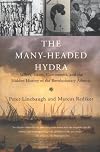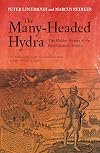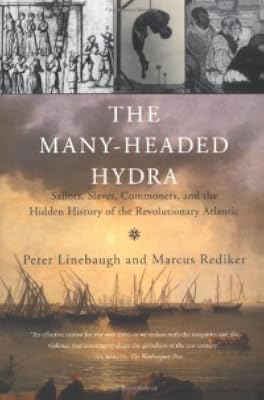
The Many-Headed Hydra: Sailors, Slaves, Commoners, and the Hidden History of the Revolutionary Atlantic
by Peter Linebaugh, Marcus Rediker
On This Page
Description
Winner of the International Labor History Award Long before the American Revolution and the Declaration of the Rights of Man, a motley crew of sailors, slaves, pirates, laborers, market women, and indentured servants had ideas about freedom and equality that would forever change history. The Many Headed-Hydra recounts their stories in a sweeping history of the role of the dispossessed in the making of the modern world. When an unprecedented expansion of trade and colonization in the early show more seventeenth century launched the first global economy, a vast, diverse, and landless workforce was born. These workers crossed national, ethnic, and racial boundaries, as they circulated around the Atlantic world on trade ships and slave ships, from England to Virginia, from Africa to Barbados, and from the Americas back to Europe. Marshaling an impressive range of original research from archives in the Americas and Europe, the authors show how ordinary working people led dozens of rebellions on both sides of the North Atlantic. The rulers of the day called the multiethnic rebels a 'hydra' and brutally suppressed their risings, yet some of their ideas fueled the age of revolution. Others, hidden from history and recovered here, have much to teach us about our common humanity. show lessTags
Recommendations




Member Recommendations

Member Reviews
The culture of the Atlantic in an era of rapid expansion of trade, and the influence of sailors, slaves, pirates, and others in the creation of a new global economy. The notion of pirates as a free-enterprise and somewhat democratic alternative to the indentured sailors and more-or-less captive roving workforce options of the time is truly thought provoking. I’ll never see pirates in quite the same way again. The intersection of aspects of the slave trade and the growing abolitionist movement with the developing Atlantic culture is a fascinating story told well by Linebaugh and Rediker. Certainly my favorite book of 2000 and one of my all-time favorites.
I won The Many-Headed Hydra as part of a Goodreads giveaway.
Linebaugh and Rediker look at the social history of England, the eastern seaboard of North America, the Caribbean, and the ocean that connected them, from early colonization to the turn of the 19th century. Told from the perspective of Marxist historians, the emphasis is generally put on class, but within that distinction are stories of racial, religious, and political minorities.
I was pleasantly surprised to find that the book wasn't strictly limited to life on the high seas; rather, it was a history of the economies on both sides of the Atlantic and the everyday (and not so everyday) non-elite people who built them, laying the ground work for the modern capitalist society.
As show more a history major and buff, a lot of the "big ideas" put forth weren't particularly new to me, as academic historians' interest in social history has intensified enormously in the last generation or so. The individual stories, however, were fascinating. Linebaugh and Rediker present a very different world from the one you may have been taught in history class: whereas the American founding fathers are depicted as radical revolutionaries in popular culture, they were actually quite conservative in comparison to many of the populist, radical movements that were the undercurrent of the Age of Revolution.
Recommended, especially for those with a budding interest in social history and/or this particular place and time in history. show less
Linebaugh and Rediker look at the social history of England, the eastern seaboard of North America, the Caribbean, and the ocean that connected them, from early colonization to the turn of the 19th century. Told from the perspective of Marxist historians, the emphasis is generally put on class, but within that distinction are stories of racial, religious, and political minorities.
I was pleasantly surprised to find that the book wasn't strictly limited to life on the high seas; rather, it was a history of the economies on both sides of the Atlantic and the everyday (and not so everyday) non-elite people who built them, laying the ground work for the modern capitalist society.
As show more a history major and buff, a lot of the "big ideas" put forth weren't particularly new to me, as academic historians' interest in social history has intensified enormously in the last generation or so. The individual stories, however, were fascinating. Linebaugh and Rediker present a very different world from the one you may have been taught in history class: whereas the American founding fathers are depicted as radical revolutionaries in popular culture, they were actually quite conservative in comparison to many of the populist, radical movements that were the undercurrent of the Age of Revolution.
Recommended, especially for those with a budding interest in social history and/or this particular place and time in history. show less
A fascinating conglomeration of social, economic, religious, and political history of the North Atlantic world in the 18th century.
I reviewed this bk & other for the magazine that Rita Rodentia & I edited, Street Ratbag No. 5., in a RATicle entitled "Recommended Reading". I'll probably post this review somewhere on GoodReads eventually.
Un libro da leggere da chi, per qual si voglia motivo, voglia comprendere come è nato il mondo moderno. Spesso la fiumana del progresso ha travolto affascinanti culture libertarie e solidali.
Dec 8, 2023Italian
CCA-6
Sep 29, 2021Catalan
Members
- Recently Added By
Lists

Charleston Syllabus (waitingtoderail)
143 works; 2 members

r/History Recommended Reading List
603 works; 12 members

In Our Time books
4,934 works; 2 members
Author Information

15+ Works 1,321 Members
Peter Linebaugh is a child of empire, schooled in London; Cattaraugus, NY; Washington, DC; Bonn; and Karachi. He went to Swarthmore College during the civil rights days. He has taught at Harvard University and Attica Penitentiary, at New York University and the Federal Penitentiary in Marion, Illinois. He used to edit Zerowork and was a member of show more the Midnight Notes Collective. He coauthored Albion's Fatal Tree and The Many-Headed Hydra and is the author of The London Hanged, The Magna Carta Manifesto, Stop, Thief!, and introductions to Verso's selection of Thomas Paine's writings and PM's edition of E.R Thompson's William Morris: Romantic to Revolutionary. He lives in the region of the Great Lakes. The final essay in this new collection constituted his retirement speech from the University of Toledo in Ohio. show less

16+ Works 2,903 Members
Marcus Rediker is Distinguished Professor of Atlantic History at the University of Pittsburgh and Senior Research Fellow at the Collge d'tudes mondiales in Paris. His books include The Many-Headed Hydra, Villains of All Nations, The Slave Ship, The Amistad Rebellion, and Outlaws of the Atlantic. Rediker is also the producer of the prize-winning show more documentary film Ghosts of Amistad: In the Footsteps of the Rebels (Tony Buba, director). He lives in Pittsburgh, Pennsylvania. show less
Work Relationships
Common Knowledge
- Original title
- The Many-Headed Hydra: Sailors, Slaves, Commoners, and the Hidden History of the Revolutionary Atlantic
- Original publication date
- 2000
- People/Characters
- John Adams; Samuel Adams, Jr.; James Aitken; Nasir al-Din; Algonquins; John Allens (show all 517); Richard Allen; American Sons of Liberty; Joyce Appleby; Francis Asbury; Anthony Ascham; John Atkins; Crispus Attucks; Matthew Backhouse; Francis Bacon; Nathaniel Bacon; Moses Baker; Alexander Lindsay; James Bannantine; William Wildman; James Barrow; Nathaniel Batts; Paul Bayne; Major John Beake; Francis Beaumont; Carl Becker; Hilary Beckles; Aphra Behn; A. L. Beier; Sam Bellamy aka Black Sam; Charles Napier Bell; John Bellingham; William Benbow; Anthony Benezet; Benjamin Bennet; Edouard Bernstein; Aneurin Bevan; Father Antoine Biet; George Bishop; William Blake; Henry St. John, 1st Viscount Bolingbroke; Anne Bonny; Edward Boscawen; Bow Street Runners; Robert Boyle; Richard Braithwaite; Joseph Brand; E. K. Brathwaite; Asa Briggs; British and Foreign Bible Society; J. S. Bromley; Richard Brothers; Tom Brown; Robert Browne; Thomas Browne; Theodore de Bry; Cornelius Bryan; Hugh Bryan; William Buchan; William Bull; John Bunyan; Sir Francis Burdett, 5th Baronet; Edmund Burke; William Burnaby; Robert Burns; Edward Burrough; Robert Burton; George Gordon Byron, 6th Baron Byron; John Calley; John Calvin; Archibald Campbell; Elizabeth Campbell; Horace Campbell; John Canne; Bernard Capp; Richard Carlisle; Rachel Carson; Mary Cary; John Cashman; Michelangelo Cerquozzi; Aimé Césaire; Joseph Chalmers; Henry Chandler; Charles I, King of England, Scotland, and Ireland; Charles II, King of England, Scotland, and Ireland; Samuel Chidley; Josiah Child; Thomas Chippendale; Scott Christianson; Edward Hyde; Adam Clark; George Clarke; Peter Clark; Laurence Clarkson; Thomas Carkson; William Cobbett; Edward Coke; Thomas Coke; Samuel Taylor Coleridge; Thomas Collier; Sir Henry Colt; Christopher Columbus; Alexander Colvill; William Combe; Edward Condent; James Cone; Connecticut Wits; James Connolly; Charles Coote; Abiezer Coppe; Michael Corbett; Jerry Corker; Ned Coxere; Robert Coster; William Coxon; Walter Craddock; Wesley Frank Craven; Henry Cromwell; Oliver Cromwell; Ottobah Cugoano; John Culpeper; Thomas Dale; John Dalling; R. J. Davis; Joan Dayan; Douglas Deal; John Dean; Thomas Dekker; Catherine Despard; Edward Marcus Despard; Jean-Jacques Dessalines; Charles Dickens; Dinah; John Donne; George Downing; Micheal Drayton; Thomas Dring; John Dryden; W. E. B. Du Bois; Wiliiam Dudingston; John Murray; Mary Dyer; Peter Easton; Thomas Edwards; John Ehrman; Elizabeth I, Queen of England; Edward Law, 1st Earl of Ellenborough; Thomas Ellis; Robert Emmet; Friedrich Engels; Edward England; Olaudah Equiano; Dorcas Erbery; Thomas Erskine, 1st Baron Erskine; Benjamin Evans; Thomas Evans; William Everard; Thomas Ewins; Alexander Exquemelin; Thomas Fairfax; Silvia Federici; Adam Ferguson; Lucas Fernandez; George Ferrers; John Fielding; Fisk Jubilee Singers; Edward Fitzgerald; Fly Boys; Richard Ford; George Fox; Oxenbridge Foyle; Francis; Benjamin Franklin; Free African Society of Philadelphia; William Frend; Peter Fryer; Thomas Fuller; Thomas Gage; Alexander Garden; Samuel Gardiner; William Lloyd Garrison; Marcus Garvey; John Gast; Thomas Gates; John Gay; David George; George III, King of the United Kingdom; George I, King of Great Britain and Ireland; Goerge Germain; Joseph Gerrard; Thomas Gewen; Humphrey Gilbert; Alexander Giraffi; John Glas; Morgan Godwyn; Oliver Goldsmith; George Gordon; Thomas Green; Robert Greene; Nanny Grigg; Hugo Grotius; Juan Francisco de Güemes; Hannah Guy; John Gwin; Richard Hakluyt; Alexander Hamilton; Elizabeth Hamilton; Lydia Hardy; Thomas Harman; James Harrington; John Harriss; Jane Hawkins; John Hawkyns; Samuel Haynes; Dorothy Hazzard; Hercules; Arthur Hesilrige; Peter Haywood; Barry Higman; Bridget Hill; Christopher Hill; Thomas Hobbes; James Holdip; Dennis Hollister; Robert Holmes; Stephan Hopkins; Daniel Horsmanden; Job Hortop; House of Burgesses; Martin Howard, Jr.; James Howell; John Hughson; David Hume; Henry Hunt; Robert Hunter; Anne Hutchinson; Thomad Hutchinson; Luke Hutton; Hyacinth; Herny Ireton; George Jackson; C. L. R. James; James VI and I, King of Scots and King of England; John Jea; Thomas Jefferson; Thomas Jefferys; Thomas Jeremiah; Henry Jessey; John Jessup; Richard Jobson; Edward Johnson; Francis Johnson; Joseph Johnson; Samuel Johnson; Absalom Jones; Joshua Jones; Ben Jonson; Silvester Jourdain; James Joyce; William Kane; Carol Karlsen; James Kelley; Margaret Kerry; William Kiffin; Boston King; Kunta Kinte; Rudyard Kipling; Hanserd Knolly; Charles Knowles; Père Labat; Charles Lamb; Thomas Lamb; Sarah Latchett; Henry Laurens; Nicholas Lawes; Hugo Leaming; Bartolomew Legate; John Leland; Jesse Lemisch; Sir John Lenthall; Daniel Leonard; Charles Leslie; Matthew Gregory Lewis; George Liele; Richard Ligon; John Lilburne; Jack Lindsey; John Locke; Robert Lockyer; John Lok; London Corresponding Society; Long Bridge Boys; Edward Long; David S. Lovejoy; Richard Lovelace; George Lowther; Loyal American Rangers; Edmund Ludlow; James G. Lydon; Daniel Lysons; Ebenezer MacIntosh; Phyllis Mack; John MacNamara; R. R. Madden; James Madison; Ras Tefari Makonnen; Thomas Malthus; Nelson Mandela; Mansfield's Army; Martin Markall; Robert Markham; Frederick Marryat; Andrew Marvell; Karl Marx; Masaniello; Cotton Mather; Joseph Mather; William Mathews; Maurice of Nassau, Prince of Orange; J. J. Mauricius; Jonathan Mayhew; Claud McKay; Edgar J. McManus; John Merrington; Kerby A. Miller; John Milton; Thomas Moffat; Thomas More Molyneux; Thomas Molyneux; William Monson; Michel de Montaigne; Thomas More; J. B. Moreton; Lewis Henry Morgan; Richard B. Morris; Thomas Morton; Benjamin Moseley; Mosquito Indians; Moutapass; Lodovick Muggleton; James Murray; Thomas Nashe; Gary G. Nash; James Naylor; Thomas Newcomen; New Model Army; Christopher Newport; Martin Noell; George Nugent; Challoner Ogle; James Oglethorpe; Andrew Oliver; Peter Oliver; Grace O'Malley; Hugh O'Neil; Orange Order; John Oswald; James Otis, Jr.; Richard Overton; John Owen; Thomas Paine; Nell Painter; J. H. Parry; Orlando Patterson; Edmund Peacham; Samuel Pepys; Hugh Peter; William Petty; John Gast; Maxwell Philip; J. Philmore; John Place; Sir John Popham; Elizabeth Poole; John Porteous; Powhatan; E. D. Prendry; Thomas Preston; Richard Price; Joseph Priestley; Privy Council; Robert Purnel; Daniel Quin; Thomas Rainborough; William Rainborough; Sir Walter Raleigh; Hugh Rankin; James A. Rawley; Mary Read; John Reeves; William Hamilton Reid; James Revel; Paul Revere; Morgan John Rhys; Nathaniel Rich; Robert Rich; Edgell Rickword; James Ridgeway; Marcellus Rivers; Bartholomew Roberts; Robin Hood Club of London; Walter Rodney; Woodes Rogers; Royal Africa Company; Royal Navy; Prince Rupert; Benjamin Rush; John Ruskin; Thomas Russell; John Saltmarsh; Richard Saltonstall; Thomas Savery; Julius Scott; Daniel Searle; Edward Sexby; William Shakespeare; Sam Sharpe; Granville Sharp; Alexander Shaw; Sheffield Constitutional Society; Percy Bysshe Shelley; William Shirley; F. O. Shyllon; Martha Simmonds; Richard Simmonds; Barnaby Slush; Adam Smith; Abel Smith; John Smith; Samuel Smith; William Smith; William Smith, Jr.; William Smith, Sr.; William Snelgrave; James Somerset; George Somers; Sons of Liberty; Robert Southey; John Speed; Henry Spelman; Thomas Spence; Edmund Spenser; Francis Spriggs; John Gabriel Stedman; Bartholomew Steere; James Fitzjames Stephen; William Strachey; Hannah Stranger; Jonathan Strong; Charles Stuart; Jonathan Swift; Jack Tar; John Taylor; Edward Terrill; John Thelwall; Arthur Thistlewood; Thomas Thistlewood; Edward Thompson; Peter Timothy; Wolfe Tone; Edward Topsell; Anna Trapnel; B. Traven; Edward Trelawney; Sojourner Truth; Daniel Tucker; Mary Turner; Wat Tyler; William Tyndale; James Tyrrell; John Underhill; United Irishmen; Andrew Ure; John Ury; Rip Van Dam; Thomas Venner; Thomas Verney; Denmark Vesey; Constantin François Volney; Heinrich von Uchteritz; Wahunsenacawh; David Walker; Robert Walpole; Edward Ward; John Ward; John "Zion" Ward; Osborne Ward; Peter Watkinson; James Watson; John Webber; John Webster; Robert Weddenburn; Josiah Wedgwood; John Wesley; John Weston; William Weston; Charles White; George White; George Whitefield; Walt Whitman; Sarah Wight; William Wilberforce; John Wilkes; Jemima Wilkinson; Moses Wilkinson; Eric Williams; George Willson; George Wilson; Gerrard Winstanley; John Winthrop; Dan Wolfe; Mary Wollstonecraft; Thomas Wooler; Virginia Woolf; Edward Wrightman; Henry Redhead Yorke; Arthur Young
- Important places
- Atlantic Ocean; Adyssinia Baptist Church; Africa; African Baptist Church; Africa Institute; African American Congress (show all 59); Albion Mills, Southwark, London, England, UK; Bank of England; Barbados; Belize; Bermuda; Boston, Massachusetts, USA; Bristol, England, UK; Broadmwad Baptist Church; Cape Coast Castle, Ghana; Caribbean; Chesapeake, Virginia, USA; Company of Adventurers of London trading to Gynney and Bynney; Company of Royal Adventurers; Cromwellian Republic; Cutlers Company; Elmina, Central Region, Ghana; England, UK; France; Gambia River; Ghana; Gorée, Dakar, Senegal; Guinea Company; Holland; Ireland; Jamaica; Land of Cockayne; Levant Company; London, England, UK; Mediterranean; Münster, North Rhine-Westphalia, Germany; Naples, Campania, Italy; Netherlands; Congo Square, New Orleans, Louisiana, USA; New River Company; New Orleans, Louisiana, USA; New York, USA; Catherine Market; Nicaragua; North Carolina, USA; Pan-African Congress; Royal Afr; Scotland, UK; Sheffield, South Yorkshire, England, UK; Sierra Leone; South Sea Company; Spain; Spanish America; Tahiti; Turkey; Virginia, USA; Virginia Company of London; West Africa; West Indies
- Important events
- American Revolution (1775 | 1783); Act Concering Aliens of 1798; Act Concerning Servants and Slaves (1705); Act for the Settlement of Ireland; Act of Trade of 1696; Act of Uniformity (1662) (show all 86); April Compromise; Articles of War of 1652; Baptist War (1831); Beggars Act of 1597/1598; Beggars' Christmas Riot (1582); Blasphemy Act; Boston Massacre; Boston Tea Party; Bussa's Rebellion; Cadiz Expedition (1596); Combination Act 1799; Conventicle Act (1664); Convention of London; Cornish Rising (1497); Corporation Act (1661); Dunmore's Proclamation (1775); Elizabethan Statute of Artificers (1814); English Revolution; Enslow Hill Rebellion (1596); Felt-Makers' Riot (1591); Five Mile Act (1665); Fort Wilson Riot; German Peasants' War; Golden Hill Riot; Gordon Riots; Haitian Revolution; Haymarket Massacre; Hydra Rebellion; Imperial Registry Bill of 1815; Intolerable Acts; Irish Rebellion of 1798; Jamaica Discipline; Kett's Rebellion; King Street Riot; Knowles Riot; Lavenham Rising (1525); Law of the Privateers; Liberty Riot; Lincolnshire Rising; Ludgate Prision Riot (1581); Massachusetts's Riot Act of 1786; Midlands Revolt of 1607; Nassau Street Riot; Navigation Acts; Navigation Act of 1651; Negro Seaman Act (1822); 1817; 1821; New York Conspiracy of 1714; Nicaraguan Expedition of 1780; Peasants' Revolt of 1381; Pequot War; Peterloo Massacre; Pilgrimage of Grace; Plaisterers' Insurrection (1586); Poor Law; Prayer Book Rebellion; Press Act of 1659; Perney Debates of 1647; Quartering Acts; Red String Conspiracy; Seven Years' War; Shays' Rebellion; South Carolina Council of Safty; Southwark Butter Riot (1595); Southwark Candle-Makers' Riot (1592); Spa Fields Riots; Stamp Act; Statute of Artificers; St. Johns Exhibition; Tacky's Rebellion; Tea Act; Test Act (1673); Townshend Acts; Treaty of Paris; Tudor Rebellions; Vagrancy Act; War of Spanish Succession; Western Rising 1626-1632; Whitsuntide Riots (1584)
- Blurbers
- Foner, Eric; Kelley, Robin D. G.; Berlin, Ira; Gilroy, Paul; Zinn, Howard
Classifications
Statistics
- Members
- 646
- Popularity
- 45,033
- Reviews
- 7
- Rating
- (4.16)
- Languages
- 7 — Catalan, English, French, German, Italian, Portuguese, Spanish
- Media
- Paper, Audiobook, Ebook
- ISBNs
- 21
- UPCs
- 2
- ASINs
- 5