
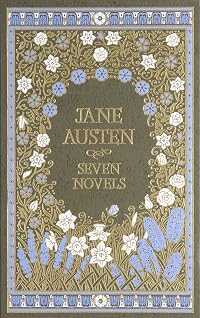
Sense and Sensibility / Pride and Prejudice / Mansfield Park / Emma / Northanger Abbey / Persuasion / Lady Susan
by Jane Austen
On This Page
Description
"Contains all six finished novels written by Jane Austen: Sense and Sensibility (1811), Pride and Prejudice (1813), Mansfield Park (1814), Emma (1815), Northanger Abbey (1818), and Persuasion (1818)"--Tags
Recommendations






Member Recommendations
1502Isabella Pride and Prejudice from a downstairs view; vivid picture of the servants' world in early 19th century
20
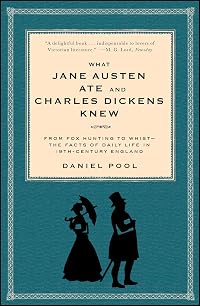
1502Isabella Eplanation of facts of daily life as well as amusing trivia. Absolute must have!
20
Member Reviews
Anthology of Jane Austen (1775 - 1817) revealing current restrictive female lives and changing idea of marriage based on rational love and companionship amidst genuine characters and attention to social detail. Lady Susan (1794-1805) first work, imitative and juvenile but signs of her future voice. Northanger Abbey (1798-1803) quasi-satiric look at Gothic romance with insightful paen to good novels ("only some work in which the greatest powers of the mind are displayed, in which the most thorough knowledge of human nature, the happiest delineation of its varieties, the liveliest effustions of wit and humour, are conveyed to the world in the best-chosen language.") but not yet hanging together as well as later novels. Sense & Sensibility show more (1811): good but prefered the Emma Thompason movie :)
Pride & Prejudice, the second best Austen novel (1813), develops the modern romantic male lead as the arrogant proud form who falls in love despite himself: "A person may be proud without being vain. Pride relates more to our opinion of ourselves, vanity to what we would have others think of us." Most famous Austen line: "It is a truth universally acknowledged, that a single man in posession of a good fortune, must be in want of a wife." Mansfield Park (1814) features Fanny Price, morally superior but rather unengaging, strong only in a passive sense; excellent job showing duality of characters, also uses town/country duality: "for sunshine appeared to her a totally different think in a town and in the country. Here, its power was only a glare, a stifling, sickly glare, serving but to bring forward stains and dirt that might otherwise have slept. There was neither health nor gaity in sunshine in a town." (Did Hemingway read Austen?) Beautiful description of May: " Her eye fell everywhere on lawns and plantations of the freshest green; and the trees, though not fully clothed, were in that delightful state, when farther beauty is known to be at hand, and when, while much is actually give to the sight, more yet remains for the imagination." Miss Crawford as the cold, modern woman of a changing morality: "So voluntarily, so freely, so coolly to canvass it! --No reluctance, no horror, no feminine--shall I say? no modest loathings!--This is what the world does." Fanny remains the same while other characters change, re Tom Bertram ("He had suffered, and he had learned to think, two advantages that he had never known before") or Sir Henry's views on his parenting deficiency ("They had been instructed theoretically in their religion, but never required tob ring it into daily practise.")
Emma (1815) reverse of the male hero on P&P sees independent heroine who must learn to better understand those around her, also more modern as a precursor to later 19C social commentary novels of Trollope and Eliot. Persuasion (posthumous 1817) finest work, best written and laid out; portrays glance of the decline of power in landed nobility as fortunes wane just as the rising middle class are beginning a meritocracy through certain chosen professions (e.g. military). The mature character of Anne Eliot: "She had been forced into prudence in her youth, she learned romance as she grew older: the natural result of an unnatural beginning....Anne always contemplated them as some of the happiest creatures of her acquaintance; but still, saved as we all are, by some, conformtable feeling of superiority from wishing for the possibility of exchange, she would not have given up her own more elegant and cultivated mind for all their enjoyments...". Rich, complex and believable characters plus good interpersonal exchange and social mirror make up for somewhat contrived plots and best-of-all-possible-worlds endings. show less
Pride & Prejudice, the second best Austen novel (1813), develops the modern romantic male lead as the arrogant proud form who falls in love despite himself: "A person may be proud without being vain. Pride relates more to our opinion of ourselves, vanity to what we would have others think of us." Most famous Austen line: "It is a truth universally acknowledged, that a single man in posession of a good fortune, must be in want of a wife." Mansfield Park (1814) features Fanny Price, morally superior but rather unengaging, strong only in a passive sense; excellent job showing duality of characters, also uses town/country duality: "for sunshine appeared to her a totally different think in a town and in the country. Here, its power was only a glare, a stifling, sickly glare, serving but to bring forward stains and dirt that might otherwise have slept. There was neither health nor gaity in sunshine in a town." (Did Hemingway read Austen?) Beautiful description of May: " Her eye fell everywhere on lawns and plantations of the freshest green; and the trees, though not fully clothed, were in that delightful state, when farther beauty is known to be at hand, and when, while much is actually give to the sight, more yet remains for the imagination." Miss Crawford as the cold, modern woman of a changing morality: "So voluntarily, so freely, so coolly to canvass it! --No reluctance, no horror, no feminine--shall I say? no modest loathings!--This is what the world does." Fanny remains the same while other characters change, re Tom Bertram ("He had suffered, and he had learned to think, two advantages that he had never known before") or Sir Henry's views on his parenting deficiency ("They had been instructed theoretically in their religion, but never required tob ring it into daily practise.")
Emma (1815) reverse of the male hero on P&P sees independent heroine who must learn to better understand those around her, also more modern as a precursor to later 19C social commentary novels of Trollope and Eliot. Persuasion (posthumous 1817) finest work, best written and laid out; portrays glance of the decline of power in landed nobility as fortunes wane just as the rising middle class are beginning a meritocracy through certain chosen professions (e.g. military). The mature character of Anne Eliot: "She had been forced into prudence in her youth, she learned romance as she grew older: the natural result of an unnatural beginning....Anne always contemplated them as some of the happiest creatures of her acquaintance; but still, saved as we all are, by some, conformtable feeling of superiority from wishing for the possibility of exchange, she would not have given up her own more elegant and cultivated mind for all their enjoyments...". Rich, complex and believable characters plus good interpersonal exchange and social mirror make up for somewhat contrived plots and best-of-all-possible-worlds endings. show less
For PERSUASION
I read Pride & Prejudice and Emma, but I think this one might be my favourite now just because I love Anne. She’s a different kind of heroin.. she’s quiet, she’s sensible and she’s wonderfully introverted!
Her family are shallow, snobbish extroverts who completely overlook her qualities, but she has a few close treasured friends and those more ‘sensible’ people who do take the effort to speak with Anne one on one soon grow to love and appreciate her.
This is a very difference kind of romance. Anne had been persuaded in her early twenties to give up an engagement to Captain Wentworth, a man she loved and who loved her. At the time his social rank and fortune was too far below hers. Now 8 years later, he has show more reappeared in her social circle but neither of them can acknowledge the pain of the intervening years or how they may still feel for each other.
She is on the sidelines and passive for most of this book. A true wallflower, she is always observing rather being driver of the action unless the circumstances truly require it. She must be witness to Wentworth being presumed to pursue other ladies, and wonder about his intentions while bearing the pain. They barely speak a word to each other for most of this novel.
Even once they eventually figure things out (in perhaps the most introvert way possible, and I loved it!) we come to a perfectly reasonable, drama free happy ending!
I did often find this challenging to read (I don’t remember other Austen books being this hard on the sentence structure, but it has been many years!). I had to reread paragraphs at times to make sense of what was going on. But it was worth the struggle because I just loved Anne and Wentworth, this story makes me feel seen as an introverted wallflower. show less
I read Pride & Prejudice and Emma, but I think this one might be my favourite now just because I love Anne. She’s a different kind of heroin.. she’s quiet, she’s sensible and she’s wonderfully introverted!
Her family are shallow, snobbish extroverts who completely overlook her qualities, but she has a few close treasured friends and those more ‘sensible’ people who do take the effort to speak with Anne one on one soon grow to love and appreciate her.
This is a very difference kind of romance. Anne had been persuaded in her early twenties to give up an engagement to Captain Wentworth, a man she loved and who loved her. At the time his social rank and fortune was too far below hers. Now 8 years later, he has show more reappeared in her social circle but neither of them can acknowledge the pain of the intervening years or how they may still feel for each other.
She is on the sidelines and passive for most of this book. A true wallflower, she is always observing rather being driver of the action unless the circumstances truly require it. She must be witness to Wentworth being presumed to pursue other ladies, and wonder about his intentions while bearing the pain. They barely speak a word to each other for most of this novel.
Even once they eventually figure things out (in perhaps the most introvert way possible, and I loved it!) we come to a perfectly reasonable, drama free happy ending!
I did often find this challenging to read (I don’t remember other Austen books being this hard on the sentence structure, but it has been many years!). I had to reread paragraphs at times to make sense of what was going on. But it was worth the struggle because I just loved Anne and Wentworth, this story makes me feel seen as an introverted wallflower. show less
Jane Austen. That name conjures up so many different feelings. For some, the name immediately presents an image of long dresses and gloves and carriages, delicious British accents, and all the fun of social intrigue and careful manners. For others, it represents boredom, interminable miniseries (in which nothing blows up and everyone constantly has long and unintelligible conversations), and stuffy classics without any pictures. To this second group, I warn you... this is pretty much a love letter to her work. Read on at your own peril.
I was first introduced to Jane Austen through an old thread on NarniaWeb.com that asked people to list their all-time favorite authors and titles. Somehow I had reached my early twenties without ever show more having read Austen, or even knowing who she was. (We may have watched the five-hour BBC movie when I was younger, but I don't remember anything clearly.) In this thread, this "Jane Austen" person was mentioned again and again. So several months later when I saw a hardback volume of her complete novels at a library booksale, I picked it up. Hardbacks were three for a dollar that day, and this has to be one of my best booksale purchases ever. I read that volume of six novels in two weeks, in a state of utter astonishment and delight. Jane Austen isn't known for expanding readers' horizons and ideas, being concerned primarily with her characters' inner lives and small social circles, but she certainly enlarged mine.
Since that first baptism I have reread the novels many times, immersed myself in the many excellent miniseries and movies based on her works, and converted a great many people to the delights of her society (my husband included; to this day there is nothing we enjoy more than curling up on the couch and visiting Regency England for five hours together).
I love Jane Austen because she is just so fun. She explodes all the silly notions we modern readers have about the stuffiness and stodginess of "classic literature," and shows us that we are the stuffy ones for indulging in such chronological snobbery. Just because you lived in a time before photography was invented doesn't mean you couldn't have a wicked sense of humor and an eye for the ridiculous.
I love Jane Austen because she and I share many of the same moral and religious convictions, and her heroines learn, grow, and change over the course of their stories. They are the kind of characters I can both identify with and admire. And yet Austen is never preachy.
I love Jane Austen because her prose style is so impeccable. She says so much with so little, and inferring her meaning helps the reader enter into the story more deeply. She is humorous, but she knows how to be serious. She is entertaining; she is also compassionate. She never crosses into the realm of bitter satire; her sarcasm is playful rather than pushy. Her sharp wit flavors a warm humor and sensitivity. And people think her books are boring!
I love Jane Austen because I can read her stories in so many different moods. She can be a comfort read; she can be a challenging intellectual exercise. You can think about her stories and characters purely from a reader's point of view, reading breathlessly for that happy ending you know is coming, reveling in all the fun along the way—or you can go all scholarly and English-majorly on her and write papers about her views on society, her attitude toward the role of women, her thoughts on the domestic arrangements of the time, her criticism of various social hypocrisies, etc. Her novels are always in season.
I love Jane Austen because I can talk about her to readers with whom I have nothing else in common. The things to love about her work are so strong that they overcome objections that contemporary readers may have to her worldview or prose style.
So yes, I love Jane Austen. And I can think of no better way to celebrate my 500th review on LibraryThing than to express my enduring affection and respect for this body of work that has given me so many hours of pleasure. Thank you, Jane Austen. show less
I was first introduced to Jane Austen through an old thread on NarniaWeb.com that asked people to list their all-time favorite authors and titles. Somehow I had reached my early twenties without ever show more having read Austen, or even knowing who she was. (We may have watched the five-hour BBC movie when I was younger, but I don't remember anything clearly.) In this thread, this "Jane Austen" person was mentioned again and again. So several months later when I saw a hardback volume of her complete novels at a library booksale, I picked it up. Hardbacks were three for a dollar that day, and this has to be one of my best booksale purchases ever. I read that volume of six novels in two weeks, in a state of utter astonishment and delight. Jane Austen isn't known for expanding readers' horizons and ideas, being concerned primarily with her characters' inner lives and small social circles, but she certainly enlarged mine.
Since that first baptism I have reread the novels many times, immersed myself in the many excellent miniseries and movies based on her works, and converted a great many people to the delights of her society (my husband included; to this day there is nothing we enjoy more than curling up on the couch and visiting Regency England for five hours together).
I love Jane Austen because she is just so fun. She explodes all the silly notions we modern readers have about the stuffiness and stodginess of "classic literature," and shows us that we are the stuffy ones for indulging in such chronological snobbery. Just because you lived in a time before photography was invented doesn't mean you couldn't have a wicked sense of humor and an eye for the ridiculous.
I love Jane Austen because she and I share many of the same moral and religious convictions, and her heroines learn, grow, and change over the course of their stories. They are the kind of characters I can both identify with and admire. And yet Austen is never preachy.
I love Jane Austen because her prose style is so impeccable. She says so much with so little, and inferring her meaning helps the reader enter into the story more deeply. She is humorous, but she knows how to be serious. She is entertaining; she is also compassionate. She never crosses into the realm of bitter satire; her sarcasm is playful rather than pushy. Her sharp wit flavors a warm humor and sensitivity. And people think her books are boring!
I love Jane Austen because I can read her stories in so many different moods. She can be a comfort read; she can be a challenging intellectual exercise. You can think about her stories and characters purely from a reader's point of view, reading breathlessly for that happy ending you know is coming, reveling in all the fun along the way—or you can go all scholarly and English-majorly on her and write papers about her views on society, her attitude toward the role of women, her thoughts on the domestic arrangements of the time, her criticism of various social hypocrisies, etc. Her novels are always in season.
I love Jane Austen because I can talk about her to readers with whom I have nothing else in common. The things to love about her work are so strong that they overcome objections that contemporary readers may have to her worldview or prose style.
So yes, I love Jane Austen. And I can think of no better way to celebrate my 500th review on LibraryThing than to express my enduring affection and respect for this body of work that has given me so many hours of pleasure. Thank you, Jane Austen. show less
Sense and Sensibility-
Jane Austen’s first published work, [Sense and Sensibility], firmly established the subject matter and tone that would mark her career as a novelist but none of the charm nor romance that have made her one of the most popular novelists of all time.
[Sense and Sensibility] follows the unpropitious lives of Elinor and Marianne; two sides of the same coin, Elinor overly infused with sensibility and Marianne too much in tune with her senses. At the outset of the tale, the young women are left essentially destitute by the death of their father and the manipulations of their treacherous sister-in-law. Given their limited means, the only prospect to cultivate is marriage to a well-heeled man. Of course, it wouldn’t be show more an Austen novel if the heroines fell in love with men who fully suited their needs. Marriane falls head over heels for a roguish man who ends up breaking her heart and leaving her near death in sorrow, while Elinor quietly pines for a man promised to marry her cousin and who is, in any case, unlikely to be able to financially support her. In Austen’s patented way, these difficulties are settled with a few unforeseeable twists. In the end, the girls learn to balance against their instincts, and each begins to live life with a little more of what the other was inherently blessed with: Elinor with more Sense and Marianne with more Sensibility.
Anyone who has read Austen’s more popular and critically acclaimed novels, [Pride and Prejudice] and [Emma], will immediately identify [Sense and Sensibility] as an earlier and rawer work. The characters are less well-drawn, less complicated, and, for that, less likeable. Austen’s nearly universal message, pitting economic well-being against emotional well-being, is less subtly introduced and discussed. And the course of the story runs rather more rocky and difficult to believe.
Comparisons to [Pride and Prejudice] are the most telling in identifying [Sense and Sensibility]’s shortcomings. The relationships between the principal sisters in both couldn’t be more different. Elinor and Marianne, though they are meant to be loving and supportive sisters, often seem on the verge of contempt for the other’s perspective on life, while [Pride and Prejudice]’s Elizabeth and Jane, though very different in constitution, show obvious fondness and fierce loyalty for each other. The growth process for Elinor and Marriance is largely missing in [Sense and Sensibility]. In the concluding passages of the book, Marianne awakes from a near death, suddenly and inexplicably more thoughtful. And Elinor bursts forth in emotion over a declaration of love from the object of her secret affections, though it seems more an explosion brought about by pressure than self-examination. With Elizabeth, Austen gives the reader subtle, minute changes in inner thought and outward behavior throughout the entire length of [Pride and Prejudice], making her the more interesting, complicated, and realistic of the characters. In total, the characters in [Sense and Sensibility] are almost all difficult to like or connect with, especially through Elinor and Marianne’s eyes, as they seem destined to look down at everyone, except the object of their momentary affection. While Elizabeth is certainly opinionated and judgmental, she does not appear completely misanthropic.
On balance, [Sense and Sensibility] is readable and enjoyable for two primary reasons. First, for the true Austenite, the seed of the author’s perspective on the world of her time is clearly in evidence, as are all the hallmarks that will mark her later work. So, if you’re looking for Austen, she is here, if not yet mature. And there in lies the second reason to read [Sense and Sensibility], to see the foundation of Austen’s work so that the expertise and subtlety of her later work can be fully appreciated.
Bottom Line: A must read for the Austenite or anyone interested in the progression of talent in a classic author. The book itself is darker and less charming than [Emma] or [Pride and Prejudice].
3 bones!!!
----------------------------------------------------------------------
Pride and Prejudice-
Elizabeth Bennet, the second daughter of a gentleman on the fringes of the British landed class and his wife, describes herself as lively and impertinent. She focuses this impertinence on Mr. Darcy, one of the truly privileged, and his entourage. Her first impression of Mr. Darcy, and his of her, though for different reasons, is one of distaste. The two dance about one another, learning more and more of the other's life and substance, until they have both realized that their initial prejudice was ill-founded. At the end of the story, we find Mr. Darcy and Miss Bennett at the precipice of a rich life together.
At the outset, I should say that this is only my second Austen, and I liked the first I read, Emma, more. The narrator in this case seemed somewhat more detached than Emma's. And it seemed that Elizabeth was a more difficult character to get to know, even if more pleasing. The first few chapters of the book dragged a bit, and I kept waiting for the story, and Elizabeth, to bloom. To be fair, this could be the result of the several viewings of a couple of different versions of the book in film. So, since I already knew what was going to happen and who Elizabeth was, I may have been a bit impatient. But that's how it felt with all of the characters; it felt as though they were all a bit more watered down or less faceted than those in Emma.
Of all the characters, the most interesting for me was Mr. Darcy. Indeed, he reminded me a good deal of Emma herself, in countenance and pride. His initial condescension and haughtiness, having driven a wedge between himself and all those around him, is quite a burden to overcome. But, in this stripped down, bare study of human interaction and class dynamics, it is a burden that is inflicted on many, in varying degrees. Miss Bennett herself suffers from the same flaw, though from a different perch.
What won through with this book was the hope in Darcy and Elizabeth's ability to adapt and change, to better themselves though introspection. They are both convicted, by each other, in the shortcomings of their own lives. And Austen seems to suggest, with the ending of the book, that their growth brings out the best in those around them who are open to it.
Girlunderglass and I, along with some other 75'ers, exchanged comments on Austen's critical eye towards her time and society. While I agree with G.U.G. that we are too apt to characterize all of Austen's writing as satire when it appears that she bought into some of the social norms of the time, I am in the camp that sees Austen as ahead of her time. The ideas and beliefs that Austen wrote about require decades and decades of subtle, minute adjustment before and change is evident. Austen's own beliefs about class and gender, though they still reflect a great deal of the times, reflect possibilities that are still in flux, even today. This may explain her timelessness and continued popularity.
Four bones!!!!
Another enjoyable read. I look forward to more Austen, especially since I know so little of the others.
--------------------------------------------------------------
Emma -
First "thought": I guess Austen wrote that she wanted to write a character who was not entirely likable. And, at first, she is not the warmest of characters to cosy up next to. But, the other characters in the book seem to rave about her and her perfection in almost cartoonish ways. Emma's inner life never seems to match the feelings of the other characters towards her. It seemed to me that Austen juxtaposed Emma's inner mean and manipulative streak with the other character's praise and adoration for her on purpose. What interests me is what motivated Austen in this endeavor. Was she sending up someone she knew personally? Was she making a comment on the society she saw around her? Was she focusing an author's sharp pen on some trait in herself? All of these seemed possibilities to me. And the tension between the two made the book very interesting.
Thought #2: One of the comments in the introduction to this edition said that the book was a great work because of the character's constantly shifting and evolving perspectives and feelings. This was one of the best things about the book for me. None of the characters was a cardboard cutout, least of all Emma. We are all a bundle of contradictions and Austen nailed this difficult aspect of the human condition in a way that few authors have. By the end, I wanted to feel more compassion for Emma and like her more. But she seemed constantly, to the bitter end, able to slip towards manipulation and selfishness, and then also beat herself up for it and inch towards redemption.
4 bones!!!! show less
Jane Austen’s first published work, [Sense and Sensibility], firmly established the subject matter and tone that would mark her career as a novelist but none of the charm nor romance that have made her one of the most popular novelists of all time.
[Sense and Sensibility] follows the unpropitious lives of Elinor and Marianne; two sides of the same coin, Elinor overly infused with sensibility and Marianne too much in tune with her senses. At the outset of the tale, the young women are left essentially destitute by the death of their father and the manipulations of their treacherous sister-in-law. Given their limited means, the only prospect to cultivate is marriage to a well-heeled man. Of course, it wouldn’t be show more an Austen novel if the heroines fell in love with men who fully suited their needs. Marriane falls head over heels for a roguish man who ends up breaking her heart and leaving her near death in sorrow, while Elinor quietly pines for a man promised to marry her cousin and who is, in any case, unlikely to be able to financially support her. In Austen’s patented way, these difficulties are settled with a few unforeseeable twists. In the end, the girls learn to balance against their instincts, and each begins to live life with a little more of what the other was inherently blessed with: Elinor with more Sense and Marianne with more Sensibility.
Anyone who has read Austen’s more popular and critically acclaimed novels, [Pride and Prejudice] and [Emma], will immediately identify [Sense and Sensibility] as an earlier and rawer work. The characters are less well-drawn, less complicated, and, for that, less likeable. Austen’s nearly universal message, pitting economic well-being against emotional well-being, is less subtly introduced and discussed. And the course of the story runs rather more rocky and difficult to believe.
Comparisons to [Pride and Prejudice] are the most telling in identifying [Sense and Sensibility]’s shortcomings. The relationships between the principal sisters in both couldn’t be more different. Elinor and Marianne, though they are meant to be loving and supportive sisters, often seem on the verge of contempt for the other’s perspective on life, while [Pride and Prejudice]’s Elizabeth and Jane, though very different in constitution, show obvious fondness and fierce loyalty for each other. The growth process for Elinor and Marriance is largely missing in [Sense and Sensibility]. In the concluding passages of the book, Marianne awakes from a near death, suddenly and inexplicably more thoughtful. And Elinor bursts forth in emotion over a declaration of love from the object of her secret affections, though it seems more an explosion brought about by pressure than self-examination. With Elizabeth, Austen gives the reader subtle, minute changes in inner thought and outward behavior throughout the entire length of [Pride and Prejudice], making her the more interesting, complicated, and realistic of the characters. In total, the characters in [Sense and Sensibility] are almost all difficult to like or connect with, especially through Elinor and Marianne’s eyes, as they seem destined to look down at everyone, except the object of their momentary affection. While Elizabeth is certainly opinionated and judgmental, she does not appear completely misanthropic.
On balance, [Sense and Sensibility] is readable and enjoyable for two primary reasons. First, for the true Austenite, the seed of the author’s perspective on the world of her time is clearly in evidence, as are all the hallmarks that will mark her later work. So, if you’re looking for Austen, she is here, if not yet mature. And there in lies the second reason to read [Sense and Sensibility], to see the foundation of Austen’s work so that the expertise and subtlety of her later work can be fully appreciated.
Bottom Line: A must read for the Austenite or anyone interested in the progression of talent in a classic author. The book itself is darker and less charming than [Emma] or [Pride and Prejudice].
3 bones!!!
----------------------------------------------------------------------
Pride and Prejudice-
Elizabeth Bennet, the second daughter of a gentleman on the fringes of the British landed class and his wife, describes herself as lively and impertinent. She focuses this impertinence on Mr. Darcy, one of the truly privileged, and his entourage. Her first impression of Mr. Darcy, and his of her, though for different reasons, is one of distaste. The two dance about one another, learning more and more of the other's life and substance, until they have both realized that their initial prejudice was ill-founded. At the end of the story, we find Mr. Darcy and Miss Bennett at the precipice of a rich life together.
At the outset, I should say that this is only my second Austen, and I liked the first I read, Emma, more. The narrator in this case seemed somewhat more detached than Emma's. And it seemed that Elizabeth was a more difficult character to get to know, even if more pleasing. The first few chapters of the book dragged a bit, and I kept waiting for the story, and Elizabeth, to bloom. To be fair, this could be the result of the several viewings of a couple of different versions of the book in film. So, since I already knew what was going to happen and who Elizabeth was, I may have been a bit impatient. But that's how it felt with all of the characters; it felt as though they were all a bit more watered down or less faceted than those in Emma.
Of all the characters, the most interesting for me was Mr. Darcy. Indeed, he reminded me a good deal of Emma herself, in countenance and pride. His initial condescension and haughtiness, having driven a wedge between himself and all those around him, is quite a burden to overcome. But, in this stripped down, bare study of human interaction and class dynamics, it is a burden that is inflicted on many, in varying degrees. Miss Bennett herself suffers from the same flaw, though from a different perch.
What won through with this book was the hope in Darcy and Elizabeth's ability to adapt and change, to better themselves though introspection. They are both convicted, by each other, in the shortcomings of their own lives. And Austen seems to suggest, with the ending of the book, that their growth brings out the best in those around them who are open to it.
Girlunderglass and I, along with some other 75'ers, exchanged comments on Austen's critical eye towards her time and society. While I agree with G.U.G. that we are too apt to characterize all of Austen's writing as satire when it appears that she bought into some of the social norms of the time, I am in the camp that sees Austen as ahead of her time. The ideas and beliefs that Austen wrote about require decades and decades of subtle, minute adjustment before and change is evident. Austen's own beliefs about class and gender, though they still reflect a great deal of the times, reflect possibilities that are still in flux, even today. This may explain her timelessness and continued popularity.
Four bones!!!!
Another enjoyable read. I look forward to more Austen, especially since I know so little of the others.
--------------------------------------------------------------
Emma -
First "thought": I guess Austen wrote that she wanted to write a character who was not entirely likable. And, at first, she is not the warmest of characters to cosy up next to. But, the other characters in the book seem to rave about her and her perfection in almost cartoonish ways. Emma's inner life never seems to match the feelings of the other characters towards her. It seemed to me that Austen juxtaposed Emma's inner mean and manipulative streak with the other character's praise and adoration for her on purpose. What interests me is what motivated Austen in this endeavor. Was she sending up someone she knew personally? Was she making a comment on the society she saw around her? Was she focusing an author's sharp pen on some trait in herself? All of these seemed possibilities to me. And the tension between the two made the book very interesting.
Thought #2: One of the comments in the introduction to this edition said that the book was a great work because of the character's constantly shifting and evolving perspectives and feelings. This was one of the best things about the book for me. None of the characters was a cardboard cutout, least of all Emma. We are all a bundle of contradictions and Austen nailed this difficult aspect of the human condition in a way that few authors have. By the end, I wanted to feel more compassion for Emma and like her more. But she seemed constantly, to the bitter end, able to slip towards manipulation and selfishness, and then also beat herself up for it and inch towards redemption.
4 bones!!!! show less
The novels of Jane Austen are among some of the most beloved, most read, and most adapted from the English language. Featuring memorable characters, locations, and narratives the “big four” Austen novels—Sense and Sensibility, Pride and Prejudice, Mansfield Park, and Emma—all have similar narrative clichés, but all done in unique ways that makes each story fresh. The later three novels are a mixed back of youthful inexperience (Northanger Abbey), different tone (Persuasion), and unique literary style (Lady Susan) with mixed results. Overall, this is a great collection especially as it has all four of Austen’s major works together.
Sense and Sensibility (3.5/5)
Pride and Prejudice (4/5)
Mansfield Park (3.5/5)
Emma (2/5)
Northanger show more Abbey (1/5)
Persuasion (3/5)
Lady Susan (2.5) show less
Sense and Sensibility (3.5/5)
Pride and Prejudice (4/5)
Mansfield Park (3.5/5)
Emma (2/5)
Northanger show more Abbey (1/5)
Persuasion (3/5)
Lady Susan (2.5) show less
Having read all of these several times before, I cannot say there is any surprise...but by heaven there is joy...in them. No one paints her time with so much style and realism as Austen. She is the rarest of storytellers, whose language alone delights.
I have rather mixed feelings about the resurgence of Austen's popularity in the 1990s. Selfishly, I rather relished that it was my secret that "classics" of the kind that could be assigned in school could be such a pleasure to read, such a winning blend of social satire, humor and romance. I've read a lot of genre novels recently, as well as rereading Austen, and what struck me is what separates classics, why they endure, is rather than quickly feeling dated, they still feel relevant and resonate with our times. Austen's novels could be seen as formulaic. She centered her works on the courtship dance among the landed gentry. Happy endings (more or less) guaranteed and focused mostly from her heroine's point of view, her novels are seen show more as the forerunners and foundations of both romance and chicklit, although they certainly transcend both. All of the novels in this volume are worth reading, even if not all are favorites.
Sense and Sensibility is the first novel in this volume. Sisters are usually important in Austen's novels, although they're not always close, and are usually in the background. This novel is unusual in having two contrasting heroines in Elinor and Marianne. Unlike say Elizabeth and Jane of Pride and Prejudice the two Dashwood sisters here both grow and learn from the other and are of equal importance to the story. The novel is interesting in its themes of prudence versus passion for which the sisters make perfect exemplars and foils. If this sounds dry--well, almost no Austen novel is without a large leavening of humor--just look at the second chapter where by degrees, their sister-in-law convinces their half-brother not to help them so that finally she has him convinced their needs are so modest they "will be much more able to give you something." That's typical of Austen. The sharp characterizations that are so funny because they're timeless in their illustrations of human foibles and how being scrupulously polite and socially correct can cover pettiness, cruelty while being of itself at times comic and ridiculous. I'll admit Elinor is my favorite. The one in the family who is sensible in a family of sentimental romantics. Who doesn't have much room to assert her own feelings because someone has to be the grownup. But I feel for Marianne too. I don't, like some, feel she "settled." I think she simply grew through her experiences to appreciate qualities that would have been lost on her earlier. That's the way of the Austen novels and rather why I love them. Love isn't something that solves problems and brings on the happy ending but an experience that, even when you're disappointed, widens and deepens you so you become wiser and so more capable of happiness. At least if you blend a bit of a romantic sensibility with a modicum of sense.
Pride and Prejudice features Austen's most sparkling and witty heroine, Elizabeth Bennet. As for Darcy, the hero, he has a reputation of the perfect romantic hero--which has even discouraged a friend of mine from reading the novel. But what I love so much in this story is that it's far from love at first sight. Darcy is rude when we first meet him and earns every bit of disdain which Elizabeth originally feels for him. And his initial opinion of her? Not pretty enough to tempt him as a dance partner. The original title of the novel is famously "First Impressions" and the way this novel credibly develops the relationship between Darcy and Elizabeth from their initial mutual contempt is a marvel. It's why this is so much more than a love story--it's a novel about perceptions, assumptions and prejudices and how they can be reversed and in the process of which cause characters to grow. That's why I see Austen as the opposite of Emily Bronte--love as a force for and as the result of growth--not destruction. Beyond the central love story this novel has so many wonderfully memorable characters. I love the relationship between Elizabeth Bennet and her father; his own marriage makes an interesting foil for the other pairings in the novel. Mr Collins is a comic marvel--as is his "patroness" Lady Catherine de Bourgh. So much of the novel is laugh-out-laugh funny, so much of the dialogue memorable and quotable.
Mansfield Park is for me Austen's most problematical novel, and I rather hated it on first read--I found the heroine Fanny Price, a prig and completely unlikeable. A friend of mine who is basing her graduate thesis on the novel urged me to give it another chance, and particularly to look at Fanny's bitterness and the "carefully crafted sense of dissatisfaction in the last chapter." Although on reread I still can't count Mansfield Park a favorite, I can see what she means. Fanny is treated as an unpaid servant in her uncle's household and taught to "know her place," particularly by her aunt Mrs Norris. A very low place. As her rival Miss Crawford notes, Fanny dreads notice the way others dread being ignored. The only person who treats her with any consideration is her cousin Edmund Bertram. He is a prig. But given the circumstances, it's understandable Fanny would mold herself after him--and given her situation, her ability to speak up and act is heavily circumscribed. All in all, she's a more complex character than I first gave her credit and on reread she did gain my sympathy. Another friend of mine said we might more highly esteem Mansfield Park if it weren't by Austen, and she may be right. You can't go into this novel expecting Pride and Prejudice or Emma. There is irony and humor and even wit to be found in it--particularly in the character of Mary Crawford, but it's nevertheless Austen's darkest work--the only one where I don't really like the hero and heroine, but a fascinating study of the enduring damages of childhood and the questions of propriety and principle.
Emma is among the lightest in tone and the most comedic of Austen's novels. No one comes close to death or is disastrously spirited away. The closest thing to a tragedy is being snubbed at a dance. I don't remember liking Emma as a character much at first, but she slowly won me over, and she has one of the more interesting arcs of any of Austen's characters. Almost all Austen protagonists grow, but I think she arguably travels the farthest as a result of her comeuppance. One delivered as a result not of her own humiliation but because of words of reproach that make her aware of having hurt someone else. I'm not sure ultimately what to make of her drifting away from Harriet Smith. I think in the end there's still plenty of social snobbery in Emma, and I'm not sure if Austen would in any case disapprove given the class roles of her time. (Although it does seem Mr Knightly, the hero of the tale has no problem having a mere farmer as a friend.) Austen makes you wonder about her characters even after you finish the novel because she creates a whole community within Emma. And so many of the people within it, like the Eltons, are great comedic characters.
Northanger Abbey is notably a send-up of the popular genre fiction of its day--the Gothic novels by writers we don't generally read these days such as Matthew Lewis' and Ann Radcliffe. I've read only the (cheesy and quite fun) The Monk by Lewis of the works alluded to in Austen's novel, but I didn't feel lost. When Henry Tilney plays off the gothic works in telling a story to Catherine Morland and later Catherine's imagination runs wild in the ancient manse of Northanger Abbey, I get the jokes because we have our own successors to the Gothic tradition in slasher movies, thrillers, horror and "romantic suspense." Moreover, the characterizations still feel real and are often funny. I was particularly taken with a passage where John Thorpe, a puffed up idiot, boasts to Catherine of his horses and carriages. Change all that to automobiles--and well, one is struck the male of the species hasn't changed much in two centuries. Catherine herself is Austen's youngest heroine, only seventeen during the course of the novel. She's unsophisticated, naive, with a head full of lurid novels and away for the first time in a city and for the first time having to make sense of male attentions. Given her flights of fancy, one might be tempted to count her as a featherbrain, but somehow she escapes that. She's a rather lovable combination of tomboy and bookworm. Her romantic interest, Henry Tilney, is among the most winning of Austen heroes--playful and witty, he's very appealing. And the novel itself doesn't take itself too seriously. Naive and unsophisticated Catherine might be, the narrator isn't, and the prose is filled with wit, irony and early nineteenth century snark--but rather good humored snark. I wouldn't recommend this novel as as introduction to Austen or rank it quite as high as her mature masterpieces (Northanger Abbey was the first work she ever submitted for publication), but it's still quite fun.
Persuasion is my favorite of all of Austen's novels. Not the one with the wittiest or with the most appealing heroine--that would be Pride and Prejudice. Nor the funniest. That would be Emma. I do find Wentworth the most appealing of the Austen heroes though. He's a self-made man and the theme of merit versus aristocratic privilege and pride runs through the story. Which is not to say I don't feel for Anne. She's a quieter heroine than you usually see in Austen. Someone that seemingly was too easily persuaded years ago and seems destined to end her life alone. I think if for nothing else, this novel would have earned a place among my favorites because of one scene. My inner feminist cheered at Anne's defense of women, and their faithfulness in love. And truly, if you aren't melted by the letter Wentworth writes to Anne, you have no beating heart.
Lady Susan, which finishes this volume, is actually the earliest work, and in my opinion the weakest. (Really a novella, not a novel--it's only 23,021 words.) It was written in 1794 when Austen was still in her teens. I found it hard to get into at first. Unlike the other works in this volume, this is an epistolary novel told in letters, not third-person narration. The story feels thin compared to her other works as a result, although about halfway through we got more of a sense of scenes, with actual dialogue. It's not that I don't find it worth reading. This is very different in tone than Austen's other novels--her titular heroine is a villain--a catty and malicious adulteress trying to force her daughter Frederica into a marriage of convenience. But if I weren't an Austen fan, I doubt I'd have persisted in reading it far enough for the fascination of Lady Susan's machinations to take hold, although take hold they did. The ending nevertheless feels abrupt to me. (I understand Phyllis Ann Karr did a third person narrative adaptation of the story. Particularly since she's an author I've liked, I'd love to read that. Sadly it's long out of print.)
These truly are beloved novels--witness all the professionally published fan fiction based on them. I can understand the impulse. It's hard to finish these and know there's not more Austen to read, other than letters, juvenilia and fragments of two novels never finished, Sandition and The Watsons. Both have been completed by other hands, and I might try them sometime. Other Austen sequels and pastiches I've tried have almost all been unsatisfying--they just don't rank with the originals and can't match Austen's wit and insight. I do rather like the Darcy mysteries written by Carrie Bebris--I think because she captures the personality of the beloved characters enough so you feel you're visiting old friends without trying to imitate Austen's style--which often just underlines the author is no Austen.
The Austen resurgence was based in particular on filmed adaptations made in the 1990s. I do love the BBC miniseries of Pride and Prejudice made with Colin Firth and Jennifer Ehle, the theatrical films of Sense and Sensibility with Emma Thompson and Kate Winslet and the Emma with Gweneth Paltrow. I thought each was faithful to spirit of their books while, especially in the case of Sense and Sensibility, wonderfully dramatizing aspects only hinted at in the narrative. The Pride and Prejudice miniseries made me laugh out loud and the film of Sense and Sensibility made me cry. I find the filmed adaptations I've watched of Persuasion, Mansfield Park and Northanger Abbey problematical. (As far as I know, no filmed adaptation of Lady Susan exists.)
And I haven't see Clueless--the modern-day adaptation of Emma--although from what a friend tells me I definitely should!
But there's nothing like the novels themselves. I envy those who will discover and enjoy them for the first time. show less
Sense and Sensibility is the first novel in this volume. Sisters are usually important in Austen's novels, although they're not always close, and are usually in the background. This novel is unusual in having two contrasting heroines in Elinor and Marianne. Unlike say Elizabeth and Jane of Pride and Prejudice the two Dashwood sisters here both grow and learn from the other and are of equal importance to the story. The novel is interesting in its themes of prudence versus passion for which the sisters make perfect exemplars and foils. If this sounds dry--well, almost no Austen novel is without a large leavening of humor--just look at the second chapter where by degrees, their sister-in-law convinces their half-brother not to help them so that finally she has him convinced their needs are so modest they "will be much more able to give you something." That's typical of Austen. The sharp characterizations that are so funny because they're timeless in their illustrations of human foibles and how being scrupulously polite and socially correct can cover pettiness, cruelty while being of itself at times comic and ridiculous. I'll admit Elinor is my favorite. The one in the family who is sensible in a family of sentimental romantics. Who doesn't have much room to assert her own feelings because someone has to be the grownup. But I feel for Marianne too. I don't, like some, feel she "settled." I think she simply grew through her experiences to appreciate qualities that would have been lost on her earlier. That's the way of the Austen novels and rather why I love them. Love isn't something that solves problems and brings on the happy ending but an experience that, even when you're disappointed, widens and deepens you so you become wiser and so more capable of happiness. At least if you blend a bit of a romantic sensibility with a modicum of sense.
Pride and Prejudice features Austen's most sparkling and witty heroine, Elizabeth Bennet. As for Darcy, the hero, he has a reputation of the perfect romantic hero--which has even discouraged a friend of mine from reading the novel. But what I love so much in this story is that it's far from love at first sight. Darcy is rude when we first meet him and earns every bit of disdain which Elizabeth originally feels for him. And his initial opinion of her? Not pretty enough to tempt him as a dance partner. The original title of the novel is famously "First Impressions" and the way this novel credibly develops the relationship between Darcy and Elizabeth from their initial mutual contempt is a marvel. It's why this is so much more than a love story--it's a novel about perceptions, assumptions and prejudices and how they can be reversed and in the process of which cause characters to grow. That's why I see Austen as the opposite of Emily Bronte--love as a force for and as the result of growth--not destruction. Beyond the central love story this novel has so many wonderfully memorable characters. I love the relationship between Elizabeth Bennet and her father; his own marriage makes an interesting foil for the other pairings in the novel. Mr Collins is a comic marvel--as is his "patroness" Lady Catherine de Bourgh. So much of the novel is laugh-out-laugh funny, so much of the dialogue memorable and quotable.
Mansfield Park is for me Austen's most problematical novel, and I rather hated it on first read--I found the heroine Fanny Price, a prig and completely unlikeable. A friend of mine who is basing her graduate thesis on the novel urged me to give it another chance, and particularly to look at Fanny's bitterness and the "carefully crafted sense of dissatisfaction in the last chapter." Although on reread I still can't count Mansfield Park a favorite, I can see what she means. Fanny is treated as an unpaid servant in her uncle's household and taught to "know her place," particularly by her aunt Mrs Norris. A very low place. As her rival Miss Crawford notes, Fanny dreads notice the way others dread being ignored. The only person who treats her with any consideration is her cousin Edmund Bertram. He is a prig. But given the circumstances, it's understandable Fanny would mold herself after him--and given her situation, her ability to speak up and act is heavily circumscribed. All in all, she's a more complex character than I first gave her credit and on reread she did gain my sympathy. Another friend of mine said we might more highly esteem Mansfield Park if it weren't by Austen, and she may be right. You can't go into this novel expecting Pride and Prejudice or Emma. There is irony and humor and even wit to be found in it--particularly in the character of Mary Crawford, but it's nevertheless Austen's darkest work--the only one where I don't really like the hero and heroine, but a fascinating study of the enduring damages of childhood and the questions of propriety and principle.
Emma is among the lightest in tone and the most comedic of Austen's novels. No one comes close to death or is disastrously spirited away. The closest thing to a tragedy is being snubbed at a dance. I don't remember liking Emma as a character much at first, but she slowly won me over, and she has one of the more interesting arcs of any of Austen's characters. Almost all Austen protagonists grow, but I think she arguably travels the farthest as a result of her comeuppance. One delivered as a result not of her own humiliation but because of words of reproach that make her aware of having hurt someone else. I'm not sure ultimately what to make of her drifting away from Harriet Smith. I think in the end there's still plenty of social snobbery in Emma, and I'm not sure if Austen would in any case disapprove given the class roles of her time. (Although it does seem Mr Knightly, the hero of the tale has no problem having a mere farmer as a friend.) Austen makes you wonder about her characters even after you finish the novel because she creates a whole community within Emma. And so many of the people within it, like the Eltons, are great comedic characters.
Northanger Abbey is notably a send-up of the popular genre fiction of its day--the Gothic novels by writers we don't generally read these days such as Matthew Lewis' and Ann Radcliffe. I've read only the (cheesy and quite fun) The Monk by Lewis of the works alluded to in Austen's novel, but I didn't feel lost. When Henry Tilney plays off the gothic works in telling a story to Catherine Morland and later Catherine's imagination runs wild in the ancient manse of Northanger Abbey, I get the jokes because we have our own successors to the Gothic tradition in slasher movies, thrillers, horror and "romantic suspense." Moreover, the characterizations still feel real and are often funny. I was particularly taken with a passage where John Thorpe, a puffed up idiot, boasts to Catherine of his horses and carriages. Change all that to automobiles--and well, one is struck the male of the species hasn't changed much in two centuries. Catherine herself is Austen's youngest heroine, only seventeen during the course of the novel. She's unsophisticated, naive, with a head full of lurid novels and away for the first time in a city and for the first time having to make sense of male attentions. Given her flights of fancy, one might be tempted to count her as a featherbrain, but somehow she escapes that. She's a rather lovable combination of tomboy and bookworm. Her romantic interest, Henry Tilney, is among the most winning of Austen heroes--playful and witty, he's very appealing. And the novel itself doesn't take itself too seriously. Naive and unsophisticated Catherine might be, the narrator isn't, and the prose is filled with wit, irony and early nineteenth century snark--but rather good humored snark. I wouldn't recommend this novel as as introduction to Austen or rank it quite as high as her mature masterpieces (Northanger Abbey was the first work she ever submitted for publication), but it's still quite fun.
Persuasion is my favorite of all of Austen's novels. Not the one with the wittiest or with the most appealing heroine--that would be Pride and Prejudice. Nor the funniest. That would be Emma. I do find Wentworth the most appealing of the Austen heroes though. He's a self-made man and the theme of merit versus aristocratic privilege and pride runs through the story. Which is not to say I don't feel for Anne. She's a quieter heroine than you usually see in Austen. Someone that seemingly was too easily persuaded years ago and seems destined to end her life alone. I think if for nothing else, this novel would have earned a place among my favorites because of one scene. My inner feminist cheered at Anne's defense of women, and their faithfulness in love. And truly, if you aren't melted by the letter Wentworth writes to Anne, you have no beating heart.
Lady Susan, which finishes this volume, is actually the earliest work, and in my opinion the weakest. (Really a novella, not a novel--it's only 23,021 words.) It was written in 1794 when Austen was still in her teens. I found it hard to get into at first. Unlike the other works in this volume, this is an epistolary novel told in letters, not third-person narration. The story feels thin compared to her other works as a result, although about halfway through we got more of a sense of scenes, with actual dialogue. It's not that I don't find it worth reading. This is very different in tone than Austen's other novels--her titular heroine is a villain--a catty and malicious adulteress trying to force her daughter Frederica into a marriage of convenience. But if I weren't an Austen fan, I doubt I'd have persisted in reading it far enough for the fascination of Lady Susan's machinations to take hold, although take hold they did. The ending nevertheless feels abrupt to me. (I understand Phyllis Ann Karr did a third person narrative adaptation of the story. Particularly since she's an author I've liked, I'd love to read that. Sadly it's long out of print.)
These truly are beloved novels--witness all the professionally published fan fiction based on them. I can understand the impulse. It's hard to finish these and know there's not more Austen to read, other than letters, juvenilia and fragments of two novels never finished, Sandition and The Watsons. Both have been completed by other hands, and I might try them sometime. Other Austen sequels and pastiches I've tried have almost all been unsatisfying--they just don't rank with the originals and can't match Austen's wit and insight. I do rather like the Darcy mysteries written by Carrie Bebris--I think because she captures the personality of the beloved characters enough so you feel you're visiting old friends without trying to imitate Austen's style--which often just underlines the author is no Austen.
The Austen resurgence was based in particular on filmed adaptations made in the 1990s. I do love the BBC miniseries of Pride and Prejudice made with Colin Firth and Jennifer Ehle, the theatrical films of Sense and Sensibility with Emma Thompson and Kate Winslet and the Emma with Gweneth Paltrow. I thought each was faithful to spirit of their books while, especially in the case of Sense and Sensibility, wonderfully dramatizing aspects only hinted at in the narrative. The Pride and Prejudice miniseries made me laugh out loud and the film of Sense and Sensibility made me cry. I find the filmed adaptations I've watched of Persuasion, Mansfield Park and Northanger Abbey problematical. (As far as I know, no filmed adaptation of Lady Susan exists.)
And I haven't see Clueless--the modern-day adaptation of Emma--although from what a friend tells me I definitely should!
But there's nothing like the novels themselves. I envy those who will discover and enjoy them for the first time. show less
Members
- Recently Added By
Lists

501 Must-Read Books
529 works; 72 members

Female Author
1,235 works; 67 members

Carole's List
445 works; 13 members

Ambleside Books
459 works; 18 members

Books We'd Want on a Desert Island
203 works; 131 members
Female Protagonist
1,056 works; 56 members
Author Information

Jane Austen's life is striking for the contrast between the great works she wrote in secret and the outward appearance of being quite dull and ordinary. Austen was born in the small English town of Steventon in Hampshire, and educated at home by her clergyman father. She was deeply devoted to her family. For a short time, the Austens lived in the show more resort city of Bath, but when her father died, they returned to Steventon, where Austen lived until her death at the age of 41. Austen was drawn to literature early, she began writing novels that satirized both the writers and the manners of the 1790's. Her sharp sense of humor and keen eye for the ridiculous in human behavior gave her works lasting appeal. She is at her best in such books as Pride and Prejudice (1813), Mansfield Park (1814), and Emma (1816), in which she examines and often ridicules the behavior of small groups of middle-class characters. Austen relies heavily on conversations among her characters to reveal their personalities, and at times her novels read almost like plays. Several of them have, in fact, been made into films. She is considered to be one of the most beloved British authors. (Bowker Author Biography) show less
Some Editions
Series
Belongs to Publisher Series
Work Relationships
Contains
Emma by Jane Austen
Has as a reference guide/companion
Has as a study
Has as a commentary on the text
Common Knowledge
- Canonical title
- Sense and Sensibility / Pride and Prejudice / Mansfield Park / Emma / Northanger Abbey / Persuasion / Lady Susan
- Original title
- The Penguin Complete Novels of Jane Austen
- Alternate titles
- The Complete Novels of Jane Austen (cover & spine titles) (cover & spine titles)
- People/Characters
- Emma Woodhouse; Fanny Price; Catherine Morland; Anne Elliot; Elizabeth Bennet; Elinor Dashwood (show all 8); Marianne Dashwood; Lady Susan Vernon
- Important places
- England, UK
- Important events
- 19th century; Regency Era; Georgian Era
- First words
- Some writers are admired by the academics and taught in the academy. - Introduction by Karen Joy Fowler
The family of Dashwood had been long settled in Sussex.
--(Penguin, 1983 edition) - Last words
- (Click to show. Warning: May contain spoilers.)For myself, I confess that I can pity only Miss Manwaring, who coming to town and putting herself to an expense in clothes, which impoverished her for two years, on purpose to secure him, was defrauded of her due by a woman ten years older than herself.
--(Penguin, 1983 edition) - Original language
- British English
- Disambiguation notice
- Please note this includes the shorter epistolary novel Lady Susan.
The title page of the Penguin 1983 edition has "Penguin": The Penguin Complete Novels of Jane Austen.
Classifications
Statistics
- Members
- 7,588
- Popularity
- 1,508
- Reviews
- 43
- Rating
- (4.64)
- Languages
- 5 — English, Finnish, French, German, Russian
- Media
- Paper, Audiobook, Ebook
- ISBNs
- 79
- UPCs
- 2
- ASINs
- 52