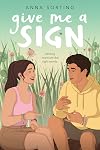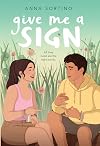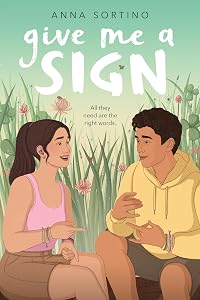
Give Me a Sign
by Anna Sortino
On This Page
Description
Jenny Han meets CODA in this big-hearted YA debut about first love and Deaf pride at a summer camp.Lilah is stuck in the middle. At least, that’s what having a hearing loss seems like sometimes—when you don’t feel “deaf enough” to identify as Deaf or hearing enough to meet the world’s expectations. But this summer, Lilah is ready for a change.
When Lilah becomes a counselor at a summer camp for the deaf and blind, her plan is to brush up on her ASL. Once there, she also finds a show more community. There are cute British lifeguards who break hearts but not rules, a YouTuber who’s just a bit desperate for clout, the campers Lilah’s responsible for (and overwhelmed by)—and then there’s Isaac, the dreamy Deaf counselor who volunteers to help Lilah with her signing.
Romance was never on the agenda, and Lilah’s not positive Isaac likes her that way. But all signs seem to point to love. Unless she’s reading them wrong? One thing’s for sure: Lilah wanted change, and things here . . . they're certainly different than what she’s used to. show less
Tags
Recommendations



Member Reviews
ADeaf teen from the Chicago suburbs explores her identity at summer camp.
Seventeen-year-old Lilah was born severely deaf. Though she’s able to get by with hearing aids, FM units at school, and lip reading, she feels disconnected from the hearing world around her. Camp Gray Wolf, designed for deaf and blind kids, was the only place where she could use ASL and accept her deafness. But the rising high school senior hasn’t been there since eighth grade. Feeling pulled back to the community, she applies for a counselor position. But camp isn’t perfect either—her signing isn’t fluent, and she feels like she doesn’t totally fit in with the Deaf world. Readers will relate to and root for Lilah as she starts a summer romance with show more Isaac, a Deaf fellow junior counselor, and confronts her feelings about her own deafness. The author captures a common feeling for people who fall into the hard of hearing category: feeling like they are not hearing enough and yet not deaf enough. She also explores other Deaf experiences such as meeting condescending saviors and navigating scary interactions with the police. Secondary characters, including a Deaf family in which one member gets a cochlear implant and a child whose father belittles and all but forbids ASL, expose readers to experiences of deafness other than Lilah’s. Lilah reads White; there is some racial diversity among the supporting characters.
Readers will love this sincere Deaf coming-of-age story. (note on the text, author’s note) (Fiction. 12-18)
-Kirkus Review show less
Seventeen-year-old Lilah was born severely deaf. Though she’s able to get by with hearing aids, FM units at school, and lip reading, she feels disconnected from the hearing world around her. Camp Gray Wolf, designed for deaf and blind kids, was the only place where she could use ASL and accept her deafness. But the rising high school senior hasn’t been there since eighth grade. Feeling pulled back to the community, she applies for a counselor position. But camp isn’t perfect either—her signing isn’t fluent, and she feels like she doesn’t totally fit in with the Deaf world. Readers will relate to and root for Lilah as she starts a summer romance with show more Isaac, a Deaf fellow junior counselor, and confronts her feelings about her own deafness. The author captures a common feeling for people who fall into the hard of hearing category: feeling like they are not hearing enough and yet not deaf enough. She also explores other Deaf experiences such as meeting condescending saviors and navigating scary interactions with the police. Secondary characters, including a Deaf family in which one member gets a cochlear implant and a child whose father belittles and all but forbids ASL, expose readers to experiences of deafness other than Lilah’s. Lilah reads White; there is some racial diversity among the supporting characters.
Readers will love this sincere Deaf coming-of-age story. (note on the text, author’s note) (Fiction. 12-18)
-Kirkus Review show less
Digital audiobook performed by Elizabeth Robbins
From the book jacket: Lilah is stuck in the middle. At least that’s what having a hearing loss seems like sometimes – when you don’t feel “deaf enough” to identify as Deaf or hearing enough to meet the world’s expectations. But this summer, Lilah is ready for a change. When she becomes a counselor at a summer camp for the deaf and blind, her plan is to brush up on her ASL. Once there, she also finds a community.
My reactions:
I loved this book. Sortino is Deaf and passionate about seeing diverse characters portrayed in the media. This is her debut novel.
Lilah and the other counselors at Camp Grey Wolf are in many ways typical teenagers. They are looking for opportunities for show more their future, trying different approaches to future success, testing their wings with a few months of independence from parents. They enjoy a variety of activities – music, dancing, art, reading, cooking – and are eager to make friends, and even have a romance. But they are also dealing with the obstacles posed by the disabilities they have.
While the experience at camp is eye-opening and refreshing for campers and counselors alike, Sortino doesn’t shy away from relating real difficulties faced by the Deaf. A scene at a fast food drive-thru window is a perfect example. This really opened my eyes to the some of the challenges faced by the deaf and hard-of-hearing.
I listened to the audiobook, which was performed by Elizabeth Robbins. The irony of my listening to an audio version of a book about the Deaf was not lost on me. Robbins does a great job and I liked the way the producers dealt with those cases where a deaf character missed vital information because she or he could not fully “hear” what was being said. (In the text version, Sortino inserts blanks to convey that information is being missed.) show less
From the book jacket: Lilah is stuck in the middle. At least that’s what having a hearing loss seems like sometimes – when you don’t feel “deaf enough” to identify as Deaf or hearing enough to meet the world’s expectations. But this summer, Lilah is ready for a change. When she becomes a counselor at a summer camp for the deaf and blind, her plan is to brush up on her ASL. Once there, she also finds a community.
My reactions:
I loved this book. Sortino is Deaf and passionate about seeing diverse characters portrayed in the media. This is her debut novel.
Lilah and the other counselors at Camp Grey Wolf are in many ways typical teenagers. They are looking for opportunities for show more their future, trying different approaches to future success, testing their wings with a few months of independence from parents. They enjoy a variety of activities – music, dancing, art, reading, cooking – and are eager to make friends, and even have a romance. But they are also dealing with the obstacles posed by the disabilities they have.
While the experience at camp is eye-opening and refreshing for campers and counselors alike, Sortino doesn’t shy away from relating real difficulties faced by the Deaf. A scene at a fast food drive-thru window is a perfect example. This really opened my eyes to the some of the challenges faced by the deaf and hard-of-hearing.
I listened to the audiobook, which was performed by Elizabeth Robbins. The irony of my listening to an audio version of a book about the Deaf was not lost on me. Robbins does a great job and I liked the way the producers dealt with those cases where a deaf character missed vital information because she or he could not fully “hear” what was being said. (In the text version, Sortino inserts blanks to convey that information is being missed.) show less
Lilah has always struggled with her identity; she has hearing loss but doesn’t feeling “deaf enough” to identify as Deaf, but she’s also not hearing enough to fit into the world’s expectations. But this summer, Lilah wants to change.
When she gets accepted to be a junior camp counselor at the Deaf and Blind Summer Camp she went to as a kid, she’s excited to brush up on her American Sign Language (ASL). Once there, she finds the community she’s been searching for, and then some. Like the two British lifeguards, an Interpreting Student YouTuber who’s just a little too desperate for views, the campers Lilah’s responsible for (including one who’s practically glues to Lilah’s leg), and the dreamy Deaf counselor helping show more Lilah with her signing.
Romance wasn’t ever on the agenda for the summer, especially since Lilah isn’t positive Isaac likes her the same way. Everything points to yes, but maybe Lilah is reading the signs wrong?
I’m always curious to read books with Deaf or Hard of Hearing characters, especially written by authors within the Deaf Community. I’ve studied American Sign Language (I have a Minor in ASL), but I am nowhere near fluent, and unfortunately I don’t always have the ability to practice as much as I would like. There weren’t books with Deaf or Hard of Hearing characters as a main character while I was growing up, so I read them any chance I got.
This book gives a lot of insight to the Deaf Community and what it’s like for those with a range of hearing loss. Of course, cochlear implants were discussed for a variety of reasons, including someone from a Deaf family getting one (a lot within the community frown upon the procedure). There is also an incident with someone who is Deaf who has a confrontation with the police.
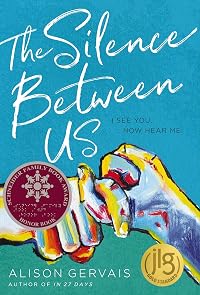
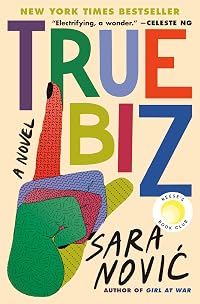
This book will be high up on my list for recommendations, especially those who enjoyed books like The Words in my Hands by Asphyxia, The Silence Between Us by Alison Gervais, and True Bix by Sara Nović.
*Thank you G.P. Putnam’s Sons Books for Young Readers and NetGalley for an advance digital copy of this book in exchange for an honest review show less
When she gets accepted to be a junior camp counselor at the Deaf and Blind Summer Camp she went to as a kid, she’s excited to brush up on her American Sign Language (ASL). Once there, she finds the community she’s been searching for, and then some. Like the two British lifeguards, an Interpreting Student YouTuber who’s just a little too desperate for views, the campers Lilah’s responsible for (including one who’s practically glues to Lilah’s leg), and the dreamy Deaf counselor helping show more Lilah with her signing.
Romance wasn’t ever on the agenda for the summer, especially since Lilah isn’t positive Isaac likes her the same way. Everything points to yes, but maybe Lilah is reading the signs wrong?
I’m always curious to read books with Deaf or Hard of Hearing characters, especially written by authors within the Deaf Community. I’ve studied American Sign Language (I have a Minor in ASL), but I am nowhere near fluent, and unfortunately I don’t always have the ability to practice as much as I would like. There weren’t books with Deaf or Hard of Hearing characters as a main character while I was growing up, so I read them any chance I got.
This book gives a lot of insight to the Deaf Community and what it’s like for those with a range of hearing loss. Of course, cochlear implants were discussed for a variety of reasons, including someone from a Deaf family getting one (a lot within the community frown upon the procedure). There is also an incident with someone who is Deaf who has a confrontation with the police.
This book will be high up on my list for recommendations, especially those who enjoyed books like The Words in my Hands by Asphyxia, The Silence Between Us by Alison Gervais, and True Bix by Sara Nović.
*Thank you G.P. Putnam’s Sons Books for Young Readers and NetGalley for an advance digital copy of this book in exchange for an honest review show less
Lilah is thrilled to land a job as junior counselor at a summer camp for deaf and blind children. Though she has significant hearing loss, she isn't completely deaf, and her memories of her time at the camp when she was younger are one of the only times in her life she truly felt a part of the community. Of course, not everything is as rosy as her memories — Camp Gray Wolf nowadays is suffering from financial difficulty and feels a bit more run-down than she remembers, some of the older counselors are irritating or cold toward her, and the younger campers can be needy and clingy, but Lilah is really starting to bond with a few of the other counselors and learning to sign with guidance from the super-cute Isaac.
Give Me a Sign was fun show more and engaging, and it offered real, thoughtful insight into deaf community and challenges its members routinely face in what non-deaf folks would consider otherwise unremarkable situations. Overall, the characters were likeable and felt genuine, though Lilah tends to overreact a bit and in some situations acts a little immaturely. Some aspects of camp life ring may false or feel contrived to folk experienced with summer camp, and there were a handful of moments when I had to suspend my disbelief in favor of staying within the narrative (underage counselors sleeping coed feels like a liability, and if a camp is under financial strain they would probably make sure their counselors are also trained as lifeguards rather than hiring two extra lifeguards who have zero other responsibilities other than lifeguarding). There is some manufactured drama, and a few chars seem like caricatures at first, but Sortino eventually rights the ship, and Lilah's summer adventures had me looking back fondly on my own summer camp experiences. Recommended highly! show less
Give Me a Sign was fun show more and engaging, and it offered real, thoughtful insight into deaf community and challenges its members routinely face in what non-deaf folks would consider otherwise unremarkable situations. Overall, the characters were likeable and felt genuine, though Lilah tends to overreact a bit and in some situations acts a little immaturely. Some aspects of camp life ring may false or feel contrived to folk experienced with summer camp, and there were a handful of moments when I had to suspend my disbelief in favor of staying within the narrative (underage counselors sleeping coed feels like a liability, and if a camp is under financial strain they would probably make sure their counselors are also trained as lifeguards rather than hiring two extra lifeguards who have zero other responsibilities other than lifeguarding). There is some manufactured drama, and a few chars seem like caricatures at first, but Sortino eventually rights the ship, and Lilah's summer adventures had me looking back fondly on my own summer camp experiences. Recommended highly! show less
Recommended: yep!
For a finding-yourself YA story, for a chance to learn a lot about sign language and deaf culture, for a collection of characters you can easily cheer for
Thoughts:
Y'all, this book taught me a ton, and that's always something I appreciate getting in a book. I am not deaf so I don't know much about the culture as someone who is involved in it is, and this was like getting a chance to learn more about it. And for the record, it's also just a cute story about teenage romance and figuring yourself out, but dang if it wasn't cute as heck. 😊
Some things it taught me about ASL and being deaf:
- hungry and horny are surprisingly similar in ASL 😳
- the whole body is used, not just hands or facial expressions, and it's a very show more movement-based language which feels so lovely
- cochlear implants are a thing, and are also a controversial thing for some deaf folks
It also both made me aware of and then challenged my belief that being deaf is bad or anyone who is deaf wishes they weren't. It's not something I've actively thought about before, but my natural reaction is kind of "oh poor you" because the idea of losing my hearing now would be very scary and require a lot of adjusting. But it's not like life is suddenly not worth living. xD Some people are genuinely happy to be deaf, like deaf parents having a deaf child and being excited to share their similar experiences and know just how to teach them. Of course this not saying EVERYONE would see things the same, but more opened me to the range of options instead of just thinking "deaf = bad quality of life."
Don't be fooled though: this had some really heavy scary moments, too. What made them so scary is that they were so terrifyingly believable in the way they escalate. Like you just know that this scene has truly happened before in life, probably many times, and I am sad to know that.
Teenagers are the focus of this book, and I felt that the ending appropriately reflected that. I feel like I don't often read books that end like this, but it was the right way forward for the characters. show less
For a finding-yourself YA story, for a chance to learn a lot about sign language and deaf culture, for a collection of characters you can easily cheer for
Thoughts:
Y'all, this book taught me a ton, and that's always something I appreciate getting in a book. I am not deaf so I don't know much about the culture as someone who is involved in it is, and this was like getting a chance to learn more about it. And for the record, it's also just a cute story about teenage romance and figuring yourself out, but dang if it wasn't cute as heck. 😊
Some things it taught me about ASL and being deaf:
- hungry and horny are surprisingly similar in ASL 😳
- the whole body is used, not just hands or facial expressions, and it's a very show more movement-based language which feels so lovely
- cochlear implants are a thing, and are also a controversial thing for some deaf folks
It also both made me aware of and then challenged my belief that being deaf is bad or anyone who is deaf wishes they weren't. It's not something I've actively thought about before, but my natural reaction is kind of "oh poor you" because the idea of losing my hearing now would be very scary and require a lot of adjusting. But it's not like life is suddenly not worth living. xD Some people are genuinely happy to be deaf, like deaf parents having a deaf child and being excited to share their similar experiences and know just how to teach them. Of course this not saying EVERYONE would see things the same, but more opened me to the range of options instead of just thinking "deaf = bad quality of life."
Don't be fooled though: this had some really heavy scary moments, too. What made them so scary is that they were so terrifyingly believable in the way they escalate. Like you just know that this scene has truly happened before in life, probably many times, and I am sad to know that.
Teenagers are the focus of this book, and I felt that the ending appropriately reflected that. I feel like I don't often read books that end like this, but it was the right way forward for the characters. show less
Lilah is thrilled and a little nervous to return to Camp Gray Wolf as a junior counselor, after having been a camper when she was younger. Lilah (17) passes as hearing, but with difficulty; she and her younger brother Max (11) were both born with hearing loss, but both parents are hearing, and the family didn't learn ASL. Lilah and Max both use hearing aids, and their parents want Max to get a cochlear implant.
When Lilah first arrives at camp, she struggles to keep up with fluent signers, and doesn't feel like she can embrace her Deaf identity; yet hearing Mackenzie, who's studying ASL and who makes videos online, irritates her (and naturally they are paired together). However, Mackenzie's online following becomes important when a show more tornado hits the camp and cabins are damaged, and they need to raise money for repairs (and to keep the camp going the following summer).
Lilah also enjoys a summer romance with Isaac, but they have a frightening encounter with a store security guard and police who don't recognize or respect their Deafness.
A headnote explains that italics are used when characters are communicating with sign, but it is not a literal translation of ASL.
Lilah seems a little young for seventeen, but the summer camp setting and the way all the campers and counselors interact - with and without hearing aids, CI, and ASL - makes for a good story.
Quotes
No one knows my deafness as well as I do. (first sentence)
...what if I struggle as much in the Deaf world as I do in the hearing one? (22)
"Deaf-blunt....Speaking your mind or emotions. Very observational comments because we are very observational people." (Ethan to Lilah, 167)
[The hearing world wants] us to adapt to them so that they don't have to adapt to us. (245)
"Miscommunication is a fact of life. We just have to deal with it more often than most people." (Ethan to Lilah, 248)
"We wouldn't know our limitations if people didn't keep telling us." (Phoebe to Lilah, 252)
My family has always treated hearing aids like glasses - the difference is, glasses are a corrective device, while hearing aids are only assistive. (286) show less
When Lilah first arrives at camp, she struggles to keep up with fluent signers, and doesn't feel like she can embrace her Deaf identity; yet hearing Mackenzie, who's studying ASL and who makes videos online, irritates her (and naturally they are paired together). However, Mackenzie's online following becomes important when a show more tornado hits the camp and cabins are damaged, and they need to raise money for repairs (and to keep the camp going the following summer).
Lilah also enjoys a summer romance with Isaac, but they have a frightening encounter with a store security guard and police who don't recognize or respect their Deafness.
A headnote explains that italics are used when characters are communicating with sign, but it is not a literal translation of ASL.
Lilah seems a little young for seventeen, but the summer camp setting and the way all the campers and counselors interact - with and without hearing aids, CI, and ASL - makes for a good story.
Quotes
No one knows my deafness as well as I do. (first sentence)
...what if I struggle as much in the Deaf world as I do in the hearing one? (22)
"Deaf-blunt....Speaking your mind or emotions. Very observational comments because we are very observational people." (Ethan to Lilah, 167)
[The hearing world wants] us to adapt to them so that they don't have to adapt to us. (245)
"Miscommunication is a fact of life. We just have to deal with it more often than most people." (Ethan to Lilah, 248)
"We wouldn't know our limitations if people didn't keep telling us." (Phoebe to Lilah, 252)
My family has always treated hearing aids like glasses - the difference is, glasses are a corrective device, while hearing aids are only assistive. (286) show less
audiobook, teen fiction(9 hrs 30 min) Deaf summer camp story with a little romance, a little mischief, and a lot of humor.
teen deals with challenges relating to her being Hard of Hearing without the benefit of her family/peers using sign language. She can hear some, but even with lipreading and assistive technology it can be very difficult for her to understand, and nobody seems to get that. I can't speak to how accurate these HoH experiences are replicated in the audio version (with muffled indecipherable speech sounds), but it seems like a good job to me, going a long way towards building empathy and understanding to a hearing reader, and also providing a glimpse of the variety of experiences of all the counselors and campers that show more Deaf (or blind) people can have.
highly recommended and I can't wait to read more from this author. show less
teen deals with challenges relating to her being Hard of Hearing without the benefit of her family/peers using sign language. She can hear some, but even with lipreading and assistive technology it can be very difficult for her to understand, and nobody seems to get that. I can't speak to how accurate these HoH experiences are replicated in the audio version (with muffled indecipherable speech sounds), but it seems like a good job to me, going a long way towards building empathy and understanding to a hearing reader, and also providing a glimpse of the variety of experiences of all the counselors and campers that show more Deaf (or blind) people can have.
highly recommended and I can't wait to read more from this author. show less
Members
- Recently Added By
Lists

Camps -- children's/young adult fiction
324 works; 9 members
Author Information

3 Works 309 Members
Awards and Honors
Awards
Distinctions
Notable Lists
Common Knowledge
- Original publication date
- 2023-07-11
- People/Characters
- Lilah; Ethan; Isaac; Natasha; Mackenzie; Gary (show all 10); Simone; Bobby; Ben; Oliver
- Dedication
- For my twin, six years younger
- First words
- No one knows my deafness as well as I do.
- Last words
- (Click to show. Warning: May contain spoilers.)Just being myself, I'm complete.
- Publisher's editor
- Orozco, Polo
- Blurbers
- Thomas, Aiden; West, Kasie; Ahn, Claire; Shim, Grace K.; Hill, Kaitlyn
- Original language
- English
Classifications
- Genres
- Fiction and Literature, Tween, Teen, Young Adult
- DDC/MDS
- 813.6 — Literature & rhetoric American literature in English American fiction in English 2000-
- LCC
- PZ7.1 .S6796 .G — Language and Literature Fiction and juvenile belles lettres Fiction and juvenile belles lettres Juvenile belles lettres
- BISAC
Statistics
- Members
- 227
- Popularity
- 143,845
- Reviews
- 8
- Rating
- (3.84)
- Languages
- English
- Media
- Paper, Audiobook, Ebook
- ISBNs
- 7
- ASINs
- 3