
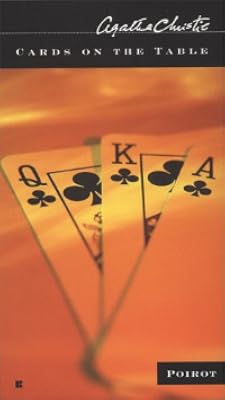
Cards on the Table
by Agatha Christie
Colonel Race (2), Ariadne Oliver (2), Superintendent Battle (3), Hercule Poirot (14)
On This Page
Description
In Agatha Christie's classic mystery, Cards on the Table, the wily Hercule Poirot is on the case when a bridge night turns deadlyMr. Shaitana is famous as a flamboyant party host. Nevertheless, he is a man of whom everybody is a little afraid. So when he boasts to Hercule Poirot that he considers murder an art form, the detective has some reservations about accepting a party invitation to view Shaitana's "private collection."
Indeed, what begins as an absorbing evening of bridge is to turn show more into a more dangerous game altogether....
. show less
Tags
Recommendations











Member Recommendations

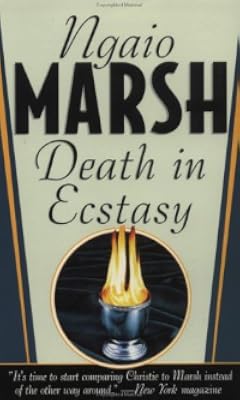
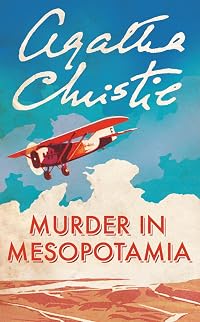
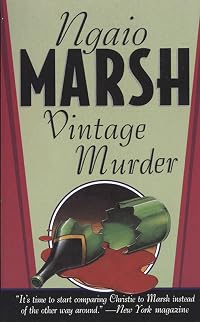
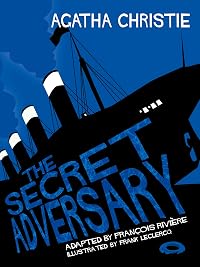
Porua Hercule Poirot with Mrs. Oliver once again after Cards on the Table. This is reason enough for anyone who has enjoyed their first outing together to read this book.
30
Member Reviews
'Cards On The Table' is a sort of twist on the Locked Room mystery only the room wasn't locked but four eminent Christie sleuths (well, three eminent Christie sleuths and one more than slightly tongue-in-cheek crime writer) are sitting outside the only exit and you know exactly who was in the 'locked' room when the man was murdered, you just don't know which of the four people with him did it and why the three who didn't do it, didn't see anything.
This isn't a book that's heavy on authenticity. It's a shameless puzzle box construction that wins you over by being over the top in how it's presented and by having a clever puzzle at its heart.
The guy who gets murdered, the wryly named Mr. Shaitana, gets no sympathy from anybody. He's show more written off as the instrument of his own destruction. He's shown as a vain foreigner who liked to take on a Mephistophelean persona and play games with people's emotions and who finally played a game where the odds were against him.
The game? To invite four people he suspects of having gotten away with murder and four detectives to a bridge party and waits to see what mischief occurs.
How did he lose? One (or more, you can never take anything for granted with Christie) of the suspected murderers killed him, quietly and efficiently and without being seen or leaving any clues.
This reminded me of one of those comics Marvel used to do back in the day, when they'd assemble teams of heroes and villains with broadly similar powers and throw them at one another to see what happened. Here we have four of Christie's professional and amateur sleuths from earlier novels, Superintendent Battle, Colonel Race, Hercule Poirot, and Ariadne Oliver, facing off against two men and two women who, as well as being suspects in the death of Mr. Shaitana, may have murdered before and gotten away with it.
The premise, while bold, was unapologetically mechanical so I was surprised at how much fun 'Cards On The Table' was. I think I had fun mainly because I think Christie was having fun with it - debunking herself via her crime writing counterpart Ariadne Oliver and trying to see how many times she could squeeze the lemon in this very static murder set-up and managing to mislead me several times.
There was a knowingness to this book that I enjoyed. Christie is almost speaking through the fourth wall via Ariadne Oliver to her readers with a subtext that says 'I know what you expect of a mystery - after all, they're beneath the surface they all have the same plot. it's always the least likely person and I always mislead you about who the least likely person is and you always come back for more'. Her tone is playful. She's a magician showing you how her old tricks worked while dazzling you with new ones. She has fun bouncing her sleuths off one another and takes full advantage of the fact that none of the four suspects seems innocent.
Towards the end of the story, I thought she'd finally gone too far and was ready to rail at her when Poirot produced a convenient window cleaner in support of a theory because it seemed so unlikely and such an obvious cheat and then she turned it into another twist of the lemon that felt like a grin and rescued herself.
The only drag on the fun might have been Poirot and his obsession with how the four suspects played Bridge. If you don't play bridge then this will likely all slide by and most of Poirot's enquiries will seem pointless (thinking about it, I often feel that most of Poirot's enquiries are pointless, so there's no change there). I went through a phase in my late teens when I played bridge obsessively so I recognised some of the behaviours Poirot was looking for that might hint at who carried out the murder and how they could do so unseen. I was the kind of Bridge player who wouldn't have noticed anything about the room the game was played in but would have recalled every bid and every trick. I was always deeply frustrated by players who habitually over-called, especially when they won, as it turned a game of maths and rational decision making into a game of chance and bravado.
I listened to Hugh Fraser doing his usual skilful narration, which was enriched this time because he'd already developed voices for the four sleuths so that I recognised each of them instantly. I do wonder who he based Adriane Oliver's voice on and whether she's forgiven him for it yet. show less
Cards on the Table – Agatha Christie
4 stars
Audio performance by H. Fraser
I wonder if this Poirot mystery might be called And Then There Were None –Light.
Something of the underlying premise seems similar to me, but of course there is a creative Agatha Christie twist.
The strange, Mephistophelian, Mr. Shaitana invites eight guests to a dinner and bridge party. Four of the guests are imminent investigators and four are unexposed murderers. Mr. Shaitana expects to be entertained by this combination of guests. Agatha Christie intends him to be the victim. No one has seen the murder. Any one of four people could be guilty. Christie is once again playing with the theme that ‘murder will out’. As each guilty past is revealed the body show more count increases.
There are four investigators; Poirot, Inspector Battle, Colonel Race of the Serect Service and mystery novelist Ariadne Oliver. Unlike earlier novels, Christie actually allows the other investigators to participate on an intelligent level. Ultimately, it is Poirot who untangles the last surprising plot twist. (Naturellement)
This is the first time I’ve read a book with Ariadne Oliver. What a great character! I think Christie had fun with writing her. There were plenty of opportunities in this book to try to outguess the detectives, but I never manage to completely unravel a Christie plot until Poirot explains the process of his little grey cells. Agatha Christie could certainly write a good puzzle, but I’ve yet to find a believable romance in any of her books. This story would have been just fine without the unlikely instant love story.
show less
4 stars
Audio performance by H. Fraser
I wonder if this Poirot mystery might be called And Then There Were None –Light.
Something of the underlying premise seems similar to me, but of course there is a creative Agatha Christie twist.
The strange, Mephistophelian, Mr. Shaitana invites eight guests to a dinner and bridge party. Four of the guests are imminent investigators and four are unexposed murderers. Mr. Shaitana expects to be entertained by this combination of guests. Agatha Christie intends him to be the victim. No one has seen the murder. Any one of four people could be guilty. Christie is once again playing with the theme that ‘murder will out’. As each guilty past is revealed the body show more count increases.
There are four investigators; Poirot, Inspector Battle, Colonel Race of the Serect Service and mystery novelist Ariadne Oliver. Unlike earlier novels, Christie actually allows the other investigators to participate on an intelligent level. Ultimately, it is Poirot who untangles the last surprising plot twist. (Naturellement)
This is the first time I’ve read a book with Ariadne Oliver. What a great character! I think Christie had fun with writing her. There were plenty of opportunities in this book to try to outguess the detectives, but I never manage to completely unravel a Christie plot until Poirot explains the process of his little grey cells. Agatha Christie could certainly write a good puzzle, but I’ve yet to find a believable romance in any of her books. This story would have been just fine without the unlikely instant love story.
show less
In this Poirot outing, the detective is invited to a dinner party where the host knowingly invites four people he suspects of being murderers. The host's hubris is rewarded by his being murdered, all while the four guests are playing bridge nearby and four experts in investigation are in the next room. With only four suspects to choose from, Poirot must use all his abilities to determine the perpetrator of the crime.
I quite liked this novel and was impressed with how Christie once again manages to create a compelling mystery even when the suspect pool is immediately limited. I also particularly enjoyed her send-up of herself, as one of the characters in this novel is a well-renowned mystery novelist whose Finnish detective creation she show more somewhat loathes. I found myself chortling in particular that the character is the author of a book titled The Body in the Library, a title Christie eventually used six years later. show less
I quite liked this novel and was impressed with how Christie once again manages to create a compelling mystery even when the suspect pool is immediately limited. I also particularly enjoyed her send-up of herself, as one of the characters in this novel is a well-renowned mystery novelist whose Finnish detective creation she show more somewhat loathes. I found myself chortling in particular that the character is the author of a book titled The Body in the Library, a title Christie eventually used six years later. show less
Professional poseur Mr Shaitana arranges a dinner-party with eight guests: four of them, one way or another, are involved with the detection of crime; the others, so Shaitana confides to Hercule Poirot, have all gotten away with murder... After dinner the oddly-assorted guests separate into two bridge-playing parties, each in a different room, while Mr Shaitana sits by the fire and enjoys his own cleverness. He has not long to do so, however, because by the end of the evening Mr Shaitana is dead: stabbed with one of his own collected artefacts, a jewelled dagger. Though one of Shaitana's "specimens" must be guilty, there is no evidence against any one of them in particular... In her personal foreword, Agatha Christie comments that this show more 1936 mystery was one of Poirot's favourite cases; I would guess that it was one of hers, too, considering the delicious layering of the plot itself and the way she uses her characters. This novel not only brings together private investigator Hercule Poirot, Scotland Yard's Superintendent Battle and Secret Serviceman Colonel Race, but - after her brief appearance in Parker Pyne Investigates - properly introduces mystery writer Ariadne Oliver, clearly her author's avatar, with whom Agatha has enormous fun. Though the professionals cannot go along with Mrs Oliver's suggestion that the four of them investigate the murder by each "backing their favourite" - tackling one suspect each - they do allow the amateur to join their ranks; subsequently - at least when she isn't allowing her "feminine intuition" to run riot - Mrs Oliver makes some valuable contributions. It is Poirot's contention that the case turns on whether or not Mr Shaitana was right in his assertion that the other four dinner-guests - explorer and author Major John Despard, bridge-fiend Mrs Lorrimer, society physician Dr Roberts and former paid companion Anne Meredith - got away with murder in the past: the detectives must, therefore, not only investigate Shaitana's murder itself, but delve into the lives of their suspects, looking for a connection with an unexpected or mysterious death---knowing that they may never be able to prove anything, whatever they discover. For Poirot, the overriding question is which of the four suspects could have been capable of murdering Shaitana - a crime unpremeditated, committed on the spur of the moment: which of them, in other words, has the right psychology---a question which Poirot answers, at least to his own satisfaction, by examining the evening's bridge scores...
"Let's look at the rough possibilities," said Battle. He considered a minute. "I put the doctor first, I think. Specious sort of customer. Would know the right spot to shove the dagger in. But there's not much more to it than that. Then take Despard. There's a man with any amount of nerve. A man accustomed to quick decisions and a man who's quite at home doing dangerous things. Mrs Lorrimer? She's got any amount of nerve, too, and she's the sort of woman who might have a secret in her life. She looks as though she's known trouble. On the other hand, I'd say she's what I call a high-principled woman---sort of woman who might be headmistress of a girls' school. It isn't easy to think of her sticking a knife into any one. In fact, I don't think she did. And lastly, there's little Miss Meredith. We don't know anything about her. She seems an ordinary, good-looking, rather shy girl. But one doesn't know, as I say, anything about her."
"We know that Shaitana believed she had committed murder," said Poirot. show less
"Let's look at the rough possibilities," said Battle. He considered a minute. "I put the doctor first, I think. Specious sort of customer. Would know the right spot to shove the dagger in. But there's not much more to it than that. Then take Despard. There's a man with any amount of nerve. A man accustomed to quick decisions and a man who's quite at home doing dangerous things. Mrs Lorrimer? She's got any amount of nerve, too, and she's the sort of woman who might have a secret in her life. She looks as though she's known trouble. On the other hand, I'd say she's what I call a high-principled woman---sort of woman who might be headmistress of a girls' school. It isn't easy to think of her sticking a knife into any one. In fact, I don't think she did. And lastly, there's little Miss Meredith. We don't know anything about her. She seems an ordinary, good-looking, rather shy girl. But one doesn't know, as I say, anything about her."
"We know that Shaitana believed she had committed murder," said Poirot. show less
I'm done! It feels like I am finishing books up so slowly lately - June wasn't a strong reading month.
Thanks to Hercule Poirot, it ended well - the Belgian detective dominates the story from start to finish. That may sound like it's something needless to say, but Agatha Christie did tend to have some Poirot books where the beloved detective didn't even show up until the second half or toward the end. In this case we open up with him at a party and end with him entertaining survivors.
The story was fascinating. While it wasn't her strongest mystery, who cares because I loved the general concept. Poirot was invited along with three other detectives of sorts (one mystery novelists, a Scotland Yard Detective, etc) to have dinner with four show more murderers who had gotten away with it. When the party host is found dead in front of all the guests, they had four suspects.
Blending the past murders with the present was interesting enough, but it was the time Christie took to dig into various motivations and personality traits that was the actual winner here. Sometimes her story takes so much focus that characters play mere backdrop counterparts, but in this case the paper people are individually drawn and convincingly motivated.
It may not be the most exciting in her library, but so far it's one of my many favorites. The story speeds by and it stays intriguing from start to finish. The ending line was just hilarious too - have to love the people who dare to tease the detective. show less
Thanks to Hercule Poirot, it ended well - the Belgian detective dominates the story from start to finish. That may sound like it's something needless to say, but Agatha Christie did tend to have some Poirot books where the beloved detective didn't even show up until the second half or toward the end. In this case we open up with him at a party and end with him entertaining survivors.
The story was fascinating. While it wasn't her strongest mystery, who cares because I loved the general concept. Poirot was invited along with three other detectives of sorts (one mystery novelists, a Scotland Yard Detective, etc) to have dinner with four show more murderers who had gotten away with it. When the party host is found dead in front of all the guests, they had four suspects.
Blending the past murders with the present was interesting enough, but it was the time Christie took to dig into various motivations and personality traits that was the actual winner here. Sometimes her story takes so much focus that characters play mere backdrop counterparts, but in this case the paper people are individually drawn and convincingly motivated.
It may not be the most exciting in her library, but so far it's one of my many favorites. The story speeds by and it stays intriguing from start to finish. The ending line was just hilarious too - have to love the people who dare to tease the detective. show less
Having never read an Agatha Christie mystery before, I was not sure what to expect going into Cards on the Table. I quickly discovered Christie's reputation is well-deserved. Cards on the Table has a gripping premise from the beginning. The enigmatic Mr. Shaitan invites the incomparable Hercule Poirot to an evening gathering. Upon arrival, it doesn't take long for Poirot to deduce the nature of the gathering. Four of the guests are sleuths of some variety or another, including an army Colonel, a Superintendent of Scotland Yard, Poirot himself, and a famed mystery writer. And the other four guests? It is soon revealed they are murderers who have gotten away with their crimes. For his disturbing sense of humor, Shaitan is rewarded with a show more knife in the chest at the beginning of the novel. Four sleuths matched up against four suspects, the latter all known to be capable of murder. And the mystery is underway! Despite the unlikely circumstance of the murder, Christie pulls it off brilliantly
Inevitably, my thoughts as I read this book drifted to a comparison between Hercule Poirot and Sherlock Holmes. As a huge fan of Holmes, I was surprised by how well Poirot stacked up. Poirot is almost Holmes's opposite. Whereas Holmes relies on evidence, Poirot has a more psychological mind. Whereas Holmes operates outside of the law, Poirot works with and respects the police. Indeed, in Christie's world the police are competent and skilled. Superintendent Battle, a character from other Christie novels, does as much sleuthing as Poirot. I was able to appreciate Poirot for the unique character he is. It helped that Christie gave a few appreciative nods to Doyle's character at a couple of points.
The mystery itself is relatively mundane. Christie is relying on her ability at characterization to hold the interest of the reader. It is a successful gamble. Each character is interesting in his or her own way. What helped the book greatly was Christie's especially brilliant tongue-in-cheek character Mrs. Oliver. A mystery writer of great fame, Mrs. Oliver inserts herself into the police investigation and proceeds to pronounce every suspect as most certainly the killer at one point or another. Christie uses Oliver to make fun of herself throughout the book. Yet Christie doesn't overdo it, Mrs. Oliver is no buffoon (at least not completely). She contributes in her own way to the solving of the case.
This isn't a perfect novel. Without a working knowledge of the card game bridge, it isn't easy to follow some of Poirot's psychological analysis. The very end of the novel also takes a few turns too many in my opinion. Some of the content I would consider bordering on racist. But overall, this is a fun mystery novel and from what I understand, it isn't even considered one of Christie's best. show less
Inevitably, my thoughts as I read this book drifted to a comparison between Hercule Poirot and Sherlock Holmes. As a huge fan of Holmes, I was surprised by how well Poirot stacked up. Poirot is almost Holmes's opposite. Whereas Holmes relies on evidence, Poirot has a more psychological mind. Whereas Holmes operates outside of the law, Poirot works with and respects the police. Indeed, in Christie's world the police are competent and skilled. Superintendent Battle, a character from other Christie novels, does as much sleuthing as Poirot. I was able to appreciate Poirot for the unique character he is. It helped that Christie gave a few appreciative nods to Doyle's character at a couple of points.
The mystery itself is relatively mundane. Christie is relying on her ability at characterization to hold the interest of the reader. It is a successful gamble. Each character is interesting in his or her own way. What helped the book greatly was Christie's especially brilliant tongue-in-cheek character Mrs. Oliver. A mystery writer of great fame, Mrs. Oliver inserts herself into the police investigation and proceeds to pronounce every suspect as most certainly the killer at one point or another. Christie uses Oliver to make fun of herself throughout the book. Yet Christie doesn't overdo it, Mrs. Oliver is no buffoon (at least not completely). She contributes in her own way to the solving of the case.
This isn't a perfect novel. Without a working knowledge of the card game bridge, it isn't easy to follow some of Poirot's psychological analysis. The very end of the novel also takes a few turns too many in my opinion. Some of the content I would consider bordering on racist. But overall, this is a fun mystery novel and from what I understand, it isn't even considered one of Christie's best. show less
I’m so torn on this book. On the one hand, how often can you say that you have four — yes, four! —of Dame Agatha Christie’s sleuths in one book? On the other hand, the task they take on turns out to be a bit thin — at least at first.
A cruel globetrotter and art collector named Mr. Shaitana gathers eight people for a party. In hindsight, it turns out that he has invited four sleuths — no less than Hercule Poirot, ditzy mystery writer Ariadne Oliver; Scotland Yard’s finest, Inspector Battle, and spy/troubleshooter for the Empire, Colonel Race. Shaitana has also gathered four people he believed to be people who had gotten away with murder. One of them commits yet another murder, poisoning Shaitana with a shirt stud. (Yes, I show more had to look it up, too.) That means that Shaitana’s murderer has to be bridge wizard Mrs. Lorimer, successful Dr. Roberts, big-game hunter Major Despard, or pretty sweet young thing Anne Meredith.
Dame Agatha had a bee in her bonnet about being able to detect a murderer based on the psychological profiles of the various suspects, and she explores that idea in this 1936 novel. Perhaps, in this day of FBI profilers, other readers will think Dame Agatha was ahead of her time; however, to me, it seems like a faddish idea like eugenics or John Harvey Kellogg’s crackpot health regimen that seem crazy a century later. I was all ready to slap a three-star (maybe even two-star) review on Cards on the Table and rank it second only to The Big Four in awfulness.
But — curse you, Dame Agatha! — two-thirds of the way in, she deviates from this crackpottery and delivers enough twists and turns for a rollercoaster. She really knows how to surprise and beguile her readers. So I’ll ignore the tediousness of the middle of this novel and award four stars to the grand dame of the Golden Age, who managed to rescue and elevate this novel. show less
A cruel globetrotter and art collector named Mr. Shaitana gathers eight people for a party. In hindsight, it turns out that he has invited four sleuths — no less than Hercule Poirot, ditzy mystery writer Ariadne Oliver; Scotland Yard’s finest, Inspector Battle, and spy/troubleshooter for the Empire, Colonel Race. Shaitana has also gathered four people he believed to be people who had gotten away with murder. One of them commits yet another murder, poisoning Shaitana with a shirt stud. (Yes, I show more had to look it up, too.) That means that Shaitana’s murderer has to be bridge wizard Mrs. Lorimer, successful Dr. Roberts, big-game hunter Major Despard, or pretty sweet young thing Anne Meredith.
Dame Agatha had a bee in her bonnet about being able to detect a murderer based on the psychological profiles of the various suspects, and she explores that idea in this 1936 novel. Perhaps, in this day of FBI profilers, other readers will think Dame Agatha was ahead of her time; however, to me, it seems like a faddish idea like eugenics or John Harvey Kellogg’s crackpot health regimen that seem crazy a century later. I was all ready to slap a three-star (maybe even two-star) review on Cards on the Table and rank it second only to The Big Four in awfulness.
But — curse you, Dame Agatha! — two-thirds of the way in, she deviates from this crackpottery and delivers enough twists and turns for a rollercoaster. She really knows how to surprise and beguile her readers. So I’ll ignore the tediousness of the middle of this novel and award four stars to the grand dame of the Golden Age, who managed to rescue and elevate this novel. show less
Members
- Recently Added By
Lists

British Mystery
469 works; 14 members

Agatha Christie Poirot
43 works; 2 members

Books About Murder
313 works; 7 members

Detective Stories
343 works; 5 members

Books whose title names an object usually found in the kitchen
171 works; 14 members

Books Read in 2016
4,666 works; 199 members

Books Read in 2010
631 works; 11 members

1930s
262 works; 5 members

Books Read in 2023
5,547 works; 145 members

Best Mysteries With a Historical Setting
292 works; 160 members

Books We Love to Reread
688 works; 296 members

TBR
77 works; 1 member
Must Read Detective Stories (Nick Fuller)
278 works; 2 members

Books Read in 2025
4,091 works; 97 members

Agatha Christie Chronology
93 works; 1 member

Books Read in 2026
1,826 works; 65 members
Author Information

2,146+ Works 439,526 Members
One of the most successful and beloved writer of mystery stories, Agatha Mary Clarissa Christie was born in 1890 in Torquay, County Devon, England. She wrote her first novel, The Mysterious Affair at Styles, in 1920, launching a literary career that spanned decades. In her lifetime, she authored 79 crime novels and a short story collection, 19 show more plays, and six novels written under the name of Mary Westmacott. Her books have sold over a billion copies in the English language with another billion in 44 foreign languages. Some of her most famous titles include Murder on the Orient Express, Mystery of the Blue Train, And Then There Were None, 13 at Dinner and The Sittaford Mystery. Noted for clever and surprising twists of plot, many of Christie's mysteries feature two unconventional fictional detectives named Hercule Poirot and Miss Jane Marple. Poirot, in particular, plays the hero of many of her works, including the classic, The Murder of Roger Ackroyd (1926), and Curtain (1975), one of her last works in which the famed detective dies. Over the years, her travels took her to the Middle East where she met noted English archaeologist Sir Max Mallowan. They married in 1930. Christie accompanied Mallowan on annual expeditions to Iraq and Syria, which served as material for Murder in Mesopotamia (1930), Death on the Nile (1937), and Appointment with Death (1938). Christie's credits also include the plays, The Mousetrap and Witness for the Prosecution (1953; film 1957). Christie received the New York Drama Critics' Circle Award for 1954-1955 for Witness. She was also named Dame Commander of the Order of the British Empire in 1971. Christie died in 1976. (Bowker Author Biography) show less
Some Editions
Series

Colonel Race
3 works (2)

Ariadne Oliver
8 works (2)

Superintendent Battle
5 works (3)

Hercule Poirot
37 works (14)
Belongs to Publisher Series
The Albatross Crime Club (No. 176)
Scherz Krimi (1353)
Oscar Narrativa (1510)
Fontana (6281)
Gli Oscar [Mondadori] (1904)
SaPo (326)
Work Relationships
Is contained in
Agatha Christie: Five Complete Hercule Poirot Novels - Murder on the Orient Express / Thirteen at Dinner / The ABC Murders / Cards on the Table / Death on the Nile by Agatha Christie
Poirot: The Complete Ariadne Oliver, Vol. 1: Cards on the Table, Mrs. McGinty's Dead, Dead Man's Folly, Plus Two Short Stories by Agatha Christie
Agatha Christie Crime Collection: Cards on the Table / N or M? / A Murder Is Announced by Agatha Christie
Murder in Three Acts / Death in the Clouds / The A.B.C. Murders / Murder in Mesopotamia / Cards on the Table by Agatha Christie
Four Novels: Murder on the Orient Express, Cards on the Table, Five Little Pigs, Hercule Poirot's Christmas by Agatha Christie
Has the adaptation
Has as a student's study guide
Common Knowledge
- Canonical title
- Cards on the Table
- Original title
- Cards on the Table
- Original publication date
- 1936-11-02
- People/Characters
- Hercule Poirot; Superintendent Battle; Ariadne Oliver; John Race (Colonel); Mrs. Lorrimer; Doctor Roberts (show all 11); Anne Meredith; John Despard (Major); Mr. Shaitana; Rhoda Dawes; Mrs. Luxmore (Professor Luxmore's widow)
- Important places
- London, England, UK
- Related movies
- "Agatha Christie: Poirot" Cards on the Table (2005 | IMDb)
- Epigraph
- [None]
- Dedication
- [None]
- First words
- 'My dear M. Poirot!'
- Quotations
- “Permit me to tell you, madame, that you are a most remarkable woman. All my homage and respect. Yes, indeed, a woman in a thousand. Why, you have not even done what nine hundred and ninety-nine women out of a thousand coul... (show all)d not have resisted doing.”
“What is that?”
“Told me just why you killed your husband—and how entirely justified such a proceeding really was.”
Mrs. Lorrimer drew herself up.
“Really, M. Poirot,” she said stiffly. “My reasons were entirely my own business.”
“Magnifique!” said Poirot, and, once more raising her hand to his lips, he left the room. - Last words
- (Click to show. Warning: May contain spoilers.)'Let's stab him, Rhoda, and see if his ghost can come back and find out who did it.'
- Original language
- English
- Canonical DDC/MDS
- 823.912
Classifications
Statistics
- Members
- 5,045
- Popularity
- 2,743
- Reviews
- 119
- Rating
- (3.81)
- Languages
- 26 — Catalan, Chinese, Czech, Danish, Dutch, English, Estonian, Finnish, French, German, Greek, Hungarian, Indonesian, Italian, Korean, Norwegian (Bokmål), Norwegian, Polish, Portuguese, Russian, Serbian, Croatian, Slovenian, Spanish, Swedish, Turkish
- Media
- Paper, Audiobook, Ebook
- ISBNs
- 172
- UPCs
- 2
- ASINs
- 88