On This Page
Description
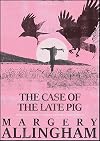
A man is killed five months after his funeral, in a tale by "one of the greatest mid-20th-century practitioners of the detective novel" (Alexander McCall Smith). Private detective Albert Campion is summoned to the village of Kepesake to investigate a particularly distasteful death. The body turns out to be that of Pig Peters, freshly killed five months after his own funeral. Soon other corpses start to turn up, just as Peters's body goes missing. It takes all Campion's coolly incisive powers show more of detection to unravel the crime. The Case of the Late Pig is, uniquely, narrated by Campion himself. In Allingham's inimitable style, high drama sits neatly beside pitch-perfect black comedy. A heady mix of murder, romance, and the urbane detective's own unglamorous past make this an Allingham mystery not to be missed. "My very favourite of the four Queens of Crime is Allingham."-J. K. Rowling "Margery Allingham deserves to be rediscovered."-P.D. James. show lessTags
Recommendations





















Member Reviews
This was the first book in the Campion series that I ever read. Unfortunately that set me up for a bit of a fall, because it is the only one written in first person from Campion's POV, so I was sorely disappointed when I moved on to find all the rest were 3rd person narratives, which meant many a scene without Campion in at all.
The Case Of The Late Pig is a really fun book, thrusting Campion into his more irreverent and egotistical personality traits, which have not been so evident in the books just prior to this one. This is only really a novella. All the Campion books are quick reads, but this one is only a slip of a tale. And I think this is because of the narration. It's a fairly simple story; don't worry, plenty of mysterious show more characters and startling plot revelations, just that what story there is is laid out and then not really revisited or gone into in the same depth as in previous stories. This seems to be a) because Campion refuses to show much depth to the audience, preferring to appear aloof and ingenious, and b) because like most Campion mysteries, he figures things out fairly early on but can't do anything until he has proof so can't tell anyone his suspicions for fear of blowing it, which doesn't work terribly well in a story he is narrating, so it has to be kept short because he can't get away with just behaving inexplicably. He's an enigmatic hero, and unfortunately that doesn't lend itself to autobiography.
This is a real shame, because it is glorious being narrated to by Campion. The best thing about any book in the series are the scenes in which Campion features, and this book is 100% Campion. So, being the only 1st person tale in the series makes it an extra special treat.
I'm not sure how much re-read value it has as a mystery. Because it is rather light, once you know the twist, it seems unbelievably obvious. It's also a little hard to buy into Campion's interest in Janet. She is presented as another Biddy (his lost love from Mystery Mile, who he has been mooning over ever since), so it's a little hard to swallow that he has another intended that he's known for years. Perhaps that's why he never made his move, because he didn't know which to pick. But even he admits Janet is not very bright and she is presented throughout as temperamental and untrusting, constantly behaving jealously and tantrumy, so it's hard to see what he sees in her.
On a side note, since this is only really a novella, I actually have three editions of it, one a stand alone book, one in the short story collection 'Mr Campion: Criminologist' and also in an omnibus. I started out reading the version in 'Mr Campion: Criminologist' which I believe was published for American audiences, because it has some extra notes at the start of each story, being laid out as Campion's casebook. However, I quickly noticed some errors in the text and later came to a paragraph that was rendered gibberish by having part of the previous paragraph replicated. So I switched to my stand-alone edition, and started again in case the other version had omitted anything. But then I noticed several DIFFERENT errors. The two texts both contain errors, but they are different errors to each other. If I knew where my third copy was, I might compare that too. To be honest, this confusion detracted from my enjoyment of a really fun story because it was distracting knowing that whichever book I read, I was missing something. I think that the stand-alone version is the 'correct' text, that happens to have some punctuation errors and typos. The one in the short story collection presumably went through a different editor who corrected those errors, but changed some of the language for the American audience (though I don't know if this was done at the time, or in the later republished version) and when the text was copied, some printing errors got through. This glimpse into the publishing industry was disappointing - why isn't there an ultimate text, that contains no errors, but is true to what Allingham wrote in the first place?
Oh well. This book will always have a place in my heart as the first Campion book I read, and the best place to spend as much time as possible with one of my all-time-favourite fictional characters. show less
The Case Of The Late Pig is a really fun book, thrusting Campion into his more irreverent and egotistical personality traits, which have not been so evident in the books just prior to this one. This is only really a novella. All the Campion books are quick reads, but this one is only a slip of a tale. And I think this is because of the narration. It's a fairly simple story; don't worry, plenty of mysterious show more characters and startling plot revelations, just that what story there is is laid out and then not really revisited or gone into in the same depth as in previous stories. This seems to be a) because Campion refuses to show much depth to the audience, preferring to appear aloof and ingenious, and b) because like most Campion mysteries, he figures things out fairly early on but can't do anything until he has proof so can't tell anyone his suspicions for fear of blowing it, which doesn't work terribly well in a story he is narrating, so it has to be kept short because he can't get away with just behaving inexplicably. He's an enigmatic hero, and unfortunately that doesn't lend itself to autobiography.
This is a real shame, because it is glorious being narrated to by Campion. The best thing about any book in the series are the scenes in which Campion features, and this book is 100% Campion. So, being the only 1st person tale in the series makes it an extra special treat.
I'm not sure how much re-read value it has as a mystery. Because it is rather light, once you know the twist, it seems unbelievably obvious. It's also a little hard to buy into Campion's interest in Janet. She is presented as another Biddy (his lost love from Mystery Mile, who he has been mooning over ever since), so it's a little hard to swallow that he has another intended that he's known for years. Perhaps that's why he never made his move, because he didn't know which to pick. But even he admits Janet is not very bright and she is presented throughout as temperamental and untrusting, constantly behaving jealously and tantrumy, so it's hard to see what he sees in her.
On a side note, since this is only really a novella, I actually have three editions of it, one a stand alone book, one in the short story collection 'Mr Campion: Criminologist' and also in an omnibus. I started out reading the version in 'Mr Campion: Criminologist' which I believe was published for American audiences, because it has some extra notes at the start of each story, being laid out as Campion's casebook. However, I quickly noticed some errors in the text and later came to a paragraph that was rendered gibberish by having part of the previous paragraph replicated. So I switched to my stand-alone edition, and started again in case the other version had omitted anything. But then I noticed several DIFFERENT errors. The two texts both contain errors, but they are different errors to each other. If I knew where my third copy was, I might compare that too. To be honest, this confusion detracted from my enjoyment of a really fun story because it was distracting knowing that whichever book I read, I was missing something. I think that the stand-alone version is the 'correct' text, that happens to have some punctuation errors and typos. The one in the short story collection presumably went through a different editor who corrected those errors, but changed some of the language for the American audience (though I don't know if this was done at the time, or in the later republished version) and when the text was copied, some printing errors got through. This glimpse into the publishing industry was disappointing - why isn't there an ultimate text, that contains no errors, but is true to what Allingham wrote in the first place?
Oh well. This book will always have a place in my heart as the first Campion book I read, and the best place to spend as much time as possible with one of my all-time-favourite fictional characters. show less
Summary: When Campion is invited to the second funeral in six months for an old school acquaintance, he finds him drawn into a murder investigation where the murders keep coming.
When Albert Campion finds himself staring at the corpse of a man he thought buried six months ago, he knows something strange is afoot. Only he doesn’t reckon how strange it is and that his involvement has placed him and Lugg in danger. Supposedly this man is Harris, the brother and heir of the man buried six months ago, R. I. “Pig” Peters. But one look is enough to persuade Campion that this is Pig, an old school nemesis. He died from a blow to the head from an urn that fell from a balustrade above the patio where he was sleeping off a hangover on a show more lounge chair.
Six months ago, he was surprised to be invited to the funeral by means of a strange verse. Another attendee, Whippet had a similar invite. Campion also notices the fiancée of Pig. All these turn up again at the second death (including the notes in which moles feature prominently), occurring at the estate of old friend Leo Pursuivant. After Campion mentions the need for further examination of the body, it goes missing, only to turn up in the river. Then another grisly murder is found, of a man called Hayhoe, stabbed in the neck and hung on a gibbet like a scarecrow. Clearly, a clever and ruthless killer is abroad in the village of Kepesake. An investigator cannot be too careful, as Campion discovers to his regret.
A unique feature is that this is written as a first-person account by Campion, unlike earlier numbers in the series. I thought it a refreshing change of pace. We also gain sympathy for Campion, who struggles to win the affections of Leo’s daughter Janet, and keeps getting on her wrong side. This is a short, briskly-paced story that works up to an edge-of-the-seat conclusion. show less
When Albert Campion finds himself staring at the corpse of a man he thought buried six months ago, he knows something strange is afoot. Only he doesn’t reckon how strange it is and that his involvement has placed him and Lugg in danger. Supposedly this man is Harris, the brother and heir of the man buried six months ago, R. I. “Pig” Peters. But one look is enough to persuade Campion that this is Pig, an old school nemesis. He died from a blow to the head from an urn that fell from a balustrade above the patio where he was sleeping off a hangover on a show more lounge chair.
Six months ago, he was surprised to be invited to the funeral by means of a strange verse. Another attendee, Whippet had a similar invite. Campion also notices the fiancée of Pig. All these turn up again at the second death (including the notes in which moles feature prominently), occurring at the estate of old friend Leo Pursuivant. After Campion mentions the need for further examination of the body, it goes missing, only to turn up in the river. Then another grisly murder is found, of a man called Hayhoe, stabbed in the neck and hung on a gibbet like a scarecrow. Clearly, a clever and ruthless killer is abroad in the village of Kepesake. An investigator cannot be too careful, as Campion discovers to his regret.
A unique feature is that this is written as a first-person account by Campion, unlike earlier numbers in the series. I thought it a refreshing change of pace. We also gain sympathy for Campion, who struggles to win the affections of Leo’s daughter Janet, and keeps getting on her wrong side. This is a short, briskly-paced story that works up to an edge-of-the-seat conclusion. show less
The Case of the Late Pig by Margery Allingham is the 8th book in her crime series that features the dapper Albert Campion and his personal thug of a valet, Lugg. I was very happy that this outing featured Lugg in a fairly major way, as he always livens up the story.
The Pig that is mentioned in the title is an old school rival of Campion’s and the book opens with Lugg reading the obituaries to Campion of which one is for the late R. I. “Pig” Peters. Campion attends his funeral but five months later he receives a call from an old friend and mentor to help solve a murder. When he arrives and examines the body, he finds it is none other than Pig. To complicate matters others who also attended the first Pig funeral arrive in the show more village and all too soon, Campion finds himself matching wits with a madman that has planned more than a few murders. To make matters even more confusing, Campion is dealing with a number of romantic high-jinks as well.
Apparently this is the only book in the series that is actually narrated by Campion himself. It is quite short but there is plenty of action and Allingham delivers this mystery with a light hand and quite a bit of subtle humor. The Case of the Late Pig is a fun addition to the series. show less
The Pig that is mentioned in the title is an old school rival of Campion’s and the book opens with Lugg reading the obituaries to Campion of which one is for the late R. I. “Pig” Peters. Campion attends his funeral but five months later he receives a call from an old friend and mentor to help solve a murder. When he arrives and examines the body, he finds it is none other than Pig. To complicate matters others who also attended the first Pig funeral arrive in the show more village and all too soon, Campion finds himself matching wits with a madman that has planned more than a few murders. To make matters even more confusing, Campion is dealing with a number of romantic high-jinks as well.
Apparently this is the only book in the series that is actually narrated by Campion himself. It is quite short but there is plenty of action and Allingham delivers this mystery with a light hand and quite a bit of subtle humor. The Case of the Late Pig is a fun addition to the series. show less
This is unusual. It's narrated in the first person by Albert Campion himself, which is not how the remainder of the series have been written so far.
It starts with a funeral in January of Pig Peters, someone who Campion went to school with and at whose hands he suffered being bullied.
Come June and there's a body turned up in a country village of some friends of his, and so Campion goes to try and sort it out - only to find that the body appears to be that of Pig himself. This time he has had is head bashed in by a giant flower urn from a parapet - no chance of rising from the dead this time, although the body does go walkabouts at one point - Pig appears to be a particularly active corpse.
From the varied range of people present in the show more environs, Campion has to work out who is what they say they are and who is dissembling. There's a lot of misdirection, and a close call at the end before the villain is exposed.
It's entertaining and engaging. show less
It starts with a funeral in January of Pig Peters, someone who Campion went to school with and at whose hands he suffered being bullied.
Come June and there's a body turned up in a country village of some friends of his, and so Campion goes to try and sort it out - only to find that the body appears to be that of Pig himself. This time he has had is head bashed in by a giant flower urn from a parapet - no chance of rising from the dead this time, although the body does go walkabouts at one point - Pig appears to be a particularly active corpse.
From the varied range of people present in the show more environs, Campion has to work out who is what they say they are and who is dissembling. There's a lot of misdirection, and a close call at the end before the villain is exposed.
It's entertaining and engaging. show less
I think I always knew that golden age detective fiction wasn’t really my bag (the inimitable Dame Christie aside) but participating in Crimes of the Century has confirmed it. This month’s foray into 1937 introduced me to Margery Allingham’s most famous creation: Albert Campion. I now know that this story is something of an aberration in that it is told in the first-person point of view by Campion but I’m not sure a more straight-forward narrative would endear the character to me more strongly. He is, to me, (yet another) upper crust Englishman surrounded by a phalanx of servants, private school chums and cap-doffing sycophants and the whole set up makes me squirm.
In his favour Albert Campion did not irk me quite as much as Ms show more Sayers’ Lord Peter Wimsey (who I met last year) but that’s not actually saying a lot. I suppose I was predisposed to irritation given the first lines of the story
“The main thing to remember in autobiography, I have always thought, is not to let any damned modesty creep in to spoil the story. This adventure is mine, Albert Campion’s, and I am fairly certain that I was pretty near brilliant in it in spite of the fact that I so nearly got myself and old Lugg killed that I hear a harp quintet whenever I consider it.”
I’m not much of a one for an unfettered ego. The rest of the characters meld into a couple of stereotypes in my memory; insipid for the women, in-bred old school chum for the chaps. Not counting Lugg of course who is Campion’s … manservant I suppose…and an ex (?) criminal whose purpose was lost on me.
The story was a complicated thing to do with disguised bodies, dodgy doctors and some fairly obvious wordplay. When reading the print version I had no clue what was going on by the end because I just wasn’t interested enough to pay attention. So I had another go at it by downloading the audio book and listened while stuck in traffic. That format was more agreeable (or there was less for me to be distracted by) and at least I cottoned on to the salient points of the plot but it still seemed to be one of those golden age novels that was telling a story that no one could ever mistake for reality, not even for a moment. Or maybe there was a world in which people acted and spoke like utter gits but if so it’s not a world I’m particularly engaged by. show less
In his favour Albert Campion did not irk me quite as much as Ms show more Sayers’ Lord Peter Wimsey (who I met last year) but that’s not actually saying a lot. I suppose I was predisposed to irritation given the first lines of the story
“The main thing to remember in autobiography, I have always thought, is not to let any damned modesty creep in to spoil the story. This adventure is mine, Albert Campion’s, and I am fairly certain that I was pretty near brilliant in it in spite of the fact that I so nearly got myself and old Lugg killed that I hear a harp quintet whenever I consider it.”
I’m not much of a one for an unfettered ego. The rest of the characters meld into a couple of stereotypes in my memory; insipid for the women, in-bred old school chum for the chaps. Not counting Lugg of course who is Campion’s … manservant I suppose…and an ex (?) criminal whose purpose was lost on me.
The story was a complicated thing to do with disguised bodies, dodgy doctors and some fairly obvious wordplay. When reading the print version I had no clue what was going on by the end because I just wasn’t interested enough to pay attention. So I had another go at it by downloading the audio book and listened while stuck in traffic. That format was more agreeable (or there was less for me to be distracted by) and at least I cottoned on to the salient points of the plot but it still seemed to be one of those golden age novels that was telling a story that no one could ever mistake for reality, not even for a moment. Or maybe there was a world in which people acted and spoke like utter gits but if so it’s not a world I’m particularly engaged by. show less
Albert Campion attends the funeral of an unlikable old classmate, only to be around six months later when the friend dies again. And then that body goes missing.
I couldn't figure out what happened, but I rarely try.
I enjoy the descriptions of characters and places. Like:
Pig Peters was a major evil in our lives at that time. He ranked with Injustice, The Devil, and Latin Prose. When Pig Peters fed the junior study fire with my collection of skeleton leaves I earnestly wished him dead, and, remembering the incident that morning at breakfast, I was mildly surprised to find that I still did.
And:
No English country house is worthy of the name if it is not breathtaking at half past six on a June evening, but Halt Knights is in a street by show more itself. It is long and low, with fine windows. Built of crushed strawberry brick, the Georgian front does not look out of place against the Norman ruins which rise up behind it and melt into the high chestnut massed at the back. show less
I couldn't figure out what happened, but I rarely try.
I enjoy the descriptions of characters and places. Like:
Pig Peters was a major evil in our lives at that time. He ranked with Injustice, The Devil, and Latin Prose. When Pig Peters fed the junior study fire with my collection of skeleton leaves I earnestly wished him dead, and, remembering the incident that morning at breakfast, I was mildly surprised to find that I still did.
And:
No English country house is worthy of the name if it is not breathtaking at half past six on a June evening, but Halt Knights is in a street by show more itself. It is long and low, with fine windows. Built of crushed strawberry brick, the Georgian front does not look out of place against the Norman ruins which rise up behind it and melt into the high chestnut massed at the back. show less
A short but very entertaining whodunnit: amateur sleuth Albert Campion is rather surprised to come across the freshly-murdered corpse of a man whose funeral he attended several months before (well, you would be, wouldn't you?) and sets out to investigate. The writing is tight and well-paced, the characterisation solid, and the denouement a lovely mixture of the blindingly obvious and the wholly unexpected.
Members
- Recently Added By
Lists

Books With the Most Memorable Titles
478 works; 158 members

Books Read in 2023
5,638 works; 147 members

Must Read Detective Stories (Nick Fuller)
278 works; 2 members
Author Information

131+ Works 20,367 Members
Margery Allingham, one of England's leading mystery writers, was born on May 20, 1904, in Ealing, a western suburb of London, but grew up in a remote village in Essex. Both of her parents were writers, and Margery carried on that tradition when she sold her first short story as an eight-year-old. At the Regent Street Polytechnic, she continued show more writing and studied drama and speech. While there, she wrote a verse play, Dido and Aeneas, in which she had a starring role during performances in London. At age 19, Allington published her first novel, Blackkerchief Dick. She wrote another novel, The White Cottage Mystery, before creating her most famous character, Albert Campion, in The Black Dudley Murder (published in England as The Crime at Black Dudley) in 1929. Allington went on to create twenty-eight more Campion mysteries, including several collections. She wrote more than 10 other novels, some under the pseudonym Maxwell March, as well as four novellas and sixty-four short stories. During World War II, Allingham served as First Aid Commandant for her district, organized the billeting and care of evacuees from London, and allowed her house to be turned into a temporary military base for eight officers and two hundred men of the Cameronians. The war greatly deepened Allingham's passion for her country, as evidenced in her later works. Allingham died of cancer on June 30, 1966. (Bowker Author Biography) show less
Some Editions
Series

Belongs to Publisher Series
Work Relationships
Is contained in
Has the adaptation
Is abridged in
Common Knowledge
- Canonical title
- The Case of the Late Pig
- Original publication date
- 1937
- People/Characters
- Albert Campion; Magersfontein Lugg; Pig Peters
- Important places
- England, UK; Village of Keepsake
- Related movies
- "Campion" The Case of the Late Pig: Part 1 (1989 | IMDb); "Campion" The Case of the Late Pig: Part 2 (1989 | IMDb); Detective: The Case of the Late Pig (1968 | TV episode | IMDb)
- Dedication
- For Mr. Malcolm Johnson from Mr. Albert Campion
- First words
- The main thing to remember in autobiography, I have always thought, is not to let any damned modesty creep in to spoil the story.
- Quotations
- Pig Peters was a major evil in our lives at that time. He ranked with Injustice, the Devil, and Latin Prose. When Pig Peters fed the junior study room fire with my collection of skeleton leaves I earnestly wished him dead, an... (show all)d I was mildly surprised to find that I still did.
- Last words
- (Click to show. Warning: May contain spoilers.)'Lugg,' I said sadly, 'would you like to walk home?'
- Original language
- English
Classifications
Statistics
- Members
- 699
- Popularity
- 40,986
- Reviews
- 22
- Rating
- (3.60)
- Languages
- 6 — Danish, Dutch, English, German, Portuguese, Spanish
- Media
- Paper, Audiobook, Ebook
- ISBNs
- 32
- ASINs
- 31