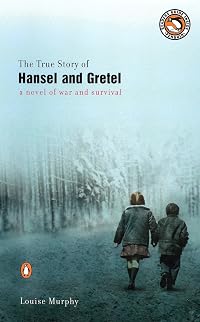
The True Story of Hansel and Gretel
by Louise Murphy
On This Page
Description
In the last months of the Nazi occupation of Poland, two children are left by their father and stepmother to find safety in a dense forest. Because their real names will reveal their Jewishness, they are renamed 'Hansel' and 'Gretel'. They wander in the woods until they are taken in by Magda, an eccentric and stubborn old woman called 'witch' by the nearby villagers. Magda is determined to save them, even as a German officer arrives in the village with his own plans for the children. show more Combining classic themes of fairy tales and war literature, Louise Murphy's haunting novel of journey and survival, of redemption and memory, powerfully depicts how war is experienced by families and especially by children. The True Story of Hansel and Gretel tells a resonant, riveting story. show lessTags
Recommendations
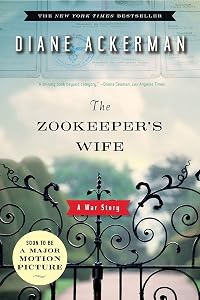
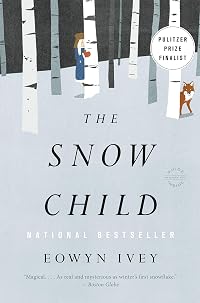
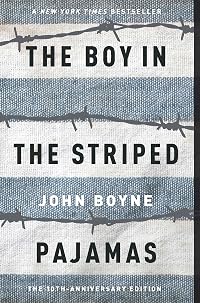
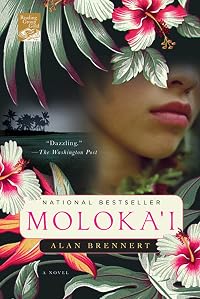


Member Recommendations
Member Reviews
Louise Murphy guides her characters through a forest of war, horror and darkness as they leave a proverbial trail of identity breadcrumbs across a vast expanse of human suffering. The holocaust in Poland becomes the backdrop of the classic Grimm fairy tale very well. Murphy puts an incredibly devastating spin on things by placing a Jewish man and woman in a terrible situation where they must abandon their young son and daughter in the woods to save them from the German soldiers pursuing them. In an effort to keep their Jewish identity hidden they give them the, indisputably German, names, Hansel and Gretel. They are then taken in by an old woman living alone on the outskirts of a Nazi occupied village, who, in a heartwarming twist on show more the original, becomes their protector instead of captor.
This book was equal parts heart-warming and heart wrenching. Its portrayal of the holocaust and life under Nazi occupation was exceptional. The interwoven story of the holocaust with the classic Grimm fairy tale is almost seamless. The story itself only draws on the fairy tale for it’s major story markers (events) and characters. Those story markers are usually re-imagined to fit the narrative but generally reflect the event from the fairy tale. However, this story is so much more then a re-imagined fairy tale, it is historical fiction in its finest form. The depiction of the life in Eastern Europe under Nazi occupation was obviously well researched by the author. Murphy also seems to use this research to inform the characters she creates. The presence of people of many different nationalities in the story is a wonderfully honest and accurate depiction of the population displacement that took place as a result of the German army’s disastrous and genocidal offensive to the east. Another strength of this book is that it provides internal perspectives for multiple characters. The presence of multiple internal perspectives creates a more accurate portrayal of the reality of the war in the east because it shows the range of diverse perspectives on both sides. Understanding that anti-Semitism was not just a view held by Nazi’s, or that German soldiers were not all believers in, or even enforcers of, Nazi ideology, might help to push back against binary narratives of the conflict. Challenging assumptions and stereotypes related to the Second World War is essential for young readers and learners because the Second World War is a popular subject for a wide variety of teens and young people.
Ultimately, this is a good YA book because it is engaging yet challenging. It challenges binary narratives about the war because it creates a very strong sense of the complexity in regards to the different decisions and desires of the various characters. The presence of so many different, and rapidly alternating, perspectives is challenging because it forces the reader to switch gears very quickly and think about a certain situation differently. It is also worth mentioning that Murphy takes the reader into the mind of an SS Officer with some beliefs and habits that may be quite challenging for younger readers to understand. To a younger teen he might come across as completely insane and over the top. The challenge of this character is realizing that he represents a belief system that is very real and still alive today. While teens might not completely identify with young Hansel and Gretel, their lack of understanding about the situation they are in might create a strong sense of dramatic irony in the mind of the reader, which is also a major drawing factor of the book. Murphy adeptly uses the reader’s prior knowledge of the Hansel and Gretel tale to draw the reader in. This creates a sense of dread and anxiety throughout the story. The subject matter of “The True Story of Hansel and Gretel” is not easy, but the skillfully crafted characters and exceptional writing make it well worth the effort. show less
This book was equal parts heart-warming and heart wrenching. Its portrayal of the holocaust and life under Nazi occupation was exceptional. The interwoven story of the holocaust with the classic Grimm fairy tale is almost seamless. The story itself only draws on the fairy tale for it’s major story markers (events) and characters. Those story markers are usually re-imagined to fit the narrative but generally reflect the event from the fairy tale. However, this story is so much more then a re-imagined fairy tale, it is historical fiction in its finest form. The depiction of the life in Eastern Europe under Nazi occupation was obviously well researched by the author. Murphy also seems to use this research to inform the characters she creates. The presence of people of many different nationalities in the story is a wonderfully honest and accurate depiction of the population displacement that took place as a result of the German army’s disastrous and genocidal offensive to the east. Another strength of this book is that it provides internal perspectives for multiple characters. The presence of multiple internal perspectives creates a more accurate portrayal of the reality of the war in the east because it shows the range of diverse perspectives on both sides. Understanding that anti-Semitism was not just a view held by Nazi’s, or that German soldiers were not all believers in, or even enforcers of, Nazi ideology, might help to push back against binary narratives of the conflict. Challenging assumptions and stereotypes related to the Second World War is essential for young readers and learners because the Second World War is a popular subject for a wide variety of teens and young people.
Ultimately, this is a good YA book because it is engaging yet challenging. It challenges binary narratives about the war because it creates a very strong sense of the complexity in regards to the different decisions and desires of the various characters. The presence of so many different, and rapidly alternating, perspectives is challenging because it forces the reader to switch gears very quickly and think about a certain situation differently. It is also worth mentioning that Murphy takes the reader into the mind of an SS Officer with some beliefs and habits that may be quite challenging for younger readers to understand. To a younger teen he might come across as completely insane and over the top. The challenge of this character is realizing that he represents a belief system that is very real and still alive today. While teens might not completely identify with young Hansel and Gretel, their lack of understanding about the situation they are in might create a strong sense of dramatic irony in the mind of the reader, which is also a major drawing factor of the book. Murphy adeptly uses the reader’s prior knowledge of the Hansel and Gretel tale to draw the reader in. This creates a sense of dread and anxiety throughout the story. The subject matter of “The True Story of Hansel and Gretel” is not easy, but the skillfully crafted characters and exceptional writing make it well worth the effort. show less
KIRKUS REVIEWA classic fairy tale is darkly reimagined in this brutally explicit Holocaust story by poet and second-novelist Murphy (The Sea Within, 1985).The eponymous protagonists are Polish Jews, the preadolescent daughter and seven-year-old son of a fugitive intellectual ironically nicknamed ?the Mechanic,? who survived by servicing German military vehicles. In the late stages of the war, the Mechanic and his second wife ?rename? his children and send them into a forest, hoping they can elude both Nazi pursuers and advancing Russian troops. The children are taken in by an aged ?witch,? Magda, and reluctantly sheltered by the embattled residents of a nearby Polish village. At first juxtaposing the ordeals of the children and their show more father, Murphy gradually expands her novel?s scope, focusing in turn on an unwed pregnant woman (Nelka) and the redoubtable villager (Telek) who loves her; Magda?s brother, a sin-burdened priest who redeems himself by a heroic sacrifice; and German Major Frankel, a suave monster who ?refreshes? himself with the transfused blood of Polish women and orchestrates the inspection of their children for the purposes of ?assimilation into the German people.? Murphy?s crisp prose renders the war?s terrors memorably, and she makes expert use of indigenous folklore and superstition¥perhaps expressed most beautifully in ?Gretel?s? declaration to ?Hansel? that stars above them are ?all the Jews that died . . . and went up in the air, and the stars are the stars that they wore on their coats.? Comparisons to Jerzy Kosinski?s The Painted Bird are inevitable, but the relentlessly grim depiction of the children?s perilous odyssey, and especially the stalwart, mordant figure of Magda (whose eventual fate and transfiguration are stunningly described) link it even more closely with Davis Grubb?s Appalachian morality tale The Night of the Hunter. Only an unconvincing hopeful ending and elegiac coda dilute the power of Murphy?s unusually gripping fiction.Lyrical, haunting, unforgettable. show less
"Caught between green earth and blue sky, only truth kept me sane, but now lies disturb my peace. The story has been told over and over by liars and must be retold."
And so begins the rough story of Hansel and Gretel, told by the witch in the woods who saved them. I appreciated the adds to the story that made you see the underlying pieces of the lies - the oven, the food house and others. It added a little light and humor to such a dark story. And this IS a dark story. About two children sent out by their father and stepmother as they flee the Nazis.
I loved the old woman and her power and ability to see through everyone. I also really appreciated the second story as we knew what was going on with the dad and stepmother. The story was show more rough in places and at times, but it's a good story and one I'm glad I read. show less
And so begins the rough story of Hansel and Gretel, told by the witch in the woods who saved them. I appreciated the adds to the story that made you see the underlying pieces of the lies - the oven, the food house and others. It added a little light and humor to such a dark story. And this IS a dark story. About two children sent out by their father and stepmother as they flee the Nazis.
I loved the old woman and her power and ability to see through everyone. I also really appreciated the second story as we knew what was going on with the dad and stepmother. The story was show more rough in places and at times, but it's a good story and one I'm glad I read. show less
I absolutely loved this book. This is a retelling of the fairy tale Hansel and Gretel with a Holocaust twist. A Jewish family fleeing the Nazis must make a real-life decision. They stop and drop their children off near a forest and tell them to run into the forest and hide. They are then to make their way through the forest, find a kind farmer who will take them in until they can be reunited again. From the very beginning you get the feeling that the step-mother doesn't like them. However, this book is darker than the original fairy-tale because of it's connection to the Holocaust. The children stumble upon a woman the village accuses of being a witch. The love she has for the children is obvious. There were surprises around each corner show more as you read. Full of tension this book takes the reader on a rollercoaster ride. Will the young active boy give them all away? Will the young girl be able to control him? Even that had a dark and unexpected twist to it. I found myself irritated everytime I was interrupted because I needed to find out how this would turn out. Most of Grimm's Fairy tales didn't have a Disney type happy ending. That is probably why I enjoyed them so much. This author had all the darkness you would expect when reading a story involving the Holocaust yet was just as much about hope. I highly recommend this book. Great for the older teens to adults due to very mature scenes. show less
Per the subtitle, this is a novel of “war and survival.”
During WW II, two Jewish children are left in the primordial forest of Poland by their father and stepmother, who are fleeing the Nazis. Their stepmother tells them to use the names “Hansel & Gretel” and to find a farmer who might take them in. Gretel is blond and green-eyed; she can easily “pass.” But her brother has curly dark hair, and brown eyes; and, of course, he’s circumcised.
Gretel is 11, her brother only 7, and it is early winter when they begin their wandering. The second day they come across a cottage in the woods. This is where Magda “the witch” lives, near a small village. She is descended from the Rom (Gypsies) and is knowledgeable about midwifery show more and herbal medicine. Her brother is the village priest, and also the grandfather of Nelka, a local beauty. Magda decides to keep the children and enlists the help of her brother to obtain forged baptismal certificates and papers.
Thus begins this mesmerizing story of the horrors of war-ravaged Poland during WW II. The scenes are also horrific, one more gruesome than the one previous. The novel moves back and forth between the children’s lives and that of their parents, who have joined a group of partisans (Poles, Russians, Jews) living in the woods and doing what they can to sabotage the Germans and improve the situation for the Poles. Everyone is starving. Everyone is cold. Everyone is scared – including the Germans, lest they lose control.
I read this book first in May 2007, and this is what I wrote in my journal:
Murphy manages to weave elements of the classic fairy tale into this tale of two Jewish children hiding from the Nazis in the forests of Poland. There are scenes that are simply horrific and gut-wrenching to read. But I could not put the book down. The ending is hopeful (I cannot say “happy” for that sounds too trite – and it isn’t.) An excellent book.
I am writing this report after re-reading it in Oct 2008 for the MSOE Dinner & a Book discussion and am surprised to find the book so horrifying. It was as if I remembered only the parallels to the fairy tale (and there are many), and the ending – and forgot all the horrors in between. I’m glad I re-read it. show less
During WW II, two Jewish children are left in the primordial forest of Poland by their father and stepmother, who are fleeing the Nazis. Their stepmother tells them to use the names “Hansel & Gretel” and to find a farmer who might take them in. Gretel is blond and green-eyed; she can easily “pass.” But her brother has curly dark hair, and brown eyes; and, of course, he’s circumcised.
Gretel is 11, her brother only 7, and it is early winter when they begin their wandering. The second day they come across a cottage in the woods. This is where Magda “the witch” lives, near a small village. She is descended from the Rom (Gypsies) and is knowledgeable about midwifery show more and herbal medicine. Her brother is the village priest, and also the grandfather of Nelka, a local beauty. Magda decides to keep the children and enlists the help of her brother to obtain forged baptismal certificates and papers.
Thus begins this mesmerizing story of the horrors of war-ravaged Poland during WW II. The scenes are also horrific, one more gruesome than the one previous. The novel moves back and forth between the children’s lives and that of their parents, who have joined a group of partisans (Poles, Russians, Jews) living in the woods and doing what they can to sabotage the Germans and improve the situation for the Poles. Everyone is starving. Everyone is cold. Everyone is scared – including the Germans, lest they lose control.
I read this book first in May 2007, and this is what I wrote in my journal:
Murphy manages to weave elements of the classic fairy tale into this tale of two Jewish children hiding from the Nazis in the forests of Poland. There are scenes that are simply horrific and gut-wrenching to read. But I could not put the book down. The ending is hopeful (I cannot say “happy” for that sounds too trite – and it isn’t.) An excellent book.
I am writing this report after re-reading it in Oct 2008 for the MSOE Dinner & a Book discussion and am surprised to find the book so horrifying. It was as if I remembered only the parallels to the fairy tale (and there are many), and the ending – and forgot all the horrors in between. I’m glad I re-read it. show less
This book re-imagines the story of Hansel and Gretal during World War II. It is the story of a young Jewish boy and girl who are separated from their parents and protected by a Polish woman who lives in the woods. Trust me when I say that you don't even need to know the story of Hansel and Gretal to get a lot out of the book. The influence is there, but this book is no fairy tale.
This story has it all - - symbolism, pathos, well developed and sympathetic characters, succinct and cleanly written prose, and suspense. Plus, it had the added bonus of being hard to put down.
For me, the book evoked two of my favorites - - The Book Thief and The Road . . .much more so, the Book Thief, but both came to mind. I didn't cry at the end of this one, show more like I did both of those - - but there were moments while I was reading that my emotions ran very high. There are some very graphic scenes so be forewarned - - but I did not think they were gratuitous.
If I have to be critical - - which I am loathe to do because I really did enjoy reading this one - - I would say that the final chapter did required a bit of suspension of disbelief. Not a whole lot, but some. I felt the way one of the characters was handled at the end wasn't as realistic as the rest of the book. But that's one teensy blemish on an otherwise outstanding read. Highly recommend! show less
This story has it all - - symbolism, pathos, well developed and sympathetic characters, succinct and cleanly written prose, and suspense. Plus, it had the added bonus of being hard to put down.
For me, the book evoked two of my favorites - - The Book Thief and The Road . . .much more so, the Book Thief, but both came to mind. I didn't cry at the end of this one, show more like I did both of those - - but there were moments while I was reading that my emotions ran very high. There are some very graphic scenes so be forewarned - - but I did not think they were gratuitous.
If I have to be critical - - which I am loathe to do because I really did enjoy reading this one - - I would say that the final chapter did required a bit of suspension of disbelief. Not a whole lot, but some. I felt the way one of the characters was handled at the end wasn't as realistic as the rest of the book. But that's one teensy blemish on an otherwise outstanding read. Highly recommend! show less
The fairy tale of Hansel and Gretel is transformed into a powerful tale during WWII in Poland. Two children are dropped off into the woods by their father and step-mother to find safety with a farmer and told never to use their Jewish names but to be known only as Hansel and Gretel. They are turned away by the farmer but taken in by Magda, who lives in a smal hut on the outskirts of a village. She is called a witch by the villagers but helps the children get fake papers so they will not be mistaken for Jews and killed.
Further into the forest, the father and step-mother discover a band of Russians and the novel moves between these two stories.
my review:
This story was moving and tragic, hopeful and devastating. I loved how the author used show more all the elements of the original fairy tale into this retold Holocaust story. It was very emotional to read at times, but well worth it. When the father goes back to look for the children the first time:
And maybe the children were moving in the same direction. Their bodies were not lying in the road. They were hiding. It was cold but the girl was smart. She'd find a farm or a village. She'd find away to get food.
" I never said their names" he said aloud. " I never did." And it seemed like good luck to him...
He told himself this as he moved into the forest, deeper and deeper, farther from the road and the dead man. He kept saying it over and over as he walked and jogged onward, and only his eyes betrayed him and leaked bitter water onto his face as he fled.
The author manages to convey the horror of the Holocaust within the setting of this small village. It was a well-written and beautifully portrayed powerful story.
my rating 5+/5 show less
Further into the forest, the father and step-mother discover a band of Russians and the novel moves between these two stories.
my review:
This story was moving and tragic, hopeful and devastating. I loved how the author used show more all the elements of the original fairy tale into this retold Holocaust story. It was very emotional to read at times, but well worth it. When the father goes back to look for the children the first time:
And maybe the children were moving in the same direction. Their bodies were not lying in the road. They were hiding. It was cold but the girl was smart. She'd find a farm or a village. She'd find away to get food.
" I never said their names" he said aloud. " I never did." And it seemed like good luck to him...
He told himself this as he moved into the forest, deeper and deeper, farther from the road and the dead man. He kept saying it over and over as he walked and jogged onward, and only his eyes betrayed him and leaked bitter water onto his face as he fled.
The author manages to convey the horror of the Holocaust within the setting of this small village. It was a well-written and beautifully portrayed powerful story.
my rating 5+/5 show less
Members
- Recently Added By
Lists

Top Five Books of 2015
811 works; 240 members

KayStJ's to-read list
1,616 works; 11 members
Author Information

4 Works 1,259 Members
Louise Murphy was born in 1943 in Kentucky. She attended the Universty of Kentucky and upon graduating became an English teacher in Newark, DE. She then went on to earn her master's degree of art at San Francisco State University and became a professor at the university from 1977-1982. She started writing novels in 1980 with her first book, My show more Garden: A Journal for Gardening around the Year. Her next novel was The Sea Within. After writing it, she went on to teach novel writing at the Acalanes Adult Education in California. She also wrote several poetry pieces and essays for newspapers and magazines. In 2003 she wrote her very popular book, The True Story of Hansel and Gretel: A Novel of War and Survival. She won the Writers Digest award for poetry and she also won the Shaunt Basmajian Award for books in 2003. (Bowker Author Biography) show less
Awards and Honors
Distinctions
Common Knowledge
- Canonical title
- The True Story of Hansel and Gretel
- Original publication date
- 2003; 2012
- People/Characters
- Hansel; Gretel; Magda; Father Piotr
- Important places
- Bialowieza Forest, Poland
- Important events
- Holocaust; World War II, Invasion of Poland (1939); World War II, German Occupation of Poland (1939-09 | 1945-05); World War II (1939 | 1945)
- Dedication
- For Christopher, artist, friend, and son, and because we grew up together
- First words
- Caught between green earth and blue sky, only truth kept me sane, but now lies disturb my peace.
- Last words
- (Click to show. Warning: May contain spoilers.)I am the witch.
Classifications
Statistics
- Members
- 1,249
- Popularity
- 19,797
- Reviews
- 55
- Rating
- (4.09)
- Languages
- English
- Media
- Paper, Audiobook, Ebook
- ISBNs
- 12
- ASINs
- 6