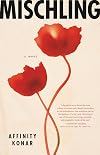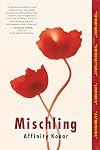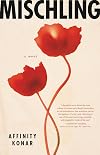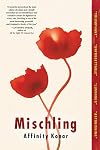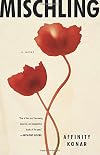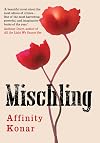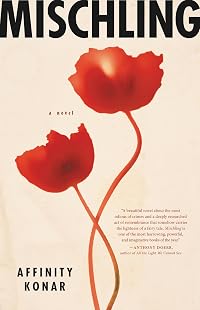
Mischling
by Affinity Konar
On This Page
Description
Fiction. Literature. Historical Fiction. HTML:Pearl is in charge of: the sad, the good, the past.Stasha must care for: the funny, the future, the bad.
It's 1944 when the twin sisters arrive at Auschwitz with their mother and grandfather. In their benighted new world, Pearl and Stasha Zagorski take refuge in their identical natures, comforting themselves with the private language and shared games of their childhood.
As part of the experimental population of twins known as Mengele's Zoo, the show more girls experience privileges and horrors unknown to others, and they find themselves changed, stripped of the personalities they once shared, their identities altered by the burdens of guilt and pain.
That winter, at a concert orchestrated by Mengele, Pearl disappears. Stasha grieves for her twin, but clings to the possibility that Pearl remains alive. When the camp is liberated by the Red Army, she and her companion Feliks — a boy bent on vengeance for his own lost twin — travel through Poland's devastation. Undeterred by injury, starvation, or the chaos around them, motivated by equal parts danger and hope, they encounter hostile villagers, Jewish resistance fighters, and fellow refugees, their quest enabled by the notion that Mengele may be captured and brought to justice within the ruins of the Warsaw Zoo. As the young survivors discover what has become of the world, they must try to imagine a future within it.
A superbly crafted story, told in a voice as exquisite as it is boundlessly original, Mischling defies every expectation, traversing one of the darkest moments in human history to show us the way toward ethereal beauty, moral reckoning, and soaring hope.
"One of the most harrowing, powerful, and imaginative books of the year"-Anthony Doerr about twin sisters fighting to survive the evils of World War II. show less
Tags
Recommendations




Member Recommendations

Member Reviews
Mischling is as dark as you can imagine given its subject matter, making it a very difficult read at times. Ms. Konar is never explicit in her descriptions, and many of Mengele’s experiments occur offstage. In many ways, this makes it worse. Not only does your imagination fill in the blanks for you, but when Pearl or Stasha do mention the damage wrought by Mengele, it is done with such innocence that the horror of what they experience hits you like a bolt of lightning.
What ultimately saves the story is their innocence. No matter what tortures they face, Pearl and Stasha maintain their faith in each other and in a better world filled with love. They never lose the childlike innocence, which is both a marvel and a tragedy given what show more they face in the camp. Their connection to each other is the stuff of legends, and one can understand why doctors would be interested in their bond – even if Mengele’s methods of studying such things are downright depraved. The true beauty lies in their relationships to their fellow Zoo inmates, the willingness to endanger themselves for others, and the protection they afford one another when things get truly bad.
We have all heard about conditions at Auschwitz for the general population, so viewing the camp from the relative protection of Mengele’s Zoo is a unique and chilling experience. The nonchalance with which the girls reference the constant “snow”, the crematorium ovens, guard cruelty, random violence, starvation, and the sadistic arrival procedures for new prisoners is difficult to stomach at times. On the one hand, one can view it as a coping mechanism; when surrounded by such constant death and despair, there is no doubt that fatalism sets in at some point in time. At other times though, there is a tinge of smugness in the descriptions, as if Pearl and Stasha are taking pleasure in their relative safety as one of Mengele’s pets. It is a disturbing glimpse into the psychological trauma occurring because of the close proximity to daily death and torture.
In spite of its horribleness, there is something profoundly beautiful about Mischling. The language itself is breathtakingly beautiful, bordering on poetic. Ms. Konar balances the dark with the light, following a sentence filled with horror with one that is simple and filled with hope. The language demands to be savored and absorbed, even while one wants to skim over the passages that highlight the experiments or the aftermath of them. Mischling is not a novel that one races to finish. It is not even the type of novel one particularly enjoys reading, but what you receive from it is worth every painstaking second. show less
What ultimately saves the story is their innocence. No matter what tortures they face, Pearl and Stasha maintain their faith in each other and in a better world filled with love. They never lose the childlike innocence, which is both a marvel and a tragedy given what show more they face in the camp. Their connection to each other is the stuff of legends, and one can understand why doctors would be interested in their bond – even if Mengele’s methods of studying such things are downright depraved. The true beauty lies in their relationships to their fellow Zoo inmates, the willingness to endanger themselves for others, and the protection they afford one another when things get truly bad.
We have all heard about conditions at Auschwitz for the general population, so viewing the camp from the relative protection of Mengele’s Zoo is a unique and chilling experience. The nonchalance with which the girls reference the constant “snow”, the crematorium ovens, guard cruelty, random violence, starvation, and the sadistic arrival procedures for new prisoners is difficult to stomach at times. On the one hand, one can view it as a coping mechanism; when surrounded by such constant death and despair, there is no doubt that fatalism sets in at some point in time. At other times though, there is a tinge of smugness in the descriptions, as if Pearl and Stasha are taking pleasure in their relative safety as one of Mengele’s pets. It is a disturbing glimpse into the psychological trauma occurring because of the close proximity to daily death and torture.
In spite of its horribleness, there is something profoundly beautiful about Mischling. The language itself is breathtakingly beautiful, bordering on poetic. Ms. Konar balances the dark with the light, following a sentence filled with horror with one that is simple and filled with hope. The language demands to be savored and absorbed, even while one wants to skim over the passages that highlight the experiments or the aftermath of them. Mischling is not a novel that one races to finish. It is not even the type of novel one particularly enjoys reading, but what you receive from it is worth every painstaking second. show less
This book takes an incredibly hard topic and treats it with a lyrical, almost fable-like style that makes it stand out from its neighbors in the realm of fictionalized Holocaust stories. I have read a lot in this area, as a Historian of the Holocaust, and honestly speaking there is a lot out there to pick through. It is a very thoroughly written about era. But what Affinity Konar has done here is refreshing in style and treatment without shying away from the horrors committed by Josef Mengele, and I think the heart of it is the way she has handled the bond between siblings and family, both blood family and chosen family.
A stunning, beautiful poem of a book. Twin girls Pearl and Stasha are brought to Auschwitz and are subjected to Mengele's sociopathic tortures he believed were serious experiments. He wanted to see how separated twins would react. He accomplished NOT ONE GOOD thing in his life but authored terror, irreparable physical and emotional harm to young children, teens and pregnant women, often causing their deaths, or killing them outright when he tired of them.
Despite the pain and abuse Mengele causes her and Pearl, Stasha proactively befriends Mengele believing it will help them survive. Pearl is more realistic, and as she weakens, tries unsuccessfully to prepare Stasha to survive on her own. Their love and efforts for each other are show more breath-taking, as are their friendships and help to others in the "zoo."
A very visual book I can see being made into a movie; but how a film can capture the poetic language of the feelings and thoughts will be a huge challenge.
A book that will make you cry. show less
Despite the pain and abuse Mengele causes her and Pearl, Stasha proactively befriends Mengele believing it will help them survive. Pearl is more realistic, and as she weakens, tries unsuccessfully to prepare Stasha to survive on her own. Their love and efforts for each other are show more breath-taking, as are their friendships and help to others in the "zoo."
A very visual book I can see being made into a movie; but how a film can capture the poetic language of the feelings and thoughts will be a huge challenge.
A book that will make you cry. show less
Striking, and written with a such gorgeous language that the story almost takes on the qualities of a fairy tale, this book is still one which suggests, at only a glance at the blurb on its back, that it will be a difficult read--and, it is. The book follows 12-year-olds Stasha and Pearl, twin girls sent to Auschwitz in 1944 who are then pulled into the circle of the infamous Dr. Josef Mengele, to be a part of his experiments within the concentration camp.
Without doubt, that sentence alone is enough to send some readers running away from the book. Others, just as certainly, will read the book blurb's first few sentences and put the book down, or begin it... and leave it unfinished. Before I read it, I heard the beginning was difficult show more to get through, and knowing the subject, I prepared myself to dive into it--perhaps, since I read an awful lot of dark books (though normally not so based in fact/history as this one is), I managed the beginning alright, and in fact expected worse. And yet, still, there were times when the emotion, and the reminder that this was based in truth more than fiction, made it so that I had to put the book down, and I even thought once about not finishing, I admit -- but then I kept going, and was glad I had. But, in truth, it was the last part of the book that was most difficult for me personally to read, so that I have to mention it, as well. I suppose it comes down to whether you can more easily read about immediate pain or drawn-out grief, or torture or its aftermath, which will determine whether the beginning or the end of the book is more difficult. For me, the ending pieces of the book made the whole story all the more real, and painful almost tangible, albeit that this was a story peopled only occasionally by real characters, and I probably took twice as long to get through the final six chapters as I did the first 3/4ths of the book.
But, was it worth it? Yes.
Affinity Konar has pieced together a masterful and emotional view into not only characters placed in Mengele's so-called 'zoo', but into the beauty, love, emotion, and survival involved within such walls as these found at Auschwitz--but without, for even a moment, romanticizing or easing the view. She hasn't dwelled on the pain or the physicality of it, or even the grief, but she has not avoided any of that, either. It's not a story that's easily read, as beautifully written and carefully researched and fast-moving (yes, fast-moving) as it is. And as someone who writes, I can't imagine the pain involved in writing it and living with the characters she's peopled this work with. But at the same time, it is an important and powerful work of fiction. More than any non-battlefield WWII fiction I've read, this carries with it a weight of history and emotion that, for me, makes it all the more beautiful and terrible.
Not all readers will be able to read this. If I were still teaching contemporary literature, I imagine I'd tell my students they Should read it, but feel that I couldn't ask them to, and I imagine I'll tell others about this book and only recommend it carefully, or half-heartedly, knowing what a difficult read it is. I'm not sure I could give it as a gift or demand anyone, student or otherwise, go through it--it's that difficult a read because of the content, and the weight involved in the story. But, that said, it is also a book which is remarkable and careful, and utterly worth reading if you can. show less
Without doubt, that sentence alone is enough to send some readers running away from the book. Others, just as certainly, will read the book blurb's first few sentences and put the book down, or begin it... and leave it unfinished. Before I read it, I heard the beginning was difficult show more to get through, and knowing the subject, I prepared myself to dive into it--perhaps, since I read an awful lot of dark books (though normally not so based in fact/history as this one is), I managed the beginning alright, and in fact expected worse. And yet, still, there were times when the emotion, and the reminder that this was based in truth more than fiction, made it so that I had to put the book down, and I even thought once about not finishing, I admit -- but then I kept going, and was glad I had. But, in truth, it was the last part of the book that was most difficult for me personally to read, so that I have to mention it, as well. I suppose it comes down to whether you can more easily read about immediate pain or drawn-out grief, or torture or its aftermath, which will determine whether the beginning or the end of the book is more difficult. For me, the ending pieces of the book made the whole story all the more real, and painful almost tangible, albeit that this was a story peopled only occasionally by real characters, and I probably took twice as long to get through the final six chapters as I did the first 3/4ths of the book.
But, was it worth it? Yes.
Affinity Konar has pieced together a masterful and emotional view into not only characters placed in Mengele's so-called 'zoo', but into the beauty, love, emotion, and survival involved within such walls as these found at Auschwitz--but without, for even a moment, romanticizing or easing the view. She hasn't dwelled on the pain or the physicality of it, or even the grief, but she has not avoided any of that, either. It's not a story that's easily read, as beautifully written and carefully researched and fast-moving (yes, fast-moving) as it is. And as someone who writes, I can't imagine the pain involved in writing it and living with the characters she's peopled this work with. But at the same time, it is an important and powerful work of fiction. More than any non-battlefield WWII fiction I've read, this carries with it a weight of history and emotion that, for me, makes it all the more beautiful and terrible.
Not all readers will be able to read this. If I were still teaching contemporary literature, I imagine I'd tell my students they Should read it, but feel that I couldn't ask them to, and I imagine I'll tell others about this book and only recommend it carefully, or half-heartedly, knowing what a difficult read it is. I'm not sure I could give it as a gift or demand anyone, student or otherwise, go through it--it's that difficult a read because of the content, and the weight involved in the story. But, that said, it is also a book which is remarkable and careful, and utterly worth reading if you can. show less
Could you possibly conceive of a more depressing and potentially horrifying novel, than one set in the Auschwitz concentration camp? Actually, yes; you could set the novel within the camp, in the laboratories of Josef Mengele, as seen through the eyes of a pair of twins who were subjects of his macabre experiments.
Many people will pass on this novel, for obvious and very well understood reasons. All I can tell you is that the author has somehow made this work very readable, without in any way lessening the horror of the activities which took place, and that is quite an accomplishment. The events of the novel are related through the eyes of the two young girls in a somewhat hazy and ethereal fashion, which at the same time, informs the show more reader of the many atrocities committed at the camp, without being overtly graphic or specific. While I am not usually a fan of this type of writing, I’ve got to say that in this case, it was perhaps the only way to relate the story to a general audience.
The first half of the novel takes place within the camp, while the second half covers the period immediately following “liberation” of the camp and the subsequent wanderings of Mengele’s subjects throughout the Polish countryside. A very depressing subject, but one that in this case, is beautifully presented. show less
Many people will pass on this novel, for obvious and very well understood reasons. All I can tell you is that the author has somehow made this work very readable, without in any way lessening the horror of the activities which took place, and that is quite an accomplishment. The events of the novel are related through the eyes of the two young girls in a somewhat hazy and ethereal fashion, which at the same time, informs the show more reader of the many atrocities committed at the camp, without being overtly graphic or specific. While I am not usually a fan of this type of writing, I’ve got to say that in this case, it was perhaps the only way to relate the story to a general audience.
The first half of the novel takes place within the camp, while the second half covers the period immediately following “liberation” of the camp and the subsequent wanderings of Mengele’s subjects throughout the Polish countryside. A very depressing subject, but one that in this case, is beautifully presented. show less
Up until recently, I had to stop reading books set during WWII. I couldn’t take anymore horror. I was having nightmares about hiding in a subway tunnel during the Blitz. The truth is, though, that these horrors actually happened, and they were real life nightmares to so many. So, I’m not giving up.
Mischling is worth it, even if it’s difficult.
Stasha and Pearl are twin sisters who have been sent to Auschwitz-Birkenau as part of Mengele’s Zoo. There are atrocities. There is torture, medical experimentation, unspeakable dehumanization. By being part of the Zoo, the sisters believe that they may be getting special treatment and their mother and grandfather are better taken care of. The torture the girls undergo, however, isn’t show more always explicit. Konar has a delicate hand, and many of the terrors are indirect and left up to the imagination of the reader, often to an even more powerful effect.
What I appreciated most is that the story of the sisters doesn’t end with the liberation of the camps. There is no scene of the girls grabbing a Russian soldier by the hand and being led into the sunshine through the gates. There is no “happily ever after” now that the war is over. There is only “after.” The real story starts after the horrors of the camp have ended. Now the children of Mengele’s Zoo are free, but they’re lost. They have no families, they can’t find their parents or siblings. The children and those adults who were forced to assist Mengele with his experiments are left to fend for themselves, burdened with the memories of what they had to endure, and what they had to do to others in order to survive. There were delusional rationalizations they had to construct for self-preservation, and now that clarity has come they’re not sure what’s true anymore.
Please don’t be dissuaded by the subject matter. Like I said above, Mischling is worth it. It’s worth it because it’s honest. One of the sisters is bent on revenge. She fantasizes about plans to hunt and kill Mengele. She contemplates suicide. She imagines what life may be like without her sister, and it’s unendurable. She holds on to violence and draws power from it. She seeks how to make herself whole again, but she can’t let go of her anger. This book is about moving forward, finding the strength to believe that there is an “after.”
The effects will last a lifetime, but the love they hold onto will carry them through. Mischling is sorrowful and unimaginable, but it’s also redemptive. The story of Stasha and Pearl deserves to be read.
This review is also posted on flyleafunfurled.com. show less
Mischling is worth it, even if it’s difficult.
Stasha and Pearl are twin sisters who have been sent to Auschwitz-Birkenau as part of Mengele’s Zoo. There are atrocities. There is torture, medical experimentation, unspeakable dehumanization. By being part of the Zoo, the sisters believe that they may be getting special treatment and their mother and grandfather are better taken care of. The torture the girls undergo, however, isn’t show more always explicit. Konar has a delicate hand, and many of the terrors are indirect and left up to the imagination of the reader, often to an even more powerful effect.
What I appreciated most is that the story of the sisters doesn’t end with the liberation of the camps. There is no scene of the girls grabbing a Russian soldier by the hand and being led into the sunshine through the gates. There is no “happily ever after” now that the war is over. There is only “after.” The real story starts after the horrors of the camp have ended. Now the children of Mengele’s Zoo are free, but they’re lost. They have no families, they can’t find their parents or siblings. The children and those adults who were forced to assist Mengele with his experiments are left to fend for themselves, burdened with the memories of what they had to endure, and what they had to do to others in order to survive. There were delusional rationalizations they had to construct for self-preservation, and now that clarity has come they’re not sure what’s true anymore.
Please don’t be dissuaded by the subject matter. Like I said above, Mischling is worth it. It’s worth it because it’s honest. One of the sisters is bent on revenge. She fantasizes about plans to hunt and kill Mengele. She contemplates suicide. She imagines what life may be like without her sister, and it’s unendurable. She holds on to violence and draws power from it. She seeks how to make herself whole again, but she can’t let go of her anger. This book is about moving forward, finding the strength to believe that there is an “after.”
The effects will last a lifetime, but the love they hold onto will carry them through. Mischling is sorrowful and unimaginable, but it’s also redemptive. The story of Stasha and Pearl deserves to be read.
This review is also posted on flyleafunfurled.com. show less
MISCHLING is not your usual Holocaust novel. Not to be misconstrued, there is plenty of horror in this book, but Konar approaches it obliquely through the eyes of the 12 year-old Zagorski twins, Pearl and Stasha. Konar aptly refers to her book as a story of “masking and then unmasking.” These youthful narrators are prone to obscuring and misunderstanding the horrors they face and this serves them for a time as a successful coping method until it ceases to work. The atrocities of the Holocaust and Mengele’s cruel “experiments” have been well documented, so the reader knows what Pearl and Stasha are really facing without Konar having to spell it out. Instead, she manages to create narrative tension through the voices and show more language of her two narrators. Using their interior monologues, she skillfully focuses on the ordeals that twins and disabled children must have faced in Auschwitz at the hands of the psychopathic “Uncle Doctor.”
The plot of MISCHLING comes in two parts pre- and post-liberation. In the first, Pearl and Stasha are assigned to Mengele’s Zoo where they are separated from each other. Pearl is tortured while Stasha is kept as an experimental control. The twins are extremely close. They like to play a game where they read each other’s mind. But Mengele separates them and this proves to be a form of torture for both. Pearl is an introvert and highly observant. She keeps notes of their experiences. Stasha is the extrovert. She develops close alliances with other children in the zoo, plots revenge, and pines for her sister. Mengele is not a prominent character in the story. Instead he appears as a shadowy and threatening presence in the twins’ world. By contrast, the other characters appear as heroic figures. Bruna, the Romani albino, is self-confident and brazen. Twins' Father attempts to rescue children by passing them off as twins. Dr. Miri, a Jewish physician forced to assist Mengele, is profoundly conflicted about her role. She speaks of it after the liberation, “These are only some of the brutalities I can speak of. They are too innumerable and varied, so grotesque — I do not have the words.” Peter has a favorable position in the camp as the Nazis’ messenger. He develops a caring relationship with Pearl. Feliks has lost his twin brother to Mengele’s barbarism, a condition that Stasha can appreciate. Following the liberation of the camp, they embark on a hapless journey to find and punish Mengele.
The post-liberation part of the novel follows the former inmates as they are either marched to their deaths by Nazi guards, or liberated by the Russians. Konar manages to capture the total chaos that must have prevailed after liberation. In their travels to Warsaw looking for Mengele, Stasha and Feliks encounter multiple adversities, including other refugees, Jewish fighters seeking to kill Nazi sympathizers, and hostile villagers. Action adventure drives this section, and thus it seems to fall short of the subtler and more meditative quality of the earlier part. Pearl’s journey to Krakow in a wheelbarrow works better because of the guilt and psychological pain being experienced by her two companions, Twins’ Father and Dr. Miri. The ending of the novel seems too contrived and too redemptive. One doubts that “happily ever after” would be in store for most of the people so damaged by this experience.
Konar’s research is evident in her deft re-imagination of Auschwitz in 1944. In addition to the bizarre world of Mengele’s Zoo, she also relates how the Nazis stored seized possessions in a facility the inmates called “Canada” and the brothel servicing guards known as “Puff.”
In general the writing is excellent, seamlessly blending reality with fantasy using lyrical prose. However, distinguishing between the two was often problematic. Likewise, the choice of mischling as the title seems enigmatic because the word was used by the Nazis to denote people of mixed Jewish and Aryan heritage. Clearly this was not the case with Pearl and Stasha. show less
The plot of MISCHLING comes in two parts pre- and post-liberation. In the first, Pearl and Stasha are assigned to Mengele’s Zoo where they are separated from each other. Pearl is tortured while Stasha is kept as an experimental control. The twins are extremely close. They like to play a game where they read each other’s mind. But Mengele separates them and this proves to be a form of torture for both. Pearl is an introvert and highly observant. She keeps notes of their experiences. Stasha is the extrovert. She develops close alliances with other children in the zoo, plots revenge, and pines for her sister. Mengele is not a prominent character in the story. Instead he appears as a shadowy and threatening presence in the twins’ world. By contrast, the other characters appear as heroic figures. Bruna, the Romani albino, is self-confident and brazen. Twins' Father attempts to rescue children by passing them off as twins. Dr. Miri, a Jewish physician forced to assist Mengele, is profoundly conflicted about her role. She speaks of it after the liberation, “These are only some of the brutalities I can speak of. They are too innumerable and varied, so grotesque — I do not have the words.” Peter has a favorable position in the camp as the Nazis’ messenger. He develops a caring relationship with Pearl. Feliks has lost his twin brother to Mengele’s barbarism, a condition that Stasha can appreciate. Following the liberation of the camp, they embark on a hapless journey to find and punish Mengele.
The post-liberation part of the novel follows the former inmates as they are either marched to their deaths by Nazi guards, or liberated by the Russians. Konar manages to capture the total chaos that must have prevailed after liberation. In their travels to Warsaw looking for Mengele, Stasha and Feliks encounter multiple adversities, including other refugees, Jewish fighters seeking to kill Nazi sympathizers, and hostile villagers. Action adventure drives this section, and thus it seems to fall short of the subtler and more meditative quality of the earlier part. Pearl’s journey to Krakow in a wheelbarrow works better because of the guilt and psychological pain being experienced by her two companions, Twins’ Father and Dr. Miri. The ending of the novel seems too contrived and too redemptive. One doubts that “happily ever after” would be in store for most of the people so damaged by this experience.
Konar’s research is evident in her deft re-imagination of Auschwitz in 1944. In addition to the bizarre world of Mengele’s Zoo, she also relates how the Nazis stored seized possessions in a facility the inmates called “Canada” and the brothel servicing guards known as “Puff.”
In general the writing is excellent, seamlessly blending reality with fantasy using lyrical prose. However, distinguishing between the two was often problematic. Likewise, the choice of mischling as the title seems enigmatic because the word was used by the Nazis to denote people of mixed Jewish and Aryan heritage. Clearly this was not the case with Pearl and Stasha. show less
Members
- Recently Added By
Lists

wish list
61 works; 3 members
Author Information

3 Works 769 Members
Some Editions
Awards and Honors
Awards
Distinctions
Common Knowledge
- Original publication date
- 2016
Classifications
Statistics
- Members
- 758
- Popularity
- 37,255
- Reviews
- 45
- Rating
- (3.87)
- Languages
- 12 — Czech, Danish, Dutch, English, Finnish, German, Italian, Portuguese, Romanian, Russian, Spanish, Swedish
- Media
- Paper, Audiobook, Ebook
- ISBNs
- 49
- ASINs
- 5