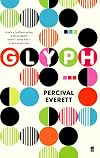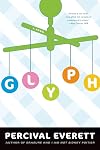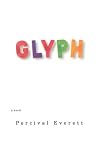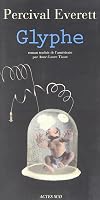
Glyph
by Percival Everett
On This Page
Description
A farcical tale about Ralph, an eleven-month-old infant who reads sophisticated literature but does not consider himself a genius because he is unable to drive.Tags
Recommendations






Member Reviews
Ralph is literally a baby genius. His parents have no idea at first and consider him “either mildly retarded or flat-out stupid.” Ralph is neither. He observes. “My father was a poststructuralist and my mother hated his guts.”
Ralph, as a baby, can read, write, ponder philosophy and has a photographic memory. His father resents him and his mother supplies him with books once she figures out his secret.
But Ralph’s life isn’t easy. He’s kidnapped by a doctor, then the government, ”Goddam monster baby on the loose. This is bad.” Then a guard – one half of a childless couple. “Is he a devil-child? I thought I was helping. He wrote me a note.” Everyone wants a piece of Ralph, a baby “capable of accurate and detailed show more representation of any turn of events.”
Ralph is both reviled and hunted for his extremely advanced faculties. Meanwhile, his mother just wants her baby back.
Part humor, part crime story, part unintelligible philosophical text. There’s a perverse joy in how much of the philosophical passages sail over my head, especially knowing they come from the mind of a baby. A fascinating story. show less
Ralph, as a baby, can read, write, ponder philosophy and has a photographic memory. His father resents him and his mother supplies him with books once she figures out his secret.
But Ralph’s life isn’t easy. He’s kidnapped by a doctor, then the government, ”Goddam monster baby on the loose. This is bad.” Then a guard – one half of a childless couple. “Is he a devil-child? I thought I was helping. He wrote me a note.” Everyone wants a piece of Ralph, a baby “capable of accurate and detailed show more representation of any turn of events.”
Ralph is both reviled and hunted for his extremely advanced faculties. Meanwhile, his mother just wants her baby back.
Part humor, part crime story, part unintelligible philosophical text. There’s a perverse joy in how much of the philosophical passages sail over my head, especially knowing they come from the mind of a baby. A fascinating story. show less
By definition, a glyph is nothing more than a symbol but stories tend to have a plot, logic or at the least, something that resembles one. Told from the POV of Ralph, a MUTE, African American baby adopted by an ignorant white couple, he's first kidnapped by researchers, and then several others. And that's about all there is here.
Beyond that, there's not much else to comment about other than the OBTUSE foreign language phrases, odd poems and quotes from existential authors to separate paragraphs. If this is what he calls humor, I'm stumped. And while some of the characters are noteworthy, the context, plot and disruptive format causes the reader to wonder what the author's goal was.
While I normally DNF books that fail to deliver, I show more kept hoping for change with this one. Unfortunately, the repetitious plot and strange paragraph separators continues making this a true head scratcher. I DO plan to read some of his others, and if lucky, he wrote them sober rather than stoned. On the off chance you love authors that require you to research words and phrases when reading, you might enjoy this; I for one, do not! show less
Beyond that, there's not much else to comment about other than the OBTUSE foreign language phrases, odd poems and quotes from existential authors to separate paragraphs. If this is what he calls humor, I'm stumped. And while some of the characters are noteworthy, the context, plot and disruptive format causes the reader to wonder what the author's goal was.
While I normally DNF books that fail to deliver, I show more kept hoping for change with this one. Unfortunately, the repetitious plot and strange paragraph separators continues making this a true head scratcher. I DO plan to read some of his others, and if lucky, he wrote them sober rather than stoned. On the off chance you love authors that require you to research words and phrases when reading, you might enjoy this; I for one, do not! show less
There is nothing better than great satire, especially a great satire of the literary criticism of the 1960s and 1970s - the kind of satire that has you laughing out loud at conversations between Bruneau and Thales (Bruneau: Would you like some water? Thales: Very funny.), God and Barthes, Wittgenstein and Russell, and many others.
Glyph, according to its cover, is a novel, but the book is much more than that. There are tidbits of anatomically themed poetry, literary theory, and seemingly random dialogues wrapped around the central text, which are the memoirs of Ralph, age four, reminiscing about his infancy. Ralph is no ordinary child; he is gifted, although no one realizes it, since he will not talk. Then Ralph one day writes a note to show more his mother. He has a gift for language, which he displays through reading and writing, not speaking. Incidentally, the first book he read was not written by A. A. Milne - it was by Wittgenstein.
Ralph has an interesting childhood - his father is a "postructuralist pretender" and his mother is an artist. With the best intentions, they take Ralph to see a psychologist, the evil Dr. Steimmel, and there his adventures begin. He is kidnapped, then kidnapped from the kidnappers. Along the way, Ralph tells the reader what he really thinks of "that Derrida guy" and a whole slew of other has-beens in academic circles, always with Barthes appearing in snippets of conversation, to say, among other things, "I am French, you know."
One might assume that the plot plays second fiddle to Ralph's commentaries. On the contrary, the plot is engrossing. I laughed at the satire and cried for Ralph. It was quite an emotional roller coaster, and I reveled in every minute of it. Glyph takes literature to new horizons. I highly recommend it, even if the reader has no experience with literary criticism. Sifting through the jargon for the plot is worth the trouble. show less
Glyph, according to its cover, is a novel, but the book is much more than that. There are tidbits of anatomically themed poetry, literary theory, and seemingly random dialogues wrapped around the central text, which are the memoirs of Ralph, age four, reminiscing about his infancy. Ralph is no ordinary child; he is gifted, although no one realizes it, since he will not talk. Then Ralph one day writes a note to show more his mother. He has a gift for language, which he displays through reading and writing, not speaking. Incidentally, the first book he read was not written by A. A. Milne - it was by Wittgenstein.
Ralph has an interesting childhood - his father is a "postructuralist pretender" and his mother is an artist. With the best intentions, they take Ralph to see a psychologist, the evil Dr. Steimmel, and there his adventures begin. He is kidnapped, then kidnapped from the kidnappers. Along the way, Ralph tells the reader what he really thinks of "that Derrida guy" and a whole slew of other has-beens in academic circles, always with Barthes appearing in snippets of conversation, to say, among other things, "I am French, you know."
One might assume that the plot plays second fiddle to Ralph's commentaries. On the contrary, the plot is engrossing. I laughed at the satire and cried for Ralph. It was quite an emotional roller coaster, and I reveled in every minute of it. Glyph takes literature to new horizons. I highly recommend it, even if the reader has no experience with literary criticism. Sifting through the jargon for the plot is worth the trouble. show less
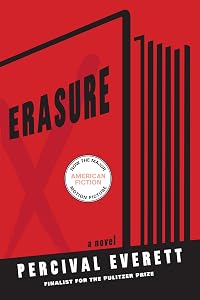
I picked this up because I really enjoyed "Erasure" by the same author. Unfortunately I didn't find this one nearly as good. The premise of the "plot" part of the book is a baby who refuses to speak, but is can read, write and appreciate literature and literary criticism. I enjoyed this part of the book and did actually laugh out loud once or twice at the baby's wry comments. However, this only constitutes a small part of the book with the rest being made up with satires involving figures from literary criticism. Much of this went over my head. I'm not completely ignorant, and know a little about the subject, but not enough to appreciate the humour of these sections. I found myself skipping these chunks just to get to the "plot" parts, show more which were sadly too few. show less
(CEDUTO) Libro perdibile. Da qui capisco l'inutilità della linguistica - o la mia sostanziale ignoranza. Ma per convincermi di quest'ultima E. dovrebbe ragionare parecchio. La storia del bambino intelligentissimo è narrata con ironia: bastava quella, senza equazioni e paragrafi cosi' colti che, oltre ad essere inutili, diventano pure ennuyeux. E quindi si saltano volentieri.
I bought this thinking it was another book... But I tried to read it still. Couldn't get through it because the baby is so douchy and none of the secondary characters make up for it.
molto più di un semplice romanzo. Il bimbo superdotato come metafora dell'uomo moderno. La grettezza dei rapitori come metafora delle istituzioni. Le citazioni di autori, opere e pensieri di assoluta attulità. Da non perdere.
Aug 20, 2008Italian
Members
- Recently Added By
Author Information

45+ Works 13,046 Members
Percival Everett is a professor of English at the University of Southern California.
Series
Belongs to Publisher Series
Common Knowledge
- Canonical title*
- Glyphe
- Original publication date
- 1999-11-01
- People/Characters
- Ralph; Dr. Steimmel; Dr. Davis
*Some information comes from Common Knowledge in other languages. Click "Edit" for more information.
Classifications
Statistics
- Members
- 211
- Popularity
- 154,757
- Reviews
- 7
- Rating
- (3.33)
- Languages
- English, French, Italian
- Media
- Paper, Ebook
- ISBNs
- 6
- ASINs
- 1