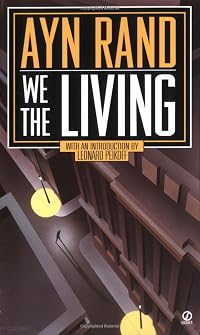
We the Living
by Ayn Rand 
On This Page
Description
We the Living portrays the impact of the Russian Revolution on three people who demand the right to live their own lives. At its center is a girl whose passionate love is her fortress against the cruelty and oppression of a totalitarian state. Of this book, Ayn Rand said, "it is as near to an autobiography as I will ever write. The plot is invented, the background is not. I was born in Russia, I was educated under the Soviets; I have seen the conditions of existence that I describe. The show more specific events of Kira's life were not mine; her ideas, her convictions, her values were and are." We the Living is not a story of politics, but of the men and women who have to struggle for existence behind the Red banners and slogans. It is a picture of what dictatorship-of any kind-does to human beings. What happens to the defiant ones? What happens to those who succumb? Who are the winners in this conflict? For those who found Ayn Rand's blockbuster Atlas Shrugged a powerful voice raised in defense of the individual, this book continues the theme of an individual's right to the pursuit of his or her own happiness. show lessTags
Recommendations


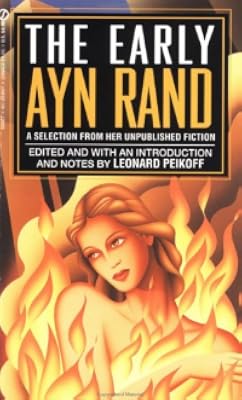

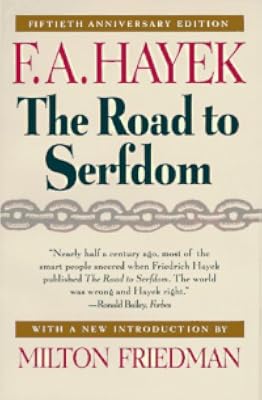
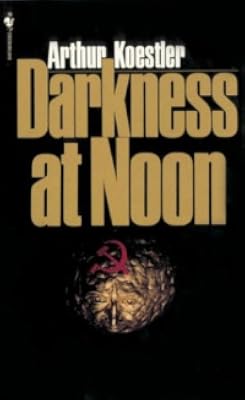
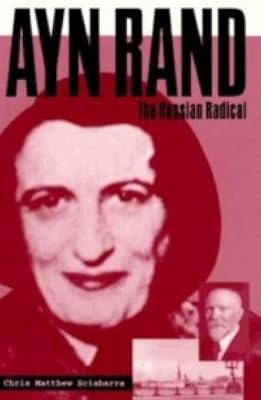

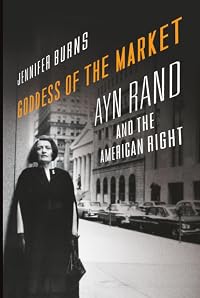
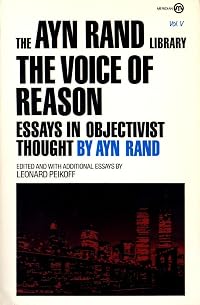
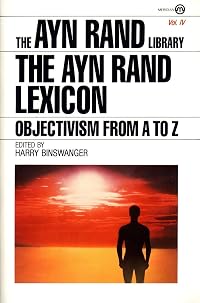

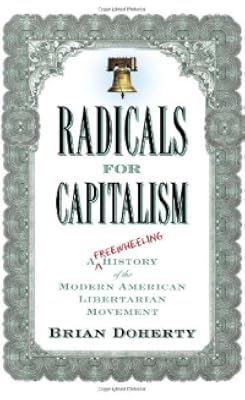










Member Recommendations
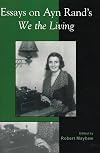
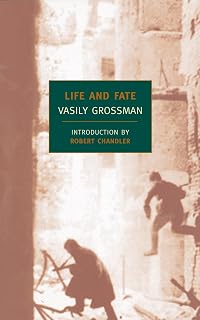
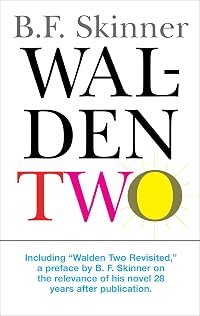
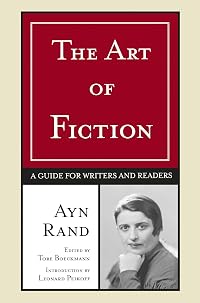
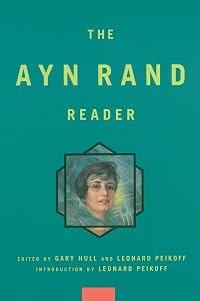
mcaution A one of a kind collection of scholarly criticisms on Rand's novel dealing not only with its historic perspectives but its philosophic and literary as well.
30

missmaddie So you want to know more about the Russia that Rand wrote about? Russka will make you an expert on the country and its people (if you have the patience to finish it).
20
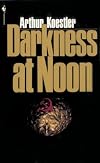
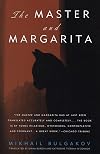
Cecrow A metaphorical take on the madness of early communist rule.

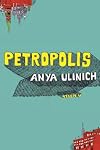
starboard Petropolis concerns a young girl growing up in current day Russia and escaping to attempt to find a better life and her father in America.
02
Member Reviews
With more wisdom than most people accumulate in a lifetime, Ayn Rand started writing this novel when she was a mere 25 years old. She managed to escape Russia to settle in America in 1926, several years after the Russian revolution ended, and she witnessed first-hand socialist/communist principals put into action. If you haven’t personally experienced socialism you may naively imagine a philosophy of beauty, fairness, equality, and theoretical utopia. But in reality, it is a political system of repression and corruption generally dominated by evil bullies. There is yet to be a country that has successfully implemented the idealistic socialist government. Fortunately, Ayn Rand escaped before Stalin’s first ‘5 Year Economic Plan’ show more which caused a famine when between 5,000,000 and 8,000,000 people starved to death, and Stalin’s ‘Reign of Terror’ in 1937 and 1938 as over 1,000,000 people were executed… merely for rumored suspicious behavior or fabricated evidence of disrespectful acts against the Socialist/Communist Regime.
In the Forward of the 1st Edition of "We the Living" Ayn Rand wrote, “This story is not a novel about Soviet Russia. It is a novel about Man against the State. It is a story of Dictatorship… it could be anywhere, at any time.” Ayn Rand’s primary goal was to share her personal experience of living in a Socialist environment and above all else, she wanted to deliver a warning to help prevent a Socialist America.
"We the Living" is semi-autobiographical. The social, cultural, and political climate are all real. Ayn explained it is a fictional plot, but the main character Kira Argounova embodies Any Rand’s intellectual and moral values, and her unique philosophy of Objectivism. Kira’s boyfriend Leo was modeled after Ayn Rand’s true love.
So, what is "We The Living" about? To set the stage- the story begins as the revolution ends. The opening scene embodies the same atmosphere as the final scene of Pasternak’s "Dr. Zhivago". Eighteen-year-old Kira, along with her bourgeois family are returning to their home town of Petrograd however the city has been re-named Leningrad and their house, business, and personal belongings have been confiscated by the state. All over the country everything has come to a standstill because prior to the revolution industrial businesses, commercial enterprises and agriculture were largely owned by the non-communist bourgeoise. The USSR government now owns everything. Since the previous owners were not registered communists (and therefore considered to be the enemies of the state - much like old white men are perceived today by many radical thinkers in the United States) they now have zero opportunities for jobs, food rations, or anything else. All products (including food and medical supplies) are divvied out by how well a person fought in the revolution, how subservient they are to the new dictators, or by bribes to friends and acquaintances in power. All survivors are struggling to resume life in peacetime despite the fact their entire existence has been turned upside down and inside out. Every person has to make the vital decision – to give in to the new system and go against everything they believe in or hold strong on their principals (of freedom and individuality) at any cost.
The plot- Kara falls in love with Leo because he shares her social, moral and political views, but in an effort to survive she secretly has an affair with a high ranking communist- a member of the G.P.U (secret service police). The story is intense, full of drama, and absolutely horrifying. Through Ayn Rand’s eyes we see life in all its terror and raw unfiltered pain where everyone lives in fear. No-one can be trusted. Not neighbors. Not friends. Not family. And no one is safe. Not even upper echelon Communist Party members. And in actuality, conditions got a thousand times worse after Ayn Rand’s timely escape.
"We The Living" is by far the most powerful novel I’ve read in 2019. show less
In the Forward of the 1st Edition of "We the Living" Ayn Rand wrote, “This story is not a novel about Soviet Russia. It is a novel about Man against the State. It is a story of Dictatorship… it could be anywhere, at any time.” Ayn Rand’s primary goal was to share her personal experience of living in a Socialist environment and above all else, she wanted to deliver a warning to help prevent a Socialist America.
"We the Living" is semi-autobiographical. The social, cultural, and political climate are all real. Ayn explained it is a fictional plot, but the main character Kira Argounova embodies Any Rand’s intellectual and moral values, and her unique philosophy of Objectivism. Kira’s boyfriend Leo was modeled after Ayn Rand’s true love.
So, what is "We The Living" about? To set the stage- the story begins as the revolution ends. The opening scene embodies the same atmosphere as the final scene of Pasternak’s "Dr. Zhivago". Eighteen-year-old Kira, along with her bourgeois family are returning to their home town of Petrograd however the city has been re-named Leningrad and their house, business, and personal belongings have been confiscated by the state. All over the country everything has come to a standstill because prior to the revolution industrial businesses, commercial enterprises and agriculture were largely owned by the non-communist bourgeoise. The USSR government now owns everything. Since the previous owners were not registered communists (and therefore considered to be the enemies of the state - much like old white men are perceived today by many radical thinkers in the United States) they now have zero opportunities for jobs, food rations, or anything else. All products (including food and medical supplies) are divvied out by how well a person fought in the revolution, how subservient they are to the new dictators, or by bribes to friends and acquaintances in power. All survivors are struggling to resume life in peacetime despite the fact their entire existence has been turned upside down and inside out. Every person has to make the vital decision – to give in to the new system and go against everything they believe in or hold strong on their principals (of freedom and individuality) at any cost.
The plot- Kara falls in love with Leo because he shares her social, moral and political views, but in an effort to survive she secretly has an affair with a high ranking communist- a member of the G.P.U (secret service police). The story is intense, full of drama, and absolutely horrifying. Through Ayn Rand’s eyes we see life in all its terror and raw unfiltered pain where everyone lives in fear. No-one can be trusted. Not neighbors. Not friends. Not family. And no one is safe. Not even upper echelon Communist Party members. And in actuality, conditions got a thousand times worse after Ayn Rand’s timely escape.
"We The Living" is by far the most powerful novel I’ve read in 2019. show less
I loved the writing in this book, and even though I didn't agree with so much of what the main characters did, I was still intrigued by them and wanted to get to know them. I found myself thinking about them when I wasn't reading, as though they were real people. Granted, I can't understand Kira's obsession with Leo, but I believe she had an inner strength despite all that. I would absolutely despise life in a socialist/communist state, and I have all the more respect and admiration now for those who fought/fight against the system. Rand's characters here may seem a bit extreme, but then again, so is blind adherence to a political system that eats its own.
This book is one of the toughest books I have read in terms of personal conviction.
Do I hate this book ? No.
Do I love this book ? No .
But this book made me question the otherwise black and white convictions that I have had.
For me , as I started the book . I knew I should love Kira, my personal convictions demanded this . But was she really the hero that the novel made her to be ? Whatever she did , was it so different than what Andrei did. Both of them were driven by personal convictions whether it be personal gratification or belief in a social cause , which can also be considered as personal gratification . So , why was she made the undisputed Heroine?
For me, the undisputed hero of this novel is Andrei . His growth was tremendous show more and he always showed the strength of his character till the very last , where Madam Rand unnaturally decided to cut him off cause such nobel a character can never survive ; this is my only complain against Andrei Taganov.
Coming to think of it , I really liked Leo with his characteristic selfishness . He , I believe , represented "The Art of Selfishness" till the very end .
But, unfortunately I cannot say that for Kira. Personally, I cannot appreciate a lady who puts her entire hopes , aspiration, wishes etc on to a guy . She holds a mantel in her heart , an untouched mantel ; which I believe was not at all her responsibility or also was not something so exalted as the entire novel . Yes, I hoped in the end she would do something for herself but she again chose to follow her dreams , the dreams she thought Leo was capable of living. I don't understand her. I know my hatred towards her is a knee jerk reaction and I hope with time I can become un affected enough to see her as Rand made her . But till then , I despise her.
As a reader , I have no complain against the writing style. The closing chapter can be compared to a few of my favorite chapters. The heart wrenching desperation was very , very real unlike other "Individual V/s State" and "dystopic" materials I have read.
This book will not be one of my favorites , not yet but will surely be one of the books with the highest learning graph. show less
Do I hate this book ? No.
Do I love this book ? No .
But this book made me question the otherwise black and white convictions that I have had.
For me , as I started the book . I knew I should love Kira, my personal convictions demanded this . But was she really the hero that the novel made her to be ? Whatever she did , was it so different than what Andrei did. Both of them were driven by personal convictions whether it be personal gratification or belief in a social cause , which can also be considered as personal gratification . So , why was she made the undisputed Heroine?
For me, the undisputed hero of this novel is Andrei . His growth was tremendous show more and he always showed the strength of his character till the very last , where Madam Rand unnaturally decided to cut him off cause such nobel a character can never survive ; this is my only complain against Andrei Taganov.
Coming to think of it , I really liked Leo with his characteristic selfishness . He , I believe , represented "The Art of Selfishness" till the very end .
But, unfortunately I cannot say that for Kira. Personally, I cannot appreciate a lady who puts her entire hopes , aspiration, wishes etc on to a guy . She holds a mantel in her heart , an untouched mantel ; which I believe was not at all her responsibility or also was not something so exalted as the entire novel . Yes, I hoped in the end she would do something for herself but she again chose to follow her dreams , the dreams she thought Leo was capable of living. I don't understand her. I know my hatred towards her is a knee jerk reaction and I hope with time I can become un affected enough to see her as Rand made her . But till then , I despise her.
As a reader , I have no complain against the writing style. The closing chapter can be compared to a few of my favorite chapters. The heart wrenching desperation was very , very real unlike other "Individual V/s State" and "dystopic" materials I have read.
This book will not be one of my favorites , not yet but will surely be one of the books with the highest learning graph. show less
Would it be strange to wish that this book had been written by [a:Irene Nemirovsky|5772020|Irene Nemirovsky|http://www.goodreads.com/assets/nophoto/nophoto-U-50x66.jpg]? I'm not saying that Nemirovsky should have written of life under the Soviets or that I wish this book had her more subtle touch. I wouldn't change a word of it, but swapping Nemirovsky's name for [a:Ayn Rand|432|Ayn Rand|http://photo.goodreads.com/authors/1168729178p2/432.jpg]'s would make this a better book. (Also, lose any introduction or afterword.)
I realize this sounds like a strange notion, but when you pick up a Nemirovsky book, you know that whatever it's flaws, the main goal is to tell a story about flawed human beings coping with the vicissitudes of life. "We show more the Living" begins in 1922 with the return of the Argounova family to Petrograd after the civil war that followed the Russian Revolution of 1917. The action principally follows Kira, the oldest daughter, who is eighteen at the beginning of the story, but as the novel proceeds it expands to include members of Kira's extended family, as well as her friends. So we get a view of the horrors of Soviet Russia from several views, including that of young party members. One of these, a man named Andrei, who is a member of the secret police and a hero of the revolution, falls madly in love with Kira. However, she herself has already fallen in love with Leo, the son of an aristocrat.
Rand is a powerful witness to the criminality of the Soviets: their corruption, their arbitrary use of power, their lack of principles. The powers-that-be talk about liberating the people, but instead they starve them, brutalize them and force them to volunteer hours to hold on to menial jobs, while corrupt party officials game the system for their own good and flaunt their ill-gotten riches. Though the dialog is sometimes clunky, Rand's writing is very evocative, conveying the destitution of the regime, the way it crushes some and corrupts others. Perhaps most heartbreaking is the plight of men such as Andrei and Stepan Timoshenko, men who fought against the injustice of the Czars only to be betrayed by the new regime.
If Nemirovsky's name were on the title page, this would be a tale of the way that a brutal system damages people, and in Kira, we would see the odd girl whose reaction to the Soviets is flawed and off-kilter because she is just a human being reacting to a terrible situation. In truth Kira, like Gutierrez' Juan Moreira, is a character whose thoughts and actions I did not always agree with, yet whose willingness to stick to her ideals, even if it means death, makes her admirable.
Yet, because this is a Rand novel, Kira is not just a flawed human being, but Rand's stand-in. Her off-kilter philosophy is meant to be the lesson of the book, and this is where the book's major flaw lies. "We the Living" presents us something peculiar, a novel in which the narrator is trustworthy but the author is not. Rand is a great witness of the life under the Soviets, but her interpretation of things (as reflected by Kira) leaves a lot to be desired.
For Kira/Rand's view is not that the Soviets are an elite using power only to serve themselves while millions toil for little, but is that they scorn men like Leo, whose lives are more meaningful than those of ordinary men. This is perplexing, since it's never clear what makes Leo so great, except that he's handsome, haughty and selfish.
If this were a "Brave New World"-style dystopia, where the contentment of the many bought at the cost of the creative or the different, this would be a reasonable objection. However, it's so clear that talk of the proletariat is just window dressing for a self-serving regime, that Kira's inability to see this makes her seem sort of clueless.
Even worse, when Andrei once asks her, "Don't you know that we can't sacrifice millions for the sake of the few?" her response is not that this is precisely what the Soviets are doing are that you cannot bring about justice through injustice, but the following rant:
So, this should be a brilliant and powerful novel, did it not stop so often to remind me that it was in service to Rand's agenda, her idea of the proper places of the aristocracy and the rabble, the warped views of her stand-in.
Rand meant this book as being not just about Russia or Communism, but about totalitarianism. However, the book falls short compared to Orwell's 1984, which sees to the true dark heart of dictatorship in which power is not a means but an end. show less
I realize this sounds like a strange notion, but when you pick up a Nemirovsky book, you know that whatever it's flaws, the main goal is to tell a story about flawed human beings coping with the vicissitudes of life. "We show more the Living" begins in 1922 with the return of the Argounova family to Petrograd after the civil war that followed the Russian Revolution of 1917. The action principally follows Kira, the oldest daughter, who is eighteen at the beginning of the story, but as the novel proceeds it expands to include members of Kira's extended family, as well as her friends. So we get a view of the horrors of Soviet Russia from several views, including that of young party members. One of these, a man named Andrei, who is a member of the secret police and a hero of the revolution, falls madly in love with Kira. However, she herself has already fallen in love with Leo, the son of an aristocrat.
Rand is a powerful witness to the criminality of the Soviets: their corruption, their arbitrary use of power, their lack of principles. The powers-that-be talk about liberating the people, but instead they starve them, brutalize them and force them to volunteer hours to hold on to menial jobs, while corrupt party officials game the system for their own good and flaunt their ill-gotten riches. Though the dialog is sometimes clunky, Rand's writing is very evocative, conveying the destitution of the regime, the way it crushes some and corrupts others. Perhaps most heartbreaking is the plight of men such as Andrei and Stepan Timoshenko, men who fought against the injustice of the Czars only to be betrayed by the new regime.
If Nemirovsky's name were on the title page, this would be a tale of the way that a brutal system damages people, and in Kira, we would see the odd girl whose reaction to the Soviets is flawed and off-kilter because she is just a human being reacting to a terrible situation. In truth Kira, like Gutierrez' Juan Moreira, is a character whose thoughts and actions I did not always agree with, yet whose willingness to stick to her ideals, even if it means death, makes her admirable.
Yet, because this is a Rand novel, Kira is not just a flawed human being, but Rand's stand-in. Her off-kilter philosophy is meant to be the lesson of the book, and this is where the book's major flaw lies. "We the Living" presents us something peculiar, a novel in which the narrator is trustworthy but the author is not. Rand is a great witness of the life under the Soviets, but her interpretation of things (as reflected by Kira) leaves a lot to be desired.
For Kira/Rand's view is not that the Soviets are an elite using power only to serve themselves while millions toil for little, but is that they scorn men like Leo, whose lives are more meaningful than those of ordinary men. This is perplexing, since it's never clear what makes Leo so great, except that he's handsome, haughty and selfish.
If this were a "Brave New World"-style dystopia, where the contentment of the many bought at the cost of the creative or the different, this would be a reasonable objection. However, it's so clear that talk of the proletariat is just window dressing for a self-serving regime, that Kira's inability to see this makes her seem sort of clueless.
Even worse, when Andrei once asks her, "Don't you know that we can't sacrifice millions for the sake of the few?" her response is not that this is precisely what the Soviets are doing are that you cannot bring about justice through injustice, but the following rant:
What are your masses but millions of dull, shriveled, stagnant souls that have no thoughts of their own, no will of their own, who eat and sleep and chew helplessly the words others put into their brains?
So, this should be a brilliant and powerful novel, did it not stop so often to remind me that it was in service to Rand's agenda, her idea of the proper places of the aristocracy and the rabble, the warped views of her stand-in.
Rand meant this book as being not just about Russia or Communism, but about totalitarianism. However, the book falls short compared to Orwell's 1984, which sees to the true dark heart of dictatorship in which power is not a means but an end. show less
Just be yourself.
Hasn't that been parents' advice to kids since the dawn of time?
Don't try to impress people by putting on a show.
Don't just tell people what you think they want to hear.
Be who you are, and those who appreciate your genuine character will be true friends. I think this is the only book where Ayn Rand is true to herself, without putting on the big überconservative show which makes her later works so irritating.
What's that?
You think maybe Atlas Shrugged and The Fountainhead represent Ayn's true self?
Well, I can't prove you wrong, but I don't think that's the case. We the Living doesn't smack of ulterior motives the way those other books do. It contains no larger-than-life robberbaron supermen, no fifteen-page show more speeches, and no fortunes built on miracle inventions. Where Altas Shrugged was really just a platform to espouse Rand's "philosophy" of Objectivism, We the Living is refreshingly 100% Objectivism-free (see my review of Anthem for more details). Better still, it has authentic three-dimensional characters who seem like they might be actual people Ayn knew. This is historical fiction, after all. Many of these events actually happened.
We the Living tells the semi-autobiographical story of college-aged Kira Argounova, whose upper middle class family flees St. Petersburg during the 1917 revolution, and then returns in 1922, trying to make a new life for themselves within the communist system. When they show up at the doorstep of their former townhouse off Nyevsky Prospekt, they discover it has been seized and divided into a multiple-family dwelling. They are advised to apply for a license to live in one of the units if they feel a particular attachment to the old homestead, but as part of the hated former petty bourgeoisie, they should be aware their chances are slim. A similar scene occurs in [book:Doctor Zhivago|9782059] (but in DZ, the family actually obtains residence in their old home). It seems either such occurances were common, or perhaps Pasternak was influenced by We the Living. Food is rationed. Work is obtained only through a state agency, once the applicant has jumped through the many hoops needed to obtain a work license. Since political loyalty is valued more than ability, Kira discovers that many of her least-promising former classmates have risen to positions of authority over her. They hang around the city's most fashionable bars, dressed to the nines in leather finery unavailable to citizens outside the Party. They smoke tobacco the proles could never get their hands on, and enjoy luxuries like fresh fruit, which Kira secretly covets. Reading through these parts, one can practically feel the resentment rising in Ayn's blood as she writes it. Through a paper-thin veneer of fiction, anybody can see this is her story, narrated very personally, with a ring of truth her other novels lack.
Consider how Ayn's life closely mirrors Argounova's: Ayn's father had owned a profitable pharmacy in St Petersburg before the revolution, just as Kira's father owned a successful textiles factory. Both Ayn and Kira's families fled St. Petersburg to the Crimea in 1917, fearing for their daughters' safety. As I said, this novel contains events which actually happened to real people.
Ayn and Kira both returned to St.Petersburg (now Petrograd) in 1922, to find the social and political changes described in this book. They each managed to enroll at Petrograd University, after considerable bureaucratic resistance, and both found their career prospects after graduation to be severely limited, due to the continued stigma of their fathers' pre-Revolutionary social status. While both tried to leave the Soviet Union, only Ayn made it to America. Kira died at the border, which demands some explanation. Why did Ayn make the choice as an author to deny Kira a life in the West? Ayn always had a weakness for melodrama; did she kill Kira for the pure intense tragedy of it? Did she think it would put greater empahsis on the injustices of the Soviet system? Why else end the novel with a sympathetic character both bleeding and freezing to death, alone in the dark, in the middle of nowhere? It seems a bit too cruel, even for a novel whose entire point is outrage and cruelty.
If you enjoy deriding Ayn Rand's wooden characters or her preachy, didactic writing style, this book won't be much fun for you. But if you're a more thoughtful type, who is curious about where her ideas came from, this is the book that tells it all. Sure, We the Living has hints of the moral certitude that makes Atlas Shrugged so shrill and irksome, but the story is heartfelt and the characters believable. Unfortunately, this best of Rand's novels also happens to be her first, so maybe she should have quit while she was ahead. show less
Hasn't that been parents' advice to kids since the dawn of time?
Don't try to impress people by putting on a show.
Don't just tell people what you think they want to hear.
Be who you are, and those who appreciate your genuine character will be true friends. I think this is the only book where Ayn Rand is true to herself, without putting on the big überconservative show which makes her later works so irritating.
What's that?
You think maybe Atlas Shrugged and The Fountainhead represent Ayn's true self?
Well, I can't prove you wrong, but I don't think that's the case. We the Living doesn't smack of ulterior motives the way those other books do. It contains no larger-than-life robberbaron supermen, no fifteen-page show more speeches, and no fortunes built on miracle inventions. Where Altas Shrugged was really just a platform to espouse Rand's "philosophy" of Objectivism, We the Living is refreshingly 100% Objectivism-free (see my review of Anthem for more details). Better still, it has authentic three-dimensional characters who seem like they might be actual people Ayn knew. This is historical fiction, after all. Many of these events actually happened.
We the Living tells the semi-autobiographical story of college-aged Kira Argounova, whose upper middle class family flees St. Petersburg during the 1917 revolution, and then returns in 1922, trying to make a new life for themselves within the communist system. When they show up at the doorstep of their former townhouse off Nyevsky Prospekt, they discover it has been seized and divided into a multiple-family dwelling. They are advised to apply for a license to live in one of the units if they feel a particular attachment to the old homestead, but as part of the hated former petty bourgeoisie, they should be aware their chances are slim. A similar scene occurs in [book:Doctor Zhivago|9782059] (but in DZ, the family actually obtains residence in their old home). It seems either such occurances were common, or perhaps Pasternak was influenced by We the Living. Food is rationed. Work is obtained only through a state agency, once the applicant has jumped through the many hoops needed to obtain a work license. Since political loyalty is valued more than ability, Kira discovers that many of her least-promising former classmates have risen to positions of authority over her. They hang around the city's most fashionable bars, dressed to the nines in leather finery unavailable to citizens outside the Party. They smoke tobacco the proles could never get their hands on, and enjoy luxuries like fresh fruit, which Kira secretly covets. Reading through these parts, one can practically feel the resentment rising in Ayn's blood as she writes it. Through a paper-thin veneer of fiction, anybody can see this is her story, narrated very personally, with a ring of truth her other novels lack.
Consider how Ayn's life closely mirrors Argounova's: Ayn's father had owned a profitable pharmacy in St Petersburg before the revolution, just as Kira's father owned a successful textiles factory. Both Ayn and Kira's families fled St. Petersburg to the Crimea in 1917, fearing for their daughters' safety. As I said, this novel contains events which actually happened to real people.
Ayn and Kira both returned to St.Petersburg (now Petrograd) in 1922, to find the social and political changes described in this book. They each managed to enroll at Petrograd University, after considerable bureaucratic resistance, and both found their career prospects after graduation to be severely limited, due to the continued stigma of their fathers' pre-Revolutionary social status. While both tried to leave the Soviet Union, only Ayn made it to America. Kira died at the border, which demands some explanation. Why did Ayn make the choice as an author to deny Kira a life in the West? Ayn always had a weakness for melodrama; did she kill Kira for the pure intense tragedy of it? Did she think it would put greater empahsis on the injustices of the Soviet system?
If you enjoy deriding Ayn Rand's wooden characters or her preachy, didactic writing style, this book won't be much fun for you. But if you're a more thoughtful type, who is curious about where her ideas came from, this is the book that tells it all. Sure, We the Living has hints of the moral certitude that makes Atlas Shrugged so shrill and irksome, but the story is heartfelt and the characters believable. Unfortunately, this best of Rand's novels also happens to be her first, so maybe she should have quit while she was ahead. show less
Ayn Rand's ideas are so controversial and notorious I think it's hard for many to evaluate her novels fairly. I am an admirer, even if not an uncritical one, and think if you read only one novel of hers, it probably should be Atlas Shrugged--that's the book that best represents her philosophy if you want to understand her and her influence. But We The Living, Rand's first novel, is more approachable--much shorter, far less didactic and with characters that are more human and complex than the almost abstractions you see in her other novels.
Maybe that's because, as Rand herself said, We the Living "is as near an autobiography" as she'd ever write, that though the plot and characters are from her imagination, "the background is not." The show more setting is revolutionary Russia in the twenties, which is where Rand came of age before she came to America. The novel revolves around a love triangle: Kira, the central protagonist, is in love with Leo, a counter-revolutionary, and in order to save his life gets involved with Andrei, an idealistic communist and a decent man. In many ways I find Andrei the most interesting, complex and sympathetic character in the novel--not what you might expect from Rand's reputation. But there may be no better way to show how the Communist Revolution betrayed what is human than through someone who fought for its ideals.
This, on the other hand, is definitely Rand's darkest work--but I think it's rewarding to read particularly as a bleak but vivid portrait of Soviet Russia from a keen observer that escaped it. I personally find Rand's style striking and lyrical; there are many passages that are memorable and quotable and it's a compelling read with a powerful impact. show less
Maybe that's because, as Rand herself said, We the Living "is as near an autobiography" as she'd ever write, that though the plot and characters are from her imagination, "the background is not." The show more setting is revolutionary Russia in the twenties, which is where Rand came of age before she came to America. The novel revolves around a love triangle: Kira, the central protagonist, is in love with Leo, a counter-revolutionary, and in order to save his life gets involved with Andrei, an idealistic communist and a decent man. In many ways I find Andrei the most interesting, complex and sympathetic character in the novel--not what you might expect from Rand's reputation. But there may be no better way to show how the Communist Revolution betrayed what is human than through someone who fought for its ideals.
This, on the other hand, is definitely Rand's darkest work--but I think it's rewarding to read particularly as a bleak but vivid portrait of Soviet Russia from a keen observer that escaped it. I personally find Rand's style striking and lyrical; there are many passages that are memorable and quotable and it's a compelling read with a powerful impact. show less
We the Living by Ayn Rand is not the type of book you want to read if feeling a little down. It will drag you so far under the depths of happiness that you may find it difficult to ever again emerge. The devastating results of communistic thought and government is portrayed with great pathos and conviction. It is clear Rand suffered mightily under this system, and wants desperately to convict the world that not only is communism in practice a horror, but the premise itself is one that should be rejected. She writes as compelling a case as I have ever read of the fallacy that communism in any way is noble. To adopt the premises inherent in communistic systems is to subjugate the greatest potentials of the individual or excellence or show more unique achievement to the lowest common denominator of the ugly masses. What is particularly frightening to me as I read this book is how similar the news of today in America is to the beginnings of communism is the USSR. I pray many people look closely again at Rand's work and heed its warning. show less
Members
- Recently Added By
Lists

Shelf 101
60 works; 1 member

Libertarian Books
102 works; 19 members

Llibres que he llegit el 2025
81 works; 2 members
Author Information

181+ Works 76,805 Members
Ayn Rand, 1905 - 1982 Novelist and philosopher Ayn Rand was born Alice Rosenbaum on February 2, 1905 in St. Petersburg, Russia. She graduated with highest honors in history from the University of Petrograd in 1924, and she came to the United States in 1926 with dreams of becoming a screenwriter. In 1929, she married actor Charles "Frank" O'Connor. show more After arriving in Hollywood, Rand was spotted by Cecil B. DeMille standing at the gate of his studio and gave her a job as an extra in King of Kings. She also worked as a script reader and a wardrobe girl and, in 1932, she sold Red Pawn to Universal Studios. In the 1950's, she returned to New York City where she hosted a Saturday night group she called "the collective." It was also during this time that Rand received a fan letter from a young man, Nathaniel Branden. She was impressed with his letter, and she wrote him back. Her correspondence with him eventually led to an affair that lasted over a decade. He became her chief spokesperson and codified the principles of her novels into a strict philosophical system (objectivism) and founded an institute bearing his name. Their affair ended in 1968 when Branden got involved with another one of Rand's disciples. According to Rand, people are inherently selfish and act only out of personal interest making a selfish act, a rational one. It is from this belief that her characters play out their lives. Rand's first novel was "We the Living" (1936) and was followed by "Anthem" (1938), "The Fountainhead" (1943), and "Atlas Shrugged" (1957). All four of her novels made the top ten of the controversial list of the 100 Best Novels of the 20th Century. On March 6, 1982, Ayn Rand died in her New York City apartment. (Bowker Author Biography) show less
Ayn Rand has a Legacy Library. Legacy libraries are the personal libraries of famous readers, entered by LibraryThing members from the Legacy Libraries group.
Some Editions
Awards and Honors
Work Relationships
Is contained in
Has the adaptation
Has as a study
Common Knowledge
- Canonical title
- We the Living
- Original publication date
- 1936
- People/Characters
- Kira Argounova; Leo Kovalensky; Andrei Taganov; Pavel Syerov; Comrade Sonia
- Important places
- St. Petersburg, Russia
- Related movies
- Noi vivi (1942); We the Living (1986); Addio Kira! (1942 | IMDb)
- First words
- Petrograd smelt of carbolic acid.
- Last words
- (Click to show. Warning: May contain spoilers.)She smiled, her last smile, to so much that had been possible.
- Canonical DDC/MDS
- 813.52
- Canonical LCC
- PS3535.A547
Classifications
Statistics
- Members
- 4,597
- Popularity
- 3,180
- Reviews
- 49
- Rating
- (3.79)
- Languages
- 13 — Danish, Dutch, English, French, German, Greek, Italian, Japanese, Russian, Slovenian, Spanish, Swedish, Turkish
- Media
- Paper, Audiobook, Ebook
- ISBNs
- 71
- UPCs
- 1
- ASINs
- 49