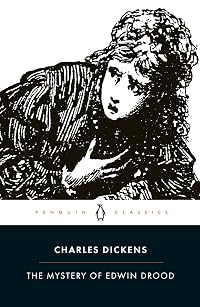
The Mystery of Edwin Drood
by Charles Dickens
On This Page
Description
The Mystery of Edwin Drood is the final, uncompleted novel by Charles Dickens. John Jasper is a choirmaster who is in love with one of his pupils, Rosa Bud. She is the fiancee of his nephew, Edwin Drood. A hot-tempered man from Ceylon also becomes interested in her and he and Drood take an instant dislike to one another. Later, Drood disappears, and as Dickens never finished the novel, Drood's fate remains a mystery indeed..
Tags
Recommendations







Member Recommendations

Member Reviews
The Mystery of Edwin Drood shows Dickens at the height of his powers as a writer. The plot and mood echo the grand guignol leanings of Our Mutual Friend, with sinister figures conspiring in an opium den, a graveyard and mouldering Cathedral lodgings with winding staircases. The characters have all of the comedy and pathos that we would expect from the author of Bleak House, and there is very little of Dickens' sentimental or 'improving' mode in the half of the novel that was completed. Although the book's final resolution will forever remain open, there is more than enough in what remains of Edwin Drood to make a highly satisfactory read.
Every year, I read a Charles Dickens novel I haven't previously read. I've been reading them in order of descending popularity on LibraryThing: this perhaps has been a mistake, since it means the last few years I have been subjected to triumphs like Martin Chuzzlewit and Dombey and Son.
I was thus a bit apprehensive about this year, where I would be reading The Mystery of Edwin Drood. What if it was as bad as the last couple books I'd read? And, famously, incomplete? ("The food here is terrible. And such small portions!")
Well, it seems to me that as he lay dying, Charles Dickens must have gotten a bit of his mojo back, because Edwin Drood was shaping up to be solid mid-tier Dickens. Not necessarily great work, but there are decent show more characters here and interesting dynamics and some strong descriptive passages. I doubt it would have ended spectacularly (maybe I am wrong), and certainly, books like Dombey and Son show that Dickens can start strong but ultimately fizzle out, but I was into it thus far, read it fairly quickly, and disappointed when it all came to a stop. show less
I was thus a bit apprehensive about this year, where I would be reading The Mystery of Edwin Drood. What if it was as bad as the last couple books I'd read? And, famously, incomplete? ("The food here is terrible. And such small portions!")
Well, it seems to me that as he lay dying, Charles Dickens must have gotten a bit of his mojo back, because Edwin Drood was shaping up to be solid mid-tier Dickens. Not necessarily great work, but there are decent show more characters here and interesting dynamics and some strong descriptive passages. I doubt it would have ended spectacularly (maybe I am wrong), and certainly, books like Dombey and Son show that Dickens can start strong but ultimately fizzle out, but I was into it thus far, read it fairly quickly, and disappointed when it all came to a stop. show less
But Mr. Grewgious seeing nothing there, not even a light in the windows, his gaze wandered from the windows to the stars, as if he would have read in them something that was hidden from him. Many of us would, if we could; but none of us so much as know our letters in the stars yet -- or seem likely to do it, in this state of existence -- and few languages can be read until their alphabets are mastered.
Not one of my favourites, this is perhaps an unfair claim to lodge against a half-finished work. Drood, Dickens 15th novel and the last of his 24 "major" works, was to be published in 12 monthly volumes, but he sadly passed away while putting the finishing touches on instalment 6.
What we are left with is an intriguing mystery in which show more the core questions seem to have obvious answers, but the purpose of it all remains undefined. Edwin Drood, a seemingly attractive and nice lad, if a bit cocksure, mutually breaks off his engagement with Rosa Bud, his lovely fiancee-since-childhood, receives an ominous warning from the mistress of a local opium den, and then goes walking with a new friend from Ceylon before disappearing into the mist, never to be seen again. Amidst the murky cast of characters who inhabit the world around the intimidating Rochester Cathedral are the two orphans from Ceylon, a quick-witted reverend, an alcoholic gravekeeper, a playwriting secretary and a mysterious new arrival to town (the latter two of whom may be one and the same).
Aesthetically, the novel is a surprise turn, coming after Dickens' dense, autumnal late works like Bleak House and (especially) Our Mutual Friend. Flowers bloom, music fills the air, and Dickens' authorial voice is less controlling, allowing the characters to speak quickly and to the point. The 1860s had been a decade of turmoil for Dickens on a personal level, and one feels like he was breaking away from the heaviness that characterised his most recent novels. There's more in common, perhaps, with his Uncommercial Traveller series written across the mid-to-late '60s, in which Dickens captures moments of life in London and the countryside. At the same time, this has a major drawback in that most of the characters, including Edwin himself, lack many defining traits. Indeed, Helena and Neville - the Ceylonese orphans - are so vague that we're still not sure whether they're merely "dark" from the sun, or are in some way natives!
Much of this is intentional, of course. The late arriving figures of Tartar and Datchery were intended to be filled out later, and no doubt the same is true of Helena and Neville. The novel plays more with Reverend Crisparkle, who seems to be the Inspector Bucket of this piece, and Rosa Bud, who emerges perhaps not fully formed but at least a woman with some great level of initiative, combining the best parts of both Lizzie and Bella from Our Mutual Friend. At the heart of the piece is Edwin's uncle, John Jasper, a man deep in unrequited love and addled by his addiction to opium. Much like Edwin, though, John's character journey comes to an unwitting end and, sadly, it feels like the next instalment would've been the beginning of Dickens piecing together all of the disparate threads.
Evidence from Dickens' family, friends and letters suggests that he wasn't that concerned about the two key mysteries - who is Datchery and what happened to Edwin - being all that ... mysterious. Indeed, he wrote to one friend a suggestion that the novel might become, in its final chapters, a meditation on the evil of the murderer, rather than a surprise revelation. This is actually very fitting, when you consider one of the most tortured characters from Our Mutual Friend, who spends the second half of the novel preparing for, then covering up, a vicious crime, in chapters that are the closest - give or take Lady Dedlock - to internal character study Dickens ever came.
On the subject of endings, I thoroughly recommend Gwyneth Hughes' 2012 adaptation for the BBC, of which the final 40 minutes or so comprise entirely original material. While removing Tartar (who seems intended to become the male romantic lead in Dickens' original mind), Jones follows the commonly believed (obvious?) answers to Datchery and the killer, but then throws in numerous surprises, none of which seem at all unreasonable given what came before. In fact, I daresay a few of them sound downright likely.
So, is Drood worth reading despite being unfinished? I'd probably rank it below any other Dickens novel, primarily because of its half-completed status. At the same time, once you've read it, it's fascinating to gaze into the 150 years of Drood-specific arguments that have come from academics and writers of all kinds. There's some great beauty in this novel, particularly the Cathedral which looms large as a character and which almost certainly (as Gwyneth Hughes knew) would have been the setting for the book's climax, whatever that may have been. As a work, the book lacks the sublime level of symbolism that characterised Little Dorrit's creaking buildings, Bleak House's combustible crooks, or Our Mutual Friend's piles of dust. It also lacks satisfying character arcs, since everyone except for Rosa seems to be half-hidden from us, by the very nature of the piece.
Still, for Dickens completists, and those who don't mind a read that ends mid-thrust, it's not half bad. show less
Not one of my favourites, this is perhaps an unfair claim to lodge against a half-finished work. Drood, Dickens 15th novel and the last of his 24 "major" works, was to be published in 12 monthly volumes, but he sadly passed away while putting the finishing touches on instalment 6.
What we are left with is an intriguing mystery in which show more the core questions seem to have obvious answers, but the purpose of it all remains undefined. Edwin Drood, a seemingly attractive and nice lad, if a bit cocksure, mutually breaks off his engagement with Rosa Bud, his lovely fiancee-since-childhood, receives an ominous warning from the mistress of a local opium den, and then goes walking with a new friend from Ceylon before disappearing into the mist, never to be seen again. Amidst the murky cast of characters who inhabit the world around the intimidating Rochester Cathedral are the two orphans from Ceylon, a quick-witted reverend, an alcoholic gravekeeper, a playwriting secretary and a mysterious new arrival to town (the latter two of whom may be one and the same).
Aesthetically, the novel is a surprise turn, coming after Dickens' dense, autumnal late works like Bleak House and (especially) Our Mutual Friend. Flowers bloom, music fills the air, and Dickens' authorial voice is less controlling, allowing the characters to speak quickly and to the point. The 1860s had been a decade of turmoil for Dickens on a personal level, and one feels like he was breaking away from the heaviness that characterised his most recent novels. There's more in common, perhaps, with his Uncommercial Traveller series written across the mid-to-late '60s, in which Dickens captures moments of life in London and the countryside. At the same time, this has a major drawback in that most of the characters, including Edwin himself, lack many defining traits. Indeed, Helena and Neville - the Ceylonese orphans - are so vague that we're still not sure whether they're merely "dark" from the sun, or are in some way natives!
Much of this is intentional, of course. The late arriving figures of Tartar and Datchery were intended to be filled out later, and no doubt the same is true of Helena and Neville. The novel plays more with Reverend Crisparkle, who seems to be the Inspector Bucket of this piece, and Rosa Bud, who emerges perhaps not fully formed but at least a woman with some great level of initiative, combining the best parts of both Lizzie and Bella from Our Mutual Friend. At the heart of the piece is Edwin's uncle, John Jasper, a man deep in unrequited love and addled by his addiction to opium. Much like Edwin, though, John's character journey comes to an unwitting end and, sadly, it feels like the next instalment would've been the beginning of Dickens piecing together all of the disparate threads.
Evidence from Dickens' family, friends and letters suggests that he wasn't that concerned about the two key mysteries - who is Datchery and what happened to Edwin - being all that ... mysterious. Indeed, he wrote to one friend a suggestion that the novel might become, in its final chapters, a meditation on the evil of the murderer, rather than a surprise revelation. This is actually very fitting, when you consider one of the most tortured characters from Our Mutual Friend, who spends the second half of the novel preparing for, then covering up, a vicious crime, in chapters that are the closest - give or take Lady Dedlock - to internal character study Dickens ever came.
On the subject of endings, I thoroughly recommend Gwyneth Hughes' 2012 adaptation for the BBC, of which the final 40 minutes or so comprise entirely original material. While removing Tartar (who seems intended to become the male romantic lead in Dickens' original mind), Jones follows the commonly believed (obvious?) answers to Datchery and the killer, but then throws in numerous surprises, none of which seem at all unreasonable given what came before. In fact, I daresay a few of them sound downright likely.
So, is Drood worth reading despite being unfinished? I'd probably rank it below any other Dickens novel, primarily because of its half-completed status. At the same time, once you've read it, it's fascinating to gaze into the 150 years of Drood-specific arguments that have come from academics and writers of all kinds. There's some great beauty in this novel, particularly the Cathedral which looms large as a character and which almost certainly (as Gwyneth Hughes knew) would have been the setting for the book's climax, whatever that may have been. As a work, the book lacks the sublime level of symbolism that characterised Little Dorrit's creaking buildings, Bleak House's combustible crooks, or Our Mutual Friend's piles of dust. It also lacks satisfying character arcs, since everyone except for Rosa seems to be half-hidden from us, by the very nature of the piece.
Still, for Dickens completists, and those who don't mind a read that ends mid-thrust, it's not half bad. show less
This review is written with a GPL 4.0 license and the rights contained therein shall supersede all TOS by any and all websites in regards to copying and sharing without proper authorization and permissions. Crossposted at WordPress, Blogspot & Librarything by Bookstooge’s Exalted Permission
Title: The Mystery of Edwin Drood
Series: ----------
Author: Charles Dickens
Rating: 4 of 5 Stars
Genre: Classic
Pages: 249
Words: 94.5K
Synopsis:
From Wikipedia
The novel begins as John Jasper leaves a London opium den.[4] The next evening, Edwin Drood visits Jasper, who is the choirmaster at Cloisterham Cathedral and also his uncle. Edwin confides that he has misgivings about his betrothal to Rosa Bud, which had been previously arranged by their respective show more fathers. The next day, Edwin visits Rosa at the Nuns' House, the boarding school where she lives. They quarrel good-naturedly, which they apparently do frequently during his visits. Meanwhile, Jasper, having an interest in the cathedral crypt, seeks the company of Durdles, a man who knows more about the crypt than anyone else.
Neville Landless and his twin sister Helena are sent to Cloisterham for their education. Neville will study with the minor canon Rev. Crisparkle; Helena will live at the Nuns' House with Rosa. Neville confides to Rev. Crisparkle that he had hated his cruel stepfather, while Rosa confides to Helena that she loathes and fears her music-master, Jasper. Neville is immediately smitten with Rosa and is indignant that Edwin prizes his betrothal lightly. Edwin provokes him and he reacts violently, giving Jasper the opportunity to spread rumours about Neville's having a violent temper. Rev. Crisparkle tries to reconcile Edwin and Neville, who agrees to apologise to Edwin if the former will forgive him. It is arranged that they will dine together for this purpose on Christmas Eve at Jasper's home.
Rosa's guardian, Mr. Grewgious, tells her that she has a substantial inheritance from her father. When she asks whether there would be any forfeiture if she did not marry Edwin, he replies that there would be none on either side. Back at his office in London, Mr. Grewgious gives Edwin a ring which Rosa's father had given to her mother, with the proviso that Edwin must either give the ring to Rosa as a sign of his irrevocable commitment to her or return it to Mr. Grewgious. Mr. Bazzard, Mr. Grewgious's clerk, witnesses this transaction.
Next day, Rosa and Edwin amicably agree to end their betrothal. They decide to ask Mr. Grewgious to break the news to Jasper, and Edwin intends to return the ring to Mr. Grewgious. Meanwhile, Durdles takes Jasper into the cathedral crypt. On the way there Durdles points out a mound of quicklime. Jasper provides a bottle of wine to Durdles. The wine is mysteriously potent and Durdles soon loses consciousness; while unconscious he dreams that Jasper goes off by himself in the crypt. As they return from the crypt, they encounter a boy called Deputy, and Jasper, thinking he was spying on them, takes him by the throat – but, seeing that this will strangle him, lets him go.
On Christmas Eve, Neville buys himself a heavy walking stick; he plans to spend his Christmas break hiking around the countryside. Meanwhile, Edwin visits a jeweler to repair his pocket watch; it is mentioned that the only pieces of jewelery that he wears are the watch and chain and a shirt pin. By chance he meets a woman who is an opium user from London. She asks Drood's Christian name and he replies that it is 'Edwin'; she says he is fortunate it is not 'Ned,' for 'Ned' is in great danger. He thinks nothing of this, for the only person who calls him 'Ned' is Jasper. Meanwhile, Jasper buys himself a black scarf of strong silk, which is not seen again during the course of the novel. The reconciliation dinner is successful and at midnight, Drood and Neville Landless leave together to go down to the river and look at a wind storm that rages that night.
The next morning Edwin is missing and Jasper spreads suspicion that Neville has killed him. Neville leaves early in the morning for his hike; the townspeople overtake him and forcibly bring him back to the city. Rev. Crisparkle keeps Neville out of jail by taking responsibility for him, stating that he will produce Neville anytime his presence is required. That night, Jasper is grief-stricken when Mr. Grewgious informs him that Edwin and Rosa had ended their betrothal; he reacts more strongly to this news than to the prospect that Edwin may be dead. The next morning, Rev. Crisparkle goes to the river weir and finds Edwin's watch and chain and shirt pin.
A half-year later, Neville is living in London near Mr. Grewgious's office. Lieutenant Tartar introduces himself and offers to share his garden with Landless; Lt. Tartar's chambers are adjacent to Neville's above a common courtyard. A white-haired and -whiskered stranger calling himself Dick Datchery arrives in Cloisterham. He rents a room below Jasper and observes the comings and goings in the area. On his way to the lodging the first time, Mr. Datchery asks directions from Deputy. Deputy will not go near there for fear that Jasper will choke him again.
Jasper visits Rosa at the Nuns' House and professes his love for her. She rejects him but he persists, telling her that if she gives him no hope he will destroy Neville, the brother of her dear friend Helena. In fear of Jasper, Rosa goes to Mr. Grewgious in London.
The next day Rev. Crisparkle follows Rosa to London. When he is with Mr. Grewgious and Rosa, Lt. Tartar calls and asks if he remembers him. Rev. Crisparkle does remember him as the one who years before saved him from drowning. They do not dare let Rosa contact Neville and Helena directly, for fear that Jasper may be watching Neville, but Mr. Tartar allows Rosa to visit his chambers to contact Helena above the courtyard. Mr. Grewgious arranges for Rosa to rent a place from Mrs. Billickin and for Miss Twinkleton to live with her there so that she can live there respectably.
Jasper visits the London opium den again for the first time since Edwin's disappearance. When he leaves at dawn, the woman who runs the opium den follows him. She vows to herself that she will not lose his trail again as she did after his last visit. This time, she follows him all the way to his home in Cloisterham; outside she meets Datchery, who tells her Jasper's name and that he will sing the next morning in the cathedral service. On inquiry, Datchery learns she is called "Princess Puffer." The next morning she attends the service and shakes her fists at Jasper from behind a pillar.
Dickens's death leaves the rest of the story unknown.
My Thoughts:
I have to admit, the whole time I was reading this all I could think of was how it was unfinished and no matter how much I thought, it would never BE finished. Not a very good mindset to get as much enjoyment from the story, that's for sure.
This was so on track for being awesome. The characters were everything I wanted in a Dickens novel. The good guys were good, the bad guy was REALLY bad and the girls were brave and fearless. The latecomers were manly and proud and I was really looking forward to seeing them developed.
This had all of the ingredients I could have asked for. Dickens just left them on the counter in the mixing bowl without cooking them. And unfortunately, it wasn't cookie dough so I couldn't take a chance and eat it raw.
I will say that this has gotten me interested in other authors who have tried to finish the story. If any of you have a good suggestion, please let me know.
★★★★☆ show less
Title: The Mystery of Edwin Drood
Series: ----------
Author: Charles Dickens
Rating: 4 of 5 Stars
Genre: Classic
Pages: 249
Words: 94.5K
Synopsis:
From Wikipedia
The novel begins as John Jasper leaves a London opium den.[4] The next evening, Edwin Drood visits Jasper, who is the choirmaster at Cloisterham Cathedral and also his uncle. Edwin confides that he has misgivings about his betrothal to Rosa Bud, which had been previously arranged by their respective show more fathers. The next day, Edwin visits Rosa at the Nuns' House, the boarding school where she lives. They quarrel good-naturedly, which they apparently do frequently during his visits. Meanwhile, Jasper, having an interest in the cathedral crypt, seeks the company of Durdles, a man who knows more about the crypt than anyone else.
Neville Landless and his twin sister Helena are sent to Cloisterham for their education. Neville will study with the minor canon Rev. Crisparkle; Helena will live at the Nuns' House with Rosa. Neville confides to Rev. Crisparkle that he had hated his cruel stepfather, while Rosa confides to Helena that she loathes and fears her music-master, Jasper. Neville is immediately smitten with Rosa and is indignant that Edwin prizes his betrothal lightly. Edwin provokes him and he reacts violently, giving Jasper the opportunity to spread rumours about Neville's having a violent temper. Rev. Crisparkle tries to reconcile Edwin and Neville, who agrees to apologise to Edwin if the former will forgive him. It is arranged that they will dine together for this purpose on Christmas Eve at Jasper's home.
Rosa's guardian, Mr. Grewgious, tells her that she has a substantial inheritance from her father. When she asks whether there would be any forfeiture if she did not marry Edwin, he replies that there would be none on either side. Back at his office in London, Mr. Grewgious gives Edwin a ring which Rosa's father had given to her mother, with the proviso that Edwin must either give the ring to Rosa as a sign of his irrevocable commitment to her or return it to Mr. Grewgious. Mr. Bazzard, Mr. Grewgious's clerk, witnesses this transaction.
Next day, Rosa and Edwin amicably agree to end their betrothal. They decide to ask Mr. Grewgious to break the news to Jasper, and Edwin intends to return the ring to Mr. Grewgious. Meanwhile, Durdles takes Jasper into the cathedral crypt. On the way there Durdles points out a mound of quicklime. Jasper provides a bottle of wine to Durdles. The wine is mysteriously potent and Durdles soon loses consciousness; while unconscious he dreams that Jasper goes off by himself in the crypt. As they return from the crypt, they encounter a boy called Deputy, and Jasper, thinking he was spying on them, takes him by the throat – but, seeing that this will strangle him, lets him go.
On Christmas Eve, Neville buys himself a heavy walking stick; he plans to spend his Christmas break hiking around the countryside. Meanwhile, Edwin visits a jeweler to repair his pocket watch; it is mentioned that the only pieces of jewelery that he wears are the watch and chain and a shirt pin. By chance he meets a woman who is an opium user from London. She asks Drood's Christian name and he replies that it is 'Edwin'; she says he is fortunate it is not 'Ned,' for 'Ned' is in great danger. He thinks nothing of this, for the only person who calls him 'Ned' is Jasper. Meanwhile, Jasper buys himself a black scarf of strong silk, which is not seen again during the course of the novel. The reconciliation dinner is successful and at midnight, Drood and Neville Landless leave together to go down to the river and look at a wind storm that rages that night.
The next morning Edwin is missing and Jasper spreads suspicion that Neville has killed him. Neville leaves early in the morning for his hike; the townspeople overtake him and forcibly bring him back to the city. Rev. Crisparkle keeps Neville out of jail by taking responsibility for him, stating that he will produce Neville anytime his presence is required. That night, Jasper is grief-stricken when Mr. Grewgious informs him that Edwin and Rosa had ended their betrothal; he reacts more strongly to this news than to the prospect that Edwin may be dead. The next morning, Rev. Crisparkle goes to the river weir and finds Edwin's watch and chain and shirt pin.
A half-year later, Neville is living in London near Mr. Grewgious's office. Lieutenant Tartar introduces himself and offers to share his garden with Landless; Lt. Tartar's chambers are adjacent to Neville's above a common courtyard. A white-haired and -whiskered stranger calling himself Dick Datchery arrives in Cloisterham. He rents a room below Jasper and observes the comings and goings in the area. On his way to the lodging the first time, Mr. Datchery asks directions from Deputy. Deputy will not go near there for fear that Jasper will choke him again.
Jasper visits Rosa at the Nuns' House and professes his love for her. She rejects him but he persists, telling her that if she gives him no hope he will destroy Neville, the brother of her dear friend Helena. In fear of Jasper, Rosa goes to Mr. Grewgious in London.
The next day Rev. Crisparkle follows Rosa to London. When he is with Mr. Grewgious and Rosa, Lt. Tartar calls and asks if he remembers him. Rev. Crisparkle does remember him as the one who years before saved him from drowning. They do not dare let Rosa contact Neville and Helena directly, for fear that Jasper may be watching Neville, but Mr. Tartar allows Rosa to visit his chambers to contact Helena above the courtyard. Mr. Grewgious arranges for Rosa to rent a place from Mrs. Billickin and for Miss Twinkleton to live with her there so that she can live there respectably.
Jasper visits the London opium den again for the first time since Edwin's disappearance. When he leaves at dawn, the woman who runs the opium den follows him. She vows to herself that she will not lose his trail again as she did after his last visit. This time, she follows him all the way to his home in Cloisterham; outside she meets Datchery, who tells her Jasper's name and that he will sing the next morning in the cathedral service. On inquiry, Datchery learns she is called "Princess Puffer." The next morning she attends the service and shakes her fists at Jasper from behind a pillar.
Dickens's death leaves the rest of the story unknown.
My Thoughts:
I have to admit, the whole time I was reading this all I could think of was how it was unfinished and no matter how much I thought, it would never BE finished. Not a very good mindset to get as much enjoyment from the story, that's for sure.
This was so on track for being awesome. The characters were everything I wanted in a Dickens novel. The good guys were good, the bad guy was REALLY bad and the girls were brave and fearless. The latecomers were manly and proud and I was really looking forward to seeing them developed.
This had all of the ingredients I could have asked for. Dickens just left them on the counter in the mixing bowl without cooking them. And unfortunately, it wasn't cookie dough so I couldn't take a chance and eat it raw.
I will say that this has gotten me interested in other authors who have tried to finish the story. If any of you have a good suggestion, please let me know.
★★★★☆ show less
It is difficult to know how to approach a review of this last of Charles Dickens' novels, left unfinished at the time of his death in 1870---perhaps by noting that while all the familiar Dickens humours and grotesques - and prejudices - are firmly in place in this final work, it also shows fascinating signs of new experimentation with plot and form. Dickens signals his intentions from the very beginning of The Mystery Of Edwin Drood, which opens audaciously with a character suffering the aftermath of an opium fever-dream. The person in question is John Jasper, choir-master in a very ancient and very dull cathedral town, who intermittently resorts to this drastic method of escaping his stiflingly restricted life and his own demons. show more Though only a young man himself, Jasper is the guardian of his nephew, Edwin Drood, for whom he feels the deepest affection. Edwin's visits are Cloisterham are not to his uncle, however, but to see Rosa Bud, who attends a girls' school in the town. Edwin and Rosa were, in effect, "willed" to one another by their fathers, and are soon to marry. Rosa is as good as she is beautiful, and Drood has fine prospects as an engineer, with a lucrative post awaiting him in Egypt. In the world's opinion they are a singularly fortunate couple; no-one suspects that there is no real love between them, or that each contemplates their upcoming marriage with dismay. Meanwhile, Rosa has another secret from Edwin: she is deeply frightened of John Jasper, whose attentions to her beneath the cloak of music lessons fill her with dread and horror. The quiet life of Cloisterham is disrupted by the arrival of Neville and Helen Landless, a young brother and sister who have come from Ceylon; Helen attends the boarding-school, while Neville lodges with the Reverend Mr Crisparkle and his mother. Though Helen is much admired, Neville's quick temper and thin skin make him enemies---in particular, Edwin Drood. Neville is immediately smitten with Rosa, and resents Edwin's casual attitude towards her and their engagement; instant antagonism flares into anger and violence. With Christmas approaching, Mr Crisparkle and John Jasper try to make peace between the two. In pursuit of this, Edwin and Neville agree to dine together at Jasper's; afterwards, late at night, they walk out together---and Edwin Drood is never seen again... Though its overarching plot means that The Mystery Of Edwin Drood is indeed a 'mystery' in the modern sense - the reader isn't left in much doubt about the reason for Edwin's disappearance - it is evident that Dickens intended his novel to be something deeper: not merely a whodunit, but a psychological study of a murderer. Even in its incomplete form, the reader is aware of the complex, self-torturing consciousness behind much of this story's darkness---and it is indeed a very dark story, both overtly, with constant reminders of death and decay via scenes set in graveyards and allusions to the crypt beneath the cathedral, and covertly, with various characters subject to misunderstanding and false judgement, and suffering in isolation; while John Jasper's opium hallucinations add a literally nightmarish component to the unfolding mystery. Even the novel's conventional central couple are not quite what we might expect. Edwin Drood is - not to put too fine a point upon the matter - a complete prat, and it is refreshing to discover that we are not supposed to like and sympathise with him, but to see the destructive potential of his oblivious self-absorption. As for Rosa--- It is dismaying to note that, even at this stage of his career, Dickens was unable to relinquish the obsession with fragile, fluttery girl-women which makes him so exasperating to some of us: the narrative's insistence upon how "little" and "young" Rosa is grows ever more uncomfortable in conjunction with her position as the romantic obsession of no less than three men. (Rosa is also burdened with The World's Most Unfortunate Nickname, but we won't get into that...) On the other hand, Rosa is the possessor of a surprising and welcome amount of backbone, as displayed via the steps she takes to remove herself from a perceived danger (although not without much mental gasping at someone so "little" and "young" doing such an audacious thing). It is also she who puts an end to the engagement between herself and Edwin, going against strong social convention to prevent a marriage she is certain will make both of them unhappy. Conscious, however, how avidly the town of Cloisterham is watching the two of them, and that the accompanying vicarious thrill is a bright spot in many dull lives, Rosa and Edwin agree to keep their severance a secret until Rosa graduates from her school and is able to leave town---a decision that sets in motion a series of events that will culminate in an appalling tragedy... show less
Maybe a five star book if Dickens would've completed it. No fault of his. But still has his typical great writing, at times dark and foreboding at others funny and whimsical, and filled with amusing characters. Takes place in Cloisterum a gothic fictional town where Edwin disappears. I should also mention the reader does and excellent job with the different voices and accents. Deserves accolades on his own.
I really did not expect that I would have any major issues with reading an unfinished book. I mean, this is Dickens: you know who the villain is, you know who the simpering whimpering heroine's going to end up with, etc. But coming to the end of what there is was slightly emotionally traumatic. I think I might actually recommend that people who love Dickens shouldn't read this, because I desperately want to know what happens, and no one will ever know what happens, and for someone who can't even leave a book she hates unfinished, this is a bad, bad feeling.
Members
- Recently Added By
Lists

Favorite Dickens novels?
16 works; 27 members

Favourite 19th century fiction
257 works; 62 members

Folio Society
831 works; 53 members
Top 100 Mystery Novels of All Time
98 works; 9 members
Harold Bloom - The Western Canon: C. The Democratic Age
336 works; 15 members

British Mystery
469 works; 14 members

H.R.F. Keating's 100 Best Crime & Mystery Books
100 works; 8 members

Haycraft Queen Cornerstones
181 works; 3 members

Books mentioned in Julian Symons’ Bloody Murder
438 works; 6 members

Books with a Character's Name as the Title
130 works; 10 members

Mysteries to Read, PD
42 works; 1 member

Books Read in 2019
4,052 works; 108 members

Jones & Newman: Best Horror Books Further Recommended Reading
577 works; 4 members

Famously Incomplete Novels
16 works; 1 member

Charles Dickens books
17 works; 1 member
Talk Discussions
Past Discussions
Would you Drood with me? *Spoilers May Lurk Here* in The Green Dragon (May 2024)
Author Information

2,578+ Works 313,139 Members
Charles Dickens, perhaps the best British novelist of the Victorian era, was born in Portsmouth, Hampshire, England on February 7, 1812. His happy early childhood was interrupted when his father was sent to debtors' prison, and young Dickens had to go to work in a factory at age twelve. Later, he took jobs as an office boy and journalist before show more publishing essays and stories in the 1830s. His first novel, The Pickwick Papers, made him a famous and popular author at the age of twenty-five. Subsequent works were published serially in periodicals and cemented his reputation as a master of colorful characterization, and as a harsh critic of social evils and corrupt institutions. His many books include Oliver Twist, David Copperfield, Bleak House, Great Expectations, Little Dorrit, A Christmas Carol, and A Tale of Two Cities. Dickens married Catherine Hogarth in 1836, and the couple had nine children before separating in 1858 when he began a long affair with Ellen Ternan, a young actress. Despite the scandal, Dickens remained a public figure, appearing often to read his fiction. He died in 1870, leaving his final novel, The Mystery of Edwin Drood, unfinished. (Bowker Author Biography) show less
Some Editions
Awards and Honors
Awards
Series
Belongs to Publisher Series
Work Relationships
Is contained in
Contains
Has the (non-series) sequel
Has the adaptation
Is expanded in
Inspired
Common Knowledge
- Canonical title
- The Mystery of Edwin Drood
- Original title
- The mystery of Edwin Drood
- Original publication date
- 1870
- People/Characters
- Edwin Drood; John Jasper; Neville Landless
- Important places
- England, UK; Cloisterham
- Related movies
- The Mystery of Edwin Drood (1909 | IMDb); The Mystery of Edwin Drood (1914 | IMDb); The Mystery of Edwin Drood (1960 | IMDb); The Mystery of Edwin Drood (1993 | IMDb); The Mystery of Edwin Drood (2012 | IMDb)
- First words
- An ancient English Cathedral Tower?
Original manuscript: An ancient English Cathedral Town? - Quotations
- A drowsy city, Cloisterham, whose inhabitants seem to suppose, with an inconsistency more strange than rare, that all its changes lie behind it, and that there are no more to come. A queer moral to derive from antiquity, yet ... (show all)older than any traceable antiquity.
"Is there anything new down in the crypt, Durdles?" asks John Jasper.
"Anything old, I think you mean," growls Durdles. "It ain't a spot for novelty." - Last words
- (Click to show. Warning: May contain spoilers.)Unknown!
- Original language
- English
- Disambiguation notice
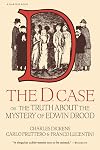
- PLEASE NOTE: The D. Case: The Truth About The Mystery of Edwin Drood is a separate book and should not be combined with The Mystery of Edwin Drood.
The D. Case is a completion of Dickens' i... (show all)ncomplete novel, and was collaborated on by two other writers. This is not the same as Charles Dickens' book. Although Dickens' entire text is included, the additional material is more than Dickens' contribution. Please do not combine these two works.
Do not combine with any edition which has been "completed" by another author.
Classifications
Statistics
- Members
- 3,596
- Popularity
- 4,569
- Reviews
- 65
- Rating
- (3.58)
- Languages
- 17 — Czech, Danish, Dutch, English, Finnish, French, German, Greek, Italian, Japanese, Norwegian (Bokmål), Polish, Russian, Spanish, Swedish, Turkish, Portuguese (Portugal)
- Media
- Paper, Audiobook, Ebook
- ISBNs
- 237
- UPCs
- 6
- ASINs
- 103